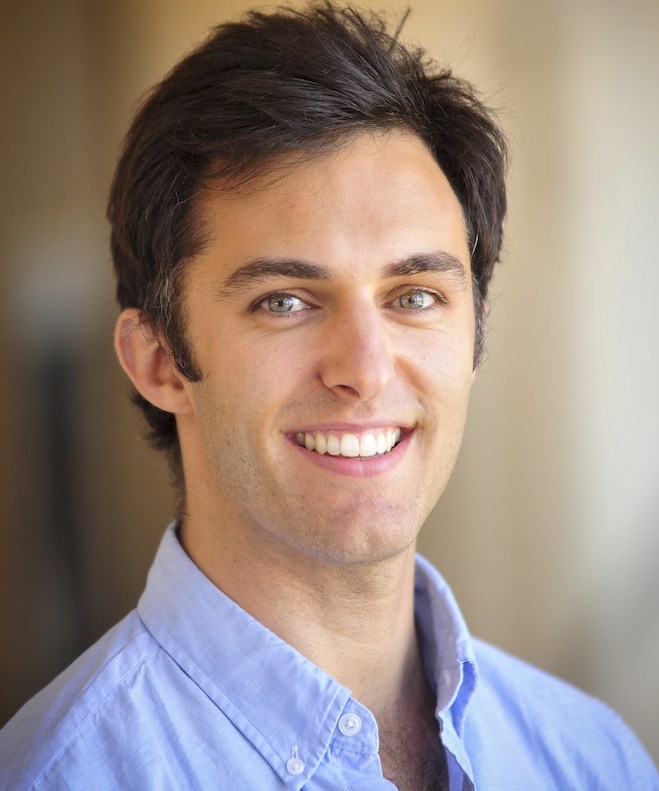
Evrim Acar Ataman is a Research Professor and Chief Research Scientist at Simula Metropolitan, where she serves as Head of the Department of Data Science and Knowledge Discovery. Her research focuses on advanced data mining techniques for complex, multi-modal datasets across biomedical and network domains. Her primary research interests include Data Mining , Matrix and Tensor Factorizations , and Data Fusion for multi-modal data analysis. She develops constrained and coupled factorization methods to extract interpretable patterns in applications spanning neuroimaging, metabolomics, and mobile network analysis, with emphasis on dynamic and longitudinal data structures. Her work integrates mechanistic models with data-driven approaches to enhance biological and system understanding. Analysis of her recent publications (2024-2025) reveals a dominant trend applying tensor and coupled matrix-tensor factorizations to biomedical data for biomarker discovery, particularly in metabolomics and neuroimaging. Key innovations include tracking evolving patterns in temporal data (tPARAFAC2), constrained fusion methods (dCMF), and integration of mechanistic models with tensor decompositions for longitudinal analysis. As Head of the Department of Data Science and Knowledge Discovery, she leads research in developing novel data mining methodologies and their real-world applications at Simula Metropolitan, with significant contributions to interpretable AI for complex systems.
Daniel M. Roy is a Full Professor at the University of Toronto, with cross-appointments in the Department of Computer Science, Department of Statistical Sciences, and Department of Electrical and Computer Engineering. He serves as Research Director at the Vector Institute and holds the CIFAR Canada AI Chair. Research Focus: Foundational principles of prediction, inference, and decision-making under uncertainty across machine learning, statistics, mathematical logic, applied probability, and computer science. Scientific Contributions: Key work in learning theory, statistical network analysis, probabilistic programming, and information-theoretic frameworks for generalization. Awards: ICML 2024 Best Paper Award for "Information Complexity of Stochastic Convex Optimization" and promotion to Full Professor in 2024. Student Advising: Actively mentors Ph.D. candidates and postdoctoral researchers with strong quantitative backgrounds, particularly at the intersection of machine learning, statistics, and computer science. Email: daniel.roy@utoronto.ca
Habib Ullah is an Associate Professor in Data Science at the Norwegian University of Life Sciences (NMBU), Norway, where he conducts research at the intersection of computer vision and machine learning. He is affiliated with the Institute of Data Science under the Faculty of Science and Technology. He has previously held academic positions at COMSATS University Islamabad, Pakistan, and the University of Ha'il, Saudi Arabia, and served as a postdoctoral researcher at The Arctic University of Norway. Educational Background: PhD in Information and Communication Technology (Computer Vision), University of Trento, Italy (2011–2015) MSc in Electronics and Computer Engineering, Hanyang University, South Korea (2007–2009) BSc in Computer Systems Engineering, NWFP University of Engineering and Technology, Pakistan (2002–2006) Habib Ullah's research is primarily focused on computer vision and machine learning, with applications in aquaculture, agriculture, and human behavior analysis. He investigates underwater fish feeding sounds using audio classification, develops zero-shot learning models for recognizing unseen classes, and applies deep learning to detect stress in salmon via skin dot patterns. He also explores AI-driven controlled environment agriculture, leveraging sensors and automation for optimal crop growth. His work emphasizes practical AI solutions for real-world challenges in environmental and biological domains. The recent publications highlight a strong trend in leveraging deep learning for zero-shot and semi-supervised learning, particularly in computer vision tasks such as sea ice classification, crowd anomaly detection, and agricultural monitoring. His research spans remote sensing, biomedical signal processing, and human activity recognition, demonstrating interdisciplinary versatility. The keywords reflect a focus on robust feature representation, knowledge transfer, and model generalization. Scientific Awards and Funding: Industrial PhD grant 'Advancing Controlled Environment Agriculture AI' from The Research Council of Norway (Project number 354125, 2 million NOK, 2024) Team member (Coordinator-Participant) in the Battery Cell Assembly Twin (BatCAT) project funded by Horizon Europe (7 mEuro, 2023–2027) Development of an AI-Based Image Analysis System for Monitoring Plant Status (Funding: 1.8 mNOK, starting 2025) Habib Ullah actively supervises PhD projects and contributes to academic service through editorial and organizational roles. He has served as an Associate Editor for IEEE Access, Guest Editor for MDPI Remote Sensing, and Editor of the Springer book Machine Learning Techniques and Sensor Applications for Human Emotion, Activity Recognition, and Support (ML-SHEARS) . He has also been a Track Chair and Program Committee Member for several international conferences, reflecting his leadership in the academic community. His research is supported by significant grants and collaborative projects, indicating strong institutional and international engagement. He is involved in multiple research teams and projects, including the BatCAT project on battery manufacturing and AI applications in controlled environment agriculture with RIFT LABS AS. His lab work integrates deep learning, sensor fusion, and data analytics for environmental and biological monitoring systems.
Norwegian University of Science And TechnologyNorway
Nadia Shardt is an Associate Professor in the Department of Chemical Engineering at the Norwegian University of Science and Technology (NTNU). Her research focuses on interfacial thermodynamics, particularly in systems with nanoscale curvature, with applications spanning atmospheric science, biomedical cryopreservation, and industrial process optimization. She contributes to teaching courses such as TKP4580 - Chemical Engineering Specialization Project and KP3100 - Chemical Engineering . PhD in Chemical Engineering (University of Alberta, 2019) BSc in Chemical Engineering (University of Alberta, 2015) Postdoctoral researcher at ETH Zurich (2020-2022) Her work addresses fundamental challenges in phase behavior under curvature constraints, combining microfluidic experimentation , Gibbsian thermodynamic modeling , and machine learning techniques to study systems like CO 2 storage media, cloud microphysics, and food emulsions. Recent publications emphasize surface tension modeling for complex multi-component systems and cryoprotectant loading efficiency. Scientific awards include the ETH Postdoctoral Fellowship Natural Sciences and Engineering Research Council of Canada (NSERC) Postdoctoral Fellowship Outstanding Academic Fellows Programme 2024-2028
Steinar Aas is a Professor at Nord University since 2012, specializing in modern Norwegian and European history with a particular focus on World War II memory studies. He holds a Dr.artium degree from the University of Tromsø (UiT) obtained in 2007. His academic career spans several institutions including the University of Tromsø where he served as Senior Consultant (1993-1998), Researcher for Narvik municipality (1998-2001), Office Manager of the Department of History (2001-2010), and Researcher at University College Bodø/University of Nordland (2010-2012) before joining Nord University. Professor Aas's educational background includes his doctoral work at UiT completed in 2007. His extensive academic journey reflects deep engagement with Northern Norwegian history and institutions. His research focuses on the interwar period, urbanization and urban life, urban planning, modernization processes, polar history, political history, and the use of history through memory studies. His work particularly emphasizes Second World War experiences in Norway. His expertise spans diverse areas including Urban History/Planning, Bodø during WWII, European History, Fascism/National Socialism, History Didactics, War History, Women/Gender History, Local and Regional History, Memory Studies, Modern and Norwegian History, High North Studies, Polar/Circumpolar History, Social History, and Labor History. Professor Aas's recent publications (2023-2024) demonstrate a strong focus on Northern Norwegian urban development, particularly Bodø, with numerous works examining small town urbanization from historical and contemporary perspectives. He has made significant contributions to understanding polar exploration history, particularly regarding Roald Amundsen and Umberto Nobile's expeditions, as well as the complex history of Narvik during WWII and the interwar period. His work often intersects urban studies with memory studies, examining how historical events shape contemporary urban identity. Professor Aas is actively engaged in public discourse, frequently contributing to local newspapers like Avisa Nordland with historical commentary on contemporary issues, demonstrating his commitment to historical dissemination beyond academic circles. His work bridges academic research and public understanding of history. His academic advising and potential research grants are not explicitly detailed in the available information, though his extensive publication record suggests active mentorship and research leadership. His work on the history of Bodø and Northern Norway represents a significant contribution to regional historical scholarship while connecting to broader European and global historical narratives.
Jianhua Zhang is a Professor of Computer Science and founding deputy head of the AI Lab at the Department of Computer Science, OsloMet - Oslo Metropolitan University, Norway. He holds affiliations with the Faculty of Technology, Art and Design. His career includes roles as Scientific Director at Vekia (France), Head of Machine Learning Lab, and Professorships at East China University of Science and Technology and Beijing University of Technology. He has held visiting positions at TU Berlin, TU Dresden, and the University of Catania. Educations: PhD in Electrical Engineering and Information Sciences (Ruhr University Bochum, 2005), Postdoctoral Research at the University of Sheffield (2005-2006). Research focuses on artificial intelligence, computational intelligence, cognitive human-machine systems, neuroergonomics, affective computing, and AI-driven neuroergonomics. Applications span engineering, biomedicine, finance, and business. He has led over 20 large-scale projects and published extensively (4 books, 13 chapters, ~200 papers). Leadership roles include Chair of IFAC Technical Committee on Human-Machine Systems (2017-2023), Vice Chair of IEEE Norway Section, and editorial roles at journals like Frontiers in Neuroscience and Cognitive Neurodynamics . He organized major conferences like IFAC HMS2025 (Beijing) and ICMLT 2024 (Oslo). Awards: Stanford/Elsevier Top 2% Scientists (2023/2024), Senior Research Fellowship (CSC, 2012), Max Planck Fellowship (2011), Shanghai Pujiang Talent (2007), DAAD Scholarship (2002-2004). Grants and advising: PI for 20+ projects, advising PhD students in AI, machine learning, and control systems. Teaching includes courses on computational intelligence, IoT, and fuzzy systems at both undergraduate and graduate levels. Labs/Teams: AI Lab at OsloMet, Machine Learning Lab (Vekia), and collaborations with institutions globally. Current work emphasizes AI ethics, neuroergonomics in smart cities, and adaptive human-machine systems.
Filippo Maria Bianchi is an Associate Professor in the Department of Mathematics and Statistics at UiT The Arctic University of Norway, where he conducts research at the intersection of machine learning, dynamical systems, and complex networks. He is also a Senior Researcher at NORCE Norwegian Research Centre and actively contributes to the IEEE Task Force on Learning for Structured Data and the ELLIS Society. Department: Department of Mathematics and Statistics School: Faculty of Science and Technology University: UiT The Arctic University of Norway Adjunct Position: Senior Researcher, NORCE Education: Bachelor’s in Computer Engineering, Sapienza University of Rome Master’s in Artificial Intelligence & Robotics, Sapienza University of Rome (cum laude, 2012) PhD in Machine Learning, Sapienza University of Rome His research focuses on graph machine learning, time series analysis, reservoir computing, and probabilistic forecasting , with applications in energy analytics and remote sensing. He has led and contributed to numerous projects involving Arctic power grids, satellite-based environmental monitoring, and deep learning for sustainability. The recent publications reflect a strong trend in graph neural networks —particularly pooling mechanisms, spatiotemporal modeling, and explainability—alongside applications in energy forecasting, avalanche detection, and remote sensing . His work combines theoretical innovation with real-world impact, especially in Arctic and remote environments. Scientific Affiliations and Leadership: Vice-Chair, IEEE Task Force on Learning for Structured Data Member, ELLIS Society Co-founder, Northernmost Graph Machine Learning group Member, IEEE Task Force on Reservoir Computing Visiting Professor, Politecnico di Milano (2024–2025) He actively mentors students and collaborates on interdisciplinary research. He has led projects in power grid reliability, solar fault detection, and unsupervised change detection in satellite imagery . His work is supported by open-source implementations and reproducible research practices. Laboratories and Research Groups: Northernmost Graph Machine Learning group (co-founder) ARC Research Group, UiT Graph Machine Learning Group, Lugano
Norwegian University of Science And TechnologyNorway
Nicola Paltrinieri is a Professor of Risk Assessment at the Department of Mechanical and Industrial Engineering, NTNU (Norway), and an Adjunct Professor at the University of Bologna (Italy). His expertise spans risk assessment, hydrogen technologies, process safety, and data-driven safety management. He holds Chartered Engineer and Chartered Scientist certifications and has served on editorial boards for journals like Safety Science and Journal of Risk Research . Education: PhD in Environmental, Safety and Chemical Engineering (University of Bologna, 2012) Master’s in Chemical and Process Engineering (University of Bologna, 2008) Research Interests: Focuses on hydrogen infrastructure safety, Natech accident analysis, risk-based inspection strategies, and AI integration in safety systems. His work emphasizes sustainable energy transitions and mitigating risks in emerging technologies like hydrogen. Key Projects (2022-2026): H2Glass : Decarbonizing glass and aluminum sectors via hydrogen HyInHeat : Hydrogen technologies for industrial heating HYDROGENi : Norwegian research center for hydrogen/ammonia Awards: Onsager Fellowship (2016–2021) Frank Lees Medal (2012) for safety-related publications Grants & Leadership: Head of NTNU Energy Team Hydrogen, coordinator for EU-funded projects like SUSHy , and active in international risk committees (e.g., EFCE, ESRA). His work bridges academia and industry, with over 8 PhD examinations supervised. Labs/Teams: Leads the NTNU Energy Team Hydrogen and collaborates on initiatives like SH2IFT-2 for safe hydrogen fuel handling. His research group focuses on AI-driven risk analysis and hydrogen infrastructure resilience.
Ali Ramezani-Kebrya is an Associate Professor with tenure in the Department of Informatics at the University of Oslo (UiO), where he leads research in machine learning theory. He holds dual Principal Investigator roles at the Norwegian Center for Knowledge-driven Machine Learning (Integreat) and SFI Visual Intelligence, and is an active member of the European Laboratory for Learning and Intelligent Systems (ELLIS) Society. His service includes Area Chair positions for NeurIPS and AISTATS, and Action Editor for Transactions on Machine Learning Research. His research focuses on theoretical foundations of deep learning with emphasis on understanding input data distribution encoding in neural network layers. Key themes include minimizing statistical risk under resource constraints, addressing distribution shifts in distributed settings, and developing practical tools for robust federated learning. Current applications span emotion recognition, marine data analysis, and neuroscience, reflecting his commitment to real-world machine learning challenges as evidenced by his FRIPRO-funded Machine Learning in Real World (MLReal) project. Recent publication trends reveal three dominant threads: (1) label/covariate shift mitigation in distributed systems through entropy regularization and density ratio estimation; (2) communication-efficient optimization via layer-wise quantization and adaptive compression techniques achieving 150% speedups; and (3) robustness guarantees against tailored attacks and distribution shifts. These works consistently bridge theoretical bounds with empirical validation across domains from GAN training to federated settings. Scientific recognition includes: FRIPRO Grant for Early Career Scientists (2025) for MLReal project SFI Visual Intelligence Spotlight Publication award (2023) for federated learning work He actively mentors 11 graduate students across Oslo and Tromsø universities, with recent PhD placements at Apple and NVIDIA. Current grant portfolio features the FRIPRO Early Career award and leadership roles in two major Norwegian research centers. His lab maintains strong industry collaborations through Vector Institute and EPFL, with recent hiring for PhD and postdoc positions in physics-informed machine learning.
Mona Baker is an Affiliate Professor at the Centre for Sustainable Healthcare Education (SHE) , University of Oslo, and a renowned scholar in translation studies. Her work bridges political, cultural, and social dimensions of translation, with a focus on conflict, activism, and corpus-based methodologies. She holds a BA in English and Comparative Literature from the American University in Cairo (1976), an MA in Special Applications of Linguistics from the University of Birmingham (1987), and a Higher Doctorate from UMIST (1999). Baker has also held prestigious roles, including founding the Baker Centre for Translation and Intercultural Studies at Jiao Tong University and Beijing Foreign Studies University. Her research interests span translation and conflict , activist translation , corpus-based studies , and the role of translation in social movements . Key projects include the Genealogies of Knowledge initiative, which examines conceptual evolution through translation, and studies on subtitling during the Egyptian Revolution. Baker's recent publications highlight the intersection of technology and activist translation , including analyses of evidence-based medicine narratives and solidarity in global protest movements. She has received notable scientific awards, such as the Kuwait Foundation for the Advancement of Sciences Award (2015) and the Abdullah Bin Abdulaziz International Award (2011). Her academic leadership includes advisory roles at institutions like the Qatar Foundation and Shanghai International Studies University , as well as participation in critical research groups such as the Antibiotic Resistance and Complexity in Health Education network. Baker continues to influence debates on global health, citizen media, and the ethics of translation through her work and mentorship.
Unni Olsbye is a Professor in the Department of Chemistry at the University of Oslo, Faculty of Mathematics and Natural Sciences. Her research focuses on catalytic processes in micro- and nanoporous materials, with particular emphasis on structure-composition-function correlations in catalytic reactions and mechanistic studies of product formation. She is affiliated with several research groups including the Catalysis Section, SMN (Center for Materials Science and Nanotechnology), ProfMOF A/S, and iCSI (industrial Catalysis, Science and Technology). Professor Olsbye's research interests center on heterogeneous catalysis, particularly examining how the chemical composition of catalytic sites, their immediate environment, and steric factors influence reaction rates and selectivity in porous materials. Her work spans zeolites, zeotypes, and metal-organic frameworks (MOFs) for applications in CO 2 conversion, methane activation, methanol-to-hydrocarbons processes, and light alkane dehydrogenation. She investigates confinement effects in micro- and nanoporous materials, with processes studied including C-H activation, C-O activation, methane partial oxidation to methanol and syngas, methyl halide conversion, and ethene oxychlorination. Analysis of her recent publications reveals a strong focus on energy-related catalysis for sustainability, particularly CO 2 conversion to fuels and chemicals, methane activation to methanol, and olefin production. Her work frequently employs copper-based catalysts in zeolites and MOFs, with increasing attention to bio-inspired catalytic systems. The research combines experimental approaches with advanced characterization techniques to understand reaction mechanisms at the molecular level. Professor Olsbye leads or participates in several significant research projects including BIZEOLCAT (bifunctional catalysts for alkane activation), CCU-NET (Nordic mobility network), CO 2 LO (CO 2 hydrogenation, TRL1-3), COZMOS (CO 2 hydrogenation, TRL3-5), CUBE (C-H activation, ERC Synergy), and ProfMOF (MOF scale-up and testing). These projects address critical challenges in catalysis for sustainable energy and chemical production. Her laboratory work focuses on advanced characterization of catalytic materials, particularly using in situ and operando techniques to monitor reactions as they occur. The research group collaborates extensively with experts in organic and inorganic synthesis, advanced spectroscopy, and theoretical calculations to develop a comprehensive understanding of catalytic processes in confined environments.
Roger Flage is a Professor of Risk Management at the University of Stavanger, affiliated with the Faculty of Science and Technology and the Department of Security, Economics and Planning. His research focuses on foundational and applied aspects of risk analysis, uncertainty quantification, and decision-making under uncertainty, with applications in critical infrastructure, environmental systems, and offshore energy. Roger Flage's research interests lie at the intersection of risk science, safety engineering, and decision theory. He investigates how uncertainty—especially epistemic uncertainty and assumptions—affects risk assessments, and advocates for more transparent and robust frameworks. His work spans theoretical advances, such as the treatment of 'black swan' events and the concept of 'real risk', as well as practical applications in offshore safety, power systems, and geohazards. He emphasizes the integration of data-driven methods, AI, and digital twins while critically assessing their limitations and associated security risks. His recent publications show a strong trend toward integrating dynamic, data-rich, and interdisciplinary approaches to risk analysis. Themes include the role of time in risk, AI applications, infrastructure interdependencies, and environmental risk in the oil and gas sector. He frequently publishes in top-tier journals like Risk Analysis , Reliability Engineering & System Safety , and Safety Science , often in collaboration with leading scholars such as Terje Aven and Seth Guikema. No scientific awards are mentioned in the provided text. Roger Flage has supervised or collaborated with several researchers, though no formal list of advisees is provided. His work is supported through academic collaborations and institutional affiliations rather than explicit grant mentions. He is actively involved in advancing risk science methodology, particularly in the treatment of assumptions and uncertainty, and contributes to both theoretical foundations and real-world applications in safety-critical domains. He is associated with research groups and collaborative networks at the University of Stavanger, particularly within the Department of Security, Economics and Planning. His work often involves interdisciplinary teams focusing on risk in complex engineered systems, including energy, transportation, and environmental systems.
Jan Bill is Professor of Viking Age Archaeology at the University of Oslo's Department of Archaeology and curator of the Viking Ship Collection at the Museum of Cultural History since 2007. His academic trajectory includes leadership roles at the Viking Ship Museum in Roskilde (2003-2007) and the Centre for Maritime Archaeology at Denmark's National Museum (1997-2003), where he progressed from PhD researcher to deputy director. His research centers on Viking Age and medieval archaeology, specializing in seafaring, burial practices, and scientific methodologies. Key investigations focus on Norwegian ship burials (Oseberg, Gokstad) to decode power representation through funerary rituals, and seafaring's role in societal complexity. His interdisciplinary approach integrates archaeology with genetics, geochemistry, and digital humanities. Recent publications reveal dominant trends in Viking Age genomics, ship burial reinterpretation, and geoarchaeological analysis of settlements. Major themes include population migrations, ancient pathogens, trade networks, and landscape reconstruction, often through large-scale collaborations like the Population Genomics of the Vikings project. Scientific recognition includes: Aage Rothenborgs Endowment (2017) for contributions to early medieval Scandinavian maritime culture Bill currently supervises two PhD candidates and leads significant grants including the Gokstad revitalised research project, Saving Oseberg Project, and Gjellestad excavation. His grant portfolio emphasizes interdisciplinary Viking Age studies combining archaeology with DNA analysis and geophysical surveying. He directs the Centre for Viking-Age Studies (ViS) and contributes to INTER-Action research group. Critical institutional work involves developing the new Museum of the Viking Age and steering major conservation initiatives like the ADED project for archaeological digital documentation.
Norwegian University of Science And TechnologyNorway
Torgeir Welo is a Professor at the Department of Mechanical and Industrial Engineering , Norwegian University of Science and Technology (NTNU) . He specializes in metal forming , particularly aluminum alloy structures , with a focus on plastic bending behavior , dimensional stability , and 3D forming technologies . His research also encompasses Lean Product Development , emphasizing knowledge reuse and maximizing customer value in automotive and aerospace applications. Key Research Areas : Metal Forming, Aluminum Processing, Springback Control, Lean Development, Additive Manufacturing, Material Substitution Teaching : Courses on Aluminum Technology , Metal Forming Analysis , and Machine Element Design Publications (15 most recent): Focus on springback monitoring , charge weld evolution , flexible forming , machine learning applications , and circular economy frameworks in metal manufacturing.
Norwegian University of Science And TechnologyNorway
Oscar Amundsen is a Professor of Organization Studies at the Department of Education and Lifelong Learning within the Faculty of Social and Educational Sciences at NTNU. His research focuses on organizational change, employee-driven innovation (EDI), leadership, and organizational culture. He teaches in Master’s programs in 'Learning in Work Life and Society' and 'Management and Organisation', as well as the PhD program in Educational Science. His research emphasizes practical application of academic knowledge to improve organizations across public, private, and voluntary sectors. Key themes include fostering innovation through cultural transformation, leadership practices, and employee engagement. His recent book How to Become a Dream Organization (2025) outlines strategies for leaders to cultivate innovative and attractive workplaces. Amundsen has led research groups such as COOL (Conditions for Learning and Innovation in Higher Education and Work), COIN (Collaboration and Innovation), and LAS (Learning in Work Life and Society). His work bridges theory and practice, with publications in journals like International Journal of Learning and Change and Journal of Knowledge Management . He has authored multiple books on organizational change, innovation management, and leadership, many translated into Danish and Swedish. His outreach activities include media contributions (articles in Aftenposten , Adresseavisen , etc.), podcasts, and collaborative projects with organizations. He emphasizes translating academic insights into actionable strategies for real-world organizational challenges.