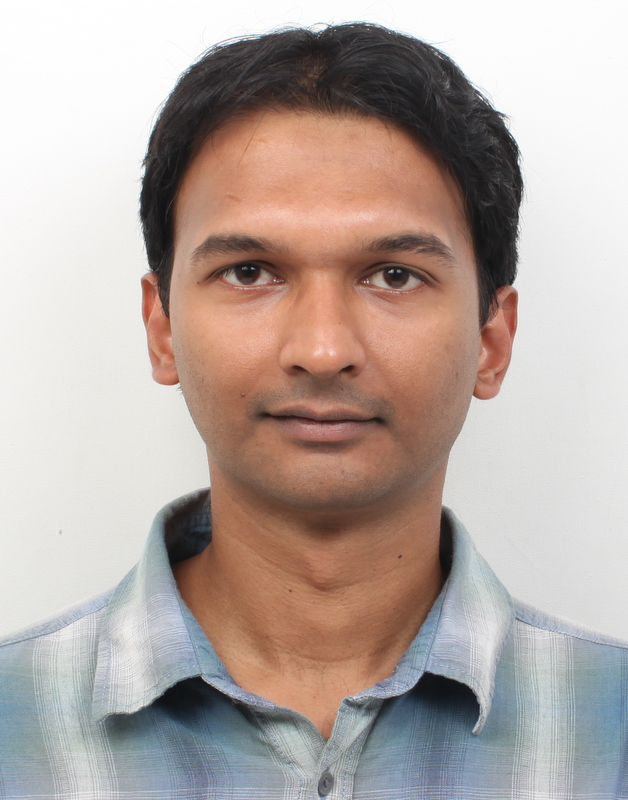
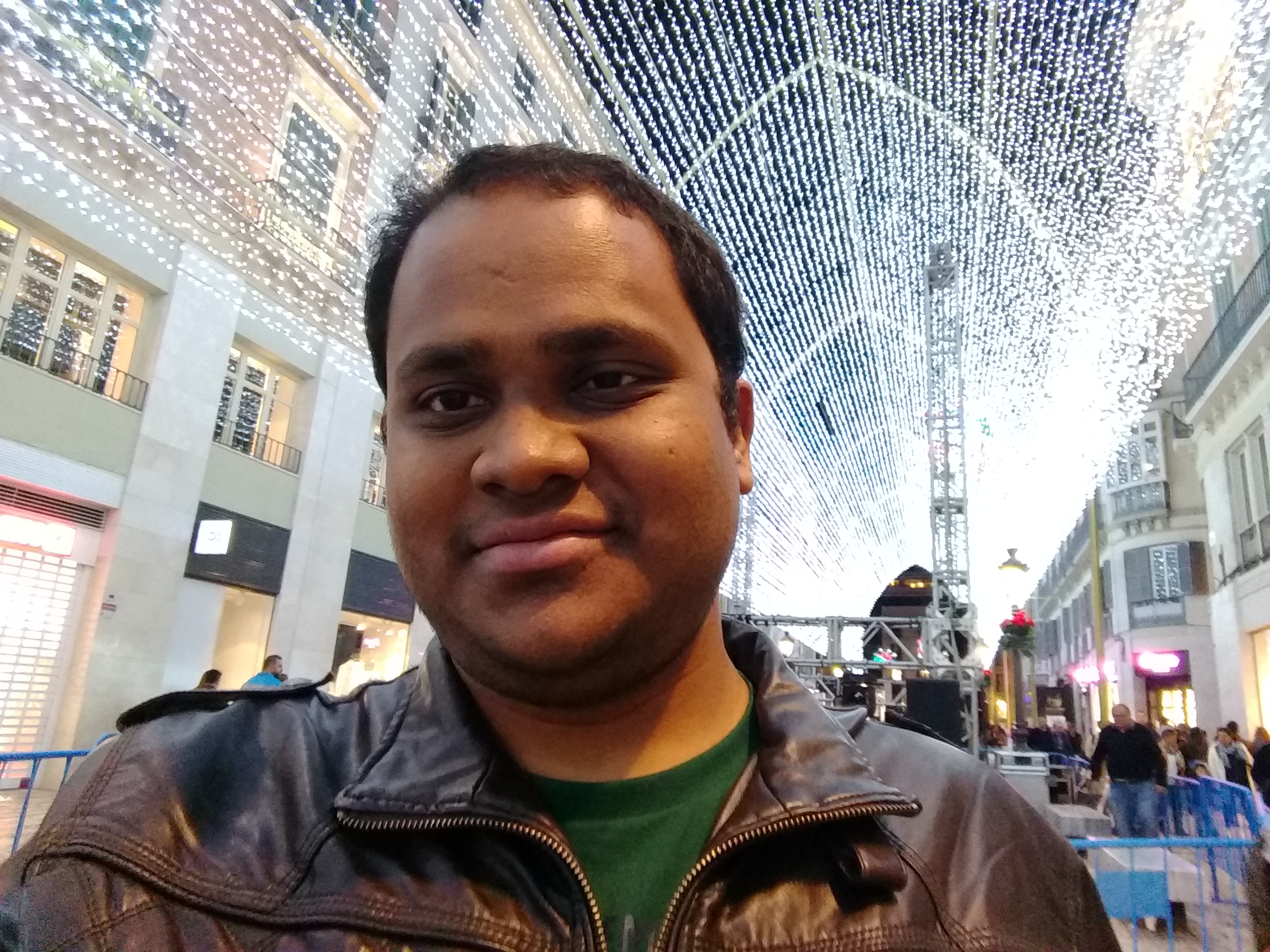
Shivaram Kalyanakrishnan is an Associate Professor at the Department of Computer Science and Engineering , Indian Institute of Technology Bombay , specialising in Artificial Intelligence and Machine Learning . His research spans sequential decision making , multiagent learning , multi-armed bandits , and humanoid robotics , with applications in robot soccer , computer games , and online advertising . He teaches advanced courses like CS 747: Foundations of Intelligent and Learning Agents and CS 748: Advances in Intelligent and Learning Agents , focusing on end-to-end system design and theoretical analysis. His scientific awards include the Best Student Paper Award at RoboCup International Symposium 2006 and nomination for Best Student Paper Award at AAMAS 2007 . His work on reinforcement learning and policy iteration has been published in leading venues such as IJCAI , ICML , and COLT , with recent contributions to railway scheduling and bandit algorithms. While no explicit list of advisees is provided, his research projects and publications suggest mentorship of students in collaborative efforts. Contact : shivaram@cse.iitb.ac.in .
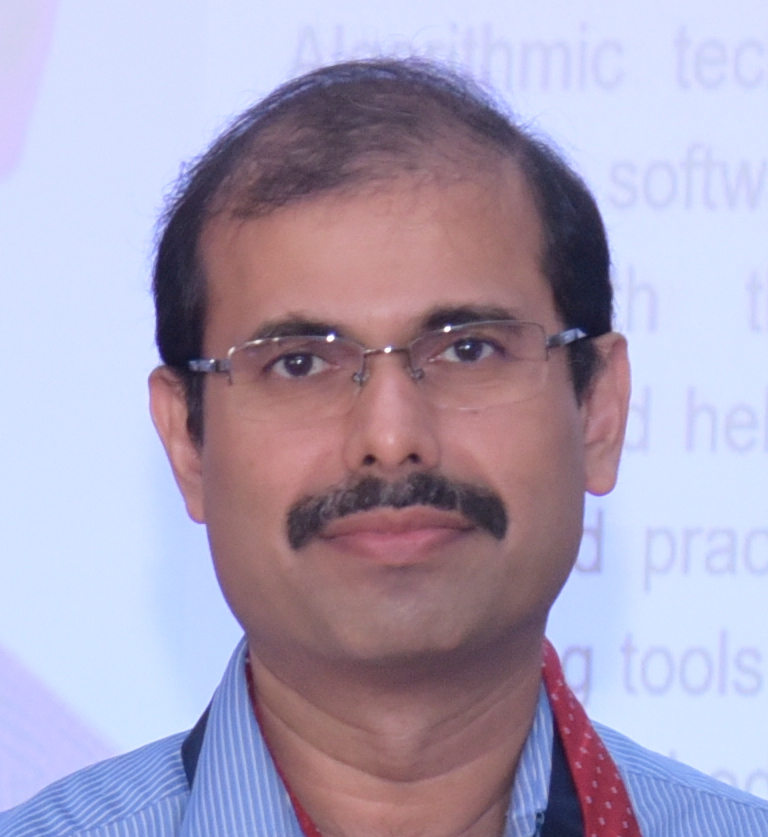
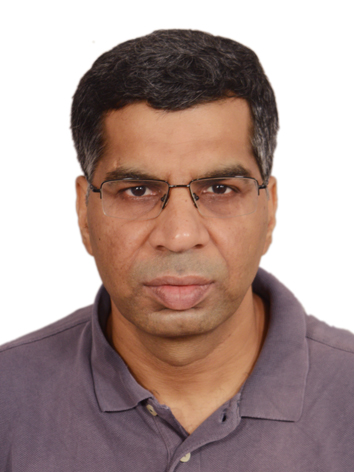
Soumya Dutta is an Assistant Professor in the Department of Computer Science and Engineering at the Indian Institute of Technology Kanpur (IITK), where he leads the INSIGHT: Intelligent Scientific and Visual Computing of Big Data Research Group. He joined IIT Kanpur in October 2022 after working as a Scientist II at Los Alamos National Laboratory (LANL) from July 2019 to August 2022, and previously as a Postdoctoral Research Associate at LANL from June 2018 to July 2019. His educational background includes a Ph.D. and M.S. in Computer Science and Engineering from The Ohio State University (2011-2018), where he was part of the GRAVITY research group, and a B.Tech. in Electronics and Communication Engineering from West Bengal University of Technology, India (2005-2009). Research Interests: Dr. Dutta's research focuses on the intersection of machine learning, visual computing, big data, and high-performance computing. His primary research areas include Machine Learning for Visual Computing and Image Analysis, Big Data Visualization and Analytics, Data Science and HPC, Machine Learning for Scientific Computing, and Explainability and Interpretability of AI Models. His work addresses various big data characteristics including the 5 Vs: Volume, Velocity, Variety, Veracity, and Value. He develops techniques that make complex machine learning models more interpretable and explainable, enabling their effective adoption in real-life applications across scientific domains, social media, IoT, healthcare, and industry applications. Dr. Dutta's research group has secured multiple funded projects including: DAVi: An Intelligent Data Analytics and Visualization Framework (funded by ISRO), Intelligent Visual Computing of Extreme-scale Data for Accelerating Scientific Discovery (IIT Kanpur Initiation Grant), Enabling Interactive Big Data Analytics and Visualization at Exascale (SERB), Development of AI-Enabled National Portal for Efficient Search of Missing People (C3iHub), and Proactive and Generalized Deepfake Defense Mechanisms (C3iHub). Best Reviewer, Honorary Mention Award for IEEE Transactions on Visualization & Computer Graphics (TVCG), 2021 Best Paper Award at ISAV 2021, co-located with Supercomputing (SC) LAAP Award at Los Alamos National Laboratory, 2021 Best Paper Award at TopoInVis 2019 Best Paper Award at ISAV 2018, co-located with Supercomputing (SC) Best Poster Award in 12th Annual CSE Student Poster Exhibition, The Ohio State University, 2018 Best Poster Award in 11th Annual CSE Student Poster Exhibition, The Ohio State University, 2017 Best Paper Honorable Mention Award at IEEE Visualization Conference (IEEE VIS) 2016 Dr. Dutta actively mentors a large group of students including Ph.D., M.Tech., and B.Tech. students. His current Ph.D. students include Shanu Saklani, Sankhadeep Bhowmick, Ananya Chaturvedi, Arpita Santra, Anubhav Dixit (co-supervised), and Robin Shah. He has supervised numerous M.Tech. students with thesis topics ranging from uncertainty-aware neural networks to deepfake detection. Dr. Dutta currently teaches courses including CS360 - Introduction to Computer Graphics and CS661 - Big Data Visual Analytics. The INSIGHT research group collaborates internationally with researchers from Meta, Oak Ridge National Laboratory, and National Taiwan Normal University. The group's work focuses on building machine learning and data science-based solutions to analyze large-scale multifaceted data in a scalable way, enabling interactive and interpretable analytics of complex data from scientific simulations, social media, IoT, healthcare, and other application domains.
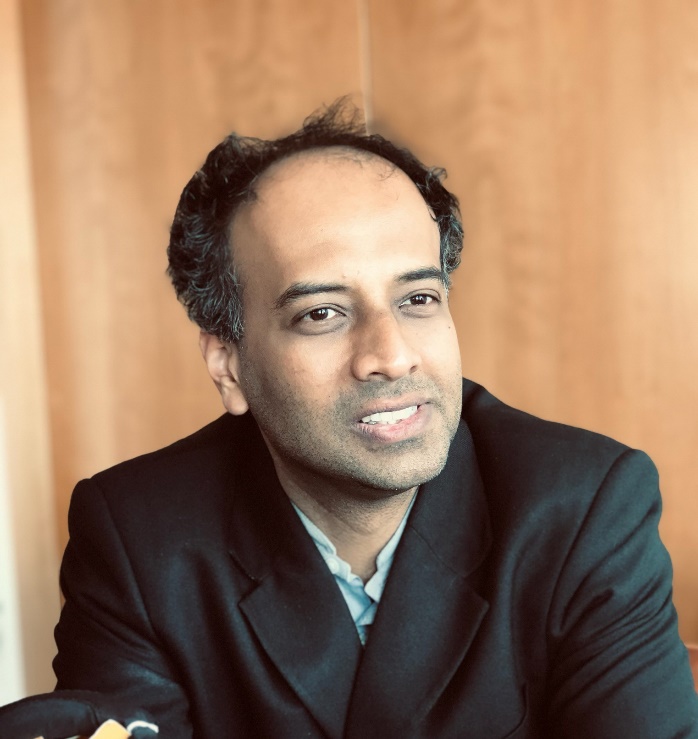
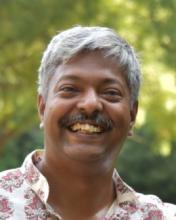
Supratik Chakraborty serves as the Bajaj Group Chair Professor in the Department of Computer Science and Engineering at Indian Institute of Technology Bombay. He maintains dual affiliations with the Centre for Formal Design and Verification of Software and the Centre for Liberal Education at IIT Bombay, demonstrating his cross-disciplinary engagement. Professor Chakraborty's research spans formal methods with focus on formal verification, rigorous analysis of system models, and automated synthesis of systems from specifications. His work bridges theoretical foundations with practical applications, particularly in developing mathematically provable guarantees for increasingly complex hardware, software, and intelligent systems. Current research interests include constrained counting and sampling, scalable formal verification of software and hardware systems, automated synthesis of programs and circuits, and applications of automata, logic and finite model theory to practical verification challenges. His publication trajectory shows a significant evolution from traditional hardware and software verification toward addressing verification challenges in machine learning and AI systems. Recent work increasingly focuses on interpretability of black-box models, verification of neural networks, and synthesis techniques applicable to intelligent systems. The research demonstrates strong interdisciplinary connections between formal methods, programming languages, and artificial intelligence. IIT Bombay Excellence in Thesis (CSE) Award 2011 (for Bhargav Gulavani's thesis) IIT Bombay Excellence in Thesis (CSE) Award 2017 (for Abhisekh Sankaran's thesis) Best Paper in Algorithms and Architecture track at IEEE International Conference on Computer Design: VLSI in Computers and Processors, 1998 Professor Chakraborty has successfully supervised 11 doctoral students, with research spanning formal verification techniques, Boolean functional synthesis, constrained counting, and applications to hardware and software systems. His students have gone on to positions at major institutions including Microsoft Research, TCS Research, Georgia Tech, and BARC, reflecting the strong industry and academic impact of his mentorship. Current research directions show increasing emphasis on verification challenges posed by machine learning systems and AI. His research group at IIT Bombay, while not explicitly named in the materials, appears to focus on formal methods with strong connections to the Centre for Formal Design and Verification of Software. The group maintains active collaborations with international researchers including Moshe Y. Vardi at Rice University, and has made significant contributions to verification tools like VeriAbs that bridge theoretical advances with practical applications.
Dr. Arghya Das is an Associate Professor in the Department of Civil Engineering at the Indian Institute of Technology Kanpur (IIT Kanpur), where he has been serving since 2014. He previously held the position of Assistant Professor at IIT Kanpur from July 2014 to November 2020 before being promoted to Associate Professor in December 2020. Prior to joining IIT Kanpur, he completed his Post-Doctoral Research Fellowship at Northwestern University, USA, and served as a Research Associate at the University of Sydney, Australia. Dr. Das earned his educational qualifications from prestigious institutions: PhD in Geotechnical Engineering from the University of Sydney, Australia (2013), M.Tech from IIT Bombay, India (2009), and B.E. from Jadavpur University, India (2006). His research focuses on advanced aspects of soil mechanics and geotechnical engineering, with particular emphasis on constitutive modeling of geomaterials, micromechanics of granular materials, and flow through porous media. His work integrates numerical and physical modeling approaches to address complex geotechnical challenges including bifurcation and instability analysis in geomaterials. Dr. Das teaches several advanced courses including Constitutive Modeling of Frictional Materials, Advanced Geotechnical Engineering, Rock Mechanics, Computational Methods in Engineering, and Soil Mechanics. Dr. Das's publication record demonstrates a consistent focus on discrete element modeling (DEM) applications in geomechanics, particle crushing behavior, and constitutive modeling of soils. His recent work (2020-2022) has particularly emphasized unsaturated soil mechanics, chemomechanical effects on granular materials, and advanced computational approaches to soil behavior. These publications appear in high-impact journals such as Acta Geotechnica, Geomechanics for Energy and the Environment, and International Journal of Geomechanics. PK Kelkar Fellowship - IIT Kanpur (2022-2025) FEIT University of Melbourne Visiting Researcher Fellowship (2022-2023) YGE Award for Best Paper on Computational Geomechanics, Indian Geotechnical Society (2018) SERB - Early Career Research Award (2016-2019) Dr. Das has successfully secured multiple research grants including projects funded by ONGC, CSIR, and SERB focusing on micro-poro-mechanical modeling, experimental assessment of Indian crushable sands, and permeability evolution in deep-reservoir rocks. He serves as a corresponding member of the International Technical Committee TC-105 on 'Geo-Mechanics from Micro to Macro' of the International Society for Soil Mechanics and Geotechnical Engineering (ISSMGE) and is a member of the Indian Geotechnical Society.
Y. N. Singh is a Professor in the Department of Electrical Engineering at Indian Institute of Technology Kanpur . He holds a PhD and M.Tech from IIT Delhi and a B.Tech from REC Hamirpur . Education PhD, IIT Delhi (1997) M.Tech, IIT Delhi (1992) B.Tech, REC Hamirpur (1991) His research focuses on telecom networks , optical networks , complex networks , and wireless sensor networks , with significant contributions to network protection protocols, rumor propagation modeling, and optical memory design. His work on p-cycles has advanced telecom network survivability techniques. Selected publications include key papers in IEEE/OSA Journal of Lightwave Technology and Acta Physica Polonica B . He has received the AICTE Young Teacher Award (2002) and the Dr. M.N. Saha Memorial Award (2006). Contact details Office: EE/ACES, IIT Kanpur, UP, India-208016 Phone: 0512-[679/392/259]-7944 (O) Lab: 0512-[679/392/259]-7841, 7070 Fax: 0512-259-0063
Krishna Jagannathan is a full-time Professor in the Department of Electrical Engineering at the Indian Institute of Technology Madras (IIT Madras), India. He specializes in stochastic modeling, communication networks, information theory, and queuing theory. He obtained his B.Tech from IIT Madras in 2004, followed by S.M. and Ph.D. degrees from MIT in 2006 and 2010, respectively. After post-doctoral positions at Caltech and MIT, he joined IIT Madras in 2011. Education: B.Tech in Electrical Engineering, IIT Madras (2004) S.M. in Electrical Engineering and Computer Science, MIT (2006) Ph.D. in Electrical Engineering and Computer Science, MIT (2010) Research Interests: His research focuses on stochastic modeling and analysis of communication networks , information theory , and queuing theory . He has made significant contributions to understanding network performance, resource allocation, and risk-aware decision-making in complex systems. He leads the Networks and Stochastic Systems lab at IIT Madras, mentoring a large cohort of Ph.D. and M.S. students working on cutting-edge problems in networking, optimization, and stochastic systems. Scientific Awards: Best Paper Award at WiOpt 2013, Tsukuba, Japan Young Faculty Recognition Award for Excellence in Teaching and Research, IIT Madras (2014) Teaching & Mentorship: He has taught a wide range of courses including Probability Foundations , Stochastic Modeling and Queuing Theory , Convex Optimization , and Signals & Systems , consistently receiving high teaching evaluations. He has supervised over 15 Ph.D. and M.S. students to completion and continues to guide several active researchers.
Indian Institute of Technology Hyderabad (IITH)India
Aditya T Siripuram is an Associate Professor at the Indian Institute of Technology Hyderabad (IITH), holding joint appointments in the Department of Electrical Engineering and the Department of Artificial Intelligence. He completed his PhD at Stanford University and holds B.Tech and M.Tech degrees from IIT Bombay. Education: PhD in Electrical Engineering, Stanford University (2017) - GPA: 4.17/4 M.Tech in Electrical Engineering, IIT Bombay (2009) - GPA: 9.79/10 B.Tech in Electrical Engineering, IIT Bombay (2009) - GPA: 9.79/10 Research Interests: His research spans Fourier analysis, signal processing, machine learning, convex and combinatorial optimization, with applications in AI/ML and applied mathematics. His work particularly focuses on computational aspects of Fourier analysis, including fast DFT computation for structured signals, convolution idempotents, and graph-based signal processing techniques. His recent research directions involve developing efficient algorithms for computing Discrete Fourier Transforms for signals with structured frequency support, investigating relationships between additive structures in frequency domains and computational complexity, and exploring graph learning techniques under spectral constraints. Awards and Recognition: Excellence in Teaching Award, IIT Hyderabad (2019, 2022) Stanford Graduate Fellowship Qualcomm Innovation Fellowship (awarded to his PhD student Charantej Reddy P in 2021) Teaching and Service: He has taught courses including AI1110 Probability and Stochastic Processes, EE5609 Matrix Theory, EE5606 Convex Optimization, and EE5328 Introduction to Submodular Functions. He serves as Departmental Undergraduate Committee Chair for the Department of AI at IITH (2020-present) and was MTech Admissions Coordinator for the same department (2019-2022). Research Group: He currently advises three PhD students working on signal processing based graph learning techniques, DFT computation for structured signals, and coded computing problems.
Angshuman Karmakar is an Assistant Professor in the Department of Computer Science and Engineering at the Indian Institute of Technology Kanpur, India. His research focuses primarily on Post-Quantum Cryptography (PQC) and Computation On Encrypted Data (COED), which are critical areas in modern cryptography and computer security. Dr. Karmakar received his Ph.D. from Katholieke Universiteit Leuven (KU Leuven), Belgium, where he worked under Prof. Ingrid Verbauwhede in the COSIC research group. He was awarded the prestigious Erasmus Mundus fellowship for his doctoral studies and the FWO (Fonds voor Wetenschappelijk Onderzoek – Vlaanderen) fellowship for his post-doctoral research at KU Leuven. His research spans theoretical development of cryptographic schemes, implementation algorithms, side-channel and fault attack analysis, and countermeasure development. Dr. Karmakar has established extensive international collaborations with researchers and engineers worldwide to address complex challenges in cryptography and security. Recent publications demonstrate a strong focus on practical post-quantum cryptographic implementations with particular attention to hardware and software efficiency, side-channel resistance, and novel attack methodologies. His work bridges theoretical cryptography with real-world implementation challenges across diverse platforms from IoT devices to high-performance computing systems. Erasmus Mundus fellowship for doctoral studies at KU Leuven FWO fellowship for post-doctoral study at KU Leuven Google India Research Award for work on practical transition to post-quantum cryptography Dr. Karmakar is actively seeking graduate students and postdoctoral researchers to collaborate on cutting-edge research in cryptography and computer security. His work has significant implications for securing future communication systems against quantum computing threats, with applications spanning blockchain technologies, IoT security, and general-purpose computing systems.
Om P. Damani is a Professor in the Department of Computer Science and Engineering at Indian Institute of Technology Bombay. He serves as Faculty In-Charge of the Sustainable Development unit of the Center for Policy Studies and is also associated with the Centre for Technology Alternatives for Rural Areas (CTARA). His work bridges computer science with social development challenges, focusing on practical applications for rural communities. Dr. Damani's research interests span Technology for Development of the bottom 80%, System Dynamics: Modeling and Simulation for Social Development, System Architecture, and Data Science. His work demonstrates how computational approaches can address complex development challenges through projects like GramDrishti (for detecting rural infrastructure in satellite images), JalTantra (for optimizing water distribution networks), and FAI (Farm Assessment Index for holistic farming practice evaluation). His publications reveal a consistent focus on applying computer science to solve real-world problems in water management, agricultural systems, and rural infrastructure. His research has been recognized with significant awards including the IIT Bombay Industrial Impact Award 2010, IIT Bombay Impactful Research Award 2019, and Best Poster Award at Agriculture Science Congress 2017. Dr. Damani has successfully translated theoretical research into practical tools that address development challenges, particularly in water resource management and agricultural systems. As an educator, he has mentored numerous PhD students including Chintan Tundia, Shreenivas Kunte, Nikhil Hooda, Sivamuthu Prakash Murugan, Dipak L. Chaudhari, Prateek Kapadia, and Manoj K. Chinnakotla. His teaching portfolio includes courses on System Dynamics: Modeling and Simulation for Development (CS 752), Program Derivation (CS 420), and ICT for Development. Dr. Damani's educational background includes a Ph.D. in Computer Sciences from the University of Texas at Austin (1994-1999), B.Tech. in Computer Science and Engineering from IIT Kanpur (1990-1994), and prior professional experience at IBM T J Watson Research Lab and Akamai Technologies.
Naren Naik is a Professor in the Department of Electrical Engineering at the Indian Institute of Technology (IIT) Kanpur, specializing in computational tomographic reconstructions and analysis for subsurface imaging and shape/target tracking. His educational background includes: PhD from the Indian Institute of Science (IISc) Bangalore in 2000 M.E. in Electronics and Communication Engineering from IISc Bangalore in 1992 B.Sc. from Bangalore in 1988 Professor Naik's research focuses on development and analysis of reconstruction algorithms for nonlinear tomography , with particular emphasis on shape-based and dynamic tomography, tracking and battlefield surveillance, and numerical solutions to partial differential equations in electromagnetics. His work spans multiple imaging modalities including subsurface imaging with Ground Penetrating Radar (GPR), fluorescence optics, electrical impedance tomography, and photoacoustic tomography. His research bridges theoretical mathematics with practical applications in electromagnetic imaging and target tracking systems, addressing complex inverse problems in computational imaging. His publication record shows a clear progression from electromagnetic tomography to advanced Kalman filtering techniques for target tracking applications. The most recent works focus on wireless sensor networks and maneuvering target tracking, demonstrating his ability to adapt theoretical frameworks to evolving technological contexts while maintaining mathematical rigor in solving inverse problems. His professional recognition includes: Invited presentation at the special session on advances in model based inversion at the 2011 IEEE AP-S International Symposium on Antennas and Propagation Professor Naik maintains an active research program with consistent publication output in high-impact journals and conferences. His work demonstrates strong interdisciplinary collaboration, particularly with researchers in electromagnetics, signal processing, and imaging sciences. His research has significant applications in defense technology (battlefield surveillance), medical imaging, and subsurface exploration systems, contributing to both theoretical advances and practical implementations in these fields. He is based in Office 303A ACES (Advanced Centre for Electronic Systems) at the Department of Electrical Engineering, IIT Kanpur, where he leads research activities in computational imaging and tomographic reconstruction.
Dr. Ajit Kumar Chaturvedi is a Professor in the Department of Electrical Engineering at the Indian Institute of Technology Kanpur (IIT Kanpur), specializing in Communications Theory and Systems. With decades of experience at IIT Kanpur, he has established himself as a leading researcher and educator in wireless communications and information theory. Dr. Chaturvedi earned his B.Tech (1986), M.Tech (1988), and PhD (1995) all in Electrical Engineering from IIT Kanpur, demonstrating his deep institutional commitment. His educational background reflects his dedication to academic excellence at his alma mater. His research focuses on Communications Theory and Systems, with specific expertise in Wireless Communications, Information Theory, and Spread Spectrum Systems. Dr. Chaturvedi's work bridges theoretical foundations with practical applications in modern communication technologies. His contributions have significantly advanced the understanding of signal processing techniques, multiuser detection methods, and error analysis in wireless systems. His research has direct implications for improving the reliability and efficiency of contemporary wireless communication standards. Dr. Chaturvedi's publication record demonstrates consistent contributions to communications engineering, spanning from fundamental signal processing techniques to complex system-level analyses. His work on ISI mitigation, orthogonal sequence design, and error rate analysis shows both theoretical rigor and practical relevance for real-world communication challenges. Distinguished Teacher award of IIT Kanpur (2007) Tan Chin Tuan Fellowship of NTU, Singapore (2008) Supervisor of Best B. Tech Project groups (2002, 2006, 2012) Plenary speaker at the 15th National Conference on Communications (2009) Mentor of IEEE Computer Society International Design Contest winning team (2002) As an educator, Dr. Chaturvedi has supervised numerous award-winning student projects, including three Best B.Tech Project awards. He has mentored teams to international recognition, such as the Microsoft Award for Innovation at the IEEE Computer Society International Design Contest World Finals in 2002. His office is located in ACES 201B at IIT Kanpur, where he continues to contribute to the academic and research mission of the institution.
Anirban Chakraborti is a Professor at the School of Computational and Integrative Sciences, Jawaharlal Nehru University (JNU), New Delhi, India, where he has been a faculty member since 2014. He previously held academic positions at École Centrale Paris (France) as Chercheur Senior (Associate Professor) and Chargé de Recherche (Assistant Professor), and earlier roles at Banaras Hindu University, Brookhaven National Laboratory (USA), and Helsinki University of Technology (Finland). He is a leading figure in the interdisciplinary field of econophysics and complex systems. Education: Diplôme d’Habilitation à Diriger des Recherches (2013), Université Pierre et Marie Curie – Paris VI, France (Physics) Ph.D. in Physics (2003), Saha Institute of Nuclear Physics, Jadavpur University, India Post-M.Sc. in Physics (1999), Saha Institute of Nuclear Physics, Jadavpur University, India (Ranked First) M.Sc. in Physics (1998), University of Calcutta, India (Ranked First) B.Sc. in Physics (1996), Scottish Church College, University of Calcutta, India His research interests lie at the intersection of physics, economics, and data science. He is particularly known for pioneering work in econophysics , including the statistical mechanics of money, wealth distribution, agent-based market models, and network-based analysis of financial and social systems. He also works on complex systems , computational finance , statistical physics , and nanosciences , with applications in sensing and imaging. His work often involves modeling socio-economic phenomena using tools from statistical physics. His recent publications span topics such as financial fluctuations, wealth inequality, network analysis of conflicts, order book dynamics, and nanomaterial characterization. These works reflect a strong trend toward interdisciplinary research combining physics, economics, and data analytics, with a focus on real-world applications in finance, inequality, and social systems. Scientific Awards: Indian National Science Academy Young Scientist Medal (2009) He has advised Ph.D. students such as Kiran Sharma and leads the ETC (Experimental-Theoretical-Computational) Lab at JNU, which brings together physicists, computer scientists, and mathematicians. The lab has been involved in international collaborations, including projects funded by the Estonian Ministry of Education and Research and consultancies with TCS Innovation Labs and DONO Consulting. His research has been supported through grants and collaborative projects, reflecting strong industry and global academic engagement.
Dr. Jillet Sarah Sam is an Associate Professor in the Department of Humanities and Social Sciences at the Indian Institute of Technology Kanpur (IIT Kanpur). Her research focuses on the sociological dimensions of digital financial transformations in India, particularly examining how money, finance, and digital technologies intersect with social structures. Dr. Sam completed her PhD in Sociology from the University of Maryland, College Park (2008-2014) with a dissertation on caste identification and spatial imaginaries. Her academic journey includes an M.A. in Sociology from the University of Hyderabad (2007) and a B.A. in Economics from Jesus and Mary College, University of Delhi (2002). Her research program investigates how digital payment systems have reshaped financial practices in India, with particular attention to gender dynamics, informal labor sectors, and social stratification. She employs ethnographic methods to understand how marginalized communities navigate digital financial inclusion, especially during critical moments like demonetization and the pandemic. Dr. Sam's work reveals how digital payment adoption is not merely a technological shift but a complex social process involving multiple actor groups, policy interventions, and cultural interpretations. Her research shows how caste, gender, and class dynamics persist and transform in digital financial spaces. 2022: Visiting Lecturer at University of Bologna 2020-2022: €20,000 BANDO STRUTTURE Mobility Grant for comparative India-Italy consumer behavior study 2018-2019: 148,000 SEK FORMAS STINT Mobility Grant for women's monetary digitization research She has established significant international collaborations with researchers in Sweden, Italy, and the United States, contributing to the global understanding of digital financial transformations in developing economies while maintaining a strong focus on India's unique sociocultural context.
Laxmidhar Behera is a Professor in the Department of Electrical Engineering at the Indian Institute of Technology Kanpur, specializing in Intelligent Systems and Control. With over two decades of academic experience at IIT Kanpur and international research experience at institutions including Fraunhofer Institute of Autonomous Intelligent Systems in Germany, ETH Zurich, and University of Ulster, he has established himself as a leading researcher in cognitive robotics and intelligent control systems. Dr. Behera's research spans multiple cutting-edge domains including Cognitive Robotics, Nano-robotics, Vision based Control, Soft Computing, Information Retrieval in music and language, Semantic Information Processing, Physics of Complex Systems, Cyber Physical Systems, Formation Control of UAVs, Brain-Computer Interface (BCI), and Sanskrit Computational Linguistics. His interdisciplinary approach bridges traditional control theory with modern computational intelligence techniques, creating innovative solutions for complex real-world problems. His extensive publication record in top-tier journals like IEEE Transactions demonstrates his leadership in areas such as brain-computer interfaces, visual servoing, multi-robot systems, and music information retrieval. Notably, his work on quantum neural networks for EEG filtering and multisatellite formation control has received significant attention in the research community. UKIERI Standard Research Award 2008 Best Paper at International Conf. on Intelligent Sensors and Information Processing (ICISIP-2004) Best Paper at WoSco,02, Int. Conf. High-Performance Computing (HiPC, 2002) AICTE career award for young teacher (1997) Senior Member IEEE Multiple IEEE top accessed articles (2009-2010) As an Associate Editor for Autosoft Journal and Technical Committee Member for Intelligent Control at IEEE Control System Society, Dr. Behera actively contributes to the academic community. His laboratory in the Western Lab - 212A of the Department of Electrical Engineering serves as a hub for research in intelligent systems, where he mentors students and collaborates with researchers worldwide on cutting-edge projects in robotics, control systems, and computational intelligence.
D. L. V. K. Prasad is an Assistant Professor in the Department of Chemistry at the Indian Institute of Technology Kanpur (IIT Kanpur). He specializes in Computational Materials science with research interests spanning electronic structure of materials, superconductivity in low-Z systems, and phase transitions in complex solids. Education: PhD (2008), University of Hyderabad M.Sc. (2002), University of Hyderabad Research Focus: His work combines quantum mechanical calculations and evolutionary algorithms to predict material structures and properties under extreme conditions. Key objectives include understanding solid-state phase transition mechanisms and designing high-temperature superconductors within BCS phonon-mediated frameworks. Publication Trends: Recent articles (2012-2016) predominantly explore high-pressure material behavior, nanostructured carbon/boron systems, and transition metal oxides, employing computational methods to investigate electronic confinement, chemical bonding, and magnetic properties in novel materials. Professional Experience: NSF Postdoctoral Associate, Cornell University (2011–2013) Max Planck Society Postdoctoral Fellow, MPI-FKF Stuttgart (2009–2011)