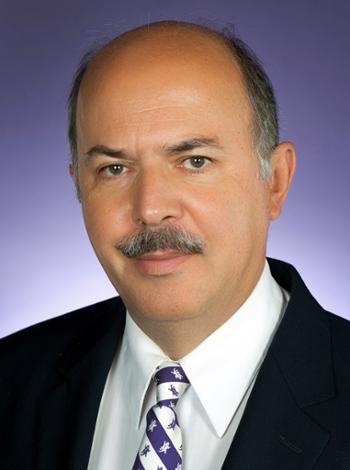
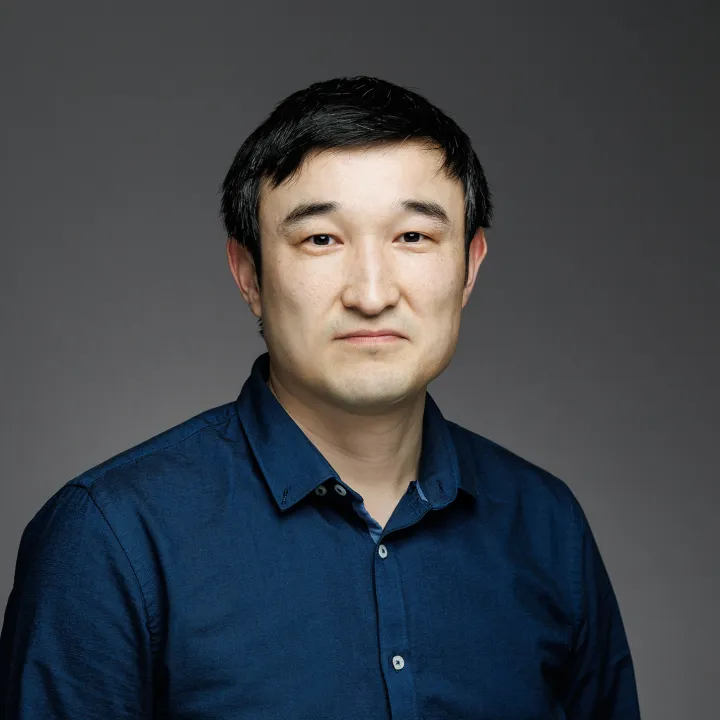
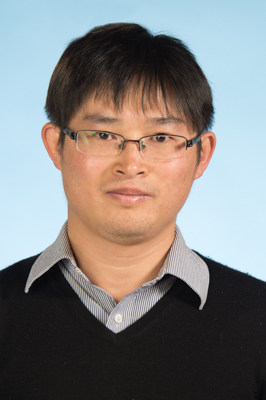
Efstathios (Stathis) Michaelides is the W.A. "Tex" Moncrief, Jr. Founding Chair of Engineering at Texas Christian University (TCU). He holds a Ph.D. and M.S. in Engineering Science from Brown University (1980, 1979) and a B.A. in Engineering Science and Economics from Oxford University (1977). His research focuses on advanced energy systems, multiphase flow, and renewable energy transitions. Ph.D. , Engineering Science, Brown University, 1980 M.S. , Engineering Science, Brown University, 1979 B.A. , Engineering Science and Economics, Oxford University, England, 1977 Michaelides' work spans energy conversion , geothermal systems , nanofluidics , and particle-fluid dynamics . His recent publications analyze energy storage requirements for renewable transitions, drag force correlations in complex flows, and thermodynamic implications of carbon sequestration. His research trends include decarbonization strategies , nanoparticle-enhanced phase transitions , and smart microfluidic systems . He has also contributed to foundational texts like Particles, Bubbles and Drops (2006) and the Multiphase Flow Handbook (2017).
Bauyrzhan Primkulov is an Assistant Professor of Mechanical Engineering at Yale University. His research focuses on interfacial fluid dynamics and soft matter physics, with emphasis on fluid-fluid displacement in disordered environments and hydrodynamic pilot-wave theory. He holds a Ph.D. from MIT (2022) and B.Sc./M.Sc. from the University of Alberta. Primkulov's work bridges theoretical and experimental approaches to address energy and environmental challenges. His team investigates phenomena such as capillary flow dynamics in porous media, wettability effects on displacement patterns, and pilot-wave systems that mimic quantum behaviors. Key contributions include advancing Lenormand's phase diagram for multiphase flows and studying avalanches in imbibition processes. Recipient of InterPore PoreLab Award (2024) and MIT's CEE Best Doctoral Thesis (2022) Expertise spans experimental hydrodynamics, multiphase flow modeling, and granular media mechanics Active in developing novel methods like photoporomechanics to visualize stress fields in fluid-filled granular systems His recent studies explore crossover dynamics between stick-slip and steady sliding regimes in viscous slugs, as well as confinement effects in pilot-wave hydrodynamics. Primkulov collaborates across disciplines to translate fundamental fluid mechanics insights into practical solutions for energy storage and environmental systems.
Dr Xinchen Zhang is a Grant-Funded Researcher (A) at the University of Adelaide's Department of Mechanical Engineering within the School of Electrical and Mechanical Engineering. His research focuses on integrating machine learning with computational fluid dynamics (CFD) to enhance predictive capabilities for multiphase flow solutions, particularly in sustainable energy applications like decarbonization technologies. He holds a PhD (2022) with a Dean's Commendation for Doctoral Thesis Excellence, emphasizing fluid and particle dynamics in particle-laden flows. His work addresses challenges in net-zero industrial processes such as limestone calcination and hydrogen production via methane pyrolysis, leveraging advanced CFD and ML-augmented methodologies. Key research areas include turbulence modeling, particle dispersion in jets, and flow regime analysis in horizontal particle-laden pipe systems. He is eligible to supervise Masters and PhD students as a co-supervisor. Dr Zhang's publications span 2018–2024, with recent trends focusing on physics-informed machine learning for turbulence modeling and multiphase flow optimization. His contributions advance computational efficiency and accuracy in predicting complex fluid-particle interactions.
Associate Professor Fangbao Tian is a distinguished researcher and academic at UNSW Canberra's School of Engineering and Technology, where he also serves as Deputy Head of School for Research since July 2023. Previously, he held positions as Senior Lecturer (2017-2021) and Lecturer (2014-2017) at the same institution after completing postdoctoral research at Vanderbilt University. His academic journey began with a BSc (2006) and PhD (2011) in Theoretical and Applied Mechanics and Engineering Mechanics from the University of Science and Technology of China. Dr. Tian's research focuses on Computational Fluid Dynamics (CFD) tools for complex flows and fluid-structure interaction, with particular emphasis on bio-inspired applications. His work spans modeling laryngeal aerodynamics and vocal-fold vibration, fluid-structure interaction of plates in viscous fluid, fish swimming and insect flight, blood flow dynamics, and non-Newtonian flow phenomena. Recent work has expanded into Martian atmosphere aerodynamics, showing his research's growing interdisciplinary nature. His extensive publication record demonstrates consistent contributions across fluid dynamics, with recent trends showing increasing focus on compressible flows, bio-inspired flight systems, heat transfer applications, and computational methods like Lattice Boltzmann approaches. The research shows strong connections between fundamental fluid mechanics and practical applications in aerospace, biomedical engineering, and environmental systems. UNSW Canberra Goldstar Award 2022 IEEE Outstanding SMCS Chapter Award 2021 Outstanding Volunteer Award 2021 UNSW Canberra Silverstar Award 2018 UNSW Canberra Silverstar Award 2017 Journal of Fluids and Structures Highly Cited Research 2017 ARC DECRA 2016 Dr. Tian actively supervises PhD students across diverse topics including bushfire-enhanced wind loads, bio-inspired flight on Mars, flow control optimization, and fluid-structure interactions in compressible flows. He has secured over $5 million in external funding as Chief Investigator, including significant Australian Research Council projects examining Martian atmosphere aerodynamics, bio-inspired flapping wings, and cardiovascular flow modeling. His editorial roles include Associate Editor for Journal of Fluids and Structures and Scientific Reports, reflecting his standing in the fluid dynamics research community.
Georges FOKOUA is a Lecturer-Researcher at ESTACA (École Supérieure des Techniques Aéronautiques et de Construction Automobile), Paris-Saclay Campus, Saint-Quentin-en-Yvelines, France. He serves as the Training Manager for the 5A Specialty in New Energies and Environment. His academic career spans multiple institutions, including IRSTEA Rennes as a Research Engineer (2014-2016) and the Naval School in Brest as a Teaching and Research Assistant (2009-2014). Dr. FOKOUA's research focuses on experimental and numerical fluid mechanics with particular interest in multiphase flows, turbulence, wake flows, and the characterization of spatio-temporal dynamics of particulate and gaseous pollutants. His work bridges fundamental fluid mechanics with practical applications in transportation systems, naval propulsion, and environmental engineering. He has developed expertise in advanced measurement techniques including PIV, LDV, Ombroscopy, hot wire, optical probes, PTV, and both mono- and biphasic CFD using Ansys-Fluent, Comsol Multiphysics, and Matlab. His publication record demonstrates strong expertise in particle dispersion in transportation systems, with recent work focusing on brake particle dispersion in underground train stations, vehicle wake flows, and ultrafine particle dispersion. His earlier work investigated bubble effects in Taylor-Couette flow for naval propulsion applications. His research consistently combines experimental work with numerical modeling to address complex fluid dynamics problems. Dr. FOKOUA actively supervises doctoral and master's students, with current PhD candidates working on topics related to air quality in vehicle cabins, particulate pollutant dispersion in vehicle wakes, and navigation emissions. He has also contributed significantly to major research projects including CEPARER (2022-2025), AmCoAir (2020-2023), and CAPNAV (2019-2022), all funded by ADEME with various industrial partners. As an educator, he teaches Fluid Mechanics, Thermodynamics, Thermal Engineering, and Energy Conversion and Transfer courses across all undergraduate and graduate levels at ESTACA. He has also led the Euroglider project (2016-2019), developing a two-seat electric propulsion glider for pilot training.
Olivier FARGES is a Senior Lecturer and HDR (Habilitation à Diriger des Recherches) holder at the University of Lorraine, affiliated with ENSGSI (École Nationale Supérieure de Géologie et Sciences Industrielles) within the Groupe INP. He serves as Director of Industrial Partnerships at ENSGSI and is part of the LEMTA Laboratory (CNRS-University of Lorraine), focusing on multiphysics and multiscale modeling of heat transfer in complex environments. His academic roles include teaching courses such as Heat and Mass Transfer, Fluid Mechanics, Scientific Computing Modeling, and Renewable Energy. Dr. FARGES holds a Ph.D. in Energy and New R&D (2014) and an Engineering degree in Energy Engineering (2010), both from the École de Mines Albi. His research emphasizes coupled conductive-radiative heat transfer in porous media, thermal property characterization of heterogeneous materials, and Monte Carlo-based computational methods for energy systems. He has contributed to advancements in photovoltaic system modeling, solar thermal power optimization, and urban climate studies. His work bridges theoretical and applied thermal engineering, with applications in sustainable energy systems, material science, and industrial partnerships. Key research themes include radiative transfer modeling, multiphysics simulation frameworks, and the development of innovative tools for thermal property measurement and energy performance assessment.
Ronald D. Haynes is a Full Professor and Chair of Scientific Computing Graduate Programs in the Department of Mathematics and Statistics at Memorial University of Newfoundland. He leads research in numerical methods for PDEs and industrial-scale optimization problems. His work develops advanced domain decomposition techniques, adaptive mesh methods, and parallel computing approaches for solving complex physical systems. Applications include modeling pitting corrosion of materials, predicting rock strength for drilling optimization, and simulating multiphase fluid flows in porous media. Recent publications demonstrate innovations in mesh adaptation, parallel algorithms, and machine learning applications for industrial problems. Collaborative projects have addressed reservoir simulation, drill bit analysis, and corrosion prediction through integrated computational approaches. Professor Haynes has received the President's Award for Outstanding Research (2018) and Dean of Science Distinguished Teaching Award (2017). He serves as Co-editor-in-chief of the CAIMS Mathematics in Science and Industry Journal and was President-Elect of the Canadian Applied and Industrial Mathematics Society (2023-2025). He maintains active doctoral supervision with current research groups focusing on domain decomposition methods, closest point algorithms, and optimization techniques. Industry partnerships include projects with ExxonMobil and Global Maritime addressing drilling optimization and mooring design challenges.
Mohamed Farhat is a Senior Scientist at EPFL's School of Engineering, Department of Mechanical Engineering, where he leads the Research Group on Cavitation and Interface Phenomena. He serves as PhD Director, Lecturer, and Member of EPFL Doctoral Committee (Mechanics), while also representing EPFL at CLUSER association and coordinating activities at the Société Hydrotechnique de France (SHF). His research expertise spans Cavitation & Multiphase flows, Flow Induced Noise & Vibration, Fluid-Structure Interaction, Flow control, Flow instabilities in hydro turbines and pumps, Condition monitoring of Hydraulic Machines, Hemodynamics, and Advanced Instrumentation in Fluid Dynamics. Farhat's work uniquely bridges fundamental fluid mechanics with practical applications across hydropower, marine propulsion, healthcare, and water management sectors. Analysis of his recent publications reveals strong focus on cavitation bubble dynamics, with particular emphasis on measurement techniques for collapsing bubbles, vortex shedding control, hydrodynamic monitoring of hydraulic machinery, and biomedical applications of cavitation phenomena. His work increasingly integrates advanced imaging techniques with computational modeling to understand complex multiphase flow phenomena. 2021: Life Sciences Book Award of the International Academy of Astronautics 2019: 1st Prize Winner of Scientific Image Contest (Swiss National Science Foundation) 2020: EPFL-Rhyming Prize (Best PhD thesis in Fluid Mechanics) 2018: EPFL-EDME Prize (Best PhD thesis in Mechanics) 2015: Edmund Optics Educational Award 2014: APS-DFD Gallery of Fluid Motion Award Farhat has successfully supervised numerous PhD students including Ali Amini, Philippe Ausoni, and Outi Supponen, with research spanning from fundamental bubble dynamics to practical hydraulic machinery applications. His Cavitation Research Group maintains strong collaborations with industry partners in hydropower and medical device sectors. Current research directions include advanced instrumentation for cavitation monitoring, condition-based maintenance of hydraulic machinery, and biomedical applications of cavitation phenomena in therapeutic ultrasound and drug delivery.
Dr. Zhihua Xie is a Reader in the School of Engineering at Cardiff University. He holds a PhD in Computational Fluid Dynamics from the University of Leeds, funded by the Marie Curie EST Fellowship. His career includes research roles at Cardiff University and Imperial College London. His research focuses on computational fluid dynamics, multiphase flows, and environmental fluid mechanics, supported by grants from EPSRC, Royal Society, and others. He has been awarded the Alexander von Humboldt Research Fellowship and multiple Baker Medals. Education: BEng in Environmental Engineering (Dalian Maritime University, 2003), Postgraduate study in Hydrodynamics (Dalian Maritime University, 2006), PhD in CFD (University of Leeds, 2010). Research interests span development and application of CFD codes for multiphase flows, turbulence modelling, and numerical methods. He is actively involved in editorial boards and professional societies like IAHR and ISOPE. Key contributions include adaptive moment-of-fluid methods, Cartesian cut-cell techniques, and large-eddy simulations. Awards include the Alexander von Humboldt Fellowship (2023), Baker Medal (2021, 2022), and EPSRC funding for wave energy converter modeling (EP/V040235/1). Grants and projects include ARCHER2 eCSE, Newton Advanced Fellowship, and collaborations on coastal engineering and offshore energy systems. His work addresses challenges in wave-structure interaction, fluid-structure dynamics, and environmental hydraulics.
James E. Smay is a Professor and Head of the Materials Science and Engineering department at Oklahoma State University. He holds a Ph.D. in Materials Science and Engineering from the University of Illinois and a B.S. in Mechanical Engineering from Oklahoma State University. Ph.D. Materials Science and Engineering, University of Illinois B.S. Mechanical Engineering, Oklahoma State University Dr. Smay’s research focuses on colloidal assembly processes, particularly direct write manufacturing, to create novel devices. His work spans 3D printing of photonic band gap crystals , bone scaffolds , all-ceramic dental crowns , and metal-ceramic composites , leveraging colloidal gel inks with ceramic, metallic, and polymer particles in aqueous media. His publications highlight advancements in additive manufacturing , bioactive ceramics , rheological control of complex fluids , and sanitation engineering . Key trends include the application of direct printing to biomedical and photonic fields, alongside studies on emulsion stability and pathogen deactivation. The Smay lab is equipped for powder processing , advanced rheology , thermal treatment of ceramics/metals/polymers, and particle size/zeta potential measurements , supporting interdisciplinary research in sustainable manufacturing and biomedical materials.
Dr. Yinghe Qi is a Professor in the Department of Experimental Fluid Dynamics at ETH Zürich, Switzerland. His research focuses on multiphase flows, turbulence, and free-surface dynamics, with applications in aerospace, marine engineering, and computational fluid dynamics. He has contributed extensively to understanding bubble dynamics, flow instabilities, and turbulence modulation through experimental and phenomenological studies. Research Interests: Dr. Qi’s work addresses complex phenomena in multiphase flow instabilities free-surface turbulence deformable bubble dynamics supersonic jet interactions vortex-induced fragmentation machine learning in fluid dynamics Recent Publications: His recent studies (2023–2025) explore multiscale bubble deformation, free-surface turbulence structure, and supersonic jet-plume interactions. Key themes include turbulent fragmentation, vortex-bubble coupling, and novel computational methodologies. Laboratory Affiliations: He collaborates with the Coletti Group, Jenny Group, and Supponen Group at ETH Zürich, advancing experimental and computational techniques in fluid dynamics.
Paul Fischer is a Professor at the University of Illinois, holding dual appointments in the Siebel School of Computing and Data Science and the Mechanical Science and Engineering department. His research focuses on advanced numerical methods for fluid dynamics, particularly leveraging spectral element techniques and high-performance computing. He is a core contributor to the Nek5000/NekRS computational frameworks. Recent work emphasizes turbulence modeling, exascale CFD simulations, and multiphase flow dynamics in complex systems like pebble bed reactors. His research interests span spectral methods, large eddy simulation (LES), direct numerical simulation (DNS), and parallel computing architectures. Key projects include developing scalable algorithms for Reynolds-averaged Navier-Stokes (RANS) models and exploring non-conforming domain decomposition approaches for reacting flows. His contributions bridge computational methodology and engineering applications, with a focus on exascale-ready solutions. Publications from 2024-2025 highlight advancements in energy-efficient CFD simulations, turbulence transition mechanisms in granular media, and reduced order modeling for turbulent flows. Collaborations involve cross-disciplinary teams focusing on combustion, fluid-structure interaction, and high-fidelity flow analysis. He maintains active involvement in computational fluid dynamics communities and contributes to open-source software tools critical for industrial and academic research. Current efforts prioritize scalability, accuracy, and adaptability in numerical methods for next-generation supercomputing platforms.
Michael Dumbser is a Full Professor at the University of Trento's Department of Civil, Environmental and Mechanical Engineering. His research focuses on computational fluid dynamics, numerical methods for hyperbolic conservation laws, and high-performance computing. He specializes in developing structure-preserving numerical schemes such as discontinuous Galerkin and finite volume methods for continuum mechanics, relativistic fluid dynamics, and multiphase flows. Teaching responsibilities include courses like Calcolo numerico e programmazione , High-Performance Computing for Multi-Functional Metamaterials , and Metodi numerici per l'ambiente . His work emphasizes thermodynamically compatible formulations and adaptive numerical methods for complex physical systems. Recent research trends involve hyperbolic reformulations of classical models (e.g., Navier-Stokes-Korteweg, Einstein equations), staggered semi-implicit schemes for incompressible flows, and GPU-accelerated algorithms. His publications span topics from geophysical fluid dynamics to relativistic astrophysics, with a focus on maintaining physical conservation principles in numerical implementations. No scientific awards are explicitly listed in the provided information. His advising record is not detailed here, though his courses suggest involvement in student mentorship. Research collaborations include projects on metamaterials and computational geophysics. Current initiatives include developing unified models for earthquake rupture dynamics, non-Newtonian fluid simulations, and adaptive mesh refinement techniques. His lab work involves high-performance computing frameworks like ExaHyPE for large-scale wave propagation studies.
Ben Goddard is a Professor in the School of Mathematics at the University of Edinburgh. His work bridges applied mathematics with real-world scientific challenges, emphasizing interdisciplinary collaboration across engineering, biology, chemistry, and physics. He earned his PhD at the University of Warwick, later completing his final year at TU Munich following his advisor. His research focuses on mathematical modeling, numerical methods, and asymptotic analysis applied to problems such as quantum chemistry, fluid dynamics, and biological systems. Education: Bachelor’s degree in Mathematics (undergraduate details unspecified) PhD in Mathematical Quantum Chemistry (University of Warwick/TU Munich) Research interests include: Dynamic density functional theory (DFT) for complex fluids and nanoparticles Interfacial phenomena and contact line dynamics Numerical optimization and pseudospectral methods Biological systems modeling (e.g., RNA transcription mechanics) Recent work explores applications like ouzo phase behavior, aerosol droplet stability, and opinion dynamics in social networks. His collaborations span diverse fields, including experimental biology at the Welcome Centre for Cell Biology. He advocates for mathematicians’ role in interdisciplinary problem-solving, emphasizing clear communication and adaptability. Advising and grants: While specific grant details are not listed, his projects reflect significant funding and team-based research. He actively promotes STEM engagement through activities like designing math-themed escape rooms with his spouse, a statistician. Labs/Teams: Collaborates extensively with Edinburgh’s Schools of Engineering, Biology, and Informatics, though no specific lab names are mentioned.
Travis B. Thompson, Ph.D. is an Assistant Professor in the Department of Mathematics and Statistics at Texas Tech University, leading the TM4 (Texas Tech Translational and Theoretical Mathematical Modeling and Machine Learning in Medicine) research group. His academic journey includes postdoctoral work at Rice University, Simula Research Laboratory, and the University of Oxford, focusing on mathematics applied to neurodegenerative diseases. Education: Ph.D. in Mathematics from Texas A&M University (2013) Dr. Thompson develops theoretical mathematical models and applies scientific computing and machine learning to study neurological pathologies, particularly Alzheimer’s disease. His work explores complex biological processes on networks, translational healthcare applications, and nutritional security implications. Current research trends integrate neuroimaging data with finite element simulations to model tau progression , amyloid beta dynamics , and glymphatic clearance in age-related diseases. Scientific awards and honors were not explicitly mentioned in the provided materials. Dr. Thompson’s interdisciplinary approach connects computational neuroscience with biomedical engineering , utilizing techniques like diffusion tensor imaging and level set methods to analyze pathological protein spread and brain tissue mechanics . The TM4 research group focuses on network neurodegeneration , personalized medicine , and machine learning diagnostics . Their work spans from microfluidic cancer detection to computational modeling of brain clearance mechanisms , addressing challenges in both neurodegenerative diseases and biomedical engineering through rigorous mathematical frameworks.