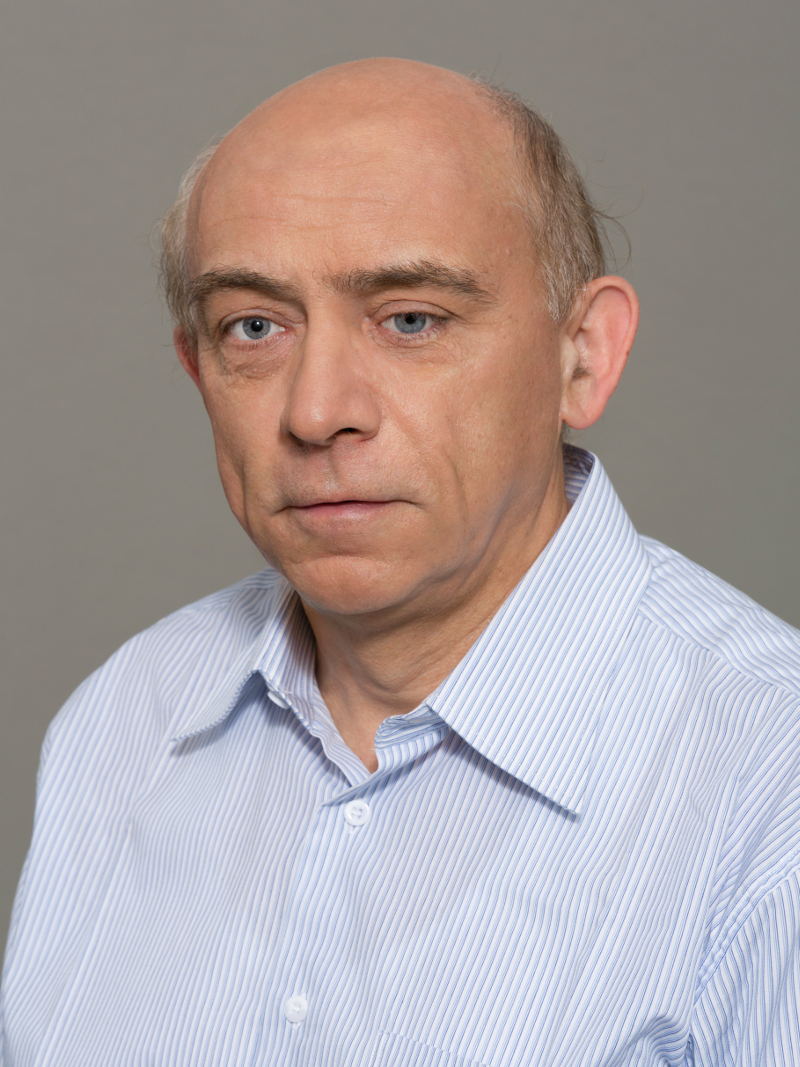
Robert Szoke is a Lecturer at the Department of Analysis, Eötvös Loránd University (ELTE), Budapest, Hungary. He has taught advanced courses such as Complex Function Theory , Kaehler Manifolds , and Stein Manifolds for mathematics students at both undergraduate and graduate levels since at least 2017. Teaching Roles: Courses in complex analysis, univariate/multivariate analysis, and differential geometry for BSc, MSc, and doctoral programs. Research Interests: Focus on complex and differential geometry, particularly Kaehler and Stein manifolds, multivariable complex functions, and several complex variables. Publication: Authored Multivariable Complex Functions (Eötvös Publishing House, 2003), a textbook used at ELTE. His work intersects mathematical analysis and geometry, emphasizing complex structures.
Sándor Ádány is a Professor at the Department of Structural Mechanics , Budapest University of Technology and Economics. His work focuses on advanced structural analysis of thin-walled members and systems-based design methodologies. Research Interests: Specializes in buckling behavior of thin-walled structures, finite element modeling, cold-formed steel stability, and modal decomposition techniques. Key areas include Lateral-torsional buckling Displacement mapping in constrained FEM Stiffener optimization in plate structures Combined loading stability of tubular members Prebuckling deformation effects Fourier-based numerical methods Article Trends (2023-2025): Recent publications emphasize elastic stability analysis of thin-walled beams and tubular structures under complex loading conditions, with particular attention to prebuckling deflections, torsional rigidity effects, and numerical validation of analytical models. Innovations include Fourier-series displacement approximations and constrained finite element methodologies.
JÓZSA János is a Professor at the Department of Hydraulic and Water Resources Engineering, Faculty of Civil Engineering, Budapest University of Technology and Economics. He serves as Coordinator of the Specialization in Infrastructure Engineering (MSc) and is a member of both the Pál Vásárhelyi Doctoral School of Civil Engineering and Earth Sciences and the Faculty's Habilitation and Doctoral Council. His research focuses on: Hydrodynamics of surface waters and interface processes Wind-induced lake currents and sediment motion Flow, mixing, and sediment transport in compound-channel rivers Floodplain inundation modeling Effects of ship-induced waves on river banks Analysis of his 2019-2024 publications reveals consistent emphasis on Danube River hydrodynamics, sediment transport mechanisms, and environmental impacts of engineering interventions. Key methodological contributions include validation of 2D/3D numerical models against field measurements, novel sediment transport calculation methods using shear Reynolds number, and practical frameworks for assessing ship wave impacts. His work bridges computational fluid dynamics with environmental monitoring. Professor Józsa has participated in international collaborations including the ERDF-funded SEDDON project for Austrian-Hungarian sediment research. No information on specific research grants or student advising was provided in the source materials.
Károly Simon is a Professor of Mathematics at the Budapest University of Technology and Economics , where he serves as Head of the Department of Stochastics and Head of the Doctoral School of Mathematics and Computer Science . He is affiliated with the Institute of Mathematics and leads research in fractal geometry, dynamical systems, and complex networks. Education : MSc thesis and initial research in real-time functions at the University of Szeged under Vilmos Totik, followed by PhD studies at ELTE under Miklós Laczkovich, and an MTA PhD (2007) on fractals under Péter Major. His research spans fractal geometry , dynamical systems , and complex networks . Key contributions include studies on random fractals (Mandelbrot percolation, 2000-present), deterministic hyperbolic systems (1990s), and complex networks (2009-present), including leadership in a five-group consortium project and the TAMOP Theoretical Foundations of the Future Internet. Scientific Recognition : Alixits Prize (Hungarian Academy of Sciences, 2001) Bolyai Plaque (2008) Advising : Supervised 3 doctoral graduates (Balázs Bárány, Júlia Komjáthy, Péter Móra) and advises 4 ongoing PhD candidates (István Kolossváry, Roland Molontai, Hajnal Tóth, Lajos Vágó). Collaborated with international scholars including Michel Dekking, Michal Rams, and others. Leadership & Service : OTKA mathematics jury chairman (2010-2012), member of Hungarian Bar Association's committee (2008-2012), editor of Central European Mathematical Journal (2003-2007), and organizer/co-organizer of fractal/dynamical systems conferences in Poland, India, Hong Kong, and France.
Ildikó Papp is an Associate Professor at the Faculty of Informatics, University of Debrecen , specializing in the Department of Data Science and Visualization . Her academic focus spans geometric modeling , 3D technologies , and experience-oriented teaching methods , bridging theoretical geometry with practical digital applications. Research Interests: Computer modeling of curves and surfaces Constructive and representational geometry 3D printing and visualization Cognitive infocommunication in education Publication Trends: Focus on QR code integration with 3D surfaces (2021-2022) Biomedical applications of FDM printing (2020) Educational impact of 3D technologies (2016-2018) Advancements in Bézier curve isoptics (2012-2013) Optimization techniques in geometric modeling (2012) Contact: Email: papp.ildiko@inf.unideb.hu
Károly Bezdek is a Professor in the Department of Mathematics at the University of Calgary. His office is located at Building I, Room 305, 8200 Veszprém, Egyetem str 10, and he can be contacted via bezdek@math.ucalgary.ca. His research spans foundational areas of mathematics with emphasis on geometric structures and combinatorial methods. Key interests include the study of convex bodies, sphere packings, and discrete optimization problems, where he applies rigorous analytical frameworks to solve complex spatial configurations.
Márton Pósfai is an Assistant Professor at the Central European University (CEU), specializing in network science and statistical physics. His research focuses on the structural and dynamic properties of complex networks, particularly physical networks, their controllability, and interdependencies. He holds a PhD and MSc in Physics from Eötvös Loránd University, Budapest. His work explores interdisciplinary topics including the impact of physical constraints on network topology, resilience under damage, and social behavior in non-human primates. Notable projects include the DYNASNET initiative to understand and utilize network structures. Pósfai’s publications span theoretical models of network dismantling, multiplex centrality metrics, and algorithmic instabilities in ranking systems. Key research trends in his articles include analyzing physical network structures (e.g., 3D shape, bundling effects), controllability strategies (input node placement, longest control chains), and social dynamics influenced by resource access. His studies often bridge abstract network theory with empirical systems like primate societies and Bitcoin transaction networks. Advising and grants are not explicitly detailed in the provided materials. Pósfai maintains a lab or team focused on network science applications, though specific lab names are unspecified.
György Dósa is a Professor in the Department of Mathematics at the University of Pannonia. His research focuses on algorithm design, combinatorial optimization, and operational research problems. University: University of Pannonia Department: Department of Mathematics Email: dosagy@almos.uni-pannon.hu His work primarily addresses online and offline bin packing, scheduling algorithms, and combinatorial optimization. Recent publications analyze approximation guarantees, lower bounds for algorithm performance, and game-theoretic approaches to packing problems. Publications highlight expertise in : Bin Packing , Scheduling Algorithms , Combinatorial Optimization , Online Algorithms , and Game Theory . Key subfields include approximation theory, constraint handling, and algorithm complexity analysis.
Dr. Carolin Hannusch is a Senior Lecturer at the Department of Computer Science, Faculty of Informatics, University of Debrecen, Hungary. She holds a B.Sc. (2009) and M.Sc. (2011) in Mathematics from the University of Debrecen, and completed her Ph.D. there in 2015. Her office is located in Room I129 of the Faculty of Informatics building. Her primary research focuses on algebraic coding theory and cryptography , with expertise in error-correcting codes, combinatorial designs, discrete mathematics, and applications in cybersecurity. She also publishes in mathematics education and digital text analysis. Her recent publications demonstrate strong interdisciplinary work across coding theory (e.g., binary self-dual codes, Goppa codes), cryptographic systems (e.g., hash functions, symmetric cryptosystems), and educational technology (e.g., digital text management, online trigonometry instruction). Awards include: Special Price at XXX. Students' Conference Hungary (2011) Universitas Prize for Young Researchers (2015) University of Debrecen's "Thesis of the Year" Prize (2018) She maintains collaborations with researchers across Europe and has presented work at international conferences including FedCSIS, CITDS, and Central European Conference on Cryptology.
János Török is an Associate Professor at the Department of Theoretical Physics, Budapest University of Technology and Economics, affiliated with the Morphodynamics group. His research spans granular materials, social network modeling, and morphodynamics of pebbles. Granular materials: Quasi-static shearing, shear band formation, particle shape effects, hopper flow Social science: Conflicts on Wikipedia, consensus modeling, social network dynamics Morphodynamics: Collective abrasion, fragmentation of pebbles His recent publications focus on computational modeling of granular physics and social dynamics, with applications in machine learning for malaria detection. Articles highlight interdisciplinary approaches to phase transitions, network analysis, and material deformation. Shear zones in granular materials Deep learning for social network parameters Malaria detection software He is involved in open-source projects (WWM, Mozi) and teaches courses in mathematical methods, mechanics, and scientific programming.
Dezső Boda is a Professor at the Faculty of Engineering, University of Pannonia. His research focuses on modeling complex molecular systems, particularly ion transport through ion channels and nanopores. Key areas of investigation include the electrical double layer, electrolyte activity, and nanofluidic device design. He employs advanced computational methods like molecular dynamics and Monte Carlo simulations. Teaching responsibilities include Physical Chemistry courses at B.Sc. and M.Sc. levels, alongside specialized subjects like computational methods and electrochemistry. Research interests emphasize understanding ion selectivity mechanisms, electrostatic correlations, and nanopore sensor development. Recent work highlights scaling laws for nanopore selectivity, ion adsorption dynamics, and the interplay between dielectric properties and ion behavior. His studies bridge theoretical chemistry with practical applications in materials science and biophysics.
Roland Szalay is an Assistant Professor at the Department of Inorganic Chemistry, Faculty of Science, Eötvös Loránd University. He is affiliated with the Silicon Organic Chemistry Laboratory and teaches courses such as General Chemistry and specialized seminars. His research focuses on organosilicon chemistry, coordination chemistry, and spectroscopic analysis of metal complexes, with notable contributions to nanomaterial characterization and magnetic properties of molecular systems. His research interests include synthesis and characterization of platinum and iron complexes, Mössbauer spectroscopy applications, and the development of novel materials for biomedical and environmental applications. He has published extensively on topics like silica nanoparticles, magnetic coupling in molecular magnets, and the biological activity of metal complexes. His work integrates experimental techniques (e.g., AF4/ICP-MS, Mössbauer spectroscopy) with theoretical approaches to explore reactivity, structure-property relationships, and material functionality. He collaborates on projects involving nanomaterials for plant nutrition and antibacterial applications. Roland Szalay's academic contributions include over 40 peer-reviewed articles and active participation in teaching and mentoring students in inorganic and organic chemistry. His laboratory emphasizes interdisciplinary approaches bridging organic, inorganic, and materials chemistry.
Gergő Pintér is a Postdoctoral Researcher at the Department of Theoretical Physics, Budapest University of Technology and Economics (BME). He has held teaching positions at multiple Hungarian institutions including Eötvös Loránd University (ELTE) and Budapest Business School (BGE), and has delivered lectures internationally at institutions such as Stony Brook University, University of Strasbourg, and Warwick University. His research interests span low dimensional topology , singularity theory , immersion theory , and topology of quantum systems . Pintér's work bridges pure mathematics with theoretical physics, particularly through his investigation of degeneracy points in quantum systems using singularity theoretical methods. His research program has two main thrusts: (1) Quantum mechanics meets singularity theory, where he studies degeneracy points of physical systems with parameter-dependent matrices, and (2) Singularity theory meets immersion theory, where he examines holomorphic map germs and their relation to non-isolated surface singularities. His publication record shows a consistent trajectory of high-quality research with recent publications in 2024, 2023, and 2022 across both mathematical and physics journals. The articles demonstrate a strong interdisciplinary approach, applying topological methods to quantum mechanical problems and advancing singularity theory with applications to geometry. Pintér is also a prolific science communicator, founding the MateMorfózis popular science lecture series. He has delivered numerous public talks including TEDxYouth presentations, Budapest Science Meetup lectures, and appearances on Hungarian television (M5's Mindenki Akadémiája). His two popular science books in Hungarian— Új világok teremtése (2020) and A számok rejtett építőkövei (2023)—have helped bring complex mathematical concepts to broader audiences. As an educator, Pintér has taught a diverse range of courses including Topological methods in condensed matter physics, Vector and Matrix Algebra, Calculus, Set theory and logic, and Popular Mathematics at multiple institutions since 2010. His teaching philosophy emphasizes making mathematics accessible to non-specialists while maintaining mathematical rigor.
Dr. Eszter Novák-Gselmann is an Associate Professor at the University of Debrecen , affiliated with the Faculty of Science and Technology and the Institute of Mathematics . Her research focuses on functional equations, operator theory, and hypergroup structures, with significant contributions to the characterization of derivations and differential operators. Primary research areas: Functional Equations, Operator Theory, Hypergroups Key methodological interests: Stability of information measures, Polynomial identities, Spectral synthesis Recent publications explore topics such as higher-order differential operators, monomial functions, and moment functions on hypergroups, demonstrating interdisciplinary connections between algebra, analysis, and information theory. Scientific Awards : Gróf Tisza István Foundation Publication Award (2022) for gene regulatory mechanism research Gróf Tisza István Foundation Publication Award for poultry nutrient supplementation studies She collaborates with researchers like László Székelyhidi , Gergely Kiss , and Csaba Vincze , and her work appears in journals such as Aequationes Mathematicae , Results in Mathematics , and Acta Mathematica Hungarica .
Till Sára is a researcher at the Department of Hydrodynamic Systems , Budapest University of Technology and Economics . Her work focuses on fluid dynamics and rheological modeling of non-Newtonian fluids , including Bingham plastic , Herschel-Bulkley , and power-law fluids . Keywords: Fluid Mechanics, Rheology, Computational Fluid Dynamics (CFD), Environmental Engineering, Pump Technology, Hydrodynamic Systems Research Trends : Her recent publications analyze viscoplastic flow in pipes , pump degradation with complex fluids , and activated sludge transport using experimental and CFD-based methods . She has contributed to understanding pressure losses, friction factors, and flow stability in industrial and environmental systems.