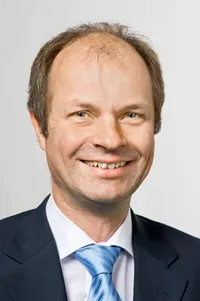
Günter Rote is a Professor in the Department of Computer Science at Freie Universität Berlin, specifically within the Theoretical Computer Science group (Arbeitsgruppe Theoretische Informatik). He holds a formal academic title of Professor Dr. and is affiliated with the Faculty of Mathematics and Computer Science. His research focuses on theoretical computer science, computational geometry, algorithms, and discrete mathematics. Key research interests include geometric algorithms, optimization problems (e.g., shortest paths, traveling salesman problems), and algorithm design for parallel computing systems. His work spans topics such as systolic arrays, convex hulls, and combinatorial optimization. Rote’s contributions include foundational studies on computational geometry problems, algorithmic complexity, and practical applications in energy equity and infrastructure design. Publications highlight contributions to solving extremal equations, polygon transformations, and the quadratic assignment problem. He has been active in academic leadership, mentoring students, and contributing to computational science communities. His email is rote@inf.fu-berlin.de, and his office is located at Takustraße 9 in Berlin.
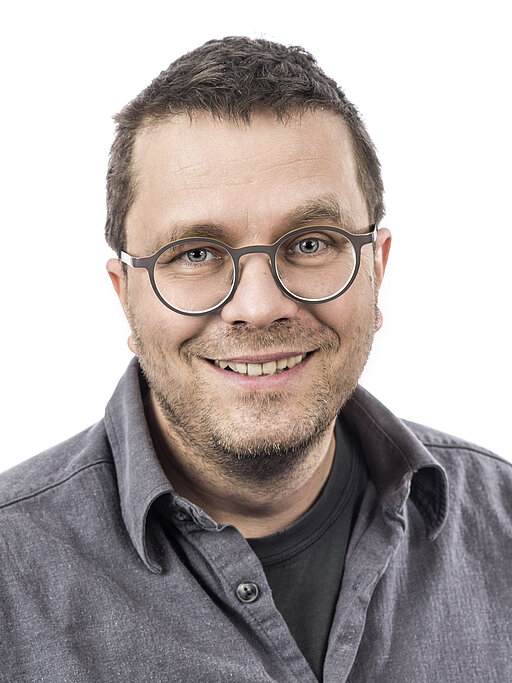
Christopher Deninger is a distinguished Professor in the Mathematical Institute at the University of Münster, Germany, where he leads research in Arithmetic Geometry and Representation Theory. His office is located in Room 413 of the Einsteinstr. 62 building, and he maintains active teaching responsibilities including courses in Representation Theory of Finite Groups, Linear Algebra, and specialized topics like Adic Spaces. Deninger's research spans multiple interconnected domains of modern mathematics, with a consistent focus on the deep connections between number theory and geometry. His work has evolved from classical arithmetic geometry to incorporate increasingly sophisticated connections with p-adic analysis, dynamical systems, and more recently proalgebraic fundamental groups. A unifying theme throughout his career has been exploring analogies between different mathematical structures, particularly those connecting analytic number theory with dynamical systems on foliated spaces. His recent publications reveal a continued expansion of his research program into new territories while maintaining connections to his foundational work. The most recent papers show increasing integration of algebraic topology concepts with arithmetic geometry, particularly through proalgebraic fundamental groups and their applications. The consistent thread throughout his decades of publications is the search for deeper structural connections between seemingly disparate areas of mathematics, particularly those bridging analysis, geometry and number theory. Professor Deninger has mentored an extensive number of doctoral students and postdoctoral researchers, as evidenced by the comprehensive list of former members in his working group. His collaborations span the international mathematical community, with numerous joint publications with leading mathematicians across Europe and beyond. While specific grant information isn't detailed in the available materials, his sustained publication record across decades suggests consistent research support for his mathematical investigations. The Mathematical Institute at Münster provides the institutional home for Deninger's research activities, where he maintains an active working group focused on arithmetic geometry and related fields. His office environment includes support staff and colleagues working in closely related mathematical domains, creating a vibrant research community centered around advanced topics in pure mathematics.
Barney Bramham is a Professor in the Mathematics Department at Ruhr University Bochum, affiliated with the Faculty of Mathematics and the Floer Center of Geometry. He is a core member of the Symplectic Geometry research group. His work focuses on Symplectic Topology, Dynamical Systems, and Geometric Analysis, with notable contributions to pseudo-rotations, systolic inequalities, and Reeb dynamics. Bramham has collaborated extensively on projects like the SFB/TRR 191 (Symplectic Structures in Geometry, Algebra, and Dynamics) and has authored/co-authored over 20 peer-reviewed publications. His research bridges pure mathematics with applications in topology and geometric analysis. Research interests include symplectic and contact topology, Hamiltonian dynamics, and the geometric analysis of low-dimensional manifolds. Key contributions involve systolic inequalities for spheres, rigidity of pseudo-rotations, and the use of pseudoholomorphic curves in dynamical systems. His work often intersects with differential geometry and mathematical physics. Publications span high-impact journals like Inventiones mathematicae and Annals of Mathematics , reflecting his expertise in foundational aspects of symplectic geometry. Bramham’s research also involves collaborative projects, such as the SFB/TRR 191 initiative, which explores symplectic structures across multiple mathematical disciplines.
Gheorghe Craciun is a Professor in the Department of Mathematics and the Department of Biomolecular Chemistry at the University of Wisconsin-Madison. His research focuses on mathematical and computational models in biology and medicine, particularly dynamical systems models of biological interaction networks. He has been a visiting researcher at the Max Planck Institute for Mathematics in the Sciences during the 2019-2020 academic year and has organized the Madison Workshops on Mathematics of Reaction Networks. Craciun's primary research interests include Mathematical Biology, Dynamical Systems, Chemical Reaction Networks, Computational Biology, Systems Biology, and Algebraic Geometry. He investigates systems of differential equations with polynomial right-hand sides, which are common in biochemical reaction networks, ecological interactions, and epidemiological models. His work often involves proving global stability, analyzing multistability, and characterizing steady states using tools from algebraic geometry and combinatorics. Recent publications demonstrate his focus on toric differential inclusions, endotactic networks, and the global attractor conjecture, extending to applications in biochemical networks and discrete Boltzmann equations. His extensive publication record reveals a strong trend toward algebraic and geometric methods for analyzing complex biological networks, with significant contributions to reaction network theory, stability analysis, and parameter characterization. Craciun's work bridges abstract mathematical concepts with practical applications in biochemistry, ecology, and medicine, including modeling vitellogenin production in trout and peptide mass distributions. He has collaborated extensively with international researchers including Alicia Dickenstein, Anne Shiu, Bernd Sturmfels, Casian Pantea, and Miruna-Stefana Sorea. In education, Craciun teaches graduate courses such as Math 703 and mentors students through the Madison Math Circle and Putnam Club, while organizing specialized workshops that foster collaboration in reaction network theory.
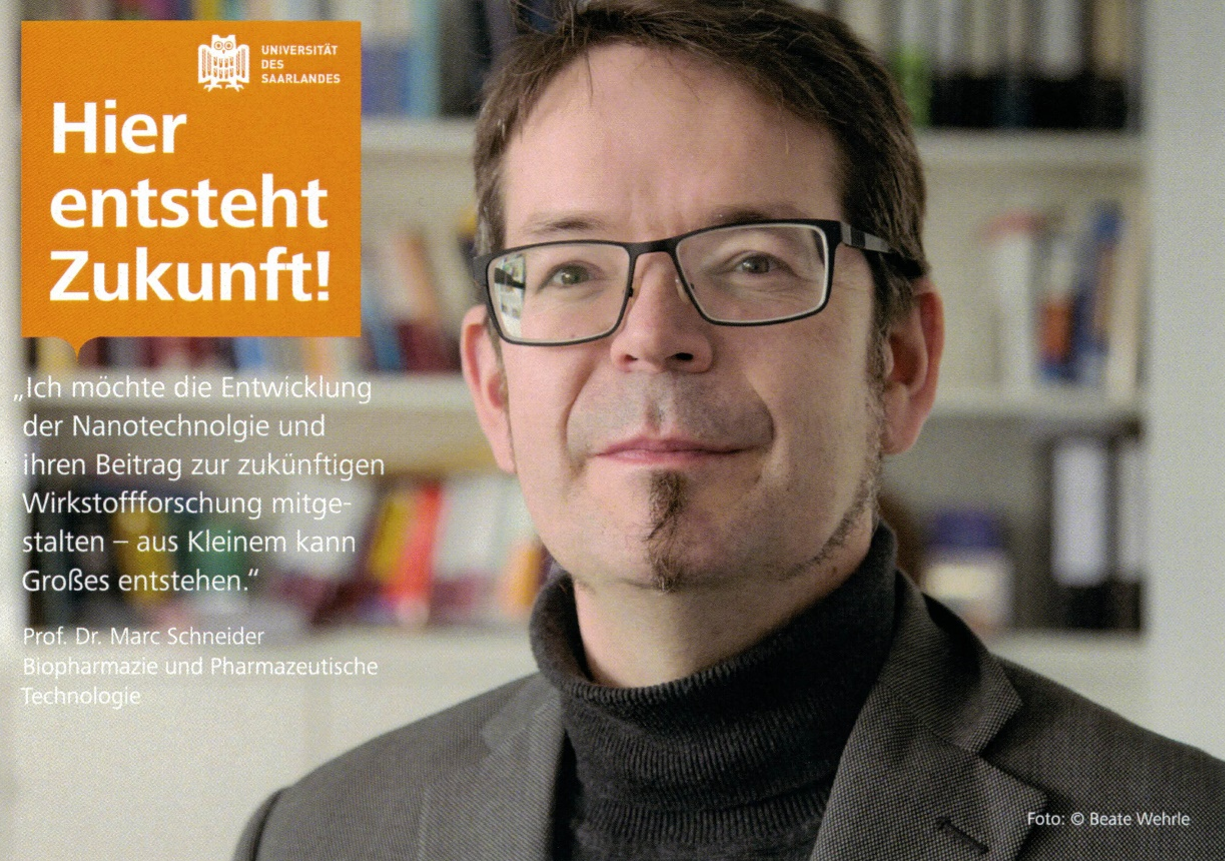
Prof. Dr. Marc Schneider holds a professorship in Biopharmaceutics and Pharmaceutical Technology at Saarland University's College of Pharmacy . His research focuses on colloidal drug delivery systems, particularly nanostructured and non-spherical particle engineering for overcoming biological barriers in pulmonary and transdermal applications. He leads an internationally recognized lab in Saarbrücken, collaborating with Helmholtz Institute for Pharmaceutical Research Saarland (HIPS) and trinational institutions. Research Highlights: Development of inhalable nano/microparticle systems Surface modification of gelatin nanoparticles Characterization of mucus-penetrating particles 3D printing for microneedle fabrication Atomic Force Microscopy (AFM) for nanoparticle analysis Selected Scientific Awards: European Journal of Pharmaceutics and Biopharmaceutics Best Paper Award (2018) for mucus-penetrating nanoparticles Recognized in 'Ausgezeichnete Orte im Land der Ideen' competition (2018) for 'Nano-Mais' drug delivery system Collaborative Networks: Co-editor for Advanced Drug Delivery Reviews special issue on biological barriers Key participant in trinational Master's program in Biomedicine with Strasbourg, Mainz, and Luxembourg Active in Controlled Release Society (CRS) conferences and local chapters
Prof. Jürg Kramer is a Professor of Mathematics at Humboldt University of Berlin, affiliated with the Faculty of Mathematics and Natural Sciences and the Institute of Mathematics. His research focuses on Arakelov geometry, automorphic forms (particularly modular forms), and their intersections. Notable contributions include advancements in arithmetic intersection theory with logarithmic singularities and sup-norm bounds for modular forms. He is also deeply engaged in mathematics education, leading initiatives for teacher training and promoting mathematical talent through networks like the Berlin School Mathematics Network. Active in academic service, he served as EMS Education Committee Chair (2017–2022) and President of the German Mathematical Society (2013/14). His work bridges pure mathematics with pedagogical innovation, emphasizing public understanding through popular science publications. Research: Arakelov geometry, modular forms, L-functions, hyperbolic geometry methods Education: Teacher training programs, math talent promotion, textbook authorship Affiliations: Leibniz Institute for Science and Mathematics Education (IPN), EMS, Deutsche Akademie der Technikwissenschaften Key educational contributions include Felix-Klein teacher training programs and co-authoring standards for mathematics teacher education. His publications span advanced mathematical research and accessible expositions on topics like Fermat’s Last Theorem and Riemann Hypothesis.
Professor Jürgen Richter-Gebert is a full professor of Geometry and Visualization at the Technical University of Munich (TUM), working within the TUM School of Computation, Information and Technology. Born in 1963, he has been at TUM since 2001, following positions at ETH Zurich (1997-2001) and TU Berlin (1994-1997). His educational background includes studies at TU Darmstadt (1983-1988) and dual PhDs from TU Darmstadt and KTH Stockholm (1991-1992). Richter-Gebert's research spans combinatorial and computer-oriented geometry, with particular expertise in polytope theory and mathematical visualization software. He develops processes for the automatic generation of geometric problem solutions and is actively involved in raising the public profile of mathematics. Richter-Gebert's publications and research focus on the intersection of mathematics and computer science, with particular emphasis on projective geometry, dynamic geometry, polytope theory, and combinatorial geometry. His work demonstrates how mathematical structures can be made accessible through computerized interactive visualizations. His most notable publications include "Perspectives on Projective Geometry" (2011) and "Geometriekalküle" (2009), along with numerous papers on dynamic geometry systems. Ars Legendi Prize for excellent university teaching (2011) Karl Max von Bauernfeind Medal of the TUM (2010) MedidaPrix - media didactic university prize (2008) EASA - European Academic Software Award (2000) Communicator Preis for science communication (2021) As founder and director of the ix-quadrat mathematics exhibition at the Garching Campus, Richter-Gebert has made significant contributions to mathematics education and outreach. He has developed influential mathematical visualization tools including Cinderella, CindyJS, and iOrnament, which have received multiple awards for educational software excellence. His research group focuses on mathematical foundations, authoring systems, and mathematical visualizations with applications in education and public scenarios.
Professor Michael Manhart is affiliated with the Technical University of Munich (TUM) as an Extraordinary Professor in the Department of Hydromechanics . His research focuses on fluid mechanics, turbulent flow dynamics, and computational fluid dynamics (CFD) simulations, particularly in porous media and environmental fluid mechanics. Education: Not explicitly stated in the provided text. His recent publications investigate turbulent flow over random sphere packs, scalar transport at porous-turbulent interfaces, acoustic resonances in HVAC systems, and nonlinear oscillatory flow modeling. He employs advanced numerical techniques like direct numerical simulations (DNS) and large-eddy simulations (LES) to study flow structures, energy budgets, and particle transport mechanisms. Professor Manhart collaborates with researchers such as Yoshiyuki Sakai, Simon Wenczowski, and Daniel Quosdorf. His work addresses applications in environmental engineering, hydraulic modeling, and industrial fluid dynamics, with a strong emphasis on validating computational models against experimental data (e.g., PIV measurements). He leads the Professorship for Hydromechanics at TUM, conducting high-fidelity simulations and experimental studies on topics like wall shear stress estimation, sediment erosion around cylinders, and turbulence decomposition in complex flows.
Professor Jörn Steuding holds the Professorship for Number Theory at the University of Würzburg since 2006, where he is affiliated with the Institute of Mathematics within the Faculty of Mathematics and Computer Science. His academic career includes a Ramon y Cajal research position at Universidad Autónoma de Madrid (2004-2006), postdoctoral work at the University of Frankfurt under Professors W. Schwarz and J. Wolfart (1999-2004), and completion of his habilitation at Frankfurt in 2004. His educational background includes a PhD from the University of Hannover in 1999 under Prof. G.J. Rieger, where he also served as an assistant from 1996-1999, and undergraduate studies in mathematics at Hannover from 1991-1995. Professor Steuding's research spans multiple areas of number theory, with particular focus on Zeta and L-functions (including zero distribution, universality properties, and connections to Random Matrix Theory), Diophantine analysis (covering approximation theory, equations, and the abc conjecture), elliptic curves and modular forms , algebraic number theory (including arithmetically equivalent fields), and elementary number theory with applications to primality testing and factorization. His work often bridges theoretical foundations with historical perspectives, as evidenced by his research on the Hurwitz brothers' contributions to complex continued fractions. His publication record demonstrates consistent contributions to leading journals in number theory, with research trends showing evolution from foundational work on Riemann zeta function zeros to broader investigations of L-functions in the Selberg class, Diophantine problems over quadratic fields, and historical aspects of number theory. His publications appear in prestigious journals including Mathematische Annalen, Acta Arithmetica, and the Bulletin of the American Mathematical Society. Professor Steuding has authored significant monographs including Diophantine Analysis (CRC Press/Chapman-Hall, 2005), Value distribution of L-functions (Springer Lecture Notes in Mathematics 1877, 2007), and Elementary Number Theory: A Gentle Introduction to Higher Mathematics (Springer Spektrum, 2015, co-authored with N. Oswald). He serves as the Erasmus Coordinator for his department alongside Dr. Jens Jordan, facilitating international academic exchanges. His research collaborations span multiple institutions, with notable co-authors including N. Oswald, M. Technau, H. Nagoshi, and L. Pankowski. Professor Steuding leads the Number Theory team at the University of Würzburg, maintaining an active research group focused on contemporary problems in analytic and algebraic number theory. His work continues to explore connections between classical number theory and modern mathematical physics through Random Matrix Theory applications.
Prof. Dr. Thomas Schick is a Professor of Mathematics at the Mathematical Institute of the University of Göttingen, leading the vibrant research group in Topology and Geometry. His work focuses on areas such as index theory, K-theory of C*-algebras, and geometry and analysis. He is a core member of the Research Training Group 2491 'Fourier Analysis and Spectral Theory', serving as its speaker, and has supervised numerous doctoral students in topics ranging from persistent cohomology to spectral engineering. His academic journey includes a PhD from Johannes Gutenberg University Mainz (1996) under Wolfgang Lück, followed by postdoctoral positions at the University of Münster and Penn State University before joining Göttingen in 2001. He has held visiting roles at institutions worldwide. Prof. Schick is an Ordentliches Mitglied of the Göttingen Academy of Sciences, a Fellow of the American Mathematical Society, and leads the Scientific Advisory Board of the Mathematisches Forschungsinstitut Oberwolfach. He edits several high-impact journals, including Annales Mathématiques Blaise Pascal and the Bulletin of the Iranian Mathematical Society. His research interests span topological and geometric analysis, with recent work exploring scalar curvature rigidity, T-duality, and coarse geometry. He regularly teaches advanced courses and seminars, including 'Index Theory and Theorems' and 'Topological Data Analysis', and actively mentors students through the RTG program.
Dr. Timur Alexander Yorgan is a prominent researcher at the Department of Osteology and Biomechanics at University Medical Center Hamburg-Eppendorf (UKE). Holding a Dr. rer. nat. degree, he has established himself as a leading figure in bone biology with over 60 publications spanning from 2013 to 2025. His research is deeply integrated with key institutional research areas including the Hamburg Center of Neuroscience and immunology research networks at UKE. Dr. Yorgan's research focuses on skeletal development, bone remodeling, and genetic bone disorders, with particular emphasis on Wnt signaling pathways and their role in bone homeostasis. His work spans multiple approaches from molecular genetics to translational studies, investigating osteoblast and osteocyte biology, genetic mechanisms underlying disorders like osteogenesis imperfecta, and the effects of various mutations on skeletal integrity. Recent research has expanded into the gut-bone axis, mechanobiology of bone cells, and neuro-immune interactions affecting bone metabolism. Analysis of Dr. Yorgan's publication record reveals a consistent trajectory of high-impact research in bone biology. His work increasingly explores interdisciplinary connections between bone metabolism and other physiological systems, with growing emphasis on translational approaches for therapeutic interventions. The research demonstrates sophisticated use of mouse models and molecular techniques to unravel complex bone disorders and identify potential treatment targets. Dr. Yorgan appears to be actively involved in collaborative research across multiple institutions, as evidenced by his extensive publication record with numerous co-authors from various departments and institutions. His work is frequently published in high-impact journals including Journal of Bone and Mineral Research, Nature Communications, and Bone Research. The Department of Osteology and Biomechanics at UKE, where Dr. Yorgan is based, is part of a vibrant research ecosystem that includes the Hamburg Center of Neuroscience and other key research networks focusing on immunology, oncology, and cardiovascular research. This collaborative environment enables interdisciplinary approaches to understanding skeletal disorders and developing novel therapeutic strategies.
Bo Xiong is a researcher at the University of Stuttgart in the Analytic Computing group. His research focuses on machine learning and knowledge graphs , with a particular emphasis on geometric embeddings and hyperbolic neural networks. His research interests include: Knowledge graph embeddings Hyperbolic and pseudo-Riemannian geometry in AI Temporal knowledge graph reasoning Structured multi-label prediction Recent publications highlight his work on geometric relational embeddings, complex query answering, and temporal fact reasoning using advanced manifold-based techniques.
Professor Catharina Stroppel is a distinguished researcher and educator in the Department of Mathematics at the University of Bonn, Germany. She maintains an active research program in representation theory and related fields, with significant contributions to categorification, knot theory, and higher category theory. Her office is located at Endenicher Allee 60, Room 4.007, Bonn, and she is supported by secretary Alev Erisöz-Reinke. Stroppel's research primarily focuses on representation theory of Lie algebras, connections to topology (particularly knot and manifold invariants), categorification, and diagram algebras. Her work bridges abstract algebra with topological applications, exploring combinatorial aspects of representation theory including Schubert calculus, Kazhdan-Lusztig theory, and canonical bases. She has made substantial contributions to understanding Hecke algebras and their representation theory, as well as developing connections between categorification and topological quantum field theories. Her recent publications demonstrate a consistent research trajectory advancing semi-infinite highest weight categories, geometric categorifications, and the interplay between quantum algebra and topology. The work shows increasing sophistication in handling higher categorical structures while maintaining concrete connections to classical representation theory problems. Her research has evolved from foundational work in categorification to more complex structures involving higher categories, quantum groups, and geometric interpretations. Indagationes Mathematicae Best Paper Prize (2022) Honorary Doctorate from Uppsala University Invited Plenary Speaker at the International Congress of Mathematicians (2022) Professor Stroppel has supervised numerous doctoral students, including current PhD candidates Jonas Nehme, Liao Wang, Lukas Bonfert, and Daniel Bermudez Montana. Her former PhD students include Till Wehrhan, Anna Mkrtchyan, Tashi Walde, Tomasz Przezdziecki, Arik Wilbert, Joanna Meinel, Hanno Becker, Antonio Sartori, Hoel Queffelec, Gisa Schaefer, and Sebastian Holzmann. She actively participates in the academic community through the Oberseminar Representation Theory (Darstellungstheorieseminar DAS), which she co-organizes with Johannes Flake, held Fridays 2:15-4pm in Endenicher Allee 60 - SR 1.008. Stroppel leads the Algebra and Representation Theory working group in Bonn and maintains strong connections with the Hausdorff Center for Mathematics, which recently received seven additional years of funding. Her research program continues to expand, with upcoming teaching responsibilities including V4A3 Representation Theory II for the WS25/26 semester.
Prof. Gert-Martin Greuel is a distinguished mathematician and Emeritus Professor at RPTU Kaiserslautern, where he previously held a Professorship in the Department of Mathematics. His career includes roles as Director of the Mathematisches Forschungsinstitut Oberwolfach (2002-2013) and as editor of major journals like Zentralblatt MATH. He co-founded the Singular computer algebra system and led the Center for Computer Algebra at Kaiserslautern. Research Interests: His work focuses on singularity theory, algebraic geometry, and computational algebra. Key contributions include foundational studies on hypersurface singularities, equisingularity, and the development of mathematical software tools like Singular and swMATH. Awards: Greuel received the Richard D. Jenks Prize (2004) for Singular, an honorary doctorate from Leibniz University Hannover (2009), and the German Mathematical Society's Media Prize (2013). He pioneered public math exhibitions through the IMAGINARY project. Leadership & Outreach: He served as Chair of European Research Centres on Mathematics (2010-2013) and championed open-access initiatives for mathematical software and publications. His editorial roles span Oberwolfach Reports, Revista Matemática Complutense, and Ergebnisse series. Education: PhD (1973) and Habilitation (1980) from University of Göttingen and Bonn, respectively. His academic journey includes professorships in Osnabrück and Kaiserslautern, and supervision of over 20 PhD students in algebraic geometry and computational mathematics.
Dr. Alexander Paulus serves as a Researcher at the Chair of High-Frequency Engineering within the Department of Electrical Engineering at the Technical University of Munich (TUM), School of Computation, Information and Technology. Working under Prof. Dr.-Ing. Thomas Eibert, he contributes to advanced electromagnetic research and measurement systems development at TUM's Arcisstr. 21 campus in Munich. Research Expertise His core specialization lies in near-field antenna measurement and transformation techniques, with significant contributions to phase retrieval algorithms, inverse source methods, and UAV-based electromagnetic field measurements. He addresses critical challenges including probe correction with unknown antennas, sparse sampling for directive antennas, and electromagnetic modeling of environmental effects like rain attenuation. His work bridges theoretical electromagnetics with practical antenna characterization solutions. Publication Trends From 2014-2025, Paulus has published 25+ papers focusing on near-field to far-field transformations, particularly in phaseless and multi-probe scenarios. Recent work (2023-2025) demonstrates innovation in spectral filtering, sparse reconstruction, and UAV-based systems for defect localization and wet antenna modeling. His research increasingly integrates computational techniques to solve complex inverse problems in antenna measurements. Scientific Recognition No formal awards documented in available information Academic Contributions Student Mentoring: No advisees listed in provided materials Research Funding: Grant details not specified in source text Research Environment Paulus operates within TUM's Chair of High-Frequency Engineering facilities, which include advanced near-field measurement ranges, UAV-based electromagnetic characterization systems, and laboratories for metamaterials research and electromagnetic compatibility testing. His work supports applications in 5G/6G communications, aviation navigation systems, and precision antenna diagnostics.