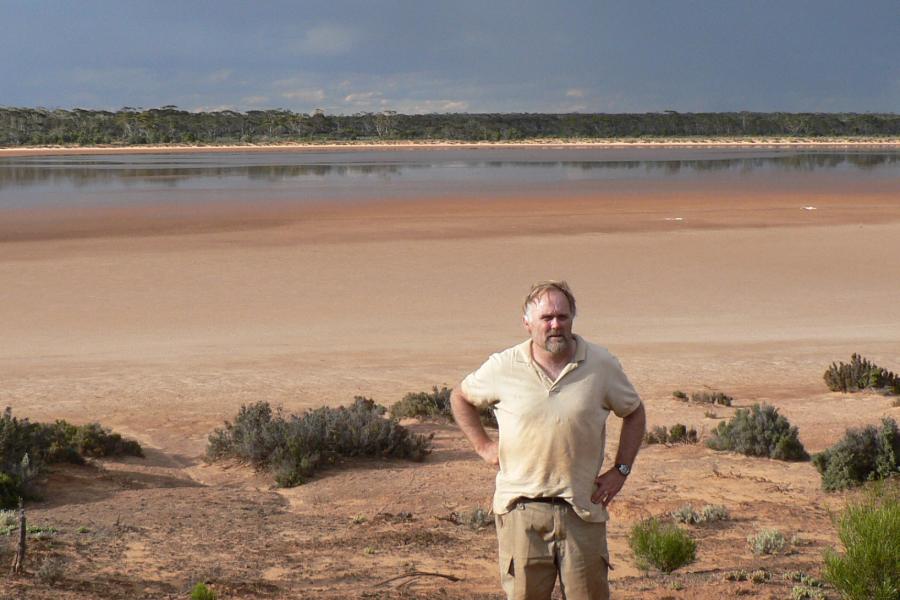
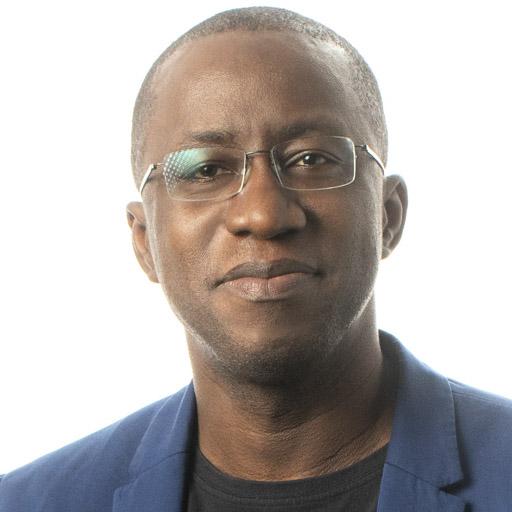
Daniel Layton-Matthews is an Associate Professor in Geological Science and Geological Engineering at Queen's University. His research program investigates chemical indicators in sedimentary rocks, post-depositional modification of minerals, and geochemical dispersion patterns for mineral exploration. Current research examines trace element signatures in ancient ore systems, with field sites including the Canadian Shield, Australian playa uranium deposits, and marine ferromanganese formations. His group develops analytical methods for in-situ geochemical analysis and isotopic tracing of element migration pathways. Research collaborations span industry partners and government geological surveys. Fieldwork integrates drone-based sampling techniques and advanced laboratory analysis including LA-ICP-MS and isotope ratio measurements.
Assistant Professor Jackson Crane at Queen's University (Smith Engineering, Mechanical and Materials Engineering) specializes in renewable energy conversion technologies, electrocatalysis, and low-carbon combustion. His research spans detonation fundamentals for high-efficiency engines and CO2-reduction electrocatalysis for alternative fuel synthesis. Education: SB (MIT), MSc & PhD (Stanford), Postdoc (Queen's University) His research combines electrochemical CO2 conversion with detonation dynamics , focusing on multiphysics modeling and experimental validation. Current projects include: High-pressure CO2 reduction systems Detonation propagation in curved channels Pulse electrolysis for stable CO2 reduction Scientific awards include: Bernard Lewis Fellowship (2024) NSF Graduate Research Fellow (Stanford) Stanford Graduate Fellow
R.E. Khayat is a Professor in the Department of Mechanical & Materials Engineering at Western University, specializing in fluid mechanics, heat transfer, and non-Newtonian fluid dynamics. He holds a Ph.D. in Chemical Physics from McGill University (1989) and has over 35 years of academic and research experience, including roles at NRC Industrial Materials Institute and McGill University. Education: B.Eng. (Honours) Mechanical Engineering (1980), M.Eng. Civil Engineering (1982), Ph.D. Chemical Physics (1989), all from McGill University. Research focuses on thermal convection, free-surface flows, and hydrodynamic stability, with contributions to chaos theory in non-Newtonian flows. Has supervised nearly 50 graduate students and published over 150 journal papers in prestigious journals like Journal of Fluid Mechanics and Physical Review Letters . Active in academic leadership roles, including Associate Chair (2003–2005) and Associate Professor (1998–2003) at Western University. His research group explores micro-scale thermal convection, nano-fluid dynamics, and multiphase flow phenomena, with applications in polymer processing and materials science. Collaborative projects include studies on viscoelastic jet behavior and hydraulic jump formation in complex fluids. Awards and recognitions include international acclaim for work on chaos theory in fluid dynamics. His lab focuses on computational modeling and experimental validation of fluid flow phenomena, supported by grants from NSERC and industry partnerships.
Professor Alexandre Odesskii is a faculty member in the Department of Mathematics and Statistics at Brock University, holding the position of Professor of Mathematics. His research focuses on Mathematical Physics, with a particular emphasis on algebraic and geometric structures arising from quantum field theory, statistical mechanics, and integrable systems. He has contributed significantly to areas such as Poisson structures, elliptic curves, and Yang-Baxter equations. His work bridges advanced algebraic geometry with theoretical physics, often exploring noncommutative algebra and functional equations. His academic journey and educational background are not explicitly detailed here. However, his publications reflect deep engagement with topics like integrable systems in hydrodynamic contexts, deformation theory, and the interplay between geometric structures and quantum mechanics. He teaches courses such as Partial Differential Equations (MATH 3P09), Ordinary Differential Equations (MATH 2P08), and Advanced Differential Equations (MATH 3P08). While no specific awards are listed, his extensive publication record in top-tier journals like *Communications in Mathematical Physics* and *Journal of Geometry and Physics* underscores his scholarly impact. His research often involves collaborations on topics such as elliptic algebras, quantum groups, and moduli spaces, reflecting a global network of academic partnerships.
Professor Ian Ferguson is a faculty member in the Department of Earth Sciences at the University of Manitoba, affiliated with the Clayton H. Riddell Faculty of Environment, Earth, and Resources. He holds a Ph.D. in Geophysics and B.Sc. (Hons) in Geology/Geophysics from the Australian National University. His research focuses on electromagnetic methods to study Earth's crust and upper mantle, including tectonic history, groundwater systems, environmental geophysics, archaeological investigations, and carbon sequestration monitoring. Notable projects include magnetotelluric surveys in Canada's Cordillera and Superior Craton, as well as geophysical studies at the Aquistore CO2 sequestration site. Dr. Ferguson teaches advanced courses such as GEOL 3810 - Applied Geophysics and GEOL 7820 - Environmental Geophysics , emphasizing practical skills in geophysical data analysis and field methodology. His work integrates cutting-edge techniques like deep learning algorithms for geophysical inversion and multidisciplinary approaches in Arctic archaeology. His publications span over 40 years, addressing diverse topics from continental-scale tectonics to near-surface environmental applications. Collaborations include international projects like the SNORCLE initiative and domestic studies on Canadian geohazards and resource exploration.
Andrew M. McDonald is a Professor of Mineralogy and Petrology at Laurentian University's Harquail School of Earth Sciences. He holds adjunct professorships at the University of Ottawa (1999–2004) and University of Western Ontario (1994–1995). His research focuses on applying mineralogy to understand alkaline rock evolution, rare metal exploration (Ta/Nb), and atomic structure-property relationships in minerals. He has supervised over 15 graduate students and co-authored >150 peer-reviewed publications since 2010. Education: B.Sc. (Toronto), M.Sc. & Ph.D. (Carleton University). Courses taught include Mineralogy I, Optical Mineralogy, and Advanced Mineralogy. Research themes include mineral exploration, ore deposit systems (VMS/Au), and material science applications of mineral structures. Notable achievements: 2016 James Edwin Hawley Medal (Mineralogical Association of Canada), Fellow of International Centre for Diffraction Data (2002), and leadership roles in professional societies. Current projects involve crystal chemistry of titanosilicates, kamafugite volcanology (Brazil), and tourmaline studies in rare-element pegmatites. His 15 most recent articles span mineral classification debates, PGE mineralogy, and porphyry Cu indicator minerals. Research groups include collaborations with institutions in Canada, Brazil, Tanzania, and Finland. Active in mineral discovery (e.g., Coldwellite, Pd3Ag2S) and methodological advancements in X-ray diffraction analysis.
Yaoping Hu is a Professor in the Department of Electrical and Software Engineering at the Schulich School of Engineering, University of Calgary, and an Associate Member of the Hotchkiss Brain Institute. He holds a Ph.D. in Robotics and Neuroscience from the University of Western Ontario. His research focuses on Human-Computer Interaction within Virtual Environments, particularly in Brain-Machine Interfaces, multisensory user interaction in XR, and immersive analytics. He teaches courses such as ENSF 619.36 (Brain-Machine Interface Systems), ENSF 519.51 (Brain-Machine Interfaces), ENEL 602 (Virtual Environments), and ENSF 545 (Introduction to VR). Research interests include modeling neural mechanisms for visuomotor processes, cognitive-ergonomic interaction design, and applications in surgical planning, data visualization, and human-machine collaboration. He leads the Visualization and Interaction Laboratory, collaborating with institutions like the neuroArm Project, Fluid Dynamics Group, and international partners in France. Past and current students include Stanley Tarng, Lida Ghaemi Dizaji, and Aida Erfanian. His work spans projects like neuroSim (a surgical simulator) and BioVista (biofilm visualization tools). Collaborations with industry partners such as Nova Chemicals and Calgary Scientific Inc. support applied research in complex data analysis and virtual reality systems.
Dr. Ziad Saghir is a Professor in the Department of Mechanical, Industrial, and Mechatronics Engineering at Toronto Metropolitan University, Faculty of Engineering and Architectural Science. His research focuses on thermofluid systems, heat and mass transfer, and fluid dynamics, with a unique emphasis on microgravity environments. He has conducted experiments aboard the International Space Station, space shuttles, and parabolic flights, contributing significantly to reduced-gravity fluid science. Education: PhD, University of Toronto, 1984 MASc, Université Laval, 1980 BSc, Université Laval, 1979 His research interests include heat and mass transfer in porous media, computational fluid mechanics, and nanofluid applications in cooling and energy systems. He investigates how gravity affects fluid behavior, particularly hydrocarbons in reservoirs, with implications for reducing drilling needs and improving environmental sustainability. His teaching includes core courses such as Fluid Mechanics I, Applied Thermodynamics, and Transport Phenomena in Porous Media. The recent publications reflect a strong trend in microgravity fluid physics, thermodiffusion in complex mixtures, and advanced modeling of nanofluids. His work bridges experimental and numerical approaches, often under space-based conditions, aiming to develop accurate predictive models for industrial and environmental applications. Professional Affiliations and Activities: Professional Engineers Ontario (PEO) Founder and Chair, International Conference on Thermal Engineering Dr. Saghir is actively involved in mentoring students and leads the Microgravity Science Lab. His former role as a program scientist at the Canadian Space Agency underscores his national and international contributions to thermal and fluid sciences. He continues to supervise graduate students and advance research in energy-efficient and sustainable thermal systems. Research Group: Microgravity Science Lab
Miroslav Grmela is a Researcher at the Department of Chemical Engineering in Polytechnique Montréal , and a member of the Research Center for High-Performance Polymer and Composite Systems (CREPEC) . His work spans thermodynamics, transfer processes, and multiscale modeling of complex fluids. Grmela’s research focuses on non-equilibrium thermodynamics , contact geometry in kinetic dynamics , and mesoscopic theories of polymer suspensions, superfluids, and nanocomposites. He has extensively explored the role of energy and entropy in multiscale systems, with recent publications addressing geometric formulations of thermodynamics and neural network applications to non-symplectic mechanics. Analysis of his 15 most recent articles reveals trends in multiscale thermodynamics , non-Fourier heat conduction , GENERIC formalism , and quantum hydrodynamics . His work often bridges geometric mechanics with thermodynamic consistency. Grmela has supervised 10 graduate students (7 PhD, 3 Master’s) in projects involving nanocomposite thermal conductivity , polymer rheology , and powder suspension simulations . He has no listed scientific awards. His research intersects with fluid dynamics , polymer science , and statistical mechanics , emphasizing mathematical structures like Poisson brackets and Hamiltonian formulations . The CREPEC laboratory provides institutional support for his studies on polymers and composites.
Marco Baiesi is an Associate Professor in the Department of Physics and Astronomy at the University of Padua. His research focuses on nonequilibrium systems, polymers, biopolymers, topology, and machine learning applications in physics and biophysics. He has contributed to understanding the statistical mechanics of complex systems, including polymer dynamics, topological effects, and non-equilibrium thermodynamics. His work spans interdisciplinary areas such as biophysics, soft condensed matter, and machine learning for medical diagnostics. Notable contributions include studies on knotted polymer behavior, entropy production in non-equilibrium systems, and the application of AI to EEG-based dementia classification. Baiesi’s publications frequently explore topics like fluctuation theorems, stochastic processes, and the interplay between topology and material properties. His research has been published in high-impact journals such as Science , Physical Review Letters , and New Journal of Physics .
Dr. Nariman Sepehri is a Professor in the Department of Mechanical Engineering at the Price Faculty of Engineering, University of Manitoba, Canada. He has held significant administrative roles including Department Associate Head (Graduate Studies), Associate Dean of Engineering (Undergraduate Programs), and Acting Dean of Engineering. His research focuses on fluid power systems, robotics, and control with applications in rehabilitation and heavy machinery. Education: Post-Doctorate, Electrical & Computer Engineering, University of British Columbia, Canada (Tele-Robotics, Mechatronics) PhD, Mechanical Engineering, University of British Columbia, Canada (Control, Fluid Power Systems, Robotics) MSc, Mechanical Engineering, University of British Columbia, Canada (Computer-Aided Manufacturing Planning) BSc, Mechanical Engineering, Sharif University of Technology, Iran (Machine Design) Dr. Sepehri's research interests span Fluid Power Systems and Technology , Robotics and Teleoperation , Control Systems , Condition Monitoring , and Mechatronics of Rehabilitation Devices . His work integrates advanced control theory with practical applications in hydraulic and pneumatic systems, aiming to improve energy efficiency and reliability in robotics, manufacturing, aerospace, and healthcare. Notably, he has developed innovative rehabilitation devices using game-based interfaces for stroke and cerebral palsy patients. His recent publications (2022-2025) demonstrate a strong trend towards energy-efficient hydraulic systems, fault detection using machine learning, and the development of soft robotic actuators for rehabilitation. Key areas include electro-hydrostatic actuators, pump-controlled circuits, and the application of advanced algorithms for condition monitoring and control. Scientific Awards: Dean of Engineering’s Award for Superior Academic Performance University of Manitoba Rh Award for outstanding contributions to scholarships and research in Applied Sciences Fellow of the Canadian Academy of Engineering (CAE) Fellow of the American Society of Mechanical Engineers (ASME) Fellow of the Canadian Society for Mechanical Engineering (CSME) Dr. Sepehri has supervised over 100 graduate and postdoctoral students, contributing significantly to the field of fluid power and robotics. His research has been supported by major grants from the Natural Sciences and Engineering Research Council of Canada (NSERC) and other sources, enabling the establishment of the Fluid Power Research Laboratory. This lab features state-of-the-art equipment including a human-robot-in-the-loop simulator and hardware-in-the-loop test facilities for condition monitoring. The Fluid Power Research Laboratory at the University of Manitoba, under Dr. Sepehri's leadership, is a hub for innovation in fluid power technology. The lab collaborates internationally with researchers in USA, Brazil, China, Hungary, Romania, Denmark, Sweden and France, and has developed interdisciplinary projects bridging engineering with healthcare applications.
Dr. Mark Tachie is a Full Professor in the Department of Mechanical Engineering at the University of Manitoba's Price Faculty of Engineering. He holds a B.Sc. from Kwame Nkrumah University of Science and Technology (1993), M.Sc. (1998), and Ph.D. (2001) from the University of Saskatchewan. His research focuses on experimental fluid dynamics, particularly turbulent shear flows, boundary layers, and bluff body hydrodynamics. He operates a state-of-the-art lab with stereoscopic PIV and tomographic PIV systems. Notable awards include the 2010 Rh Award and Governor General's Gold Medal for academic excellence. Research interests include turbulent boundary layers, free surface flows, and flow separation phenomena. His work addresses industrial and environmental challenges like fish migration hydraulics and ice-jam dynamics. He has over 300 peer-reviewed publications and served as Associate Editor of the ASME Journal of Fluid Engineering (2010–2017) and Associate Head of the Mechanical Engineering Department (2011–2019). Key contributions include studies on wake dynamics of submerged cylinders, twin jets, and flow interactions with complex geometries. His lab's advanced PIV systems enable detailed turbulence visualization and analysis. Current projects explore turbulence modification in spillways and ice-covered flows, aiming to improve fish passage and environmental flow management.
Colin D. Rennie is a Professor and Chair in the Department of Civil Engineering at the University of Ottawa, Faculty of Engineering. He holds a Ph.D. and MASc from the University of British Columbia and a B.Sc. from the University of Guelph, and is a licensed Professional Engineer (P.Eng.). He is an active researcher, educator, and leader in river and environmental hydraulics. His research focuses on river morphodynamics, sediment transport, turbulence, and aquatic habitat, utilizing advanced techniques including acoustic Doppler current profilers (ADCPs), laboratory physical models, and 3D numerical modeling. His work addresses critical issues such as river stability, flood dynamics, hydroelectric development, and ecosystem protection. The recent trends in his publications reflect a strong emphasis on high-resolution numerical modeling of local scour, sediment transport using acoustic methods, and the morphodynamic impacts of river confluences and floods. His work integrates field data with computational fluid dynamics (CFD), particularly using OpenFOAM, to understand complex flow-sediment interactions. He is an Associate Editor of the Journal of Hydraulic Engineering (ASCE) and has served on editorial boards of Journal of Geophysical Research – Earth Surface (AGU). He is a member of professional organizations including ASCE, IAHR, CSCE, and AGU, and has held leadership roles such as Secretary of the River Hydraulics Division at IAHR. Professor Rennie currently supervises multiple graduate students, including Yi Man, Xiatong Cai, Qingcheng Yu, and others, supporting research in sediment dynamics and hydraulic modeling. He has secured research funding for projects related to river flooding, ice processes, and habitat restoration. His teaching includes CVG3116 (Hydraulics), CVG4001 (Introduction to Civil Engineering Design), CVG4907 (Design Project), CVG5162 (River Hydraulics), and CVG5160 (Sediment Transport). His research has been conducted globally, with collaborations in New Zealand, Switzerland, Spain, and China, where he has led field campaigns and trained researchers in spatial mapping of water and sediment fluxes. He has applied his expertise to major flood events, including the 2013 Alberta flood and the 2017–2019 Ottawa River floods.
Elizabeth Weckman is a Professor in the Department of Mechanical and Mechatronics Engineering at the University of Waterloo. She is also a member of the Fire Research Group and a Professional Engineer of Ontario. Her research focuses on fire dynamics, fire safety engineering, and advanced diagnostic techniques for turbulent flows. Education: Doctorate in Mechanical Engineering, University of Waterloo, 1987 Master's in Mechanical Engineering, University of Waterloo, 1982 Bachelor's in Mechanical Engineering, University of Waterloo, 1979 Research Interests: Professor Weckman’s work addresses fire initiation/spread, material flammability, fire suppression methods, and hot surface ignition. She leads projects at the UWaterloo Fire Research Facility, leveraging world-class infrastructure to study pool fires, fuel spill fires, and fire safety of infrastructure. Her Fire Research Group explores fire modeling, sensor technologies, and diagnostics for real-world applications. Teaching: She teaches courses like Fire Safety Engineering (ME 567), Fundamental Fire Dynamics (ME 671), and Fire Modelling (ME 673). Recent courses also include numerical methods and fluid flow (ME 770). Labs & Facilities: Affiliated with the UWaterloo Fire Research Facility and the Waterloo Region Emergency Services Training & Research Complex (WRESTRC), enabling large-scale fire experiments and safety studies.
Moussa Tembely is an Assistant Professor in the Department of Mechanical, Industrial and Aerospace Engineering at Concordia University. His research focuses on Multiphase Flows, Computational Fluid Dynamics (CFD), Flow in Porous Media, Machine and Deep Learning, Thermal Spray, and Icing phenomena. He supervises graduate students in Mechanical Engineering (MASc and PhD programs). His work integrates advanced computational methods and AI-driven approaches to solve complex problems in fluid dynamics, reservoir engineering, and materials science. Key research interests include predictive modeling of droplet dynamics, enhanced oil recovery (EOR) optimization using machine learning, and the analysis of porous media flow. He leads the Multiphase Thermofluids Learning Lab , which explores interdisciplinary solutions for energy and environmental challenges. Recent studies emphasize data-driven derivation of governing equations and analytical solutions for fluid-structure interactions. Teaching responsibilities include courses such as HEAT TRANSFER I (MECH 352), DYNAMICS (ENGR 243), and FLUID MECHANICS II (MECH 361). His publications span over two decades, showcasing contributions to multiphase flow physics, thermal spray technology, and AI applications in geoscience and engineering.