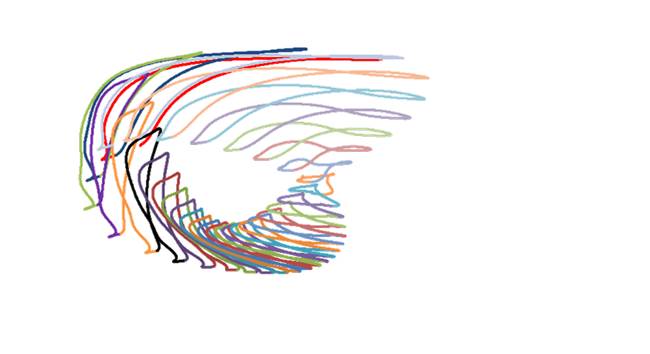
Jean-Luc Thiffeault is a Professor of Applied Mathematics at the University of Wisconsin-Madison, serving as Chair of the Department of Mathematics. His research spans applied mathematics, fluid dynamics, and topological chaos, with a focus on mixing mechanisms in viscous flows, biogenic mixing by microorganisms, and computational modeling. Key research themes include: Topology-driven fluid mixing via braid theory; Chaotic advection in low-Reynolds environments; Microswimmer interactions with boundaries and waves; Development of numerical tools for dynamical systems analysis. He has authored significant software packages like braidlab (braid analysis), rodent (ODE integration), and jlt lib (utility functions for scientific computing). Collaborative projects include studies on hagfish slime unraveling, burger flipping dynamics, and Brownian particle winding around vortices. His work is supported by NSF grants DMS-0806821 and CMMI-1233935, emphasizing interdisciplinary approaches combining mathematics, physics, and computational methods.
Professor Fabian Waleffe is an Applied Mathematician at the University of Wisconsin, Madison, holding a joint appointment between the Department of Mathematics and the Department of Engineering Physics. His academic career spans multiple decades with extensive teaching experience at both UW Madison and MIT. Professor Waleffe's primary research focuses on the fundamental problem of turbulence in fluid flows and its relation to Exact Coherent States. He developed the Self-Sustaining Process theory for shear flows, which provides an ab initio method to discover families of 3D traveling wave solutions of the Navier-Stokes equations in all canonical shear flows. His research also encompasses geophysical flows and computational methods for solving partial differential equations, including spectral integration methods and numerical techniques for incompressible flows. His publication record demonstrates consistent focus on hydrodynamic instabilities, turbulence, and coherent structures. Recent work examines optimal heat transport in Rayleigh-Bénard convection, streak instability, and near-wall turbulence, integrating theoretical analysis, numerical computation, and physical insight to address fundamental questions in fluid dynamics. His research has evolved from early work on triad interactions in homogeneous turbulence to the current focus on exact coherent structures that form the 'backbone' of turbulent shear flows. Professor Waleffe has taught extensively across the mathematics and engineering curriculum. He has taught Math 321 (Vector and complex calculus for the physical sciences) for 29 semesters at UW Madison, along with numerous other undergraduate and graduate courses. His teaching spans from introductory calculus to advanced graduate topics in hydrodynamic instabilities and turbulence, reflecting his deep commitment to mathematical education in the physical sciences.
Professor Rob Poole holds the Harrison Chair in Mechanical Engineering at the University of Liverpool’s School of Engineering, part of the Faculty of Science and Engineering. Previously Head of Department (2017–2021), he co-edits the Journal of Non-Newtonian Fluid Mechanics . His research focuses on rheology, fluid mechanics, and turbulence, with recent work on polymeric drag reduction, superhydrophobic surfaces, and viscoelastic instabilities. Education: BEng (Hons) and PhD in Mechanical/Aerospace Engineering. Research Interests: Non-Newtonian fluid mechanics Elastic turbulence and viscoelastic instabilities Polymer solutions and additive effects Heat transfer in porous media Constitutive equation development Awards & Fellowships: EPSRC Complex Fluids and Rheology Fellowship (2015–2021) British Society of Rheology Annual Award (2018) 2015 Best Paper Award (Theoretical and Applied Mechanics Letters) Grants & Projects: Funded projects include Flexible Heat Pump development (£1.5M), Instabilities in Complex Fluid Flows (£1.2M), and Superhydrophobic Surface Drag Reduction (£0.8M) Industry collaborations: Schlumberger, Procter & Gamble, National Nuclear Laboratory Professional Activities: Editorial roles: Journal of Non-Newtonian Fluid Mechanics (Co-Editor-in-Chief), Physics of Fluids External examiner at Warwick, Strathclyde, and multiple Indian Institutes of Technology
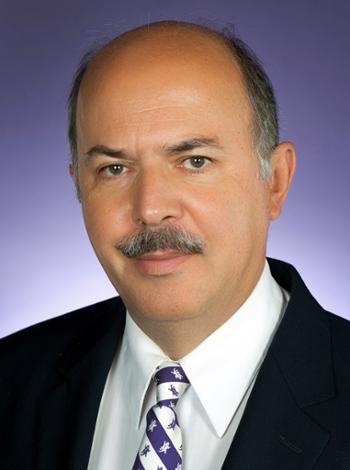
Efstathios (Stathis) Michaelides is the W.A. "Tex" Moncrief, Jr. Founding Chair of Engineering at Texas Christian University (TCU). He holds a Ph.D. and M.S. in Engineering Science from Brown University (1980, 1979) and a B.A. in Engineering Science and Economics from Oxford University (1977). His research focuses on advanced energy systems, multiphase flow, and renewable energy transitions. Ph.D. , Engineering Science, Brown University, 1980 M.S. , Engineering Science, Brown University, 1979 B.A. , Engineering Science and Economics, Oxford University, England, 1977 Michaelides' work spans energy conversion , geothermal systems , nanofluidics , and particle-fluid dynamics . His recent publications analyze energy storage requirements for renewable transitions, drag force correlations in complex flows, and thermodynamic implications of carbon sequestration. His research trends include decarbonization strategies , nanoparticle-enhanced phase transitions , and smart microfluidic systems . He has also contributed to foundational texts like Particles, Bubbles and Drops (2006) and the Multiphase Flow Handbook (2017).
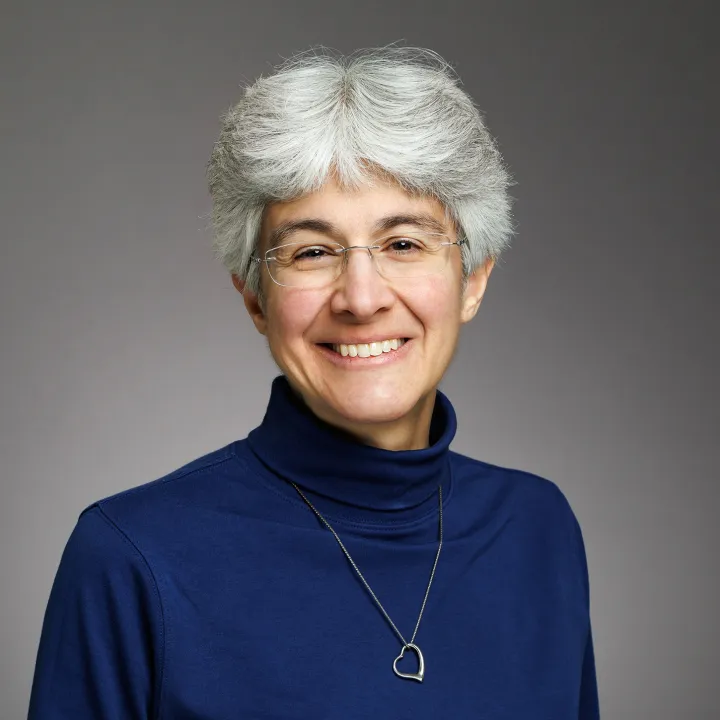
Beth Anne Bennett is a Senior Lecturer in the Department of Mechanical Engineering at Yale University. Her research focuses on computational methods for solving complex fluid dynamics and combustion problems, particularly involving adaptive grid refinement techniques for nonlinear PDEs. She holds a Ph.D. from Yale University, where her doctoral work centered on developing efficient numerical algorithms for multidimensional combustion phenomena. Her research interests include laminar combustion, fluid dynamics, heat transfer, and solidification processes. She has pioneered solution-adaptive gridding techniques like Local Rectangular Refinement (LRR) for both nonreacting and reacting flows, with applications to steady and unsteady multidimensional systems. Bennett has been recognized with the National Science Foundation ADVANCE Fellows Award (2002-2006). Her publications span computational studies of ethanol/dimethyl ether blending effects in flames, oxygen-enhanced methane flames, and axisymmetric coflow flames. She actively contributes to professional societies including The Combustion Institute, ASME, SIAM, ASEE, and SWE. Her work integrates computational innovation with experimental validation, addressing challenges in parallelization, sparse matrix treatments, and algorithm optimization for convection-diffusion problems. Bennett's research bridges fundamental numerical methods and applied combustion engineering, advancing both theoretical frameworks and practical applications in energy systems.
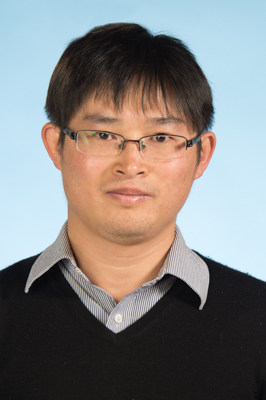
Associate Professor Fangbao Tian is a distinguished researcher and academic at UNSW Canberra's School of Engineering and Technology, where he also serves as Deputy Head of School for Research since July 2023. Previously, he held positions as Senior Lecturer (2017-2021) and Lecturer (2014-2017) at the same institution after completing postdoctoral research at Vanderbilt University. His academic journey began with a BSc (2006) and PhD (2011) in Theoretical and Applied Mechanics and Engineering Mechanics from the University of Science and Technology of China. Dr. Tian's research focuses on Computational Fluid Dynamics (CFD) tools for complex flows and fluid-structure interaction, with particular emphasis on bio-inspired applications. His work spans modeling laryngeal aerodynamics and vocal-fold vibration, fluid-structure interaction of plates in viscous fluid, fish swimming and insect flight, blood flow dynamics, and non-Newtonian flow phenomena. Recent work has expanded into Martian atmosphere aerodynamics, showing his research's growing interdisciplinary nature. His extensive publication record demonstrates consistent contributions across fluid dynamics, with recent trends showing increasing focus on compressible flows, bio-inspired flight systems, heat transfer applications, and computational methods like Lattice Boltzmann approaches. The research shows strong connections between fundamental fluid mechanics and practical applications in aerospace, biomedical engineering, and environmental systems. UNSW Canberra Goldstar Award 2022 IEEE Outstanding SMCS Chapter Award 2021 Outstanding Volunteer Award 2021 UNSW Canberra Silverstar Award 2018 UNSW Canberra Silverstar Award 2017 Journal of Fluids and Structures Highly Cited Research 2017 ARC DECRA 2016 Dr. Tian actively supervises PhD students across diverse topics including bushfire-enhanced wind loads, bio-inspired flight on Mars, flow control optimization, and fluid-structure interactions in compressible flows. He has secured over $5 million in external funding as Chief Investigator, including significant Australian Research Council projects examining Martian atmosphere aerodynamics, bio-inspired flapping wings, and cardiovascular flow modeling. His editorial roles include Associate Editor for Journal of Fluids and Structures and Scientific Reports, reflecting his standing in the fluid dynamics research community.
Guillaume Chiavassa is a Professor in Applied Mathematics at Ecole Centrale de Marseille, affiliated with the Laboratoire M2P2 (Mechanics, Modeling and Physical Processes Laboratory). He leads research in the Thermodynamics, Waves, Digital, Interfaces and Combustion team, focusing on advanced computational methods for complex physical phenomena. His research spans wave propagation in porous media, numerical modeling of plasma flows in Tokamak configurations, multilevel schemes for conservation laws, penalization methods for compressible flows, and wavelets in numerical analysis. Chiavassa's work demonstrates exceptional mathematical rigor applied to challenging physical systems, particularly in nonlinear wave dynamics and computational fluid mechanics. His methodologies bridge theoretical mathematics with practical engineering applications. Analysis of his recent publications reveals a strong focus on wave propagation phenomena across diverse media, with significant contributions to numerical methods for nonlinear systems. His work consistently addresses the mathematical challenges of modeling complex physical behaviors including material softening, fractional attenuation in porous media, and plasma dynamics in fusion devices. The interdisciplinary nature of his research connects applied mathematics with mechanical engineering, geophysics, and nuclear fusion technology. Chiavassa leads the PROSPERO Software project and participates in the ANR Espoir research initiative and the Consortium SEISCOPE. His teaching activities include courses on hyperbolic equations, finite elements, and heat transfer, with practical computational components developed for student instruction. He maintains an active research program through Laboratory M2P2, where his team develops advanced numerical methods for simulating complex physical phenomena with applications ranging from environmental engineering to nuclear fusion research.
Kyle Hanquist is an Assistant Professor in the Department of Aerospace and Mechanical Engineering at the University of Arizona, where he is also a member of the Graduate Faculty. He directs the Computational Hypersonics and Nonequilibrium Laboratory (CHANL), focusing on advanced simulation techniques for high-speed flows. His academic journey includes a PhD and MSE in Aerospace Engineering from the University of Michigan and a BSE in Mechanical Engineering from the University of Nebraska. PhD, Aerospace Engineering, University of Michigan, Ann Arbor MSE, Aerospace Engineering, University of Michigan, Ann Arbor BSE, Mechanical Engineering, University of Nebraska, Lincoln Dr. Hanquist's research centers on hypersonics, aerothermodynamics, and nonequilibrium flows , with strong emphasis on computational fluid dynamics , low-temperature plasmas , and thermal management systems . His work involves modeling complex physical phenomena such as electron transpiration cooling, plasma-assisted flow control, and high-temperature gas effects in reentry environments. He also investigates molecular gas dynamics and finite-rate chemistry in extreme conditions. His recent publications reveal a strong trend in computational modeling of hypersonic boundary layers , plasma sheaths , and shock-tube validation of thermochemical models . The interdisciplinary nature of his work spans aerospace engineering, plasma physics, and materials response under extreme thermal loads. Much of his research integrates multi-physics simulations to address fluid-thermal-structural interactions critical for next-generation hypersonic vehicles. Dr. Hanquist has received several scientific honors, including: 2020 AIAA Plasmadynamics and Lasers Best Paper Award Editor's Choice, AIP Publishing - Physics of Fluids (Summer I 2020) Featured Article, AIP Publishing - Physics of Fluids (Summer I 2021) Frontiers in Physics – Plasma Physics (Spring 2020) As an advisor and lab director, he mentors graduate students in computational hypersonics and collaborates with institutions like NASA and the University of Michigan. His research is supported by grants from aerospace and defense agencies, though specific funding sources are not listed. He teaches courses in fluid mechanics, numerical methods, and nonequilibrium flows, contributing to both undergraduate and graduate education. He leads the Computational Hypersonics and Nonequilibrium Laboratory (CHANL) , which develops and applies high-fidelity simulation tools for hypersonic applications. The lab focuses on kinetic modeling, plasma interactions, and optimization of thermal protection systems, often using massively parallel CFD codes and multi-fidelity surrogate models.
Wouter Bos is a Research Director at CNRS working at the Laboratory of Fluid Mechanics and Acoustics (LMFA) at École Centrale de Lyon, France. He leads research within the Turbulence & Instabilities team, focusing on fundamental aspects of fluid dynamics with applications spanning from plasma physics to epidemiology. His academic journey reflects a deep engagement with theoretical and computational fluid mechanics, particularly in turbulence phenomena. Dr. Bos's research interests center on fluid dynamics, with particular emphasis on turbulence in various contexts including two-dimensional flows, magnetohydrodynamics, plasma physics, and statistical mechanics of fluids. His work explores fundamental questions about energy transfer, coherent structures, and statistical properties of turbulent flows. He has made significant contributions to understanding turbulence without vortex stretching, two-dimensional turbulence, and the application of fluid dynamics principles to epidemiological modeling. Analysis of his recent publications reveals a strong focus on theoretical and computational approaches to turbulence. His work spans from fundamental questions about equilibrium states in two-dimensional turbulence to practical applications in plasma confinement and epidemic modeling. The publications demonstrate consistent innovation in turbulence theory, with particular attention to statistical mechanics approaches, spectral analysis, and the development of reduced-order models for complex fluid phenomena. His research shows growing interdisciplinary connections, especially between fluid dynamics and epidemiology as evidenced by his work on modeling the spread of infectious diseases. Dr. Bos actively supervises doctoral students and postdoctoral researchers, with recent students including Tong Wu, Ryo Araki, Smiron Varghese, Wesley Agoua, and Bruce (Xi Yuan) Yin. He participates in collaborative research projects such as the ANR CM2E project (2021-2025) on Characteristic Mapping Method for the Euler Equations, working with researchers from Aix-Marseille University and McGill University. His laboratory work involves both theoretical analysis and computational simulations, with applications ranging from fundamental fluid mechanics to practical problems in energy research (particularly related to ITER and fusion plasma physics) and public health. The interdisciplinary nature of his research demonstrates the broad applicability of fluid dynamics principles across seemingly disparate scientific domains.
Lisa Beinborn is a Professor for Human-Centered Data Science at the University of Göttingen, leading the Human-Centered Data Science group. Her research bridges natural language processing with cognitive science, focusing on multilingual models and interpretability. PhD in Computer Science (2016), Technische Universität Darmstadt MSc in Computational Linguistics (2010), Saarland University & Bolzano, Italy BSc in Computational Linguistics (2008), Saarland University & Barcelona, Spain Her research explores cognitive plausibility in NLP, analyzing how language models process language differently from humans. Key areas include multilingual model interpretability, semantic drift, eye-tracking, and readability prediction. Recent work examines input representation stability in neural models, cross-lingual transfer of complexity, and aligning language models with human cognitive patterns. Her team has presented findings at EMNLP, CoNLL, ACL, and CoLING. VENI Grant for "Interpretability of Transfer in Multilingual Models" Early Career Partnership by Royal Dutch Academy of Science "Most Interesting Paper" Award at BabyLM Challenge "Best Project Award" by Network Institute She has taught courses like Language as Data and Advanced NLP at University of Göttingen, VU Amsterdam, and TU Darmstadt. Her group collaborates with institutions like Gemeente Amsterdam and NT2 on multilingual text simplification and learner correction.
Marco Panesi is a Professor in the Department of Aerospace Engineering at the University of Illinois at Urbana-Champaign and Director of the Center for Hypersonics and Entry Systems Studies (CHESS). His research focuses on non-equilibrium phenomena in high-enthalpy flows, plasma dynamics, and uncertainty quantification. He holds a Ph.D. from the von Kármán Institute for Fluid Dynamics (2009) and M.S. degrees from Università di Pisa (2003) and VKI (2005). Roles: Faculty Member, Research Director, Principal Investigator Key Affiliations: CHESS, University of Illinois, VKI Research Interests: Hypersonic flow modeling, non-equilibrium plasmas, radiation effects, machine learning applications in aerothermodynamics, ablation processes, and state-to-state chemistry. His work bridges computational fluid dynamics with experimental validation in facilities like the Plasmatron X wind tunnel. Publications: Over 100 peer-reviewed articles on topics ranging from plasma kinetics to thermal protection systems. Recent work emphasizes adaptive neural operator models and Bayesian uncertainty quantification. Awards: Includes the Vannevar Bush Faculty Fellowship (2021), NASA Groundbreaker Award (2021), and multiple early-career recognitions from AFOSR, NASA, and ESA. Grants & Leadership: Secured funding from NSF, NASA, and DOD. Leads multidisciplinary teams on projects like the CHyPS material response solver and hypersonic entry modeling. Labs & Facilities: Principal investigator for the UIUC Plasmatron X facility, a key resource for studying high-enthalpy plasma flows.
Souad HARMAND is a Professor of Energy at the University of Valenciennes and Hainaut-Cambresis, teaching at the School of Engineering and conducting research at the LAMIH UMR CNRS 8201 laboratory. She currently serves as Vice-President of the University's Board of Directors, a position held since 2016. Her educational background includes: Engineering degree, Ecole des Mines de Douai, 1987 PhD, University of Valenciennes and Hainaut-Cambresis, 1990 Habilitation to direct research, University of Valenciennes and Hainaut-Cambresis, 1999 (topic: heat and mass transfer in complex systems) Professor HARMAND's research focuses on thermal management systems for electric vehicles, heat and mass transfer in complex systems, and fluid dynamics. She led the Fluid Dynamics and Thermal Transfer research team at LAMIH laboratory, producing over 300 publications and 6 patents that bridge fundamental thermal engineering with industrial energy applications. She has supervised more than 30 doctoral students throughout her career. Her administrative leadership includes serving as Head of Communications (2004-2008), Deputy Director of ENSIAME (2004-2008), and Vice-President of Education and Student Life (2012-2016) before assuming her current board role. At LAMIH laboratory, she developed critical thermal management solutions for electric vehicle engines, establishing interdisciplinary collaborations between mechanical engineering, energy systems, and industrial partners to advance sustainable mobility technologies.
Johannes Brandstetter is an Associate Professor at the Institute for Machine Learning at Johannes Kepler University Linz (JKU) where he leads the "AI for data-driven simulations" research group. He is also Co-founder and Chief Scientist at Emmi AI, bridging academic research with industrial applications in AI-driven physics simulation. Brandstetter earned his PhD after working at CERN's CMS experiment on Higgs boson physics. In 2018, he transitioned to machine learning, joining Sepp Hochreiter's research group in Linz. From 2021-2023, he worked at the Amsterdam Machine Learning Lab under Max Welling and Microsoft Research, developing expertise in Geometric Deep Learning and neural surrogates for partial differential equations. He returned to JKU in October 2023 to establish his own research group. His research spans Machine Learning, Deep Learning, and Physics-Informed Machine Learning with focus areas including Neural PDE solvers, Computational Fluid Dynamics, and Climate Modeling. Brandstetter believes AI is poised to revolutionize industrial-scale simulations, potentially saving thousands of compute hours across engineering domains. His work integrates computer vision, numerical simulation, and engineering components to advance data-driven approaches. Recent publications reveal a strong trend toward foundation models for scientific applications, particularly in atmospheric modeling (Aurora), geometric deep learning, and neural surrogates for complex physical systems. His interdisciplinary work spans computer vision, climate science, computational physics, and engineering, demonstrating the versatility of his research approach. Principal Investigator for "AlKa-DL: Alpine karst spring discharge prediction" (FWF-funded, 2024-2027) Principal Investigator for Cluster of Excellence "Bilateral Artificial Intelligence" (FWF-funded, 2024-2029) Co-PI for "Fast, efficient and flexible CFD simulation through generative AI" (FFG-funded, 2025-2026) As an educator and researcher, Brandstetter actively engages with the scientific community through invited talks at major conferences including presentations on "Closing the Gap Between Scientific Foundation Models and Real-World Applications" (March 2025) and "Scientific Machine Learning for Science and Engineering" (February 2025).
Georges FOKOUA is a Lecturer-Researcher at ESTACA (École Supérieure des Techniques Aéronautiques et de Construction Automobile), Paris-Saclay Campus, Saint-Quentin-en-Yvelines, France. He serves as the Training Manager for the 5A Specialty in New Energies and Environment. His academic career spans multiple institutions, including IRSTEA Rennes as a Research Engineer (2014-2016) and the Naval School in Brest as a Teaching and Research Assistant (2009-2014). Dr. FOKOUA's research focuses on experimental and numerical fluid mechanics with particular interest in multiphase flows, turbulence, wake flows, and the characterization of spatio-temporal dynamics of particulate and gaseous pollutants. His work bridges fundamental fluid mechanics with practical applications in transportation systems, naval propulsion, and environmental engineering. He has developed expertise in advanced measurement techniques including PIV, LDV, Ombroscopy, hot wire, optical probes, PTV, and both mono- and biphasic CFD using Ansys-Fluent, Comsol Multiphysics, and Matlab. His publication record demonstrates strong expertise in particle dispersion in transportation systems, with recent work focusing on brake particle dispersion in underground train stations, vehicle wake flows, and ultrafine particle dispersion. His earlier work investigated bubble effects in Taylor-Couette flow for naval propulsion applications. His research consistently combines experimental work with numerical modeling to address complex fluid dynamics problems. Dr. FOKOUA actively supervises doctoral and master's students, with current PhD candidates working on topics related to air quality in vehicle cabins, particulate pollutant dispersion in vehicle wakes, and navigation emissions. He has also contributed significantly to major research projects including CEPARER (2022-2025), AmCoAir (2020-2023), and CAPNAV (2019-2022), all funded by ADEME with various industrial partners. As an educator, he teaches Fluid Mechanics, Thermodynamics, Thermal Engineering, and Energy Conversion and Transfer courses across all undergraduate and graduate levels at ESTACA. He has also led the Euroglider project (2016-2019), developing a two-seat electric propulsion glider for pilot training.
Prof. Dr. Job Boekhoven is an Associate Professor at the Department of Bioscience , TUM School of Natural Sciences , Technical University of Munich . His research focuses on synthetic life , chemically fueled self-assembly , and supramolecular materials , aiming to synthesize life from scratch. Research Interests include creating synthetic cells that compete for resources, replicate, and undergo Darwinian evolution . His lab designs molecules like lipids , peptides , and nucleic acids that self-assemble into active compartments regulated by chemical energy. These systems exhibit life-like hallmarks such as emergence , self-division , and controllable lifetimes . Scientific Awards include: ERC Consolidator Grant (2024) Lecturer Award by Association of the Chemical Industry (2024) ERC Starting Grant (2019) Volkswagen Foundation 'Life?' Grant (2019) Max Planck Fellow (2019) VCI Dozentenpreis (2021) Thieme Chemistry Journal Award (2017) Rubicon Postdoctoral Fellowship (2013) Publications highlight trends in nonequilibrium materials , dynamic combinatorial libraries , and protocell engineering . His work bridges synthetic chemistry with biophysics to explore life's origins and applications in materials science .