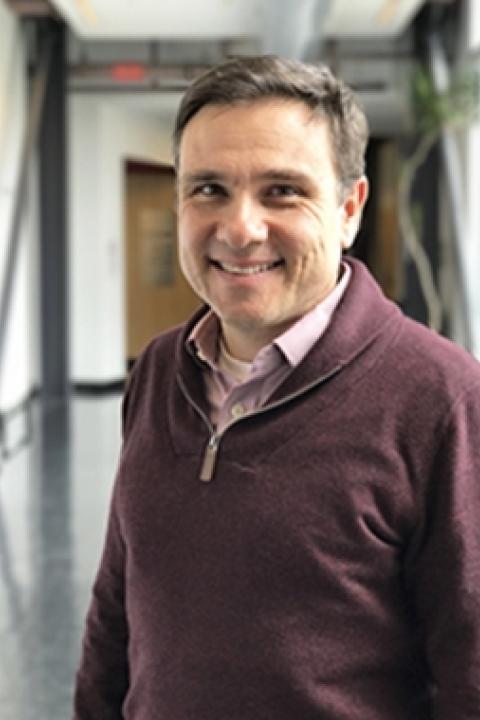
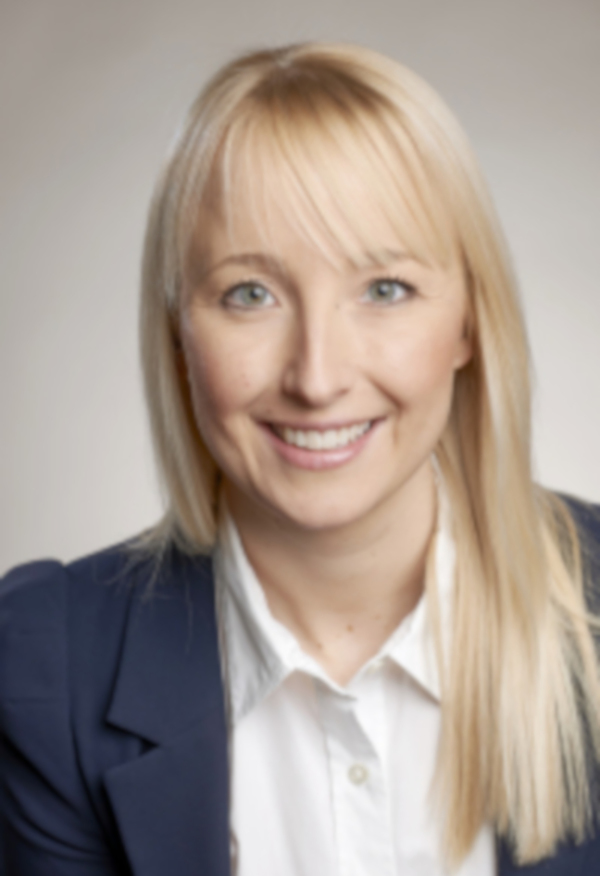
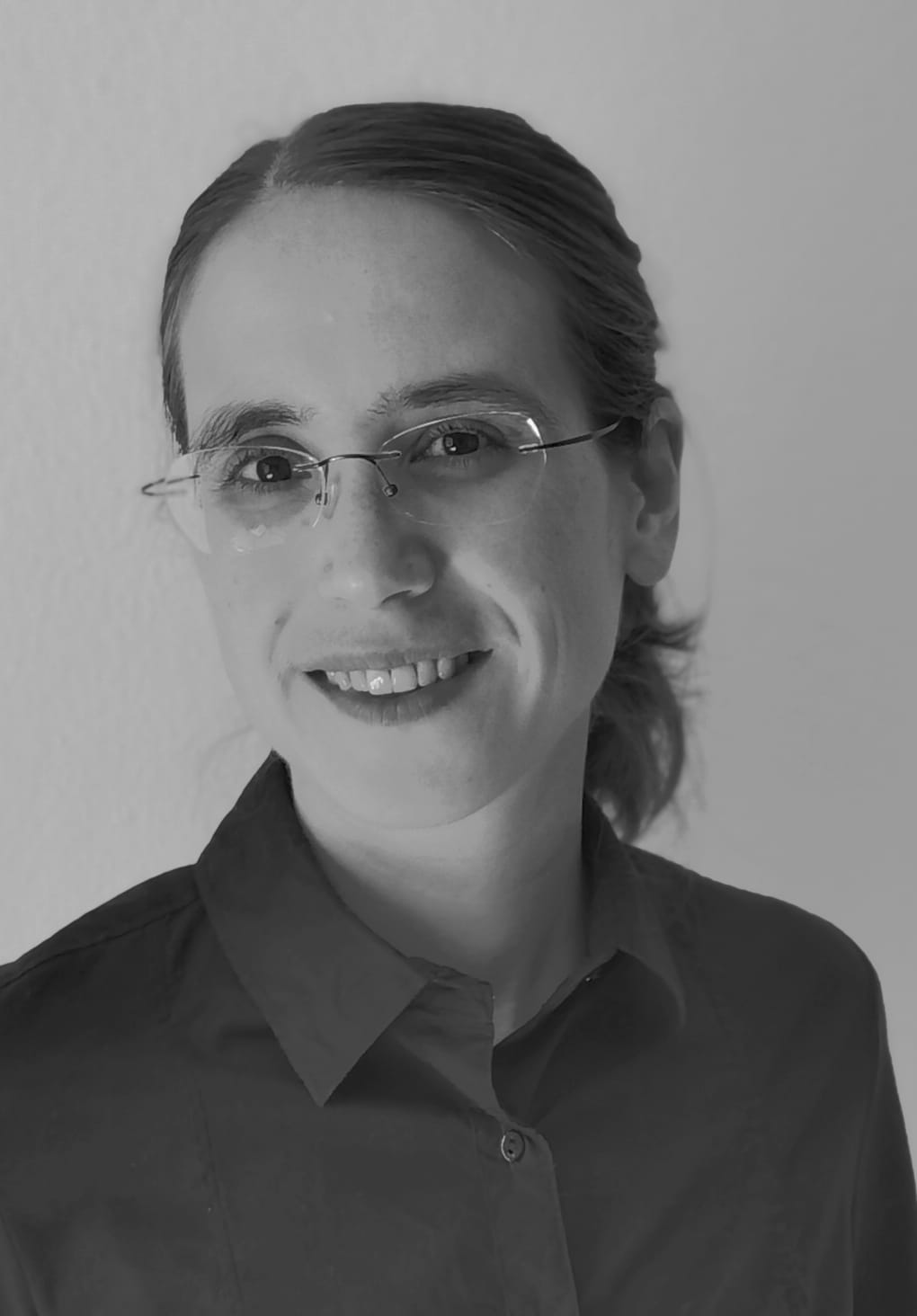
Anna Lyhne Jensen is an Assistant Professor at AAU Energy within the Thermal Engineering Department at Aalborg University's Faculty of Engineering and Science. Her research focuses on computational fluid dynamics (CFD), pump design optimization, heat transfer analysis, and marine growth mitigation. She has contributed to projects like ACOMAR: Auto Compact Marine Growth Remover and Clogging in Waste Water Pumps , demonstrating expertise in fluid-structure interaction and industrial fluid machinery challenges. Her academic work spans experimental and numerical studies, with notable contributions to marine growth inspection via autonomous systems, heat transfer enhancement using roughness elements, and CFD-DEM coupled simulations for clogging phenomena. She actively participates in initiatives like Girls' Day in Science to promote STEM education. Key research areas include: CFD modeling of complex flow regimes Optimization of wastewater pump systems Autonomous underwater inspection technologies Passive heat transfer augmentation strategies Her recent publications (2016–2022) reflect advanced work in fluid dynamics, pump optimization, and marine engineering solutions. Professional activities include project supervision roles and participation in multidisciplinary engineering collaborations.
Gregory Chini is a Professor in the Department of Mechanical Engineering at the University of New Hampshire (UNH), where he has been a faculty member since 1999. He also serves as the Director of the Integrated Applied Mathematics (IAM) Ph.D. program and holds affiliations with the College of Engineering and Physical Sciences. He has been a visiting researcher at the California Institute of Technology and the University of Nottingham, and is a regular participant in the Woods Hole Summer Program in Geophysical Fluid Dynamics. Ph.D., Aerospace and Aeronautical Engineering, Cornell University M.S., Aerospace and Aeronautical Engineering, Cornell University B.S., Aerospace and Aeronautical Engineering, University of Virginia Prof. Chini's research lies at the intersection of fluid dynamics and applied mathematics, with a focus on modeling geophysical, environmental, biological, and industrial flows. He investigates the stability and dynamics of coherent structures such as vortices, waves, and boundary layers using asymptotic, variational, and spectral methods. His work emphasizes reduced-order modeling to understand complex systems like turbulent convection and porous media flows. The recent publications highlight a strong trend in multiscale modeling, turbulent transport, and mathematical analysis of fluid systems. His articles frequently address Rayleigh-Bénard convection, stratified turbulence, boundary layer dynamics, and optimal transport, often employing quasilinear and asymptotic frameworks to extract physical insights. The research spans from theoretical analysis to computational modeling, with applications in oceanography, geophysics, and soft matter. He has been awarded multiple research grants from the National Science Foundation (NSF) and the U.S. Department of Defense (Navy), supporting projects on high Reynolds number turbulence, wall-bounded flows, and multiscale oceanic modeling. These grants reflect sustained funding and leadership in fundamental fluid mechanics research. National Science Foundation (NSF): Development of Asymptotically-Reduced Multi-Scale Models (2014–2019) National Science Foundation (NSF): Multiscale Modeling of Oceanic Mixed Layer (2009–2015) U.S. DOD, Navy: Predicting Non-Equilibrium Wall-Flow Phenomena (2017–2023) Mentis Sciences Inc: Cooling System for Laser Enclosure (2018) Prof. Chini teaches core courses such as Fluid Dynamics (ME 608), Thermodynamics (ME 503), Viscous Flow (ME 909), and Asymptotic Methods (IAM 940), and supervises doctoral research in applied mathematics and mechanical engineering. He advises Ph.D. students and collaborates widely, particularly with researchers like Christopher White. His lab and research group focus on theoretical and computational fluid dynamics, with an emphasis on model reduction and predictive simulation of complex flows.
Carina Schwarz is a researcher at the Institute of Mechanics, Faculty of Engineering, University of Duisburg-Essen, where she has been a research assistant since 2012 and completed her doctorate in 2018. Her work focuses on the development and application of least-squares finite element methods (LSFEM) to problems in fluid and solid mechanics, including sea ice modeling, fluid-structure interaction, and incompressible fluid dynamics. She teaches multiple courses in engineering mechanics and finite element methods at both bachelor’s and master’s levels. PhD in Engineering, University of Duisburg-Essen, 2018 B.Sc. in Civil Engineering, University of Duisburg-Essen, 2010 M.Sc. in Computational Mechanics, University of Duisburg-Essen, 2012 Research stay at École des Mines, Paris, 2012 Her research interests center on computational mechanics , particularly least-squares finite element methods , sea ice modeling , and incompressible fluid dynamics . She investigates higher-order time integration schemes and mixed finite element formulations for linear elastodynamics and fluid-structure interaction problems. Her work bridges theoretical mechanics with practical numerical simulation tools. The trend in her recent publications shows a growing emphasis on environmental applications, especially sea ice dynamics in polar regions, using advanced computational fluid dynamics and numerical methods. Her earlier work focused more on fundamental formulations of LSFEM for Navier-Stokes equations and elastodynamics, evolving toward coupled environmental systems. She has supervised multiple student theses in computational mechanics, mentoring students in finite element implementation and numerical modeling. Although no specific grants or awards are mentioned, her consistent publication output in reputable journals and conferences reflects sustained research activity. Carina Schwarz leads and contributes to collaborative research projects involving interdisciplinary modeling of complex mechanical and environmental systems. Her work is integrated within the Institute of Mechanics, where she participates in academic teaching and research seminars such as the Seminar for Numerical Mathematics and Mechanics (SNMM).
Dr. Lucie Semenec serves as Deputy Vice-Chancellor (Corporate Engagement and Advancement) at Macquarie University, where she maintains an active research profile alongside her administrative leadership role. Her academic career spans over 15 years with 24 research outputs documented in the university repository, demonstrating consistent scholarly productivity through 2024. Dr. Semenec's research focuses on bacterial pathogenesis, with particular expertise in Acinetobacter baumannii and Klebsiella pneumoniae. Her work examines bacterial interactions, virulence mechanisms, and survival strategies of ESKAPE pathogens. Notably, she has pioneered the application of microfluidic technologies for bacterial separation and analysis, bridging engineering approaches with microbiological research. Her fingerprint analysis reveals strong specialization in Geobacter, Acinetobacter baumannii (98%), Pseudomonas aeruginosa (74%), and coculture techniques (58%). Her recent publications demonstrate a strategic integration of microfluidics with bacterial pathogenesis research. The 2023-2024 articles reveal a dual focus: developing novel viscoelastic flow-based separation techniques for bacterial populations and investigating cross-protection mechanisms between multidrug-resistant pathogens. This work addresses critical challenges in antimicrobial resistance by examining how pathogens cooperate to survive antibiotic pressure while advancing diagnostic technologies through microfluidic innovations. Dr. Semenec has secured competitive research funding through the MQRIS S 2022 program, leading two significant projects: 'Integrated, Multifunctional in situ Characterisation Facilities for Advanced Biodevices and Biotechnologies' and 'High-throughput Phenotyping Platform for PC2 organisms.' These projects reflect her strategic positioning at the intersection of microbiology, engineering, and biotechnology development. Beyond traditional academic outputs, Dr. Semenec has made notable societal impact through the JAMSpod microbiology podcast, which generated substantial engagement across multiple platforms including 11 news outlets, 2 blog posts, 128 X (Twitter) users, and 111 Mendeley readers, demonstrating her commitment to science communication and public engagement.
Jeanette Cleotilde Polanco Pinerez is an Associate Professor at the Department of Industrial Technology, UiT The Arctic University of Norway, based in Narvik. She specializes in fluid dynamics, energy systems, and industrial applications of machine learning, with significant contributions to winter road maintenance technologies and Arctic infrastructure solutions. Her research focuses on: Advanced fluid mechanics and multiphase systems in industrial contexts Machine learning applications for Arctic transportation challenges Energy efficiency and renewable energy systems analysis Sensor technologies for industrial safety and environmental monitoring Thermodynamic modeling and heat transfer optimization Publication analysis reveals strong emphasis on predictive maintenance systems, alternative energy solutions, and Arctic-specific engineering challenges, with recent work increasingly incorporating AI/ML methodologies. She is an active member of the Materials Science research group and contributes to developing practical engineering tools for extreme climate conditions.
Katharina Hopf is a Researcher at the Weierstrass Institute in Berlin, where she leads the junior group Multi-species Balance Laws . She also supervises Master thesis projects in analysis and partial differential equations at Humboldt University of Berlin . Research Interests: Analytical aspects of nonlinear evolution PDEs Cross-diffusion and reaction-diffusion systems Interface phenomena and singularities Entropy tools and variational methods Metric gradient flows and mixed-type PDE systems Recent Publications focus on gradient flows, cross-diffusion models, and singularities in PDEs, with applications in viscoelastic phase separation, energy-reaction-diffusion systems, and fluid dynamics. Interdisciplinary work includes modeling reactive gas mixtures in porous media. Scientific Awards: 2020 Faculty Thesis Prize for Mathematics (University of Warwick)
Anna Czemplik, PhD, serves as academic staff in the Department of Control Systems and Mechatronics at Wrocław University of Science and Technology's Faculty of Information and Communication Technology. Her active teaching role is evidenced by scheduled office hours in building C-3, room 317A, and her research profile demonstrates ongoing contributions to control engineering. Research Expertise: Dr. Czemplik specializes in dynamic system modeling with emphasis on industrial applications. Her core competencies include: Control Systems & Automation Physical Process Modeling (heat exchangers, tank systems) PID Control Algorithms Simulation using Matlab/Scilab Thermal Systems Dynamics System Identification Methods Publication Trends: Her 2019-2022 work reveals concentrated focus on heat exchanger modeling under ideal mixing conditions and three-tank system identification. These studies consistently bridge theoretical control engineering with practical industrial validation using simulation tools, demonstrating evolving sophistication in handling complex thermal and fluid dynamics. Awards & Recognition: No scientific awards or fellowships are documented in current institutional records. Academic Contributions: Beyond research, Dr. Czemplik develops educational resources including textbooks on dynamic systems and simulation tools, indicating significant investment in engineering pedagogy despite absence of listed student advisement. Professional Engagement: Regular participation in EUROCAST and MMAR conferences confirms active collaboration within international control engineering communities, though specific laboratory affiliations remain unspecified.
Professor Dimitris Drikakis serves as Vice President for Global Partnerships at the University of Nicosia, Cyprus, and holds a joint professorship in the School of Sciences and Engineering. His academic career spans over 24 years, including roles as Executive Dean and Head of Department at UK universities. His research focuses on fluid dynamics, acoustics, computational science, and nanotechnology, emphasizing uncertainty reduction and physics-based modeling. He has co-authored two books, published over 400 papers, and graduated 45 PhD students globally. Research interests include super-resolution fluid flow analysis, machine learning applications in turbulence simulation, and computational methods for aerodynamics and heat transfer. His work on indoor aerosol transmission and epidemiological modeling has addressed pandemic-related challenges. He serves on editorial boards for journals like Computers and Fluids and Physics of Fluids . Recent articles highlight advancements in deep learning for fluid-structure interaction, shock-wave predictions, and AI-driven thermal optimization. His contributions bridge computational science with real-world engineering and public health applications.
Bertrand CariSSIMO is a Lecturer at École des Ponts ParisTech (ENPC), affiliated with the Center for Teaching and Research in Atmospheric Environment (CEREA), a joint lab with EDF R&D. His research focuses on micro-meteorological measurements and numerical modeling for urban climate applications, including pollution dispersion around industrial sites and wind farms. He holds an Engineer degree from the School of Hydraulics, Grenoble; a PhD from Princeton University; and a HDR (Habilitation à Diriger des Recherches). Key research interests include: urban climate dynamics, pollutant dispersion in complex environments, CFD modeling for atmospheric flows, and radiative/convective thermal exchanges in urban settings. His work integrates advanced numerical methods, such as time-staggered schemes for variable density flows, and employs tools like Code_Saturne and MUNICH street network models. Recent studies highlight innovations in parameterizing tree effects in street canyons, low-wind dispersion mechanisms, and thermal modeling of city centers. His interdisciplinary approach combines technical modeling with participatory urban quality assessments.
Dr. MARIA DEL PILAR BROCOS FERNANDEZ is a Professor at the Department of Applied Physics, Faculty of Physics, University of Santiago de Compostela. Her research focuses on thermophysical properties of liquid mixtures, surface chemistry, and the thermodynamics of surfactant systems. She holds a Doctorate from the University of Santiago de Compostela (2005), with a thesis on 'Refractive index, free volume and molar refraction. Concepts and correlations. Thermodynamic analysis of cyclic ether + ketone mixtures.' Research Interests: Her work spans physical chemistry, thermodynamics of liquid mixtures, and molecular dynamics simulations. Key areas include micellization thermodynamics, surfactant behavior, host-guest complexes (e.g., cyclodextrins), and the thermodynamic characterization of inclusion complexes. She explores surface tension analysis, aggregation numbers, and molecular interactions in systems like tetrahydrofuran, cyclic ethers, and alkanes. Publications Overview: Over 30 peer-reviewed articles since 1998, covering topics such as micelle formation, surface tension modeling, and calorimetric studies. Recent work includes advancements in thermoacoustimetry for micellization analysis and molecular dynamics simulations of surfactant systems. Her research bridges experimental and computational methods to understand complex fluid behavior. Awards and Grants: No specific awards listed, but her extensive publication record indicates sustained research excellence in thermodynamics and surface chemistry. Active in international collaborations, evidenced by co-authored papers and conference presentations. Labs/Teams: Leads research on thermophysical properties and surface phenomena within the PTSL group (Thermophysical and Surface Properties of Liquids) at the University of Santiago de Compostela.
Benoît Goyeau is a researcher at the Mathematics and Computer Science for Complexity and Systems laboratory. His work focuses on fluid dynamics, porous media flow, thermal convection, and mathematical modeling of transport phenomena. He has contributed extensively to understanding interfacial fluid-porous medium interactions, boundary layer dynamics, and multiphase flow systems. Recent research emphasizes compressible flow modeling, membrane fouling mechanisms, and stability analysis of natural convection in porous-fluid systems. His research integrates experimental approaches with computational fluid dynamics, addressing challenges in heat transfer, mass transport, and material science. Key contributions include advancements in jump boundary condition theories for fluid-porous interfaces and pore network modeling of shear-thinning fluid behavior. Collaborations span multi-institutional teams, with frequent co-authorships on topics like thermosolutal convection and interfacial momentum transfer. Publications highlight innovations in porous media mechanics, including ATR-FTIR analysis of biomolecule interactions and experimental studies on convective flow structuring. His work bridges theoretical models with practical applications in energy systems, biomedical engineering, and materials characterization.
Jana Orszaghova serves as a Senior Lecturer at the University of Western Australia (UWA) within the School of Earth and Oceans, and is affiliated with the UWA Oceans Institute and UWA Defence and Security Institute. She holds the position of Deputy Program Leader for Offshore Renewable Energy Systems at the Blue Economy CRC, demonstrating significant leadership in marine energy research. Her research centers on marine renewable energy systems , specifically focusing on wave-structure interactions with applications to Wave energy converters (WECs) Floating and fixed offshore wind turbines Non-linear excitation mechanisms Ocean technology development She applies advanced mathematical and numerical modeling to solve complex hydrodynamics challenges, with strong industry collaboration aimed at creating safer, more reliable marine energy systems. Recent publications reveal a concentrated research trajectory in wave energy conversion and offshore wind hydrodynamics , with emphasis on extreme response analysis, harmonic decomposition of forces, and non-linear wave-body interactions. Her work consistently bridges theoretical fluid mechanics with practical engineering applications for renewable energy infrastructure. Through active leadership in major research initiatives including the Blue Economy CRC and ARC-funded projects, she drives innovation in ocean renewable energy systems. Her collaborative network spans international institutions and industry partners focused on advancing marine energy technologies. Dr. Orszaghova maintains strong educational engagement through public lectures on offshore renewable energy topics and supervises research projects within UWA's marine energy programs, contributing significantly to workforce development in this critical sustainability sector.
Denis Evans is a Professor at the Research School of Chemistry, ANU College of Physical and Mathematical Sciences. He holds fellowships from the Royal Australian Chemical Institute (1989) and the Australian Academy of Science (1994). His academic journey includes postdoctoral positions at Oxford University, Cornell University, and the National Bureau of Standards in Colorado before joining ANU in 1982 as a Fellow and becoming a Professor in 1990. Evans specializes in non-equilibrium statistical mechanics, thermodynamics, and fluctuation theorems. His research explores entropy production, dissipation, and the behavior of systems far from equilibrium. Notable contributions include theoretical frameworks for nonequilibrium steady states and experimental validations of fluctuation theorems using colloidal particles and optical traps. His work spans molecular dynamics simulations, rheology of confined fluids, and foundational questions in statistical mechanics. Key achievements include proofs of the zeroth law of thermodynamics and the nonlinear Fourier law, alongside experimental demonstrations of second-law-like theorems in small systems. Scientific Awards: Fulbright Fellowship, Rennie Medal (RACI), Frederick White Prize (AAS), Centenary Medal, Moyal Medal. Research Focus: Fluctuation theorems, nonequilibrium systems, entropy production, and molecular dynamics. Evans has advised numerous researchers and contributed to interdisciplinary initiatives like the Zero Carbon Energy for the Asia-Pacific Initiative (ZCEAP). His labs focus on advancing computational and experimental methods to understand complex thermodynamic phenomena.
Pablo Fariñas Alvariño is a Professor in the Department of Naval and Industrial Engineering at the School of Engineering of Ferrol, University of A Coruña. His academic work focuses on naval engineering with specialization in hydrodynamics and thermal systems. He is affiliated with the Thermal Systems and Heat Transfer research group and maintains active roles in both teaching and research activities. His research interests span multiple areas of naval engineering, with particular expertise in Computational Hydrodynamics, Naval Hydrodynamics, and Mechanics of Computational Continuous Media. His work bridges theoretical fluid mechanics with practical naval applications, focusing on ship design, marine propulsion systems, and thermal management in marine environments. Dr. Fariñas Alvariño applies advanced computational methods to solve complex engineering problems in naval architecture. Analysis of his recent publications reveals a strong focus on computational fluid dynamics applied to naval engineering problems, with particular emphasis on ship hydrodynamics, cavitation phenomena, and thermal systems in marine environments. His research demonstrates consistent quality with publications in high-impact journals across fluid mechanics, thermal engineering, and naval architecture disciplines. The work shows progression from fundamental fluid mechanics to increasingly complex marine engineering applications. Dr. Fariñas Alvariño has secured significant research funding from multiple sources including the Galician Innovation Agency (GAIN), Horizon 2020 EU program, Xunta de Galicia, and the Ministry of Economy and Competitiveness. His research portfolio demonstrates sustained activity across more than a decade with consistent publication output. He actively supervises bachelor's and master's theses on various naval engineering topics including ship design, LNG tankers, marine propulsion systems, and computational analysis of marine structures. His teaching portfolio includes core courses in Computational Hydrodynamics, Naval Hydrodynamics, and Mechanics of Computational Continuous Media across multiple degree programs. His research activities are centered around the Thermal Systems and Heat Transfer research group at the University of A Coruña, where he collaborates with national and international researchers on naval engineering challenges. The group maintains strong connections with the maritime industry and participates in both fundamental and applied research projects.
Dr. Chantelle Blachut is a Postdoctoral Fellow at UNSW Canberra within the School of Science , focusing on the application of mathematics to analyze dynamic physical systems. Her research bridges dynamical systems theory with real-world environmental challenges, particularly bushfire risk management near ridgelines and Indigenous cultural Songlines. Education : PhD in Applied Mathematics from University of Queensland (2019), Master of Economics (Development) from University of Warsaw. Research Areas : Non-autonomous dynamical systems, ergodic theory, coherent structures in natural phenomena, and bushfire dynamics. Current Projects : Collaborating with UNSW Bushfire and the NSW Bushfire & Natural Hazards Research Centre . Teaching : Previously co-ordinated Multivariable and Complex Calculus, and taught Applications of Quantitative Methods in Finance at the University of Adelaide. Email : c.blachut@unsw.edu.au