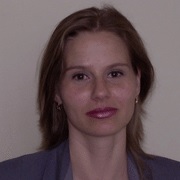
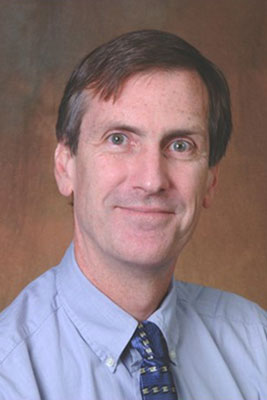
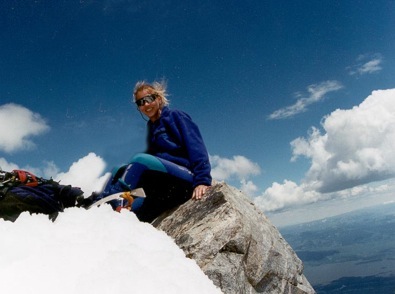
Dr. Tatiana Gambaryan-Roisman is an Adjunct Professor (Apl. Prof.) at Technische Universität Darmstadt, where she leads the research group Interfacial Transport and Complex Wetting . She holds a D.Sc. in Mechanical Engineering from Technion and completed her habilitation in Heat Transfer at TU Darmstadt. Her research explores interfacial phenomena, including droplet dynamics, evaporation/condensation, and heat transfer enhancement using nanostructured surfaces. Her work integrates experimental and computational methods to study: Drop impact on heated/deformable substrates Marangoni convection in thin films Wetting of porous and textured materials Nanoparticle assembly and battery interface engineering Recent publications focus on droplet coalescence, evaporation kinetics, and lithium-ion battery interfaces, demonstrating consistent innovation in thermal-fluid sciences. She coordinates EU projects like nanoPaInt and has led the Emmy Noether Research Group. Awards include: Ralf-Dahrendorf Prize for European Research (2019) Emmy Noether Grant (2002–2009) Minerva Fellowship (1998–2000) She serves on editorial boards for Experimental Thermal and Fluid Science and Current Opinion in Colloid & Interface Science , and organizes international conferences like Droplets 2021.
Nishant Sinha is a Researcher at the Institute for Technical Thermodynamics at TU Darmstadt since 2022. He holds a Ph.D. in Mechanical Engineering from IIT Patna, India (2016-2022) and a Bachelor of Technology in Mechanical Engineering from NSEC, Kolkata, India (2012-2016). His research focuses on heat transfer phenomena, particularly on moving substrates and microlayer formation in boiling processes. He is actively involved in the CRC 1194 project "Interaction between Wetting and Transport Processes," specifically working on subproject A01 "Forced Wetting and De-Wetting on Complex Surfaces." Dr. Sinha's work investigates the physics of thin film evaporation (microlayers) which plays a significant role in liquid-vapor phase change processes such as pool boiling, flow boiling in microchannels, printed electronics, semiconductor industry applications, and heat exchangers. His research employs experimental approaches including high-speed camera measurements of dynamic contact angles and infrared camera recording of local temperature fields at fluid-wall interfaces. His research interests span across: Heat transfer on moving substrates Microlayer formation and evaporation Wetting and dewetting phenomena Boiling crisis prediction Thermal management systems Dr. Sinha's publications demonstrate a consistent focus on experimental thermal engineering with applications in industrial thermal management. His work combines acoustic monitoring, visual characterization, and thermal analysis to understand fundamental boiling phenomena, with particular emphasis on predicting and preventing thermal runaway situations in boiling systems. The research has direct implications for improving efficiency in heat exchangers, electronic cooling systems, and manufacturing processes involving phase change. He works under the supervision of Prof. Dr.-Ing. Jeanette Hussong and Prof. Dr.-Ing. Peter Stephan as part of an interdisciplinary team investigating wetting phenomena and transport processes.
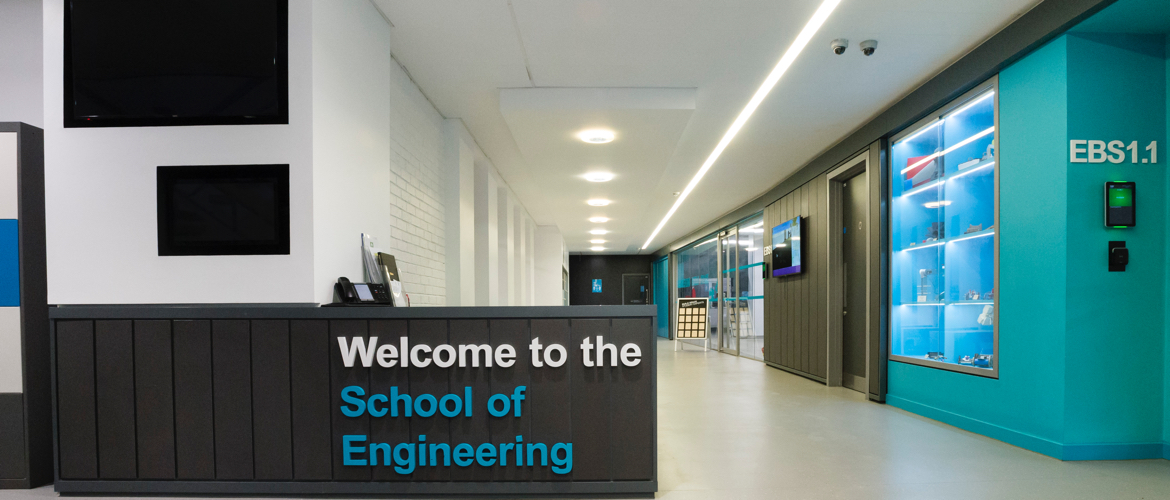
Yongmann Chung is an Associate Professor at the School of Engineering, University of Warwick. His research focuses on Computational Fluid Dynamics (CFD), turbulence modeling, and flow control with applications in aerospace engineering and electrochemistry. He specializes in Large Eddy Simulation (LES) and Direct Numerical Simulation (DNS) of complex flows, including micro-fluid dynamics in electrochemical systems and drag reduction strategies. His work spans unsteady turbulent flows, heat transfer, and aerodynamic phenomena in systems like flying cars and quadcopters. Teaching interests include fluid mechanics (ES2A7), computational fluid dynamics (ES440), and scientific computing (MA5P9). Recent publications explore battery health prediction using graph neural networks, vortex ring state analysis, and computational models for droplet dispersion in public spaces. Chung’s research also addresses industrial challenges such as cavitation erosion monitoring and turbulent flow control via Lorentz force actuation. Office hours are Fridays 10 am–12 pm during term time. He advises projects and grants in fluid dynamics and thermal engineering, with a focus on both fundamental turbulence research and applied energy systems. His work extends to bio-inspired design, exemplified by studies on dolphin kick swimmers, and environmental health modeling for airborne disease transmission.
Joel Hochstetter is a Research Fellow in the Department of Applied Mathematics and Theoretical Physics (DAMTP) at the University of Cambridge. He is affiliated with the Biological Physics and Mechanics research group. His work bridges quantum computing, neuromorphic engineering, and biophysics, focusing on neuromorphic nanowire networks, spin systems, and complex adaptive systems. His research explores topics such as criticality in neural networks, quantum spin dynamics, and biomaterials for particle detection. Recent publications highlight advancements in neuromorphic computing frameworks, including GPU-optimized quantum simulation tools (Spinsim), neuromorphic networks for MNIST classification, and the role of tissue fluidity in wound healing. His portfolio reflects interdisciplinary collaboration between physics, biology, and computer science. No scientific awards are explicitly listed in the provided texts. His research is supported by studies in DAMTP, with potential links to computational biology and quantum device engineering. While specific grants or labs are not detailed, his affiliation with DAMTP implies involvement in advanced theoretical and experimental projects.
Professor Vassilios Loukopoulos holds a faculty position at the Department of Theoretical and Mathematical Physics, Astronomy and Astrophysics, University of Patras, since 2021. Previously, he served as Associate Professor (2016-2021), Assistant Professor (2011-2016), and Lecturer (2007-2011). He teaches courses in Fluid Mechanics, Computational Physics, and specialized MSc topics like Simulation Techniques for Physical Systems. His research focuses on computational fluid dynamics, magnetohydrodynamics, and numerical methods for fluid flow problems, with emphasis on nanofluids and biomedical applications. Collaborations include Max Planck Institute (Germany), KAUST (Saudi Arabia), and EPFL (Switzerland). He serves on editorial boards of journals like Mathematical Problems in Engineering and ISRN Mathematical Physics . Research interests span numerical solutions of Navier-Stokes equations, thermal convection in nanofluids, and biofluid mechanics under magnetic fields. He has developed meshless computational methods for complex fluid dynamics problems. Recent publications explore magnetohydrodynamic flows in porous media and transient bioheat transfer modeling. His work integrates advanced numerical techniques with applications in astrophysical fluid dynamics and medical physics. Education Progression : Professor: University of Patras (2021–present) Associate Professor: University of Patras (2016–2021) Assistant Professor: University of Patras (2011–2016) Lecturer: University of Patras (2007–2011) Grants and collaborations involve institutions like KAUST and the Institute of Chemical Engineering Sciences (Greece). His research team actively publishes in top journals like Journal of Computational Physics and Physics of Fluids , with a focus on developing innovative numerical frameworks for multiphysics problems.
Ray LeBeau is an Associate Professor and Associate Department Chair in the Department of Aerospace and Mechanical Engineering at Saint Louis University's School of Science and Engineering. He holds a Ph.D. in Planetary Science from MIT, an M.S. in Engineering Physics from the University of Virginia, and a B.S. in Aerospace Engineering from the University of Virginia. His research focuses on computational fluid dynamics (CFD), flow control, aerodynamic design optimization, and planetary atmospheres of Uranus and Neptune, with applications in UAV design, inflatable wings, and plasma actuators. Research Facilities: Fluid Systems Laboratory: Includes subsonic and supersonic wind tunnels, DPIV systems, and experimental setups for flow visualization and aerodynamic testing. Water Tunnel: Equipped with high-speed data acquisition and DPIV technology for fluid dynamics studies. His work bridges aerospace engineering and planetary science, with notable contributions to ice giant atmospheric modeling and inflatable wing aerodynamics. Over 60 peer-reviewed publications and 15+ advised graduate students highlight his academic impact. He is an Associate Fellow of the American Institute of Aeronautics and Astronautics (AIAA) and maintains affiliations with multiple professional organizations. Grants & External Funding: LeBeau’s research has attracted external funding for projects involving UAV design and planetary atmosphere simulations. His labs support both undergraduate instruction and advanced graduate research. Future Directions: Current projects include optimizing inflatable wing aerodynamics, studying Uranian vortex dynamics, and advancing CFD code performance for high-speed computing architectures.
Jonathan Nash is a Professor at the Oregon State University within the College of Earth, Ocean, and Atmospheric Sciences. His research focuses on the physics of oceanic turbulence, mixing, and small-scale processes, particularly near ice and in coastal environments. He leads the Ocean Mixing Group , which explores glacier-ocean interactions, internal wave dynamics, and submesoscale instabilities through innovative instrumentation and data analysis. B.Sc. in Engineering Physics from Queen's University (1991) M.Sc. in Environmental Engineering from Cornell University (1995) Ph.D. in Physical Oceanography from Oregon State University (2000) His work spans ocean mixing , glacier melt dynamics , and internal wave generation , with a strong emphasis on field measurements and autonomous vehicle technologies. Key projects include deploying chi-pods for long-term turbulence monitoring and studying subglacial discharge plumes in Alaska and Greenland. Recent publications highlight advancements in ice-ocean boundary layer parameterization , buoyant melt plume dynamics , and turbulent diffusivity in polar regions. His group collaborates extensively with institutions like Scripps/UCSD, University of Washington, and Cambridge University. Students in his lab engage in interdisciplinary research combining physical oceanography , climate science , and instrumentation development . The Ocean Mixing Group actively recruits graduate and undergraduate researchers for projects involving Arctic oceanography , glacial meltwater , and turbulent exchange processes . The group utilizes autonomous systems such as the Robotic Oceanographic Surface Sampler (ROSS) and μFloats to study complex geophysical phenomena. Findings contribute to understanding climate-related heat fluxes and oceanic nutrient transport in regions like the Bay of Bengal and LeConte Bay.
Dr. Umberto Terranova serves as a Lecturer in Chemical Physics at the University of Buckingham's School of Health Sciences since 2019. His expertise combines computational physics and molecular modelling to address sustainable energy challenges, with particular focus on catalytic systems for CO 2 conversion and renewable fuel production. Academic background: BSc Physics, Università di Pisa MSc Physics (with internship at National Enterprise for nanoScience and nanoTechnology, Italy) PhD Physics, University College London (2013; research at National Institute of Materials Science, Japan) Dr. Terranova specializes in atomistic simulations using density functional theory and classical force fields to model complex systems from inorganic materials to proteins. His research centers on two interconnected themes: (1) metalloenzymes for CO 2 reduction, particularly iron-sulfur clusters in viral and biological contexts, and (2) oxide perovskites like SrTiO 3 for photocatalytic hydrogen evolution. This work bridges quantum chemistry, biochemistry, and materials science to develop sustainable catalysts for energy applications. Analysis of his 2020-2025 publications reveals consistent focus on computational catalysis, with emerging integration of machine learning methods. Key research threads include CO 2 hydrogenation, oxygen evolution reaction mechanisms, and chirality-spin interactions, demonstrating interdisciplinary impact across virology, energy storage, and space medicine. Research Funding: HPC-Europa3 programme (2019): Collaborative project with University of Barcelona on artificial photosynthesis. As a lecturer, Dr. Terranova contributes to teaching within the School of Health Sciences and likely supervises computational research projects, though specific student advisees are not documented in the provided materials. His work shows strong translational potential for carbon capture technologies and renewable energy systems.
Alberto Alberello is a Research Fellow at the University of East Anglia 's School of Engineering, Mathematics and Physics, specializing in Fluids & Structures . His work focuses on wave-ice interactions, polar oceanography, and nonlinear wave dynamics. Doctor of Science, Swinburne University of Technology (2017) Master of Engineering, Politecnico di Milano (2012) Bachelor of Engineering, Politecnico di Milano (2010) Alberello's research explores the complex interactions between ocean waves and sea ice, particularly in Antarctic and Arctic environments. He investigates wave propagation in ice-covered waters, wave-induced ice breakup, and the development of numerical models like WIce-FOAM for simulating heterogeneous sea ice systems. His work contributes to understanding climate dynamics and improving maritime safety in polar regions. His recent publications demonstrate expertise in wave mechanics, with a focus on parameter-free Schrödinger systems, ICESat-2 altimetry validation, and nonlinear wave evolution under heterogeneous damping. Alberello's work spans both theoretical modeling and experimental validation through wave tank studies and field measurements. Alberello actively collaborates internationally, with recent projects involving institutions such as the Isaac Newton Institute for Mathematical Sciences , London Mathematical Society , and the Daiwa Anglo-Japanese Foundation . He has presented at conferences in New Zealand and Australia and conducted fieldwork in the Southern Ocean and Okhotsk Sea.
Jeremy Koch is an Assistant Teaching Professor in the Department of Thermo Fluid Sciences at the University of Colorado. He obtained his PhD in Theoretical and Applied Mechanics from the University of Illinois in 2017. Before joining the R+PM Group in 2019, he worked in Prof. Petia Vlahovska's laboratory at Northwestern University. His research focuses on functional liquid crystalline materials for energy applications, rheology of complex fluids, and interdisciplinary studies spanning materials science, fluid mechanics, and thermodynamics. His expertise includes experimental and theoretical investigations of liquid crystalline elastomers, phase transitions in polymers, and caloric effects in advanced materials. He also explores granular physics in construction materials and electrohydrodynamic phenomena in multiphase systems. Recent work has emphasized 3D printing applications of liquid crystalline materials and vibration-driven particle motion in yield-stress fluids. Jeremy's research has been published in high-impact journals, with recent contributions to topics like elastocaloric effects in amorphous polymers and electrorotational instabilities in electric fields. His academic career bridges teaching innovation with cutting-edge material science research, particularly in energy-related systems.
Dr. Dambaru Bhatta is a Professor of Mathematics at the University of Texas Rio Grande Valley (UTRGV), affiliated with the School of Mathematical and Statistical Sciences and the Department of Mathematics. His research focuses on fluid dynamics, mathematical modeling, and numerical analysis with applications in porous media, nanofluids, and stability analysis. Key research interests include magneto-hydrodynamics, nonlinear convection, and finite element methods for analyzing complex fluid systems such as viscoelastic fluids, crack-tip fields in elastic solids, and wave-structure interactions. Recent work addresses hydro-thermal convection in porous aquifers and Hall current effects on nanofluid flows in cone-disk systems. His academic contributions span three decades, with publications on wave diffraction, fractional calculus applications, and mathematical models for biomedical and environmental systems. Notable expertise includes fluid-structure interaction, numerical methods like Petrov-Galerkin spectral techniques, and stability analysis for systems involving thermal and chemical reactions. Teaching responsibilities include Calculus-III and graduate courses in mathematical fluid mechanics.
Gabriela HUMINIC is a Professor in the Department of Mechanical Engineering at the Faculty of Mechanical Engineering, Transilvania University of Brasov, Romania. Her office is located in Building H, room HI25 at Colina Universității campus. With extensive research contributions in thermal engineering and nanofluids, she has established herself as a leading expert in heat transfer applications using advanced nanofluid technologies. Research Interests Professor HUMINIC's research primarily focuses on Heat and Mass Transfer , Applied Thermodynamics , and Nanofluids , with particular emphasis on hybrid nanofluid systems. Her work explores the thermo-physical properties of various nanofluid compositions, including water-based Fe-Si hybrid nanofluids, Ag NPs-rGO hybrid nanofluids, and graphene oxide-silicon hybrid nanofluids. She investigates how these advanced fluids can enhance heat transfer in solar collectors, heat exchangers, and other thermal systems. Her research has significant implications for renewable energy applications, particularly in improving the efficiency of solar thermal systems through direct absorption solar collectors. She examines critical properties such as thermal conductivity, viscosity, surface tension, and photo-thermal conversion characteristics to optimize nanofluid performance in practical engineering applications. Publication Trends Analysis of Professor HUMINIC's recent publications reveals a strong focus on hybrid nanofluid applications for solar energy systems. Her work demonstrates a progression from fundamental property characterization to practical implementation in thermal devices. The research shows increasing sophistication in nanofluid composition, with recent studies exploring plasmonic-magnetic hybrid systems and multi-component nanofluids for enhanced solar absorption. Her publications consistently address critical engineering challenges in renewable energy conversion and thermal management systems. Scientific Recognition ISI WoS Hot Paper in Field (Top 0.1% papers in research field) ISI WoS Highly Cited in Field (Top 1.0% papers in research field) - for "Hybrid nanofluids for heat transfer applications – A state-of-the-art review" ISI WoS Highly Cited in Field (Top 1.0% papers in research field) - for "Application of nanofluids in heat exchangers: A review" Research Supervision and Projects Professor HUMINIC has supervised numerous research projects focused on nanofluid applications in thermal engineering. Her work involves extensive experimental investigations and numerical modeling of heat transfer phenomena. She has contributed significantly to the understanding of entropy generation in nanofluid systems and the thermophysical behavior of complex fluid mixtures. Her research bridges fundamental nanotechnology with practical engineering applications, particularly in renewable energy systems. Laboratory and Research Teams Professor HUMINIC conducts her research within the Department of Mechanical Engineering at Transilvania University of Brasov, likely utilizing specialized thermal engineering laboratories equipped for nanofluid synthesis, characterization, and thermal performance testing. Her collaborative work with researchers like A. Huminic, C. Fleaca, F. Dumitrache, and I. Morjan suggests an active research group focused on advancing nanofluid technology for heat transfer applications.
Robert Nichols is a Research Professor (Not-In-Residence) at the University of Alabama at Birmingham (UAB), affiliated with the School of Engineering. His research focuses on advanced computational fluid dynamics (CFD), turbulence modeling, and high-speed flow simulations. He has contributed extensively to the development and validation of flow solvers like Kestrel, Firebolt, and COFFE, with applications in aerodynamics, propulsion, and aerospace systems. His work emphasizes boundary layer transition models, turbulence closure schemes, and high-fidelity numerical methods for complex flow phenomena. Nichols has collaborated with organizations such as the DoD HPCMP and NASA, addressing challenges in high-lift systems, weapons bay flows, and engine-airframe integration. His publications span over three decades, reflecting expertise in both fundamental and applied fluid dynamics research. Education and professional background details are not explicitly provided in the text, but his long-standing contributions to CFD tool development suggest a strong academic and industrial background in mechanical or aerospace engineering. His research also involves unstructured mesh techniques, sliding interfaces, and thermochemical modeling for high-enthalpy flows. Despite no explicitly listed awards, his prolific publication record underscores his influence in the field. Nichols’ advising and grant activities are not detailed here, though his role as a Research Professor likely involves guiding research projects and teams. His work is centered at UAB’s Education & Engineering Complex, contributing to both academic and defense-related computational fluid dynamics advancements.
Prof. Nam Mai-Duy is a Professor in Computational Engineering at the University of Southern Queensland (USQ), affiliated with the School of Engineering and the Institute for Advanced Engineering and Space Sciences. His expertise spans numerical methods, fluid dynamics, and viscoelastic materials. He holds a MEng from Ho Chi Minh City University of Technology and a PhD from USQ. His research focuses on developing advanced numerical techniques like integrated radial basis functions (IRBFs) and dissipative particle dynamics (DPD), addressing challenges in fluid flow, heat transfer, and complex material modeling. Prof. Mai-Duy has supervised numerous PhD students, including notable works on dissipative particle dynamics and numerical stencils. His contributions have garnered significant attention, with over 300,000 views and downloads of his research outputs. His work bridges computational mathematics and engineering applications, advancing solutions for multiphase flows, viscoelastic fluids, and high-order numerical methods.
Professor Barbara Dutrow is a distinguished metamorphic petrologist and mineralogist at Louisiana State University , where she teaches courses in Mineralogy , Petrologic Mineralogy , and Scientific Visualization . Her research spans from continental-scale tectonometamorphism to micrometer-scale crystal chemistry, with a focus on tourmaline and computational modeling of heat/mass transport. Department of Geology & Geophysics, LSU Curator of Mineralogy/Petrology Collections, LSU Natural History Museum Research Interests include: 3-D computational modeling of heat and mass transport in metamorphic systems Crystal chemistry of metamorphic minerals, particularly tourmaline Fluid-rock interactions in crustal environments Scientific visualization and spatial reasoning in geoscience education Scientific Awards : None explicitly listed in the provided text. Teaching emphasizes hands-on learning through fieldwork and advanced analytical techniques like electron microprobe analysis. She has developed innovative course-embedded research programs to enhance students' quantitative and critical thinking skills. Professional Service includes serving as ADA Coordinator for LSU's Geoscience Complex and leading initiatives for accessible education in geology.