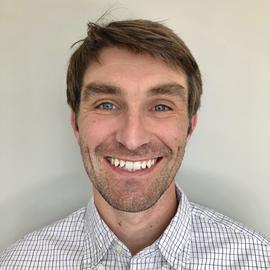
Andrei Igamberdiev , PhD, D.Sc., is a Professor of Biology at Memorial University of Newfoundland , Canada. His research spans plant physiology, bioenergetics, theoretical biology , and quantum systems in living organisms , focusing on the interplay between photosynthesis, respiration, and hypoxic stress mechanisms. Editorial Roles : Editor-in-Chief of BioSystems (Elsevier), Subject Editor of the Journal of Plant Physiology Teaching : Courses include Principles of Plant Physiology , Global Change Biology , and Selected Readings in Molecular Biology Research Highlights : Proposed that photorespiration regulates atmospheric CO2 and O2 levels through oscillatory feedback mechanisms. Discovered the haemoglobin/nitric oxide cycle as a key pathway for plant hypoxia adaptation. Linked the glyoxylate cycle to mammalian metabolic flexibility under starvation. Developed a quantum measurement theory framework for biological self-organization and semiotic structures. Advising and Research Lab : Supervises a team of graduate students including Devin Cochrane (PhD), Somaieh Zafari (PhD), and Jayamini Jayawardhane (MSc), focusing on plant metabolic pathways and global change impacts.
Emanuela Callone is a Researcher at the Department of Industrial Engineering, University of Trento, Italy. She has been affiliated with the "K. Mueller" Magnetic Resonance Laboratory since 2009, where she specializes in materials characterization using nuclear magnetic resonance (NMR) and electron paramagnetic resonance (EPR) techniques. Her responsibilities include experimental design, data analysis, scientific writing, and technical management of laboratory equipment. She also contributes to teaching through laboratory exercises for courses such as "Laboratory of Chemistry" and "Properties and characterization of materials." Education: Ph.D. in Evolutionary Biology, University of Pisa (2004) Degree in Physics (Biosystems), University of Trento (2001) Scientific Certificate, "G. Galilei" Scientific Liceum, Trento (1994) Her research focuses on the development and application of solid-state NMR and EPR spectroscopy for structural characterization of polymers, biopolymers, silicon-based materials, and hybrid organic-inorganic compounds, with emphasis on interfacial properties. She combines these techniques with infrared spectroscopy and other analytical methods to solve complex material science problems. Active in scientific communities, Callone is a member of GIDRM (Italian Group for Magnetic Resonance Discussions), INSTM (Interuniversity Consortium for Materials Science and Technology), and SCI Trentino AltoAdige SudTirol (Italian Chemical Society). She has participated in numerous national and international conferences, including the National Congress on Magnetic Resonance, COST HINT meetings, and workshops on hybrid materials and sol-gel technologies. Her collaborative work includes ERASMUS+ staff training at CNRS Spectropole (Aix-Marseille University) and Université Pierre et Marie Curie (LCMCP, France). These experiences have strengthened her expertise in advanced spectroscopic techniques and their industrial applications.
Dr. George Kostakis is an Associate Professor in Physical/Inorganic Chemistry at the University of Sussex's School of Life Sciences, Department of Chemistry. He joined Sussex in 2013 following postdoctoral work at Karlsruhe Institute of Technology and a senior researcher position at the Institute of Nanotechnology. His research group pioneers innovative approaches in coordination chemistry, focusing on three pillars: 1) catalytic 3d/4f coordination clusters for sustainable synthesis, 2) benzotriazole-based coordination polymers, and 3) the Polynuclear Inorganic Clusters Database (PICD) for structural analysis. Key research interests include: Development of earth-abundant metal catalysts (Cu, Zn, Ni) for organic transformations Radical-triggered C-H activation methodologies Design of therapeutic metal chelators Functionalization of biomaterials like amyloid fibrils Green chemistry via solvent-free reactions His group has secured significant funding from the Royal Society, EPSRC, and Royal Society of Chemistry. Current grants support work on late-stage bioactive compound functionalization (2024-2026) and economical Cu(II) synthetic methodologies. Dr. Kostakis teaches extensively in inorganic chemistry, convenes PhD programs, and oversees industrial placements.
Dr. Jens Dernedde serves as Privatdozent (Private Lecturer) at Charité - University Medicine Berlin's Institute for Laboratory Medicine, Clinical Chemistry and Pathobiochemistry. He actively leads the Bioanalytical Core Unit within Collaborative Research Centers and participates in International Research Training Group GRK 2662 'Charging into the Future'. His research integrates bioanalytical chemistry with polymer science to investigate polyelectrolyte-biosystem interactions and multivalent binding phenomena. Key applications include preclinical development of dPGS-based therapeutics for chronic inflammatory diseases and analytical method standardization for quantifying biological interactions. Current projects focus on advancing polymer-biosystem interaction models through GRK 2662's international framework while maintaining analytical leadership via the Bioanalytical Core Unit. This work supports drug development pipelines and fundamental understanding of biomolecular interactions. Dr. Dernedde's lab provides specialized training in bioanalytical techniques for characterizing complex biological interactions, with strong connections to Collaborative Research Centers and international training networks. The Bioanalytical Core Unit serves as central infrastructure for multiple research groups studying multivalent systems.
Professor Roland Netz is a faculty member at the Free University of Berlin's Department of Physics and Institute for Theoretical Physics, leading research at the intersection of theoretical physics, biophysics, and soft matter science. His work combines computational modeling with fundamental physical principles to address complex biological and nanoscale phenomena. His research portfolio spans: Polyelectrolyte behavior at dielectric interfaces Single-molecule friction mechanisms RNA secondary structure modeling Nanofluidic systems far from equilibrium Protein dynamics and folding landscapes Hydrogel transport properties Professor Netz maintains an exceptionally active grant portfolio with continuous DFG funding since at least 2005. His current leadership roles include principal investigator for Priority Programs on polyelectrolytes and ion specificity, plus subproject leadership in seven Collaborative Research Centers covering interface dynamics, superhydrophobicity, and hydrogel rheology. The International Research Training Group GRK 2662 represents his major international collaboration platform. His research demonstrates consistent evolution from fundamental polymer physics toward biomedical applications, with recent projects increasingly focusing on biosystem interactions. The group maintains strong methodological continuity in multiscale modeling while expanding into new application domains including drug delivery systems and biomolecular transport phenomena.
Wylie Stroberg is an Assistant Professor in the Department of Mechanical Engineering within the Faculty of Engineering at the University of Alberta. He leads the Computational BioSystems Lab, where he conducts research at the interface between cell biology, physiology and engineering using a range of computational and theoretical techniques. His research interests span multiple areas including: Biomechanics and Biomedical Engineering Biomaterials Mechanics and Materials Composites and Polymers Nano and Micro Materials Computational Mechanics Systems Biology of Proteostasis and the Unfolded Protein Response Reactions in Crowded Cellular Compartments Wetting Phenomena of Nanoscale Structures Dr. Stroberg's research focuses on developing new quantitative techniques for studying complex biological systems across disparate length and time scales. His work has significant implications for understanding cellular physiology, protein homeostasis, and developing new therapeutic approaches for age-associated and protein folding diseases. He employs advanced computational methods including multiscale modeling, machine learning, and theoretical analysis to investigate biological phenomena from the molecular to cellular level. His research group has published extensively in mathematical biology and computational mechanics, with a consistent focus on enzyme kinetics, cellular stress responses, and computational modeling of biological processes. The publications demonstrate a strong interdisciplinary approach combining techniques from mechanical engineering, computational science, and molecular biology. Dr. Stroberg has received recognition for his work in mathematical biology and systems biology, with publications in journals such as the Journal of Theoretical Biology, Biophysical Journal, and Mathematical Biosciences. He currently advises several graduate students working on diverse projects including multiscale modeling of enzymatic nanosensors, protein-based modulation of endoplasmic reticulum shape, development of machine learning-based coarse grained models for high-entropy alloys, and simulation of high-entropy alloys for thermal-spray deposition. His lab has trained undergraduate and master's students who have gone on to further academic pursuits. The Computational BioSystems Lab maintains active collaborations with other researchers at the University of Alberta and beyond, working at the intersection of engineering, biology, and computational science.