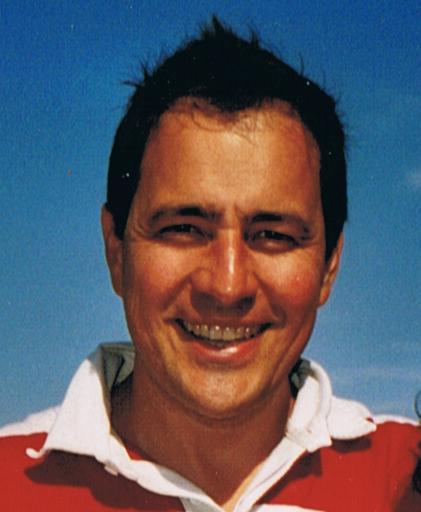
Hervé Brédif is a Professor at Paris 1 Panthéon-Sorbonne University within the Faculty of Geography. He holds an HDR (Habilitation à Diriger des Recherches) and is affiliated with Section CNU 23, covering Geography, Political Science, and Life Sciences. His research centers on complex governance challenges including multi-stakeholder problem management, joint action processes, and quality-of-life governance. He investigates territorial dynamics through territorialization processes, biodiversity management in forest ecosystems, and ecological crisis solutions grounded in humanist cosmopolitics via contractual frameworks. Geographically, his work spans French communication routes for the Geophotographic Inventory program and Sub-Saharan Africa/Haiti in distance learning contexts. Professor Brédif serves as Director of the Master 1 Environment program and contributes to national initiatives through key responsibilities: Expert evaluator for MEEDDM's REPERE program (Research and Expertise for Joint Management) Associate expert at INRA's ADAGE workshop (Climate Change Adaptation) Coordinator of the Biodiversity and Forest Management program with ENS Lyon, INRA, and FCBA Supervision of Master 1 interns across diverse research topics
Eleanor Scerri is a W2 Professor and Research Group Leader of the Human Palaeosystems Research Group at the Max Planck Institute of Geoanthropology in Jena, Germany. She is also a Reader at the Department of Prehistoric Archaeology at the University of Cologne and an Associate Professor in the Department of Classics and Archaeology at the University of Malta, her alma mater. Dr. Scerri obtained her PhD in Archaeology from the University of Southampton, jointly funded by the Royal Anthropological Institute and the Sutasoma Trust. Prior to her current position, she held prestigious fellowships including a Marie Skłodowska-Curie Actions Fellowship at the Max Planck Institute for the Science of Human History, a British Academy Fellowship at the University of Oxford with a Junior Research Fellowship at Jesus College, and a Fyssen Foundation funded postdoctoral fellowship at the University of Bordeaux. She received tenure in 2023 after winning a place on the Lise Meitner Excellence Programme with her 'Pan African Evolution Research Group'. Her research focuses on exploring the articulation between material culture, genetics, and biogeography to advance theoretical, methodological, and scientific understanding in human evolution and niche expansion. The Human Palaeosystems Group investigates deep time human-environment relationships to understand the dynamics of human bio-cultural evolution and ecosystem change, from the rise of our species until the beginning of agriculture. Her work centers on three key areas: the emergence and expansion of the human niche with its technological societal and ecological feedbacks, disease-culture co-evolution, and island colonization with ecosystem resilience and societal feedbacks. Her approach combines primary fieldwork with a range of modeling approaches using paleoecological and genetic data. Dr. Scerri's recent publications demonstrate a strong focus on human evolution in Africa and Southwest Asia, with particular attention to the Middle Stone Age, lithic technology, and human-environment interactions. Her work frequently addresses the complex population structure of early Homo sapiens in Africa and challenges simple out-of-Africa models, instead supporting structured metapopulation models of human origins. She has made significant contributions to understanding the role of tropical forests in human evolution and the dynamics of island colonization. Lise Meitner Excellence Programme (2023) Marie Skłodowska-Curie Actions Fellowship British Academy Fellowship Fyssen Foundation Postdoctoral Fellowship Dr. Scerri supervises undergraduate and postgraduate students at the University of Cologne, where she teaches undergraduate courses and supervises Masters projects. She leads several major research projects including the ERC StG funded IslandLab Project, which explores the transition from pristine natural systems to human dominated landscapes on Malta; the Disease-Culture Co-evolution project; and the Pan-African Evolution Project, which involves extensive fieldwork in West Africa investigating the deep human past in this region. The Human Palaeosystems Research Group conducts fieldwork programs across Africa and the Mediterranean, particularly in West Africa, Arabia, and Malta. The group's approach integrates archaeological, paleoenvironmental, and genetic data to test hypotheses about human evolution and the growth and impact of the human niche. Their work has significantly advanced understanding of human dispersals, population structure in Africa, and the complex evolutionary processes that shaped our species.
María Belén Pérez Lancho is a Full Professor in the Department of Computer Science and Automation at the University of Salamanca, Spain. With over 25 years of academic experience since completing her PhD in 1995, she maintains active affiliations with multiple research groups including BISITE (Bioinformatics, Intelligent Computing Systems and Educational Technology), CaUSAL (Academic Culture, Heritage and Social Memory), and Process Supervision and Control. Dr. Pérez Lancho earned her doctoral degree from the University of Salamanca with her thesis "Integrated process control system: a practical approach" supervised by Dr. Eladio Sanz García. Her academic foundation in systems engineering and automation has evolved into diverse research applications across multiple domains. Her research program demonstrates remarkable breadth while maintaining technical coherence. She has pioneered context-aware multiagent systems for home care environments, developing architectures like HoCa and HoCCAC that monitor patients and optimize task scheduling. In environmental science, she created hybrid intelligent systems for forest fire prediction using Case-Based Reasoning with topology-preserving algorithms. More recently, she has addressed cybersecurity challenges in educational technology through two-factor authentication systems. Her work consistently bridges theoretical computer science with practical implementations in real-world settings. Analysis of her publication trajectory reveals a consistent focus on adaptive intelligent systems that respond to environmental changes. Her earliest work established foundations in systems engineering, which evolved into sophisticated multi-agent applications across healthcare, environmental monitoring, and security domains. The most recent publications continue this trajectory while addressing contemporary challenges in educational technology security. Dr. Pérez Lancho maintains extensive collaborative relationships, particularly with Juan M. Corchado at the University of Salamanca, as evidenced by numerous co-authored publications. Her research has been implemented in actual home care environments and environmental monitoring systems, demonstrating the practical impact of her work. Her research infrastructure includes: BISITE group focusing on intelligent computing systems and educational technology CaUSAL group examining academic culture and heritage Process Supervision and Control group applying her foundational work to industrial contexts These affiliations support her interdisciplinary approach to solving complex problems through computational methods.
Prof. GUO Meiyu serves as an Assistant Professor at Hong Kong Baptist University, where she is affiliated with the Department of Geography and a member of the Smart Society Lab. Her research bridges energy systems and environmental sustainability, with particular focus on China's unconventional energy development and carbon neutrality pathways. Her academic credentials include: Ph.D. from The Chinese University of Hong Kong Visiting Research Fellowship at Harvard University's School of Engineering and Applied Science M.Ec. from Renmin University of China B.Sc. from Renmin University of China Dr. Guo's research centers on shale gas development and its environmental implications, examining water resource impacts , carbon market mechanisms , and policy frameworks for sustainable energy transitions. Her work integrates engineering analysis with economic modeling to address critical gaps in China's energy-environment nexus, particularly regarding unconventional resource extraction and decarbonization strategies. Analysis of her recent publications reveals three dominant research trajectories: (1) technical optimization of shale gas operations with environmental safeguards, (2) carbon market development and certification systems, and (3) spatial analysis of energy-land interactions. Her interdisciplinary approach combines geospatial techniques, policy analysis, and environmental economics to tackle complex sustainability challenges in rapidly industrializing regions. Dr. Guo has not listed any major scientific awards in the provided information. She actively mentors graduate researchers through multiple externally funded projects: Principal Investigator for RGC's Early Career Scheme (2025-2027) on Xinjiang shale water impacts Lead on Guangdong Natural Science Fund project for low-carbon shale technologies PI for HKBU's carbon credit certification initiative Multiple grants from National Natural Science Foundation of China As a core member of the Smart Society Lab, Dr. Guo contributes to interdisciplinary research on sustainable urban systems, focusing on energy-water-land interactions in China's rapidly developing regions through integrated geospatial and policy analysis frameworks.
Richard Potts serves as Curator of Biological Anthropology and holds the Peter Buck Chair of Human Origins at the Smithsonian Institution's National Museum of Natural History. As founder and director of the Human Origins Program, he leads ongoing archaeological excavations in partnership with the National Museums of Kenya, focusing on the Rift Valley of southern Kenya and the Homa Peninsula. His interdisciplinary research bridges anthropology, earth sciences, and paleontology to investigate the relationship between environmental dynamics and human evolutionary adaptations. Dr. Potts received his B.A. from Temple University and earned his Ph.D. in biological anthropology from Harvard University in 1982. After teaching at Yale University, he joined the Smithsonian in 1985, where he has maintained a distinguished career spanning nearly four decades. He also serves as curator of the Smithsonian's Hall of Human Origins, which presents the story of human evolution to the public. Potts' research centers on the environmental variability hypothesis, which proposes that fluctuating environmental conditions were a key selective pressure driving human evolution. His work examines how ecological instability shaped hominin adaptations including tool use, dietary flexibility, and social behaviors. Through extensive fieldwork in East Africa, particularly in Kenya's Rift Valley, he has documented how shifting landscapes and climate patterns influenced early human development and dispersal patterns. His approach integrates geological, paleontological, and archaeological evidence to reconstruct ancient environments and their relationship to hominin evolution. Analysis of Potts' recent publications reveals a consistent focus on environmental dynamics and human evolution, with particular attention to Oldowan tool technology, hominin behavioral adaptations, and Pleistocene environmental reconstruction. His work increasingly incorporates interdisciplinary approaches, combining archaeological evidence with geological, paleontological, and climate data to build comprehensive models of human evolutionary processes. The geographic focus remains primarily on East Africa, with significant contributions to understanding the paleoenvironmental context of key hominin sites in Kenya. As director of the Human Origins Program, Potts has mentored numerous researchers and students, fostering collaborative international research projects that have advanced our understanding of human evolution. His work has been supported by multiple research grants that have enabled extensive fieldwork and laboratory analysis, contributing significantly to the development of paleoanthropological methodologies and theoretical frameworks. Potts leads active research teams conducting fieldwork in Kenya's Rift Valley, where they investigate Pleistocene archaeological sites and reconstruct ancient environments. His program collaborates with Kenyan institutions and researchers, maintaining long-term partnerships that support capacity building and knowledge exchange. The Human Origins Program also develops educational resources and public exhibits that translate complex scientific findings about human evolution for broader audiences.