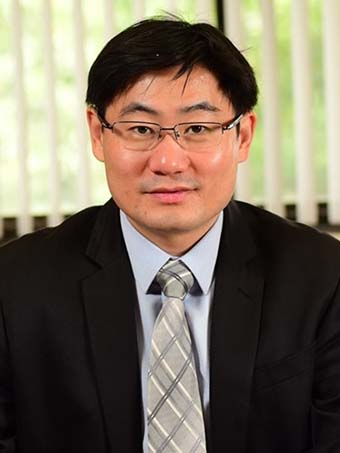
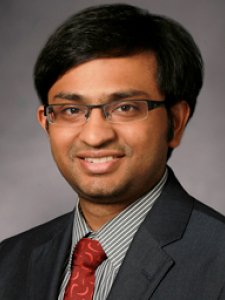
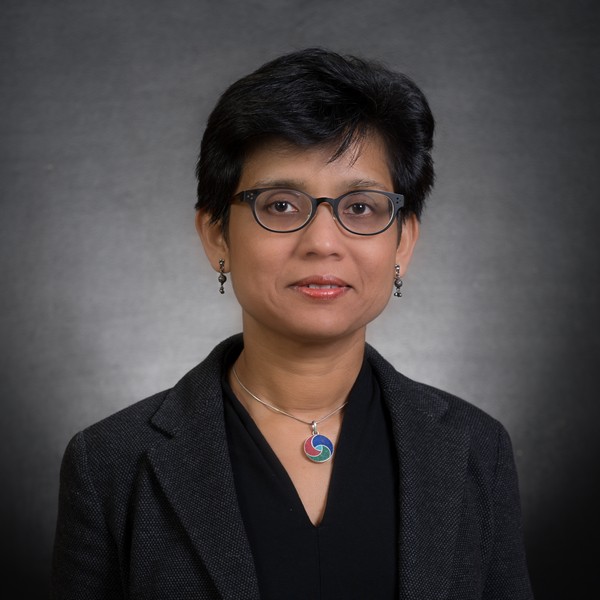
Professor CHEN Wei (National University of Singapore) holds the Provost's Chair Professorship (2023-2026) and serves as Vice-Dean (Research) with joint appointments in the Departments of Chemistry and Physics. His research focuses on molecular-scale interface engineering for 2D materials-based devices and interface-controlled nanocatalysis in energy/environmental applications. PhD in Material Science, NUS (2004) Lee Kuan Yew Research Fellow (2006-2008) Established Surface and Interface Lab (2009) Director, NUS Research Institute (Fuzhou) His work on 2D optoelectronic memory (Nat. Comm. 2018), Kagome lattice design (Nano Lett. 2020), and single-atom catalysis (Nat. Comm. 2021) has been recognized by multiple high-impact publications and the Clarivate Highly Cited Researcher status (2017-2021). Awards include the NRF Investigatorship (2023) , Mitsui Chemicals-SNIC Industry Award (2020) , and Singapore Young Scientist Award (2012) . Grants from NUS, Singapore MOE, CREATE/CRP programs, and A*STAR support his exploration of interface engineering for neuromorphic computing and energy-efficient nanocatalysts . Current projects include monolayer blue phosphorus synthesis and solid electrolyte interphase engineering for lithium batteries.
Professor Andrew Johnson at the University of Bath is a leading researcher in materials chemistry for energy applications , specializing in precursor design for advanced thin film growth techniques including Chemical Vapour Deposition (CVD) and Atomic Layer Deposition (ALD) . His work spans sustainable technologies, graphene science, and nanoparticle synthesis, with a focus on enabling next-generation electronics and climate solutions. Department of Chemistry, University of Bath Centre for Sustainable Chemical Technologies (CSCT) Institute of Sustainability and Climate Change Collaborations with University of Leeds, University of California Davis, and industry partners like Pragmatic Printing Research Interests: Development of volatile, non-toxic molecular precursors for metals/oxides ALD/CVD of metastable materials (e.g., SnO, α-Fe2O3) Carborane chemistry for early transition metals and lanthanides Surface engineering for automotive lubricant alternatives Photoanodes for solar water splitting Flexible electronics with sustainable materials Collaborations & Grants: Funded by EPSRC and Innovate UK , with projects on low-power flexible electronics and complementary semiconductor systems. Collaborates with physics, chemical engineering, and industry partners for mechanical property testing and device fabrication.
Saptarshi Das is an Associate Professor in the Department of Engineering Science and Mechanics within the College of Engineering at Pennsylvania State University. His research focuses on cutting-edge semiconductor technology, particularly in the realm of two-dimensional materials for next-generation electronic devices. Das maintains an active research program with numerous publications in high-impact journals including Nature, Nature Electronics, and Nature Communications. Dr. Das's research interests center around two-dimensional materials, semiconductor devices, and nanoelectronics with applications in AI hardware and computing systems. His work explores the fundamental properties and applications of materials like transition metal dichalcogenides (MoS 2 , WSe 2 ), graphene, and other 2D materials for creating novel electronic devices that can overcome limitations of traditional silicon-based technology. His research spans from fundamental material science to practical device implementation, with particular emphasis on developing energy-efficient computing solutions. Analysis of Dr. Das's recent publications reveals a strong focus on 2D material-based transistors, 3D integration techniques, and novel computing architectures. His work demonstrates significant advancements in p-type 2D transistors, monolithic 3D integration, and biomimetic sensor systems. The research shows a clear trajectory toward developing non-silicon computing platforms that could revolutionize AI hardware and low-power electronics. Dr. Das leads an active research group with multiple PhD students and collaborators working on semiconductor device fabrication, characterization, and integration. His laboratory likely has strong connections with Penn State's Materials Research Institute and other interdisciplinary research centers focused on advanced materials and semiconductor technology. His research has attracted significant attention, with multiple mentions in university news and science media outlets highlighting breakthroughs in 2D computing and electronic tongue technology.
Associate Professor Ranjith Rajasekharan Unnithan is a Research Group Leader and Assistant Dean (Graduate Research Experience) at the University of Melbourne's Faculty of Engineering and Information Technology. He also serves as Director of Sensor Research at Hort-Eye Pty Ltd (precision agriculture drones) and Lead Scientific Advisor at KDH Design Co Ltd (AR technology). His academic affiliations include: Associate Professor, Department of Electrical and Electronic Engineering Advanced Sensors Spectral Image Sensors Researcher Topical Editor, Optics Letters (Optica/OSA Group) Research Focus: Spanning image sensors , augmented reality displays , nanophotonic engineering , and biomedical sensing with applications in space, agriculture, and neurological disorders. Key technologies include: Photonics and Electronics for sensor systems Machine learning integration with sensor data Miniscope Lab-on-chip Sensors Autonomous drone sensing platforms Scientific Recognition: Dean's Excellence Award in Industry Research (2024) EMI Emerging Leader Award (2020) MCN Tech Fellow Ambassador (2019) Transurban Innovation Competition Winner (2017) Academic Background: PhD in Electrical Engineering from the University of Cambridge and Executive Certificate in Management from MIT's Sloan School.
Ole Richter is an Assistant Professor in the Department of Applied Mathematics and Computer Science at the Technical University of Denmark (DTU). His research focuses on advanced device integration and neuromorphic processors, particularly leveraging beyond-CMOS technologies for embedded systems engineering. His recent work involves developing electronic circuits with silicon-based components and exploring neuromorphic architecture for adaptive memory materials. A 2025 publication in Nature Communications highlights his contributions to on-chip learning systems. Richter’s research has attracted attention from 3 news outlets and is accessible via his ORCID profile (0000-0001-5399-8992). Collaborations and publications reflect his expertise in neuromorphic electronics and device integration.
Paul McIntyre holds the Rick and Melinda Reed Professorship and is a Professor of Photon Science at Stanford University, concurrently serving as a Senior Fellow at the Precourt Institute for Energy. His research focuses on nanostructured inorganic materials for advanced electronics, energy technologies, and sensor applications. He earned his ScD from MIT in 1993, establishing a foundation for his expertise in materials science and semiconductor physics. McIntyre's research spans Materials Science , Semiconductor Physics , and Nanotechnology , with core expertise in metal oxide/semiconductor interfaces, ultrathin dielectrics, defects in complex metal oxide thin films, and nanostructured Si-Ge single crystals. His group employs advanced materials synthesis, electron microscopy, spectroscopy, and device characterization to investigate interface passivation and functional properties. Current work emphasizes atomic layer deposition techniques for precision material engineering. Analysis of his 2023-2025 publications reveals dominant research thrusts in oxide semiconductor transistors for low-voltage memory applications, ferroelectric HfZrO2 systems for high-endurance non-volatile memory, and ALD-engineered catalysts for solar fuel production. Key trends include dimensional scaling of nanodevices, interface dipole engineering, and defect control in energy conversion materials. McIntyre leads an active research group that integrates materials synthesis with advanced characterization to develop next-generation electronic and energy conversion technologies, maintaining strong connections with Stanford's energy initiatives through the Precourt Institute.
Suchi Guha is a Professor of Physics and Astronomy and Director of Graduate Studies at the University of Missouri's College of Arts and Science. Her research focuses on organic semiconductors, with expertise in optical spectroscopy, light scattering techniques, and device fabrication for optoelectronics. She leads the Light Scattering and Organic Electronics Research Group, exploring applications in field-effect transistors, solar cells, and light-emitting displays. Her education includes a PhD from Arizona State University. Research interests include high-pressure studies of conjugated systems, charge transport mechanisms in organic materials, and improving device performance through interface engineering. Current projects involve polymer-dielectric interface control, organic solar cell charge transfer, and triplet exciton dynamics. Publications emphasize hybrid halide perovskites, ferroelectric transistors, and CVD-grown materials. While no specific awards are listed, her work contributes to advancing organic electronics and optoelectronic materials science. Advising and grants are integral to her role as Director of Graduate Studies, though specific details are not provided here. Her lab focuses on interdisciplinary approaches to material synthesis and device optimization.
Paul Morrow is a Lecturer in the Department of Electrical and Electronic Engineering at the Faculty of Engineering and the Built Environment. His research focuses on areas including Flicker Noise, Audio Output systems, Power Stage optimization, and semiconductor technologies such as Complementary Metal-Oxide-Semiconductor (CMOS) and chopper circuits. His work also explores feedback bit mechanisms and applications in television engineering. While no specific educational background, grants, or lab affiliations are detailed in the provided text, his research fingerprint highlights a specialized focus on analog circuit design and signal integrity in electronic systems. No awards, advised students, or published articles are listed here.
Farshad Moradi is a Professor at the Institute of Mechanical and Electrical Engineering, University of Southern Denmark, specializing in Microelectronics. His research spans spintronics, neuromorphic computing, and analog-to-digital conversion technologies. Current Role: Professor at SDU Microelectronics Research Focus: Spin-Orbit Torque, Magnetic Tunnel Junctions, CMOS Integration Collaborations: Active in international research networks with recent partnerships in Europe His work emphasizes the intersection of electronics, materials science, and computational innovation, particularly in spin-based hardware for AI applications. Recent publications highlight trends in hybrid spin-CMOS circuits and vortex dynamics for wearable sensors, demonstrating interdisciplinary impact.
Dr. Mariana STEFAN is a Scientific Researcher II at the National Institute of Materials Physics (NIMP), working in the Laboratory of Atomic Structures and Defects in Advanced Materials (LASDAM). She also serves as the responsible person for the EPR facility from the Romanian partner NIMP within the Central European Research Facility Consortium (CERIC). With expertise in electron paramagnetic resonance techniques, her work bridges fundamental materials science and practical applications in energy, sensing, and environmental technologies. Dr. STEFAN's educational background includes: PhD in Physics (Condensed State Physics), University of Bucharest, Romania (2002) Thesis title: Paramagnetic point defects in ionic crystals with structural phase transitions PhD supervisor: Prof. Dr. Sergiu V. Nistor BSc Physics (Electronic and Electrotechnical Materials and Components), Faculty of Physics, University of Bucharest, Romania (1991) Her research focuses on characterizing point defects in wide band gap semiconductors and insulating crystalline materials. She specializes in EPR probing of structural and chemical transformations, with particular expertise in multifrequency EPR analysis and computational interpretation of spectra. Her work extends to EPR investigations of nanostructured materials for applications in electronics, (photo)catalysis, and gas sensing, where she has made significant contributions to understanding defect structures and their impact on material properties. Her technical proficiency also includes single crystal growth using Czochralski and Bridgman techniques. Dr. STEFAN's publication record demonstrates consistent high-impact research across multiple domains of materials science. Her work shows a clear trajectory from fundamental studies of defect structures in semiconductor nanoparticles to applied research on energy storage devices, gas sensors, and photocatalytic materials. The integration of EPR with complementary techniques like XRD, STEM, and XPS in her research provides comprehensive materials characterization that has advanced understanding in multiple subfields. Her scientific recognition includes: Dragomir Hurmuzescu award of the Romanian Academy (2001) Dr. STEFAN has contributed to numerous collaborative research projects through CERIC and has co-authored multiple book chapters on semiconductor nanoparticles and defect structures. Her work with Research ID G-4068-2011 and ORCID ID 0000-0001-5272-4770 demonstrates sustained research productivity, with recent publications focusing on supercapacitor materials, gas sensing applications, and advanced EPR methodologies for nanomaterial characterization. As part of LASDAM at NIMP, Dr. STEFAN operates advanced EPR facilities that support both fundamental research on defect structures and applied research on materials for energy, sensing, and environmental applications. Her laboratory contributes significantly to the Romanian and European materials science communities through the CERIC consortium, providing specialized characterization capabilities for researchers across multiple disciplines.