
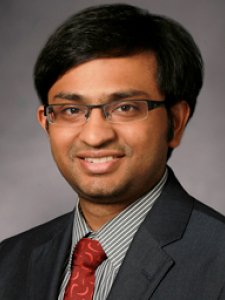
Saptarshi Dasمشاهده پروفایل
دانشیار
Saptarshi Das is an Associate Professor in the Department of Engineering Science and Mechanics within the College of Engineering at Pennsylvania State University. His research focuses on cutting-edge semiconductor technology, particularly in the realm of two-dimensional materials for next-generation electronic devices. Das maintains an active research program with numerous publications in high-impact journals including Nature, Nature Electronics, and Nature Communications. Dr. Das's research interests center around two-dimensional materials, semiconductor devices, and nanoelectronics with applications in AI hardware and computing systems. His work explores the fundamental properties and applications of materials like transition metal dichalcogenides (MoS 2 , WSe 2 ), graphene, and other 2D materials for creating novel electronic devices that can overcome limitations of traditional silicon-based technology. His research spans from fundamental material science to practical device implementation, with particular emphasis on developing energy-efficient computing solutions. Analysis of Dr. Das's recent publications reveals a strong focus on 2D material-based transistors, 3D integration techniques, and novel computing architectures. His work demonstrates significant advancements in p-type 2D transistors, monolithic 3D integration, and biomimetic sensor systems. The research shows a clear trajectory toward developing non-silicon computing platforms that could revolutionize AI hardware and low-power electronics. Dr. Das leads an active research group with multiple PhD students and collaborators working on semiconductor device fabrication, characterization, and integration. His laboratory likely has strong connections with Penn State's Materials Research Institute and other interdisciplinary research centers focused on advanced materials and semiconductor technology. His research has attracted significant attention, with multiple mentions in university news and science media outlets highlighting breakthroughs in 2D computing and electronic tongue technology.
