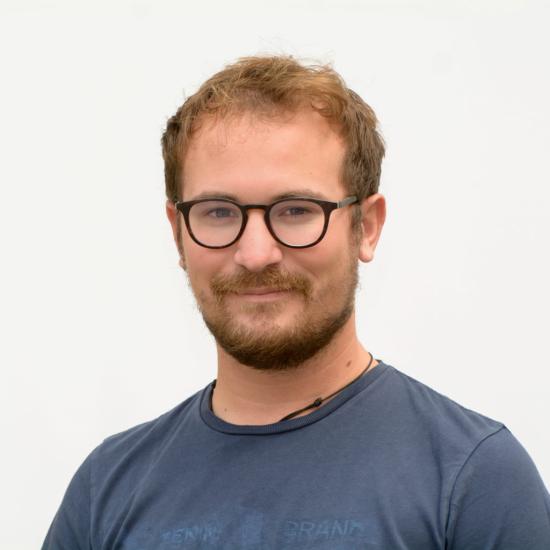
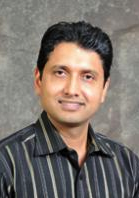
Maxime Menuet is a Professor of Economics at Université Côte d'Azur (GREDEG) and a Research Associate at IPAG Business School in Paris. His academic credentials include a PhD in Economics and dual M.Sc. degrees in Macroeconomics/Finance and Mathematics from the University of Orléans, complemented by a 2023 HDR (Habilitation à Diriger des Recherches) from Paris VIII. 2023: HDR in Economics, Paris VIII 2018: PhD in Economics, University of Orléans 2015: M.Sc in Macroeconomics and Finance, University of Orléans 2015: M.Sc in Mathematics (Theoretical Probability), University of Orléans His research focuses on Economic Theory and Political Economy , with specialized expertise in public debt , macroeconomic stability , conflict dynamics , and interdisciplinary intersections with theology and history . Recent work explores environmental sustainability through fiscal policy, ideological clashes in macroeconomic governance, and historical economic thought from Jansenist perspectives. Maxime's publications since 2023 show strong interdisciplinary trends, blending theological analysis with economic modeling (e.g., New Testament debt language), refining game-theoretic conflict models , and advancing ecological macroeconomic frameworks for sustainable debt management. ANR Young Researcher Grant Best Paper Award, TIMTED Conference Visiting Scholarships: Duke University, Osaka University, UCAM Montreal As Deputy Director of EUR ELMI and co-director of the European Research Group on Money, Banking, and Finance, he leads major interdisciplinary initiatives. His teaching portfolio mirrors his research, covering economic theory, political economy, and debt/conflict dynamics.
Alana Clifton-Cunningham is a dedicated educator and researcher in fashion and textile design at the University of New South Wales, Faculty of Arts, Design & Architecture. With over two decades of experience in higher education, she has established herself as a leader in sustainable and innovative design education. Her work bridges traditional craftsmanship with cutting-edge technologies, creating experiential learning environments that prepare students for contemporary design practice while addressing global sustainability challenges. Educational Background: 2021 | UNSW - Learn to Lead: Progress Needs Resilient Leaders 2019 | UTS - Graduate Certificate in Higher Education Transdisciplinary Learning 2008 | UNSW (COFA) - Master of Design (Hons) Research 2002 | UTS - Graduate Certificate in Higher Education Teaching and Learning 2001 | TAFE - Diploma of Marketing Management 1993 | UTS - Bachelor of Design (Hons) (Fashion and Textile Design) Clifton-Cunningham's research focuses on sustainable fashion practices, with particular emphasis on circular economy principles in textile production and garment design. Her work explores scalable models for textile remanufacturing, clothing waste reduction, and sustainable workwear systems. She is deeply engaged in addressing clothing sizing issues and standards in Australia, advocating for more inclusive approaches to fit and body diversity. Her commitment to equity, diversity, and inclusion underpins all aspects of her leadership and teaching, making her a strong advocate for responsible design futures that prioritize both environmental sustainability and social justice. Her publication record demonstrates a consistent focus on the intersection of design education, cultural exchange, and sustainable practices. Notable works include her 2022 book chapter on cross-cultural textile workshops in India, her 2018 analysis of undergarment technology evolution, and her contributions to exhibitions like 'Out of Hand' at the Powerhouse Museum. These works collectively highlight her emphasis on hands-on, experiential learning that connects students with real-world sustainability challenges and cultural contexts. Research Grants: 2024 | Redesigning Clothing Waste Using a Circular Design Framework - LP230200929 $220,473K 2024 | Department of Community and Justice - $17,900 2024 | Education Focussed Community of Practice (PVCESE) - $2,500 2023 | Department of Community and Justice - $15,900 2023 | Education Focussed Community of Practice (PVCESE) - $6,995 2017 | AbbVie Pharmaceutical Pty Ltd, HS Support Garments: Chief Investigator - $35,000 Clifton-Cunningham actively supervises research in fashion and textile design, with a focus on sustainable practices and innovative design processes. Her extensive industry network, including partnerships with major fashion labels, brings real-world insight into the classroom. She has led international global studios, including immersive programs in India where students collaborate with artisans. Her current ARC Linkage project 'Redesigning Clothing Waste Using a Circular Design Framework' represents a significant contribution to sustainable fashion research. Her creative practice is reflected in numerous exhibitions, including the Seoul International Fashion Art Biennale (2016, 2018), Wangaratta Contemporary Textile Awards, and the Powerhouse Museum's 'Out of Hand' exhibition. These artistic endeavors complement her academic work, demonstrating the practical application of her research interests in sustainable and innovative textile design.
Edwin Olson is an Associate Professor of Computer Science and Engineering at the University of Michigan, where he directs the APRIL Robotics Lab. He also serves as CEO of May Mobility Inc., a company focused on developing driverless shuttles. His research spans autonomy, perception, robotics, and learning, with notable contributions to technologies like AprilTags and the LCM middleware. Olson has led groundbreaking projects, including the 2010 MAGIC competition-winning robot team and the DARPA Urban Challenge. He has been recognized with awards such as Popular Science's 'Brilliant Ten' (2012), the DARPA Young Faculty Award (2013), and the College of Engineering Education Excellence Award (2015). His work emphasizes real-world applications of autonomous systems, including risk assessment, multi-policy decision making, and sensor fusion. Recent articles focus on autonomous agent behavior prediction, remote assistance systems, and infrastructure calibration. Olson's academic contributions are complemented by industry roles, including his tenure at Toyota Research Institute as Co-Director for Autonomous Driving Development. Education: PhD in Computer Science from MIT (2008) Key Projects: MAGIC 2010, DARPA Urban Challenge, Toyota Research Institute Labs: APRIL Robotics Lab Awards: DARPA Young Faculty Award, Brilliant Ten, Education Excellence Award
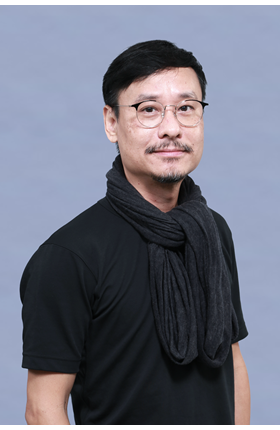
Brian Kwok is an Associate Professor at The Hong Kong Polytechnic University's School of Design, where he serves as Programme Leader of BA Communication Design and heads the Information Design Lab. His academic foundation includes an MA in Design from PolyU, complemented by an MA in Visual Culture Studies and MPhil in Communication from the Chinese University of Hong Kong. With over a decade of tenure at PolyU, Kwok co-founded the Information Design Lab in 2011 to advance research in practical design applications. Kwok's research explores the intersection of visual communication, cultural heritage, and urban environments. Primary domains include: Neon Signage Studies : Documentation and semiotic analysis of Hong Kong's vanishing neon landscapes Healthcare Communication : Typographic legibility for medication labeling targeting senior citizens Urban Ethnography : Spatial practices of street vendors and visual narratives in public spaces Cultural Preservation : Archival projects on Hong Kong's typographic heritage and vernacular design His publication corpus (2015-2023) demonstrates consistent focus on Hong Kong's visual culture evolution, with recurring themes: cultural identity in urban signage, typographic accessibility for vulnerable populations, and cinematic representations of urban change. Methodologically, he blends empirical studies (e.g., user testing of medicine labels) with visual semiotics and historical documentation. Awards recognize both scholarly and practical impact: GRF-funded research on neon sign preservation (2023) Arts Go Digital grant for cultural documentation (2021) HKDA Global Design Excellence Award (2017) Outstanding Paper Award for neon signage research (2017) As Lab Leader, Kwok oversees projects including medicine label optimization, wayfinding systems, and the Fading of HK Neon Visual Culture Project. He actively engages with public institutions through roles on the Public Libraries Advisory Committee and as external examiner for academic programs.
Rachel Cremona is an Associate Professor of Political Science & International Studies and serves as the Dean of the School of Liberal Arts & Sciences at Flagler College. She is affiliated with the Department of Humanities, where she teaches courses including Introduction to Political Science, Politics in the U.S., Comparative Government, and US/Latin American Foreign Policy, demonstrating leadership in liberal arts education. Her academic credentials include: Ph.D. in Political Science from the State University of New York at Binghamton (2006) M.A. in Political Science from the State University of New York at Binghamton (2003) M.A. in United States Government and Politics from the University of Essex (2001) B.A. in American Studies: Politics and Government from the University of Kent (2000) Study Abroad at the University of California, Berkeley (1998-1999) Dr. Cremona's research critically examines Latin American Politics , U.S./Latin America Relations , the rise of Far Right Political Parties , European Union dynamics, theories of Democratic Representation , and evolving concepts of Citizenship . Her work consistently explores how identity, governance structures, and historical contexts shape political systems across diverse regions. Analysis of her 2004-2012 publications reveals a strong empirical focus on comparative politics, with recurring themes of ethnic diversity in state formation, electoral system impacts on representation, and historical foundations of national identity. Her research bridges African, Latin American, and American political contexts while maintaining methodological rigor in examining democratic processes. No scientific awards were mentioned in the provided text. Dr. Cremona actively mentors students as Faculty Advisor for Pi Sigma Alpha (National Political Science Honor Society) and First Year Advisor. Her sustained scholarly output indicates ongoing research engagement, complemented by significant administrative leadership as Dean of the School of Liberal Arts & Sciences. There is no information about dedicated research laboratories or specialized research teams associated with Dr. Cremona in the provided materials.
Julie Anne Legate is Professor and Chair of Linguistics at the University of Pennsylvania's Department of Linguistics. She earned her PhD from the Massachusetts Institute of Technology in 2002. Legate co-directs the Penn Syntax Lab and served as Editor-in-Chief of Natural Language & Linguistic Theory for 10 years. Her research focuses on syntactic theory, morphosyntax, and syntax-semantics interfaces, with specialization in endangered/understudied languages. Key interests include passives, impersonals, causatives, null subjects, case theory, and locality domains. She maintains secondary research interests in language acquisition. Legate's publications demonstrate extensive work on voice systems (especially passives), ergativity, case theory, recursion, and cross-linguistic analysis of languages including Acehnese, Warlpiri, and Lithuanian. Her research frequently combines theoretical innovation with empirical fieldwork. Awards include the LSA’s Best Paper in Language Award (2020) for On Passives of Passives . She has advised multiple PhD students including Faruk Akkuş (2021), Milena Šereikaitė (2020), Ava Irani (2019), Helen Jeoung (2018), and Einar Freyr Sigurðsson (2017). Current projects include: syntactic islands (with Charles Yang), Mandarin bridge verbs (with Jiayi Lu and Charles Yang), null subjects in Brazilian Portuguese (with Gesoel Mendes), and passive agent binding.
Jesse Jenkins is an Assistant Professor at Princeton University, jointly appointed in the Department of Mechanical and Aerospace Engineering and the Andlinger Center for Energy and Environment, with courtesy affiliations in the School of Public and International Affairs and the High Meadows Environmental Institute. He leads the Princeton ZERO Lab and specializes in macro-scale energy systems engineering. Education: PhD and SM – Massachusetts Institute of Technology (MIT) Postdoctoral Fellow – Harvard Kennedy School and Harvard University Center for the Environment Research Interests: Jenkins focuses on the transition to zero-carbon energy systems . His work spans the integration of distributed energy resources, optimization of national and sub-national energy systems, and the role of electricity in economy-wide decarbonization. He applies advanced modeling techniques to inform policy and planning decisions. Publications Focus: His recent work emphasizes the intersection of decarbonization strategies and nature-based climate solutions , exploring how ecosystem-based interventions can complement technological pathways to net-zero emissions. These publications underscore the importance of policy frameworks and risk assessments in scaling sustainable climate interventions. Labs & Teams: Jenkins leads the Princeton ZERO Lab (Zero-carbon Energy systems Research and Optimization Laboratory) , which develops and applies optimization-based models to evaluate low-carbon energy technologies and support policy decisions in transitioning to net-zero emissions systems.
Catherine Polling is an NIHR Clinical Lecturer in General Psychiatry at King’s College London (KCL), affiliated with the Institute of Psychiatry, Psychology & Neuroscience (IoPPN) and the Health Inequalities Research Group . Her work focuses on mental health inequities, self-harm epidemiology, and mixed-methods research, particularly in urban and marginalized communities. Education: MBBS from University College London, MSc in Epidemiology from the London School of Hygiene and Tropical Medicine, PhD from KCL's Department of Psychological Medicine Research Interests: Catherine investigates health disparities in mental health services using advanced statistical methods (multi-level modeling, Bayesian disease mapping) and GIS-based data visualization. Her clinical work with the South London and Maudsley NHS Foundation Trust complements her academic focus on systemic racism and mental health outcomes. Teaching & Engagement: She lectures on urban mental health for KCL’s Urban Informatics MSc and co-leads training on racism in mental health services. She also facilitates reflective practice groups accredited by the Balint Society and contributes to curriculum reform via the Maudsley Cultural Psychiatry Group. Scientific Awards: NIHR Clinical Lecturer Fellowship Wellcome Training Fellowship Research Trends: Her publications emphasize self-harm risk factors, pandemic impacts on healthcare workers, ethnic disparities in mental health services, and the intersection of urban environments with mental health outcomes. She integrates large-scale clinical datasets, qualitative interviews, and spatial analysis to address systemic inequities.
Michael Krisinger is an Associate Professor of Teaching in the Department of Biochemistry & Molecular Biology at the University of British Columbia . He began his teaching career in 2010, transitioning to full-time in 2013. He lectures Biochemistry 202 (Introductory Medical Biochemistry) and Biochemistry 303 (Molecular Biochemistry) while serving as a tutor in the Faculty of Medicine's Case Based Learning program. Krisinger co-developed the department's two-course summer program for international students and mentors postdoctoral fellows in teaching. He also manages the department's CANVAS digital learning platform. Krisinger's research focuses on the molecular mechanisms of coagulation and complement system regulation , particularly their evolutionary relationship and functional interplay. His work has explored thrombin's role in complement activation, polyphosphate-mediated complement suppression, and nanoparticle surface interactions with proteolytic cascades. He previously co-supervised graduate students at UBC's Centre for Blood Research before prioritizing education. Publications highlight his expertise in protease-substrate dynamics , lipoprotein-phospholipid interactions , and hemostasis-immunity crosstalk . He remains engaged in public science through community environmental initiatives and local outreach activities.
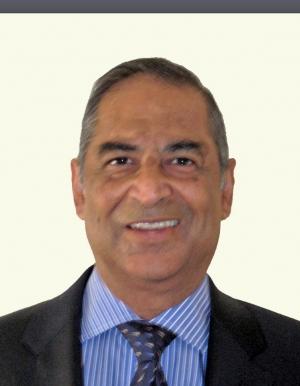
Lakshmi N Sankar serves as Regents Professor and Sikorsky Professor in the Guggenheim School of Aerospace Engineering at Georgia Institute of Technology, where he directs the Computational Fluid Dynamics Laboratory and teaches aerodynamics, helicopter theory, and wind energy courses. His research program spans unsteady viscous flow modeling for aircraft, helicopters, and wind turbines since joining the faculty in 1982 after industry experience at Lockheed Martin. Education: Ph.D., Aerospace Engineering, Georgia Institute of Technology, 1977 MSAE, Aerospace Engineering, Georgia Institute of Technology, 1975 B. Tech., Aeronautical Engineering, Indian Institute of Technology, Madras, India, 1973 Research Focus: Professor Sankar's work centers on Computational Fluid Dynamics for rotorcraft aerodynamics and wind energy systems , with significant contributions to icing phenomena and unsteady flow modeling . His recent publications reveal intensifying focus on adverse weather effects (rain/icing), eVTOL conversion challenges, and high-fidelity hybrid modeling techniques for rotorcraft performance prediction. Publication Trends: Analysis of his 2022-2025 publications shows dominant themes in rotorcraft icing (35%), weather impact studies (25%), and advanced CFD methodologies (20%), with growing interest in drone applications and mathematical aspects of fluid dynamics. His work consistently bridges theoretical mathematics with practical aerospace engineering challenges. Scientific Recognition: AIAA Fellow and AHS Technical Fellow NASA Group Achievement Award (2007) and Space Act Software Release Award (2003) Multiple Sigma Gamma Tau Teaching Awards (2005-2015) Dean George C. Griffin Faculty of the Year (2014-2015) Sikorsky Professorship (2018-Present) Mentorship and Collaboration: As recipient of Georgia Tech's Graduate Research Assistant Development Award, he has cultivated extensive student mentorship. His research integrates with the Vertical Lift Research Center of Excellence and Center for 21st Century Universities, securing major industry and NASA funding for rotorcraft innovation. Current projects include physics-based modeling of ice accretion and eVTOL retrofit feasibility studies. Research Infrastructure: The Computational Fluid Dynamics Laboratory serves as his primary research hub, complemented by collaborations through the Vertical Lift Research Center of Excellence where his team develops next-generation modeling tools for military and civilian rotorcraft applications under federal funding programs.
Dr Shu-Ling Lu is an Associate Professor at the University of Reading , serving as Director of the MSc Project Management Programme and a Member of Senate . Her research spans Innovation Management , Quality Control , and Net Zero Transitions in construction, alongside Heritage Building Integration and Gender Dynamics in built environment sectors. Her academic journey includes a PhD , MSc in Construction Engineering , and a Diploma in Architectural Engineering , all from institutions in Taiwan and the UK, complemented by a Postgraduate Certificate in Higher Education Practice from the University of Salford. Research Interests : Innovation in construction, quality management, heritage conservation, net-zero transitions, gender equity, and system dynamics applications. Article Trends : Focus on defects analysis , heritage integration , gender dynamics , system dynamics , and net-zero strategies across 15 recent publications. Scientific Awards : Fellow of the Chartered Institute of Building (FCIOB) Fellow of Higher Education Academy (FHEA) Full member, Association for Project Management (MAPM) BSI Committee Participation (Quality Management Standards) Supervision & Grants : Mentored 7 PhD students and led/co-led projects funded by Natural Environment Research Council (NERC) , EPSRC , and COST , with total grants exceeding £500,000.
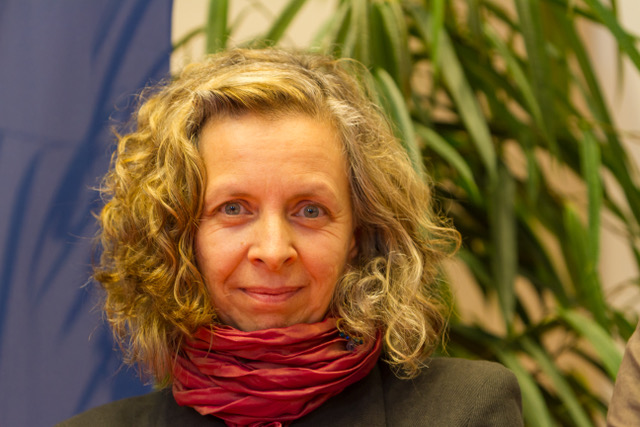
Demirdache Hamida is a Full Professor of Linguistics at Nantes University and Director of the Nantes Linguistics Lab (LLING UMR 6310, CNRS). She holds a PhD from MIT (1991) and Habilitation à diriger des recherches from Nantes University (2003). Her research focuses on syntax-semantics interfaces, linguistic diversity, and formal syntactic theory with emphasis on Semitic languages and under-represented languages like Salish. She has pioneered experimental methodologies to probe logical form syntax, particularly in studies of temporal anaphora, distributivity, and quantification. Leadership roles: Founded LLING lab in 2004, elevated to CNRS status in 2016 Research grants: Coordinator of ANR-DFG projects (2022-2025), CHILL serious game initiative (2018-2021) Awards: Palmes académiques (2011), Descartes-Huygens Prize (2003), multiple PEDR/PES excellence awards Her experimental work bridges theoretical syntax and empirical child language studies, with recent focus on cross-linguistic variation in telicity and scalar implicatures. Supervised 15 PhD theses (including 3 double-doctorates) and 54 master’s theses. Active in international research networks including the Van Riemsdijk Foundation and Carnot Cognition Institute. LLING lab specializes in formal linguistics with particular expertise in: syntax-semantics interfaces, multilingualism, and experimental methods. Current projects investigate Boolean connectives (FRAL project), heritage language maintenance (AThEME EU project), and logical language acquisition through game-based learning (Cool Boole School).
Rajesh Karki is a Professor in the Department of Electrical and Computer Engineering at the University of Saskatchewan’s College of Engineering. He holds a B.E., M.Sc., and Ph.D. in related fields. His research focuses on power system reliability, renewable energy integration, and microgrid resilience, with particular emphasis on addressing challenges posed by extreme weather, cyber threats, and decarbonization targets. Dr. Karki’s work spans theoretical modeling, probabilistic analysis, and practical implementation strategies for smart grids, energy storage systems, and distributed generation. His educational background includes advanced degrees in electrical engineering, complemented by professional engineering licensure (P.Eng.). His research has explored diverse topics such as wind energy curtailment mitigation, energy storage optimization, and demand response mechanisms in developing economies like Nepal. He has authored numerous peer-reviewed publications on grid resilience, reliability economics, and cyber-physical system security. Key themes in his work include: (1) quantifying the reliability value of energy storage in active distribution systems, (2) modeling cyber-physical threats to microgrids, and (3) developing frameworks for extreme weather-resilient infrastructure. Despite the volume of his publications (over 50 articles), no specific awards or grants are explicitly listed in the provided materials. His research often intersects technical, economic, and policy dimensions of sustainable energy systems.
Cesla Amarelle serves as Full Professor and Chairholder of Public Law and Migration Law at the University of Neuchâtel's Faculty of Law. Her academic leadership extends to co-directing the Swiss Center for Migration Law (CDM) and contributing to national research initiatives including the National Center of Competence in Research (NCCR) 'On the Move'. She concurrently holds significant public appointments as Chair of the Institute of European Law at the University of Fribourg and Federal Commissioner for Women's Issues, with recent expert designation to the Federal Round Table on signature collection integrity for 2024. Her academic foundation includes a law degree from the University of Lausanne (1996), LL.M. in European and International Economic Law from the University of Fribourg, and doctoral thesis from the University of Lausanne (2004). Her career progression at the University of Neuchâtel spans assistant professor (2009-2014), extraordinary professor (2015-2016), and full professor positions since 2016, complemented by earlier research roles at Swiss National Science Foundation and University of Fribourg. Professor Amarelle's research centers on migration law frameworks, human rights protections in asylum systems, and constitutional dimensions of European integration. Her work critically examines the intersection of migration governance with digital technologies, climate change impacts, and gender equality. Current projects analyze temporary protection regimes, non-refoulement principles in technological contexts, and the evolving relationship between Swiss migration law and European legal frameworks. Her scholarship consistently bridges theoretical legal analysis with practical policy implementation challenges. Her extensive publication record demonstrates evolving focus from foundational migration law codification toward contemporary challenges including digital discrimination, child rights in emergency contexts, and sustainable finance frameworks. Recent scholarship reflects increasing engagement with technological impacts on migration governance and the humanitarian dimensions of temporary protection systems, while maintaining rigorous analysis of constitutional and European law interfaces. Professor Amarelle actively contributes to academic and public discourse through leadership in the Swiss Center for Migration Law and participation in the NCCR 'On the Move' consortium. Her public service includes significant political roles as Vaud State Councilor for Education (2017-2022) and National Councilor (2011-2017), where she chaired key committees on political institutions and finance while representing Swiss higher education interests nationally. She maintains active engagement with professional associations including the Swiss Conference of Higher Education Institutions and Conference of Directors of Public Education.
Gary M. Shaw is the Rosemarie Hess Professor and Professor (Research) at Stanford University , with courtesy appointments in the Department of Epidemiology and Population Health and Department of Obstetrics & Gynecology - Maternal Fetal Medicine . He serves as Co-PI of the March of Dimes Prematurity Research Center at Stanford and PI of the California Center for Finding Causes and Preventives of Birth Defects . His research focuses on the Epidemiology of birth defects Gene-environment interactions in perinatal outcomes Nutritional factors in reproductive health . He has developed machine learning approaches for precision parenteral nutrition and predictive models for preterm birth, while investigating persistent metabolomic signatures following hypertensive pregnancy disorders. Shaw's recent work explores Climate change impacts on reproductive health Maternal-fetal immune interactions Epigenetic mechanisms in perinatal disease with applications of multiomics to neonatal intensive care units. As a member of Bio-X and the Maternal & Child Health Research Institute , he contributes to translational research networks while serving as Associate Editor for Birth Defects Research and American Journal of Medical Genetics . He supervises Med Scholar Project student Richard Liang Doctoral co-advisor for Saskia Comess and Richard Liang Master's advisor for Lenae Joe while leading the Division of Neonatology as Associate Chair for Clinical Research (2012-2025). His laboratory work integrates Metabolomic profiling Proteomic analysis Computational modeling Machine learning for biomedical data to advance neonatal care through precision medicine approaches.