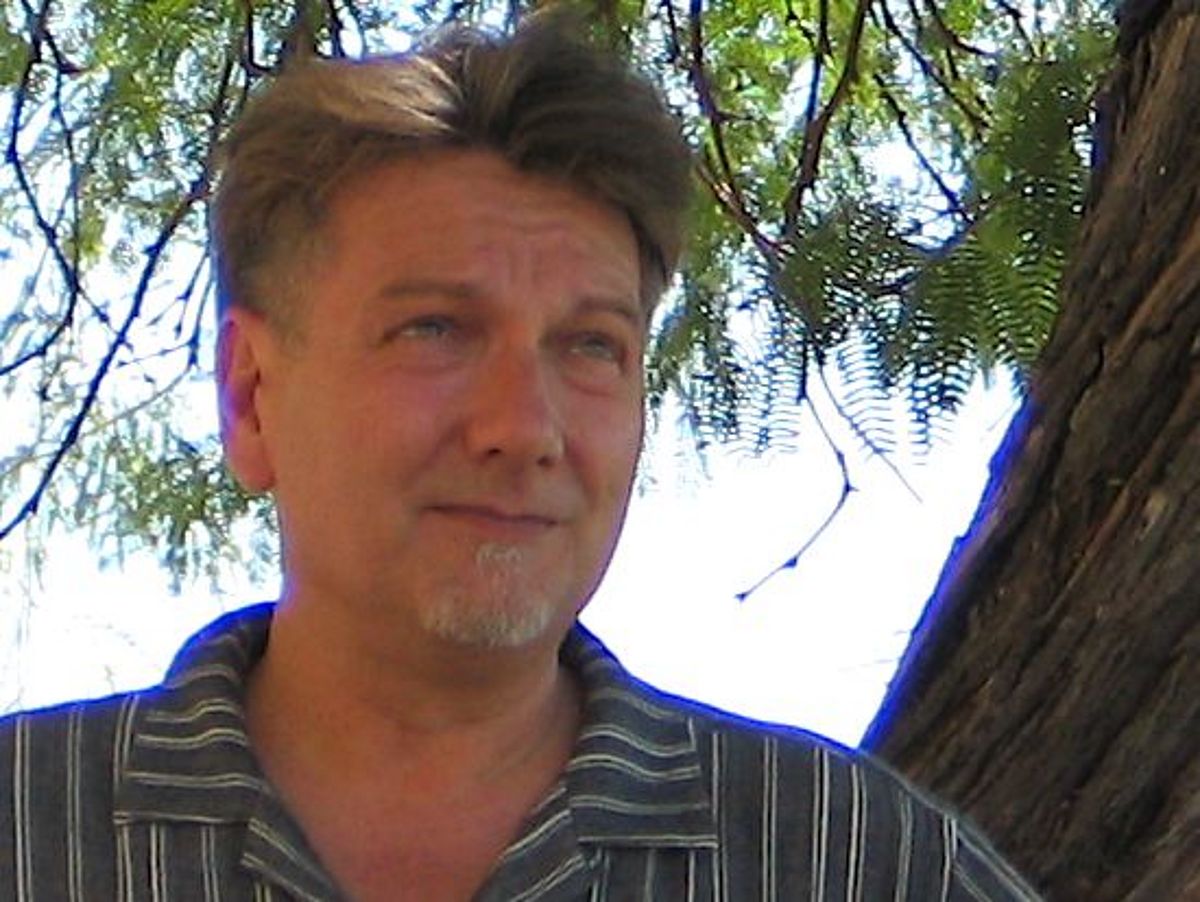
Dr. Mudagamuwe Maithrimurthi is a Lecturer at the Department of Cultural and Religious History of South Asia , South Asian Institute, University of Heidelberg . He holds a D.Phil. in Classical Indology from the University of Hamburg and specializes in Sanskrit, Pāli, and Buddhist thought with a focus on Sri Lankan contexts. Teaching: Sanskrit, Pāli, Singhalese language, Buddhist philosophy Research Pillars: Early Buddhism, Yogācāra, Buddhist ecology, entomology in Sanskrit texts International Experience: Taught at Universities of Hamburg, Leipzig, and Michigan His work bridges philology and religious studies, particularly examining doctrinal concepts like the brahmavihāras and Vaiśravaṇa's transformation in Esoteric Buddhism. Recent publications analyze Pāli meditation terms and classical entomology. Scientific achievements include the 2003 Friedrich-Weller-Prize for outstanding academic work. His research intersects with Heidelberg's Transforming Cultural Heritage flagship initiative, emphasizing transcultural studies and digital humanities approaches. Contact: maithrimurthi@uni-heidelberg.de | Office: Room 130.02.24, Heidelberg
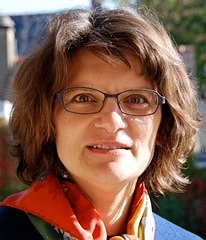
Sandrine Blazy is a Professor in the Computer Science Department at the University of Rennes, France. She is a member of CELTIQUE (also referred to as Epicure), a joint project-team with Inria Rennes Bretagne Atlantique and the IRISA laboratory. Since 2021, she has served as deputy director of the IRISA CNRS UMR 6074 laboratory and will be the general chair for POPL 2026, which will be held in Rennes. She is also a member of the editorial board of the LMCS journal. Dr. Blazy completed her PhD at CNAM (Conservatoire National des Arts et Métiers) in 1993 with a thesis titled "La spécialisation de programmes pour l'aide à la maintenance du logiciel" (Program Specialization for Software Maintenance Assistance). She later completed her Habilitation à diriger des recherches (HDR) in 2008 at the University of Évry Val d'Essonne with a thesis titled "Sémantiques formelles" (Formal Semantics). Her research focuses on the formal verification of program transformations and semantic properties of programming languages, particularly in the context of the CompCert compiler and Verasco static analyzer. She develops mechanized semantics using the Coq (or Rocq) proof assistant to ensure software correctness and security. A prime application domain of her work is software security, including constant-time programming for cryptographic applications and software obfuscation techniques. Her teaching includes mechanized semantics (in Coq), functional programming (in OCaml), formal methods (using Why3), and software vulnerabilities. Dr. Blazy's publication record from 2019-2025 shows a sustained focus on verified compilation techniques, particularly in preserving security properties during compilation. Her work bridges theoretical formal methods with practical compiler implementation, resulting in tools that have real-world impact in safety-critical systems. She has made significant contributions to the CompCert formally verified compiler project, with particular attention to constant-time preservation for cryptographic applications and JIT compilation verification. Her scientific achievements have been recognized with several major awards: CNRS Silver Medal (2023) Lucas Award from Formal Methods Europe (2023) ACM SIGPLAN Programming Languages Software Award for CompCert (2022) ACM Software System Award for CompCert (2021) Dr. Blazy has been actively involved in the programming languages research community, serving on numerous program committees for major conferences including POPL, ICFP, PLDI, and CPP. She has mentored students and contributed to education through teaching mechanized semantics and formal methods. Her work with the CompCert compiler has led to practical applications in safety-critical systems, with industry collaborations documented in publications like "CompCert: Practical experience on integrating and qualifying a formally verified optimizing compiler" (ERTS 2018). She leads research within the CELTIQUE project team, which focuses on developing trustworthy software using deductive verification. Her team works on advancing the state of the art in formal verification of compilers and static analyzers, with applications in security-critical domains including cryptographic implementations and safety-critical embedded systems.
William Wulff is a Scientific Assistant at the Chair of Integrated Systems, Technical University of Munich (TUM), School of Computation, Information and Technology. He holds an M.Sc. in Computer Science and Engineering from the Technical University of Denmark (2021-2023) and a B.Eng. in Computer Engineering from the same institution (2017-2021), with an internship at CERN focusing on Embedded Systems and Compilers. Education : M.Sc. in Computer Science and Engineering (TUD), B.Eng. in Computer Engineering (TUD) Current Role : PhD candidate at LIS, TUM Research Interests include computer architecture (arithmetic circuits), error-correction schemes, asynchronous circuits, and linear codes for improving packet-drop resilience in wired networks, particularly low-latency implementations on SmartNICs. Contact : Email william.wulff@tum.de , Room N2139, Building N1, TUM Campus.
Prof. Dr.-Ing. Holger Blume serves as Vice President for Research and Transfer at Leibniz University Hannover while maintaining his academic position as Professor in the Architectures and Systems Section within the Faculty of Electrical Engineering and Computer Science. He holds multiple leadership positions including Chairperson of the Research Commission and Central Ethics Committee, Executive Board member of eNIFE (Leibniz Research Initiative for Neurosciences), and membership in both the Laboratory of Nano and Quantum Engineering and L3S Research Centre. His research interests span computer architecture, hardware design, signal processing, AI accelerators, hearing aid technology, and biomedical engineering. His work bridges theoretical computer science with practical applications in automotive systems, medical devices, and quantum engineering. Professor Blume's research demonstrates strong interdisciplinary connections between electrical engineering, computer science, and biomedical applications, with particular emphasis on hardware-oriented solutions for real-world problems. Analysis of his recent publications (2023-2025) reveals a strong focus on hardware acceleration for AI and signal processing applications, particularly in automotive radar/LiDAR systems and hearing aid technology. His work shows consistent innovation in RISC-V processor design, specialized hardware for mathematical functions, and biomedical applications of engineering principles. The research demonstrates a clear trajectory toward energy-efficient, specialized computing architectures for specific application domains. As Vice President for Research and Transfer, Professor Blume oversees significant research initiatives at Leibniz University Hannover, which hosts multiple Clusters of Excellence including PhoenixD (Photonics, Optics, and Engineering), QuantumFrontiers, and Hearing4all. The university participates in numerous collaborative research centers and junior research groups funded by DFG, BMBF, and EU programs. Professor Blume is actively involved in multiple research facilities including the Laboratory of Nano and Quantum Engineering and the L3S Research Centre. His work connects with Leibniz University's research focuses on optical technologies, quantum optics and gravitational physics, and biomedical research and technology. His leadership positions indicate strong involvement in shaping the research strategy and ethical framework of the university's scientific endeavors.
Prof. Dr. Philipp Slusallek serves as Scientific Director and executive board member at the German Research Center for Artificial Intelligence (DFKI), where he leads the Agents and Simulated Reality research area. He holds a Full Professorship in Computer Graphics at Saarland University since 1999, co-founded the European AI initiative CAIRNE as Director of Strategy, and directs research at the Intel Visual Computing Institute. His career spans leadership roles in the Excellence Cluster on Multimodal Computing and Interaction and prior visiting positions at Stanford University and Nvidia Research. His academic foundation includes: 1983-1990: M.Sc. in Physics, University of Tübingen 1992-1995: Ph.D. in Computer Science, University of Erlangen Slusallek's research bridges Artificial Intelligence, Simulated Reality, and Computer Graphics with applications in high-performance computing, motion synthesis, and AI for science. His interdisciplinary work integrates real-time rendering, heterogeneous system programming (CPU/GPU/FPGA), and biomechanical modeling, driving innovations in digital reality frameworks and AI-driven simulation systems across medical, engineering, and autonomous vehicle domains. His 2025 publications reveal a strong focus on graphics compilation (Vulkan SPIR-V), rehabilitation biomechanics, and multi-agent motion simulation, demonstrating consistent integration of computer graphics foundations with emerging AI methodologies for practical real-world applications. Award highlights include the Eurographics Gold Medal (2023), acatech membership (2018), Land of Ideas Awards (2015, 2010), and Eurographics Fellowship (2013), recognizing his transformative contributions to computer graphics and AI. Eurographics Gold Medal (2023) acatech Membership (2018) Land of Ideas Award: Display as a Service (2015) Fellow of Eurographics Association (2013) CeBIT Innovation Award (2013) Land of Ideas Award: DFKI Visualization Center (2010) Slusallek leads major research initiatives including B5GCyberTestV2X (cybersecurity for autonomous driving), ENGAGE (AI computing environments), Carousel+ (digital character interaction), PRIME (predictive rendering), and TAILOR (trustworthy AI). His DFKI research group pioneers virtual environment frameworks while his academic mentorship has shaped generations of computer graphics researchers through Saarland University's programs. He co-founded the Intel Visual Computing Institute and established foundational visualization infrastructure at DFKI, maintaining active leadership in European AI strategy through CAIRNE and prior service on the European Commission's High-Level Expert Group on AI.
Dr. Matthias Meckel is a Senior Lecturer in the School of Business, Social & Decision Sciences at Constructor University. Previously, he held academic positions at the University of Central Lancashire, including Principal Lecturer (2020-2023), Senior Lecturer (2007-2020), and Lecturer (2004-2007). His research focuses on e-business strategies for SMEs, organizational technology adoption barriers, and survey methodology. He holds a PhD in e-business strategies for SMEs from the University of Central Lancashire, alongside an MSc in Business Administration with IT (Distinction) and a Diplom-Informatiker (FH) degree. His research interests include digital transformation frameworks for SMEs, healthcare information systems, and cross-channel survey techniques. Notable work includes developing a hospital resource management system using real-time data and analyzing organizational barriers in e-Banking adoption. His publications span journals like Strategic Change and conferences such as the International Conference on Systems and Informatics. Teaching expertise spans business management, information systems, and technology strategy. He has advised numerous projects on SME digitalization and contributed to academic events globally. Currently based at Constructor University's Bremen campus, he continues advancing knowledge in business innovation and technology adoption.
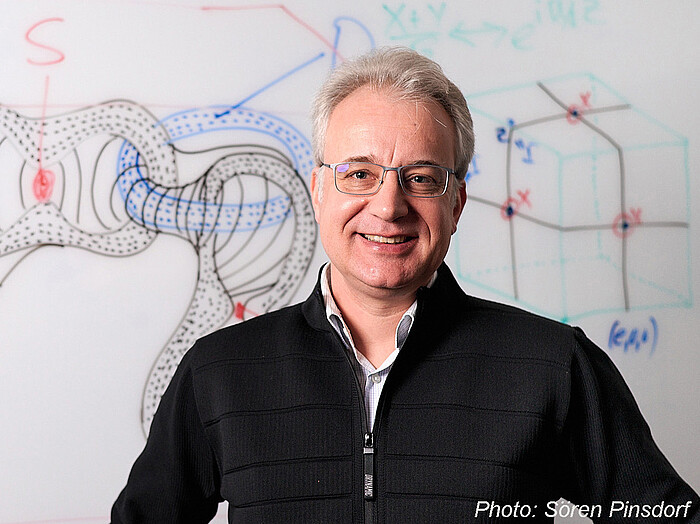
Robert Raussendorf is a Professor at the Institute of Theoretical Physics, part of the Faculty of Mathematics and Physics at Leibniz University Hannover. He leads the research group focusing on quantum information, particularly measurement-based quantum computation (MBQC) and quantum fault-tolerance. His work includes the invention of the one-way quantum computer (QCc), a paradigm where quantum computations are performed via local measurements on entangled cluster states. Raussendorf’s research bridges foundational quantum mechanics with practical applications, emphasizing the role of contextuality and resource states in quantum advantage. Research Interests: His primary areas include quantum computation models, quantum cellular automata, topological error correction, and the foundational aspects of quantum mechanics. He explores how quantum principles like entanglement and contextuality enable computational power, with recent focus on symmetry-protected systems and efficient quantum architectures. Articles Trends: Recent publications highlight advancements in measurement-based computation, error correction strategies, and theoretical frameworks like contextuality and cohomology. Notable work includes high-error-threshold architectures and the application of dual-unitary circuits in one-dimensional systems. Lab/Team: His team includes postdocs (e.g., Markus Frembs, Martin Plávala) and doctoral candidates (e.g., Arnab Adhikary, Ruben Campos Delgado), collaborating on topics like quantum error tolerance, computational phases of matter, and algorithm optimization. The group also engages in interdisciplinary projects with institutions like the Stewart Blusson Quantum Matter Institute.
Markus Schartau is a Researcher in the Biogeochemical Modelling Research Unit at GEOMAR Helmholtz Centre for Ocean Research Kiel, where he has worked since 2013. His research focuses on marine biogeochemical modeling, plankton dynamics, and parameter optimization in ecosystem models. With over 69 publications spanning two decades, Schartau has established himself as a leading expert in marine biogeochemical modeling, particularly in the areas of model calibration, mesocosm experiment simulation, and plankton community dynamics. His research interests encompass uncertainty and trustworthiness of biogeochemical model results, species composition and size frequency structures of plankton, methods of parameter optimization and model selection, simulations of mesocosm experiments, physiological and ecological variations of plankton, and temporal and spatial variations of organic substances in coastal ocean areas and estuaries. Schartau's work often bridges theoretical modeling with experimental observations to improve our understanding of marine biogeochemical processes. The analysis of his recent publications (2020-2024) reveals a strong focus on marine biogeochemical modeling, with particular emphasis on plankton dynamics, carbon cycling, and the impacts of environmental change. His work spans multiple spatial scales from coastal systems to the global ocean and integrates approaches from data science, biogeochemistry, and ecosystem modeling. Key themes include model calibration techniques, mesocosm experiment analysis, marine particle dynamics, and the effects of ocean acidification on biogeochemical processes. Schartau actively participates in major research projects including OceanNETs (EU project), BASS (funded by DFG), ICEBERG (EU project), and μARC (funded by BMBF), demonstrating his integration into the international marine science community. His collaborative approach is evident in his extensive co-authorship network across multiple institutions and countries. His career trajectory shows progression from postdoctoral positions at Stony Brook University and the Alfred Wegener Institute to permanent research scientist roles at Helmholtz-Zentrum Geesthacht (now HEREON) and finally at GEOMAR. This path reflects his growing expertise and recognition in the field of marine biogeochemical modeling.
Prof. Dr. Barne Kleinen is a faculty member at Berlin University of Applied Sciences (HTW Berlin) , teaching courses such as B7 Informatik 2 , B21 WT1 Verteilte Systeme , and M1 Media Programming . His contact details include an office in WH-C 645, a Zoom room, and the email Barne.Kleinen@htw-berlin.de . His work spans technical and administrative domains, including advising students on BAföG (German student financial aid), organizing academic resources, and advocating for trans*/TIN* students through initiatives like Trans@HTW. He co-authored the brochure "Wie ein grünes Schaf in einer weißen Herde" (2020), addressing the life situations of young trans* people in Germany. He has also collaborated with the AG Transemancipatory University Policy to plan a trans* conference at HTW Berlin (canceled due to the pandemic) and compiled legal information to support trans* students' use of chosen names in university systems. His efforts align with the Berlin Anti-Discrimination Act and recommendations from the Governing Mayor of Berlin (2017).
Richard Membarth is a Research Professor at Technische Hochschule Ingolstadt (THI) since 2021, specializing in System on a Chip (SoC) and Artificial Intelligence for Edge Computing . Previously, he worked as a Senior Researcher and Team Leader at the German Research Center for Artificial Intelligence (DFKI) in Saarbrücken (2014–2021), a Postdoc at the Intel Visual Computing Institute (IVCI) at Saarland University (2013–2014), and as a Research Employee at Friedrich-Alexander University Erlangen-Nürnberg (2008–2013), where he earned his PhD in Computer Science with a focus on medical imaging. Research Focus: Membarth's work bridges GPU computing compiler optimization domain-specific languages edge AI architectures His expertise in CUDA programming and high-performance systems informs his leadership in THI's AI Mobility Node (AImotion). Awards: HiPEAC Network Member Email: Richard.Membarth@thi.de
Jennifer D'Souza is a Research Fellow in the Open Research Knowledge Graph (ORKG) project at the Data Science and Digital Libraries research group within the Technische Informationsbibliothek (TIB) . Her current work focuses on natural language machine learning, including knowledge graph construction, ontology alignment, and AI-assisted scientific discovery. Prior to TIB, she held postdoctoral positions at the University of California, Davis (focusing on software engineering and NLP applications) and completed her PhD at the University of Texas at Dallas, specializing in relation mining. She has also contributed to industrial software solutions in concept generation. Education : PhD in Computer Science, University of Texas at Dallas Postdoctoral Researcher, University of California, Davis Research Interests : Information Extraction and Question Answering Scientometrics and Knowledge Organization Natural Language Processing (NLP) for Ontology Learning Large Language Models (LLMs) in Scientific Workflows Awards & Grants : Not explicitly listed, but her contributions to projects like ORKG and participation in hackathons highlight collaborative achievements in AI-driven research. Labs/Teams : Active member of the Data Science and Digital Libraries group at TIB, contributing to projects such as ORKG and the Large Language Models for Ontology Learning Challenge .
Félix García is a prominent professor at the University of Castilla-La Mancha in Ciudad Real, Spain, with extensive contributions to software engineering, sustainable computing, and business process management. His research spans over two decades with 187 publications indexed in dblp, demonstrating consistent scholarly productivity and leadership in multiple research areas. Dr. García's research interests focus on critical contemporary challenges in software development, particularly green software engineering, energy efficiency in computing systems, and sustainable software development practices. His work bridges theoretical foundations with practical applications, addressing how software design, implementation, and maintenance impact environmental sustainability. He has pioneered research connecting software quality attributes with energy consumption, examining how design patterns, code smells, and refactoring techniques affect resource usage. His recent publications (2023-2025) reveal a strong focus on cutting-edge topics including Green AI, quantum computing sustainability, and energy-aware programming language design. These works demonstrate his ability to anticipate and address emerging challenges at the intersection of software engineering and environmental sustainability. Dr. García has received significant recognition through numerous collaborations, particularly with Mario Piattini (133 co-authored papers), Francisco Ruiz (63 papers), and María Ángeles Moraga (30 papers), establishing him as a central figure in his research community. His work has appeared in prestigious venues including IEEE Transactions on Software Engineering, Journal of Systems and Software, and ACM Computing Surveys. He has mentored numerous researchers who have become established scholars in their own right, including Javier Mancebo, Laura Sánchez-González, and César Jesús Pardo Calvache. His contributions to gamification in software engineering education through serious games like GLOBAL-MANAGER demonstrate his commitment to innovative teaching approaches.
Yannick Selke is a Research Associate at the Ecumenical Institute of the Catholic Theological Faculty at the University of Münster. His work focuses on ecumenical theology, systematic theology, gender theory, and peace ethics. He has contributed to publications on theological didactics and gender perspectives in church studies. Education: Bachelor of Arts in Catholic Religious Education and Mathematics (2015-2018), Master of Education (2018-2021) from the University of Münster Key Roles: Research Associate (2023-present), Teacher Trainee (2021-2022), and various student assistant positions Selke's recent publications explore ecumenical dialogue, gender in theology, and educational methodologies like the "Gespräch am Esstisch" (Table Talk). His research emphasizes diversity-sensitive approaches in dogmatics and religious pedagogy. He is involved in academic networks including the Ökumenischer Arbeitskreis and serves as a jury member for the Ecumenical Facharbeitswettbewerb in Religious Studies. His teaching includes seminars on systematic theology, ecumenism, and diversity-aware religious education.
Dr. Ute Pietruschka (b. 1959) is a senior research fellow at the Academy of Sciences Göttingen and associate researcher in the Seminar für Arabistik/Islamwissenschaft, University of Göttingen. From 2001-2021 she taught as Lehrbeauftragte at the Oriental Institute, University of Halle, after earlier appointments at Queensland and Marburg. Her projects include the Corpus of Arabic and Syriac Gnomologia and the Union Catalogue of Oriental Manuscripts in Germany. Education & Career 1982 Diplom, Martin-Luther-Universität Halle-Wittenberg (Arabic & Christian-oriental languages) 1986 Dr. phil. Halle, thesis on Ethiopian transmission of Greek philosophical sayings 1985-1992 wiss. Mitarbeiterin / Oberassistentin, University of Halle 1992-1994 Lecturer, University of Queensland 1994-2001 Assistentin, University of Marburg 2001-2021 Lecturer, Oriental Institute, University of Halle 2012-2022 Senior researcher, Academy of Sciences Göttingen Research Interests Pietruschka investigates the circulation of Greek wisdom literature into Arabic, Syriac, Coptic and Ethiopic cultures. Using philological and Digital-Humanities methods she edits gnomologia, traces manuscript transmission, and studies the educational role of monasteries and schools in the Islamicate world. Additional interests include the representation of nomads in Syriac writing and the reuse of biblical material in Islamic adab. Publication Profile Recent articles cluster around three thrusts: (1) Edition and analysis of Greek-Arabic gnomologia and doxographies, showing how compilations like Ps.-Plutarch’s Placita served as textbooks; (2) Study of Christian Arabic and Syriac wisdom collections, especially the monastic Apophthegmata Patrum and their pedagogical Sitz im Leben; (3) Codicological surveys of Coptic and Karšūnī manuscripts, highlighting monasteries as intellectual hubs after the Islamic conquest. Projects & Grants Head, Corpus der arabischen und syrischen Gnomologien (since 2011, continuation planned 2023-) Co-leader (with Jürgen Tubach) DFG-SFB project “Das Bild des Nomaden in der syrischen Literatur” (2004-2008) Senior researcher, Union Catalogue of Oriental Manuscripts in Germany, Göttingen Academy (2012-2022) Teaching & Digital Humanities Together with Dr. Marco Büchler (Leipzig) she regularly offers courses on Digital Humanities applied to Semitic manuscript cultures, combining codicology, XML/TEI and network analysis.
Ali Rida Rizek is a postdoctoral researcher at the Department of Arabic and Islamic Studies I, University of Göttingen, Germany. He earned his BA and MA in Arabic Language and Literature from the American University of Beirut (AUB) and a PhD in Arabic and Islamic Studies from the University of Göttingen (2021). He has taught Arabic and Islamic studies at institutions including AUB, Lebanese American University, Leiden University, and University of Bayreuth. His research focuses on: Islamic intellectual history, particularly Shi'ism (Imamiyya) Development of Islamic law and jurisprudence Quranic studies and ethical discourse in classical Islam Historical transmission of Shi'i scholarship Rizek's publications emphasize Shi'i legal history, ethical frameworks in medieval Islam, and Quranic hermeneutics. His work frequently engages with Imami scholarly traditions, critiques of political authority, and the intellectual revival in centers like Ḥilla. He maintains an active profile on Academia.edu with publications spanning Qur'anic studies, Shi'i law, and Islamic ethics. No awards, grants, or supervised students are documented in available sources.