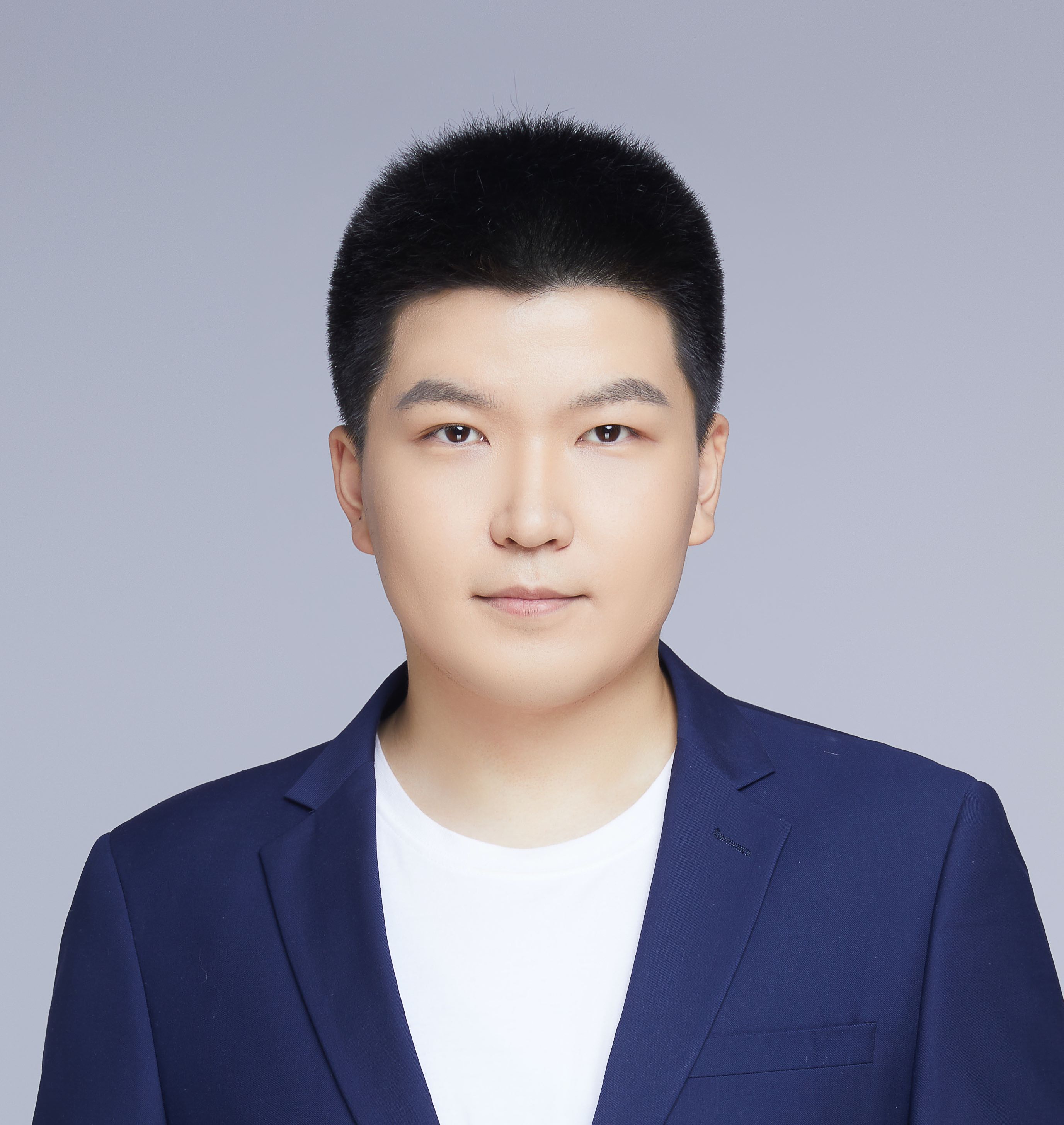
Xupeng Miao is a Visiting Assistant Professor in the Department of Computer Science at Purdue University, holding the Kevin C. and Suzanne L. Kahn New Frontiers Assistant Professorship. Previously, he was a Postdoctoral Fellow at Carnegie Mellon University's Catalyst Group under Professors Zhihao Jia and Tianqi Chen. He earned his Ph.D. in Computer Science from Peking University (2022) and a Bachelor’s degree from Northeastern University. His research focuses on machine learning systems, distributed computing, and data management, with notable contributions to systems like Hetu (a distributed deep learning framework) and innovations in large language model (LLM) serving (e.g., SpotServe, SpecInfer). He has received awards including the 2024 WAIC Yunfan Award and an Outstanding Paper Award at ACL 2024. Current projects emphasize efficient systems for generative AI, including optimizing LLM training and inference on heterogeneous hardware, fault-tolerant distributed training, and scalable graph-based machine learning. He teaches CS 59200-MLS: Machine Learning Systems at Purdue and actively mentors students in PhD/MS programs and internships. Key achievements include NVIDIA Academic Awards, IEEE Micro Top Picks recognition, and leadership in international conference roles (e.g., Artifact Evaluation Co-Chair for KDD 2025 and MLSys 2025). His work bridges system design, algorithmic innovation, and hardware-aware optimizations to advance scalable AI infrastructure.
Deian Stefan is an Associate Professor in the Department of Computer Science and Engineering at the University of California, San Diego (UCSD). His research focuses on building secure systems through interdisciplinary approaches spanning security , programming languages , and systems . Key areas include WebAssembly security , JavaScript JITs , constant-time programming , memory safety , information flow control , and program analysis tools. He co-founded Intrinsic , a web-security startup later acquired by VMWare, and contributed to standards like W3C WebAppSec and Node.js Security Working Groups. Education: PhD in Computer Science from Stanford University (2015), advised by David Mazières, John C. Mitchell, and Alejandro Russo BE and ME in Electrical Engineering from Cooper Union (2011) Research Trends: His work targets secure systems (Web frameworks, sandboxing, runtime systems), language-based security (constant-time programming, memory safety), and verification for security . Recent publications focus on mitigating speculative execution attacks, hardware-assisted sandboxing, and WebAssembly security. Awards & Recognition: Distinguished Paper Award at POPL 2021 and IEEE MICRO Top Picks 2024 Best Paper Award at CollaborateCom 2010 2010.01 Prize by Daniel J. Bernstein (DJB) Most Influential Paper Award at ICFP 2022 Teaching: He has taught graduate and undergraduate courses including Graduate Computer Security (CSE 227) , Building Secure Systems with Rust , and Programming Languages: Principles and Paradigms at UCSD since 2018. Prior teaching experience includes Stanford and Cooper Union.
Nate Foster is a Professor of Computer Science at Cornell University and currently serves as the Associate Dean for Research in the Ann S. Bowers College of Computing and Information Science. He is also a Visiting Researcher at Jane Street and served as a Visiting Professor at École Polytechnique Fédérale de Lausanne during the 2023-24 academic year. His research uses ideas from programming languages to solve problems in networking, databases, and security. BA in Computer Science, Williams College (2001) MPhil in History and Philosophy of Science, University of Cambridge (2008, all work completed in 2003) PhD in Computer and Information Science, University of Pennsylvania (2009) Foster's research focuses on developing languages and tools that make it easy for programmers to build secure and reliable systems. His current work centers on the design and implementation of languages and tools for programmable networks, particularly using the P4 language. His past work includes bidirectional languages (also known as 'lenses'), database query languages, data provenance, type systems, mechanized proof, and formal semantics. His research group at Cornell has made significant contributions to network verification, software-defined networking, and formal foundations for programmable data planes. Analysis of Foster's recent publications reveals a strong focus on network verification and programming language foundations for networking. His work consistently applies formal methods to practical networking problems, with a particular emphasis on the NetKAT and P4 languages. Over the past five years, his research has evolved toward more complex network verification techniques, including infinite state verification, active learning of network models, and dependently-typed approaches to network programming. His work bridges theoretical computer science with practical networking systems, making formal methods accessible to network engineers. ACM Fellow (2025) ACM SIGPLAN Robin Milner Award (2023) ACM SIGCOMM Rising Star Award (2018) NSF CAREER Award (2013) Alfred P. Sloan Fellowship (2012) Multiple distinguished paper awards across top conferences including POPL, PLDI, and SIGCOMM Foster has advised numerous PhD and Master's students who have gone on to prominent positions in both industry and academia, with many continuing work in programming languages and networking. He has led multiple significant research grants including an NSF CAREER Award and has been involved in the P4 Language Consortium, serving as Chair of the P4 Language Governing Board. His work has been supported by various organizations including NSF, DARPA, and industry partners like Intel and Jane Street. Foster is also active in the programming languages research community, serving on numerous program committees and as Vice Chair of DARPA's Information Science and Technology (ISAT) study group. Foster leads a vibrant research group at Cornell focused on programming languages for networks, with collaborators from academia and industry. His group has developed several influential tools and frameworks including NetKAT, Petr4, and KATch. They maintain strong connections with the P4 community and work closely with industry partners to ensure their research has practical impact on real-world networking systems.
Hadi Esmaeilzadeh is an Associate Professor at the University of California, San Diego in the Department of Computer Science and Engineering . He previously served as an Assistant Professor at Georgia Tech (2013-2017) and holds the Halicioğlu Chair in Computer Architecture . As founder/director of the Alternative Computing Technologies (ACT) Laboratory and associate director of UCSD's Center for Machine Integrated Computing and Security (MICS) , his research drives cross-stack solutions for next-generation computer systems. Early tenure recipient at UCSD Coined the term "dark silicon" in computer architecture Developed Tabla/DnnWeaver open-source frameworks Research Interests span: Approximate Computing Neural Acceleration FPGA/ASIC Hardware Design Machine Learning Systems Dark Silicon Challenges Security/Privacy in Accelerated Systems Scientific Recognition : 4 CACM Research Highlights 4 IEEE Micro Top Picks Distinguished Paper Award (HPCA 2016) Inducted to ISCA Hall of Fame (2018) Teaching : Developed courses on accelerator design (CSE 240D) and alternative computing (CS 8803 ACT) Advocates for hands-on FPGA-based learning in Processor Design with FPGAs courses
Ruoyu (Fish) Wang is an Associate Professor at the School of Computing and Augmented Intelligence, Arizona State University (Tempe campus). He also holds affiliations as Associate Director of Impact at the Global Security Initiative, Center for Cybersecurity & Trusted Foundations, and with the Biodesign Center for Biocomputing, Security and Society. His educational background includes: Ph.D. in Computer Science, University of California, Santa Barbara Professor Wang's research focuses on system security, with an emphasis on automated binary program analysis and reverse engineering of software. He is the co-founder and core developer of the angr binary analysis platform, which won third place in the DARPA Cyber Grand Challenge (2018). His work spans vulnerability discovery, fuzzing, and security tool development for binary program analysis. His current research interests include: Binary program analysis and reverse engineering Automated vulnerability discovery and mitigation Fuzzing techniques and robust testing Phishing and fraud detection in e-commerce Security of firmware and embedded systems Application of machine learning to security problems His recent publications (2024-2025) demonstrate cutting-edge research in fraud detection for e-commerce using LLMs, advanced fuzzing methodologies, and binary decompilation techniques. Key trends include bridging theoretical program analysis with practical security tools, as evidenced by extensions to the angr platform, and addressing emerging threats in financial ecosystems and client-side security. Dr. Wang has received notable recognition: Third place in DARPA Cyber Grand Challenge (2018) with team Shellphish As an active educator, he supervises graduate research (CSE 599/799) and teaches core cybersecurity courses including Software Security (CSE 545) and Information Assurance (CSE 365). His teaching spans multiple semesters through 2025, covering practicums, internships, and special topics in computing security. Dr. Wang co-founded the angr binary analysis platform and contributes to Arizona State University's security research ecosystem through leadership roles in the Center for Cybersecurity & Trusted Foundations and Biodesign Center for Biocomputing, Security and Society.
Lin Ma is currently an Assistant Professor at the University of Michigan, Ann Arbor in the Department of Electrical Engineering and Computer Science (College of Engineering). Previously, they served as a Post Doctoral Fellow at Carnegie Mellon University (2021-2022) and as a Software Engineer at Databricks, Inc. (2022-2023). Research Interests focus on the intersection of database systems and machine learning, particularly in developing self-driving database management systems . Key areas include workload forecasting , automated index optimization , query execution acceleration , and machine learning integration for database automation. Their work explores GPU-accelerated analytics, memory optimization, and transactional consistency models. Academic Contributions span 15+ publications in top venues like VKDB , SIGMOD , and CIDR , including recent 2025 papers on Vortex (GPU memory optimization) and Scompression (workload compression). Earlier work introduced QueryBot 5000 , a workload forecasting framework, and explored anti-caching for storage optimization in OLTP systems. Teaching includes courses like EECS 584: Advanced Database Management Systems and EECS 484: Database Management Systems at the University of Michigan (2023-2025), and 15-445/645 Database Systems at Carnegie Mellon University. Service involves program committee roles for SIGMOD (2023-2025), VLDB (2022-2025), and CIDR (2024-2025). They also served on admissions and search committees at both institutions. Advising includes supervising PhD and MS students: Siyuan (Doug) Dong , Zhongwei Xu , and Haotian (Jack) Gong (co-advised with Barzan Mozafari), among others.
Tianyi Zhang is a Tenure-Track Assistant Professor in the Department of Computer Science at Purdue University, part of the College of Science. He leads the Human-Centered Software Systems Lab, focusing on AI-driven systems that synergize human expertise with machine intelligence to enhance programming productivity and software reliability. Prior to Purdue, he was a Postdoctoral Fellow at Harvard University under Dr. Elena Glassman and earned his Ph.D. from UCLA (2019) and B.Sc. from Huazhong University of Science and Technology (2013). Education: Ph.D. in Computer Science, University of California, Los Angeles (2019) Bachelor's in Computer Science, Huazhong University of Science and Technology (2013) Research Interests: His work spans Software Engineering, Human-Computer Interaction, and AI. Key areas include program synthesis, interactive debugging tools, autonomous driving system testing, and mitigating biases in AI models. He develops systems like Interpretable Program Synthesis and SQLucid to bridge human and machine intelligence. Recent Trends in Publications: Recent work emphasizes human-in-the-loop AI, including mixed-initiative systems for data wrangling (Dango), interactive program repair, and bias analysis in text representations (STILE). He also explores challenges in autonomous driving testing and LLM-based code generation errors. Awards & Grants: NSF Career Award (2024) Amazon Research Award Showalter Trust Research Award for pre-diabetes research $1.5M NSF grant for software supply chain security Best Paper Honorable Mentions at CHI and VAHC Advising & Teams: Supervises 12+ PhD/Master's students and 30+ research interns. Notable advisees include Bonan Kou (API misuse studies) and Yuan Tian (text-to-SQL systems). Collaborates with Harvard Medical School on healthcare data analysis. Labs & Initiatives: Directs Purdue's Human-Centered Software Systems Lab. Co-founded the Societal Impact Fellows program. Active in open-source projects like Examplore for API usage visualization and JShrink for Java debloating.
Andrew Rice is a Professor of Computer Science at the University of Cambridge's Department of Computer Science and Technology, and holds the Hassabis Fellowship in Computer Science. He is also the Director of Studies in Computer Science at Queens' College. His research focuses on programming languages, software engineering, and machine learning applications in software development. He leads projects like Isaac Computer Science and ALTA (Automated Language Teaching and Assessment), advancing adaptive learning technologies. His work includes static analysis tools such as Error Prone at Google, energy efficiency studies in computing infrastructure, and contributions to the Computing for the Future of the Planet initiative. His teaching emphasizes practical skill development through flipped classrooms and video lectures, earning him the 2014 Pilkington Prize for teaching excellence. He has held visiting roles at Google and collaborated on energy consumption research for mobile devices and data centers. His research spans systems, networking, and natural language processing, with a strong focus on applying computational methods to real-world challenges. Key Projects: Isaac Physics/Computer Science, ALTA, Error Prone Static Analysis Research Themes: Programming Languages, Machine Learning, Energy Efficiency Awards: Pilkington Prize (2014)
Kyle C. Hale is an Associate Professor at Oregon State University's School of Electrical Engineering and Computer Science (College of Engineering). He holds a Ph.D. and M.S. from Northwestern University (2016, 2013) and a B.S. in Computer Science from UT Austin (2010). Prior to joining Oregon State in 2024, he served as an Associate Professor at Illinois Tech in Chicago. His research spans operating systems, high-performance computing (HPC), virtualization, computer architecture, and system security. Current work focuses on specialized system software stacks for emerging computing paradigms like memory disaggregation and parallelism optimization. He leads the HExSA Lab and collaborates with the HiPCastor group. Scientific Awards: NSF CAREER Award (2023-2028) Illinois Tech College of Computing Excellence in Research (2023) Illinois Tech College of Computing Excellence in Teaching (2021) Illinois Tech Department of Computer Science Teacher of the Year (2020) EuroSys '22 Best Artifact Award Recent Research Trends: His publications emphasize compiler techniques for memory-disaggregated systems, optimizing parallel runtimes through hardware-software integration, virtualization at fine granularities, and accelerating machine learning workloads via system-level innovations. Keywords include HPC, virtualization, parallelism, and secure execution contexts. Teaching: Courses taught include Computer Architecture (CS/ECE 472), System Security (CSP 544), Operating Systems (CS 450), and advanced topics in serverless/edge computing. He actively recruits PhD students to the HExSA Lab.
Anastasia Ailamaki is a Professor at the Swiss Federal Institute of Technology in Lausanne (EPFL), renowned for her work in database systems and data management . Her research focuses on optimizing query processing for modern hardware, particularly GPUs and heterogeneous systems, and advancing cloud data analytics with serverless architectures like PixelDB . She has co-authored influential frameworks for adaptive query optimization , hardware-conscious database engines , and model-relational data management . Key research areas: GPU acceleration , HTAP , query approximation , spatial data processing , and cloud-native databases . Recent work emphasizes cross-task optimizations in distributed environments, efficient sampling , and context-aware joins integrating vector embeddings. In 2023, she contributed to adaptive recursive query optimization and speculative K-means clustering, while 2024 publications addressed proportional caching (HPCache) and model-relational systems . Her collaborations span institutions such as MIT, Microsoft, and ETH Zurich, with publications in top venues like SIGMOD , VLDB , and ICDE .
Jishen Zhao is an Assistant Professor in the Department of Computer Science and Engineering at the University of California, San Diego (Jacobs School of Engineering). His research focuses on computer architecture, non-volatile memory systems, and deep learning acceleration. Dr. Zhao has published extensively in top venues including ISCA, MICRO, ASPLOS, and IEEE Transactions. He collaborates with researchers at UCSD and beyond to advance systems for emerging applications in AI and autonomous vehicles. Dr. Zhao's primary research areas include persistent memory systems, hardware/software co-design for deep learning, and safety-critical computing. He develops techniques for crash consistency, memory disaggregation, and efficient neural network deployment. His work on autonomous vehicles addresses scenario generation and perception-aware system design. Recent projects explore LLM applications for software engineering and hardware verification. Analysis of Dr. Zhao's 2024-2025 publications reveals a strong shift toward AI-integrated systems research. He applies large language models to tasks like RTL verification and software issue localization while continuing to innovate in memory systems for serverless computing. There is growing emphasis on safety-critical systems for autonomous vehicles and energy-efficient neural network training using novel hardware architectures. Information about Dr. Zhao's scientific awards, advising activities, grants, and laboratory facilities was not available in the provided documentation.
Kenneth Ross is a Professor in the Computer Science Department at Columbia University in New York City. His primary appointment is within the Department of Computer Science, with affiliations including the Foundations of Data Science Committee. His work bridges theoretical database research and practical system implementation. His research focuses on database systems with particular expertise in query processing, query language design, data warehousing, and architecture-sensitive database system design. Additional research spans computational biology, especially analysis of large genomic data sets. Current projects include Linear Algebra Operators in Databases for machine learning workloads and Repeats and Somatic Mutation analysis in genomics. His work consistently addresses the intersection of hardware capabilities and database system design. Ross leads the Database Research Lab at Columbia, which has produced significant work on query optimization, GPU database processing, and hardware-conscious database systems. His recent publications demonstrate strong focus on adapting database systems to modern hardware including GPUs, SIMD processors, and persistent memory. His scientific recognition includes: Packard Foundation Fellowship Sloan Foundation Fellowship NSF Young Investigator Award Distinguished Faculty Teaching Award (2008) Ross actively advises undergraduate engineering students (juniors with last names P-Z) and has taught foundational courses including Introduction to Databases and Programming and Problem Solving for over two decades. His teaching portfolio shows consistent engagement with both theoretical concepts and practical implementation challenges in computer science education.
Monica Lam is the Kleiner Perkins, Mayfield, Sequoia Capital Professor in Stanford University's School of Engineering and holds a courtesy professorship in Electrical Engineering. She leads the Stanford Open Virtual Assistant Laboratory and has pioneered work in virtual assistants, privacy protection, and compiler design. Her research includes the Almond virtual assistant, privacy-preserving IoT systems, and the ThingTalk programming language. She co-authored the seminal 'dragon book' on compilers and co-founded Tensilica (now part of Cadence). Education: Bachelor of Science (Honors), Computer Science, University of British Columbia, 1980 Master of Science, Computer Science, Carnegie Mellon University, 1982 Doctor of Philosophy (PhD), Computer Science, Carnegie Mellon University, 1987 Research Interests: Dr. Lam's work focuses on conversational AI with privacy guarantees, compiler optimization for parallel computing, and open-source virtual assistant ecosystems. She is a leader in decentralized systems, having developed frameworks like SociaLite for large-scale graph analysis and Musubi for mobile social networking without centralized platforms. Article Trends: Recent publications emphasize multimodal interactions, multilingual dialogue systems, and LLM-driven applications in areas like question answering, persuasive chatbots, and adaptive assistants. Her work bridges foundational AI research (e.g., semantic parsing) with real-world deployments (e.g., privacy-compliant IoT). Awards & Honors: Member of the National Academy of Engineering ACM Fellow Popular Science's Best of What's New Award (Security, 2019) Advising & Grants: Lam oversees the Open Virtual Assistant Initiative, a collaborative project to build open-source semantic models. Her NSF CNS grant (CNS Core) focuses on federated privacy systems. She has advised over 50 students in AI and systems research, though specific names are not listed in the provided texts. Labs & Teams: Directs the Stanford Open Virtual Assistant Laboratory, collaborates with the Stanford NLP group, and maintains ties to industry through former startup Tensilica's legacy in embedded processors.
Torsten Grust is a Professor of Computer Science at the University of Tübingen, leading the Database Systems research group since 2008. Previously, he held professorships at TU München and TU Clausthal. He earned his M.Sc. (Diploma) and Ph.D. in Computer Science from Universität Konstanz in 1994 and 1999, respectively. His research focuses on database languages, query and programming language technology, and scalable processing of non-relational queries. He bridges database and programming language research, emphasizing mutual benefits between the fields. **Education:** Ph.D. in Computer Science, University of Konstanz (1999) M.Sc. (Diploma), Computer Science, University of Konstanz (1994) Visiting Scientist, IBM Silicon Valley Laboratories (2000) **Research Interests:** Design and optimization of database languages Query compilation and execution engines Integration of functional programming with SQL Query provenance and debugging **Awards and Honors:** ACM SIGMOD Reproducibility Award (2021) University of Tübingen Teaching Award (2021/22) Winner of Dyalog 2019 APL Program Solving Competition Member of the VLDB Endowment Board of Trustees (2022–2027) **Advising & Grants:** Guided numerous students, including alumni such as Alexander Ulrich, Benjamin Dietrich, and Christian Duta Recipient of grants supporting research in query compilation, provenance analysis, and database language design **Labs & Teams:** Leads the Database Systems research group at University of Tübingen Collaborates with the National Institute of Informatics (Tokyo) on query and programming languages
Jeremy Gibbons is a Professor of Computing at the University of Oxford, affiliated with the Department of Computer Science within the Faculty of Computer Science. He serves as Director of the Professional Programmes, overseeing part-time postgraduate degrees in Software Engineering. His roles include Chair of the Faculty of Computer Science (2012–2016), Director of the Software Engineering Programme, and Fellow of Kellogg College. Gibbons' research focuses on programming methodologies, particularly functional and object-oriented languages, with an emphasis on program calculation, design patterns, and bidirectional transformations. He leads the Algebra of Programming research group and is Editor-in-Chief of the Journal of Functional Programming and The Art, Science, and Engineering of Programming . Education includes a D.Phil. from Oxford University. His work spans formal methods, domain-specific modeling for clinical trials (e.g., CancerGrid project), and semantic frameworks for software systems. He has advised numerous students and contributed to open-access initiatives in publishing. Key collaborations include roles in ACM SIGPLAN and IFIP Working Groups 2.1 and 2.11. Research interests emphasize foundational aspects like profunctor optics, categorical programming, and algorithm design. Notable projects include datatype-generic programming and metadata-driven engineering for clinical trials. His work bridges theoretical computer science with practical applications in software architecture and system design.