René Mayrhofer is a full Professor at the Institute of Networks and Security, Johannes Kepler University Linz, leading the LIT Secure and Correct Systems Lab. With over 137 research outputs and active leadership in projects like the Christian Doppler Laboratory for Private Digital Authentication (Digidow), he is a key figure in network security and privacy research. His research focuses on practical security solutions for real-world systems, particularly in digital identity management , Tor network security , and mobile device authentication . Recent work addresses critical challenges in Android security states, biometric systems, and trusted execution environments, emphasizing deployable privacy-preserving architectures for physical-world applications. Analysis of his 15 most recent publications reveals strong trends in empirical security evaluation (e.g., Android device security studies) and system hardening (e.g., attested builds and backdoor mitigation), with growing emphasis on supply chain security and decentralized identity frameworks. Professor Mayrhofer has supervised 12 students and currently manages 6 research projects, including the active Digital Shadows initiative (funded until 2025) and the Digidow laboratory (running through 2026). His grants include significant support from federal authorities and the Austrian Research Promotion Agency. As principal investigator of the LIT Secure and Correct Systems Lab, he drives interdisciplinary research in secure communication protocols, privacy-aware authentication, and verifiable computing systems, collaborating with industry partners on real-world deployment challenges.
Michael Hicks is a Professor in the Department of Computer and Information Science at the University of Pennsylvania and an Amazon Scholar. Previously, he was a Professor at the University of Maryland (2002-2021) and Senior Principal Scientist at Amazon Web Services (2022-2025). He co-founded the Programming Languages research lab (PLUM) at Maryland and was its director, as well as Director of the Maryland Cybersecurity Center (MC2). He is a Fellow of the Association of Computing Machinery (ACM), former Chair of ACM SIGPLAN, and Editor-in-Chief of Proceedings of the ACM on Programming Languages (PACMPL). His research focuses on programming languages and their application to software security , quantum programming , and formal verification . He has pioneered dynamic software updating techniques, developed tools like Checked C for memory safety, and co-designed the Cedar authorization policy language at AWS. In quantum computing, he works on verified compilers like VOQC and Qunity to ensure reliability and correctness. His recent work trends include quantum programming languages , secure multi-party computation (e.g., Wysteria , Symphony ), and fuzz testing methodologies . He has contributed to formal verification for quantum programs and language-based security frameworks. Scientific Awards include: ACM Fellow He has advised numerous PhD and Master’s students , including James Parker, Andrew Ruef, Kesha Hietala, and Aseem Rastogi, who now hold academic and industry positions. His lab, PLUM , has been instrumental in advancing programming languages research.
Francisco J. Andújar Muñoz is an Associate Professor at the University of Valladolid in the Department of Computer Science since January 2024. His career spans multiple institutions including Universidad de Castilla-La Mancha (2008-2015) and Universitat Politècnica de València (2017-2018), with academic roles ranging from Research Assistant to Juan de la Cierva Formación Researcher. PhD in Advanced Computer Science Technologies (2011-2015) MsC in Advanced Computer Science Technologies (2010-2011) Computer Science Engineering (2008-2010) Computer Science Technical Engineering (2004-2008) His research focuses on high-performance interconnection networks , with significant contributions to quality-of-service mechanisms, energy-efficient network topologies, and heterogeneous programming optimization. He maintains the open-source VEF Traces framework for network workload modeling. Recent publications (2023-2025) demonstrate expertise in FPGA high-level synthesis portability, SYCL-based GPU optimization, and machine learning applications for Twitch streaming analysis. His work combines theoretical network design with practical implementations in the Journal of Supercomputing and IEEE Transactions on Computers .
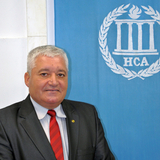
Professor Apostol Slavchev serves as Vice-Rector for Academic Affairs at the Vasil Levski National Sports Academy, where he holds a professorship in the Department of Athletics within the Faculty of Pedagogy. With over four decades of academic service, he has held leadership roles including Dean of the Faculty of Education (2008-2016) and membership on the Academic Council since 2007, demonstrating sustained institutional commitment to advancing sports education and athletic training methodologies. His academic foundation includes doctoral studies completed in 1998 with a dissertation on 400m hurdle training optimization, complemented by medical education at Sofia's G. Dimitrov State Medical University (1978-1982). His scholarly journey reflects a unique integration of medical science with athletic specialization: Doctorate in Sports Training Methodology (1998) Medical University Studies (1978-1982) Polytechnic High School Diploma (1972-1976) Slavchev's research spans sprint and hurdle training mechanics , athletics officiating systems , and inclusive athletic programming for diverse populations including children and Special Olympics participants. His work bridges theoretical sports science with practical coaching applications, particularly in developing technical proficiency in short-distance events through biomechanically-informed training protocols. The integration of mathematical modeling in sports ranking systems demonstrates his interdisciplinary approach to athletic administration. His 150+ publications reveal consistent focus on athletics pedagogy and technical officiating , with recent works emphasizing digital educational tools and longitudinal performance analysis. The trajectory shows evolving specialization from foundational coaching manuals toward sophisticated biomechanical analysis and institutional management systems, reflecting both deepening expertise and expanding administrative responsibilities. As an academic advisor, Slavchev has supervised four doctoral candidates to successful dissertation completion, with research concentrated in athletic training methodology. His institutional roles include directing postgraduate training for coaches and serving on the editorial board of the "Athletics & Science" journal, demonstrating commitment to knowledge dissemination. Slavchev founded and chairs the KLASA athletics club at the National Sports Academy while leading the Bulgarian Athletics Federation's judges committee since 2004. His practical coaching legacy includes developing over 100 athletes, with multiple national champions in hurdle events, demonstrating effective translation of academic research into competitive success.
Jenna DiVincenzo is an Assistant Professor in the Elmore Family School of Electrical and Computer Engineering at Purdue University, where she conducts research at the intersection of programming languages, software engineering, and formal methods. Her work focuses on making verification techniques more usable and scalable for developers. Dr. DiVincenzo earned her PhD in Software Engineering from Carnegie Mellon University in December 2023, where she was co-advised by Dr. Jonathan Aldrich and Dr. Joshua Sunshine. Her dissertation focused on gradual verification technology for recursive heap data structures. She also holds a BS in Mathematics and Computer Science from Youngstown State University. Her primary research area is gradual verification, which seamlessly combines static (compile time) and dynamic (run time) verification techniques to support incremental specification and verification of code. She takes a holistic approach to research, exploring new techniques through mathematical formalizations, user studies, and tool development. Her current projects include gradual verification for Rust, proof synthesis and repair for gradual verifiers, educational impact of gradual verification, evaluating gradual verifiers' soundness, and gradual program analysis. Analysis of her recent publications reveals a strong focus on practical verification techniques that balance developer productivity with software assurance. Her work consistently bridges theoretical foundations with practical implementation, often incorporating empirical evaluation through user studies and performance measurements. She has made significant contributions to understanding how to make verification more incremental and accessible to developers. Google PhD Fellow NSF GRFP Fellow 2022 Rising Star in EECS Dr. DiVincenzo is actively mentoring PhD students in her research group, with recent student achievements including Craig Liu winning first place in the undergraduate category of the SPLASH'24 SRC and Conrad Zimmerman receiving an NSF GRFP award. She previously interned at IBM Research, MIT Lincoln Laboratory, and contributed to language designs for Penrose and Obsidian. Her research has been supported by various grants, though specific current grants aren't detailed in the provided text. Her lab focuses on building practical verification tools, with projects including Gradual C0 (a gradual verifier for recursive heap data structures) and developing gradual verification techniques for Rust. She collaborates with researchers across institutions, including Dr. Lin Tan at Purdue on LLM applications for verification.
Prof. Edward Mleczko is a distinguished professor at the Academy of Physical Education in Krakow, where he serves as Vice-Rector for Science since 2008 and Deputy Director of the Institute of Sport since 2012. Previously, he was Head of the Department of Theory and Methodology of Athletics (1994-2012) and Vice-Dean for Part-time Studies (2005-2008). He also holds a professorship at Świętokrzyska University in Kielce since 1994 and has periodically taught at other institutions including the College of Business and Entrepreneurship in Ostrowiec Świętokrzyski, the State Higher Vocational School in Tarnów, and the Podhale State Higher Vocational School in Nowy Targ. His educational background includes: Graduated from Faculty of Polish Philology, Jagiellonian University (1971) Graduated from Faculty of Physical Education, Academy of Physical Education in Krakow (1980) Doctoral degree in Physical Education with distinction (1985) Habilitation (postdoctoral degree) in Physical Education Sciences (1992) Professor title in Physical Culture Sciences awarded by the President of Poland (2002) Prof. Mleczko's research focuses on the optimization of sports training systems, particularly in competitive sports with emphasis on recruitment and selection. His work extensively examines physical activity's role in health improvement across different life stages, physical fitness from a health perspective, and genetic/environmental factors influencing children's and adolescents' development. His approach integrates anthropomotorics - the study of human movement - with practical applications for athletic training and physical education. He has made significant contributions to understanding the relationship between environmental factors (including pollution) and physical development. His recent publications demonstrate a continued focus on the relationship between environmental factors and physical development, training methodology for young athletes, and the theoretical foundations of motor skills. The research spans multiple sports disciplines but maintains a consistent thread of examining how physical, genetic, and environmental factors interact to shape athletic performance and development. His work shows particular attention to longitudinal studies of youth development and the impact of urbanization on physical characteristics. Prof. Mleczko has received significant recognition for his work, most notably being awarded the title of professor by the President of the Republic of Poland in 2002 for his scientific achievements. He has also been an elected member of the Committee for Rehabilitation, Physical Culture and Social Integration of the Polish Academy of Sciences since 2004. As an educator, he has supervised four doctoral dissertations and over 200 master's and bachelor's theses. He has served as a reviewer for numerous academic degrees at Polish and international universities. His editorial work as Editor-in-Chief of "Antropomotoryka" and on the editorial boards of "Journal of Human Kinetics", "Human Movement" and "Wydawnictwo Naukowe AWF" in Krakow has helped shape the field's scholarly discourse. He has been a member of the International Association of Sport Kinetics (IASK) since 1989. His practical experience as a former competitive athlete (national team long-distance runner, six-time Polish champion, European Championships participant) and coach (KS Cracovia, AZS AWF in Kraków, Polish University Middle and Long-Distance Running Team) provides valuable real-world context for his academic work.