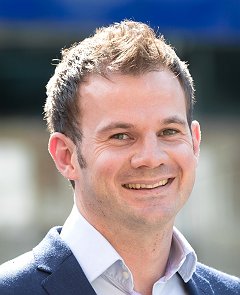
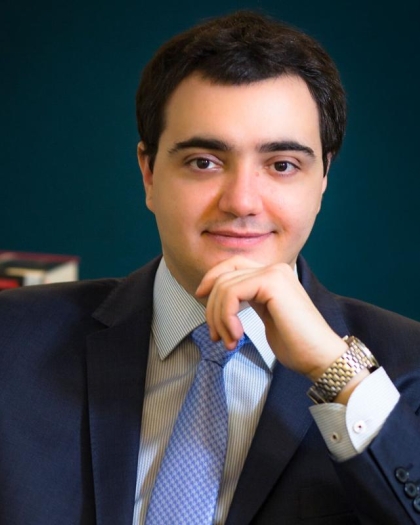
Clément Pit-Claudel is an assistant professor at École Polytechnique Fédérale de Lausanne (EPFL), where he heads the SYSTEMF lab in the School of Computer and Communication Sciences. His research focuses on programming languages, compilers, and formal verification, with broader interests spanning systems engineering, hardware design languages, security, performance engineering, and type theory. Education: Undergraduate studies at École Polytechnique PhD at MIT with Adam Chlipala, specializing in proof-producing compilers Pit-Claudel's research program is organized around three main axes: extensible compilation (teaching compilers domain-specific optimization tricks), hardware design languages and verification (creating ways to describe and verify hardware), and tooling for proof assistants (to support verification efforts and lower entry barriers). His work bridges theoretical foundations with practical applications, as evidenced by algorithms from his Elk project being merged into V8 (and hence Chrome and Node.js). Scientific Awards: Distinguished artifact, Untangling Mechanized Proofs, ACM SIGPLAN International Conference on Software Language Engineering (2020) William A. Martin Memorial Thesis Award for Outstanding Thesis in CS, MIT (2016) Frederick C. Hennie III Teaching Award in Recognition of Outstanding Contributions to Departmental Teaching, MIT (2016) Pit-Claudel has extensive experience mentoring students through MIT's Undergraduate Research Opportunities Program and currently teaches Software Construction to approximately 400 undergraduate students and Interactive Theorem Proving at the graduate level. He's deeply committed to educational excellence, having developed innovative teaching methods including continuous assessment through oral examinations and designing assignments that lead students to build concrete artifacts they can be proud of. The SYSTEMF lab, created in January 2023, focuses on building "small, fast, and completely verified components for critical systems, at reasonable cost." The lab's philosophy of "full assurance, without compromise" combines machine-checked proofs of correctness, hardware-software co-design, low-level compiler engineering, and new tools for interactive theorem proving.