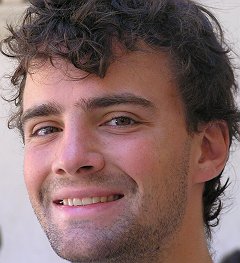
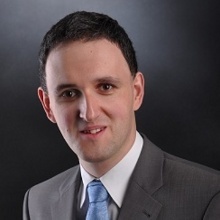
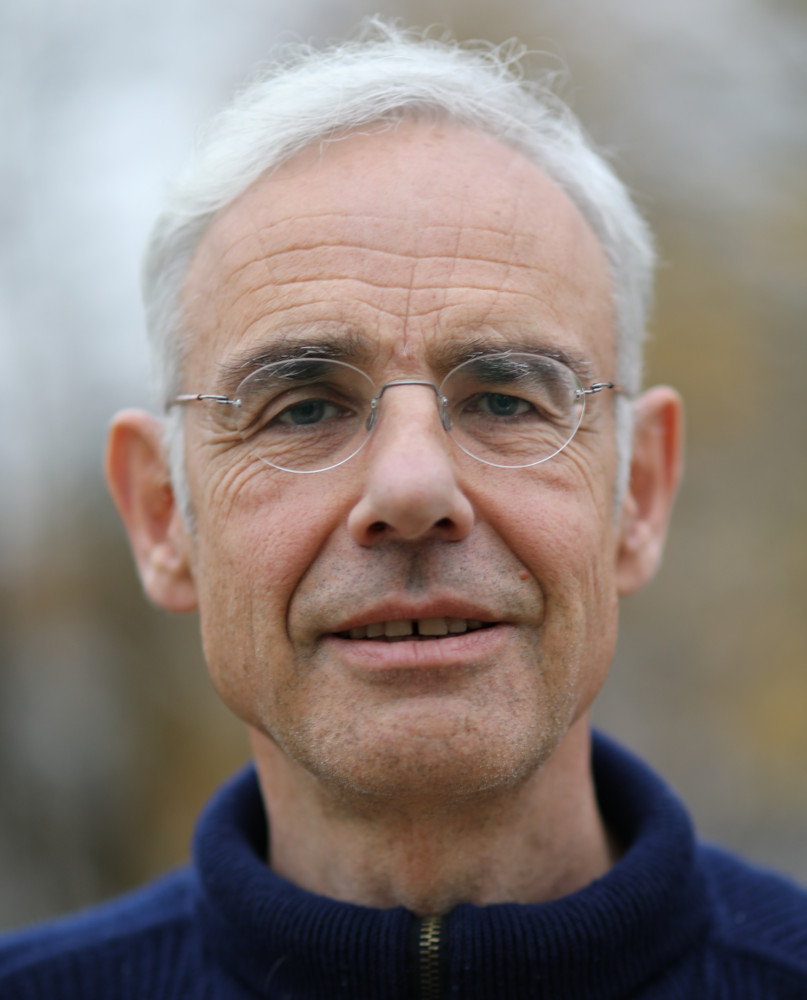
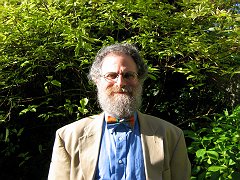
Dominique Devriese is a professor at the Department of Computer Science, KU Leuven, and a member of the DistriNet research group. His work bridges computer security, programming languages, and formal verification. Research interests: Functional Programming, Object Capabilities, Secure Compilation, Dependently-typed Programming, Modal Type Theory Teaching: Formal Systems, Object-Oriented Programming, CyberSecurity, Secure Software His research focuses on rigorous software systems security through capability machines and secure compilation techniques. He actively contributes to formal verification using Agda and Haskell, with recent work on multimode type theory and effect parametricity. Key publication trends include: multimode/presheaf type theory, capability-based security models, formal verification of hardware/software abstractions, and parametricity applications in programming languages. Contact: Email: dominique.devriese@kuleuven.be ORCID: 0000-0002-3862-6856
Prof. Dr. Matthias Weidlich is a faculty member at Humboldt University of Berlin within the Institute of Computer Science under the Faculty of Mathematics and Natural Sciences . His research focuses on Process Mining , Complex Event Processing , and Data Privacy with applications in Business Process Management and Scientific Workflows . Research Interests: Business Process Management and Process Mining Complex Event Processing and Stream Data Analysis Data Privacy and Security in Process Systems Scientific Workflow Systems and User Behavior Heterogeneous Network Embeddings Algorithm Design and Optimization Recent Publications (2023-2025) demonstrate expertise in: Efficient stream processing techniques Privacy-preserving process mining frameworks Scientific workflow analysis tools Graph neural network applications Multi-modal data integration Adaptive querying systems Contact: Office: Unter den Linden 6, 10099 Berlin Phone: 030 2093-41277 Email: matthias.weidlich@hu-berlin.de Web: hu.berlin/data
Yingfei Xiong is an active Associate Professor at Peking University, China, specializing in software engineering and programming languages. With a consistent research trajectory from 2013 through 2026, Xiong has established themselves as a prominent figure in the software engineering research community, regularly contributing to top-tier conferences including SPLASH, ICSE, ASE, and PLDI. Dr. Xiong's research primarily focuses on program synthesis, automated program repair, and software analysis techniques. Their work bridges theoretical programming language concepts with practical software engineering applications, particularly in developing novel approaches for code generation, bug fixing, and program optimization. The research demonstrates strong interdisciplinary connections between traditional software engineering, programming languages theory, and emerging AI techniques. Analysis of Xiong's publication trends reveals a clear evolution in research focus, beginning with foundational work in API transformations and program adaptation around 2013-2016, shifting toward program repair techniques from 2017-2020, and most recently incorporating machine learning and neural approaches into program synthesis and repair (2021-2026). The work consistently addresses practical challenges in software development while maintaining theoretical rigor, with increasing integration of AI techniques in recent years. Dr. Xiong has served in various leadership roles across the software engineering conference ecosystem, including program committee membership and session chair positions at major conferences. Their extensive service demonstrates recognition by peers as a subject matter expert in software engineering and programming languages research. While specific grant information isn't detailed in the provided text, the sustained publication record suggests successful research funding.
Heiko Falk is a Professor and Head of the Institute of Embedded Systems at Technische Universität Hamburg (TUHH). His roles include serving as Workshop Chair for the 2024 Embedded Systems Week (ESWEEK), Scientific Coordinator for the B.Sc. and M.Sc. Computer Science programs, and Deputy Head of the Board of Examiners for Computer Science and Engineering. His research focuses on real-time systems, compiler optimizations, and worst-case execution time (WCET) analysis. Key areas include multi-core architectures, cache management, energy efficiency, and hardware/software co-design. Falk's work emphasizes practical compiler techniques for improving real-time performance, such as WCET-aware memory allocation, dynamic SPM optimization, and event-driven scheduling. His publications analyze shared cache interference, preemptive/non-preemptive scheduling, and DMA-aware optimizations. Recent work explores multi-objective trade-offs between WCET, energy consumption, and code size in embedded systems. No scientific awards are explicitly listed, but his contributions to WCET benchmarking (e.g., haRTStone project) and compiler frameworks demonstrate significant impact in the field. Advising and grants: No formal advisees are listed in the provided texts. Falk's work is supported through projects like teamplay, focusing on cyber-physical systems optimization. Labs/Teams: His group operates within TUHH's Institute of Embedded Systems, collaborating on projects addressing real-time system challenges in multi-core environments.
Shuvendu K. Lahiri is a researcher at Microsoft Research, focusing on formal verification, program synthesis, and software testing. His work bridges artificial intelligence with formal methods, particularly in blockchain security and automated code generation. 2025 : Published LLM-Vectorizer (verified loop vectorizer) and neural synthesis for SMT-assisted proof-oriented programming 2024 : Explored LLM-based test-driven code generation and natural precondition inference 2023 : Developed resource management specifications and contributed to test generation with pre-trained models 2022 : Advanced Solidity type systems and merge conflict resolution using language models His research combines large language models with formal verification tools to improve software correctness. He actively contributes to conferences like ICSE, PLDI, and ISSTA as author and committee member.
Dr. Farzaneh Derakhshan is an Assistant Professor in the Computer Science Department at Illinois Institute of Technology (Illinois Tech), where she explores logical foundations of concurrency and develops formal methods for program verification. She earned her Ph.D. in Pure and Applied Logic from Carnegie Mellon University in 2021 under Frank Pfenning, followed by a postdoctoral fellowship at CMU with Limin Jia and Stephanie Balzer. Current affiliation: Illinois Tech (since ~2021) Previous affiliation: Carnegie Mellon University (Ph.D. and postdoc) Research focus: Type theory, logical verification, and security for concurrent systems Teaching: Courses on programming languages, type systems, and security Her research addresses fundamental challenges in concurrent programming, including: Developing modal logic frameworks for system verification Designing type systems for intermittent computing Creating behavioral type systems for security guarantees Applying relational logic to GPU security and secure compilation Investigating logical foundations of session-typed processes Formal verification of cyclic process networks Current research trends include: Hybrid dynamic verification for parallel systems Logical approaches to side-channel security Formal methods for cyber-physical systems Crash-resilient computing models Security verification in decentralized applications Noninterference proofs in session-typed concurrency Scientific recognition: NSF SaTC CORE Collaborative Award #2350217 Organizing committee member at Dagstuhl Seminar 26071 Professional leadership: Program committee co-chair for PLACES 2025 Committee roles at LICS 2026, ESOP 2026, ICFP 2025, and ECOOP 2025 Regular reviewer for ACM Transactions journals Laboratory involvement: Co-director of behavioral types research at Illinois Tech Collaboration with Carnegie Mellon's formal verification group Key participant in the FACCT workshop
Steve Zdancewic is the Schlein Family President's Distinguished Professor and Associate Chair in the Department of Computer and Information Science at the University of Pennsylvania's School of Engineering and Applied Science. He is a leading researcher in programming languages, formal methods, and computer security with over two decades of impactful contributions to the field. His research interests span programming languages, type theory, logic, computer security, quantum programming, and formal verification. Zdancewic has made significant contributions to information-flow security, memory safety, program synthesis, and the verification of low-level systems. His work often bridges theoretical foundations with practical applications, particularly through the development of verified systems using Coq and other proof assistants. Analysis of his recent publications reveals a strong focus on formal verification techniques, particularly using Interaction Trees and the Coq proof assistant. His research trajectory shows consistent evolution from foundational work on information-flow security toward increasingly sophisticated verification of complex systems including LLVM, quantum computing, and distributed systems. His work demonstrates a commitment to building practically useful verification tools while maintaining rigorous theoretical foundations. Distinguished Paper Award for Semantics for Noninterference with Interaction Trees (ECOOP 2023) Schlein Family President's Distinguished Professor (2021) Distinguished Paper Award for Interaction Trees (POPL 2020) Christian R. and Mary F. Lindback Foundation Award for Distinguished Teaching (2018) IEEE MICRO top picks (2013) Alfred P. Sloan Fellow (2009-2010) NSF CAREER award (2004) Zdancewic has advised numerous PhD students who have gone on to successful careers in academia and industry. His research has been supported by significant grants from NSF, including the NSF Expedition on the Science of Deep Specification. He is actively involved in multiple major research projects including Vellvm (verified LLVM), DeepSpec, and quantum programming verification. Zdancewic also co-organizes Penn's PL Club programming languages research group with Benjamin Pierce and Stephanie Weirich.
Ori Lahav is a faculty member in the School of Computer Science at Tel Aviv University. His research is generously supported by an ERC Starting Grant and an ISF Grant. He actively supervises PhD and MSc students, and seeks highly motivated candidates for postdoc, PhD, and MSc positions in programming language theory, concurrency, and formal methods. Dr. Lahav completed his PhD at Tel Aviv University under the supervision of Arnon Avron. In 2014, he was a postdoctoral researcher at Tel Aviv University hosted by Mooly Sagiv. From 2014 to September 2017, he was a postdoctoral researcher at MPI-SWS in Germany hosted by Viktor Vafeiadis and Derek Dreyer. His primary research areas focus on programming languages and verification, with specialization in concurrency and relaxed memory models. He also has significant interests in proof-theory, semantics of non-classical logics, and automated reasoning. His work bridges theoretical foundations with practical applications in programming language design and implementation. Dr. Lahav's publication record shows a consistent trajectory of high-impact research in top-tier conferences including PLDI, POPL, OOPSLA, and ESOP. His recent work (2023-2025) demonstrates continued leadership in memory models, concurrency semantics, and verification techniques. His research spans both theoretical contributions in denotational semantics and practical tools for verification. Best Paper Award DISC 2024 Best Student Paper Award DISC 2024 Distinguished Artifact Award ESOP 2022 Distinguished Paper Award OOPSLA 2021 Kleene Award for Best Student Paper LICS 2013 Dr. Lahav actively advises students including Yoav Ben Shimon, Yotam Dvir, Amir Karniel, and Roy Margalit (PhD students), Yuval Katsman Ezra (MSc student), and has alumni including Ori Saporta (MSc) and Abhishek Kr Singh (postdoc, now Assistant Professor at IIIT Hyderabad). He has organized significant events including VMCAI 2024 and Dagstuhl Seminars on persistent programming. His teaching portfolio includes courses on Shared Memory Concurrency Semantics, Programming Language Foundations, and Software Foundations in Coq.
Prof. Ilia Polian serves as Head of the Institute of Computer Engineering and Chair of the Hardware-Oriented Computer Science (HOCOS) department at the University of Stuttgart. His leadership spans research, teaching, and institutional coordination across multiple high-impact projects. Prof. Polian's research focuses on developing circuit and system architectures based on both traditional and novel principles, including neuromorphic, stochastic, and approximate architectures. His second major research focus is systematic design methodology and design automation, with particular emphasis on safety and reliability properties of developed systems. Current research directions include quantum computing engineering, secure mixed-signal neural networks, and resource-efficient stochastic circuits for near-sensor computing applications. His recent publications demonstrate strong trends in quantum computing (particularly circuit partitioning and compilation for multi-QPU architectures), hardware security (including memristive cryptographic implementations), and AI-driven approaches to hardware testing and reliability. These works bridge fundamental computer architecture research with practical industrial applications. University of Stuttgart's Publication Prize for Paper on Partitioning of Quantum Circuits Prof. Polian actively supervises doctoral students including Devanshi Upadhyaya, and leads significant research grants such as the DFG Priority Program Nano Security which he coordinates. His department offers numerous thesis and research opportunities for students interested in cutting-edge hardware research. The Hardware-Oriented Computer Science department maintains strong collaborations with industry partners including IBM, Infineon Technologies, and Advantest, as well as academic institutions through the IQST Graduate School and QuantumBW initiatives.
Professor Tobias Nipkow is a leading researcher in formal methods and interactive theorem proving at the Technical University of Munich (TUM), affiliated with the School of Computation, Information and Technology and the Department of Computer Science. He is a core developer of the Isabelle proof assistant and leads the Theorem Proving Group. His work has profoundly influenced program verification, semantics, and formalized mathematics. University: Technical University of Munich School: School of Computation, Information and Technology Department: Department of Computer Science Research Group: Theorem Proving Group Key Projects: Isabelle, Archive of Formal Proofs, Concrete Semantics His research focuses on formal verification, higher-order logic, semantics of programming languages, and verified algorithms. He has pioneered the formalization of textbook algorithms, data structures like B+-trees and quadtrees, and logical systems. His work bridges theoretical foundations with practical tools for software correctness. The most recent publications show a strong trend in verifying classical algorithms (e.g., Gale-Shapley, Earley parser), data structures (B+-trees, deques), and decision procedures, primarily using Isabelle/HOL. His contributions span foundational logic, program analysis, and educational approaches to formal methods. Best Paper Award at CADE 28 (2021) Tobias Nipkow has made extensive contributions to advising and collaborative research, co-authoring with numerous researchers and students. He has secured support for large-scale formalization efforts and contributed to major projects like the Flyspeck proof of the Kepler conjecture. His work is supported by ongoing development of the Isabelle framework and the Archive of Formal Proofs. He leads the Theorem Proving Group at TUM, which is central to the development and application of Isabelle. The group fosters international collaboration, contributes to the Archive of Formal Proofs, and advances research in automated reasoning, semantics, and verified systems.
Daniel Müller-Gritschneder is an Adjunct Teaching Professor (Privatdozent) at the Technical University of Munich (TUM), affiliated with the Chair of Electronic Design Automation. He leads the 'Electronic System Level' research group, focusing on embedded systems, TinyML, virtual prototyping, and hardware resilience. He temporarily served as head of the Chair of Real-Time Systems (2019–2020) and holds a senior membership in IEEE. His research spans: TinyML : Optimizing neural network inference for microcontrollers. Virtual Prototyping : Fast simulation for embedded software development (e.g., ETISS simulator). Runtime Verification : Hardware monitoring for safety-critical systems. Fault Tolerance : Cross-layer resilience against soft errors. Design Automation : NoC synthesis and RISC-V toolchain optimization. His publications emphasize RISC-V-based systems, TinyML deployment, fault injection, and embedded AI. Recent works show trends toward compiler-assisted security, thermal management, and automated design-space exploration for edge devices. Awards: Best Paper Award (SiPS 2019) Habilitation Award (Bund der Freunde der TUM, 2019) 2nd Best Paper (SMACD'15) Best Paper nominations at DAC'07, DATE'10, Analog'10, NOCS'13 He advises researchers in the Electronic System Level group and contributes to EU projects (e.g., Scale4Edge). His lab develops tools like ETISS, MLonMCU, and Seal5 for RISC-V and TinyML ecosystems.
Philip Wadler is Professor of Theoretical Computer Science at the University of Edinburgh and Senior Research Fellow at IOHK. He is an ACM Fellow, Fellow of the Royal Society, and Fellow of the Royal Society of Edinburgh. His work spans programming language design, type systems, and formal verification, with significant contributions to Haskell, Java, and XQuery. He has held leadership roles in ACM SIGPLAN and served on editorial boards for major journals. Research Interests: Wadler's research focuses on the foundations of programming languages , including Gradual and session typing Language-integrated query Functional and logic programming XML data models Parametricity and free theorems Verification of smart contracts Publication Trends: Recent articles emphasize type safety, formal verification, and blockchain applications. Key themes include gradual typing (blame calculus), session types for concurrency, and logical foundations of programming. His 2015–2025 papers show sustained focus on type theory and language design . Awards & Recognition: POPL Most Influential Paper (2003 for 1993 work) SIGPLAN Distinguished Service Award Best Paper SBMF 2018 Royal Society-Wolfson Fellowship (2004–2009) ACM Fellow (2007) Fellow of Royal Society of Edinburgh (2005) Advising & Grants: He has supervised numerous PhD students in programs like the Centre for Doctoral Training in Pervasive Parallelism. His EPSRC Programme Grant "From Data Types to Session Types" (2013–2020) funded major advances in concurrency theory. Current work with IOHK explores blockchain verification using Haskell-based Plutus.
Kihong Heo is an Associate Professor in the School of Computing and Graduate School of Information Security at KAIST (Korea Advanced Institute of Science and Technology) in South Korea. His academic career includes serving as an Assistant Professor at KAIST from 2017-2019 before being promoted to Associate Professor in 2020, following his postdoctoral research at the University of Pennsylvania. He earned both his Ph.D. and B.S. in Computer Science & Engineering from Seoul National University. Dr. Heo's research focuses on developing program reasoning systems for safe and reliable software, with specific interests in AI-based program analysis systems for detecting deep semantic software bugs, general-purpose program simplification systems for secure and efficient software, and scalable program synthesis systems for automatic software generation and repair. His work bridges the gap between programming languages, program analysis, and machine learning techniques to create next-generation programming systems. Analysis of his recent publications reveals a strong trend toward integrating machine learning techniques with traditional program analysis methods, with significant contributions in compiler validation, software security, fault localization, and program debloating. His research has practical impact, with some of his work incorporated into Facebook's Infer static analyzer. ACM SIGSOFT Distinguished Paper Award, FSE 2025 Amazon Research Award, 2024 The Soo-Young Lee Teaching Innovation Award, KAIST, 2024 Prize for Excellence in Teaching, KAIST, 2024 Best Artifact Award, ICSE 2022 ACM SIGPLAN Distinguished Paper Award, PLDI 2019 ACM SIGSOFT Distinguished Paper Award, ICSE 2019 Dr. Heo actively mentors graduate students, currently advising several Ph.D. candidates including Yeonhee Ryou, Taeeun Kim, and Sujin Jang, as well as master's students. He has served on program committees for major software engineering and programming language conferences including PLDI, ICSE, POPL, and SPLASH, demonstrating his active role in the academic community. His laboratory, the Programming Systems Laboratory at KAIST, focuses on creating innovative programming systems that leverage both semantic-based program analysis and AI techniques.
Aslan Askarov is an Associate Professor in the Department of Computer Science at Aarhus University, where he leads research in computer security and programming languages. He is a member of the Logic and Semantics Group and maintains an active research program with several ongoing projects. Dr. Askarov's research interests span computer security and privacy, with a focus on foundations, information-flow, covert channels, metadata privacy, and formal methods for security. He also works extensively in programming languages, particularly in semantics, design, type systems, and program analysis. His work bridges theoretical foundations with practical security applications, particularly in web and mobile security contexts. His active projects include Troupe, a programming language for concurrent and distributed programming with dynamic information flow control, and DenIM, a protocol for secure instant messaging with metadata privacy. These projects reflect his commitment to developing practical security solutions grounded in formal methods. Dr. Askarov has published extensively in top security and programming languages venues, with recent work focusing on metadata privacy in instant messaging, separation logic for virtual machine security, and oblivious execution techniques for reactive programs. His research demonstrates a consistent pattern of addressing fundamental security challenges through formal methods and language-based approaches. CSF 2026 ESOP 2026 PLDI 2025 CSF 2025 CSF 2022 CSF 2021 CSF 2020 PriSC 2020 Nordsec 2019 (co-chair) POST 2019 Euro S&P 2018 PLAS 2017 FCS 2017 (co-chair) HotSpot 2017 FCS 2016 (co-chair) CSF 2016 ESSOS 2015 FCS-FCC 2014 ARES 2014 FCS 2013 ARES 2013 PLAS 2013 ARES 2012 PLAS 2011 (co-chair) ISARCS 2010 PLAS 2009 VODCA 2008 Dr. Askarov teaches advanced courses in computer science, including Compilers in Fall 2024 and Language-Based Security in Spring 2024. He is actively recruiting PhD students and postdocs to work in the areas of Programming Languages and Computer Security, demonstrating his ongoing commitment to mentoring the next generation of researchers.
Peter Schwabe is a scientific director at the Max Planck Institute for Security and Privacy and holds academic positions as a part-time professor for cryptographic engineering in the Digital Security Group at Radboud University, Faculty of Science, and as an adjunct professor in the Faculty of Computer Science at Ruhr University Bochum. His career spans multiple prestigious institutions including Academia Sinica and National Taiwan University. Dr. Schwabe's research focuses on cryptography, particularly post-quantum cryptography, cryptographic engineering, and implementation security. His work addresses critical challenges in secure cryptographic implementations, side-channel resistance, and the transition to quantum-resistant algorithms. He has made significant contributions to NIST's post-quantum cryptography standardization project, particularly with CRYSTALS-Kyber which was selected for standardization in July 2022. His publication record shows a strong emphasis on practical implementations of cryptographic algorithms, formal verification of security properties, and addressing real-world security challenges. Recent work centers on verifying Kyber implementations, protecting against Spectre variants, and developing high-assurance cryptographic software. Dr. Schwabe has received significant recognition in the field, serving as an elected member of the IACR Board of Directors and participating in various steering committees including the IACR CHES and RWC Steering Committees. He also serves on advisory boards for several security-focused companies. As an advisor, he has supervised numerous PhD students working on cutting-edge cryptographic research, with recent graduates focusing on post-quantum cryptography, side-channel resistance, and formal verification of cryptographic implementations. His research group actively contributes to both theoretical advances and practical implementations in cryptography.