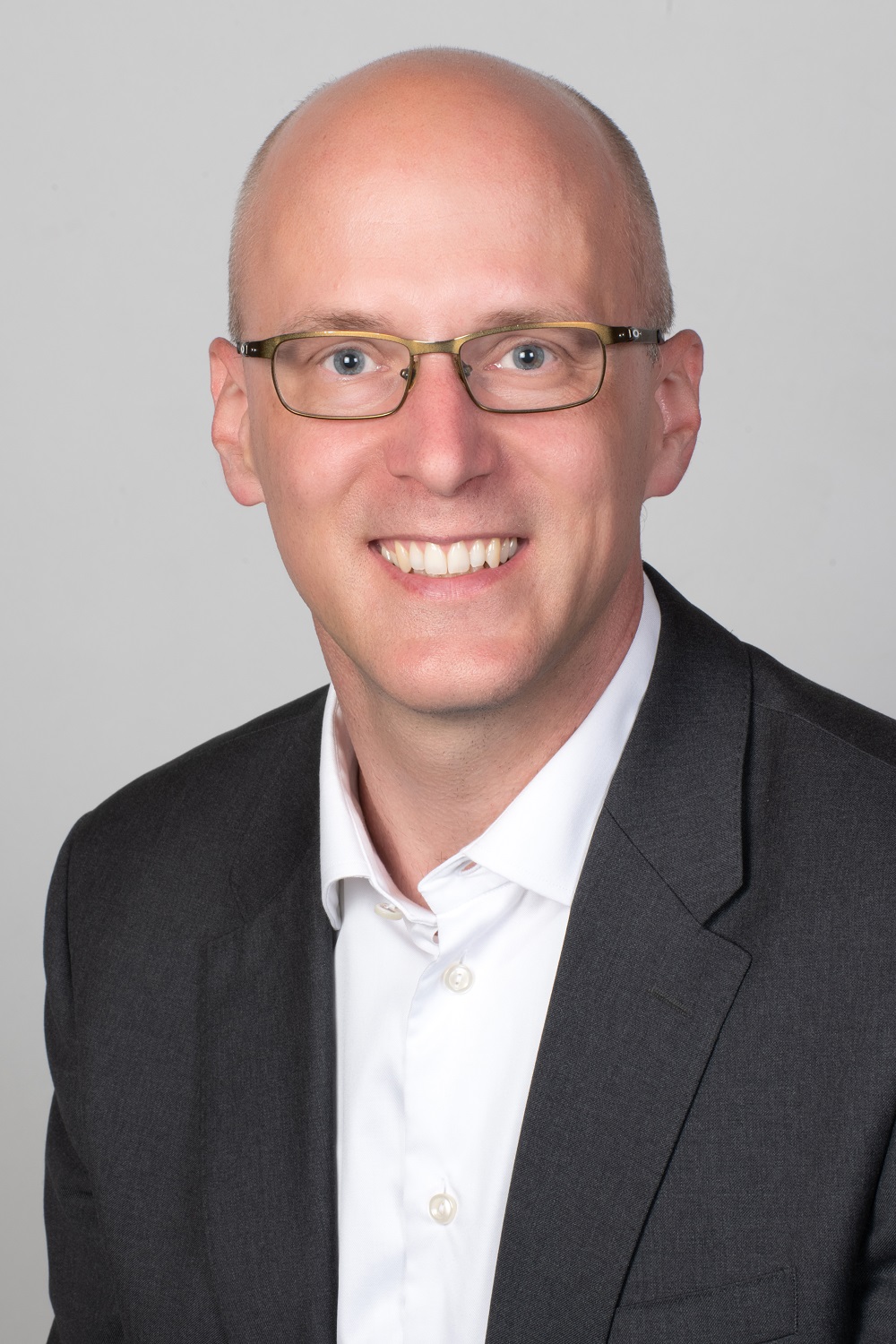
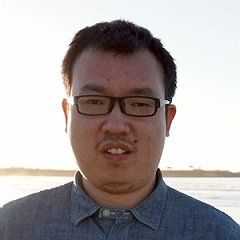
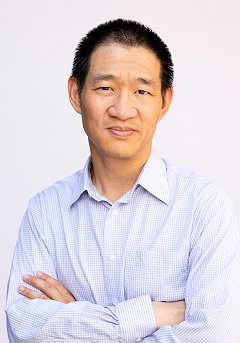
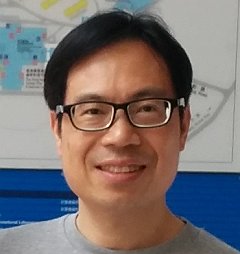
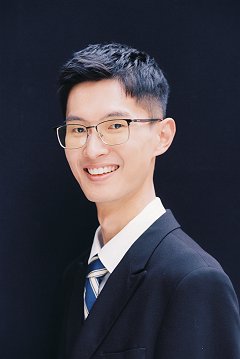
Prof. Dr. Andreas Podelski is a Professor of Software Engineering at the Institute of Computer Science (Institut für Informatik) at the University of Freiburg, part of the Faculty of Engineering. His research focuses on formal verification, software model checking, and requirements engineering, with a particular emphasis on improving the reliability and safety of complex software systems. He leads the SystemValid project, funded by the German Federal Ministry of Education and Research (BMBF), which aims to validate requirements in system and software development to reduce errors early in the design phase. Key contributions include the development of verification tools like Ultimate Automizer and Ultimate Taipan , which are used in international competitions (e.g., SMT-COMP). His work bridges theoretical foundations and practical applications, addressing challenges in concurrent systems and safety-critical software. Podelski has been recognized as an IEEE Fellow (2022) and has collaborated with industry partners like Bosch on real-world applications of formal methods. His research also extends to teaching and academic leadership, contributing to courses on software engineering, formal methods, and verification. He actively engages in interdisciplinary projects, such as the European Flagship initiative DigiTwins , and has published extensively on topics including automated testing, concurrency, and model-driven engineering.
Professor Vincent Heuveline serves as Professor and Head of the Engineering Mathematics and Computing Lab (EMCL) at Heidelberg University's Interdisciplinary Center for Scientific Computing (IWR). He concurrently holds the positions of Chief Information Officer (CIO) and Director of the Computing Centre at the university, while leading the Data Mining and Uncertainty Quantification (DMQ) group at HITS gGmbH. His academic background includes: Studies in Mathematics, Physics, and Computer Science at Caen (France) and Würzburg (Germany) PhD in Computer Science (1997) from Université de Rennes and INRIA Habilitation in Mathematics (2002) at Heidelberg University Research focuses on uncertainty quantification (UQ) , high-performance computing (HPC) , and data-intensive computing with applications in medical engineering. He is deeply engaged in IT security research and teaching, developing practical frameworks for industrial deployment of numerical simulations and secure computing infrastructures. Recent publications reveal converging trends in biomedical image segmentation (e.g., Biomedisa platform), metabolic modeling for newborn diagnostics, and cybersecurity solutions like DGA detection. Key interdisciplinary themes include machine learning for medical applications, HPC algorithm optimization, and network security frameworks addressing real-world industrial challenges. He leads the EMCL and DMQ research groups, driving innovation in computational science. As CIO, he shapes Heidelberg University's digital infrastructure strategy while maintaining active industry collaborations for translating academic research into simulation and security solutions.
Julian Erhard is a researcher and lecturer at the Technical University of Munich (TUM), affiliated with the Chair of Languages and Description Structures in Computer Science under Prof. Helmut Seidl. His research focuses on static analysis techniques, particularly leveraging abstract interpretation to enhance precision and performance in compiler optimization and concurrency analysis. He contributes to the Goblint static analyzer and is a member of the ConVeY research training group. Erhard has organized preparatory mathematics courses and served as an exercise instructor for core computer science courses such as Functional Programming and Verification, Compiler Construction, and Static Analysis. His teaching spans multiple semesters from 2019 to 2025, emphasizing practical programming concepts and theoretical foundations. In research, he addresses challenges in context-sensitivity management, concurrency validation, and pointer analysis. His work includes developing frameworks like the digest framework for concurrency-sensitivity and tools like C-2PO for weakly relational pointer domains. Recent publications explore correctness witnesses for concurrent programs and optimizing context sensitivity dynamically. Erhard has co-organized ConVeY retreats and contributed to projects such as the Goblint validator and the Clustered relational thread-modular analysis framework. His expertise bridges theoretical advancements in abstract interpretation with practical compiler tool development.
Lucas Vincenzo Davi is a Professor of Computer Science at the University of Duisburg-Essen and Director of the paluno - the Ruhr Institute for Software Technology . He leads the SYSSEC research group and is a Principal Investigator (PI) in the SFB CROSSING and CASA excellence cluster. His work focuses on practical software and systems security, including memory corruption vulnerabilities, exploit mitigation, and blockchain smart contract security. Davi holds an ERC Starting Grant for Smart Contract Security research. Education: PhD in IT Security, TU Darmstadt (2011–2015), Dissertation: "Code-Reuse Attacks and Defenses" Master of Science in IT Security, Ruhr-Universität Bochum (2007–2009) Diplom (FH) in Business Informatics, FOM Neuss (2003–2007) Research: Davi's work emphasizes real-world security challenges like runtime attacks, trusted execution environments (TEE), and secure embedded systems. His contributions include Wemby (WebAssembly security analysis), HCC (smart contract hardening), and rowhammer mitigations like CATT. His research has influenced industry practices, e.g., Microsoft EMET v5.1 improvements. Awards: Best Teacher Award (2025) Finalist German IT Security Prize (2022, 2020) ACM SIGSAC Dissertation Award (2016) CAST Förderpreis (2010) Grants & Leadership: ERC Starting Grant (Smart Contracts), SFB CROSSING PI, CASA Cluster PI, and leadership in interdisciplinary initiatives like Nano Security (DFG Priority Program). Labs/Teams: Director of paluno, SYSSEC group leader, and collaborator in projects like HERA (hotpatching for embedded systems) and DMA’n’Play (DMA-based attestation).
Rainer Höckmann is a Researcher at the Laboratory for Digital and Microprocessor Technology , part of the Faculty of Engineering and Computer Science at Osnabrück University of Applied Sciences . Since 2008, he has focused on digital systems, FPGA accelerators, and wireless network concepts. Education: Diplom-Ingenieur (FH) in Computer Science (2006) Research interests include: Digital and microprocessor technology FPGA-based hardware acceleration Embedded microcomputing systems Compiler construction and sensor technology Wireless network relaying strategies Quality-of-service mechanisms in telecom networks His publication trends show expertise in: Cooperative relaying topologies Multimedia broadcasting enhancements Portable FPGA design frameworks Next-gen network concepts Teaching activities include: Bildgebende Sensortechnik Compilerbau Digitaltechnik Embedded Systems Hardware/Software Co-Design Rechnerarchitektur Professional projects : HPVis visual data project (2012-2014) C-MOBILE (mobile multicast/broadcast) C-CAST (context-dependent data transport)
Hironori Washizaki is a Professor in the Department of Computer Science and Engineering at Waseda University, Japan. He is a leading researcher in software engineering with a focus on software design patterns, machine learning systems, cybersecurity, and software quality. His primary research interests include: Software Engineering Machine Learning Systems Engineering Software Design Patterns AI and ML Security Requirements Engineering for AI Systems Natural Language Processing for Software Engineering Software Quality and Reliability Empirical Software Engineering His recent publications (2023–2025) reveal a strong trend toward integrating AI and machine learning into software engineering practices. Key themes include prompt engineering patterns in software development, automated log anomaly detection, vulnerability analysis using NLP techniques, modeling frameworks for ML systems, and gender studies in software engineering. His work combines theoretical modeling with empirical validation and practical application. Notable scientific contributions and activities include: Guest editorial for IEEE Transactions on Emerging Topics in Computing on software aging and rejuvenation Organizing and contributing to workshops on SQuaRE, gender in software engineering, and ML systems engineering Leadership roles in IEEE Computer Society Extensive collaboration with researchers at Waseda and internationally He advises students and leads research on topics such as automated program repair, data-driven personas, bug fixing time analysis, and educational tools for programming. His work often involves interdisciplinary collaboration across software engineering, AI, and cybersecurity domains. He is involved in several research labs and teams focused on software engineering innovation, including groups working on: Software patterns and architecture AI/ML engineering Security and privacy in cloud and IoT Empirical studies in software development Educational technology and programming pedagogy
Prof. Dr. Matthias Tichy is a Full Professor and head of the Institute of Software Engineering and Programming Languages at Ulm University, Germany, since 2015. His research focuses on domain-specific languages (DSLs), model-driven engineering (MDE), self-adaptive software , and cyber-physical systems , with an emphasis on safety-critical applications and graph transformation formalisms. He employs empirical research methods to evaluate technical contributions and human factors in software engineering. University: Ulm University Role: Professor & Institute Head Research Interests span domain-specific languages for mechatronic systems, collaborative modeling , performance prediction in model transformations, and software evolution in industrial contexts. His work often bridges graph transformations and safety assurance for self-adaptive systems. Recent Publications highlight trends in model versioning (e.g., operation-based caching), DSL design (e.g., flowR for R code analysis), and automotive software testing (e.g., clustering test case specifications). He frequently collaborates with international institutions on topics like cyber-physical systems and IoT resilience . Key Collaborations include projects with Chalmers University, University of Gothenburg, and industrial partners like dSPACE GmbH. His grants and industry partnerships focus on automotive software , robotics , and self-healing systems .
Myra Cohen is a Professor and the Lanh and Oanh Nguyen Chair in Software Engineering in the Department of Computer Science at Iowa State University. Previously, she held the position of Susan J. Rosowski Professor at the University of Nebraska-Lincoln where she was a member of the ESQuaReD software engineering research group. She serves on the ASE Steering Committee and has held leadership roles including general chair of ASE 2015 and program co-chair for ICST 2019 and ESEC/FSE 2020. Dr. Cohen earned her Ph.D. from the University of Auckland, New Zealand, her M.S. from the University of Vermont, and her B.S. from the School of Agriculture and Life Sciences at Cornell University. Her academic journey includes lecturing positions at both the University of Auckland and University of Vermont during her graduate studies. Her research spans several interconnected domains focused on software quality and assurance. A significant portion of her work addresses software testing challenges in highly-configurable systems, where she applies search-based techniques and combinatorial designs to create efficient test suites. More recently, her research has expanded into innovative areas including software testing for biological systems, quantum computing applications, and security testing through genetic improvement techniques. Her work demonstrates a consistent theme of addressing complex verification challenges through creative application of formal methods and automated techniques. Analysis of her recent publications reveals a growing focus on emerging domains including quantum software testing, molecular/biological computing systems, and assurance cases for safety-critical systems. She has increasingly incorporated AI techniques, particularly large language models, into traditional software engineering problems while maintaining her foundational work in configurable systems and metamorphic testing. NSF CAREER award recipient AFOSR Young Investigator Award recipient ACM Distinguished Scientist Recipient of 4 ACM Distinguished Paper awards Dr. Cohen has served as chair and committee member for numerous conferences including ASE, ICSE, ISSTA, ESEC/FSE, and ICST. She has mentored numerous students through the doctoral symposiums and student research competitions at major software engineering conferences. Her research has been supported by significant grants including those from NSF and AFOSR. She leads the LaVA-OPs (Laboratory for Variability-Aware Assurance and Testing of Organic Programs) research group at Iowa State University, which focuses on testing challenges in biological and organic computing systems.
Eric Bodden is a Professor for Secure Software Engineering at Paderborn University and co-director of Fraunhofer IEM. He is also a member of the directorate of the Collaborative Research Center CROSSING at TU Darmstadt. As an ERC fellow, Bodden leads the Attract-Group on Secure Software Engineering at Fraunhofer IEM, where he develops code analysis technology for security in collaboration with leading national and international software development companies. Bodden is one of the leading experts in secure software engineering with a specialty in building highly precise tools for automated program analysis. His research spans static program analysis, Android security, taint analysis, and cryptographic API security. He has made significant contributions to the field through frameworks like FlowDroid for Android analysis, DroidBench benchmark suite, and as one of the chief maintainers of the Soot program analysis framework. His work bridges theoretical advances with practical applications, focusing on creating tools that can be effectively used by developers to enhance software security. His recent publications demonstrate a continued focus on advancing static analysis techniques, with increasing attention to modern challenges like C/C++ analysis, large language models in program analysis, and addressing security vulnerabilities in dependency management. His work shows a consistent trajectory of improving analysis precision, scalability, and usability for developers. Heinz Maier-Leibnitz-Preis (2014) ERC fellow BITKOM Management Club membership (2013) Bodden has advised numerous doctoral students whose theses cover diverse aspects of secure software engineering, including static analysis for Android applications, secure integration of cryptographic software, and information flow security engineering. His research group has received recognition through multiple dissertation awards including Summa cum laude distinctions and the Ernst Denert Software Engineering Award. The group has developed influential tools like FlowDroid, CogniCrypt, and SootUp that have shaped the field of secure software development. At Fraunhofer IEM, Bodden heads the Attract-Group on Secure Software Engineering, which collaborates with industry partners to develop practical security analysis solutions. His team has created several influential frameworks including FlowDroid for Android security analysis and the DroidBench benchmark suite. The group's work bridges academic research with real-world applications, focusing on making security analysis tools more precise, scalable, and usable for developers.
Tevfik Bultan is a Professor and Chair of the Department of Computer Science at the University of California, Santa Barbara. His research focuses on software verification, program analysis, software engineering, and computer security. He directs the Verification Laboratory (VLab) and has authored over 100 refereed publications. Education Ph.D. in Computer Science, University of Maryland, College Park (1998) M.S. in Computer Engineering, Bilkent University (1992) B.S. in Electrical Engineering, Middle East Technical University (1989) Research Focus Bultan's work spans automated verification techniques, security vulnerability detection, quantitative program analysis, and symbolic execution. His lab develops tools for analyzing software systems with applications in cloud security, network protocols, and embedded systems. Awards and Honors ACM Distinguished Scientist (2016) NSF CAREER Award (2000) UCSB Outstanding Graduate Mentor Award (2016) ACM SIGSOFT Distinguished Paper Awards (2005, 2014) NATO Science Fellowship (1993) Professional Activities He has chaired program committees for top conferences including ICSE, FSE, and ASE. Currently serves as associate editor for ACM TOSEM and on steering committees for ISSTA, ASE, and ICSE. Regularly advises PhD students and postdoctoral researchers in verification and security. Laboratory Leads the Verification Laboratory (VLab) focusing on automated reasoning techniques for software systems. Current projects include symbolic analysis for vulnerability detection, quantitative information flow, and security policy verification.
Coen De Roover is a Professor at the Vrije Universiteit Brussel (VUB) since October 2015, affiliated with the Software Languages Lab (SOFT) where he leads the Code Analysis and ManiPulation (CAMP) subgroup. He serves as programme director for the bachelor's program in Computer Science since the 2019-2020 academic year. His research focuses on the design of program analyses and their application to software quality problems , with particular expertise in static and dynamic analysis techniques. Key research areas include: Soft verification of contracts and incremental abstract interpretation Fine-grained change analysis of individual commits Mining for change patterns across multiple commits Vulnerability detection in infrastructure code (particularly Ansible) Concolic testing and resilience analysis Recent publication trends show increasing focus on infrastructure as code security, WebAssembly analysis, and modular abstract interpretation frameworks. His work bridges theoretical program analysis with practical software engineering applications, often validated through empirical studies on open-source projects. As an active contributor to the software engineering community, he has served on program committees for major conferences including ASE, ECOOP, ICSE, and SPLASH. His leadership roles include steering committee positions for GPCE and SANER, and program co-chair roles for International Conference on Program Comprehension. De Roover directs the CAMP research subgroup which has published over 120 peer-reviewed articles. The group develops practical analysis tools while advancing theoretical foundations of program analysis, with recent work focusing on infrastructure code security and WebAssembly analysis.
Ding Li is an Assistant Professor in the School of Computer Science at Peking University. He holds a Ph.D. in Computer Science from the University of Southern California (USC) and a B.S. from Peking University. His research focuses on program analysis, energy optimization for mobile applications, and security, with publications in top conferences including ICSE, FSE, and ASE. His research interests span: Program Analysis : Techniques to optimize mobile application energy consumption. System Security : Identifying vulnerabilities in Android apps and WebAssembly binaries. Cloud/Edge Computing : Enhancing serverless computing efficiency and federated learning security. Dr. Li's recent work explores the integration of large language models into pointer analysis and automated optimization of resource inefficiencies. His publications demonstrate a consistent focus on practical system optimizations and security enhancements across mobile, cloud, and machine learning domains. Awards: Viterbi Undergraduate Research Mentoring Award (2014)
David Lie is a Professor in the Department of Electrical and Computer Engineering at the University of Toronto. He holds additional appointments in the Department of Computer Science and the Faculty of Law. He is a Tier 1 Canada Research Chair in Secure and Reliable Systems, a research lead at the Schwartz Reisman Institute for Technology and Society, an Associate Director at the Data Sciences Institute, a Vector Faculty Affiliate, and a Senior Massey College Fellow. His educational background includes: BASc from the University of Toronto (1998) MS from Stanford University (2001) PhD from Stanford University (2004) David Lie's research spans computer security, privacy, and cybersecurity. He is renowned for pioneering the XOM architecture—a foundational model for modern trusted execution environments like ARM TrustZone and Intel SGX—and developing the widely adopted PScout Android permission mapping tool. His current work emphasizes program analysis, fuzzing, and symbolic execution to enhance software security and reliability, addressing critical vulnerabilities in mobile and system software. His recent publications reveal a strong trajectory in integrating machine learning with program analysis techniques. Key themes include optimizing symbolic execution for Android apps, leveraging LLVM IR for bug detection, and using predictive models to guide test generation. These contributions underscore a practical focus on scalable, automated security tools that bridge theoretical advances with real-world software vulnerabilities. His notable awards include: Best Paper Award at SOSP Tier 1 Canada Research Chair in Secure and Reliable Systems Senior Massey College Fellow No specific information on student advising or research grants was provided in the available text, though his extensive program committee service for top security conferences (OSDI, IEEE Security & Privacy, CCS, etc.) indicates significant academic leadership. David Lie actively contributes to interdisciplinary research ecosystems through his roles at the Schwartz Reisman Institute for Technology and Society (as research lead), the Data Sciences Institute (as Associate Director), and the Vector Institute for Artificial Intelligence (as Faculty Affiliate), fostering collaborations between security research, law, and societal impact studies.
Shing-Chi Cheung is a Professor of Computer Science and Engineering at the Hong Kong University of Science and Technology (HKUST), School of Engineering. He founded the CASTLE research group and co-founded the International Workshop on Automation of Software Testing (AST) in 2006. His leadership includes serving as General Chair of FSE 2014 and chairing multiple APSEC conferences. His research focuses on software quality enhancement through program analysis, testing, debugging, and AI techniques, targeting Android apps, open-source software, deep learning systems, smart contracts, and spreadsheets. Current projects include metamorphic testing frameworks, binary analysis tools, and vulnerability detection systems for emerging technologies. His publication portfolio demonstrates consistent contributions to software engineering since 2016, with recent work emphasizing AI-integrated testing methodologies, smart contract security, and deep learning system reliability. Key trends show increasing focus on cross-language analysis, data visualization quality, and compiler-level verification for modern software stacks. Distinguished Member of the ACM Fellow of the British Computer Society Editorial board member: Science of Computer Programming (SCP), Journal of Computer Science and Technology (JCST) Former editorial board member: IEEE Transactions on Software Engineering (2006-2009), Information and Software Technology (2012-2015) Four patents in China and the United States Cheung actively mentors through the CASTLE research group and serves on program committees for major conferences including ICSE, ESEC/FSE, and ISSTA. His work bridges academic research with practical applications through industry collaborations and tool development. He has contributed to numerous workshops and symposia as steering committee member and program chair.
Shangwen Wang is an Assistant Professor in the School of Computer Science at National University of Defense Technology (NUDT) in Changsha, China. He earned his Bachelor's degree in June 2017, Master's degree in December 2019, and Ph.D. in December 2023, all from NUDT. During his graduate studies, he was supervised by Professor Xiaoguang Mao. From May 2022 to July 2023, he was a visiting student at Southern University of Science and Technology under Professor Yepang Liu. His educational background includes: Ph.D. in Software Engineering, NUDT (2020.3-2023.12), supervised by Prof. Xiaoguang Mao Visiting Scholar, SUSTech (2022.5-2023.7), supervised by Prof. Yepang Liu M.A. in Software Engineering, NUDT (2017.9-2019.12), supervised by Prof. Xiaoguang Mao B.A. in Software Engineering, NUDT (2013.9-2017.6) Wang's research focuses on program repair, program comprehension, mining software repositories, software maintenance and evolution, software testing, and AI for Software Engineering. His work bridges traditional software engineering techniques with modern AI approaches, particularly leveraging large language models for various software engineering tasks. He has made significant contributions to automated program repair, fault localization, vulnerability detection, and code generation. His research demonstrates a strong emphasis on empirical validation and practical applicability to real-world software development challenges. His recent publications show a clear trend toward integrating large language models with traditional software engineering tasks. The 15 most recent articles reveal a focus on applying LLMs to program repair, fault localization, vulnerability detection, and code generation, while maintaining strong empirical foundations. His work spans both theoretical advancements and practical tool development, with applications in software security, testing, and maintenance. His notable achievements include: CCF Outstanding Doctoral Dissertation (CCF优博) 2024 Outstanding Doctoral Graduates, NUDT, 2023 Multiple distinguished paper awards including ACM SIGSOFT Distinguished Paper Award (ISSTA'24) and IEEE TCSE Distinguished Paper Awards (ICSME'22, SANER'22) Prestigious scholarships from NUDT throughout his academic career As an active member of the software engineering community, Wang serves on numerous program committees for top conferences including ICSE, ASE, ESEC/FSE, and ISSTA. He has also contributed to teaching as a teaching assistant for courses such as Compiler, Python Programming, Discrete Mathematics, and C++ Programming. His research group appears to be actively mentoring students, as evidenced by his role as corresponding author on multiple student-led publications. Wang maintains an active research presence with collaborations across multiple institutions in China. His work demonstrates a clear trajectory from traditional program analysis techniques toward integrating cutting-edge AI approaches, particularly large language models, into software engineering practices.