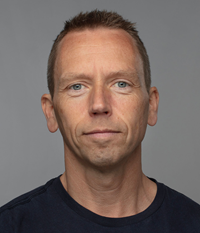
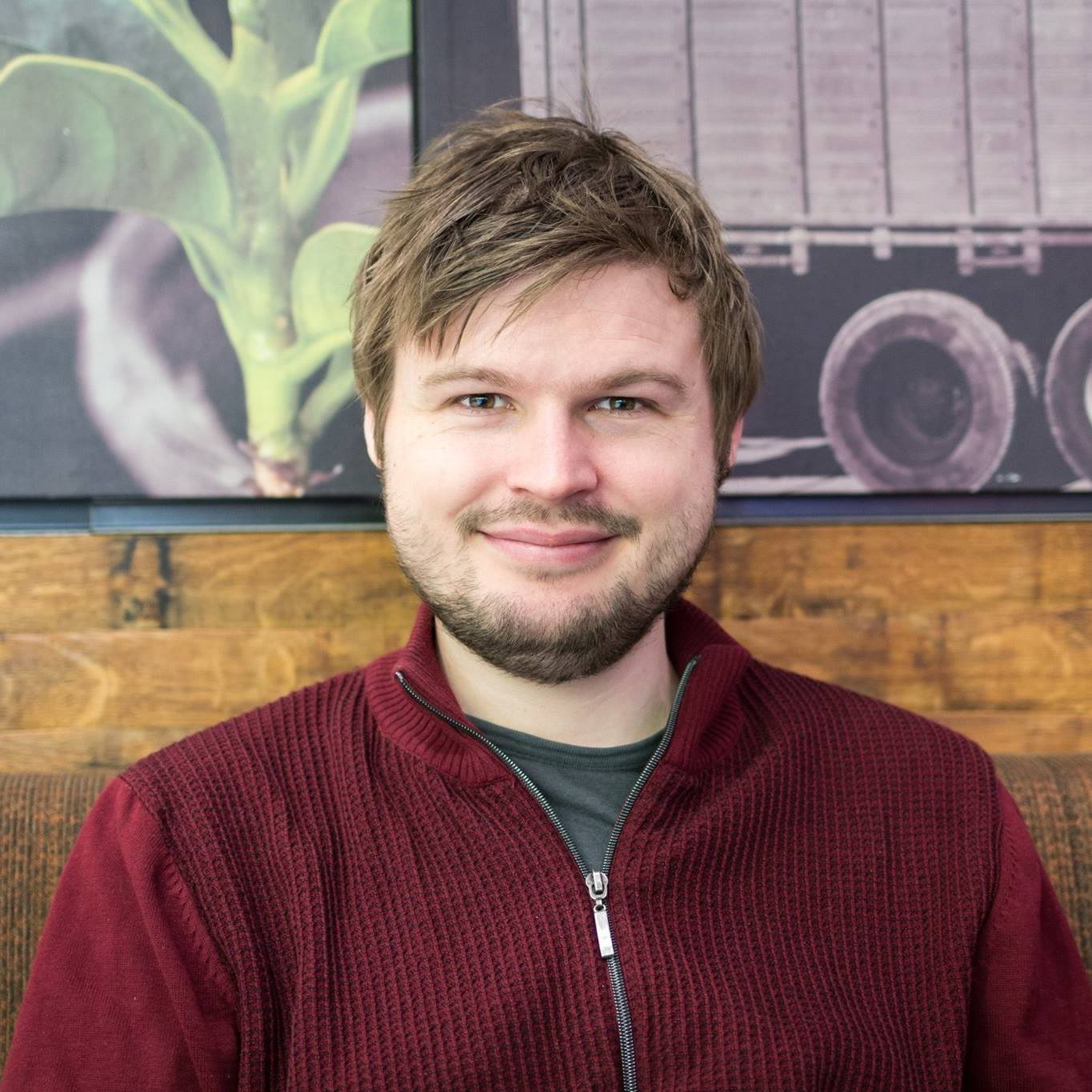
Yassine Ghannane is a Research Fellow at the Department of Computer Science , University of Copenhagen , specializing in Algorithms and Complexity . University: University of Copenhagen Department: Department of Computer Science Research Focus: Theoretical computer science, permutation-based evolutionary algorithms, computational complexity His recent work includes runtime analysis and theory development for permutation-based evolutionary algorithms, as well as module-based neural network mapping heuristics. Publications span 2022–2024 with interdisciplinary applications in machine learning and optimization. Contact: yagh@di.ku.dk | Office: Universitetsparken 1, 2100 København Ø, Denmark
Arijit Khan is an Associate Professor in the Department of Computer Science at Aalborg University, Denmark. He leads the Data Engineering, Science and Systems group and is affiliated with the Technical Faculty of IT and Design. His research focuses on Graph Neural Networks , Blockchain , Data Management , and AI interpretability . He is the Principal Investigator (PI) of a major project on Data Management, Fundamental Algorithms, and Machine Learning for Emerging Problems in Large Networks (2022–2027). Research Interests : Graph Data Management & Machine Learning Blockchain Transaction Analysis Large Language Model + Knowledge Graph Synergies Healthcare AI (e.g., ICU glucose prediction) Explainable AI for Graph Neural Networks Research Trends : His publications emphasize neuro-symbolic systems , uncertain graph analysis , and AI-driven blockchain insights . Recent work bridges large language models with knowledge graphs and explores GPU performance optimization via shader code analysis. Awards & Grants : No explicit awards listed, but his active research grants include a 5-year project on large network analysis with interdisciplinary applications in life and health sciences. Funding emphasizes algorithmic innovation and data science integration. Labs/Teams : Head of the Data Engineering, Science and Systems research group, focusing on AI for societal impact ('AI for the People') and scalable graph data systems. Collaborations span blockchain analytics, healthcare informatics, and GPU architecture design.
Peter Sestoft is a Professor at the IT University of Copenhagen (ITU), leading the Computer Science Department since 2017. His primary roles include academic leadership, research in programming languages and software engineering, and teaching. He holds a PhD in Computer Science from the University of Copenhagen (1991) and has held academic positions at institutions like the Royal Veterinary and Agricultural University and the Technical University of Denmark before joining ITU in 1999. His research focuses on programming languages, functional and managed object-oriented languages, parallel programming, compilers, and spreadsheet implementation technologies. He has developed influential tools like the C5 Generic Collection Library for C# and Moscow ML, a Standard ML implementation. His work on Funcalc and Corecalc advanced spreadsheet technology with user-defined functions and efficient recalculation algorithms. Key contributions include over 30 publications, including books on programming language concepts and Java/C# syntax. He has led major research projects such as 'Popular Parallel Programming' (P3) and 'Probabli' for actuarial calculations. His academic service includes roles on national grant committees and international conference organizing committees. Notable advising includes PhD students like Andrzej Wasowski (ITU Professor) and David Christiansen (Director of Haskell Foundation). His work has been recognized through grants exceeding 25 million DKK and collaborations with institutions like Microsoft Research and Harvard University.
Martin Elsman is a full-time Professor in the Programming Languages and Theory of Computation section at the Department of Computer Science, University of Copenhagen (DIKU). He serves as head of the PLTC section and head of studies for the BSc education in Computer Science and Economics. Elsman is also an active maintainer of several software tools including the MLKit and SMLtoJs. Joined DIKU in 2012 after 4 years at SimCorp (2008-2012) and previous Associate Professorship at IT University of Copenhagen (2003-2008). Co-developer of Futhark, TAIL APL compiler, SMLtoJs, and SMLserver. Education: M.Sc. in Engineering, Technical University of Denmark Ph.D. in Computer Science, University of Copenhagen (DIKU), supervised by Mads Tofte. Research Interests: Elsman works on programming language design and implementation, with a focus on functional programming, module systems, domain-specific languages for financial contracts, region-based memory management, compilation techniques for parallelism, program optimization, and static type systems. His work spans both theoretical and applied domains, including blockchain-based financial contract execution, web technology, and GPU programming using functional languages. Publication Trends: His recent articles focus on functional programming, array programming, parallelism, and memory management. Topics include region inference, type systems for data-parallelism, program optimization techniques, and domain-specific compilation for financial and quantum computing. He frequently collaborates with Troels Henriksen and others on tools like Futhark and MLKit.
Ruben Niederhagen is an Associate Professor at the Department of Mathematics and Computer Science, University of Southern Denmark. His roles include affiliation with the Digital Democracy Centre and the VIP group in Artificial Intelligence, Cybersecurity, and Programming Languages. He holds external positions as Assistant Research Fellow at Academia Sinica (since 2022) and previously led the 'Advanced Cryptographic Engineering' and 'Post-Quantum Cryptography' departments at Fraunhofer SIT (2016–2020). He earned his PhD in Mathematics and Computer Science from Eindhoven University of Technology (2010–2012). His research focuses on cryptology, post-quantum cryptography, and embedded security. Key areas include quantum-resistant algorithms, cryptographic protocols, and hardware security implementations. His work addresses challenges like signature scheme optimization, electric vehicle cybersecurity, and quotable signature systems for data authenticity. Niederhagen has been featured in multiple media outlets discussing post-quantum cryptography’s role in future security. He teaches courses such as Cryptographic Engineering (DM886) and Networks and Cybersecurity (DM572). His research outputs span 33 publications, including book chapters and peer-reviewed conference papers, with a focus on practical implementations and theoretical advancements in cryptographic systems.
Anders Møller is a Professor and Vice Head of Department at the Department of Computer Science, Aarhus University, Denmark. He is a leading researcher in programming languages and software engineering, with a primary focus on static and dynamic program analysis. He serves as Chairman of the PhD Committee and holds leadership roles in the international research community, including Vice-Chair of ACM SIGPLAN and Associate Editor for ACM TOPLAS and ACM TOSEM. His research interests include programming languages, software engineering, static and dynamic analysis, program verification, and security. His work bridges theoretical foundations and practical applications, particularly in improving software reliability and security through advanced analysis techniques. The trends in his recent publications reflect a strong emphasis on static analysis for security, scalability, and real-world impact—especially in web applications, smart contracts, and open-source software supply chains. His research has evolved toward practical deployment, demonstrated by the founding and acquisition of Coana by Socket in 2025 for enhanced vulnerability detection. Recipient of the Danish Elite Research Prize 2020 ACM Distinguished Member He actively mentors students and contributes to the academic community through conference leadership (e.g., OOPSLA, PLDI, ICSE). He also co-authored the widely used textbook Static Program Analysis with Michael I. Schwartzbach. His work is deeply integrated into both academic and industrial advancements in software analysis and security.
Troels Henriksen is an Assistant Professor on Tenure Track at the Department of Computer Science (DIKU) at the University of Copenhagen, where he is affiliated with the Programming Languages and Theory of Computation research section. His research focuses on programming languages, particularly functional array programming languages, compiler design, and parallel computing. He maintains an active research profile with numerous publications in top-tier programming language conferences. Dr. Henriksen's research interests center around programming language theory and implementation, with particular emphasis on functional array programming languages. His work bridges theoretical foundations with practical high-performance computing applications. His research spans type systems, compiler optimizations, parallelism, and memory management in the context of array programming languages, contributing to both academic knowledge and practical language implementations. His recent publications reveal a strong focus on array programming language design and implementation. There is a clear trend toward optimizing functional array languages for high-performance computing environments, with significant work on fusion optimizations, parallelism, and memory management. His research often intersects with practical applications in scientific computing and machine learning, particularly through work on automatic differentiation for array languages. Dr. Henriksen is actively involved in the programming languages research community, regularly publishing in prestigious venues such as the ACM SIGPLAN conferences. His collaborations span multiple institutions, indicating an active research network in the programming languages field.
Robert Glück is a Professor at the Department of Computer Science under the Faculty of Science , University of Copenhagen. He also served as a Visiting Professor at the National Institute of Informatics, Tokyo . His research spans programming languages , reversible computing , and metaprogramming , with a focus on energy-efficient computation. Email: glueck@di.ku.dk Phone: +45 29611655 Address: Universitetsparken 5, Building B, 2100 Copenhagen Ø Glück's research interests center on reversible computing , program generation , and metaprogramming , particularly for low-energy systems. His work includes developing reversible logic circuits, invertible interpreters, and tools for program inversion via term rewriting systems. Recent publications highlight advancements in reversible flowchart languages , partial evaluation techniques , and compiler design . Key themes include garbage-free reversibility, memory-efficient algorithms, and formal verification of reversible systems. Scientific Awards: Japan Society for the Promotion of Science (JSPS) Fellowship Grants & Projects: Presto Basic Research Grant (JST) Danish Council for Strategic Research (DSF) project Danish Council for Independent Research (FNU) project Administrative Roles: Current member of the Study Board for Mathematics and Computer Science Former Head of Studies for the Master in Computer Science Professional Activities: IFIP Technical Committee WG 2.11 member (2004–) Steering Committee roles at LOPSTR 2024, FLOPS 2024, HCVS 2024, RC 2024 Editorial Board member for New Generation Computing (2005–)
Professor Martin Schoeberl is affiliated with the Department of Applied Mathematics and Computer Science at the Technical University of Denmark (DTU). His research focuses on real-time systems, worst-case execution time analysis, and embedded systems engineering. He is actively involved in projects such as Rigoletto, aiming to develop high-performance automotive processors using RISC-V architecture. Research Interests: Schoeberl's work spans time-predictable processors, network-on-chip architectures, and hardware-software co-design for cyber-physical systems. He explores methodologies to ensure deterministic behavior in multicore environments and develops tools for WCET analysis. His contributions include advancements in compiler optimizations for neural networks and temporal semantics in embedded systems. Advising & Grants: Schoeberl supervises PhD students such as E. Khodadad (on rigorous design of time-predictable systems) and A. Cerioli (on compiler optimizations for neural networks). He leads or participates in funded projects including Rigoletto (2025-2028) and Multi-Core Architecture for L1 Deterministic Processing (2022-2025). These projects aim to enhance real-time capabilities in embedded systems and automotive computing platforms. Labs & Teams: As part of the Embedded Systems Engineering group at DTU, Schoeberl collaborates on hardware generators using Chisel and designs reactor-oriented architectures for cyber-physical systems. His work integrates reconfigurable logic and synchronous models to create efficient, time-predictable solutions.
Anasua Chatterjee is a researcher at the Center for Quantum Devices, part of the Niels Bohr Institute at the University of Copenhagen. Her work focuses on quantum dot arrays, spin qubits, and semiconductor-based quantum computing platforms. She collaborates with leading quantum research groups and contributes to advancements in quantum device calibration, optimization, and noise mitigation. Affiliation: Center for Quantum Devices, Niels Bohr Institute, University of Copenhagen Her research spans quantum device automation, charge sensing, and real-time control of qubit fluctuations. Recent publications highlight her expertise in radio-frequency reflectometry, gate voltage optimization, and topological superconductivity in hybrid devices. Key article trends include autonomous calibration of quantum dots using evolutionary algorithms, spin qubit control via FPGA-based feedback systems, and integration of superconducting elements with semiconductor platforms. These studies often involve collaborations with institutions in the U.S. and Europe. While no formal awards are listed in the provided texts, her work appears integral to scaling quantum processors and improving qubit coherence for fault-tolerant systems.
Morten Rhiger is an Associate Professor in the Department of People and Technology at Roskilde University, Denmark, specializing in programming language theory and implementation with expertise in semantics, type systems, and compiler design. His research portfolio centers on: Programming Languages : Core design principles and theoretical foundations Semantics : Formal denotational and operational frameworks Type Systems : Safety mechanisms and correctness verification Compilers : Optimization techniques and runtime systems Program Generation : Staged computation and automatic code synthesis Multi-stage Languages : Runtime code generation and partial evaluation Publication trends reveal sustained contributions from foundational work (2009-2012) on pattern combinators and staged computation to recent innovations in type-based uncurrying (2024), with significant interdisciplinary work on energy-transparent systems (2016). His research consistently bridges theoretical rigor with practical implementation challenges. Rhiger actively contributes to major research initiatives including ENTRA (2012-2015) for energy transparency, NUSA (2011-2013) for model checking, and recent energy-certification projects (2020-2022), demonstrating sustained focus on program analysis and energy-aware computing. He maintains strong community engagement through organizing the Copenhagen Programming Languages Workshop and participating in key conferences including the Symposium on Implementation and Application of Functional Languages.
Pinar Tözün is an Associate Professor and Head of the Data, Systems, and Robotics department at the IT University of Copenhagen. She leads multiple research groups, including the Resource-Aware Data Systems and Data-intensive Systems and Applications. Her roles also include academic responsibility for DASYA and involvement in the Center for Climate IT. Her research focuses on resource-aware computing, machine learning systems, heterogeneous hardware optimization, and sustainable data management. Key areas include workload characterization, GPU utilization, and benchmarking frameworks for edge devices and cloud systems. Dr. Tözün has led significant projects such as MOTH (Machine Learning on Tiny Hardware), RAD+ (Resource-Aware Data Science), and DAPHNE (Integrated Data Analysis Pipelines), funded by institutions like the Novo Nordisk Foundation and the European Commission. She has published extensively in top venues, including Proc. ACM Manag. Data and Dagstuhl Reports, with a focus on efficient machine learning pipelines and hardware-aware systems. Her work has been highlighted in media discussions on sustainable hardware and software practices. Tözün also actively participates in academic governance, serving on hiring committees and shaping future faculty recruitment in data-intensive systems.
Robin Kaarsgaard is an Assistant Professor (Tenure-track) specializing in Programming Languages, Quantum Computing, and Reversible Computing. His work bridges theoretical computer science with practical programming language design, focusing on foundational aspects of quantum algorithms, invertible computation, and algebraic structures. Research interests include quantum programming languages, reversible computing models, category theory applications in computer science, and formal semantics of programming constructs. He has contributed to frameworks like Jeopardy, an invertible functional language, and explored quantum computing's computational limits through mathematical abstractions. Key projects include the Landauer Meets von Neumann initiative (2020–2022), investigating reversibility in quantum semantics. His work has been featured in media discussions about academic life in Svendborg, Denmark. Publications span 28 peer-reviewed outputs in venues like ACM Proceedings and Lecture Notes in Computer Science, with recent focus on compositional approaches to quantum programming and invertible recursion mechanisms.
Claudio Orlandi is a Professor in the Department of Computer Science at Aarhus University. His research focuses on cryptography, secure computation, privacy-preserving technologies, and blockchain security. He is actively involved in advancing cryptographic protocols for applications such as secure multi-party computation, zero-knowledge proofs, and homomorphic encryption. Orlandi has contributed to numerous high-impact publications on topics ranging from threshold cryptosystems to privacy-preserving analytics. He serves as Chief Cryptographic Protocol Designer and Partner at Partisia, where he applies his expertise to real-world cryptographic solutions. His work emphasizes practical implementations of secure systems, including protocols for distributed data analytics, private set intersection, and accountable blockchain mechanisms. Orlandi’s research bridges theoretical cryptography with real-world usability, addressing challenges in privacy, efficiency, and security in distributed environments. Key areas of specialization include secure computation frameworks, post-quantum cryptography, and cryptographic mechanisms for distributed systems. His contributions have been recognized through collaborations with industry partners and academic institutions, driving innovation in privacy-preserving technologies.
Magnus Madsen is an Associate Professor at the Department of Computer Science, Aarhus University. He specializes in programming language design, compilers, and type and effect systems, and is the lead developer of the Flix programming language. His research focuses on advancing static analysis techniques and declarative language constructs for effectful and data-driven programming. Research Interests : - Programming language design - Type systems and effect systems - Static program analysis - Datalog and declarative programming - Compiler optimization and implementation Awards & Grants : - 2023: Sapere Aude Grant (Independent Research Fund Denmark) - 2022: Dahl-Nygaard (Junior) Prize (ECOOP) - 2022: STEM Grant (Stibo Foundation) - 2021: Amazon Research Award (collaboration with Jaco van de Pol) - 2020: DFF Project One (Independent Research Fund Denmark) Advising & Collaboration : - Supervises four current PhD students (listed above). - Active in academic service: PC member for ECOOP, OOPSLA, PLDI, and other conferences. - Collaborates with industry (e.g., Google, Systematic) and academia on tool development and language research. Labs & Projects : - Core contributor to the Flix programming language and the CASA (Center for Advanced Software Analysis) initiative. - Involved in interdisciplinary projects combining declarative programming with domain-specific applications.