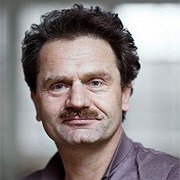
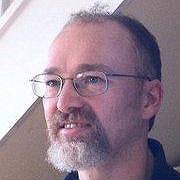
Fritz Henglein is a Professor at the Department of Computer Science, University of Copenhagen (DIKU), with affiliations also at Deon Digital. His career spans over three decades, with notable roles including Head of the Algorithms and Programming Languages (TOPPS) research group and Director of the HIPERFIT research center. Research interests include Programming languages and type systems Functional programming and DSLs High-performance computing Contracts and distributed ledger technology Algorithmic logic and formal semantics His work often bridges theoretical rigor with practical applications, particularly in financial information technology and compiler design. Collaborations include leadership in conferences like POPL, ICFP, and PEPM, with a focus on mentoring through academic events and community-building initiatives.
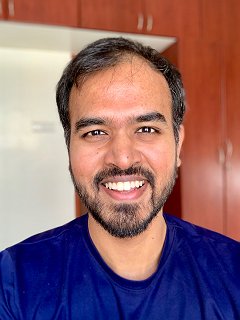
KC Sivaramakrishnan serves as an Adjunct Professor at the Indian Institute of Technology, Madras and CTO of Tarides, bridging academic research and industrial application in programming languages and systems. His dual roles reflect a commitment to advancing both theoretical foundations and practical implementations in computer science. His research spans Functional Programming, Language Runtimes, Concurrency/Parallelism/Distribution, and Weak Memory/Consistency models, with particular focus on the OCaml programming language. Sivaramakrishnan's work addresses fundamental challenges in concurrent and distributed systems through innovative language design and runtime techniques. Analysis of his publication record reveals a consistent trajectory from foundational work on effect handlers and concurrency models (2015-2020) to more recent contributions in verified systems, multicore programming, and distributed data types (2021-2025). His research demonstrates strong continuity in exploring how programming language principles can solve real-world systems challenges. Sivaramakrishnan actively contributes to the academic community through program committee memberships across major PL conferences including POPL, PLDI, ICFP, and SPLASH. His service spans multiple roles from committee member to track chair and diversity co-chair. As CTO of Tarides, he leads industrial efforts in OCaml compiler development and systems programming, maintaining a productive synergy between his academic research and industry leadership. His work with the OCaml community includes significant contributions to multicore support and effect handler implementations.
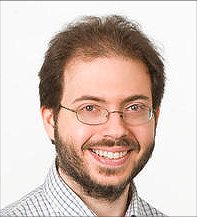
Derek Dreyer is the Scientific Director at the Max Planck Institute for Software Systems (MPI-SWS) and an Adjunct Professor in the Saarland Informatics Campus of Saarland University . His research focuses on programming languages , type theory , and formal verification of software systems. Education : PhD in Computer Science from Carnegie Mellon University (2005), advised by Bob Harper and Karl Crary. Key Contributions : Pioneering work in separation logic , ownership types , and memory safety for languages like Rust and C. Awards & Grants : Recipient of significant grants for research on logical foundations of safe systems programming . Leadership : Program Chair for POPL and PLDI, Organizer of RTFM (Red-Hot Topics in Faculty Mentoring), and active role in mentoring students through PLMW. Labs & Teams : Leads a dynamic research group at MPI-SWS , driving collaborative projects in programming languages and systems verification.
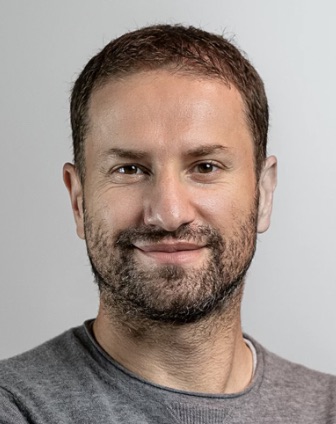
Salvador Garrigues Mateo is a Professor at the University of Valencia in the Faculty of Chemistry and Department of Analytical Chemistry . He leads the research group SOLINQUIANA (Solutions & Innovation in Analytical Chemistry) , focusing on green analytical chemistry and innovative spectroscopic methods. Education: PhD in Analytical Chemistry from the University of Valencia (1993) with a thesis on Quantitative analysis by Fourier Transform Infrared Spectrometry . Research Interests: Green Analytical Chemistry, Fourier Transform Infrared Spectroscopy (FTIR), Ion Mobility Spectrometry (IMS), environmental and biomedical analysis, sample preparation techniques, and forensic chemistry. His recent publications highlight trends in environmental analysis (wastewater drug monitoring, bioaerosol assessment), forensic chemistry (illicit drug detection, synthetic cannabinoids), and green sample preparation (natural sorbents, microextraction techniques). He also contributes to food analysis (oil degradation, essential oil authentication) and biomedical applications (urinalysis for drug exposure, serum diagnostics). His work emphasizes green chemistry principles , focusing on reducing solvent consumption, developing non-invasive testing protocols, and applying chemometrics for improved analytical accuracy. He has published extensively on spectroscopic methods for both environmental and clinical applications, often combining FTIR with ion mobility spectrometry for enhanced detection capabilities. Contact: salvador.garrigues@uv.es
Juan Carlos Pichel is an Associate Professor at the Center for Research in Intelligent Technologies (CITIUS) within the University of Santiago de Compostela (Spain). He holds a B.Sc. in Physics and a Ph.D. in Computer Science from the same university (2006). His research focuses on parallel and distributed computing, Big Data technologies, quantum computing, and optimization for emerging architectures. He has held visiting positions at University Carlos III de Madrid and University of Illinois at Urbana-Champaign, and worked at the Galicia Supercomputing Center. Education: B.Sc. Physics (USC, Spain), Ph.D. Computer Science (USC, 2006). Research interests include: HPC frameworks (IgnisHPC), quantum computing tools (NetQIR), bioinformatics software (BigSeqKit/VeryFastTree), and misinformation detection systems. His work emphasizes interdisciplinary applications of parallel computing in genomics, health informatics, and social media analysis. Notable contributions: MPI4All (universal MPI bindings), IgnisHPC (HPC-Big Data framework), and VeryFastTree (phylogeny tool). Active in projects like C3HS (health search systems) and HYBRIDS (AI for democratic practices). Labs/Teams: Leads the ARQCOMP research group in Computer Architecture. Collaborates with multidisciplinary teams in bioinformatics, quantum computing, and social media analytics.
Manuel Eugenio Acacio Sanchez is a Professor in the Department of Computer Engineering and Technology at the University of Murcia's Faculty of Informatics. His research focuses on computer architecture, parallel systems, cache coherence, and hardware transactional memory. He earned his Ph.D. from the University of Murcia in 2003 with a thesis on directory-based coherence protocols for distributed-shared memory multiprocessors. Doctorate: Universidad de Murcia (2003) Academic Rank: Professor Research Interests include Hardware transactional memory Cache coherence protocols GPU and DNN accelerators Energy-efficient computing Parallel architectures Recent Article Trends emphasize cycle-level simulation tools (e.g., STONNE), hardware transactional memory optimizations, and neural network accelerator design. His work bridges microarchitectural improvements and application-specific efficiency in multicore systems. Labs & Teams : Affiliated with the Computer Architecture and Parallel Systems research group, previously part of the Architecture and Parallel Computing group.
Alberto Ros Bardisa is a Professor at the Department of Computer Engineering and Technology within the Faculty of Informatics at the University of Murcia. He holds a Doctorate from the same university, completing his thesis on Efficient and Scalable Cache Coherence for Many-Core Chip Multiprocessors in 2009. His research focuses on computer architecture , with particular emphasis on cache coherence protocols , hardware transactional memory , speculative execution , and many-core systems . He has contributed to optimizing memory subsystems, concurrency management, and scalability in parallel computing environments. His work often bridges hardware-software co-design to enhance performance and security in modern architectures. Dr. Ros Bardisa is affiliated with the Computer Architecture and Parallel Systems research group and previously contributed to the Architecture and Parallel Computing group. His publications (over 130+ listed) reflect a sustained focus on advancing cache efficiency, transactional memory systems, and speculative execution techniques. His current work explores innovative solutions for fine-grain coherence , secure prefetching , and atomic operation optimization , with recent contributions in 2025 addressing novel protocols like WoperTM and MASCOT.
Sukyoung Ryu is a Professor in the Department of Computer Science at KAIST's College of Computing, South Korea. Her research centers on programming languages and program analysis, with significant contributions to WebAssembly, JavaScript semantics, and language specification. She leads the Programming Languages Research Group (PLRG) at KAIST. Her research spans multiple critical areas including executable specification engineering, static analysis techniques, and language interoperability. Recent work focuses on WebAssembly conformance testing, C-to-Rust translation, and bridging real-world implementations with formal semantics. Her group develops practical tools like SpecTec for mechanized language specifications and JISET for JavaScript semantics extraction. Analysis of her 15 most recent publications reveals strong trends in executable specifications (7 papers), WebAssembly tooling (5 papers), and language translation (4 papers). Key methodological approaches include record-replay debugging, filtered-simulation for binary lifting, and algebraic data type transformations for memory safety. Ryu actively contributes to the programming languages community through leadership roles including Steering Committee Chair for APLAS, Program Co-Chair for SPLASH/OOPSLA, and committee positions at POPL, PLDI, and ICFP. She frequently organizes workshops on real-world language specification (RPLS) and presents keynotes on programming language research for social good. Her mentoring activities include co-chairing New Faculty Symposia and participating in RTFM panels on faculty mentoring. She advises students through KAIST's programs and supervises research in the PLRG lab, which focuses on building practical language tools with formal foundations. Current projects emphasize WebAssembly standardization, secure language interoperability, and specification-based testing frameworks.
Alastair Reid is a researcher at Intel (2021–present) focusing on formal instruction set architecture (ISA) specifications and model checking processor pipelines. His career spans roles at Google Research (2019–2021) developing Rust verification tools, Arm Ltd (2004–2019) working on formal ISA specifications and vectorizing compilers, University of Utah (1998–2004) on component-based operating systems, Yale University (1994–1998) contributing to Haskell functional reactive programming, and University of Glasgow (1988–1994) in formal specification and verification. Ph.D. in Defining interfaces between hardware and software: Quality and performance , Glasgow University M.Sc. in A precise semantics for Ultraloose Specifications , Glasgow University B.Sc., University of Strathclyde His research interests include formal verification, security analysis, functional programming languages (particularly Haskell and Rust), and computer architecture. He has contributed to the development of machine-readable ISA specifications for ARM, RISC-V, and Intel architectures, and worked on symbolic execution tools like KLEE for Rust verification. Key publications include work on RISC-V specification improvements (2024), formal methods for persistent programming (2023), PLARCH workshop contributions on ISA specification (2023), and foundational papers on ARM processor verification with ISA-Formal (2016). His technical blog posts cover topics in symbolic execution, SMT solvers, and practical verification challenges. Contributions to conferences include committee roles in PLDI (2024), PriSC (2024), and workshop organization in formal methods and programming language design.
José L. Abellán is a Ramón y Cajal Fellow (Tenure-Track Associate Professor) and European R3 researcher at the University of Murcia's Department of Computer Engineering and Technology. He leads the EcoArTech research group and holds a Ph.D. in Computer Science from the University of Murcia (2012). His career includes postdoctoral positions at Boston University and previous faculty roles at Universidad Católica de Murcia. Dr. Abellán's research focuses on architectural enhancements for GPU systems and customized accelerators targeting machine learning and fully homomorphic encryption applications. His work spans hardware/software co-design, microarchitectural extensions for privacy-preserving computation, and efficient parallel processing. His extensive publication record demonstrates consistent contributions to GPU architecture, processing-in-memory, hardware acceleration for cryptography, and graph neural networks. Recent work has appeared in top computer architecture venues including MICRO, ASPLOS, and HPCA. Awards and Honors HiPEAC Paper Awards (2019, 2020, 2023, 2024) Best Paper Award at IPDPS 2011 Top Picks in Hardware and Embedded Security 2024 European R3 Certificate (2024) Dr. Abellán leads the EcoArTech research team and serves as Associate Editor for ACM Transactions on Architecture and Code Optimization (TACO) and Frontiers in Electronics. He is a Senior Member of IEEE and active in the HiPEAC European network.
Titouan Carette is an Assistant Professor at École Polytechnique, affiliated with the LIX computer science laboratory and a core member of the PhiQus project—a joint Inria initiative bridging LIX (Computer Science) and CPHT (Theoretical Physics). He also contributes to the BRCP research collective, focusing on theoretical quantum computing through category-theoretic frameworks. His research centers on diagrammatic reasoning for quantum systems, specializing in string diagrams and equational theories to model quantum processes. Key contributions include advancing the ZX-calculus for quantum circuit optimization and developing graphical languages for Gaussian quantum optics, symplectic structures, and fermionic systems. Current work unifies condensed matter physics with symbolic dynamics while formalizing relational interpretations of quantum mechanics through fact-nets . Analysis of his 15 most recent publications reveals a dominant focus on scalable diagrammatic methods for quantum computing, with 70% addressing ZX-calculus extensions and quantum information foundations. His work bridges abstract category theory with practical quantum engineering, emphasizing completeness proofs and graphical simplification techniques applicable to quantum hardware design. Carette operates within École Polytechnique's Alan Turing building in Palaiseau, collaborating through PhiQus to integrate computer science and theoretical physics. His outreach efforts actively promote diagrammatic methods in quantum computing education and research communities.
Manuel V. Hermenegildo is a Distinguished Professor at the IMDEA Software Institute and a Full Professor at the Department of Computer Science, Universidad Politécnica de Madrid. He holds a PhD in Electrical and Computer Engineering from the University of Texas at Austin (1986). His academic career spans over four decades, contributing to global program analysis, verification, and parallel computing. Education: PhD, Electrical and Computer Engineering, University of Texas at Austin (1986) M.S., Electrical and Computer Engineering, University of Texas at Austin (1984) M.S., Electrical Engineering, Technical University of Madrid (1981) Research Interests: His work focuses on global program analysis , verification , and optimization for functional/non-functional properties. He pioneered techniques in abstract interpretation , parallelism , and constraint/logic programming . His contributions include the Ciao programming system and the CiaoPP preprocessor, emphasizing static analysis and program debugging . Key Awards: ACM Fellow Julio Rey Pastor Prize (2006) Elected member of Academia Europaea (2010) Test of Time Award at ICLP 2017 His work has been cited over 10,000 times, with an h-index of 60. Leadership & Contributions: Founded and directed the IMDEA Software Institute Directed Spain's National Research Directorate (1999–2002) Chair of major conferences (POPL 2010, ICLP 2006) Labs & Teams: Leader of the CLIP Lab (Computational Logic, Implementation, and Parallelism) Principal investigator in EU-funded projects on resource-aware computing
Iván Marsá Maestre is a Professor in the Department of Automática at Universidad de Alcalá. He holds a PhD in Telematics Engineering from the same institution, focusing on automated negotiation in complex utility spaces. His research emphasizes network optimization, multi-agent systems, cybersecurity, and wireless communication protocols. Key contributions include the development of graph-based algorithms for Wi-Fi channel assignment, negotiation frameworks for resource allocation, and resilient network architectures such as CloudWall and TOWER. His work spans diverse applications like intelligent transportation systems, IoT security, and distributed e-voting mechanisms. Notable projects include the EnvAdapt-CRO-SL algorithm for dynamic network resource allocation and the use of graph coloring techniques to mitigate interference in dense wireless networks. He has contributed to conferences like PRIMA and published extensively on automated negotiation in complex systems. Marsá Maestre’s research integrates theoretical models (e.g., fuzzy ontologies, coral reefs optimization) with practical implementations, addressing real-world challenges in network resilience, traffic management, and cybersecurity. His methodologies often combine multi-agent negotiation, graph theory, and machine learning to solve problems in decentralized systems.
Manuel Hermenegildo is a distinguished professor at the IMDEA Software Institute and a full professor at the Technical University of Madrid (UPM), leading the CLIP Lab. He specializes in program analysis, verification, and optimization, with contributions to logic and constraint programming. His academic roles include founding director of IMDEA and leadership in EU-funded projects. Education: PhD in Electrical and Computer Engineering, University of Texas at Austin (1986) M.S. in Electrical and Computer Engineering, University of Texas at Austin (1984) M.S. in Electrical Engineering, Technical University of Madrid (1981) Research Interests: Focuses on global program analysis, verification, debugging, and optimization for functional/non-functional properties (e.g., time, memory, energy). Explores abstract interpretation, parallelism, constraint/logic/functional programming, and computational logic. His work bridges theoretical foundations and practical tools like Ciao Programming System. Publications & Trends: Over 200+ papers in top venues like Theory and Practice of Logic Programming , POPL , and SAS . Recent work emphasizes static analysis for energy efficiency, formal verification via Horn clauses, and lightweight runtime checks. Contributions span formal methods, compiler optimization, and declarative languages. Awards & Recognition: ACM Fellow (2010) Julio Rey Pastor Prize (2006) – Spain’s top award in mathematics/ICT Academia Europaea Membership (2010) Test of Time Award (ICLP 2017) Google Scholar: 10k+ citations, h-index 60 Advising & Grants: Supervised over 20 PhD students. Principal investigator on major EU projects (e.g., María de Maeztu distinction) and national initiatives. Served as director of the Spanish National Research Directorate, shaping science policy. Labs & Teams: CLIP Lab (UPM-IMDEA), Microsoft-IMDEA Joint Research Center, and leadership in EIT Digital Spain. Collaborates globally with institutions like MIT, INRIA, and Monash University.
Prof. Guillermo Pérez is a Full Professor in the Department of Computer Architecture at the University of Malaga, Spain. He has been affiliated with the university since 1992, starting as an Assistant Professor during his Ph.D. studies. He holds an M.S. in Computer Science from the Polytechnic University of Catalonia (1992) and a Ph.D. from the University of Malaga (1999). His research focuses on high-performance computing, bioinformatics, and parallel computing, with contributions to tools like SeqTrim and Full-Lengther . He also serves as the technical supervisor of the SuperComputing Laboratory at the University of Malaga, overseeing infrastructure design and implementation for supercomputing environments. Prof. Pérez has over 25 years of teaching experience in computer networks, operating systems, and computer infrastructure design. His work bridges theoretical advancements with practical applications, emphasizing computational efficiency and interdisciplinary collaboration. His publications span topics ranging from bioinformatics pipelines to parallel algorithm design, reflecting a sustained commitment to advancing computational methodologies.