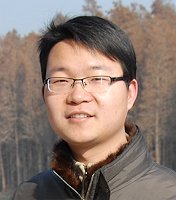
Wei Yang is an Associate Professor in the Department of Computer Science at the University of Texas at Dallas, actively contributing to software engineering research through program committee roles at ICSE, FSE, ASE, and ISSTA conferences since 2015. His research focuses on software testing innovation , particularly in mobile security, GUI testing, and AI-driven test automation. Key contributions include frameworks for malware analysis (MalScan), UI exploration (Guardian, Vet), and neural network testing (DeepPerform, EREBA), addressing critical challenges in test oracle generation, flaky tests, and resource-constrained environments. Recent work demonstrates a strategic shift toward LLM and foundation model applications for testing, with 2023-2026 publications exploring vision-language models for GUI testing, parameter ownership in collaborative AI development, and instruction alignment in large language models. This evolution reflects the field's broader trajectory toward AI-integrated quality assurance.
Michalis Kokologiannakis is an Assistant Professor in the Department of Computer Science at ETH Zurich, Switzerland. Previously, he was affiliated with the Max Planck Institute for Software Systems (MPI-SWS) in Germany where he completed his PhD. His research focuses on programming languages, compilers, and software verification, with particular emphasis on: Automated verification and testing of concurrent programs Weak memory models employed by modern microprocessors Stateless model checking techniques Formal methods for program analysis His work has led to the development of several verification tools including GenMC (a stateless model checker for C/C++ programs under weak memory models) and Kater (a tool that automates weak memory model metatheory and consistency checking). Dr. Kokologiannakis has published extensively at top-tier programming languages and verification conferences including PLDI, POPL, OOPSLA, and CAV. His research has pioneered advances in stateless model checking, partial order reduction, and verification under weak memory consistency models. He completed his MEng at the National Technical University of Athens (NTUA) before earning his PhD from MPI-SWS.
Michael F. P. O'Boyle is a Professor of Computer Science at the University of Edinburgh's School of Informatics. He is a leading researcher in compiler technology, specializing in optimizing compilation, machine learning for compilation, and heterogeneous systems. His work addresses the critical challenges of compiling software for increasingly diverse hardware architectures in the post-Moore's Law era. Professor O'Boyle's research interests focus on: Optimizing compilation techniques Machine learning applications in compilation Heterogeneous computing systems Program synthesis Neural machine translation for code Hardware/software co-design His recent publications demonstrate a strong focus on tensor optimization, compiler infrastructure for heterogeneous systems, and machine learning applications in program analysis and transformation. O'Boyle's work bridges traditional compiler techniques with modern AI-driven approaches to code optimization, addressing the growing complexity of hardware-software interfaces. Professor O'Boyle has received several notable honors and awards: ACM CGO Test of Time award (2017) Senior EPSRC Research Fellow Fellow of the British Computer Society (BCS) He holds significant leadership roles including Director of the ARM Research Centre of Excellence at Edinburgh and Director of the EPSRC Centre for Doctoral Training in Pervasive Parallelism. O'Boyle is also a founding member of HiPEAC, a European network for high-performance and embedded architecture and compilation, and has delivered keynote addresses at major conferences including PPoPP 2019 where he presented his vision for "Rethinking Compilation in a Heterogeneous World."
Georgios Manis is an Associate Professor in the Department of Computer Science and Engineering at the School of Engineering, University of Ioannina, Greece. He holds a PhD from the National Technical University of Athens and has been a faculty member at the University of Ioannina since 2002, progressing from Lecturer to Associate Professor in 2018. He has also served as temporary teaching staff at the University of Patras, University of Crete, and University of Ioannina in the late 1990s and early 2000s. Education: B.Sc. in Computer Engineering (Diploma), National Technical University of Athens (NTUA), 1987–1992 MSc in Advanced Methods in Computer Science (Distributed and Parallel Systems), Queen Mary, University of London, 1992–1993 PhD in Computer Engineering, NTUA, School of Electrical and Computer Engineering, 1993–1997 His research interests lie at the intersection of Biomedical Engineering and Computing Systems , with a strong emphasis on Biomedical Signal Processing , Entropy Analysis , and Machine Learning . He has pioneered work in Bubble Entropy —a parameter-free entropy measure—and developed fast algorithms for entropy computation. His work also extends to compiler design and parallel computing, particularly in the automatic parallelization of recursive functions and loops. The trends in his recent publications reflect a dual focus: (1) biomedical applications involving entropy, heart rate analysis, and disease diagnosis using machine learning (especially Random Forests and SVMs), and (2) high-performance computing, including parallelization techniques and compiler optimizations for multi-core and SVP architectures. His research is highly interdisciplinary, combining signal processing, algorithm design, and clinical applications. Scientific Leadership and Recognition: Guest Editor, Special Issue on “Entropy in Biomedical Engineering”, Entropy (MDPI) Member of the IPAN Laboratory, University of Ioannina Active contributor to IEEE, Elsevier, and MDPI journals He has supervised several graduate students and is involved in funded research projects such as Palimpsest and Homore , focusing on smart systems for cultural interaction and elderly monitoring. His advising contributions are evident in co-authored papers with students like Evanthia Tripoliti and Aristeidis Mastoras. He teaches both undergraduate and postgraduate courses, including Compilers I/II and Biomedical Data Analysis . Laboratories and Teams: He is a member of the IPAN lab at the University of Ioannina, which supports interdisciplinary research in informatics and biomedical applications. His collaborative network includes researchers from Greece and abroad, particularly in the fields of biomedical signal analysis and entropy-based methods.
Vassilios V. Dimakopoulos is a Professor of Parallel Processing at the Department of Computer Science and Engineering, University of Ioannina, Greece. He has been affiliated with the university since 1998, initially as an adjunct professor and later as a regular faculty member. Currently, he serves as the Dean of the School of Engineering and Chairman of the Technical Council of the University of Ioannina. His academic journey includes a Diploma in Computer Engineering from the University of Patras (1990), and M.A.Sc. and Ph.D. degrees in Electrical and Computer Engineering from the University of Victoria, Canada (1992 and 1996, respectively). His research focuses on parallel and distributed systems, parallel programming models, systems software, computer architecture, embedded systems, and performance analysis. He has held administrative roles such as Deputy Chairman of the Department (2014–2017) and Director of Graduate Studies (2016–2020). His contributions include pioneering work on OpenMP runtime systems, adaptive scheduling for embedded multicore architectures, and probabilistic search protocols in dynamic networks. Dimakopoulos is a member of the IEEE and the Technical Chamber of Greece. His work emphasizes bridging compiler design, runtime systems, and hardware constraints to optimize parallel computing efficiency. Recent research trends include hybrid OpenMP-MPI offloading strategies, adaptive task scheduling in heterogeneous environments, and fog computing cost modeling. His administrative leadership spans multiple institutional committees, reflecting his dual role as an academic leader and researcher. His research group collaborates on projects involving high-performance numerical optimization, task-based global optimization for protein folding, and embedded systems integration.
Florian Kübler is a researcher at Technische Universitat Darmstadt, Germany, specializing in Programming Languages and Static Analysis . He has contributed to major conferences including PLDI, ISSTA, ESEC/FSE, and SOAP, focusing on topics like abstract interpretation, call graph construction, and modular program analysis. His work addresses challenges in code optimization, soundness evaluation, and runtime reusability in static analysis frameworks. Research Interests: Florian's research spans Abstract Interpretation for static analysis Modularization techniques in program analysis Call graph algorithms for Java Parallelization of static analyses Intermediate representation design Compiler and toolchain optimization Conference Contributions: His publications highlight expertise in static analysis frameworks (OPAL, SootKeeper), semi-implicit parallelization, and systematic evaluation of analysis soundness. Recent work (2022) explores collaborative program analysis, while earlier studies (2018-2020) focus on lattice-based modularization and call graph algorithms.
Sotirios Xydis is an Assistant Professor in the Division of Computer Science at the School of Electrical and Computer Engineering, National Technical University of Athens (NTUA), with prior faculty appointment at Harokopion University of Athens (2020-2023). He maintains ongoing collaboration with the Institute of Communication and Computer Systems (ICCS) since 2014 and previously served as an engineer at HEDNO (2015-2018) and postdoctoral researcher at Politecnico di Milano (2011-2013). His academic credentials include: BSc in Electrical and Computer Engineering, NTUA (2005) MSc in Techno-Economic Systems, NTUA (2011) PhD in Electrical and Computer Engineering, NTUA (2011) Dr. Xydis specializes in hardware/software co-design , energy-efficient hardware acceleration , and memory management for embedded and cloud-edge systems. His research bridges low-power circuit design , heterogeneous architecture optimization , and resource management frameworks , with particular emphasis on AI workloads and serverless infrastructures. Current projects target Edge AI accelerators (CONVOLVE), disaggregated memory systems, and LLM inference optimization through hardware-aware algorithms. Analysis of his 2023-2025 publications reveals three dominant trends: (1) Energy-efficient hardware accelerators for Edge AI using approximate computing techniques, (2) Memory/resource management innovations for disaggregated serverless environments, and (3) GPU/FPGA optimization for LLM inference through dynamic frequency scaling and predictive throttling. These works consistently address the power-performance tradeoffs in heterogeneous computing systems. His scientific recognition includes: Best Paper Award, IEEE/NASA/ESA AHS (2007) Best Paper Award, ACM PARMA (2013) Best Paper Award, ACM Computing Frontiers (2020) Hipeac Award at DAC (2019, 2020) Dr. Xydis has secured over 15 European/national research grants as Principal Investigator and Technical Coordinator, focusing on hardware acceleration frameworks and energy-efficient computing. His advising encompasses graduate research in hardware design and optimization, though specific student names aren't publicly listed. Current projects include CONVOLVE for Edge AI and CollectiveHLS for collaborative hardware synthesis. He is a core member of NTUA's Microelectronics Laboratory (Microlab) and collaborates with ICCS on hardware acceleration projects. His team develops frameworks like CollectiveHLS and throttLL'eM, with active participation in DATE, DAC, and ISCA conference communities.
Diego Garbervetsky is an Associate Professor at the Computer Science Department, School of Sciences, University of Buenos Aires, and a Researcher at ICC/CONICET. He also serves as Director of the Institute of Research in Computer Sciences (ICC). His academic career spans software engineering, programming languages, and formal methods with a focus on program analysis and verification. His research interests include: Static and dynamic program analysis Reverse engineering and compiler optimizations Program understanding and validation Testing and verification of programs featuring rich protocols Automatic symbolic resource analysis (gas consumption, dynamic memory, energy, etc.) Garbervetsky's recent work focuses on smart contract analysis and verification, particularly for Solidity on Ethereum blockchain. His research bridges theoretical program analysis with practical applications in security-critical domains. He has developed several tools including Contractor for behavior validation, JConsume2 for heap memory analysis, and BudaPest for automated software verification. His scientific contributions have been presented at top-tier conferences including ICSE, FSE, ISSTA, and PLDI. Garbervetsky has served on numerous program committees for major software engineering conferences and has advised multiple PhD and undergraduate students through their research.
Sriram Krishnamoorthy is a Research Professor at Washington State University's School of Electrical Engineering & Computer Science and a research scientist at Pacific Northwest National Laboratory (PNNL), where he serves as the System Software and Applications Team Leader in PNNL's High Performance Computing group. Dr. Krishnamoorthy earned his B.E. from the College of Engineering, Guindy in Chennai, India, and his M.S. and Ph.D. degrees from The Ohio State University. He is a senior member of the Institute of Electrical and Electronics Engineers. His research focuses on parallel programming models, fault tolerance, and compile-time/runtime optimizations for high-performance computing. He has made significant contributions in areas including: Fault tolerance techniques that minimize rollback during failures Dynamic load balancing for irregular parallel applications Compiler and runtime optimizations for HPC applications GPU programming and heterogeneous computing Quantum chemistry simulations and quantum computing Dr. Krishnamoorthy's publications span computational science, high-performance computing, and quantum chemistry. His recent work shows strong trends toward quantum computing applications, fault tolerance in large-scale systems, and optimization of computational chemistry methods. He has developed techniques for density matrix quantum circuit simulation, floating-point error analysis, and scalable execution of coupled-cluster models. His scientific achievements have been recognized with several prestigious awards: Best Paper Award at International Conference on High Performance Computing (HiPC'03) Best Paper Award at International Parallel and Distributed Processing Symposium (IPDPS'04) U.S. Department of Energy Early Career award (2013) PNNL's Ronald L. Brodzinski Award for Early Career Exceptional Achievement (2013) The Ohio State University's Outstanding Researcher award (2008) Dr. Krishnamoorthy has advised numerous graduate students and collaborated extensively with researchers across computational science domains. His work on the NWChem project demonstrates significant grant funding and large-scale collaborative research efforts in computational chemistry. He leads research efforts in PNNL's High Performance Computing group, focusing on system software and applications development for next-generation supercomputing platforms.
Adrian Sampson is an Associate Professor in the Department of Computer Science at Cornell University, where he is part of the Computer Systems Laboratory and the programming languages group. He joined Cornell in 2016 as an Assistant Professor and was promoted to Associate Professor in 2022. Prior to Cornell, he was a Visiting Researcher at Microsoft Research (2015-2016). He received his Ph.D. from the University of Washington in 2015 under advisors Luis Ceze and Dan Grossman, with a dissertation on Hardware and Software for Approximate Computing. His research focuses on breaking down abstraction barriers and rethinking the hardware-software interface. He is particularly known for his work on approximate computing, which explores how computers can be more efficient by allowing them to make controlled mistakes. He leads the Capra research group at Cornell, which investigates programming languages and computer architecture. Sampson's recent publications demonstrate a strong focus on hardware acceleration, FPGA programming, compiler design, and programming language theory. His work often bridges the gap between high-level programming abstractions and low-level hardware implementation, with particular attention to predictability, verification, and energy efficiency. He has made significant contributions to geometry types for graphics programming, timeline types for modular hardware design, and virtual machines for FPGA programming. Among his notable recognitions are the IEEE TCCA Young Computer Architect Award (2021), NSF CAREER award (2019), and multiple Distinguished Artifact Awards at major conferences. He has advised numerous Ph.D. students who have gone on to positions at institutions like Wellesley College, Northwestern University, and Amazon. Sampson is actively involved in academic service, serving on program committees for major conferences including PLDI, ASPLOS, and ISCA. He has also held leadership roles such as ACM SIGARCH Board of Directors (2023-2025) and SIGPLAN Information Director. His teaching at Cornell includes courses on computer systems, programming languages, and advanced compilers.
James Cheney is a Personal Chair of Programming Languages and Systems at the University of Edinburgh, working in the Laboratory for Foundations of Computer Science within the School of Informatics. He leads the Principles of Provenance research group and has been a Turing Fellow from 2018 to 2023. His educational background includes a PhD in Computer Science from Cornell University (2004), an MS in Mathematics from Carnegie Mellon University (1998), and a BS in Computer Science and Mathematics from Carnegie Mellon University (1998). Cheney's research focuses on the intersection of databases and programming languages, with particular emphasis on data provenance. His work spans several key areas: Databases and data provenance Programming languages and compilers Generic programming Logic and automated theorem proving Compression and information theory XML and related technologies His recent publications demonstrate a strong focus on language-integrated query systems, type systems for programming languages, and formal approaches to data provenance. These works often bridge theoretical foundations with practical applications in database systems and programming language design. Cheney has received several notable awards and recognitions: Royal Society University Research Fellowship (2008-2016) Turing Fellow (2018-2023) ERC Consolidator Grant for the Skye project (2016-2021) Google Research Award for Language-integrated provenance As an advisor, Cheney has supervised numerous PhD students and postdoctoral researchers who have gone on to positions at institutions including New York University, LSE, University of Southampton, Meta, and others. His research has been supported by various grants from DARPA, EPSRC, AFOSR, EU FP7, and industry partners including Google, Microsoft Research, and Huawei. Cheney leads the Principles of Provenance group, which conducts fundamental research on data provenance and its applications in security, data curation, and scientific computing. The group has worked on projects including Skye (a programming language for scientific data curation), ADAPT (a DARPA-funded project on advanced persistent threat prevention), and language-integrated provenance systems.
Dr. Zhenman Fang is an Associate Professor in the School of Engineering Science (Computer Engineering Option) and Associate Member in the School of Computing Science at Simon Fraser University, Canada. He founded and directs the HiAccel Lab, focusing on accelerator-rich architectures. His PhD (2014) is from Fudan University, China, with 15 months spent at the University of Minnesota. Prior to SFU, he was a Staff Software Engineer at Xilinx (2017-2019) and a postdoc at UCLA (2014-2017). His research spans: Hardware acceleration for ML, big data, genomics, and HPC FPGA-based customizable computing and near-data processing Compiler/runtime systems for heterogeneous platforms Performance/reliability optimization of accelerator-rich systems His recent publications (2024-2025) focus on FPGA acceleration for machine learning (e.g., on-device training, quantization), computational chemistry, image/video compression, database systems, and reconfigurable computing, demonstrating cross-domain applications of specialized hardware. Awards & Honors: Best Paper Awards: FPL 2024, MEMSYS 2017, TCAD 2019 Best Paper Nominations: ICCAD 2025, FCCM 2025, HPCA 2017, ISPASS 2018 SFU Research Excellence Horizon Award (2025) NSERC Alliance, CFI JELF, and Xilinx University Awards He advises 20+ PhD/Master's students in HiAccel Lab, focusing on accelerator design. Major grants include NSERC Alliance (2020) and CFI JELF (2019). The lab operates a 10-node cluster with FPGA/GPU infrastructure.
Dominik Helm serves as an interim professor at the University of Duisburg-Essen and is a researcher at the Software Technology Group, Technical University of Darmstadt since 2018. He holds a Dr.-Ing. degree and serves as the lead maintainer of the OPAL static analysis framework. Helm is also affiliated with ATHENE (National Research Center for Applied Cybersecurity) and CRISP, where he contributes to cybersecurity research focusing on 'Security at Large' for comprehensive systems. Dr. Helm's research centers on modularization and automatic parallelization of collaborative static analyses to improve precision, soundness, and performance. His work specifically targets the OPAL framework for Java VM bytecode, with expertise spanning purity and immutability analyses, modular call graphs, and bug/security vulnerability detection. His research bridges theoretical foundations with practical implementation, addressing real-world challenges in static analysis. His publication record shows consistent contributions to top-tier conferences (PLDI, ISSTA, ESEC/FSE, ASE) with recent work focusing on cross-language analysis, modular call graph algorithms, and evaluation of static analysis precision. Helm has demonstrated particular interest in making static analysis more practical through modularity and parallelization. As an educator, Helm teaches courses including Software Engineering, Type Systems, Quality Assurance, and Program Analysis at the University of Duisburg-Essen. He has supervised multiple student teams through bachelor and master projects, guiding research on call graphs for dynamic languages, IDE solvers, alias analysis, and immutability analysis. Dr. Helm actively contributes to the academic community through program committee service for ICSE, ISSTA, ASE, and other major conferences. His work with the OPAL framework represents a significant contribution to the static analysis community, providing a platform for developing and composing modular analyses for Java bytecode processing and analysis.
Weihang Wang is a WiSE Gabilan Assistant Professor in the Department of Computer Science at the University of Southern California. His research focuses on building testing and analysis techniques to improve the reliability, security, and efficiency of complex software systems, with particular expertise in WebAssembly technologies. Wang received his Ph.D. in Computer Science from Purdue University in 2018. His educational background has provided a strong foundation for his research in software engineering and security, leading to numerous publications and awards in the field. His research spans multiple critical areas including WebAssembly analysis , software security , and program analysis . Wang's work addresses fundamental challenges in detecting and mitigating vulnerabilities in modern web applications and systems. His research group develops innovative approaches to static and dynamic analysis, bug detection, and security testing, with a strong emphasis on practical applications and real-world impact. Recent projects include developing frameworks for Spring analysis, WebAssembly function identification, and business flow tampering detection. Wang's publication record shows a clear trajectory of increasing impact in WebAssembly research, with multiple papers at top-tier conferences like WWW, ICSE, and FSE. His work spans from foundational analysis techniques to practical tools that address security and performance challenges in web technologies, demonstrating both theoretical depth and practical applicability. His scientific achievements have been recognized with prestigious awards including: N2Women Rising Stars in Networking and Communications (2024) University at Buffalo Exceptional Scholar - Young Investigator Award (2022) NSF CAREER Award (2021) Facebook Testing and Verification Research Award (2019) Mozilla Research Award (2019) Maurice H. Halstead Memorial Research Award (2018) Best Poster Award at ACSAC'22 Wang has successfully advised numerous graduate and undergraduate students, many of whom have published first-author papers at top conferences and secured positions at leading technology companies. He actively serves the research community through program committee roles at major software engineering and security conferences. His work has been supported by competitive grants from NSF, Facebook, and Mozilla, demonstrating the significance and potential impact of his research directions. At USC, Wang leads a vibrant research group focused on software engineering, security, and systems. The group is currently working on cutting-edge projects related to static/dynamic bug detection, program analysis for WebAssembly, attack investigation and detection, compiler testing, and performance profiling of modern web applications.
Tiago Cogumbreiro is an Assistant Professor at the University of Massachusetts Boston, where he has been a faculty member since Fall 2018. His research focuses on advancing the foundations of parallel programming through rigorous quality assurance of languages and runtimes. Dr. Cogumbreiro received his PhD from the University of Lisbon (ULisboa) in March 2015 under Francisco Martins, where he developed techniques to handle barrier deadlocks including the Armus runtime verification tool. His educational background includes a B.Sc. from Universidade dos Açores, followed by research assistant work at Imperial College London (supervised by Nobuko Yoshida) and postdoctoral research at Georgia Tech and Rice University (supervised by Vivek Sarkar). As an expert in formal methods for high-performance computing, Dr. Cogumbreiro's work centers on detecting concurrency errors in parallel programs with special emphasis on GPU systems. His research spans theoretical contributions to deadlock avoidance policies and practical applications of Coq and Why3 for certified algorithms. Recent work demonstrates sophisticated approaches to static analysis of data-races in GPU programming, addressing fundamental challenges in parallel system reliability. His publication pattern reveals a consistent trajectory from foundational work on futures-based deadlock avoidance (2017) through behavioral type systems (2019) to current innovations in GPU program analysis (2023-2024). These contributions form a cohesive research program focused on mathematically rigorous approaches to parallel system correctness. Dr. Cogumbreiro actively contributes to the programming languages community through committee service at major conferences including PLDI (2020 Artifact Evaluation), SPLASH (2025 OOPSLA Review Committee), and PPoPP. His GitHub activity shows ongoing development of formal verification tools, particularly Coq-based projects like gorn-coq and habanero-coq that implement his theoretical contributions.