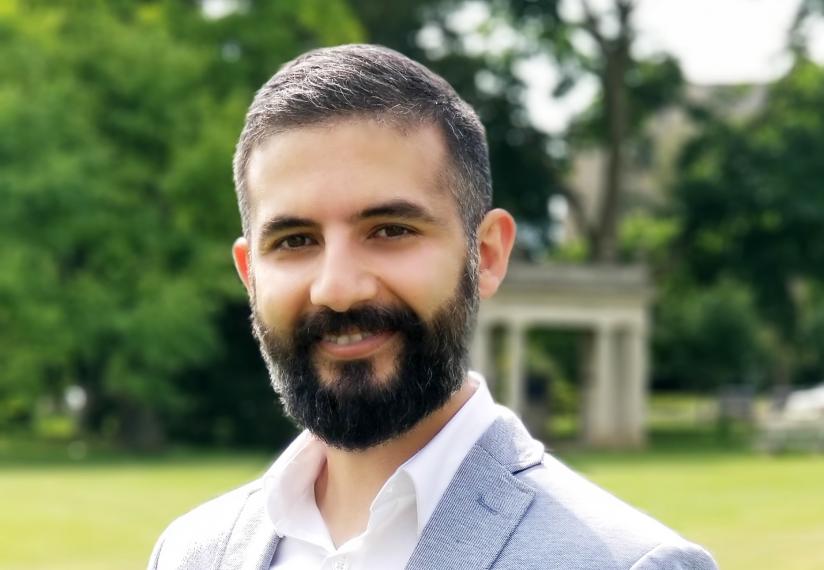
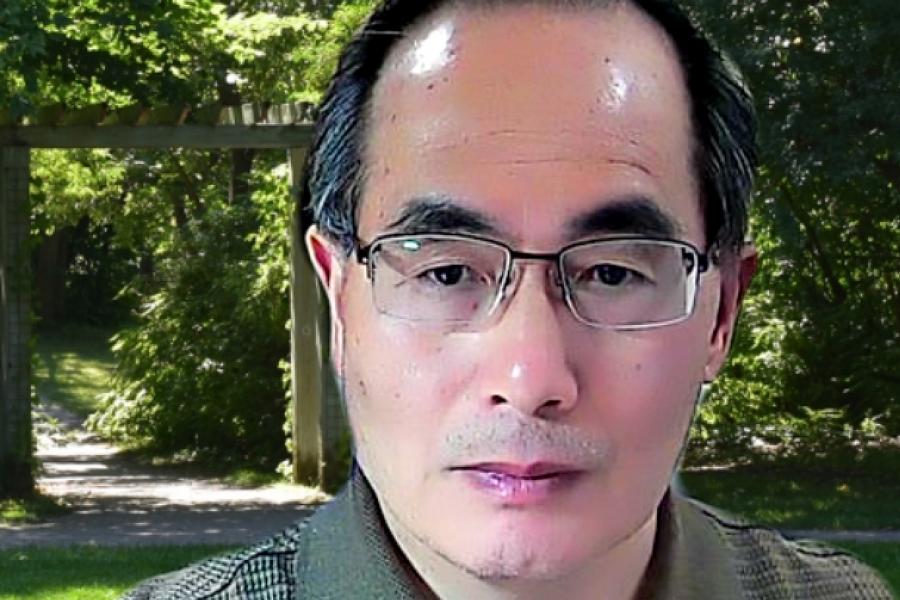
Afshin Ashari is an Assistant Professor in Landscape Architecture at the School of Environmental Design and Rural Development , University of Guelph. Prior to academia, he worked at BrookMcIlroy Inc., an interdisciplinary firm in Toronto, on architectural and landscape projects in public and private sectors. Education : Masters in Landscape Architecture, University of Toronto Bachelor of Computer Engineering, Azad University of Tehran Research Interests : Afshin explores the intersection of computational design and mixed-reality environments, focusing on: Art-Technology Unity in Public Spaces Algorithmic and Parametric Modeling Data-Driven Design Approaches Interactive Immersive Environments Biophilic Design Agricultural Urbanism Article Trends : His publications emphasize: AI tools for design processes Parametric modeling in urban rehabilitation Climate change communication via social media Drones for visual impact assessments Augmented reality in public spaces Historical and future-oriented design frameworks
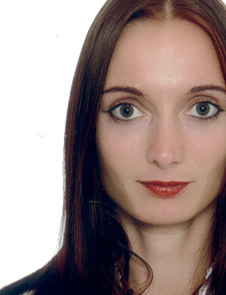
Dr. Alexandra Fedorova is a Professor in the Department of Electrical and Computer Engineering at the University of British Columbia (UBC), with an Associate Member role in the Computer Science department. She leads the Systopia systems research group, focusing on system software design, memory/storage management, and accelerator-centric computing. Her work emphasizes performance optimization, energy efficiency, and hardware-software co-design. She holds a PhD from Harvard University (2006), where she researched operating system scheduling under Margo Seltzer. Prior to UBC, she was an Associate Professor at Simon Fraser University (2006–2015). Fedorova is a recipient of the Alfred P. Sloan Research Fellowship and the Anita Borg Early Career Award. She consults for MongoDB's storage engine team and collaborates with industry on storage and performance challenges. Her research spans tools like Non-sequitur for program trace visualization, studies on storage-class memory (e.g., Optane), and frameworks for GPU acceleration. Recent efforts include Sunstone (spatial accelerator scheduling) and ExtMem (application-aware memory management). Her work bridges low-level systems with high-performance computing needs. Key contributions include optimizing NUMA systems, improving storage engine performance, and exploring processing-in-memory architectures. Fedorova’s projects often involve open-source collaboration, reflected in her GitHub repositories such as vividperf and perf-logging , which support performance analysis tools.
Dr. Kenneth Kent is a Professor in the Department of Computer Science at the University of New Brunswick (UNB), where he has served for 14 years. He is the Director of the Information Technology Centre (ITC) and heads the Reconfigurable Computing Group. He also serves as Director of the IBM Centre for Advanced Studies - Atlantic and holds an Honorary Professorship at Hochschule Bonn-Rhein-Sieg. His research focuses on hardware/software co-design, reconfigurable computing, virtual machines, and embedded systems. Dr. Kent earned his PhD and Master of Science in Computer Science from the University of Victoria. His work has led to over 100 refereed publications and the supervision of 70+ graduate students. He co-founded WEnTech Solutions Inc., a software firm addressing waste-to-energy optimization. His awards include the IBM Faculty Fellow of the Year and Project of the Year (as Principal Investigator) for contributions to the J9 Java Virtual Machine. His articles span FPGA acceleration, compiler optimization, cloud storage security, and IoT intrusion detection. Recent work emphasizes energy-efficient Node.js systems and advancements in CAD tools like VTR 9 for FPGA architecture. Dr. Kent’s advising and grants include leading the IBM CAS Atlantic and directing industry-academia collaborations. He has pioneered technologies such as the Eclipse OpenJ9 JVM and the CephArmor storage interface, balancing academic research with commercial innovation. He leads the Reconfigurable Computing Group at UNB and collaborates with the Institute for Visual Computing in Germany. His research bridges theoretical computing and practical applications, with a focus on scalable systems and embedded technologies.
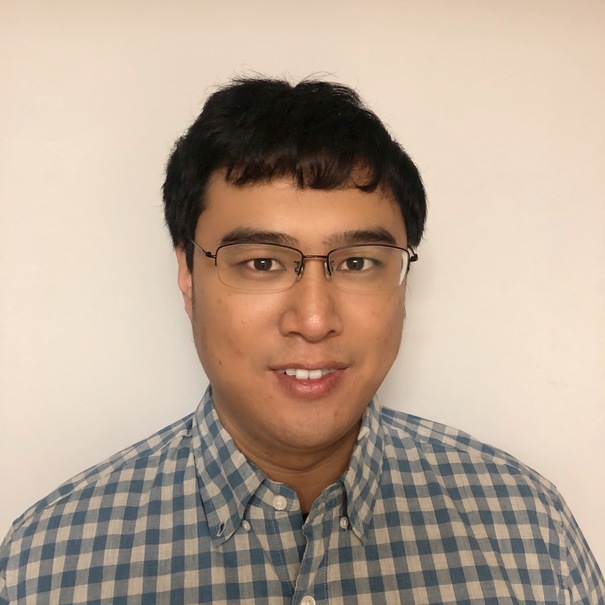
Ksenia Dolgaleva is an Associate Professor at the University of Ottawa's School of Electrical Engineering and Computer Science, and holds a Canada Research Chair in Integrated Photonics (Tier 2). She joined the university in July 2013 as part of the Canada Excellence Research Chair team led by Professor Robert Boyd. Education: She earned a Diploma in Physics from Moscow State University (Russia) and a Ph.D. in Optics from the University of Rochester (USA, 2009). She completed a postdoctoral fellowship at the University of Toronto (2009–2013), supported by a Mitacs Elevate fellowship (2011–2012). Research Interests: Her work focuses on integrated photonics, nonlinear optics, THz technology, and advanced optical materials. Key areas include artificial photonic structures, nonlinear responses in materials like InP, GaN, and quartz, and plasmonic metamaterials for sensing and frequency conversion. Publications & Trends: Over 20 peer-reviewed articles highlight her contributions to nonlinear photonics platforms, THz spectroscopy, and material characterization. Recent work emphasizes phase-matched processes, ultra-high-Q resonances, and THz plasmonic metasurfaces. Scientific Awards: Outstanding undergraduate thesis award (Russian Physical Society, 2009) Outstanding student presentation (OSA Frontiers in Optics, 2008) Advising & Grants: Trained 8 students during her Ph.D. and postdoc. Currently building her research group to explore optics and photonics. Labs/Teams: Active in the Canada Excellence Research Chair team and collaborates on projects involving III-V semiconductors and THz technologies.
Joseph Emerson is an Associate Professor at the University of Waterloo's Department of Applied Mathematics and a faculty member at the Institute for Quantum Computing (IQC). He is also a Fellow of CIFAR's Quantum Information Science program and CEO of Quantum Benchmark, a startup specializing in quantum computing error diagnostics. His research focuses on scalable quantum error correction, foundational quantum theory, and protocols like randomized benchmarking, now a global standard for quantum gate characterization. Emerson earned a BSc from McGill University, an MSc in experimental nuclear physics, and a PhD in theoretical physics from Simon Fraser University. His postdoctoral work at MIT and the Perimeter Institute explored quantum randomness and decoherence. He has held roles at IQC since 2005, advancing quantum computing's practical implementation through error suppression and validation techniques. Research Highlights Developed randomized benchmarking for error diagnostics across quantum platforms. Framework for unitary t-designs applied to quantum algorithms and thermodynamics. Investigated contextuality in quantum mechanics as a computational resource. Awards & Recognition Early Researcher Award (Ontario, 2008–2013) CIFAR Quantum Information Science Fellow NSERC Postdoctoral Fellowship (2003–2005) Labs & Affiliations Emerson leads research teams at IQC and collaborates with Perimeter Institute and industry partners. His work bridges theoretical foundations with practical tools for quantum computing scalability.
Meng Xu is an Assistant Professor in the Cheriton School of Computer Science at the University of Waterloo, Canada. He is affiliated with the Cryptography, Security, and Privacy (CrySP) group and the Cybersecurity and Privacy Institute (CPI). His research focuses on system and software security, emphasizing secure-by-design languages (e.g., Rust, Move), automated program analysis, and runtime defense techniques. Education : Ph.D., Computer Science (2020), Georgia Institute of Technology B.Eng. and B.Business (First Class Honors), Nanyang Technological University (2014) Research Interests : Secure-by-design languages Automated security analysis (fuzzing, symbolic execution) Runtime defense mechanisms (moving target defense, secure hardware) Key Awards : EAPLS Best Paper Award (2022) USENIX Security Distinguished Paper Award (2018) Grants & Funding : BlackBerry Research Grant (CAD $200,000) Amazon Research Award (USD $60,000) NSERC Discovery Grant (CAD $170,000) Labs & Collaborations : CrySP (Cryptography, Security, and Privacy Group) Cybersecurity and Privacy Institute (CPI)
Yizhou Zhang is an Assistant Professor in the Department of Computer Science at the University of Waterloo. He holds a PhD and MS from Cornell University (2019 and 2016) and a BS from Shanghai Jiao Tong University (2012). His research focuses on programming languages, including design, implementation, and theory, with emphasis on formal methods, compiler optimization, and probabilistic programming. Education: PhD, Cornell University, 2019 MS, Cornell University, 2016 BS, Shanghai Jiao Tong University, 2012 Research interests span programming language theory, compiler construction, and formal verification. His work explores topics like certified compilers, effect handlers, and probabilistic program analysis. Recent publications emphasize formal models for memoization, nested family polymorphism, and bidirectional control flow. His publications reflect contributions to probabilistic programming semantics, compiler optimization techniques, and type systems. No scientific awards are explicitly listed. Advising and grant details are not provided in the text. Zhang’s research often intersects with formal methods and practical compiler implementation challenges.
Dr. Matt Amy is an Assistant Professor in the School of Computing Science at Simon Fraser University (SFU), holding the Canada Research Chair in Quantum Computing. His research focuses on quantum compilers, programming languages, and formal verification of quantum programs. He also explores quantum circuit optimization and models of quantum computation. Education: PhD in Computer Science (University of Waterloo, 2019), M.Math in Quantum Information (2013), and B.Math in Computer Science (2011), all from the University of Waterloo. Research Interests: Quantum compilers and languages, circuit optimization, formal verification, and quantum computation models. His work bridges theoretical foundations with practical implementations, emphasizing efficient quantum software development. Recent research trends include advancing quantum compilation techniques, exploring NP-hard optimization problems in quantum circuits, and developing formal methods for quantum program analysis. His work on symbolic synthesis and equational theories for quantum circuits demonstrates a focus on foundational algorithmic challenges. Scientific Awards: Canada Research Chair (2025–present) Advising and Grants: While no current advisees are listed, his research is supported by grants focused on quantum computing and formal methods. He collaborates with industry through SFU’s School of Computing Science. Labs and Teams: Involved with the Tangent Lab, a research group exploring quantum algorithms and software systems at SFU.
Yann-Gaël Guéhéneuc is a Professor at Concordia University's Department of Computer Science and Software Engineering. He leads the Ptidej Team, focusing on software engineering methodologies, IoT systems, and game engine architecture analysis. His research emphasizes static/dynamic analyses, service-oriented architectures, and machine learning design patterns. Current Affiliations: Concordia University (Full-time Professor) Ptidiej Team Lead Research Interests: Specializes in IoT system testing, microservices architecture, game engine design patterns, and anti-pattern detection in multi-language systems. His work bridges theoretical software engineering principles with practical industrial applications, particularly in legacy system modernization and machine learning system design. Recent Trends in Publications: Focuses on IoT testing methodologies, machine learning architecture patterns, and service-oriented system transformations. His 2025 works advance IoT system taxonomy and game engine analysis techniques. Advising: Supervises MASc and PhD programs in Software Engineering and Computer Science Labs/Teams: Ptidej Team develops software tools for system analysis (e.g., Magnet, SyDRA)
Ondřej Lhoták is a Professor and Director of Undergraduate Studies at the Cheriton School of Computer Science, University of Waterloo. He holds a Ph.D. and M.Sc. from McGill University, and a B.Math from the University of Waterloo. His research focuses on: Programming language design and implementation Compiler optimization techniques Static and dynamic program analysis Object-oriented language semantics Scala programming ecosystem development As Director of Undergraduate Studies, he oversees academic programs and curriculum development for computer science students. His office is located in the Davis Centre (DC 2520) on the Waterloo campus.
Patrick Lam is an Associate Professor in the Department of Electrical and Computer Engineering at the University of Waterloo, with a cross-appointment to the Cheriton School of Computer Science. His research focuses on applications of programming languages and static analysis to software engineering challenges, emphasizing verifiable software specifications and program understanding. Dr. Lam has held significant grants from NSERC and is recognized for his impactful work, including the First Decade High Impact Paper award for his Soot framework. Education: Doctorate in Computer Science, Massachusetts Institute of Technology, 2007 Master's in Computer Science, McGill University, 2000 Bachelor's in Joint Honours Mathematics and Computer Science, McGill University, 1999 Research Interests: His primary areas include static program analysis, verifiable software specifications, and compiler design, with a focus on linking high-level software designs to low-level implementations. He explores techniques like lightweight specifications and domain-specific languages to enhance software reliability and efficiency. Recent work also addresses empirical studies of programming practices and security through modularization. Publications: Dr. Lam's recent publications span advancements in static analysis tools (e.g., WasmWalker for WebAssembly), formal verification of code generated by AI tools like GitHub Copilot, and empirical studies on C++ immutability usage. His work bridges theoretical programming language research with practical software engineering applications, emphasizing tools for developer productivity and code reliability. Awards and Recognition: First Decade High Impact Paper recognition for "Soot – A Java Optimization Framework" (2010) Teaching and Grants: He has taught courses such as CS 447, ECE 453, and ECE 459 on software testing and performance programming. Active in grant-funded research, he secured NSERC Engage Grant (2013) and an ongoing NSERC Discovery Grant (2013–2018). Lam has also advised graduate students and contributed to the Software Engineering Program at Waterloo as its Director (2016–2019). Labs and Teams: His research group explores topics in program analysis and software engineering, with collaborations on projects like abstract debugging tools (GobPie) and static analysis frameworks (Soot). He maintains an open-source repository on GitHub, contributing to educational materials and research tools.
Steven Ding is an Adjunct Assistant Professor and Lab Director at the School of Computing, Queen's University , leading the L1NNA Artificial Intelligence and Security Lab. His research focuses on the intersection of machine learning, data mining, and cybersecurity with applications in malware analysis, reverse engineering, and authorship attribution. Education: PhD in Information Studies (McGill University, 2019), M.A.Sc. in Information Systems Security (Concordia University), B.S. in Information Systems (University of the Fraser Valley), B.S. in Computer Science (University of Shanghai for Science & Technology) Research Interests: His work integrates artificial intelligence and security systems to develop solutions for malware phenotype decomposition, neural malware analysis, binary provenance, and explainable AI in cybersecurity. He explores data analytics for assembly code evolution and authorship analysis using machine learning and differential privacy . Publication Trends: His peer-reviewed work (IEEE Transactions, ACM conferences) emphasizes binary code analysis , neural networks , and cybersecurity , with a focus on static malware characterization , authorship attribution , and cross-architecture code similarity . Scientific Awards: FRQNT Doctoral Research Scholarship (2017-2018) Dean’s Graduate Award at McGill University (4 years, 2014-2018) NSERC Alliance Grant (2021-2024) Best Poster Award, SERENE-RISC Research Showcase (2016) Second Prize, Hex-Rays Software Plug-in Contest (2015) ACM SIGKDD Student Travel Award (2016) Advising & Grants: Dr. Ding has supervised numerous Ph.D. and Master’s students (e.g., Li Tao Li, Mark M. Adams) and secured significant funding from BlackBerry Cylance , DRDC , and NSERC , including a 1.24M CAD NSERC Alliance Grant (50%) and 1.5M CAD DRDC Contract (50%). Labs & Teams: The L1NNA lab collaborates with DRDC Canada, NVIDIA, and IEEE Security & Privacy, focusing on AI-driven security tools (e.g., Kam1n0 assembly clone search engine) and neural malware analysis . The lab is located in Goodwin Hall, Queen's University, and emphasizes practical software development and industrial partnerships .
Andrej Bogdanov is a Professor at the University of Ottawa in the School of Electrical Engineering and Computer Science . He earned his B.S. and M.Eng. from MIT and Ph.D. from UC Berkeley . Before joining Ottawa, he held positions at the Chinese University of Hong Kong , ITCS (Tsinghua) , DIMACS (Rutgers) , and the Institute for Advanced Study . He has served as a Visiting Professor at the Tokyo Institute of Technology (2013) and the Simons Institute (2017, 2021). Research Interests : Computational complexity, cryptography foundations, pseudorandomness, one-way functions, property testing, quantum algorithms, and sublinear-time algorithms. Teaching : Courses on Discrete Mathematics, Great Algorithms, Computational Complexity, and Cryptography at University of Ottawa, Chinese University of Hong Kong, and Rutgers University. Publications : 15+ recent works in TCC , CRYPTO , ICALP , RANDOM , and journals like Journal of Cryptology and Theory of Computing . Service : Program co-chair for SAC 2026 , and committee member for major conferences including CRYPTO , TCC , Eurocrypt , and FOCS . Advising : 12 current and former Ph.D./M.Phil. students, with postdoctoral advisees at institutions like IIT Palakkad and Academia Sinica . His work bridges theoretical computer science with applications in cryptography, quantum computing, and network security.
Dr. Yunhua Luo is a Professor & Associate Head (Graduate Program) in the Department of Mechanical Engineering at the University of Manitoba (Price Faculty of Engineering). His expertise lies in computational mechanics, finite element methods, and biomechanical modeling. He holds a PhD from Stockholm, Sweden (1999), a Licentiate (MSc) from Stockholm (1997), and a B.Eng. from Beijing, China (1985). His research focuses on three core areas: Development of advanced finite element methods for composite materials Multilevel biomechanical modeling of bone strength and hip fracture mechanisms Mechanistic analysis of brain injury and helmet design optimization Over 30 years of academic progression includes roles from Research Associate (2000–2006) to full Professor (2019–present). His recent publications (2022–2025) emphasize voxel-based modeling, osteoporotic fracture risk prediction, and helmet performance evaluation. Current research seeks MSc/PhD students in computational micromechanics.
Kazem Cheshmi is an Assistant Professor in the Department of Electrical and Computer Engineering at McMaster University. His research focuses on compiler optimization techniques for accelerating scientific computing and machine learning applications on parallel architectures. He leads the SwiftWare Lab and teaches courses such as High-Performance Programming (COMPENG 4SP4/ECE 6SP4) and Special Topics in Computation (ECE 718). Education: B.Eng. (Ferdowsi University of Mashhad), M.A.Sc. (University of Tehran), Ph.D. (University of Toronto). He has held research positions at Microsoft Research, Adobe Research, Concordia University, and Rutgers University. Research Interests: High-performance computing, compiler design, sparse matrix computations, and their applications in machine learning and scientific computing. His work emphasizes optimizing sparse codes for parallel architectures and developing efficient QP solvers like NASOQ. Key Contributions: Developed Sympiler (a domain-specific compiler for sparse matrix codes) and NASOQ (a scalable QP solver). His awards include the ACM-IEEE CS George Michael Memorial HPC Fellowship (2020) and recognition for contributions to compiler-driven sparse computation optimization. Teaching and Service: Organizes SONAD’25, serves on program committees for PPoPP, Supercomputing, and IPDPS. Supervises students in compiler design, parallel programming, and high-performance computing. Labs/Teams: Leads the SwiftWare Lab focusing on compiler optimization and high-performance systems. Collaborates on open-source projects like Sympiler and NASOQ.