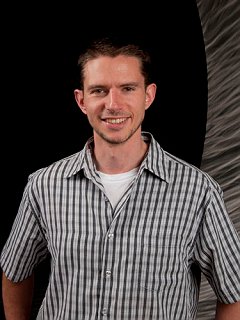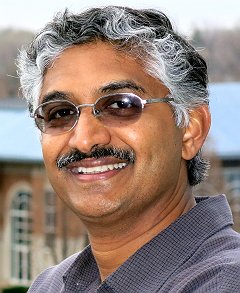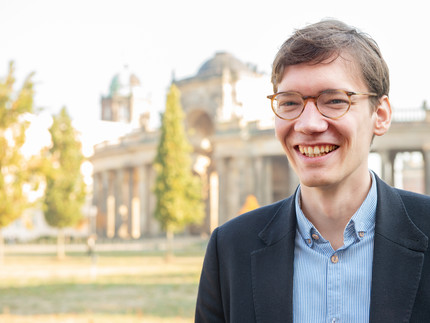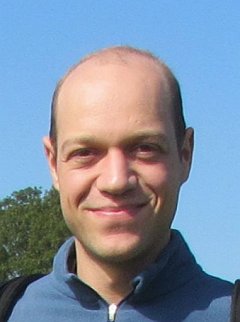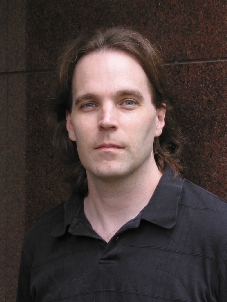
Eric Van Wyk is a Professor in the Department of Computer Science and Engineering at the University of Minnesota's College of Science and Engineering. His research focuses on programming languages, particularly extensible languages and language tools. He leads the Minnesota Extensible Language Tools (MELT) group and has made significant contributions to attribute grammars, compiler design, and language specification techniques. Professor Van Wyk's research centers on programming languages, especially extensible languages. His team has developed techniques for specifying languages and extensions that add new syntax and semantics to a "host" language. His work focuses on mechanisms guaranteeing that independently-developed domain-specific extensions can be automatically composed into well-defined languages. He has created two major systems: Silver, an attribute grammar specification language enabling highly-modular language specification, and Copper, an integrated parser and context-aware scanner generator that uses parser information to return more discriminating tokens. His publication record shows a clear progression from foundational work on language composition to increasingly sophisticated techniques for metatheoretic reasoning, scope management, and strategic tree rewriting. The research demonstrates a consistent pattern of developing practical tools (Silver, Copper, ableC) alongside theoretical advances in language specification and composition, bridging the gap between formal methods and practical language implementation. Distinguished Paper award at SLE2020 Professor Van Wyk has advised multiple Ph.D. students including Ted Kaminski (2017), Lijesh Krishnan (2012), August Schwerdfeger (2010), Jimin Gao (2007), and Dawn Michaelson (2024). His research has received substantial support from the National Science Foundation through projects such as "FMitF: Track I: ComScaN" (2021-2026), "XPS: EXPL: Enabling An Ecosystem of Parallel Programming" (2016-2021), and "SI2-SSE: Collaborative: Extensible Languages for Sustainability" (2010-2015). He leads the Minnesota Extensible Language Tools (MELT) group, which has developed influential systems for language specification while advancing theoretical understanding of language composition and extensibility. The group's work has established significant contributions to the field of software language engineering with particular expertise in attribute grammars and language composition techniques.