Dr. Andrew Butterfield is a faculty member at the School of Computer Science and Statistics, Trinity College Dublin. He serves as Head of the Foundations and Methods Group and actively contributes to Lero: the Irish Software Research Centre. His research focuses on Formal Methods and Functional Programming, particularly the Unifying Theories of Programming (UTP) paradigm, with applications in clinical pathways, medical device software, and spacecraft operating systems. Current research includes developing UTP theories for shared-variable concurrency, rely/guarantee reasoning, and separation logic in collaboration with Jim Woodcock. He also explores Process Modelling Language (PML) semantics with John Noll and Anila Mjeda. His contributions feature proof-assistance tools like UTP2 Theorem Prover, UTP Calculator, and ReasonEq implemented in Haskell. Andrew leads funded projects such as ESA's RTEMS-SMP (2019) and SFI's FMHIDA (2016-2020). Past projects encompass formal verification of separation kernels, Handel-C language semantics, and NAND flash memory models. He has taught courses in Formal Methods, Functional Programming, and Concurrency, while serving on editorial and program committees including Formal Aspects of Computing.
Jean Pierre David is a Full Professor in the Department of Electrical Engineering at Polytechnique Montréal. He has been with the institution since January 2006, was promoted to Associate Professor in June 2013, and became a Full Professor in June 2021. His research focuses on digital systems design, reconfigurable systems, and hardware implementations of artificial intelligence applications. David received his Electrical Engineering degree (specializing in electronics) from the University of Liège (Belgium) in 1995. He completed his Ph.D. in June 2002 at the Catholic University of Louvain, with research focused on reconfigurable systems (FPGAs). Before joining Polytechnique Montréal, he was a professor at the University of Montreal from August 2002 to January 2006. Jean Pierre David's research spans several key areas in electrical engineering and computer science. His primary focus is on digital systems design, configuration, and programming, with particular expertise in reconfigurable systems such as FPGAs and microcontrollers. He has made significant contributions to Hardware Description Languages (HDL), developing methodologies for fast, safe, and simple design of digital architectures. His work extends to Hardware-in-the-Loop (HIL) simulation, Deep Packet Inspection (DPI) for high-speed communications (10GBE, 40GBE, 100GBE), and applications of digital systems in artificial intelligence, particularly neural network implementations. David's recent research has increasingly focused on energy-efficient AI hardware, RISC-V processor design for neural network acceleration, and specialized architectures for low-precision computation. His publication record shows a clear evolution from foundational work in digital system design and FPGA implementation toward increasingly sophisticated applications in artificial intelligence and neural network acceleration. The most recent publications demonstrate expertise in creating specialized hardware for efficient AI computation, with a strong emphasis on low-precision and binary neural networks that can run efficiently on resource-constrained devices. His work bridges computer architecture, electrical engineering, and artificial intelligence, creating practical hardware solutions for emerging computational challenges. David is affiliated with several important research groups and institutions including the Strategic Microsystems Group of Quebec (ReSMiQ), the Institute of Electrical and Electronics Engineers (IEEE), and the Institute for Data Valorization (IVADO). His work has been recognized through numerous publications in high-impact journals and conferences, with a total of 108 publications to his name. Professor David has supervised an impressive number of graduate students throughout his career, mentoring 9 Ph.D. students and 24 Master's students to completion. His students have worked on diverse topics including FPGA-based neural network acceleration, hardware implementations of deep learning algorithms, energy harvesting systems for IoT devices, and specialized architectures for low-precision computation. His lab appears to maintain strong connections with industry through various research projects and collaborations with researchers like Yves Savaria. His research laboratory focuses on the intersection of hardware design and artificial intelligence, with particular emphasis on creating efficient implementations of neural networks on specialized hardware platforms. The lab maintains strong connections with industry partners and collaborates extensively on projects related to network processing, AI acceleration, and energy-efficient computing systems.
Supratim Biswas is a Professor in the Department of Computer Science and Engineering at the Indian Institute of Technology Bombay, where he has served since 1995. His academic career spans over four decades, beginning as a Lecturer in the Computer Center in 1980, progressing to Assistant Professor in 1985, Associate Professor in 1990, and achieving full Professorship in 1995. He has held significant administrative roles including Dean of Academic Programs (2007-2010), Head of CSE Department (2000-2003), and Director of IITB-Monash Academy (2009-2010). His research interests focus on Programming Languages, Compiler Optimization, Parallelizing Compilers, Parallel and Distributed computing, and Combinatorial Optimization . Professor Biswas has made substantial contributions to compiler technology, particularly in parallelization techniques for modern architectures. His work bridges theoretical compiler design with practical applications in high-performance computing and CAD systems, demonstrating how compiler optimizations can significantly enhance computational efficiency in real-world applications. The publication record shows a consistent research trajectory spanning nearly four decades, with recent work (2012-2015) focusing on GPU-based parallel algorithms, loop parallelization techniques for non-uniform data dependencies, and mesh processing for CAD applications. His research demonstrates evolution from foundational compiler theory to contemporary parallel architectures, maintaining relevance through practical applications in computational geometry, CAD systems, and high-performance computing. Excellence in Teaching Award (2000) Professor Biswas has supervised over 60 doctoral and master's students, establishing himself as a dedicated mentor in systems software education. His sponsored research portfolio includes significant projects with CDAC (350 lacs), MIT (133 lacs), TCS (81.3 lacs), and Intel Corporation (10 lacs), demonstrating strong industry-academic collaboration. His teaching portfolio spans both undergraduate and postgraduate levels, including foundational courses like Discrete Structures and advanced topics like Parallelizing Compilers, reflecting his commitment to curriculum development across multiple generations of computer science education. His laboratory work has supported students across B.Tech, M.Tech, and Ph.D. programs, with particular emphasis on compiler construction and operating systems. Through the Continuing Education Program, he has extended his expertise to industry professionals, conducting numerous specialized courses for organizations including VSNL, TCS, DRDO, and Reliance.
Dr. Carine van Rhijn is an Associate Professor in Medieval History at Utrecht University's Faculty of Humanities, Department of History and Art History. She serves as Head of Medieval History and is affiliated with the Humanities Research Institute for History and Art History. Her scholarly work focuses on the cultural history of the early medieval period, with particular expertise in manuscripts, local religious practices, knowledge systems, and beliefs. Her research interests span Medieval History, Early Middle Ages, Carolingian Period studies, Medieval Manuscripts, Pastoral Care, Medieval Religions, Cultural History, Divination Practices, and Archaeology. Dr. van Rhijn has established herself as a leading scholar on Carolingian religious reforms, particularly examining how these reforms were implemented at the local level through priests and pastoral care. Her work often explores the intersection of religious authority, local knowledge, and everyday practices in the early medieval world. Analysis of her recent publications (2023-2025) reveals a consistent focus on medieval knowledge systems, particularly divination practices, prognostication, and the cultural significance of manuscripts. Her research demonstrates a strong interest in how religious reforms, particularly during the Carolingian period, were experienced and adapted at the local level. She frequently examines the relationship between official religious doctrine and local practices, with special attention to how priests functioned as knowledge brokers in early medieval society. Dr. van Rhijn has made significant contributions through her monograph Leading the Way to Heaven: Pastoral Care and Salvation in the Carolingian Period (2022) and her edited volume Rethinking the Carolingian Reforms (2023). She has also co-edited important works including Men in the Middle: Local Priests in Early Medieval Europe (2016) and Religious Franks: Religion and Power in the Frankish Kingdoms (2016). As Senior Lecturer and Head of Medieval History, Dr. van Rhijn plays an active role in teaching and academic leadership at Utrecht University. Her scholarly approach combines meticulous manuscript study with broader cultural analysis, offering nuanced perspectives on how religious reforms were implemented and adapted in local contexts during the early medieval period.
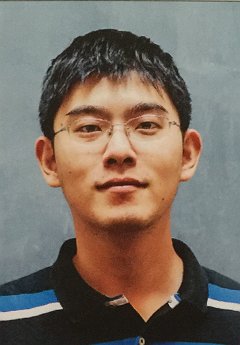
Zhu Lichao is a Lecturer in Language Sciences at Paris Cité University, affiliated with the Faculty of Interdisciplinary Studies of Languages and Arts (UFR EILA) and the CLILLAC-ARP research unit. His professional address is Bâtiment Olympe de Gouges, Place Paul Ricoeur, 75013 Paris, and he can be contacted at lichao.zhu@u-paris.fr. Dr. Zhu's primary research interests focus on phraseology and lexicography, specifically exploring phraseological molds, linguistic modeling, and machine simulation of lexicographic data. His work extends to terminology studies with emphasis on specialized phraseology and terminotics, and he also investigates machine translation through parallel corpora, specialized engines, and neural networks. His research demonstrates a strong interdisciplinary approach combining theoretical linguistics with computational applications. His publication record shows consistent scholarly output from 2011 to 2020, with significant contributions in 2018 and 2020. His research trajectory reveals a progression from fundamental studies in phraseology and lexicography toward more computational and applied approaches, particularly in Chinese language processing. Notably, he has developed the Chengyu Database and the "Valextra" electronic dictionary, demonstrating his commitment to practical lexicographic applications. His work bridges theoretical linguistic concepts with practical computational implementations, particularly in the domain of Chinese phraseology. Through his GitHub profile (lichaozhu), he maintains several repositories related to natural language processing, including projects like joeynmt (a minimalist neural machine translation toolkit) and mosesdecoder (a machine translation system), indicating active engagement with computational linguistic tools and methodologies. His research demonstrates a clear trajectory from theoretical phraseology toward practical computational applications in language processing.
Leonardo Querzoni is a Professor at the Department of Computer, Automatic and Management Engineering Antonio Ruberti within Sapienza University of Rome . He currently serves as Deputy Rector for Digital Technologies and Cybersecurity (2024-2026) and President of the CYBER 4.0 Competence Center since 2022. His academic career spans over two decades with 120+ publications. PhD in Computer Engineering (2007) with thesis "Techniques for Efficient Event Routing" Coordinates Italy's first joint PhD program in Cybersecurity (Sapienza-Luiss) Co-author of Italy's National Cybersecurity Framework Research spans Cybersecurity , Stream Processing , Dependable Distributed Systems , and Big Data Scalability . Particular focus areas include: Malware analysis and incident forensics Secure distributed systems Binary code analysis using neural networks Security for cyber-physical systems IoT attack triage Stream processing optimization Key awards: 2023 DEBS 10 Years Time Award 2021 ASPLOS Distinguished Paper 2019 DIMVA Best Paper Runner-Up 2017 DEBS 10 Years Time Award Active in European projects EU-GUARDIAN, ATENA, and national initiatives like PRIN TENACE. Industry collaborations include: Presidenza del Consiglio dei Ministri Leonardo-Finmeccanica CISCO Research Banca MPS
Professor Suresh Jagannathan is a leading researcher in programming languages and formal verification. His work focuses on semantics of high-level languages, type theory, program analysis, and compiler design, with a particular emphasis on concurrent and distributed systems. He explores formal methods for certified compilation, memory model consistency, and verification techniques enabling safe program optimizations. Core research areas: programming language semantics, formal verification, type theory, compiler design Key applications: concurrent/distributed systems, certified compilation, safe neural network verification Recent publications highlight his contributions to automated verification of concurrent data structures, type-guided repair of input generators, and differentiable logic specifications for AI planning systems. His work combines theoretical rigor with practical implementations like ECOOP best papers and tool developments. Professor Jagannathan has received multiple scientific awards (not specified in available data) and maintains active collaborations with researchers in formal methods and systems verification communities.
Masaaki Kitayama is a Professor at Waseda University's School of Education. His research focuses on Environmental Law and Civil Law , with a particular emphasis on comparative studies between Japan, Germany, and the EU. Professional Memberships: Japan Society for Environmental Policy and Law, Japan Scientists' Association, Japan Legal Society for Civil Law Research Interests: Environmental regulation, citizen legal initiatives, sustainable development, and historical evolution of civil law systems Teaching: Offers courses in Civil Law, Jurisprudence, and Legal Transaction frameworks His recent publications analyze EU product policies , waste management frameworks , and legal precedents in environmental disputes . He has contributed to comparative studies on nature conservation laws across Germany, Japan, and Russia. Active in policy reform, Kitayama investigates mechanisms for integrating grassroots movements into legal systems, with a focus on participatory decision-making in regional development. He is affiliated with multiple research institutes, including the Institute of Comparative Law.
Akio Tsuchiya is a Professor at the Faculty of Law , Waseda University , specializing in Chinese Literature and Classical Chinese Poetry . His career spans multiple roles at Waseda University since 2006, including Assistant Professor, Full-time Lecturer, and current Professorship. Education: Master of Arts (Waseda University, 2008), Peking University studies (2006), and Waseda University PhD (2003) Research focuses on Mid-Tang literature , particularly Wei Yingwu , Bai Juyi , and Liu Yuxi , analyzing epitaphs, poetic theories, and Dezong-Zhenyuan period dynamics. Recent publications (2025-2022) examine textual analysis of Tang banquet poetry, Wei Yingwu's political career, and digital education frameworks. Professional Affiliations: Waseda University Law Association Institute of Chinese Ancient Texts and Culture Chinese Classical Literary Society Chinese Tang Dynasty Literature Association Chinese Linguistic Society of Japan Academic activities include organizing conferences, presenting at international symposia (Beijing, Fudan, Keio Universities), and leading research projects on Tang literature. He also contributes to digital language education through the Waseda Moodle platform.
Kazunori Ueda is a Professor at Waseda University's Faculty of Science and Engineering, with a career spanning over three decades in logic/constraint programming, hybrid systems, and concurrency. He has held visiting positions at the Egypt-Japan University of Science and Technology and part-time roles at the University of Tokyo. His research bridges theoretical advancements and practical implementations, focusing on languages like HydLa and LMNtal for hybrid and concurrent system modeling. Research Interests: Logic and Constraint Programming Hybrid Systems Modeling Concurrency and Parallelism Programming Language Design and Implementation Article Trends: Recent works emphasize symbolic simulation of hybrid systems, graph rewriting optimization, and distributed storage reliability. His work integrates interval arithmetic, constraint hierarchies, and formal verification techniques. Scientific Awards: Fellow, Japan Society for Software Science and Technology (2016) Fellow, Information Processing Society of Japan (2015) Basic Research Award, Japan Society for Software Science and Technology (2011) Multiple Best Paper and Encouragement Awards (1985–2010)
Tillmann Rendel is a Research Fellow at the University of Tübingen , affiliated with the Department of Programming Languages and Software Technology . He contributes to projects involving DSLs , language design , and program transformations . Education: M.Sc. in Computer Science. Research interests center on programming languages , focusing on modular systems , functional programming , and domain-specific language implementation . His work explores invertible syntax descriptions , copattern matching , and variability-aware testing . Publications highlight advancements in parsing , DSL design , and language composition , with a strong emphasis on formal semantics , compiler design , and interactive development tools . Scientific Awards: Most Influential Paper Award at GPCE 2018 for 'Polymorphic Embedding of DSLs' (2008 paper co-authored with Hofer, Ostermann, and Moors). Collaborations include key contributions to the Uroboro project , participation in Dagstuhl Seminars , and presentations at major conferences like OOPSLA , ICFP , and DSLDI .
Jack W. Davidson is a Professor at the University of Virginia renowned for transformative leadership in ACM's publications ecosystem. He served as Co-Chair of the ACM Publications Board (2010-2021) and founding chair of the ACM Digital Library Board (2021-present), driving digital library revitalization, open-access transitions, and inclusive publishing policies including the groundbreaking author name change policy. His core research expertise lies in compiler design and implementation, recognized by his 2008 ACM Fellowship. This work underpins critical advancements in programming language theory and software engineering infrastructure, enabling efficient code translation and optimization across computing systems. Major honors include: ACM Fellow (2008) for contributions to compiler design and implementation Outstanding Contribution to ACM Award (2023) for publications program leadership Professor Davidson pioneered standards for research artifact evaluation and replication studies while expanding ACM's portfolio with interdisciplinary journals like the ACM/IMS Journal of Data Science. His advocacy addressed complex publication ethics issues including plagiarism, compromised reviewing, and bullying. Information regarding student advising and grant funding was not specified in available sources.
Xiaodi Wu is an Associate Professor in the Department of Computer Science at the University of Maryland, College Park, with affiliations to the Institute for Advanced Computer Studies and the Joint Center for Quantum Information and Computer Science (QuICS). They also serve as an Amazon Visiting Academic at AWS Braket. Education: Ph.D. in Theoretical Computer Science (University of Michigan, 2013); B.S. in Mathematics and Physics (Tsinghua University, 2008). Their research bridges theoretical foundations of quantum computing with practical implementations, focusing on computational models for quantum device programmability and systems for operating quantum machines. Key areas include quantum programming languages, formal verification, and robustness analysis. Recent work includes SimuQ (quantum simulation frameworks) and Qafny (quantum program verification). Publications emphasize verification of quantum compilers, algebraic reasoning, and differentiable quantum languages. Scientific Awards: Sloan Research Fellow, NSF CAREER, AFOSR YIP. Xiaodi Wu has advised numerous students and mentored interns, contributing to quantum complexity theory and cryptographic protocols. They actively participate in organizing committees for conferences like POPL and PLDI.
Camille Fernandes serves as a Lecturer in Public Law at the University of Franche-Comté, affiliated with the Centre de Recherche Juridique Franche-Comté (CRJFC). She completed her thesis on academic freedom and civil servant status under the supervision of Charles Fortier. Focuses on academic freedom within civil servant frameworks Specializes in public law, administrative law, and constitutional law Active contributor to legal journals and public commentary platforms Her research examines tensions between public service obligations and individual freedoms in academic environments, with particular emphasis on secularism, European law integration, and judicial oversight mechanisms. Key publication trends include judicial interpretations of academic rights, comparative analyses of public-private legal status, and regulatory frameworks for institutional autonomy. Her work appears in journals such as AJDA and RFDA, as well as multi-author volumes. Contact: camille.fernandes@univ-fcomte.fr | LinkedIn | Twitter
Tiago Cogumbreiro is an Assistant Professor at the University of Massachusetts Boston, where he has been a faculty member since Fall 2018. His research focuses on advancing the foundations of parallel programming through rigorous quality assurance of languages and runtimes. Dr. Cogumbreiro received his PhD from the University of Lisbon (ULisboa) in March 2015 under Francisco Martins, where he developed techniques to handle barrier deadlocks including the Armus runtime verification tool. His educational background includes a B.Sc. from Universidade dos Açores, followed by research assistant work at Imperial College London (supervised by Nobuko Yoshida) and postdoctoral research at Georgia Tech and Rice University (supervised by Vivek Sarkar). As an expert in formal methods for high-performance computing, Dr. Cogumbreiro's work centers on detecting concurrency errors in parallel programs with special emphasis on GPU systems. His research spans theoretical contributions to deadlock avoidance policies and practical applications of Coq and Why3 for certified algorithms. Recent work demonstrates sophisticated approaches to static analysis of data-races in GPU programming, addressing fundamental challenges in parallel system reliability. His publication pattern reveals a consistent trajectory from foundational work on futures-based deadlock avoidance (2017) through behavioral type systems (2019) to current innovations in GPU program analysis (2023-2024). These contributions form a cohesive research program focused on mathematically rigorous approaches to parallel system correctness. Dr. Cogumbreiro actively contributes to the programming languages community through committee service at major conferences including PLDI (2020 Artifact Evaluation), SPLASH (2025 OOPSLA Review Committee), and PPoPP. His GitHub activity shows ongoing development of formal verification tools, particularly Coq-based projects like gorn-coq and habanero-coq that implement his theoretical contributions.