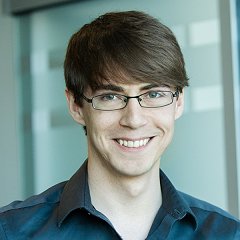
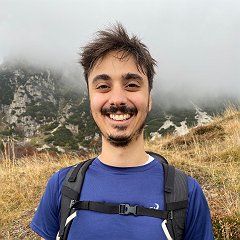
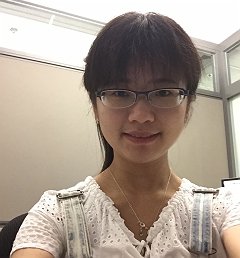
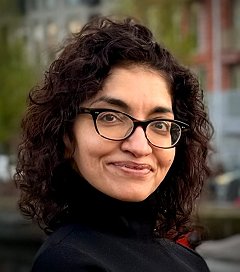
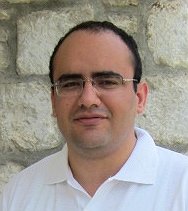
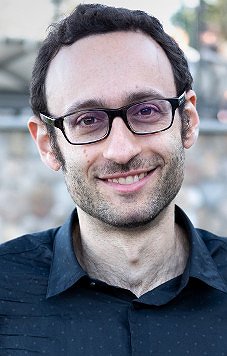
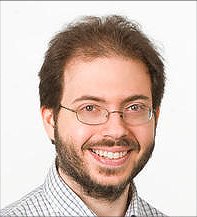
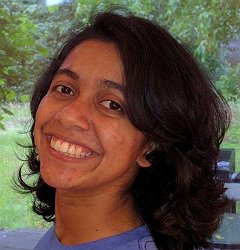
Carmine Abate is a researcher affiliated with Inria Paris , a prominent French research institute focused on computer science and applied mathematics. He is actively involved in academic service, serving as a Committee Member in the Program Committee for the Principles of Secure Compilation (PriSC) track at POPL 2024. His research interests center on secure compilation , compiler correctness , and software security , with a focus on formal methods and programming languages. His primary publication, Trace-Relating Compiler Correctness and Secure Compilation (2020), explores connections between compiler correctness and security guarantees. As a member of the academic community, he contributes to conference organization and program committees, particularly in the domain of secure compilation.
William J. Bowman is an Assistant Professor in the Department of Computer Science at the University of British Columbia. He focuses on secure and verified compilation, dependently typed programming, and meta-programming systems. His work bridges high-level language design with low-level code generation to maintain correctness and security invariants throughout compilation. Education: PhD in Computer Science from Northeastern University Research spans type-preserving compilation, including: Typed closure conversion for dependently typed languages Allocation-aware type universes Hybrid embedding techniques Secure interoperability via multi-language semantics Recent publications examine: Heap allocation modeling through type universes Flat closure representations WebAssembly extensions with indexed types Control-effect semantics
Matteo Busi is a researcher at University Ca' Foscari Venice , specializing in software security, language-based security, and secure compilation. His work focuses on formal verification of security properties in cryptographic implementations and protocol verification using symbolic methods. Research interests include: Software Security Language-Based Security Secure Compilation Formal Verification Cryptographic Protocol Analysis Embedded Security Recent publications examine constant-time preservation under obfuscation, remote attestation protocols using pi-calculus, and robust compilation techniques. His contributions span POPL, PriSC, and APLAS conferences from 2019 to 2024.
Thomas P. Jensen is a Researcher at INRIA Rennes , France, specializing in program analysis , software security , and abstract interpretation . With a Cand. scient. in Computing and Mathematics from the University of Copenhagen (1990) and a PhD from Imperial College, University of London (1992), he has led research teams at INRIA, including the Celtique project-team (2010-2022) and currently the Epicure project-team (since 2022). He holds a Habilitation à diriger des recherches from Université Rennes 1 (1999). Research Focus Program analysis with type-based and big-step semantics approaches Certification of static analysis tools for embedded systems Software fault isolation and language-based security Information flow control through hybrid static-dynamic analysis His work spans Java security (including Java Card and mobile telephony) and formal verification of compilers and sandboxes. Notable projects include JavaSec , AJACS , and the CominLabs cybersecurity network. He received a Best Paper Award at GPCE 2018. Publications & Editorial Recent publications focus on algebraic data types , automata-based verification , and control-flow analysis with applications in cybersecurity . He has contributed to the Strategic research and innovation roadmap for SPARTA (2022) as editor. His work appears in top venues like POPL , PLDI , ICFP , and ESOP . Leadership Director of Laboratoire d'Excellence CominLabs (since 2022) Co-chair of VMCAI 2026 and member of PriSC 2024 Program Committee
Chao Peng is a Principal Research Scientist at ByteDance where he leads the Trae Research team (ByteDance Software Engineering Lab), conducting cutting-edge research on AI agents for software engineering. He also serves as a Part-time Postgraduate Student Mentor at Fudan University's School of Computer Science, bridging industry research with academic mentorship. PhD in Informatics (2021), University of Edinburgh, UK MSc in High Performance Computing and Data Science (2017), University of Edinburgh, UK BEng in Computer Science and Technology (2016), Xuzhou University of Technology, China Dr. Peng's research focuses on the intersection of software testing, program analysis, and large language models. His work explores how AI agents can revolutionize software engineering practices, with particular emphasis on automated bug detection, code generation, and testing frameworks. He has pioneered approaches for evaluating LLM performance in software engineering contexts and developing agent-based systems that enhance developer productivity while maintaining code quality and security. His recent publications demonstrate a clear trend toward integrating large language models with traditional software engineering practices. The research spans code generation evaluation, security vulnerability detection, automated bug reproduction, and issue localization. These works collectively advance the field of AI-assisted software development by addressing practical challenges in reliability, security, and efficiency of AI-generated code. Distinguished Reviewer for FSE'25 School of Informatics Scholarship (fully-funded PhD scholarship) Outstanding Graduate Scholarship at Xuzhou University of Technology Multiple China National Scholarships Honours Spot Bonus at ByteDance Certificate of Achievement for HPCAC Student Cluster Competition Dr. Peng actively mentors students through his role at Fudan University and previously at the University of Edinburgh, where he served as sub-supervisor for MSc projects and teaching assistant for software testing courses. His research has attracted significant industry attention, leading to multiple collaborations between ByteDance and academic institutions. He frequently serves on program committees for major software engineering conferences including ASE, FSE, and ICSE, demonstrating his leadership in the field. As leader of the Trae Research team at ByteDance Software Engineering Lab, Dr. Peng oversees research on AI agents for software engineering, including the application and evaluation of AI agents and training LLMs for agent-based systems. The lab's work focuses on practical systems that predict, detect, diagnose, and fix bugs across various software systems, with particular emphasis on real-world applications and measurable impact on developer productivity.
Işıl Dillig is an Associate Professor of Computer Science at the University of Texas at Austin, where she leads the UToPiA research group. Her academic career spans over a decade of significant contributions to programming languages research, particularly in program analysis, verification, and synthesis. Dr. Dillig received all her academic degrees (BS, MS, and PhD) from Stanford University before joining the faculty at UT Austin. Her educational background established the foundation for her innovative research approach that bridges theoretical computer science with practical applications. Her research focuses on developing techniques to make software systems more reliable, secure, and easier to build through advanced program analysis, verification, and synthesis methods. She has pioneered approaches that combine symbolic reasoning with machine learning to tackle complex software engineering challenges across multiple domains including security, databases, and programming language theory. Her work demonstrates exceptional depth in creating practical tools that address real-world software development problems while maintaining strong theoretical foundations. Analysis of Dr. Dillig's publication record reveals a consistent trajectory of innovation in program synthesis, with recent work expanding into neurosymbolic approaches that bridge neural networks with formal methods. Her research shows strong connections between theoretical foundations and practical applications, particularly in security-critical systems, database technologies, and blockchain applications. The evolution of her work demonstrates increasing sophistication in handling complex program structures while maintaining practical usability. Dr. Dillig has received prestigious recognition for her research contributions: Sloan Fellowship NSF CAREER award As a dedicated educator and research leader, Dr. Dillig has served in significant roles including Program Chair for PLDI 2022 and Steering Committee member for PLDI. She has mentored numerous students through her UToPiA research group, guiding research in program synthesis, verification, and analysis. Her work has been supported by substantial research grants that have enabled innovative projects at the intersection of programming languages and security. Dr. Dillig leads the UToPiA (UT Austin Programming, Languages, and Analysis) research group, which focuses on developing novel techniques for program analysis, verification, and synthesis. The group maintains strong collaborations with industry partners and academic institutions worldwide, translating theoretical advances into practical tools that address real software engineering challenges.
Yufei Ding is an Associate Professor in the Computer Science & Engineering Department at the University of California, San Diego (UCSD), where she leads the PICASSO Lab. Her research spans domain-specific language design, architecture and compiler optimization, and hardware acceleration, with current focus on developing high-performance, energy-efficient, and high-fidelity programming frameworks for quantum computing and machine learning. Dr. Ding received her Ph.D. in Computer Science from North Carolina State University and a B.S. in Physics from the University of Science and Technology of China. Her interdisciplinary background bridges physics and computer science, enabling her to tackle challenges in emerging computing paradigms. Her research interests focus on Compiler Technology, Machine Learning, and Quantum Computing , with specific expertise in domain-specific language design, architecture and compiler optimization, and hardware acceleration. Dr. Ding's work addresses critical challenges in programming frameworks for emerging technologies, particularly in making quantum computing more accessible and efficient through innovative compiler techniques and runtime systems. Dr. Ding's scientific contributions have been recognized with prestigious awards including the NSF CAREER Award (2020) and the IEEE Computer Society TCHPC Early Career Researchers Award for Excellence in High-Performance Computing (2019) . As an active researcher and educator, Dr. Ding serves on program committees for major conferences including PLDI, PPoPP, and SPLASH. She currently has Ph.D. openings in quantum computing and machine learning systems research, as well as a postdoc position in quantum computing for physics Ph.D. candidates with relevant background. Dr. Ding founded and leads the PICASSO Lab at UCSD, which focuses on developing innovative solutions for programming emerging computing technologies. The lab's work bridges theoretical foundations with practical implementations to address real-world challenges in high-performance computing.
Amal Ahmed is a Professor and Associate Dean for Graduate Programs at Khoury College of Computer Sciences, Northeastern University, where she leads research in programming languages and secure compilation. She received her PhD in Computer Science from Princeton University and has established herself as a leading researcher in compiler correctness, language interoperability, and type systems. Her research focuses on correct and secure compilation across the software-hardware stack and safe language interoperability, including design of sound foreign-function interfaces (FFIs) and richly typed compiler intermediate languages. She makes extensive use of semantics and type systems for reasoning about imperative and probabilistic programming languages, multi-language systems, security, concurrency, and provenance. Her work has significantly advanced the understanding of gradual typing, compiler verification, and compositional language interoperability. Dr. Ahmed's publications reveal a research trajectory focused on building solid semantic foundations for language interoperability and secure compilation. Her recent work spans topics from probabilistic separation logic to WebAssembly interoperability, with consistent emphasis on formal verification and semantic techniques. She has developed frameworks for reasoning about multi-language systems that preserve security properties across language boundaries. NSF CAREER Award recipient Editorial Board: Journal of Functional Programming (2017–present) Editorial Board: Mathematical Structures in Computer Science (2016–present) Member: IFIP Working Group 2.8 (Functional Programming, 2014–present) As an educator and mentor, Dr. Ahmed has advised numerous PhD students, postdocs, and undergraduates, many of whom have gone on to successful academic and industry careers. She has organized the Programming Languages Mentoring Workshop and regularly teaches advanced courses in programming languages. She serves on the steering committees of major conferences including POPL, SPLASH, and PLMW, and has chaired program committees for ESOP and POPL.
Mohamed Faouzi Atig is a Professor in Computer Systems at Uppsala University's Department of Information Technology since July 2021, following a progression from Assistant Professor (2014-2018) to Associate Professor (2018-2021). His academic career began with a post-doctoral position at Uppsala University (2010-2012) after earning his PhD from University of Paris Diderot-Paris 7 in 2010, followed by a docent degree (habilitation equivalent) from Uppsala University in 2017. His research focuses on formal verification of concurrent and infinite-state systems, with particular expertise in model checking , weak memory models (including x86-TSO, Release-Acquire), and automata theory applied to string constraints. His work bridges theoretical foundations with practical verification techniques for modern hardware and programming language semantics. Analysis of his publication record reveals a sustained focus on verification challenges in concurrent systems, evolving from foundational work on memory models (2015) to sophisticated techniques for string constraints (2017) and persistent memory (2024-2025). His research demonstrates consistent contributions to top venues like PLDI and POPL, with increasing complexity in handling real-world memory models while maintaining theoretical rigor. At Uppsala University, he has served on program committees for major conferences including POPL, VMCAI, and SPLASH, demonstrating active engagement with the programming languages research community.
Adam Chlipala is a Professor at the Massachusetts Institute of Technology working at the intersection of programming languages, formal methods, and computer systems. His research focuses on building practical verified systems with end-to-end machine-checked proofs, particularly using the Coq proof assistant. His educational background includes a Computer Science undergraduate degree from Carnegie Mellon University (2003) and a PhD in Computer Science from the University of California, Berkeley (2007). Following a postdoctoral position at Harvard University through 2011, he joined MIT as faculty. Chlipala's research spans multiple domains with strong emphasis on dependent types , verified compilation , and hardware-software co-verification . His work consistently bridges theoretical foundations with practical implementation, as evidenced by his development of the Ur/Web programming language and his focus on creating clean-slate hardware-software stacks with formal guarantees. Key research thrusts include cryptographic constant-time verification, side-channel security, and verified tensor compilation. His recent publications (2020-2025) reveal a clear trajectory toward increasingly complex verified systems, with growing emphasis on hardware-software integration, cryptographic implementations, and performance-critical applications. The work consistently leverages Coq for machine-checked proofs while addressing real-world constraints like timing channels and hardware interfaces. Chlipala is the author of the influential textbook Certified Programming with Dependent Types , which serves as a primary educational resource for Coq at numerous institutions worldwide. His professional activities include significant service to the PL community through program committees for major conferences including PLDI, POPL, ICFP, and CPP. He leads research initiatives connecting hardware and software verification, most notably through the DeepSpec project which aims to build fully verified computing stacks. His current work focuses on practical applications of dependent types for business applications through Ur/Web and verified cryptographic implementations.
Minki Cho is a Research Fellow in the Department of Computer Science and Engineering at Seoul National University, South Korea. Having completed their Ph.D. in August 2023 with a thesis titled "Simplifying Reasoning under Weak Memory Concurrency," they continue active research while maintaining institutional affiliation. Cho's educational background includes: Sep. 2017 - Aug. 2023: Ph.D. Computer Science and Engineering, Seoul National University Mar. 2014 - Feb. 2017: B.S. Computer Science and Engineering, B.S. Philosophy of Mathematics and Logics (double major), Seoul National University Mar. 2011 - Feb. 2014: Seoul Science High School Cho's research focuses on Verified Compilation , Relaxed Memory Concurrency , and Program Logic , bridging theoretical foundations with practical applications in programming language design and verification. Their work addresses fundamental challenges in weak memory models, compiler optimizations, and formal verification frameworks, with particular emphasis on developing rigorous semantic models that enable practical compiler optimizations while maintaining program correctness. Cho's publication record demonstrates consistent contributions to top-tier venues including PLDI, POPL, and OOPSLA from 2020-2025, showing evolution from foundational work on relaxed memory concurrency toward more comprehensive verification frameworks supporting complex language features like integer-pointer casting and liveness properties. Recognition for Cho's work includes: PhD Dissertation Award, Department of Computer Science and Engineering, Seoul National University (2023) Gold medal in University Students Contest of Mathematics, Korean Mathematical Society (2014) Prior to completing their Ph.D., Cho gained teaching experience as a TA for: Computational Civilization (2020 Spring) Programming Languages (2019 Fall) Principles and Practices of Software Development (2019 Spring/2018 Spring) Principles of Programming (2018 Fall)
Derek Dreyer serves as Scientific Director at the Max Planck Institute for Software Systems (MPI-SWS) and holds the position of Honorarprofessor (Honorary Professor) of Computer Science at Saarland University's Saarland Informatics Campus. With a PhD from Carnegie Mellon University, he has established himself as a leading researcher at the intersection of programming language theory and practical software verification. Dreyer's research focuses on developing formal methods that bridge theoretical foundations with real-world systems programming challenges. His work has significantly advanced the theoretical understanding of programming languages, particularly in the areas of type systems, separation logic, and concurrency. He is renowned for his contributions to the formal verification of the Rust programming language, including the influential RustBelt project. His recent publications demonstrate a consistent focus on making formal verification practical for industrial-strength codebases. The research trajectory shows increasing sophistication in handling complex systems properties while maintaining theoretical rigor. His work spans from foundational logical frameworks to applied verification techniques for specific language features and system components. As an academic leader, Dreyer has served as Program Chair for major conferences including POPL and ICFP, and has mentored numerous students and postdocs. He is known for his insightful commentary on academic life, including a widely-read blog post addressing impostor syndrome in research careers. Dreyer leads a vibrant research group at MPI-SWS that collaborates extensively with both academic and industrial partners. His team's work has influenced both theoretical developments in programming languages and practical verification tools used in industry.
Konstantinos Kallas serves as Assistant Professor of Computer Science at the University of California, Los Angeles (UCLA), commencing his appointment in January 2025. Previously affiliated with the University of Pennsylvania as evidenced by his 2020 PLDI contribution, his research bridges theoretical formal methods with practical systems engineering across multiple high-impact conferences including PLDI, POPL, and SPLASH. His research program centers on enhancing computational efficiency and correctness in systems software, with three flagship projects defining his trajectory: PaSh for automatic shell script parallelization, Durable Functions for stateful serverless computing semantics, and DiffStream for differential testing of stream processing. These efforts consistently target the intersection of programming language theory and real-world systems constraints, particularly in parallelism, concurrency, and cloud-native environments where correctness guarantees are challenging to implement. Analysis of his publication history since 2020 reveals a methodological pattern: developing formal semantic models to enable practical optimizations in distributed systems. His work increasingly focuses on serverless architectures and data-intensive pipelines, with recent contributions emphasizing automated verification techniques. The evolution from shell script optimization (2020-2021) to serverless state management (2021-2022) demonstrates strategic expansion into cloud computing's hardest problems. Dr. Kallas actively contributes to the academic community through program committee service for PLDI (2022, 2025), POPL (2021, 2022, 2023), and SPLASH (2020-2023), including leadership roles as Publicity Co-Chair for PLDI 2025 and 2026. His June 2024 announcement confirms recruitment for Fall 2025 students at UCLA, targeting researchers interested in systems, compilers, and programming languages who can advance his work on correctness-preserving parallelization and serverless computing.
Chandrakana Nandi is the Director of US R&D at Certora and an affiliate assistant professor in the Department of Computer Science & Engineering at the University of Washington's College of Engineering. She completed her PhD at the University of Washington working with Zachary Tatlock and Dan Grossman in the PLSE research group. Her research focuses on building tools for scaling automated formal verification to real-world programs, particularly for DeFi applications. She works extensively with equality saturation techniques (egg project) and has made significant contributions to computational fabrication through projects like Carpentry Compiler, Szalinski, and LambdaCAD. Her work bridges programming languages, compilers, and digital fabrication, creating novel tools that transform how we design and manufacture physical objects. Nandi's publication record shows a strong trajectory in programming language techniques applied to verification and fabrication. Her work on equality saturation has become foundational in the field, with the egg library enabling state-of-the-art results in compiler optimization and program synthesis. Recent work has expanded into formal verification of smart contracts, demonstrating the versatility of her research approach across different domains. Distinguished Paper Award at OOPSLA 2021 Sigplan Research Highlight for POPL 2021 As Director of US R&D at Certora, she leads research efforts on verification tools for languages like WASM and techniques to help users write formal specifications more easily using mutation testing. She has served in numerous organizational roles for major programming languages conferences including as Workshops Co-Chair for ICFP 2025 and Committee Member for PLDI Review Committee. Nandi has established herself as a leader in the intersection of programming languages and computational fabrication, with her work on equality saturation becoming particularly influential across multiple subfields of programming languages research.
Clément Pit-Claudel is an assistant professor at École Polytechnique Fédérale de Lausanne (EPFL) in the School of Computer and Communication Sciences, Department of Computer Science. He leads the SYSTEMF lab which he founded in January 2023. Prior to joining EPFL, he was a PhD candidate at MIT with Adam Chlipala and subsequently worked as a senior applied scientist at Amazon AWS. His academic journey began at École Polytechnique in France, followed by doctoral studies at MIT. Dr. Pit-Claudel's research focuses on programming languages, compilers, and formal verification, with broader interests spanning systems engineering, hardware design languages, security, performance engineering, databases, and type theory. His work centers around three main axes: extensible compilation (teaching compilers domain-specific optimization tricks), hardware design languages and verification, and tooling for proof assistants. He has developed several influential systems including Elk (a linear-time engine for JavaScript regexes), Warblre (a Coq translation of JS regex specification), Fiat (a library for correct-by-construction refinement), Narcissus (for verified binary encoders/decoders), F2F (a program extraction framework), Rupicola (a compiler-construction toolkit), Kôika (a rule-based hardware design language), Cuttlesim (a fast hardware simulator), and Alectryon (a literate programming system for Coq). His publications span top venues including PLDI, POPL, ICFP, ASPLOS, and SLE, with recent work focusing on verified JavaScript regular expressions, foundational integration verification of cryptographic servers, and relational compilation techniques. His research aims to build small, fast, and completely verified components for critical systems through a combination of machine-checked proofs, hardware-software co-design, low-level compiler engineering, and new tools for interactive theorem proving. His notable awards include the Distinguished Artifact award at SLE 2020 for 'Untangling Mechanized Proofs,' the William A. Martin Memorial Thesis Award from MIT in 2016, and the Frederick C. Hennie III Teaching Award from MIT in 2016. He has served on program committees for numerous conferences including PLDI, POPL, ICFP, and SPLASH, and has organized workshops such as the Coq Workshop and Proof Systems. As an educator, he teaches 'Software Construction' (undergraduate level, ~400 students) and 'Interactive Theorem Proving' (graduate level) at EPFL. His teaching philosophy emphasizes hands-on learning, continuous assessment through oral examinations, and designing assignments that lead students to build concrete artifacts they can be proud of. His approach is informed by hundreds of hours of in-class instruction in Europe and the US, resulting in stellar student reviews and multiple teaching awards.