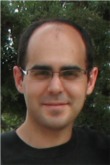
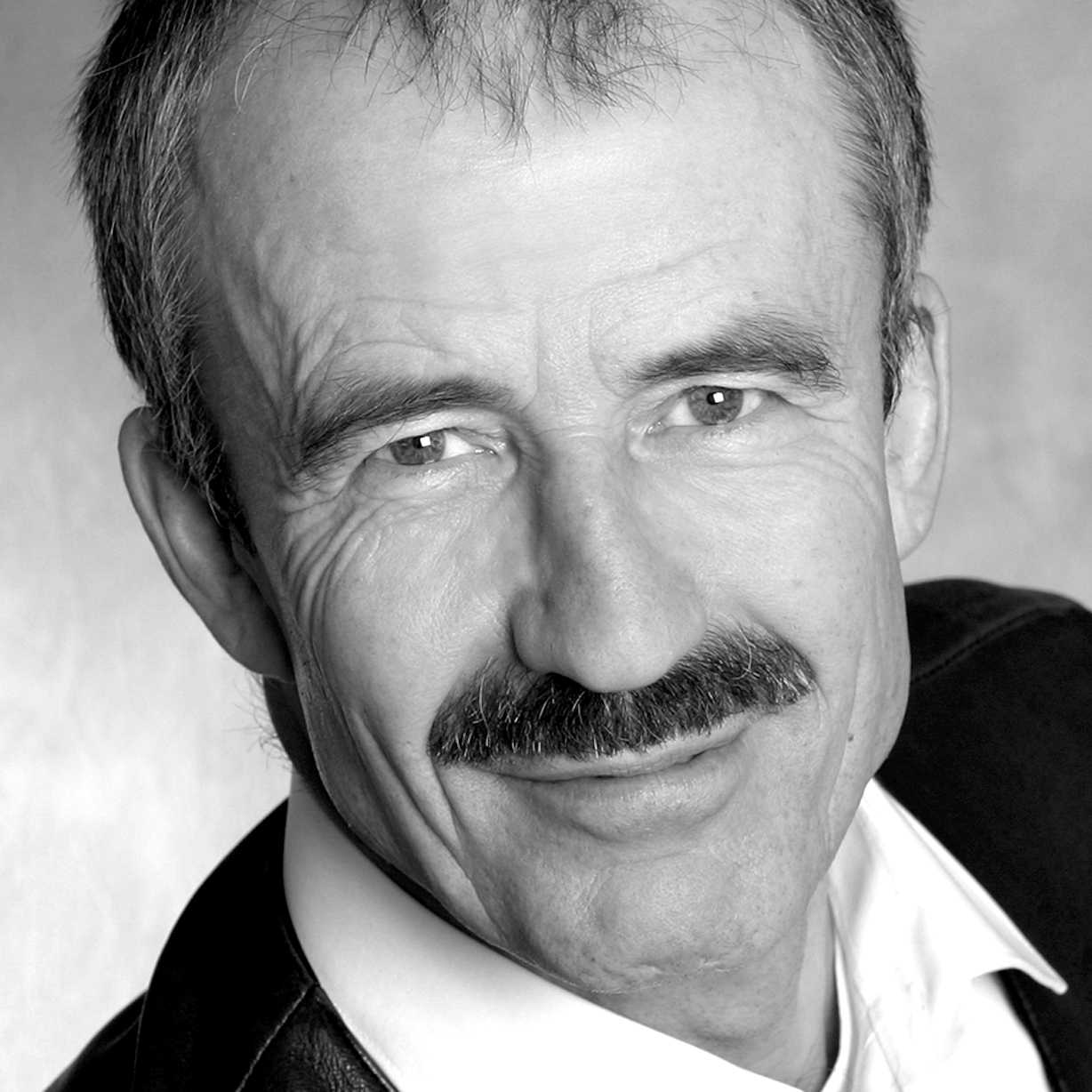
Jose Francisco Morales is a Researcher at IMDEA Software Institute, a position he has held since November 2010 after completing his PhD at the Technical University of Madrid (UPM). Prior to this, he served as a teaching assistant at Universidad Complutense de Madrid starting in 2005. His academic background includes: PhD in Computer Science from the Technical University of Madrid (UPM), Spain His research focuses on efficient logic program execution through abstract interpretation for property inference, highly-optimizing native code translation , and abstract machine specification . Key areas include constraint logic programming, assertion languages, program analysis, compiler optimizations, and multiparadigm language implementation, with emphasis on developing formal abstractions for automated system construction. No scientific awards, student advisees, grants, or laboratory affiliations were documented in the source material.
Saverio Perugini is a Professor of Mathematics and Computer Science at Ave Maria University, leading the computer science program since 2022. Previously, he spent 18 years as a faculty member at the University of Dayton, where he held roles including undergraduate program director. He earned his Ph.D. in Computer Science from Virginia Tech in 2004. His research focuses on functional programming, engineering interactive computing systems, and applying programming language concepts to novel domains like human-computer interaction. Perugini is a Senior Member of the ACM and IEEE Computer Society. He has published extensively, including a textbook Programming Languages: Concepts and Implementation (2023), and co-authored a NSF-funded project (2017–2022) on active learning in computer science education. His work emphasizes practical, hands-on teaching, integrating programming with problem-solving and computational thinking. He has advised numerous students and contributed to curriculum development, including courses on programming languages, operating systems, and artificial intelligence. Perugini’s funded research includes a $299,864 NSF grant for active learning in STEM education. He also leads initiatives like the Ave Maria Computer Science program, emphasizing ethical and humanistic approaches to technology. His research and teaching align with Catholic educational values, fostering intellectual curiosity and moral integrity in students.
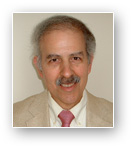
Dr. Bary W. Pollack serves as an Adjunct Professor at Capitol Technology University. Previously, he held roles as Computer Science Program Chair at Sierra Nevada University's Department of Science and Technology for two decades, and taught at City College of San Francisco and San Francisco State University. With over 20 years in Silicon Valley R&D, he specialized in software design and implementation. Education: Ph.D. & M.S. in Computer Science (Stanford University), B.S. in Mathematics (MIT) His research focuses on compilers, programming languages, computer graphics, and entertainment technology. He co-founded General Parametrics Corporation and contributed to software engineering advancements. Publications include Compiler Techniques (1972) and co-authored works on computational linguistics. Awards include Sigma Xi membership (1974). Volunteer activities include co-founding Winds-Across-the Bay youth symphonic band and AP Computer Science exam reading for ETS.
Dr. Bruce Lester is a Professor of Computer Science at Maharishi University of Management (MUM), where he founded the Computer Science Department and served as its Chair for eight years. He holds PhD, MS, and BS degrees from the Massachusetts Institute of Technology (MIT). His research focuses on Parallel Computing and Programming Languages for Multi-Core Processors, with a strong emphasis on compiler optimization and concurrency control. Education: Bachelor of Science, Massachusetts Institute of Technology Master of Science, Massachusetts Institute of Technology Doctor of Philosophy (PhD), Massachusetts Institute of Technology Research Interests: Dr. Lester’s work spans Parallel Computing, Programming Languages, and Multi-Core Processor Optimization. He has developed techniques for lock-free parallel data structures, operator fusion in data-parallel libraries, and compile-time detection of control flow errors in parallel programs. His contributions to the field include foundational research on concurrency debugging and the design of educational tools like Multi-Pascal for teaching parallel programming. Publications Trends: His publications emphasize practical applications of parallel computing, including high-performance algorithms, compiler techniques, and concurrency error detection. Recent work focuses on lock-free systems and data-parallel library optimizations. Awards & Honors: Best Paper Award at the 2011 International Conference of Parallel and Distributed Computing (World Congress on Engineering) Advising & Grants: No formal advisee names are listed in the provided data. His professional experience includes 13 years of teaching and six years as a Senior Software Engineer at Primus Telecommunications, where he developed client/server systems and internet platforms. Labs & Teams: While specific lab affiliations are not detailed, his role as founder of MUM’s Computer Science Department suggests leadership in departmental research initiatives.
Shaun H. Cooper is a College Associate Professor in the Department of Computer Science at New Mexico State University (NMSU). He holds a Ph.D. in Computer Science from NMSU (2000), an M.S. from the University of Texas (1988), and a B.S. from the University of New Mexico (1984). His research focuses on networking, distributed computing, computer security, and ethics. He previously served as Chief Information Officer/Associate Vice President for NMSU’s Information and Communication Technologies division, managing over 100 staff and a $16M budget. Education: Ph.D. Computer Science (NMSU, 2000), M.S. Computer Science (UT Austin, 1988), B.S. Computer Science (UNM, 1984). Professional Roles: 25+ years at NMSU, including leadership in IT policy and infrastructure. Current duties include teaching undergraduate courses, student advising, and departmental mentorship. Dr. Cooper is active in the New Mexico Supercomputing Challenge and officiates high school football. His technical expertise spans Unix systems, visualization technologies, and network security. He has presented widely on topics such as computer ethics, LAN configurations, and distributed systems.
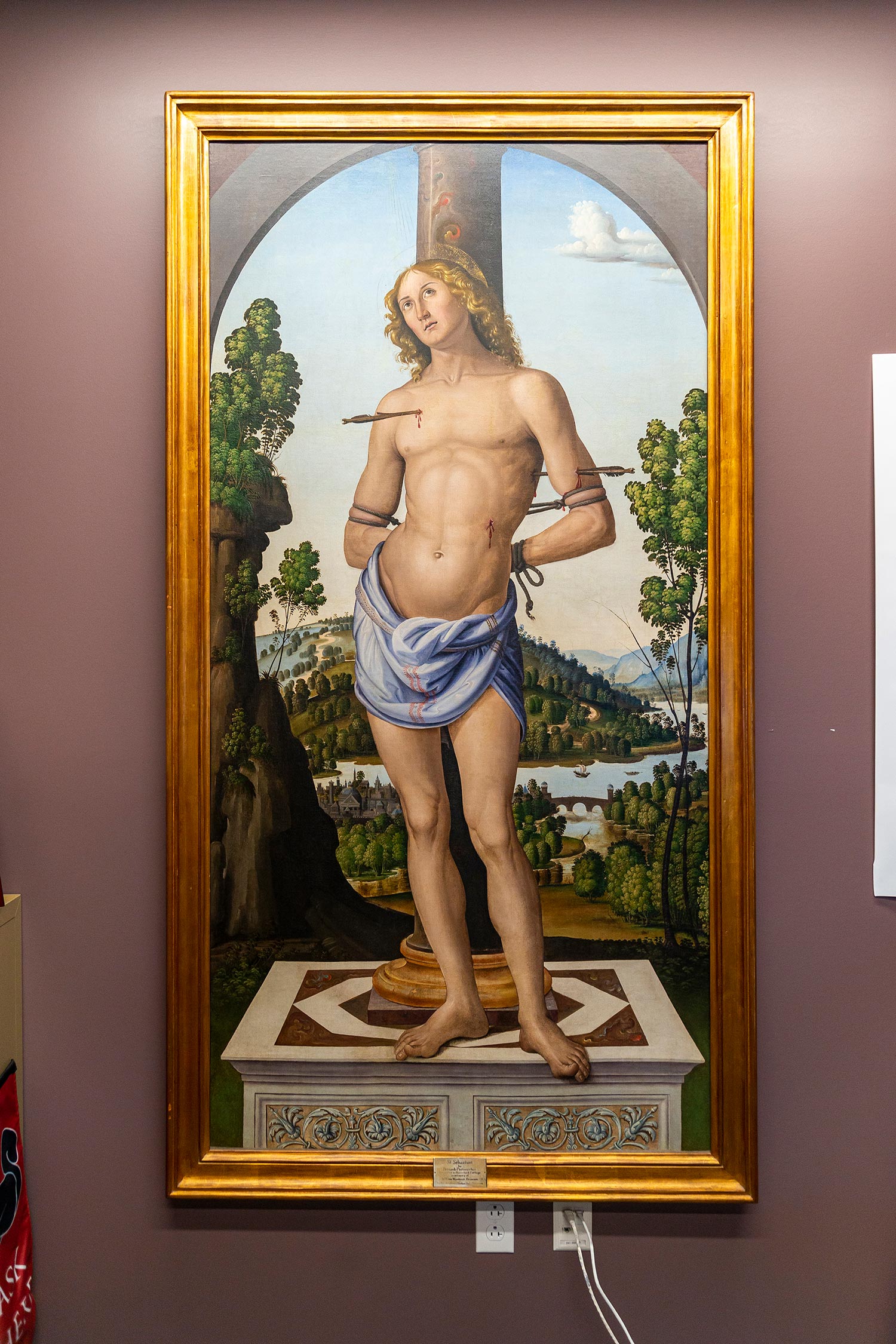
Margaret Schaus serves as the Lead Research and Instruction Librarian at Haverford College, where she oversees academic support for undergraduate research and library operations. She earned a Master’s in Medieval Studies from the University of Toronto and a Master’s in Library and Information Science from UC Berkeley. Her work centers on medieval women’s history and gender studies, exemplified through the Feminae database she founded in 1996, which catalogs over 44,000 records on medieval women and gender topics. Her office features notable artifacts including a Renaissance-era St. Sebastian painting and a 19th-century nursery rhyme pressed glass set gifted by Professor Sue Stuard. Schaus actively mentors students, particularly those conducting senior theses in history, political science, and classics. She emphasizes the importance of adaptability in research, as seen in Meaghan Ryan’s thesis on Venetian female poets and visual culture. Her scholarly contributions include encyclopedic works like Women and Gender in Medieval Europe and articles exploring research practices in literature and languages. She has supervised over 70 students through internships and research assistantships, maintaining the Feminae database with their assistance. Family memorabilia in her office reflects her personal history, including photos of her daughter Amelia (a Ph.D. student at Penn studying classical reception) and son Anselm (a Tokyo-based translator).
Prof. Dr.-Ing. Ivo W. Boblan is a Professor at the Department of Electrical Engineering at Berlin University of Technology. His research focuses on compliant robotics, bionics, human-robot interaction, and actuator systems. He leads the Compliant Robotics Lab (CoRoLab), developing advanced robots like the ZAR5 humanoid muscle robot and the BionicMotionRobot. Boblan has contributed to numerous conferences and serves on editorial and review boards for journals like Actuators and Advanced Robotics. He actively participates in interdisciplinary initiatives, including the Bionics Competence Network (BIOKON), and has organized international conferences such as BIOKON2004. His work emphasizes safe human-robot collaboration and biologically inspired designs, with applications in healthcare, industry, and exoskeleton development. Boblan's academic background includes a PhD in Prozesswissenschaften from TU Berlin (2009), with prior technical reports on evolutionary methods and robotic control systems. He has presented at institutions like the University of Kiel, Volkswagen AG, and the Berlin Senate Administration, advocating for robotics in modern work environments. His research spans pneumatic actuators, compliant mechanisms, and interdisciplinary approaches to robotics ethics and societal impact.
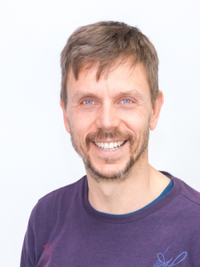
Ulrich Grude is a Professor in the Department of Computer Science and Media at Beuth University of Applied Sciences Berlin. His teaching portfolio includes the following courses taught across multiple semesters (2012-2018): Programming 1 and 2 (Java, C, Ada, C++) Compiler Construction Algorithms and Data Structures Concepts of Programming Languages Programming with Erlang and VPL His research focuses on: Programming language semantics via buoy representation Compiler construction methodologies Algorithm visualization techniques Formal systems like Lambda Calculus and Petri Nets Computer science pedagogy innovations Low-level language implementation details He developed the buoy variable representation model for explaining language peculiarities in Java/C++, documented in technical papers, and created interactive educational tools including floating-point number explorers (GleitBitsFloatApplet) and Java formatting trainers (eTeachMePrintf). Professor Grude supervises Bachelor's and Master's theses in computer science. His course materials include comprehensive lecture notes, programming exercises, exams, and supplementary resources for over 10 distinct courses. He maintains extensive educational repositories covering language-specific implementations (GCC, LCC, Borland C++), floating-point arithmetic, and multilingual programming concepts.
Michael Lam is an Associate Professor in the Department of Computer Science and Interim Assistant Dean of the College of Integrated Science & Engineering (CISE) at James Madison University (JMU). He holds a Ph.D. and M.S. in Computer Science from the University of Maryland (2014 and 2010, respectively), and a B.S. in Computer Science from JMU (2007). His research focuses on high-performance computing, scientific computing, and software engineering, with a particular emphasis on precision computing and algorithm optimization. Dr. Lam's work includes developing tools for mixed-precision analysis, such as HPC-MixPBench, and advancing techniques like ADAPT (Algorithmic Differentiation for Floating-Point Precision Tuning). His contributions span both computational theory and pedagogy, including innovative approaches to online systems education and curriculum design. He has held roles such as Post-doctoral Researcher at the University of Maryland and Graduate Research Intern at Lawrence Livermore National Lab. His research trends emphasize energy-efficient computing paradigms, automated precision tuning, and bridging the gap between theoretical algorithms and practical software implementation. While no awards are explicitly listed, his extensive publication record reflects sustained excellence in high-performance computing and educational innovation. As Interim Assistant Dean of CISE, Lam contributes to interdisciplinary initiatives and program development. His advising and grant activities are reflected in his scholarly work, though specific grant details are not provided here.
Ethem Gürer is an Associate Professor in the Department of Interior Architecture at Istanbul Technical University. He holds a Doctorate in Architectural Design with Computers (Dr.) from the same institution. His research focuses on computational design methodologies, digital fabrication, virtual reality applications in architecture, and pedagogical innovations in design education. Education: PhD in Architectural Design with Computers (2007-2014) Master's in Architectural Design with Computers (2004-2007) Bachelor's in Architecture (2000-2004) Research Interests: Algorithmic design and generative systems Extended reality applications in AEC disciplines Digital tools for architectural pedagogy Material science integration in design processes Quantitative analysis of spatial perception Recent work trends show emphasis on immersive VR environments for education, computational pattern generation, and rethinking traditional design pedagogy through digital fabrication. His 2022-2025 publications particularly highlight decision support systems for ER SDKs and hermeneutical frameworks for design evaluation. Administrative roles include Department Deputy Chairman (since 2018) and membership in design technology committees. He has led architectural design studios emphasizing complex systems thinking and interdisciplinary approaches. Labs/Teams: Active member of İTÜ Design Technologies and Informatics Research Group since 2014, focusing on digital design innovation and educational tool development.
Guillem Feixas Viaplana is a Full Professor (Catedràtic) at the Universitat de Barcelona (UB), affiliated with the Departament de Psicologia Clínica i Psicobiologia and the Facultat de Psicologia. He specializes in Personal Construct Theory, clinical psychology, and psychotherapy, particularly focusing on cognitive conflicts and their role in mental health. His work integrates constructivist methodologies like the Repertory Grid Technique (RGT) to explore identity and personal meaning. He leads research groups such as 'Intervenció en Psicologia Clínica i de la Salut' and co-created the EYME-VR platform for psychological assessment using virtual reality. Education: Licenciatura en Psicología, Universitat de Barcelona (1984) Doctorat en Psicologia Clínica, UB (1988) Postdoctoral Research Fellowship at the University of Memphis (1988–1989) Research Interests: Feixas' work centers on interpersonal construing, cognitive conflicts in depression, and the application of constructivist methods in therapy. He has pioneered the use of RGT to identify dilemmas blocking personal development and has developed tools like RECORD/GRIDCOR for analyzing construct systems. Awards & Recognition: Member of the Institut d'Estudis Catalans (2017) Member of the Institut de Neurociències (UB, 2011) Recipient of 6 research sexenis and 7 teaching quinquenals Young Investigator Award (Institute for Personal Construct Psychology, 1987) Grants & Projects: Active in multidisciplinary projects such as the Dilema Project, VR-PSY innovation, and studies on depression treatment efficacy. His work includes EU-funded initiatives like Oncommunities (online cancer support). Labs/Teams: Directs the 'Intervenció en Psicologia Clínica i de la Salut' research group and co-founded EYME-VR for immersive psychological interventions. Involved in teaching master’s programs in Cognitive Social Therapy and Eating Disorder Intervention.
Sebastian Rasinger serves as the Head of the School of Humanities and Social Sciences and an Associate Professor of Applied Linguistics at Anglia Ruskin University (ARU). His research focuses on multilingualism, migration, cultural identities, and intercultural communication. He holds a DPhil in Linguistics and a PGCert in Social Research Methods from the University of Sussex. Dr. Rasinger has co-edited major texts including the Cambridge Handbook of Intercultural Communication (2020) and authored Quantitative Research in Linguistics (2013), translated into Spanish in 2019. He leads strategic initiatives in learning, teaching, research, and student employability at ARU. His academic roles include Deputy Chair of the 2022 Linguistics Subject Benchmark Statement panel (QAA) and Vice Chair of the Board of Governors at Long Road Sixth Form College in Cambridge. His work bridges applied linguistics with societal issues, emphasizing language policy, migration narratives, and educational equity. He actively supervises research in bilingual identities, migration linguistics, and minority group representation. Notable publications span linguistic landscapes, migration discourse, and quantitative methodologies. His Cambridge Introduction to Intercultural Communication (2022) offers foundational insights into cross-cultural dynamics. Rasinger’s research often intersects with public discourse, analyzing media representation of minority groups and policy impacts on language vitality.
Dr. Ilias S. Kotsireas is a Professor in the Department of Computer Science and Physics at Wilfrid Laurier University (WLU), Canada. He serves as Director of the CARGO (Computer Algebra Research Group) lab and Editor-in-Chief of the Journal of Algebraic Combinatorics . His research focuses on computational mathematics, combinatorics, optimization algorithms, and symbolic computation. Kotsireas is a Fellow of the Institute of Combinatorics and its Applications (ICA, 2004) and has held leadership roles in organizations like ACM SIGSAM and the ACA Working Group. He maintains adjunct appointments at the Athena Research Center (Greece) and the University of Waterloo, and is a Principal Scientist at ORCCA (Ontario Research Centre for Computer Algebra). His work integrates computer algebra systems with SAT solvers to address complex combinatorial problems, such as Hadamard matrices and Golay pairs. Recent research explores neurosymbolic frameworks, blockchain economics, and machine learning applications in algebraic geometry. Education: Advanced degrees in Mathematics/Computer Science (not explicitly listed, inferred from roles). Research Interests: Computer algebra systems, combinatorial search, algorithm portfolios, cryptographic protocols, and computational neuroscience applications. His contributions span theoretical advancements (e.g., Legendre pair algorithms) and practical tools (e.g., Maple-based software). Kotsireas collaborates internationally, organizing conferences like ACA and publishing in venues such as Journal of Symbolic Computation and SpringerPlus . His lab, CARGO, emphasizes supercomputing and interdisciplinary projects. Awards: Fellow of the Institute of Combinatorics and its Applications (ICA), 2004 Labs & Teams: Leads the CARGO lab and affiliated with ORCCA, focusing on computational algebra and high-performance computing.
Dr. Laura Cleaver is a Senior Lecturer in Manuscript Studies at the Institute of English Studies, University of London. She holds a PhD from The Courtauld Institute of Art (2008) and specializes in the art and architecture of the High Middle Ages and its modern reception. Her research focuses on medieval manuscripts' production, circulation, and valuation, particularly in early 20th-century Europe and North America. She leads the ERC-funded CULTIVATE MSS project (2019–2024), examining the manuscript trade's impact on cultural identity formations. Her scholarly work spans edited volumes on manuscript economics, cultural diplomacy, and transatlantic trade dynamics. She collaborates with institutions like the Schoenberg Database of Manuscripts and York Medieval Press, contributing to series like Writing History in the Middle Ages . Her supervision includes studies on clubs/societies' roles in manuscript collecting and women's contributions to the book trade. Research interests include medieval historiography, manuscript diagrams, and the intersection of art, politics, and religion in manuscripts. She has held affiliations with the Ordered Universe research network and New Interpretations on the Angevin World project. Her work bridges material culture analysis with socio-economic histories of cultural heritage formation.
Dr. Ross Paterson is a Lecturer at City St George's, University of London, where he has been employed since 1998. He is a member of the Research Centre for Machine Learning and specializes in programming languages and functional programming. His research interests focus on functional programming techniques, embedded domain-specific languages, program transformations, and persistent data structures. His work bridges theoretical computer science with practical applications in programming language design and implementation. Dr. Paterson's publication record spans over three decades, with significant contributions to functional programming, type theory, and data structures. His most influential work includes the development of arrows as a general interface to computation, applicative functors, and finger trees as a general-purpose data structure. His research shows consistent focus on theoretical foundations with practical implementations in functional programming languages. Throughout his career, Dr. Paterson has maintained strong academic connections, having previously worked at the University of North London (1996-1998), Imperial College London (1990-1995), and the University of Queensland (1988-1989).