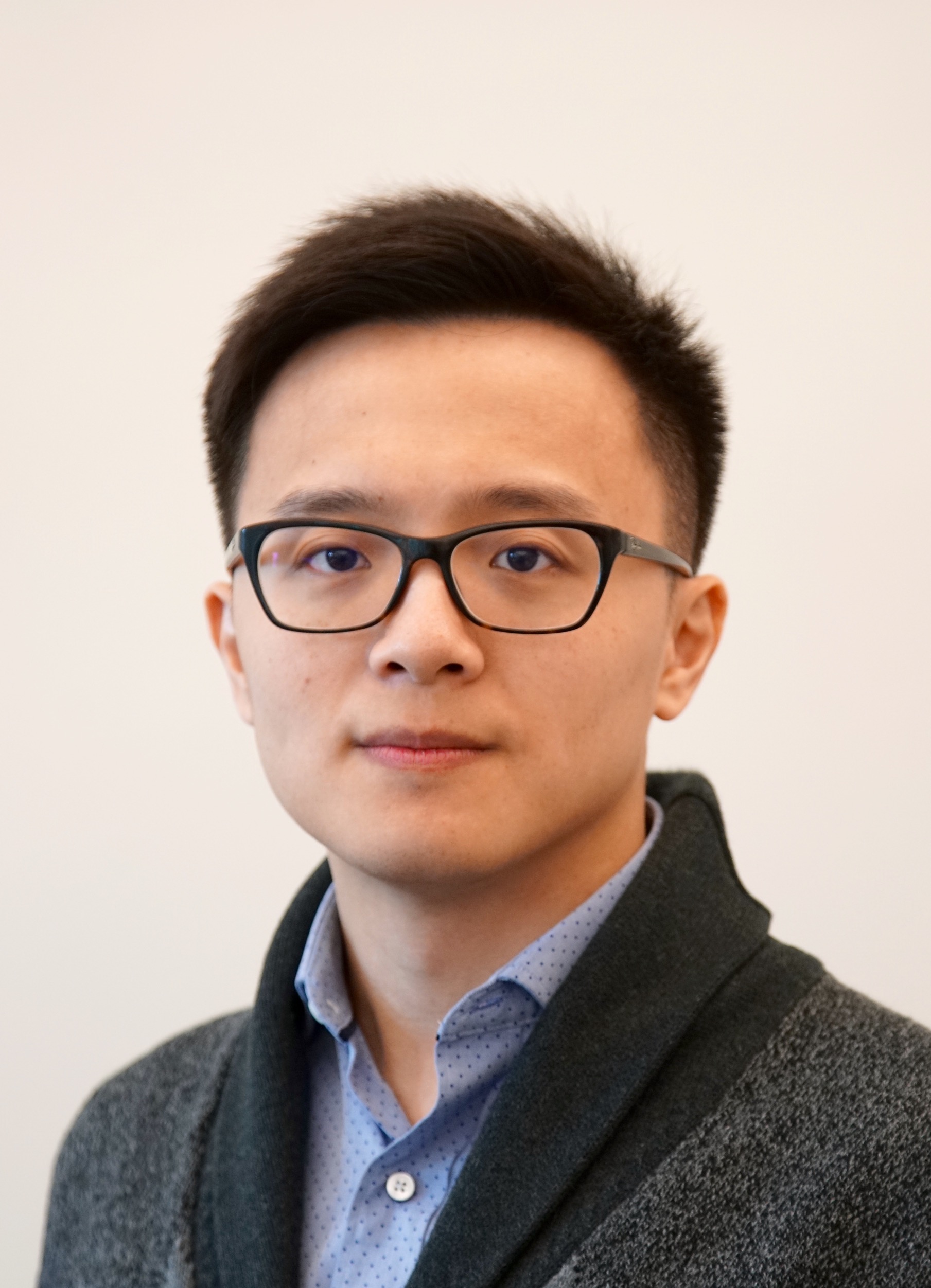
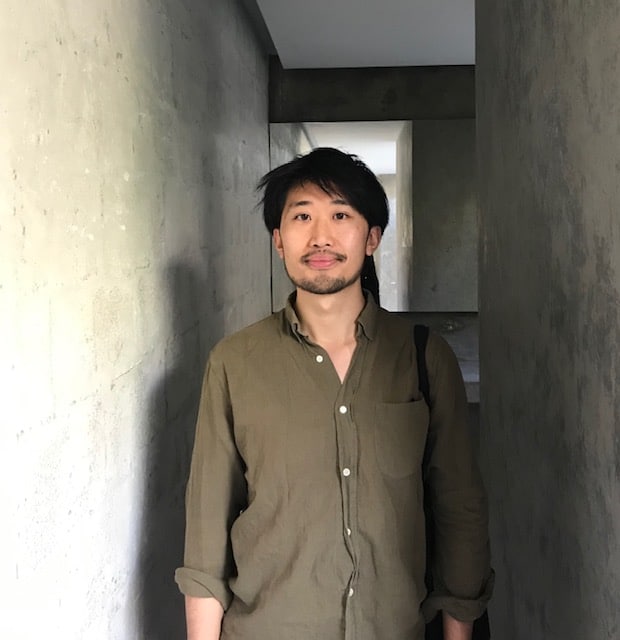
Benjamin J. Delaware is an Assistant Professor of Computer Science at Purdue University. His research focuses on programming languages, formal verification, and tools for ensuring software correctness using mechanized theorem provers. He holds a Ph.D. from The University of Texas at Austin (2013), an MSc from Washington University in St. Louis (2007), and a B.S. from Truman State University (2005). His work emphasizes practical formal methods, including static enforcement of privacy policies, compiler design for oblivious computation, and automated verification techniques. Key contributions include tools like Taypsi, KestRel, and HACCLE. His research bridges theory and practice, addressing challenges in software security, correctness, and efficiency. Publications span top venues like POPL, PLDI, and OOPSLA, reflecting a strong focus on foundational programming language concepts. Collaborations with researchers like Suresh Jagannathan and Qianchuan Ye drive advancements in automated reasoning and secure computation.
Professor El Mustapha Lahlali is a distinguished academic at the School of Languages, Cultures and Societies, University of Leeds, where he holds the position of Professor of Applied Linguistics and Media. His research and teaching focus on Arabic media discourse, critical discourse analysis, translation, ideology, and pedagogy. Education: BA in Applied Linguistics MA in Applied Linguistics PhD in Critical Discourse Analysis and Classroom Discourse His research interests span Arab media and society, discourse analysis in educational and political contexts, appraisal theory, translation and ideology, and teaching Arabic as a foreign language. He has published extensively on media discourse, political rhetoric, and translation practices in Arabic contexts, contributing significantly to the understanding of linguistic strategies in media and political communication. His recent publications reflect a strong focus on discourse in conflict, media framing, translation challenges, and pedagogical development. These works collectively emphasize critical analysis of Arabic media, political transitions, and intercultural communication, revealing trends in ideological representation and linguistic power dynamics. Scientific Awards: No specific awards listed in the text. Professor Lahlali has supervised 27 PhD students to completion and currently mentors several more on topics including media translation, ideology, discourse analysis, and pedagogy. He has served as internal and external examiner for over 100 PhD theses across the UK and internationally. He has secured and contributed to numerous research grants in Arabic, linguistics, and Middle Eastern studies. His leadership extends to organizing over 45 academic events, including conferences and workshops. He is actively involved in research groups and welcomes PhD applicants in areas related to Arabic media, discourse analysis, and translation. He is a key figure in professional associations such as BATA (Founder and President), BRISMES, UCML, and APETAU.
Craig L. Just holds the Donald E. Bently Professorship in Engineering and serves as a Professor in the Department of Civil and Environmental Engineering at the University of Iowa's College of Engineering. He also works as a Faculty Research Engineer at IIHR—Hydroscience and Engineering. With a PhD in Environmental Engineering and Science (2001) and an MA in Chemistry (1994), both from the University of Iowa and University of Northern Iowa respectively, his career spans over two decades of academic and practical contributions. Education: PhD, Environmental Engineering and Science, University of Iowa (2001) MA, Chemistry, University of Northern Iowa (1994) BS, Chemistry, University of Northern Iowa (1992) Dr. Just's research focuses on water quality monitoring through sensor technology, freshwater mussel biosensing , pharmaceutical contaminant removal , and PCB exposure analysis from dredging operations. His work bridges environmental engineering with ecological health and sustainable systems. Recent publications highlight trends in anaerobic digestion optimization , PCB emission characterization , and machine learning applications for biogas prediction. He has extensively studied constructed wetlands , nitrogen cycling , and flood risk mitigation in agricultural and urban contexts. As director of the Iowa Wastewater and Waste to Energy Research Program, he leads initiatives connecting bioremediation , smart infrastructure , and community engagement . His projects span from hydrological modeling in Iowa to international water programs in Honduras.
Dr. Brigitta Mittmann is a Senior Lecturer at the Department of English and American Studies, Friedrich-Alexander University Erlangen-Nuremberg (FAU), holding the Alexander von Humboldt Professorship for Language and Cognition. Her work focuses on lexicography, phraseology, and comparative analysis of spoken English varieties.
Matthieu Sozeau is a prominent researcher at Inria in the Gallinette team in Nantes, France, and a key contributor and coordinator of the Coq/Rocq proof assistant project. His work bridges theoretical computer science and practical software development, focusing on creating reliable formal verification tools. His research interests span Type Theory, Proof Assistants, Functional Programming, and Unification. He has made significant contributions to the development of Coq (recently renamed to Rocq Prover), particularly through the MetaCoq project which aims to verify Coq's kernel within Coq itself, the Equations plugin for dependent pattern matching, and CertiCoq, a verified compiler from Coq to assembly. His work enables stronger guarantees about formalized mathematics and verified software. Sozeau's publications reveal a consistent focus on foundational aspects of proof assistants. His recent work includes verified type checking ('Coq Coq Correct!'), verified extraction from Coq to OCaml, and sort polymorphism for proof assistants. These contributions advance both theoretical understanding and practical implementation of dependently-typed programming languages. Distinguished paper award for Verified Compilation from Coq to OCaml at PLDI'24 As an academic mentor, Sozeau has supervised PhD students including Théo Winterhalter and Antoine Allioux. He regularly teaches courses on proof assistants, notably at MPRI (Master Parisien de Recherche en Informatique), and actively participates in the academic community through program committees, invited talks, and workshops. His work has significantly influenced both the theoretical foundations and practical applications of interactive theorem proving.
Jan Buts is an Associate Professor at the Sustainable Health Unit within the Faculty of Medicine at the University of Oslo, specializing in the intersection of translation theory, medical humanities, and corpus linguistics with a focus on sustainable health and development discourses. His academic background includes: Linguistics and Literature studies at KU Leuven (Belgium) PhD in Translation and Intercultural Studies from the University of Manchester (UK) Postdoctoral research at Trinity College Dublin (Ireland) Assistant Professor position at Boğaziçi University (Turkey) Buts' research centers on corpus-assisted discourse analysis applied to translation theory, medical humanities, and sustainable development. He actively develops the Sustainability and Health Corpus to analyze how language shapes public health narratives, gender discourses in development aid, and conceptual frameworks around sustainability. His work bridges linguistic analysis with critical perspectives on social justice and health equity. Analysis of his recent publications reveals a strong trajectory toward integrating corpus linguistics with medical humanities and sustainable development goals. Key trends include examining gendered vulnerabilities in policy discourse, translation's role in knowledge dissemination for sustainability, and digital media's impact on health communication – all characterized by methodological innovation in corpus construction and conceptual analysis. His scientific recognition includes: Runner-up for the Martha Cheung Award (2023) Buts serves on the executive council of IATIS (International Association for Translation and Intercultural Studies) and leads multiple research initiatives including the SHE Corpus project. His grant activities focus on interdisciplinary collaborations between translation studies and medical humanities, particularly through projects like KNOWIT (Knowledge in Translation) and MEDRA (Medicalisation of Democratic Rights in Abortion debates). He directs the Sustainable Health Unit, fostering cross-disciplinary teams that combine linguists, medical researchers, and public health experts to advance data-driven critical analysis of health and sustainability discourses through innovative corpus methodologies.
Professor Tony McEnery is a Distinguished Professor of English Language and Linguistics at Lancaster University, where he has held various senior roles, including Dean of the Faculty of Arts and Social Sciences (2008–2014) and Head of the Department of Linguistics and English Language (2000–2005). His research focuses on corpus linguistics, applied linguistics, and sociolinguistics, with notable contributions to corpus-based analyses of historical medical discourse, media representation of Islam, and swearing in English. He has led major research projects, including the ESRC Centre for Corpus Approaches to Social Science (CASS) and the Trinity Lancaster Corpus. McEnery has secured over £10 million in research funding and holds visiting professorships at institutions worldwide, including Zhejiang University of Media and Communications and Shanghai International Studies University. He is a Fellow of the Academy of Social Sciences, Trinity College London, and the Royal Society for the Arts. Education: No explicit details provided, but his career trajectory implies advanced degrees in linguistics. Research Interests: Corpus linguistics applications in theoretical and applied linguistics, historical language analysis, and language as a socially situated phenomenon. McEnery’s work extends to interdisciplinary collaborations, including projects with the Environment Agency and the Home Office. His teaching includes summer schools in corpus linguistics and a Futurelearn MOOC, reaching tens of thousands globally. He advises on research funding for international bodies like the Irish Research Council and the Qatar National Research Foundation. Grants and Awards: Queen’s Anniversary Prize (2015), Changjiang Chair (2021), and multiple fellowships. Current grants include the Lancaster-Northern Arizona corpus and the Trinity Lancaster Corpus projects. Advising and Labs: Supervises postgraduate students in linguistics and collaborates with teams like the ESRC CASS Centre and UCREL (University Centre for Computer Corpus Research on Language).
Humphrey Southall is Professor of Historical Geography at the University of Portsmouth, affiliated with the Faculty of Science & Health and the School of the Environment and Life Sciences. He has been a key figure in advancing digital historical geography through large-scale projects such as A Vision of Britain through Time and the Great Britain Historical GIS . University: University of Portsmouth Faculty: Faculty of Science & Health Department: School of the Environment and Life Sciences Academic Rank: Professor Education: Bachelor's Degree, University of Cambridge (1976) Special Student, Harvard University (1976–1977) PhD, University of Cambridge (awarded 1984) Humphrey Southall's research centers on historical geography, with a focus on geospatial data modeling, gazetteers, and historical GIS. His work explores the long-term impacts of locality on health inequalities, the North-South divide in Britain, and the political roles of travellers. He has pioneered methods for disambiguating historical place names and constructing digital gazetteers from old maps and census data. His interdisciplinary approach bridges geography, history, and data science, contributing to digital humanities and sustainable development goals related to health and inequality. His recent publications reveal a strong trend toward integrating historical data with modern GIS and ontologies. Themes include electoral analysis (e.g., Reform UK), climate-land use interactions, and the digitization of historical statistics. His work emphasizes data accessibility, public engagement, and the application of historical insights to contemporary policy challenges. Scientific Awards and Recognition: No specific awards listed in the provided text. Humphrey Southall has secured major research grants from the ESRC, AHRC, JISC, and the European Commission. He leads the DDME: Data Discovery Made Easy project, applying machine learning to social science databases. He has supervised PhD students and actively collaborates with researchers across disciplines. His public engagement includes media commentary on homelessness, air pollution, and elections via The Conversation and national press. Labs and Research Teams: Lead Principal Investigator, A Vision of Britain through Time (VoB) Lead, Great Britain Historical GIS (GBHGIS) Team Member, PastPlace and AOU Resources as a Pelagios GIF Resource Collaborator with Patrick Aucott, Chris Thomas, and others on biodiversity and health projects
Geoffroy Couteau is a CNRS research scientist at IRIF (Institut de Recherche en Informatique Fondamentale), Université Paris Cité, where he conducts research in theoretical and applied cryptography. He obtained his PhD from École Normale Supérieure de Paris in 2017 under the supervision of David Pointcheval and Hoeteck Wee, followed by a postdoctoral position at Karlsruhe Institute of Technology (KIT) from 2017 to 2019. His primary research interests include secure multiparty computation, zero-knowledge proofs, and the theoretical foundations of cryptography, with a particular emphasis on pseudorandom correlation generators and efficiency improvements in cryptographic protocols. He has made significant contributions to fine-grained cryptography, non-interactive zero-knowledge proofs, and post-quantum secure computation. The recent publications reflect a strong trend toward foundational advances in secure computation, with increasing focus on efficiency, practicality, and connections to complexity theory and learning theory. His work often bridges theoretical hardness assumptions with practical protocol design. ERC Starting Grant (2023) for project OBELiSC (Overcoming Barriers and Efficiency Limitations in Secure Computation) Geoffroy Couteau has advised numerous PhD and master’s students, including Dung Bui, Clément Ducros, Eliana Carozza, and Ulysse Léchine. He has also hosted many visiting students and postdocs, fostering a vibrant research group. He has served on the program committees of major conferences such as EUROCRYPT, CRYPTO, TCC, and PKC. He is currently leading research in cryptography at IRIF and is involved in postdoctoral hiring for projects in advanced cryptographic primitives. He maintains a research blog and resource collection for students, including LaTeX templates, a probability cheat sheet, and curated answers to common cryptography questions.
Dr. Min Sun is an Associate Professor and Director of the Undergraduate Program in the Department of Civil Engineering at the University of Victoria (UVic). He holds a PhD from the University of Toronto. His research focuses on structural engineering and steel structures, particularly in the areas of steel connections, seismic resilience, and numerical modeling. Dr. Sun has extensive academic and professional experience, including roles as Assistant Professor at UVic (2016–2022), Lecturer at the University of Toronto, and structural design roles in industry. His research interests emphasize the performance of steel structures under extreme loads, including earthquake engineering and material behavior. Recent work includes studies on stress concentration factors in steel connections, thermal integrity of piles, and wood-frame building reliability under lateral loads. He actively contributes to professional organizations, such as serving as Vice President (Western Region) for the Canadian Society for Civil Engineering (2018–2020). Dr. Sun teaches courses including Advanced Structural Analysis (CIVE 421) and Solid Mechanics (CIVE 220) at UVic. He currently supervises graduate students in structural steel design and construction. His publications span experimental and numerical analyses, with a focus on improving design standards for steel and wood structures. Labs/Teams: Affiliated with UVic's Engineering and Computer Science faculty and the IESVIC (Institute for Energy Systems and Sustainability at UVic), though specific lab names are not explicitly stated in the text.
Andreas Abel is a Senior Lecturer in the Division of Computing Science at the Department of Computer Science and Engineering, Chalmers University of Technology and the University of Gothenburg. He has previously served as an Assistant Professor at Ludwig-Maximilians-Universität (LMU) Munich and has been a visiting researcher at INRIA in Paris. His primary affiliations are with Chalmers and the University of Gothenburg, where he conducts research and teaches in programming languages and type theory. Chalmers University of Technology, Department of Computer Science and Engineering, Senior Lecturer University of Gothenburg, Division of Computing Science LMU Munich, Assistant Professor (former) INRIA Paris, Visiting Researcher Abel’s research lies at the intersection of type theory, functional programming, and formal verification. He is particularly known for his work on dependent types, normalization by evaluation, and the development of the Agda proof assistant. His interests include constructive logic, logical frameworks, modal and linear typing, program verification, and compiler construction. He leads the Modal Dependent Type Theory project funded by the Swedish Research Council (Vetenskapsrådet) and has contributed to several other major research initiatives in programming language theory. His recent publications reflect a strong focus on foundational aspects of type systems, including cubical type theory, decidability of conversion, and formalization of algebraic completeness. These works appear in top-tier venues such as ICFP, LICS, POPL, and TYPES, showcasing both theoretical depth and practical implementation in Agda. Distinguished Paper Award, ICFP 2019 Editor, Theoretical Pearls column, Journal of Functional Programming Member, IFIP WG 1.3 on Foundations of System Specification Abel actively supervises students and contributes to the research community through program committee memberships for major conferences including LICS, ICFP, and CPP. He is a senior developer of Agda and the maintainer of the BNFC (Backus-Naur Form Compiler) tool. His work bridges theoretical computer science with practical software development for formal methods. He is involved in several research groups and projects, including the Programming Logic Group at Chalmers and the international EUTYPES network. His role as principal investigator and core contributor in multiple funded projects highlights his leadership in the field of programming language foundations.
Haiyang Ai is an Associate Professor in the Literacy and Second Language Studies program at the University of Cincinnati's School of Education. His research applies corpus linguistics and natural language processing to investigate second language acquisition, writing complexity, and bilingual language processing. His educational background includes a Ph.D. in Applied Linguistics from The Pennsylvania State University (2015), an M.A. in Linguistics & Applied Linguistics from the University of Chinese Academy of Sciences (2006), and a B.A. in English from Shaanxi Normal University (2003). Dr. Ai's research spans corpus linguistics, natural language processing, second language acquisition, and computer-assisted language learning. He specializes in compiling and analyzing native and learner corpora to develop intelligent language learning systems and investigate lexical/syntactic complexity in L2 writing. His methodological approach integrates computational tools with theoretical linguistics to address practical language teaching challenges. His recent publications (2019-2023) demonstrate consistent focus on lexical bundles in professional communication, automating complexity measurement in Chinese, speech perception mechanisms in bilinguals, and grammatical puzzles in English learning. These works bridge corpus-based analysis with psycholinguistic experimentation across diverse subfields including morphosyntax, pragmatic competence, and cognitive processing in L2 acquisition. Dr. Ai has secured multiple University of Cincinnati grants including three CECH Faculty Development Grants ($2500 in 2017-2018 for verb-noun collocation research, $2000 in 2016-2017 for corrective feedback tools) and the NCFDD Faculty Success Program ($3250 in 2017), all supporting his development of computational language learning resources.
Yoon Sun Yang is an Associate Professor at Boston University in the Department of Korean & Comparative Literature and affiliated with Women’s, Gender & Sexuality Studies. She holds a PhD from the University of Chicago and has taught courses on Korean literature, comparative studies, and gender in East Asian cinema. Her research focuses on colonial Korean literature, transpacific cultural exchanges, and intersections of medicine/gender with literature. Her major publications include From Domestic Women to Sensitive Young Men (2017), which won the James B. Palais Book Prize, and the edited Routledge Handbook of Modern Korean Literature (2020). Current projects involve translating early colonial Korean texts and studying transpacific migrant literature. Her work has been supported by NEH and Suzy Newhouse Center fellowships. Teaching focuses include Korean literature surveys, comparative East Asian works, and gender-focused film studies.
Hakan Karateke is the Kanuni Süleyman Professor for Ottoman and Modern Turkish Studies at the University of Chicago, affiliated with the Department of Near Eastern Languages and Civilizations. He has taught at UChicago since 2009 and serves as Admissions Chair. His research focuses on Ottoman cultural history, philology, and the evolution of Turkish language and historiography. Ph.D., University of Bamberg (1998) His methodological expertise bridges philology and historical analysis, emphasizing textual interpretation and contextual reconstruction. He is currently working on a monograph about 19th-century Ottoman historiography and a multi-year project tracing the cultural history of the Ottoman Turkish language. Recent publications include analyses of Evliya Çelebi’s travel account construction, Ottoman anti-Judaism discourse, and protocol evolution. He co-edits two major academic series: 'Ottoman and Turkish Studies' (Academic Studies Press) and 'The Ottoman Empire and its Heritage' (Brill). His courses cover Ottoman cultural history, language studies, and Near Eastern empires. Research themes span: Ottoman historiography transformation Language perception shifts Inter-ethnic relations Manuscript analysis Political rhetoric Ceremonial studies
Kenneth Yu is an Assistant Professor in the Department of Classics at the University of Toronto, with additional affiliation to the Department for the Study of Religion. His research intersects Imperial Greek literature, ancient religious frameworks, and classical scholarship methodologies. University of Toronto (St. George Campus) Department of Classics & Department for the Study of Religion Academic rank: Assistant Professor Yu's scholarly focus spans three key areas: Analysis of Greek religious epistemology and its disciplinary history Commentary practices in antiquity across philosophical and literary texts Evolution of aetiological reasoning from Homeric hymns to Imperial ethnography His recent publications and projects include: Problems in Greek Religion: Constructing the Gods between Thauma and Philology (monograph) Co-edited volume The Oxford Handbook of Global Commentary (2020-25 SSHRC-funded) Titles in Ancient Greek Literature: Forms, Practices, and Theories (2022-25 SSHRC-funded) Yu has held distinguished fellowships at: Collège de France Hardt Foundation (Switzerland) Institute of Classical Studies (University of Leuven) Center for Hellenic Studies (2022-23) His academic credentials include: AB & PhD in Classics, University of Chicago