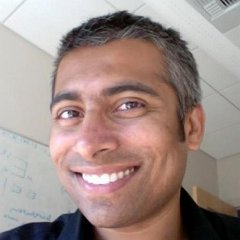
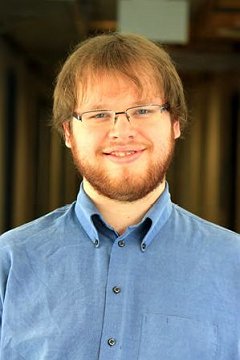
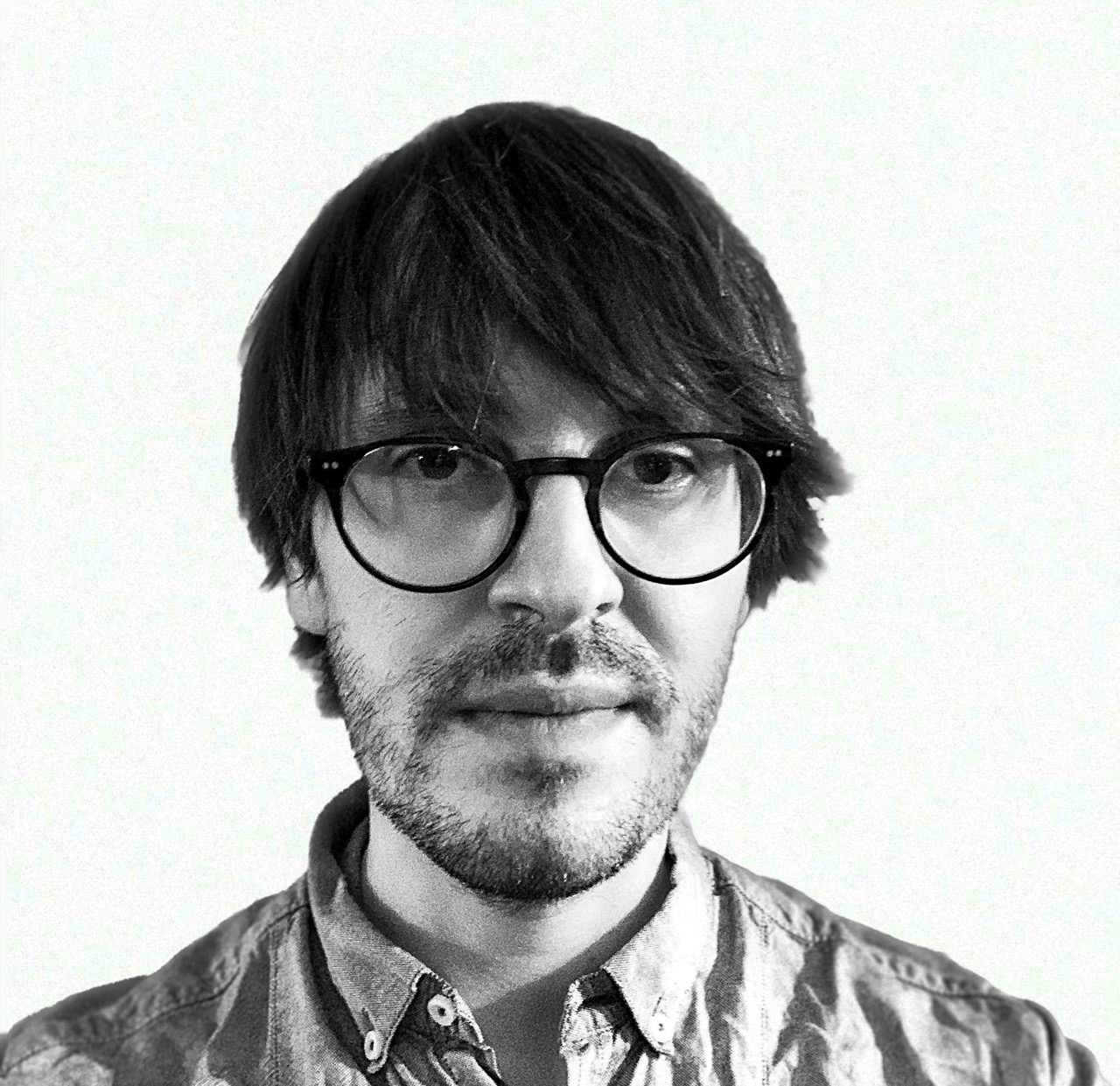
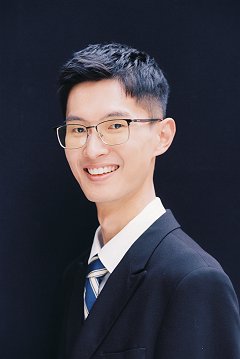
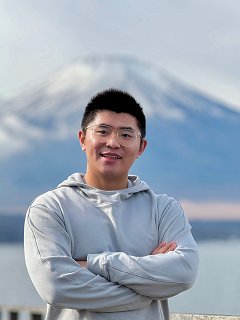
Ranjit Jhala is a Professor of Computer Science Engineering in the Jacobs School of Engineering at the University of California, San Diego. His research focuses on building reliable computer systems through programming languages and software engineering techniques. His primary research interests include Programming Languages, Formal Verification, and Software Engineering. He draws from and contributes to areas such as Type Systems, Model Checking, Program Analysis, and Automated Deduction, bridging theoretical foundations with practical implementations for real-world software development. Prof. Jhala's publication record shows a consistent trajectory in refinement type systems, evolving from Liquid Haskell to Flux for Rust, while also exploring neurosymbolic approaches to error repair and type error diagnosis. His work demonstrates a commitment to making formal verification techniques accessible to practitioners. He leads the Programming Systems Group at UCSD, mentoring graduate students and collaborating with researchers across the programming languages community. His service includes General Chair roles for POPL 2018 and PLDI 2022, reflecting his leadership position in the field. Prof. Jhala is also known for his mentoring activities, including talks on academic presentation skills and participation in ICFP's mentoring programs for students and early-career researchers.
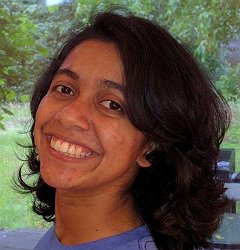
Chandrakana Nandi is the Director of US R&D at Certora and an affiliate assistant professor in the Department of Computer Science & Engineering at the University of Washington's College of Engineering. She completed her PhD at the University of Washington working with Zachary Tatlock and Dan Grossman in the PLSE research group. Her research focuses on building tools for scaling automated formal verification to real-world programs, particularly for DeFi applications. She works extensively with equality saturation techniques (egg project) and has made significant contributions to computational fabrication through projects like Carpentry Compiler, Szalinski, and LambdaCAD. Her work bridges programming languages, compilers, and digital fabrication, creating novel tools that transform how we design and manufacture physical objects. Nandi's publication record shows a strong trajectory in programming language techniques applied to verification and fabrication. Her work on equality saturation has become foundational in the field, with the egg library enabling state-of-the-art results in compiler optimization and program synthesis. Recent work has expanded into formal verification of smart contracts, demonstrating the versatility of her research approach across different domains. Distinguished Paper Award at OOPSLA 2021 Sigplan Research Highlight for POPL 2021 As Director of US R&D at Certora, she leads research efforts on verification tools for languages like WASM and techniques to help users write formal specifications more easily using mutation testing. She has served in numerous organizational roles for major programming languages conferences including as Workshops Co-Chair for ICFP 2025 and Committee Member for PLDI Review Committee. Nandi has established herself as a leader in the intersection of programming languages and computational fabrication, with her work on equality saturation becoming particularly influential across multiple subfields of programming languages research.
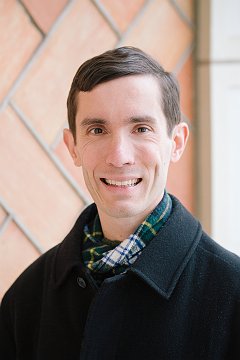
Bryan Parno is the Kavčić-Moura Professor of Electrical & Computer Engineering and Computer Science at Carnegie Mellon University, where he leads the Secure Foundations Lab within CyLab, CMU's Security & Privacy Institute. His research combines theory and practice to provide formal, rigorous security guarantees about concrete systems, with emphasis on creating solid foundations for practical solutions. His research spans secure systems , formal software verification , applied cryptography , data privacy , and usable security . Current work focuses on protocols for verifiable computation and zero-knowledge proofs, building practical formally verified secure systems, and developing next-generation application models. His lab maintains a strong commitment to reproducibility, open-sourcing code under permissive licenses, and avoiding patenting results to maximize public benefit. His recent publications demonstrate a clear trend toward practical verification of real-world systems, particularly through the Verus project for verifying Rust code, Everest for building verified HTTPS stacks, and Ironclad for provably secure systems. These works bridge the gap between theoretical security guarantees and practical implementation, with applications ranging from blockchain protocols to verified cryptographic libraries deployed in the Linux kernel. His scientific achievements include multiple Distinguished Paper/Artifact Awards (USENIX Security, SOSP, PLDI), the IEEE Cybersecurity Award for Practice , the Sloan Fellowship , and the ACM Doctoral Dissertation Award . His work on verifiable computation protocols has influenced blockchain systems, while his research on secure code execution environments contributed to Intel's SGX and TDX technologies. As an advisor, Parno has mentored numerous PhD students including Aymeric Fromherz (recipient of the ACM SIGSAC Doctoral Dissertation Award) and Jay Bosamiya. His lab receives funding from diverse sources including NSF, industry partners, and security foundations. Notably, his work has been incorporated into Windows 8+, iOS 13+, and the Linux kernel. He also serves in leadership roles including Chair of IEEE Computer Society's Technical Committee on Security & Privacy. The Secure Foundations Lab maintains strong industry connections, with alumni joining Microsoft Research, Inria, Northeastern University, and other leading institutions. Recent projects like Verus, Everest, and Ironclad represent the lab's commitment to building end-to-end verified systems that provide rigorous security guarantees while maintaining practical performance.
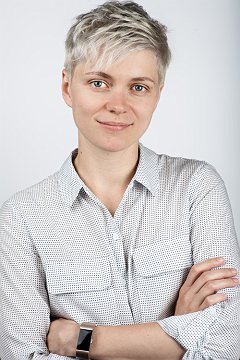
Clément Pit-Claudel is an assistant professor at École Polytechnique Fédérale de Lausanne (EPFL) in the School of Computer and Communication Sciences, Department of Computer Science. He leads the SYSTEMF lab which he founded in January 2023. Prior to joining EPFL, he was a PhD candidate at MIT with Adam Chlipala and subsequently worked as a senior applied scientist at Amazon AWS. His academic journey began at École Polytechnique in France, followed by doctoral studies at MIT. Dr. Pit-Claudel's research focuses on programming languages, compilers, and formal verification, with broader interests spanning systems engineering, hardware design languages, security, performance engineering, databases, and type theory. His work centers around three main axes: extensible compilation (teaching compilers domain-specific optimization tricks), hardware design languages and verification, and tooling for proof assistants. He has developed several influential systems including Elk (a linear-time engine for JavaScript regexes), Warblre (a Coq translation of JS regex specification), Fiat (a library for correct-by-construction refinement), Narcissus (for verified binary encoders/decoders), F2F (a program extraction framework), Rupicola (a compiler-construction toolkit), Kôika (a rule-based hardware design language), Cuttlesim (a fast hardware simulator), and Alectryon (a literate programming system for Coq). His publications span top venues including PLDI, POPL, ICFP, ASPLOS, and SLE, with recent work focusing on verified JavaScript regular expressions, foundational integration verification of cryptographic servers, and relational compilation techniques. His research aims to build small, fast, and completely verified components for critical systems through a combination of machine-checked proofs, hardware-software co-design, low-level compiler engineering, and new tools for interactive theorem proving. His notable awards include the Distinguished Artifact award at SLE 2020 for 'Untangling Mechanized Proofs,' the William A. Martin Memorial Thesis Award from MIT in 2016, and the Frederick C. Hennie III Teaching Award from MIT in 2016. He has served on program committees for numerous conferences including PLDI, POPL, ICFP, and SPLASH, and has organized workshops such as the Coq Workshop and Proof Systems. As an educator, he teaches 'Software Construction' (undergraduate level, ~400 students) and 'Interactive Theorem Proving' (graduate level) at EPFL. His teaching philosophy emphasizes hands-on learning, continuous assessment through oral examinations, and designing assignments that lead students to build concrete artifacts they can be proud of. His approach is informed by hundreds of hours of in-class instruction in Europe and the US, resulting in stellar student reviews and multiple teaching awards.
Nadia Polikarpova is an Associate Professor in the Computer Science and Engineering Department at the University of California, San Diego. She leads the Programming Systems group and serves as a member of IFIP Working Group 2.8 on Functional Programming since 2022. Her academic journey includes a PhD from ETH Zurich (Switzerland) under Bertrand Meyer's supervision in 2014, followed by postdoctoral work at MIT CSAIL with Armando Solar-Lezama. Her research interests center around program synthesis, program verification, and type systems, with a focus on building practical tools that enhance software security and reliability. Polikarpova's work bridges theoretical foundations with real-world applications, particularly in the emerging area of AI-assisted programming. Her recent publications demonstrate a strong trajectory in program synthesis techniques, with increasing integration of machine learning approaches. The research spans from foundational type-driven synthesis methods to practical applications for validating AI-generated code and synthesizing heap-manipulating programs. Her work frequently appears in top-tier programming languages venues including PLDI, POPL, ICFP, and OOPSLA. 2020 Sloan Fellow 2020 Intel Rising Stars Award 2020 NSF CAREER Award Distinguished paper awards at PLDI'21, ICFP'20, and POPL'19 Best paper award at FM'15 Polikarpova actively mentors PhD students and has advised numerous graduates who now work at Microsoft Research, University of Michigan, and various tech companies. She teaches core programming languages courses including CSE 130 and specialized graduate courses on program synthesis (CSE 291). Her service to the community includes program committee roles for major conferences and co-chairing the Haskell conference in 2022.
Myra Cohen is a Professor and the Lanh and Oanh Nguyen Chair in Software Engineering in the Department of Computer Science at Iowa State University. Previously, she held the position of Susan J. Rosowski Professor at the University of Nebraska-Lincoln where she was a member of the ESQuaReD software engineering research group. She serves on the ASE Steering Committee and has held leadership roles including general chair of ASE 2015 and program co-chair for ICST 2019 and ESEC/FSE 2020. Dr. Cohen earned her Ph.D. from the University of Auckland, New Zealand, her M.S. from the University of Vermont, and her B.S. from the School of Agriculture and Life Sciences at Cornell University. Her academic journey includes lecturing positions at both the University of Auckland and University of Vermont during her graduate studies. Her research spans several interconnected domains focused on software quality and assurance. A significant portion of her work addresses software testing challenges in highly-configurable systems, where she applies search-based techniques and combinatorial designs to create efficient test suites. More recently, her research has expanded into innovative areas including software testing for biological systems, quantum computing applications, and security testing through genetic improvement techniques. Her work demonstrates a consistent theme of addressing complex verification challenges through creative application of formal methods and automated techniques. Analysis of her recent publications reveals a growing focus on emerging domains including quantum software testing, molecular/biological computing systems, and assurance cases for safety-critical systems. She has increasingly incorporated AI techniques, particularly large language models, into traditional software engineering problems while maintaining her foundational work in configurable systems and metamorphic testing. NSF CAREER award recipient AFOSR Young Investigator Award recipient ACM Distinguished Scientist Recipient of 4 ACM Distinguished Paper awards Dr. Cohen has served as chair and committee member for numerous conferences including ASE, ICSE, ISSTA, ESEC/FSE, and ICST. She has mentored numerous students through the doctoral symposiums and student research competitions at major software engineering conferences. Her research has been supported by significant grants including those from NSF and AFOSR. She leads the LaVA-OPs (Laboratory for Variability-Aware Assurance and Testing of Organic Programs) research group at Iowa State University, which focuses on testing challenges in biological and organic computing systems.
Ding Li is an Assistant Professor in the School of Computer Science at Peking University. He holds a Ph.D. in Computer Science from the University of Southern California (USC) and a B.S. from Peking University. His research focuses on program analysis, energy optimization for mobile applications, and security, with publications in top conferences including ICSE, FSE, and ASE. His research interests span: Program Analysis : Techniques to optimize mobile application energy consumption. System Security : Identifying vulnerabilities in Android apps and WebAssembly binaries. Cloud/Edge Computing : Enhancing serverless computing efficiency and federated learning security. Dr. Li's recent work explores the integration of large language models into pointer analysis and automated optimization of resource inefficiencies. His publications demonstrate a consistent focus on practical system optimizations and security enhancements across mobile, cloud, and machine learning domains. Awards: Viterbi Undergraduate Research Mentoring Award (2014)
Vincent Weaver is an Associate Professor in the Electrical and Computer Engineering Department at the University of Maine's College of Engineering. He leads the VMW Research Group, focusing on low-level systems research including hardware performance counters, computer architecture, and operating systems. Weaver received his BS in Electrical Engineering from the University of Maryland College Park in December 2000, followed by MS (January 2009) and PhD (May 2010) degrees in Electrical and Computer Engineering from Cornell University. He joined the University of Maine faculty in July 2012 as an Assistant Professor and earned tenure and promotion to Associate Professor in September 2018. His research centers on hardware performance analysis, architectural simulation, and systems programming with emphasis on Linux kernel development and embedded systems. Weaver's work bridges theoretical computer architecture with practical systems implementation, often resulting in open-source tools that advance the field. His publications reveal a consistent focus on performance analysis techniques, code optimization, and security through low-level system understanding. Weaver maintains an active teaching schedule including courses in embedded systems, operating systems, and network engineering. He values students with strong programming skills and encourages open source contributions as part of the learning process. His research group provides hands-on experience with cutting-edge processor architectures and performance analysis tools.
Jeremy G. Siek is a Professor at Indiana University Bloomington in the School of Informatics and Computing. His research spans programming language design, type systems, gradual typing, mechanized theorem proving, and optimizing compilers. Gradual typing integration in functional languages Co-inventor of the Boost Graph Library Former NSF CAREER award recipient Active in programming language foundations research Jeremy's research focuses on reconciling static and dynamic type checking through gradual typing, with current work on parametricity in polymorphic blame calculus, combining gradual typing with dependent types, and formal criteria for gradual type systems. He investigates high-performance implementations of gradual typing and its application to security enforcement. His recent publications examine verified nanopass compilers, gradual security guarantees, and parameterized cast calculi. He has received multiple distinguished visiting fellowships and maintains the Deduce proof assistant for educational use. NSF CAREER Award (2009) Distinguished Visiting Fellowships (2010, 2015) Jeremy leads the Center for Programming Systems at IU and advises Ph.D. students Tianyu Chen (gradual security) and Darshal Shetty (gradual dependent types). He teaches courses in compilers, data structures, and programming language foundations.
Andrew K. Hirsch is an Assistant Professor at the University at Buffalo, SUNY , Department of Computer Science and Engineering. He leads the Databases and Programming Languages group and focuses on programming languages for decentralized systems, particularly choreographic programming and information-flow security. Education: Ph.D. in Computer Science (2019) from Cornell University, supervised by Ross Tate on computational effects. B.S. in Computer Science and Pure Mathematics from The George Washington University. Research Interests: His work centers on choreographic programming, a paradigm ensuring deadlock-free concurrent systems, and information-flow security for decentralized applications. He also explores computational effects and type systems in programming language theory. Publications: Recent work includes advancements in process polymorphism (OOPSLA 2025), type-level polymorphism (PLACES 2025), and security definitions for higher-order declassification (OOPSLA 2023). Students: Doctoral: Michael Piskozub, Keith Allen Mason Masters: Alexander Bohosian, Gianna Bossoreale Undergraduate: Alex Doyoon Kim, Julia Montouri Recent Alumni: Ethan Canton, Tiffany Cai, Vamsi Krishna Bellam, Vincent Chan, Frank (Feng-Mao) Tsai Projects: Leads initiatives such as Choret (open choreographies) and The Pirouette Language and Compiler , which translate choreographic programs into concurrent system implementations.
Dr. Ali Allami serves as an Assistant Professor in the Department of Computer Science at Grinnell College, specializing in privacy-preserving technologies and distributed systems. His research bridges theoretical protocols with practical applications to advance secure computation in networked environments. His academic credentials include: Ph.D. in Computer Science, University of Missouri–Columbia M.S. in Computer Science, Informatics Institute for Postgraduate Studies B.S. in Computer Science, Shatt Alrab University Research interests focus on privacy engineering with emphasis on multiparty computation, privacy-preserving machine learning, and ethical data governance. His work develops novel methods for preserving privacy during distributed data aggregation and learning while maintaining utility, particularly through reinforcement learning frameworks under privacy constraints and trusted system design. Publications appear in premier venues including IEEE COMPSAC, Computers & Security (Elsevier), and ACM SACMAT. Key contributions encompass secure comparison protocols, compiler frameworks for privacy-preserving computations, and innovative approaches to distributed firewall policies and stealth location-sharing protocols. As a faculty member at Grinnell College, Dr. Allami mentors undergraduate researchers and integrates his expertise in privacy engineering into the computer science curriculum, fostering student development in critical areas of modern computing.
Ranjit Jhala is a Professor of Computer Science Engineering at UC San Diego's Jacobs School of Engineering, where he leads the Programming Systems Group. His research spans Programming Languages and Software Engineering, focusing on building reliable systems through Type Systems, Model Checking, Program Analysis, and Automated Deduction. His current projects include Flux for Rust verification, Liquid Haskell refinement types, and techniques for analyzing timing channels. Professor Jhala teaches courses on Programming Languages (CSE 130) and Graduate Programming Languages (CSE 230), with extensive experience teaching compilers and verification topics. Professor Jhala advises several students including Alexander Bakst, Ben Cosman, and Marc Andrysco. Notable former students include Niki Vazou (Postdoc at Maryland), Ravi Chugh (University of Chicago), and Patrick Rondon (Google).
Klaus von Gleissenthall is a tenured Assistant Professor in Computer Science at Vrije Universiteit Amsterdam, affiliated with the Theory Group and VUSec security lab. He holds a joint appointment with CWI's Computer Security group. Previously, he was a post-doc at UCSD and completed his PhD at TUM under a Microsoft Research scholarship. His research integrates programming languages , security , and systems to develop formally verified, low-overhead solutions for hardware/software correctness. Key focus areas include: Side-channel attack mitigation via leakage contracts Refinement-type systems for hardware verification Byzantine fault tolerance in distributed systems Publications demonstrate strong emphasis on hardware security (45% of recent papers), formal methods (30%), and distributed systems (25%), with consistent appearances in top-tier venues (S&P, CCS, OOPSLA). Awards & Honors: ERC Starting Grant (€1.5M, 2024) Intel Hardware Security Award Honorable Mention (2020, 2024) Distinguished Paper Awards: CCS'23, OOPSLA'23, POPL'21 He advises four PhD students and two post-docs, supported by his ERC grant. Current projects include refinement types for hardware and pre-silicon leak detection. His lab collaborates with VUSec and CWI, focusing on scalable verification tools like LLVM Blade and methodologies for constant-time execution guarantees.
Shangwen Wang is an Assistant Professor in the School of Computer Science at National University of Defense Technology (NUDT) in Changsha, China. He earned his Bachelor's degree in June 2017, Master's degree in December 2019, and Ph.D. in December 2023, all from NUDT. During his graduate studies, he was supervised by Professor Xiaoguang Mao. From May 2022 to July 2023, he was a visiting student at Southern University of Science and Technology under Professor Yepang Liu. His educational background includes: Ph.D. in Software Engineering, NUDT (2020.3-2023.12), supervised by Prof. Xiaoguang Mao Visiting Scholar, SUSTech (2022.5-2023.7), supervised by Prof. Yepang Liu M.A. in Software Engineering, NUDT (2017.9-2019.12), supervised by Prof. Xiaoguang Mao B.A. in Software Engineering, NUDT (2013.9-2017.6) Wang's research focuses on program repair, program comprehension, mining software repositories, software maintenance and evolution, software testing, and AI for Software Engineering. His work bridges traditional software engineering techniques with modern AI approaches, particularly leveraging large language models for various software engineering tasks. He has made significant contributions to automated program repair, fault localization, vulnerability detection, and code generation. His research demonstrates a strong emphasis on empirical validation and practical applicability to real-world software development challenges. His recent publications show a clear trend toward integrating large language models with traditional software engineering tasks. The 15 most recent articles reveal a focus on applying LLMs to program repair, fault localization, vulnerability detection, and code generation, while maintaining strong empirical foundations. His work spans both theoretical advancements and practical tool development, with applications in software security, testing, and maintenance. His notable achievements include: CCF Outstanding Doctoral Dissertation (CCF优博) 2024 Outstanding Doctoral Graduates, NUDT, 2023 Multiple distinguished paper awards including ACM SIGSOFT Distinguished Paper Award (ISSTA'24) and IEEE TCSE Distinguished Paper Awards (ICSME'22, SANER'22) Prestigious scholarships from NUDT throughout his academic career As an active member of the software engineering community, Wang serves on numerous program committees for top conferences including ICSE, ASE, ESEC/FSE, and ISSTA. He has also contributed to teaching as a teaching assistant for courses such as Compiler, Python Programming, Discrete Mathematics, and C++ Programming. His research group appears to be actively mentoring students, as evidenced by his role as corresponding author on multiple student-led publications. Wang maintains an active research presence with collaborations across multiple institutions in China. His work demonstrates a clear trajectory from traditional program analysis techniques toward integrating cutting-edge AI approaches, particularly large language models, into software engineering practices.
Zhou Yang is an Assistant Professor at the University of Alberta and Fellow at the Alberta Machine Intelligence Institute (Amii), with research focusing on the intersection of software engineering and artificial intelligence. His academic journey includes a Ph.D. from Singapore Management University, an M.Sc. in Software System Engineering from University College London, and undergraduate studies at Yangzhou University. His research interests span Software Engineering, Artificial Intelligence, AI for Software Engineering (AI4SE), Software Engineering for AI (SE4AI), Large Language Models, and Cybersecurity. Yang's work explores how human and AI collaboration can improve code writing, how AI impacts open-source communities, and how developers build software in emerging environments like VR/AR. His recent publications demonstrate strong trends in code language models, with significant contributions to ASE, ICSE, ISSTA, and top journals like TOSEM and TSE. His research addresses critical challenges including token efficiency in code generation, user perception of AI coding assistants, privacy preservation in code models, and fairness in AI systems. 2024 IEEE Computer Society Best Paper Award (1 out of 183 submissions) ACM Distinguished Paper Award from ISSTA 2024 Distinguished Reviewer Award from Internetware 2024 SMU Research Staff Excellence Award (1 of 4 university-wide) SMU Presidential Fellowship Award SMU Dean's List Award 1st Place in ACM Student Research Competition at ICSE 2024 Yang actively mentors graduate students with regular one-on-one meetings, constructive feedback, and support for top-venue publications. He provides full funding through teaching assistantships and research grants, including travel support for conferences. His lab focuses on responsible research conduct and societal implications of AI work. Though early-career, he actively builds professional networks for students through collaborations and supports diverse career paths in academia and industry. He leads research in the Alberta Machine Intelligence Institute, focusing on practical applications where software engineering principles enhance AI systems and where AI techniques solve real-world software engineering challenges.