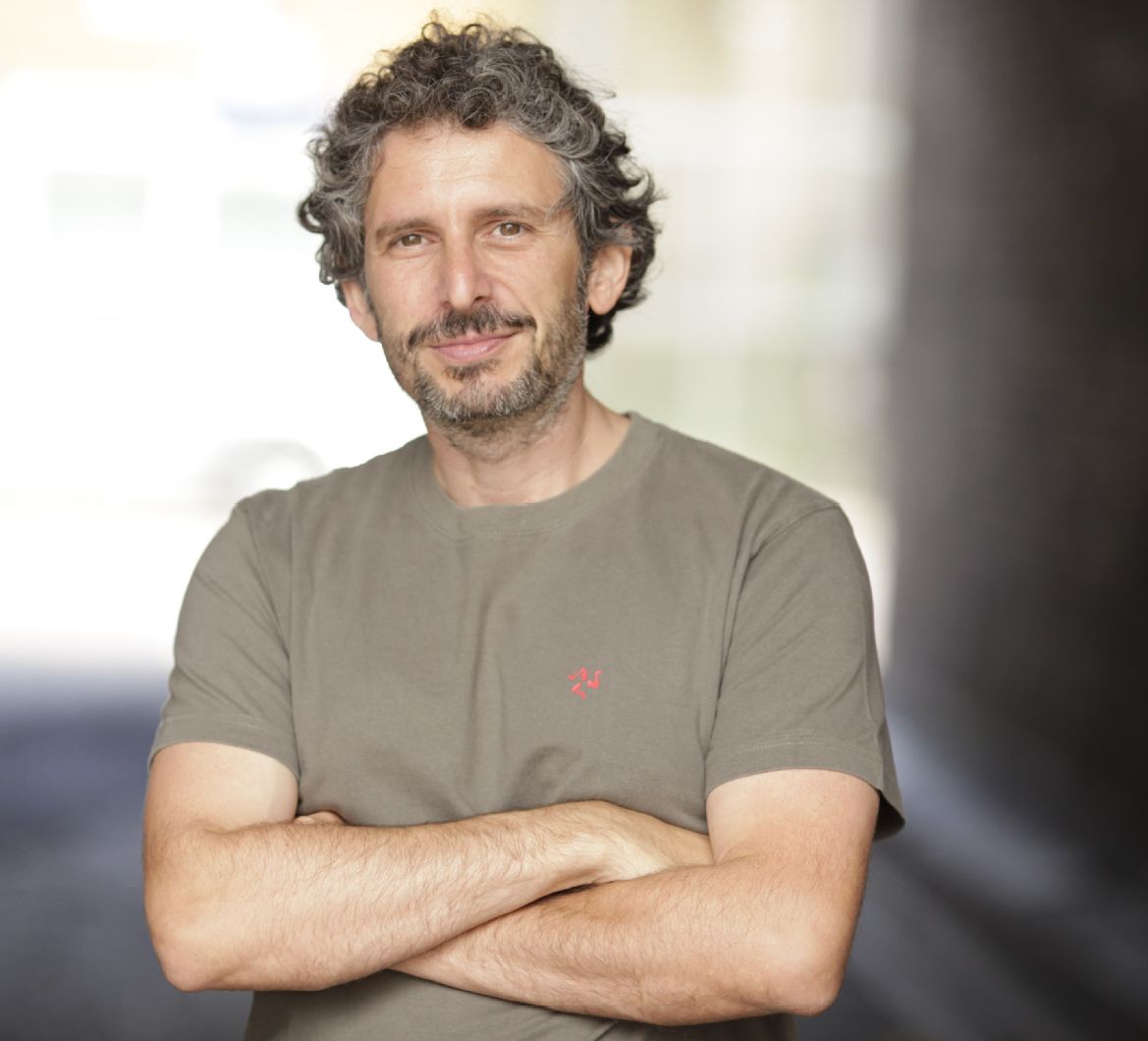
Anthony Constantinou is a Senior Lecturer at Queen Mary University of London, part of the School of Electronic Engineering and Computer Science. He leads the MInDS Research Group and the Bayesian AI Lab, focusing on causal machine learning for decision-making under uncertainty. His research spans healthcare, defense, sports, economics, and gaming, with a strong emphasis on Bayesian networks and causal inference. Research Interests: Causal machine learning, decision systems, Bayesian networks, uncertainty quantification, and their applications in healthcare, military defense, sports analytics, and economics. He collaborates with academia and industry to advance AI-driven decision-making systems. Grants: Noted for securing funding such as the Engineering and Physical Sciences Research Council grant (EP/S001646/1) for Bayesian AI research. His work emphasizes practical applications in diverse fields through collaborative projects. Labs & Teams: Head of the MInDS Research Group and Bayesian AI Lab, fostering interdisciplinary research in AI and decision systems.
William C. Wohlforth is a Professor of Government at Dartmouth College since 2000, holding the Daniel Webster Professorship. He specializes in international relations theory, international security, U.S. foreign policy, and Russian foreign policy. Prior to Dartmouth, he taught at Princeton University and Georgetown University. He earned a B.A. in International Relations from Beloit College, followed by an M.A. and Ph.D. in Political Science from Yale University. His research examines great power politics, U.S. grand strategy, and the dynamics of international order. He has authored or edited nine books and over 60 articles, including influential works on multipolarity and great power subversion. His recent work includes contributions to Foreign Affairs , Security Studies , and Comparative Political Studies . Wohlforth has held fellowships at the Hoover Institution, Stanford’s Center for International Security and Cooperation, and the Institute of Strategic Studies at Yale. He served as editor-in-chief of Security Studies and advises U.S. policy institutions like the National Intelligence Council. His current projects include a forthcoming book A Measure Short of War: A Brief History of Great Power Subversion (Oxford UP, 2025). At Dartmouth, he chairs the Government Department and directs the Initiative for Global Security at the Dickey Center. He teaches courses on international politics, Russian foreign policy, and strategic leadership, emphasizing realist theory and contemporary policy challenges.
Nicolò Cesa-Bianchi is a Professor of Computer Science at the University of Milan, Department of Computer Science (Dipartimento di Informatica), and affiliated with the DEIB Department at Politecnico di Milano. His research focuses on foundational aspects of machine learning, particularly online learning, multi-armed bandits, reinforcement learning, and graph analytics. He is an ELLIS Fellow and a corresponding member of the Accademia Nazionale dei Lincei. Research interests include the design and analysis of algorithms for prediction, clustering, and online decision-making, with applications to digital markets, social networks, and bioinformatics. Notable contributions span cooperative online learning, multitask learning, and bandit algorithms. He co-authored the influential book Prediction, Learning, and Games (2006). Professional roles include Board member of ELLIS, co-director of the Milan ELLIS unit, and involvement in EU initiatives like ELSA (Secure & Safe AI) and ELIAS (AI for Sustainability). He teaches graduate courses on statistical methods, machine learning, and reinforcement learning, with a focus on theoretical foundations. Key awards: ELLIS Fellowship (2020), Corresponding Member of the Accademia Nazionale dei Lincei (Italian National Academy of Sciences). His work bridges theory and practice, addressing challenges in adaptive systems, market design, and algorithmic fairness. Current projects explore distributed learning, regret minimization in adversarial environments, and interpretable models.
Pedro U. Lima is a Full Professor at Instituto Superior Técnico (IST), University of Lisbon, and President of the Institute for Systems and Robotics (ISR/IST), coordinating the Intelligent Robots and Systems group (IRSg). He holds a Ph.D. in Electrical Engineering from Rensselaer Polytechnic Institute (1994). His research focuses on intelligent control systems, multi-robot coordination, and human-robot interaction, with contributions to robotics competitions like RoboCup and initiatives like the European Robotics League (E.R.L.). Lima has served as Vice President of the RoboCup Federation, Trustee of IEEE Portugal RAS Chapter, and Portuguese National Delegate to the European Space Agency’s Human Spaceflight Program Board. He led the Cátedra de Excelencia sabbatical at UC3M (2010), contributing decision-theoretic approaches to human-robot interaction. His work integrates robotics with societal impact, including outreach through the Pavilhão do Conhecimento and media appearances. He coordinates large projects like euROBIN (EU Horizon Europe) and CRAI (Portugal’s PRR), advancing robotics in domains like autonomous delivery and social robotics.
Dr. Kian Tajbakhsh is a Visiting Assistant Professor at New York University’s Program in International Relations, specializing in geopolitics, global governance, and Iranian studies. His research focuses on authoritarian regimes, Middle Eastern politics, and urban policy. He holds a PhD in Urban Planning from Columbia University and has authored influential works including Creating Local Democracy in Iran (Cambridge, 2022), examining decentralization under authoritarianism. Previously a Presidential Fellow at Columbia, he has advised international organizations like NATO and the U.S. Intelligence Community. Dr. Tajbakhsh’s advocacy includes pro-democracy efforts in Iran, leading to his imprisonment. His current projects explore global urbanization, post-colonial theory, and comparative governance between NYC and Tehran. Education: PhD (Urban Planning, Columbia, 1993), MSc (Urban Economic Development, UCL, 1985), BSc (Civil Engineering, Imperial College London, 1983). Research interests span Iran’s foreign policy, authoritarianism, and city diplomacy. His articles appear in Foreign Affairs , The Atlantic , and Washington Quarterly . He critiques post-colonial theories and explores the geopolitical implications of urban challenges in global North-South contexts. Awards include the prestigious Columbia Presidential Fellowship. His work bridges academia and policy, addressing democratization, human rights, and global governance.
José Fernández Cavia is an Associate Professor at the Department of Communication of Universitat Pompeu Fabra (UPF) and Academic Director at the UPF Barcelona School of Management. He holds a Doctorate in Communication Sciences from Universitat Autònoma de Barcelona and a Bachelor's degree in Hispanic Philology from Universitat de Barcelona. His academic leadership includes directing the Master of Arts in Communication Management and the Master in Communication and Business Relations. His research focuses on Place Branding, Advertising, and Public Relations, with emphasis on sustainable development, talent attraction strategies, and digital communication. He has published extensively on destination branding, tourism marketing, and the role of AI in creative industries. Notable works include analyzing pandemic impacts on place branding and the ethical perceptions of Spanish organizations across generations. Prof. Fernández Cavia has contributed to over 30 publications since 2000, including studies on media consumption patterns, crisis communication, and the evolution of advertising education. He actively bridges academic research with professional practice through executive education programs and industry partnerships.
Senarath Dharmasena is an Instructional Associate Professor at the Department of Agricultural Economics within the College of Agriculture & Life Sciences at Texas A&M University. He holds a Ph.D. in Agricultural Economics from Texas A&M University and an undergraduate degree in Agriculture from the University of Peradeniya. His research focuses on consumer economics, applied demand analysis, agribusiness, and food market dynamics. Dr. Dharmasena’s work explores complex economic systems, including food price inflation, rural land market valuation, and the impact of macroeconomic factors on food security. He employs advanced methodologies like causal inference, machine learning, and hedonic pricing models. His recent publications analyze U.S. demand patterns for alternative food products, energy drinks, and agricultural aviation industry economics. As an associate editor for the Journal of Agribusiness in Developing and Emerging Economies (JADEE), he contributes to academic discourse. His affiliations include Texas A&M AgriLife Extension Service and the Agribusiness, Food and Consumer Economics Research Center (AFCERC). His research integrates socioeconomic factors with food policy implications, emphasizing practical applications in agriculture and consumer behavior.
Krishna Jayakar is a Professor of Telecommunications and Public Policy and Head of the Department of Telecommunications at The Pennsylvania State University's College of Communications. He specializes in telecommunications policy, broadband access, intellectual property rights, and media economics, with a focus on disability accessibility in technology. His research frequently compares policy frameworks across nations, particularly analyzing China and India's approaches to digital economies. Education includes a Bachelor's from the Institute of Technology-BHU in India, and Master's and PhD degrees from Indiana University. His work bridges policy analysis and technical implementation, with notable contributions to understanding broadband adoption models, smart city governance, and the effects of national innovation strategies on 6G development. Key research trends in his articles include cross-national policy comparisons, the socio-economic impacts of broadband investments, and regulatory frameworks for emerging technologies like AI. His studies on domain name arbitration regimes and media company responses to streaming services highlight his interdisciplinary approach to telecommunications challenges. Dr. Jayakar has advised on grants related to broadband initiatives and rural economic development, leveraging his expertise in policy diffusion and regulatory federalism. He leads the Telecommunications Department at Penn State, fostering research into digital equity and telecommunications infrastructure's societal impacts.
Professor Daniele Condorelli is a faculty member in the Department of Economics at the University of Warwick. His research focuses on Microeconomic Theory, Networks and Platforms, and Mechanism Design. He holds a Professor title and is affiliated with the Department of Economics. His work explores topics such as consumer hold-up in ecosystems, data-driven envelopment, and surplus bounds in Cournot competition. His research interests span strategic models of intermediation networks, auction design, and information economics. Notable publications include studies on vertical mergers in digital ecosystems, privacy-policy impacts on data monetization, and optimal mechanism design for market efficiency. Recent articles highlight his contributions to understanding platform competition, resale networks, and algorithmic game theory. His work often intersects with antitrust policy, digital market governance, and incentive design in networked environments. Professor Condorelli advises students in economics and is involved in academic administration, offering office hours by appointment.
Dr. Jonathan Liebenau is an Associate Professor (Reader) in Technology Management at the London School of Economics (LSE), part of the Department of Management. He also holds a visiting professorship at Columbia University’s Graduate School of Business and School of Engineering. His expertise spans technology management, innovation policy, and the socio-economic impacts of information systems in developing countries. He has authored/co-authored over 70 publications and advised global organizations such as Dell, IBM, and the UK Office of Science and Innovation. Education: PhD in History and Sociology of Science (University of Pennsylvania, 1981), BA in Science Policy (University of Rochester, 1976). His career includes roles at the Smithsonian Institution, Boston University, and academic leadership roles at LSE. Research focuses on technology policy, telecommunications, and the role of digital infrastructure in development. He leads LSE Tech, a research group exploring internet economics and policy. Notable work includes studies on payment systems modernization, blockchain regulation, and the economic implications of cloud computing in emerging economies. Advisory roles include membership on boards at Istanbul Bilgi University and the American University in Cairo. He has supervised numerous PhD students researching topics like ICT in Sub-Saharan Africa, banking innovation in Thailand, and DSS applications in national debt management. His recent articles address global technological competition with China, urban mobility policy, and fintech innovation mechanisms. He emphasizes interdisciplinary approaches to understanding how technology shapes economic development and regulatory frameworks.
Ilkka Leppänen is an Assistant Professor (2nd term) at Aalto University's Department of Information and Service Management. His research focuses on behavioral operational research, game theory, and systems intelligence, with a particular emphasis on integrating psychophysiological methods to study decision-making processes in strategic interactions. Key research areas include emotional responses in negotiations, evolutionary stability of preferences in duopoly markets, and the application of systems thinking to complex organizational challenges. His work bridges theoretical models with empirical experiments, often employing psychophysiological measurements to understand human behavior in competitive and collaborative settings. Leppänen has contributed to advancements in behavioral OR through interdisciplinary studies, including the analysis of cooperation mechanisms in Stackelberg and Cournot games, as well as the design of educational platforms for operations management simulations. His research frequently addresses practical interventions to improve decision-making in real-world contexts. Notable collaborations include studies with Raimo P. Hämäläinen and Etiënne A.J.A. Rouwette, exploring topics such as strategic timing in duopolies and the impact of emotional states on economic interactions. His publications span prestigious journals like the European Journal of Operational Research and the Journal of Neuroscience, Psychology, and Economics.
Dr. Katharina Graf is a Research Fellow at the Institute of Cultural Anthropology and European Ethnology, Faculty of Linguistics, Cultures and Arts, Goethe University Frankfurt. She leads the DFG-funded ethnographic research project Cyborg Cook – Domestic Cooking in the Digital Age , investigating how digital technologies transform domestic cooking practices, knowledge reproduction, and socio-political negotiations around gender, class, and race in German households. Previously, she was a Postdoctoral Research Fellow at the SOAS Food Studies Centre, University of London, where she conducted research on bread as a measure of urban stability in Morocco, funded by the AXA Research Fund. Her educational background includes a PhD in Social Anthropology from SOAS, University of London (2016), with fieldwork in Marrakech, and a Diplom in Geography from the universities of Tübingen, Bonn, and Cologne, focusing on water supply in rural Morocco. Katharina Graf’s research lies at the intersection of cultural anthropology, food studies, gender, urban life, and science and technology studies. She explores how everyday practices—especially cooking—reflect and shape broader social, political, and technological transformations. Her work emphasizes the entanglement of material culture, digitalization, and human agency, particularly in domestic spaces. She investigates how food serves as a lens for understanding political legitimacy, social change, and human-machine relations. Her recent publications and blog posts from the Cyborg Cook project reveal a strong trend toward understanding digital domesticity through ethnographic, sensory, and feminist lenses. Themes include the role of mothers as technological pioneers, the disruption of routines by smart devices, and the multisensory experience of digital cooking practices. Her earlier work on bread in Morocco highlights how food security and culinary practices are deeply tied to political stability and state-society relations. Postdoctoral Fellowship, AXA Research Fund Principal Investigator, DFG-funded 'Cyborg Cook' project Dr. Graf has supervised undergraduate and postgraduate students at SOAS and Goethe University. While no specific grants beyond DFG and AXA are named, her role as principal investigator indicates leadership in competitive research funding. She is actively involved in academic service, including as associate book reviews editor for the FoodAnthropology Blog (Society for the Anthropology of Food and Nutrition) and former co-convenor of the Anthropology of Food Network at EASA. She disseminates research through innovative public formats such as photo exhibitions, cookery classes, and comedy clubs, reflecting a commitment to engaged scholarship. She is affiliated with the Cyborg Cook research team at Goethe University, an interdisciplinary group using ethnographic methods to study digital kitchen technologies. The project emphasizes collaborative, sensory, and participatory research approaches, often involving co-creation with participants through shared meals and observational cooking sessions.
Dr. Malcolm Heywood is a Professor in the Faculty of Computer Science at Dalhousie University, Halifax, Canada. He leads the Network Information Management and Security (NIMS) Lab and is actively involved in research on genetic programming, coevolution, reinforcement learning, and big data analytics. His research interests span: Genetic Programming and Evolutionary Computation Coevolution and Competitive Learning Problem Decomposition and Hierarchical Models Streaming Data Analysis and Anomaly Detection Network Security and Insider Threat Detection Reinforcement Learning in Games (Atari, ViZDoom, Dota 2) Dr. Heywood's recent publications focus on emergent behaviors in reinforcement learning using Tangled Program Graphs (TPG), benchmarking genetic programming for streaming data, and applications in cybersecurity and computational finance. His work demonstrates a strong trend toward scalable, efficient evolutionary models for complex, real-world problems. His scientific awards include: Silver placed at Human-Competitive (Humies) Competition (2018) Best Paper at EuroGP (2017) Best Paper at DETA track, ACM GECCO (2017) Best Paper at RWA track, ACM GECCO (2018) Nomination for Best Paper at DETA track, ACM GECCO (2019) He has supervised numerous graduate students, including PhD and Master's candidates, many of whom have continued research in evolutionary computation. His lab has developed open-source code distributions for Tangled Program Graphs and Symbiotic Bid-Based GP. Dr. Heywood teaches courses in Computer Organization, Introduction to AI with Gaming Applications, and Genetic Algorithms and Programming.
Jan Kirenz is a Professor at Stuttgart Media University of Applied Sciences (HdM Stuttgart) and a freelance Consultant, Lecturer, and Data Scientist specializing in Generative AI and data science. With a strong academic foundation, he earned a Doctorate (Dr. oec. publ.) from the Graduate School of Business at the University of Zurich and a Diploma in Business Administration (Operations Research) from the University of Tübingen. His work bridges the gap between technical complexity and practical application, focusing on transformative AI integration for businesses. His research interests center on Generative AI, Machine Learning, and Digital Transformation, with a particular emphasis on Prompt Engineering, agentic AI, and MLOps. He collaborates with companies such as Mercedes-Benz Group, EnBW, and Alfred Kärcher SE & Co. KG to develop tailored AI strategies and solutions. His practical approach ensures measurable results and actionable strategies for enhancing competitiveness. Jan leverages advanced tools and frameworks, including Google Gemini, OpenAI ChatGPT, Anthropic Claude, Hugging Face, Kubeflow, and cloud platforms like Microsoft Azure and Google Cloud AI. He is active in GitHub repositories related to AI development, with a focus on the Model Context Protocol and other cutting-edge technologies. His current projects prioritize practical AI applications for business processes, from prototyping to deployment.