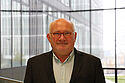
Thomas Krüger is a Professor of Project Development at HafenCity University Hamburg (HCU). He leads the research group Real Estate and Urban Development and focuses on interactions between urban development, real estate economics, and project management. His work explores new governance models, public-private partnerships, and digital tools for planning evaluation. Current positions: Professor at HCU, Head of Research Group Research: Urban centers, real estate dynamics, project governance Teaching: Project development, real estate economics, urban management Research highlights include: 2010–2014: RegioProjektCheck – regional evaluation tools for sustainable development Since 2007: Urban Improvement Districts – new property owner collaborations Since 2006: Impact of Shopping Centers on urban structures His scientific contributions span over 30 years, with recent work on: 2025: Urban planning-real estate tensions 2024: Strategic alliances for city centers 2023: Night economy, pandemic impacts on urban retail Leadership roles include: BAföG Officer for urban planning programs Member of HCU Academic Senate Coordination of integrated planning courses He is affiliated with research networks like the Research Association for Urban Synergies and contributes to City Science Lab initiatives.
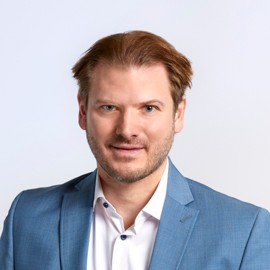
Prof. Dr. Bianca Burgfeld-Meise is a faculty member at the Department of Education and Social Sciences at South Westphalia University of Applied Sciences (FH-SWF). Her research focuses on media education, digitalization, and media socialization with a particular emphasis on media literacy, digital humanities, and social network sites. Key collaborations include TU Dresden (Digital@Humanities), HfM Detmold (digital music editions), and nationwide initiatives like Keine Bildung ohne Medien e.V. Research funded by DFG, BMBF, and institutional grants for projects on digital learning processes, MINT promotion, and digital edition methodologies. Her recent publications analyze lifelogging practices, digital memory, and interdisciplinary software development in educational contexts. She contributes to theoretical frameworks in media pedagogy and digital culture. She currently serves in the national steering committee of Keine Bildung ohne Medien e.V., advocating for systematic integration of media education across societal domains through workshops and policy discussions.
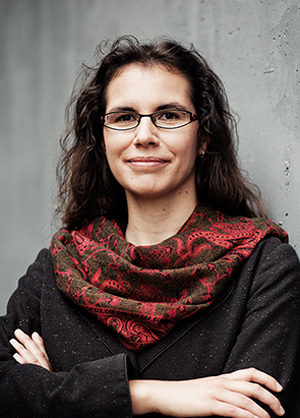
Dr. Sebastian Hellmann is a senior researcher at the Institute of Computer Science , University of Leipzig , affiliated with the Business Information Systems department. He leads the Knowledge Integration and Language Technologies (KILT) Competence Center at InfAI and serves as executive director and board member of the DBpedia Association . His work spans semantic technologies, linked data, and knowledge graphs, with significant contributions to data curation, FAIR data principles, and natural language processing. PhD in Computer Science (2014) at University of Leipzig Contributed to open-source projects like DBpedia, NLP2RDF, and OWLG Author of over 80 peer-reviewed publications (h-index 21, 4300+ citations) Sebastian's research focuses on Knowledge Graphs , Ontology Management , and Data Interoperability , as evidenced by his publications and projects. Recent work includes ClassRank for knowledge graph summarization, DBpedia Databus for dataset management, and the Open Energy Ontology for energy systems analysis. His projects often bridge semantic web technologies with practical applications in data quality, integration, and user-centric tools. Selected publications highlight his expertise in Linked Data , Ontology Archiving , and Agile Knowledge Engineering . He actively participates in academic-industry collaborations through EU H2020 projects like ALIGNED and FREME , as well as the Smart Data Web initiative. His work with DBpedia, Wikidata, and the Semantic Web community underscores his commitment to advancing machine-readable knowledge representation.
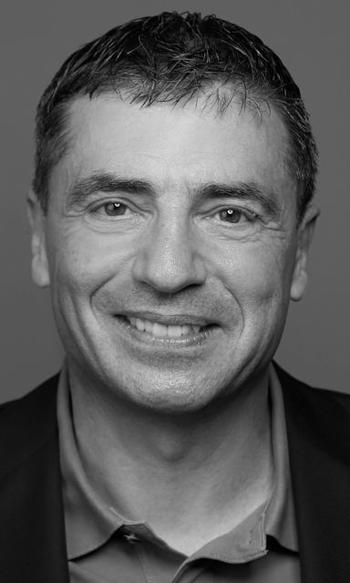
Holger Dette is a Professor and Chair Holder of Stochastics (specializing in Statistics) at the Faculty of Mathematics, Ruhr University Bochum. He leads the prominent Group Dette within the Institute of Statistics, overseeing a team of researchers, doctoral students, and administrative staff including Birgit Tormöhlen as team assistant. His research group is deeply integrated within the university's mathematical ecosystem, collaborating with other research groups across algebra, analysis, numerics, and topology. Dette's research spans mathematical statistics with strong applications in real-world problems. His primary interests include optimal experimental design, time series analysis, functional data, change point problems, nonparametric regression, biostatistics, special functions, goodness-of-fit tests, and random matrices . His work bridges theoretical statistics with practical applications, particularly evident in his collaborations with pharmaceutical giants Novartis and Bayer AG in biostatistics, as well as Quasol, a spin-off company from his statistics institute. His recent publications (2024-2025) reveal a research program increasingly focused on high-dimensional and functional data analysis, privacy-preserving statistics, and novel methodological approaches to longstanding statistical problems. Dette's work shows strong interdisciplinary connections, particularly with biomechanics (analyzing joint angles during fatigue phases) and data science (addressing challenges in the era of big data). His research group is actively involved in multiple DFG-funded projects including the newly established 'Small Data' collaborative research center (Sonderforschungsbereich 1597) and the Spatio-temporal Statistics for the Transition of Energy and Transport (Transregio 391). Dette has received significant recognition including the prestigious Humboldt Research Award . His paper 'With Great Power Come Great Side Channels: Statistical Timing Side-Channel Analyses with Bounded Type-1 Errors' achieved second place at the CSAW'24 Applied Research Competition MENA. His research group has also secured multiple significant funding awards from the German Research Foundation (DFG). As an advisor, Dette supervises numerous doctoral and master's students including Pascal Quanz, Marius Kroll, and Carina Graw. His group offers statistical consulting services for scientists and students across bachelor's, master's, and doctoral phases. The group maintains strong industrial partnerships, particularly in biostatistics applications, demonstrating Dette's commitment to translating theoretical statistics into practical solutions for real-world challenges.
Prof. Dr. Heiner Rindermann is a Professor of Educational and Developmental Psychology at Chemnitz University of Technology (TUC). Affiliated with TUC's Institute of Psychology under the Behavioural and Social Sciences school, his work bridges educational practices and cognitive development. Academic Timeline: 1988-1993 Heidelberg RA, 1994-1999 LMU Munich RA, 1999-2007 Otto-von-Guericke-University Magdeburg RA, 2001 University of Graz visiting professor, 2003-2004 University of Kassel interim, 2004-2006 Saarland University interim, 2006-2007 Paderborn University interim, 2008-2010 University of Graz Professor, 2010-present TUC Professor. Educational Background: 1972-1985 Baden-Württemberg schools, 1986-1995 University of Heidelberg (PhD 1995), 2005 Landau habilitation. Research Interests focus on cognitive competence development , cross-cultural comparisons , intelligence-societal development links , kindergarten quality assessments , and international comparative studies . His work examines psychometric vs. Piagetian frameworks, emotional competence, and educational program evaluation. Academic Contributions include the William-Stern-Preis (2007) , APS Fellowship (2010) , and Mexican National Award of Giftedness (2016) . He serves on editorial boards for journals like Zeitschrift für Pädagogische Psychologie and Intelligence , and reviews for over 40 journals and institutions. Projects include BMBF-funded SoKonBe (external educational consultation using socio-cognitive conflicts) and international collaborations like the Study of Latin American Intelligence with Earl Hunt and Jelte Wicherts. His publications span books including Cognitive Capitalism (Cambridge University Press, 2018) and chapters in encyclopedias.
Prof. Dr. Job Boekhoven is an Associate Professor at the Department of Bioscience , TUM School of Natural Sciences , Technical University of Munich . His research focuses on synthetic life , chemically fueled self-assembly , and supramolecular materials , aiming to synthesize life from scratch. Research Interests include creating synthetic cells that compete for resources, replicate, and undergo Darwinian evolution . His lab designs molecules like lipids , peptides , and nucleic acids that self-assemble into active compartments regulated by chemical energy. These systems exhibit life-like hallmarks such as emergence , self-division , and controllable lifetimes . Scientific Awards include: ERC Consolidator Grant (2024) Lecturer Award by Association of the Chemical Industry (2024) ERC Starting Grant (2019) Volkswagen Foundation 'Life?' Grant (2019) Max Planck Fellow (2019) VCI Dozentenpreis (2021) Thieme Chemistry Journal Award (2017) Rubicon Postdoctoral Fellowship (2013) Publications highlight trends in nonequilibrium materials , dynamic combinatorial libraries , and protocell engineering . His work bridges synthetic chemistry with biophysics to explore life's origins and applications in materials science .
Dr. Christian Lerch is a prominent researcher and coordinator at the Fraunhofer Institute for Systems and Innovation Research ISI in Karlsruhe, specializing in innovation management, industrial transformation, and digitalization. He holds a PhD from Freie Universität Berlin and lectures at Zeppelin University and the University of Applied Sciences Karlsruhe, focusing on service economics and business model innovation. His work bridges academic and applied research, emphasizing servitization, Industry 4.0/5.0, and sustainability in manufacturing. Affiliations: Fraunhofer ISI (since 2008), Zeppelin University (lecturer), University of Applied Sciences Karlsruhe (lecturer). Education: PhD in Innovation Management from Freie Universität Berlin (2014), studies in Economics Engineering at Karlsruhe Institute of Technology (KIT). Research Interests: His work centers on innovation dynamics in manufacturing industries, digital transformation, AI-readiness, platform-based business models, and resilience strategies. He explores how firms adapt to trends like servitization, Industry 5.0 human-technology synergy, and green economy challenges. Recent studies focus on policy implications of China's industrial strategies and the role of competence management in fostering innovation. Articles Trends: His publications emphasize the interplay between technological advancements and human-centric approaches, particularly in Industry 5.0. Key themes include AI-driven resilience, platformization pathways, and the evolution of production paradigms. He also analyzes digital servitization maturity models and the socio-economic impact of collaborative economy models in manufacturing. Awards: Recognized with a Best Paper Award (2015) for research on digitalization's role in manufacturing's service transformation. Active in professional societies like the Deutsche Gesellschaft für System Dynamics. Grants & Labs: Led projects on AI-readiness, Digital Maturity Checks, and the economic relevance of B2B platforms. Involved in the European Manufacturing Survey (EMS) network. Coordinates the Business Unit Industrial Change and New Business Models at Fraunhofer ISI.
Prof. Dr. Andrea Dreyer is a full-time Professor of Art and its Didactics at the Bauhaus University Weimar , where she has served since 2013. She is Vice Dean for Strategic Development within the Faculty of Art and Design and actively participates in academic governance, including roles in graduation committees, teacher training advisory boards, and curriculum commissions. Her research focuses on teacher professionalization, architectural pedagogy, and digital art education, emphasizing interdisciplinary approaches and qualitative social research methodologies. First and Second State Examination for Teaching at Grammar Schools in Art Education and Social Studies (1994–2000, 2004–2006) Andrea Dreyer’s publications span topics such as Bauhaus-inspired pedagogy, urban-rural spatial education, and digital integration in art teaching. She has led initiatives like DigiProSMK and Denkraum.Bauhaus , and her work often bridges art, architecture, and societal transformation. She has served as Dean of Studies and Vice-Rector for Studies and Teaching at Bauhaus University, advocating for phase-transcendent teacher networks and reflective professional practices. Her recent articles address participatory architectural psychology, interdisciplinary curriculum design, and digitalization in art education. Despite extensive committee involvement and editorial contributions, no specific scientific awards are highlighted in the provided texts. She mentors students and collaborators within the kunst:pädagogik | netz:werk platform and maintains active partnerships with institutions like the Thuringian Ministry of Education and Friedrich-Schiller University Jena.
Prof. Dr. Dieter Ohr is a Professor of Methods of Empirical Social Research at the Free University of Berlin since 2006. Previously, he held positions at the University of Cologne and Justus Liebig University Giessen. His career spans empirical analyses of voter behavior, political communication, and electoral systems. Diploma in Political Science (1989) Diploma in Economics (1991) Doctorate in Economics and Social Sciences (1995, University of Cologne) Ohr’s research focuses on political sociology , voter behavior , candidate image , and media effects . His work often examines long-term electoral trends , social identity , and radical party dynamics . His publications include empirical studies on federal elections , right-wing voting , and political campaigns . Recent articles analyze 2017 Bundestag elections , papal communication , and religious influence in politics. Earlier works explore NSDAP propaganda , candidate priming , and individual voter decision-making . Scientific Awards include a doctoral scholarship from the German National Academic Foundation. Grants include funding from the German Research Foundation (DFG) and the Fritz Thyssen Stiftung . He has contributed to projects on political communication , voter trends , and candidate effects . Ohr is affiliated with the Otto Suhr Institute for Political Science and the Political Sociology Unit at Free University Berlin. He collaborates with scholars like Markus Klein , Hermann Dülmer , and Robert Stelzle .
Christoph Breuer is a Professor at the Institute of Sport Economics and Sport Management at the Deutsche Sporthochschule Köln. His work focuses on sports economics, club management, and policy analysis. He leads research initiatives examining sports integrity, club ownership dynamics, and volunteer engagement. Breuer is actively involved in editorial roles for journals such as the Journal of Global Sport Management and Sport Management Review. His research spans over 800 publications, including studies on pandemic impacts on athletes and clubs, sponsorship strategies, and logistics in sports organizations. He has received the SMAANZ Best Conference Paper Award 2024. Key projects include analyzing multi-club ownerships and evaluating prevention measures against sports match-fixing. He advises PhD students like Thomas Breuer and Christoph Pott. His grants include projects funded by third parties, such as the 'Sportentwicklungsbericht' series and investigations into sports integrity. Breuer collaborates internationally, addressing topics like equipment logistics and athlete well-being. His work bridges academic research with practical applications for sports policy and management. Editorial roles: Journal of Global Sport Management, Sport Management Review Key projects: Sport Development Report (SEB 3.0), UEFA EURO 2024 evaluation Media engagements: Over 100 press contributions on topics like sports economics and club financing
Annabelle Bohrdt is a Professor at the University of Regensburg's Faculty of Physics, affiliated with the Institute of Theoretical Physics. Her research focuses on strongly interacting quantum many-body systems, combining numerical methods, quantum simulation experiments, and machine learning techniques like neural networks. She explores topics such as the Fermi-Hubbard model, t-J model, and stripe formation in doped antiferromagnets. Her work bridges theoretical models and experiments, leveraging quantum gas microscopy and interpretable machine learning tools. Notable contributions include studies on pairing mechanisms in bilayer antiferromagnetic Mott insulators and the role of fluctuations in quantum many-body systems. Bohrdt actively collaborates with experimental groups to validate theoretical predictions. Teaching includes specialized courses on numerical methods for quantum many-body systems and machine learning applications in physics. She advises graduate and undergraduate students on projects in quantum matter and computational physics.
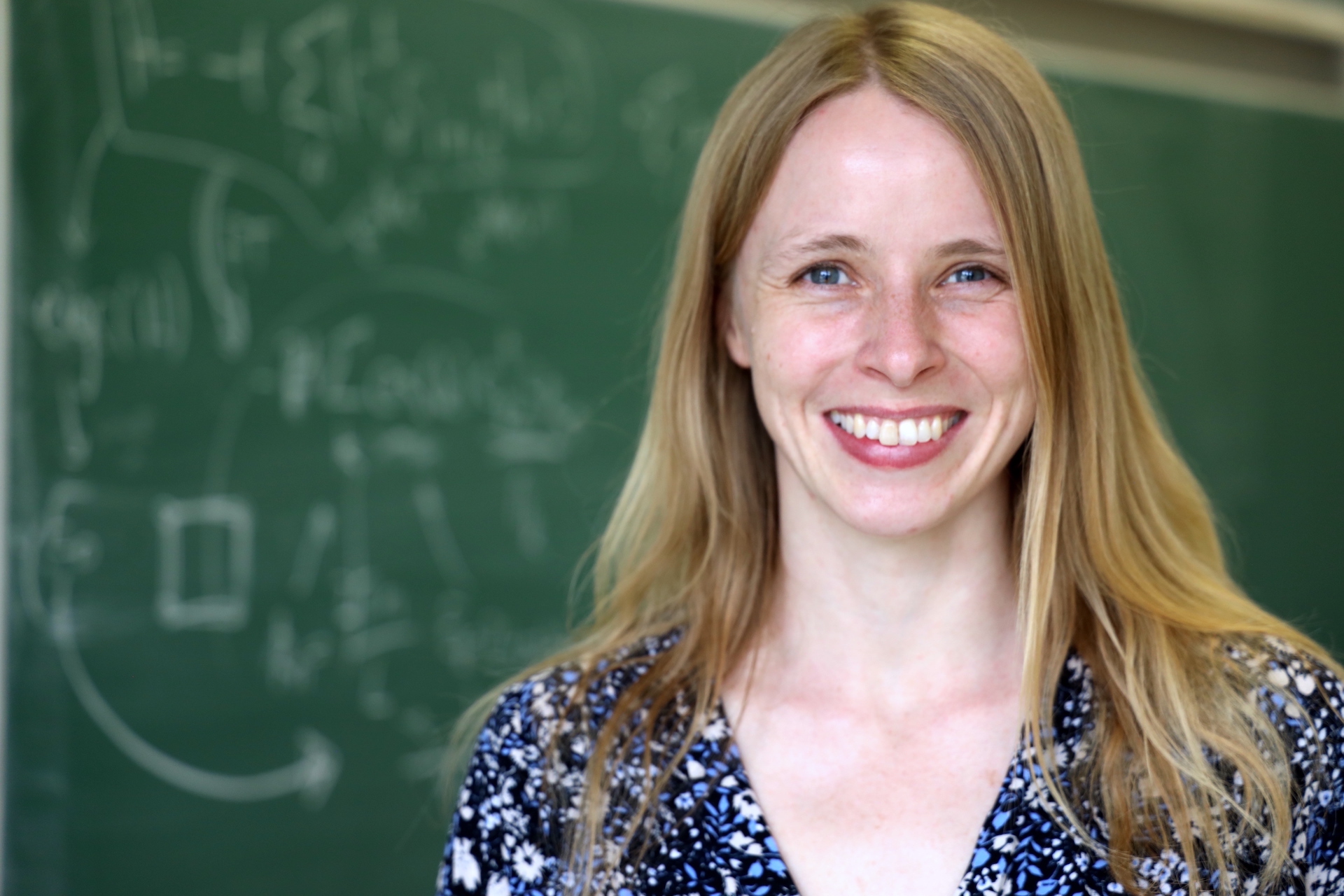
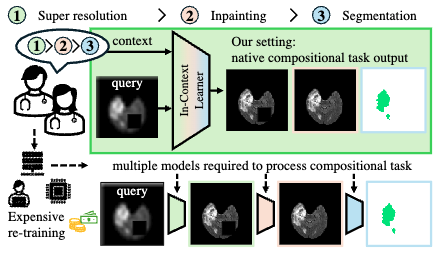
Prof. Dr. Erik Rodner is a faculty member at the University of Applied Sciences Berlin (HTW Berlin), where he serves as a Professor for Machine Learning and Data Science. He also contributes to the School of Engineering Sciences - Technology and Life. His research spans computer vision, machine learning, and biomedical applications, with a focus on learning with limited data, robust visual recognition models, and medical image analysis. He has developed innovative methods for medical diagnostics, industrial classification, and anomaly detection. Recent publications (2025-2016) highlight his expertise in visual in-context learning, semi-weakly segmentation, and active learning frameworks. He has collaborated with institutions such as ZEISS Group, Friedrich Schiller University Jena, and UC Berkeley. Scientific Awards: Award for Excellent Teaching (2023)
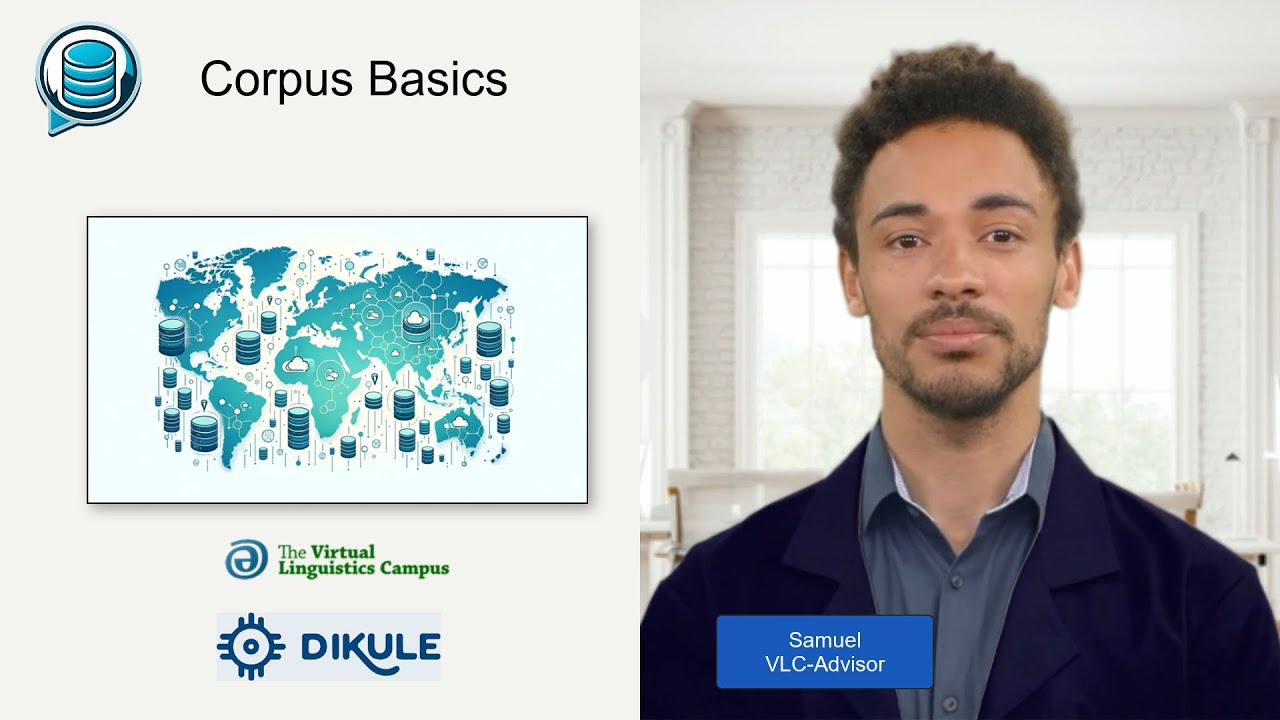
Professor Julia Schlüter is a distinguished academic in the Chair of English Linguistics within the Humanities Faculty at the University of Bamberg, Germany. She has served as Senior Lecturer at the Chair of English Linguistics and Language History under Prof. Manfred Krug since June 2008, holding the title of Professor following her habilitation in 2008. Her institutional profile demonstrates deep commitment to both research and teaching innovation, particularly through her leadership of the KorPLUS project and development of open educational resources for corpus linguistics. Her research interests span corpus linguistics for English language learners, empirical methods for studying language variation and change, and the application of corpus methods to teaching. She specializes in examining grammatical, phonological, and lexical differences between British and American English across historical periods from Middle English to present-day usage. Her work investigates phonological variation (particularly phonotactically controlled alternations), morphological change, and syntactic variation through corpus analysis, with special attention to functional grammar and grammaticalization theory. Professor Schlüter's recent publications (2022-2025) reveal a strategic evolution in her research focus, with increasing emphasis on the intersection of corpus linguistics and digital education. While maintaining her foundational work in historical English linguistics, she has developed significant expertise in applying corpus methods to language teacher education and evaluating AI writing tools. Her work demonstrates consistent methodological innovation, moving from traditional corpus analysis to blended learning approaches and digital educational resource development. Her scientific recognition includes: Winner of the 2025 Teaching Innovation Prize from the International Society for the Linguistics of English for the KorPLUS project University of Bamberg Prize for outstanding habilitation (2009) Lise Meitner Programme post-doctoral scholarship (2005-2006) Rectorate Prize from University of Paderborn for outstanding Ph.D. thesis (2005) Multiple DAAD scholarships for international study Professor Schlüter actively supervises doctoral research, currently guiding three Ph.D. candidates (Katharina Deckert, Aklima Nahar, and Nikolai Beland) while having successfully completed supervision for several others. She leads the KorPLUS project (2021-2025), funded by the Stiftung Innovation in der Hochschullehre, which develops open educational resources for corpus linguistics. Her research has been consistently supported by the German Research Foundation (DFG) and other funding bodies throughout her career. She heads the KorPLUS team (with Carina Großmann and Katharina Deckert) which develops the interactive Open Educational Resource platform for corpus linguistics. Her YouTube channel offers video tutorials on corpus basics, and she has created the Video Podcast Series "How to Update your Grammar" for English teachers. She regularly organizes in-service teacher trainings and collaborates with the Virtual Linguistics Campus at RWTH Aachen University to deliver her educational materials globally.
Susanne Narciss is a Professor at the Psychology of Learning and Instruction department of Technische Universität Dresden, leading the Center of Tactile Internet with Human in the Loop (CeTI). Her research focuses on error processing in educational contexts, with 15 recent publications analyzing error climates, feedback strategies, and motivational frameworks. Key Research Areas : Learning from errors/failure, instructional feedback design, affective-motivational responses, error-related metacognition. Methodological Scope : Combines longitudinal studies, experimental designs, and qualitative analyses across K-12, university, and informal learning settings (museums, home contexts). Her work emphasizes context-specific interventions for educators, parents, and students, including error-competency training programs and metacognitive scaffolding tools. Current projects examine vibrotactile feedback systems for motor learning and cultural responsiveness in psychology education. Collaborative Networks : Works with international teams on the International Competences for Undergraduate Psychology model and cyber-physical system pedagogy. Recent Trends : 2025 articles focus on collaborative error processing, scenario-based human-machine interaction, and generative learning tasks in digital environments.
Torsten Steinhoff is a Professor of Didactics of the German Language at the Department of Germanic Studies, University of Siegen, Faculty of Arts and Humanities. His research and teaching focus on theoretical, methodological, and empirical aspects of language acquisition and instruction from elementary to university levels. His primary research interests include: Writing didactics (Schreibdidaktik) Vocabulary didactics (Wortschatzdidaktik) Language-specific and disciplinary learning (Sprache im Fach) Digital communication and AI in education Development of complex learning arrangements (Lernarrangements) Steinhoff investigates how digital tools like ChatGPT can be integrated into writing instruction, promoting argumentative writing through structured learning tasks. His recent work (2023–2025) analyzes human-AI collaboration in writing, proposing models such as GPT as Ghost, Partner, or Tutor. He emphasizes a post-digital didactic approach, balancing traditional literacy with digital competencies. His publications reflect a strong trend in digital transformation of writing, multilingual education, and empirical interventions in secondary classrooms. He leads research projects funded by BMBF and MKW NRW, including the "AI Writing Arrangements" project tested in 8th-grade classes. Scientific contributions and collaborations: Co-editor of research handbooks on empirical writing didactics Collaborator with scholars like Nicole Marx, Katrin Lehnen, and Joachim Grabowski Active contributor to journals such as Didaktik Deutsch , BiSS-Journal , and Waxmann publications Hosts a research team at lernarrangements.de He advises on academic language development, text procedures, and vocabulary transfer across modalities and subjects. His lab develops open educational resources (OER) for digital writing and communication, contributing to platforms like Twillo.