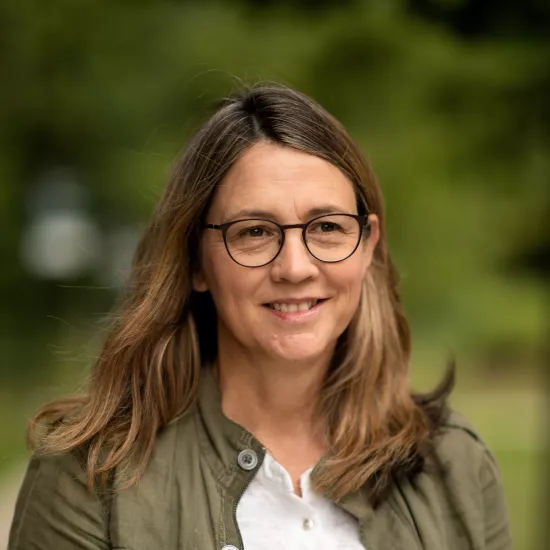
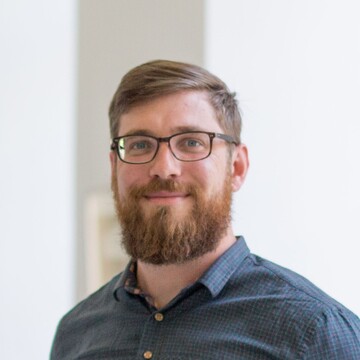
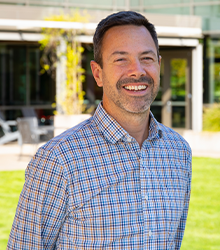
Dr. Jillianne Code is an Associate Professor at the University of British Columbia's Faculty of Education, Department of Curriculum & Pedagogy, directing the ALIVE Research Lab. Her work focuses on learner agency, educational technologies, and social media's impact on student success. Specializes in immersive virtual environments for assessment Researches self-regulated learning and formative feedback Investigates health education through digital interventions Her recent publications examine pandemic-era educational transitions, digital literacy in teacher training, and cognitive tools in virtual reality. She has received Outstanding Paper Awards for her work on immersive assessment. Dr. Code leads research projects on learning analytics, student engagement in digital spaces, and technology education sustainability. Her work bridges educational theory with practical interventions through digital badges, mobile health applications, and 3D learning environments.
Gail E. Joseph is a Professor in the College of Education at the University of Washington, with affiliations in Early Childhood & Family Studies and Learning Sciences & Human Development. She teaches courses, advises students, and conducts research on early care and education, focusing on child care quality, social-emotional learning, teacher education, and technology integration. Ph.D., University of Washington Her research projects include statewide surveys on early childhood workforce conditions, studies on digital professional learning tools like Circle Time Magazine, and evaluations of coaching interventions (e.g., FIND in Childcare) to improve teacher-child interactions. She co-created resources such as Teacher Time and the EarlyEdU Alliance, which aims to enhance early childhood education through accessible bachelor’s degrees. Her publications span topics like social-emotional curricula, behavioral interventions, and inclusive education frameworks. She has held leadership roles as Principal Investigator (PI) of the Head Start Center for Inclusion and Co-PI of the National Center for Quality Teaching and Learning (NCQTL). 2018 David R. Thorud Leadership Award (University of Washington) She currently serves as Executive Director of Cultivate Learning at the University of Washington, advancing professional development and quality improvement initiatives nationwide.
Jennifer C. Dalton serves as Associate Professor and Undergraduate Program Director in the Department of Communication Sciences and Disorders within Appalachian State University's Beaver College of Health Sciences. With over 15 years of higher education experience, she provides strategic leadership in curriculum development, program assessment, and student success initiatives across the undergraduate program. Her educational foundation includes: Ph.D. in Speech and Hearing Sciences, UNC Chapel Hill (2012) M.A. in Communication Sciences and Disorders, Appalachian State University (1999) M.B.A., Appalachian State University B.S. in Speech Pathology and Audiology, Kent State University (1997) Dr. Dalton's research bridges clinical practice and educational innovation, focusing on pediatric speech disorders while advancing scholarship in teaching methodologies. Her work examines how experiential education builds graduate competencies and how employment prospects influence student retention, reflecting her commitment to evidence-based program development. Recent publications demonstrate consistent output in higher education scholarship, with three peer-reviewed articles published between 2023-2024 addressing pandemic-era pedagogy, graduate training, and student retention analytics. These works highlight her dual expertise in clinical communication sciences and educational leadership. Her academic recognition includes: 2021 Beaver College of Health Sciences Outstanding Teaching Award 2023 UNC System Academic Affairs Faculty Fellowship Dr. Dalton actively secures program development grants that enhance student learning outcomes through innovative curriculum design. As program director, she oversees clinical education pathways while maintaining her ASHA clinical certification and Quality Matters online teaching credentials. Her leadership emphasizes inclusive education practices that prepare diverse learners for professional success in dynamic healthcare environments. Though not leading a named laboratory, Dr. Dalton is central to departmental research through her scholarship of teaching and learning, influencing clinical education standards across the discipline.
Ira Lit is a Teaching Professor at the Graduate School of Education at Stanford University. They serve as Faculty Director of the Stanford Teacher Education Program (STEP) and are affiliated with the Stanford Woods Institute for the Environment . Their work bridges teacher education, elementary education, and educational equity. Key research areas include: Equity in education systems Design of schooling models Experiences of marginalized students Family-school partnerships Recent publications analyze teacher preparation programs, voluntary desegregation, and multilingual education. Lit has supervised doctoral students like Elena Darling Hammond and Nallely Aceves , with a focus on race, identity, and policy in California schools. They hold a Ph.D. from Stanford in Curriculum Studies and Teacher Education (2003) and have taught at Stanford since 1986.
Tracey Galloway is an Associate Professor in the Department of Anthropology at the University of Toronto Mississauga (UTM), where she conducts critical research on Indigenous health disparities and policy interventions in northern Canada. Her work bridges medical anthropology, public health, and community-based participatory research to address systemic inequities affecting circumpolar populations. Education: PhD, McMaster University, 2008 MA (institution unspecified) BA (institution unspecified) BScN (institution unspecified) Dr. Galloway's research program centers on chronic disease risk assessment and health system improvement in Indigenous communities, with specific expertise in nutrition transition, food security, child growth patterns, and public health policy evaluation. She examines the impact of federal programs like Nutrition North Canada while developing community-led solutions for health equity. Her methodological approach combines quantitative analysis of health outcomes with qualitative community engagement, emphasizing Indigenous research sovereignty and decolonizing methodologies. Her publication record reveals consistent thematic focus across 15 recent articles, demonstrating interdisciplinary collaboration between anthropology, epidemiology, and health economics. Key trends include rigorous evaluation of colonial impacts on Indigenous food systems, innovative analysis of subsidy program effectiveness, and centering Indigenous patient experiences in healthcare design. Her work consistently prioritizes community-defined research questions and actionable policy recommendations. Dr. Galloway actively mentors graduate students including Darci Belmore, Carly Checholik, Neda Maki, and Hiliary Monteith, guiding research on Indigenous health determinants and policy interventions. While specific grant details aren't publicly enumerated, her collaborative projects involve partnerships with Indigenous communities across Northern Canada and interdisciplinary teams addressing complex health system challenges. She maintains strong community partnerships for her applied research, particularly in Nunavut and Northwestern Ontario, working directly with Anishinabeck and Inuit communities to translate findings into culturally safe health initiatives and policy reforms that address the root causes of health inequities.
Professor Oliver Razum at Bielefeld University's Faculty of Health Sciences leads Working Group 3 in Epidemiology & International Public Health. He serves on multiple commissions including the Faculty Conference and Teaching Commission, and contributes to the Center for Statistics and Bielefeld Center for Data Science. His work focuses on Epidemiology of migration and health Refugee health inequalities Medical rehabilitation equity Othering processes in public health Gender-sensitive health research Recent articles explore 2026 medical rehabilitation for people with disabilities, 2025 refugee mental health frameworks, and 2024 pandemic equity research. Key scientific contributions include the 2025 Georg Forster Fellowship and leadership in diversity-sensitive healthcare initiatives. His research spans urban neighborhood health effects , digital rehabilitation , and structural racism in healthcare . Current projects address intersectional inequalities , post-migration stress , and gender as social determinant . Professor Razum maintains active collaborations with institutions like the German Research Foundation and DRV Westphalia.
Zach Shahn is an Assistant Professor in the Department of Epidemiology and Biostatistics at the CUNY School of Public Health. He holds a PhD in Statistics from Columbia University and a BA in Mathematics from Stanford University. His research focuses on causal inference methods applied to healthcare data, particularly time-varying treatment effects and critical care applications. He has conducted postdoctoral work at Harvard School of Public Health and previously worked at IBM Research in Healthcare and Life Sciences. Education: PhD in Statistics and Probability, Columbia University BA in Mathematics, Stanford University Research interests include developing causal inference frameworks for evaluating treatment efficacy in dynamic healthcare settings, with a focus on critical care outcomes and methodological innovations. Recent work explores applications of causal diagrams, instrumental variables, and machine learning in healthcare decision-making. His studies often involve large-scale healthcare datasets to assess interventions' real-world impacts. Key trends in his articles include advancements in causal effect estimation under complex treatment regimes, bias analysis in observational studies, and methodological contributions to difference-in-differences and N-of-1 trial designs. His work bridges statistical theory with practical healthcare challenges, emphasizing reproducibility and policy relevance. No scientific awards are listed, though his contributions to causal inference methodologies are notable in academic circles. He has advised on healthcare data projects and published extensively without explicitly listed grants. His professional network includes collaborations with institutions like Harvard and IBM. He is affiliated with CUNY's public health programs and actively engages in academic discourse via Twitter and LinkedIn. His lab or team details are not explicitly mentioned in available materials.
David Bawden is a Professor in the Department of Library and Information Science (CityLIS) at City, University of London. With a publication record spanning over two decades, he has established himself as a leading scholar in information science, particularly known for his work on the philosophical foundations of information, knowledge organization, and information behavior. His research frequently intersects with Luciano Floridi's Philosophy of Information, which he has applied to library and information science theory and practice. Bawden's research interests focus on the theoretical underpinnings of information science, including information behavior, information literacy, knowledge organization, and the philosophical dimensions of information. His work often explores the conceptual frameworks that shape how we understand information in both physical and digital environments. He has made significant contributions to understanding information privacy through a philosophical lens and has examined temporal aspects of information in contemporary society. His recent publications demonstrate a continued focus on theoretical developments in information science, with particular attention to the implications of Floridi's work for library and information practice. Bawden's scholarship shows a consistent trajectory from examining historical aspects of information to contemporary challenges in the digital age, maintaining a strong theoretical orientation throughout. As a frequent collaborator with Lyn Robinson (also at City, University of London), Bawden has co-authored numerous papers exploring transitions between concepts of information across different domains, information overload, and the philosophical foundations of information science. His work has appeared in leading journals including the Journal of Documentation, Journal of the Association for Information Science and Technology, and Information Research. Bawden has been actively involved in the CityLIS program, contributing to innovative approaches to information science education including the development of curricula addressing data librarianship and the 'onlife' nature of contemporary information experience. His scholarship reflects a deep commitment to advancing the theoretical foundations of the field while maintaining relevance to practical information challenges.
Remko Van Hoek serves as Professor of Practice in the Department of Supply Chain Management at the Sam M. Walton College of Business, University of Arkansas. He teaches Sourcing and Procurement courses across undergraduate, master's, and doctoral programs. Prior to joining the University of Arkansas, Dr. Van Hoek held academic positions in Europe and served as a visiting professor at Cranfield School of Management, complemented by extensive industry experience as a supply chain and procurement executive at global corporations including Nike, PwC, and The Walt Disney Company. He currently serves on the Council of Supply Chain Management Professionals (CSCMP) Board of Directors and acts as executive director of the CSCMP Supply Chain Hall of Fame hosted by the Walton College. Dr. Van Hoek's research centers on digital transformation in procurement and supply chain management, with particular focus on blockchain implementation, artificial intelligence applications, and sustainable sourcing practices. His work investigates how emerging technologies reshape procurement processes, supplier relationship management, and risk mitigation strategies. He explores innovative approaches to supplier diversity programs, ethical sourcing frameworks, and the strategic evolution of procurement from cost reduction to value creation. His research consistently bridges academic theory with industry practice through case studies from major corporations, developing actionable frameworks for practitioners facing digital disruption and sustainability challenges. Analysis of his 15 most recent publications (2023-2025) reveals dominant themes in AI-driven supply chain risk prevention, blockchain implementation for transparency, and sustainable supplier engagement. His work demonstrates consistent industry collaboration, drawing from case studies at Walmart, Moet Hennessy, and Bayer to address post-pandemic resilience challenges. A significant portion examines procurement's strategic evolution beyond transactional functions, with recurring emphasis on ethical considerations in digital transformation and the practical implementation barriers for emerging technologies in global supply networks. As a Professor of Practice, Dr. Van Hoek integrates executive-level industry experience into curriculum development and student mentorship. His industry-engaged teaching model includes guest lecturer programs connecting students with supply chain practitioners, as evidenced by his co-authored work on integrating industry insights into supply chain education. While specific grant funding details are not publicly documented, his leadership in the CSCMP Supply Chain Hall of Fame demonstrates commitment to professional development and industry-academia knowledge transfer. Dr. Van Hoek directs the CSCMP Supply Chain Hall of Fame initiative, which documents transformative contributions to supply chain management through interviews with industry pioneers and historical case studies. This platform serves as both an educational resource for Walton College students and a professional development tool for supply chain practitioners globally. The Hall of Fame preserves critical industry knowledge while highlighting contemporary innovations in supply chain strategy and technology implementation.
Dr. Jan Delcker is a Post-Doc Researcher at the University of Mannheim's Chair for Economic and Business Education, specializing in Learning, Design & Technology. With a background in social work and media education, his research examines digitalization in educational contexts. Key research areas include: AI competence assessment in teachers and students Digital curriculum development in vocational schools Mobile learning applications for language assessment Impact of COVID-19 on school development He teaches courses on educational systems management and research methodology while supervising graduate theses. Recent publications explore AI tool adoption predictors and text mining analysis of vocational curricula.
Luisa Domingues is an Assistant Professor in the Department of Information Science and Technology at ISCTE - University Institute of Lisbon. She serves as an Integrated Researcher at ISTAR-Iscte - Research Center in Information Sciences, Technologies and Architecture, specializing in Information Systems research. Her academic qualifications include a PhD in Information Science and Technology from ISCTE-IUL (2013). Her primary research interests focus on: Project Management : Methodologies, risk assessment, and knowledge sharing Database Systems : Management, interoperability, and standardization e-Government Solutions : Public sector information systems and shared services Ontological Frameworks : Particularly for architectural heritage documentation Educational Technologies : Blended learning approaches in higher education Her recent publications (2016-2024) demonstrate a strong focus on project management methodologies, knowledge transfer, and information systems in public sector contexts. Key thematic trends include PMBOK framework applications, agile methodology adoption challenges, data science project risks, and technological solutions for cultural heritage preservation. Most works employ case study research and empirical validation methods. Dr. Domingues maintains an active advising portfolio with 1 doctoral candidate and 36 master's students, primarily focusing on topics in project management, information systems, and data science applications. She has held significant academic leadership positions including: 4th Year Coordinator for Bachelor's in Computer Science and Business Management (2020-2027) Program Director for the same degree (2017-2019) At ISTAR-Iscte research center, she contributes to projects involving information systems architecture, data standardization, and knowledge management frameworks.
Dr. Ben Clarke is an Associate Professor and Department Head of Special Education and Clinical Sciences at the University of Oregon’s College of Education. His research focuses on mathematical development, assessment systems, and school-based interventions to support student achievement. He has led over 20 federally funded grants totaling ~$55 million, emphasizing early numeracy interventions and multi-tiered instructional models. Clarke’s work bridges theory and practice, with publications on mathematics instruction, assessment, and RTI frameworks. Education: PhD (2002), MA (2001) in School Psychology/Special Education from University of Oregon; BS (1997) in Psychology from Wabash College (Phi Beta Kappa). Research Interests: Mathematics intervention design and efficacy Early numeracy assessment Multi-tiered systems of support (MTSS) Technology in education Equity in mathematics education Publications highlight his focus on intervention fidelity, tiered models, and outcomes for students with learning difficulties. Awards include the AERA Special Education SIG Research Award and recognition for academic excellence. Grants and Advising: Principal Investigator on ~$55M in federal grants; advises graduate students in School Psychology and Special Education. His lab develops evidence-based tools like the KinderTEK iPad program and contributes to national practice guides (e.g., IES RTI for Mathematics). Labs/Teams: Leads research teams focused on early mathematics intervention and MTSS implementation, collaborating with schools and policymakers to scale effective practices.
Associate Professor Bambang Trigunarsyah holds a position at RMIT University since 2018, affiliated with the School of Property, Construction and Project Management (PCPM). He earned his BSc in Civil Engineering from Colorado School of Mines, a Master's in Civil Engineering (Construction Management) from the University of Indonesia, and a PhD in Engineering Project Management from the University of Melbourne. His career spans industry roles, including project engineering in Indonesia's oil and gas sector, academic leadership at the University of Indonesia, and international teaching/research appointments at Queensland University of Technology (QUT) and King Fahd University of Petroleum and Minerals in Saudi Arabia. Research interests focus on post-disaster reconstruction, infrastructure project governance, constructability of infrastructure, and project management in developing countries. Notable projects include risk management frameworks using blockchain, circular economy in Saudi construction, and BIPV energy solutions. He actively supervises HDR students in areas like public-sector project success determinants and thermal environment studies. Bambang serves as Higher Degree Research Delegate Authority (HDR DA) for the School of PCPM and teaches postgraduate project management programs. Professional memberships include AIPM, PMI, and ASCE. His industry advisory roles include Indonesia's National Construction Service Development Board (2002-2007) and Australia-Indonesia Centre's Infrastructure Cluster (2016-2018). Recent research emphasizes BIM applications in infrastructure preservation, risk assessment methodologies, and climate-resilient construction. His work bridges theory and practice, addressing challenges in emerging economies and complex project environments.
Elena Simperl is a Professor of Computer Science and Deputy Head of Department for Enterprise and Engagement at King's College London's Department of Informatics. She co-directs the King's Institute for Artificial Intelligence and serves as Director of Research for the Open Data Institute. As a Hans Fischer Senior Fellow at the Technical University of Munich's Institute for Advanced Study, she leads the Trustworthy Knowledge Graphs focus group and contributes to advancing human-centric AI research across European institutions. Professor Simperl obtained her doctoral degree in Computer Science from the Free University of Berlin and her diploma from the Technical University of Munich. Prior to joining King's, she held academic positions in Germany, Austria, and at the University of Southampton, and was a Turing Fellow. Her career trajectory demonstrates consistent leadership in bridging academic research with practical applications in data ecosystems. Her research sits at the critical intersection of AI and social computing, focusing on human-centric approaches to building sociotechnical systems that integrate data, algorithms, and human capabilities. She investigates how to make knowledge engineering more accessible, how to leverage collective intelligence for data quality improvement, and how to design participatory AI systems that address societal challenges like misinformation. Her work spans knowledge graphs, semantic technologies, crowdsourcing, and open data, with particular emphasis on the social dimensions of data-intensive systems and the governance frameworks needed for trustworthy AI deployment. Analysis of her recent publications reveals a strong evolution toward integrating large language models with traditional knowledge engineering practices while maintaining human oversight. There's a clear trajectory from foundational work on knowledge representation toward increasingly applied research addressing real-world challenges in media ecosystems, citizen science, and data governance, with growing attention to policy implications of AI technologies. Fellow of the British Computer Society Fellow of the Royal Society of Arts Hans Fischer Senior Fellow at TUM-IAS (2023) Ranked among top 100 most influential scholars in knowledge engineering of the last decade Included in Women in AI 2000 ranking Professor Simperl has led 14 major European and national research projects totaling millions in funding, including MediaFutures (a Horizon 2020 program tackling online misinformation), QROWD, ODINE, Data Pitch, and ACTION. She currently co-chairs the Croissant working group in ML Commons developing data standards for AI, and serves as president of the Semantic Web Science Association. Her research has directly influenced the development of data ecosystems supporting startups and citizen science initiatives across Europe, demonstrating exceptional ability to translate theoretical advances into practical impact. As Director of Research at the Open Data Institute, she oversees initiatives connecting data entrepreneurs with artists and civic organizations. Her leadership in the MediaFutures project established a data-driven innovation hub that supported 51 startups/SMEs and 43 artists through three open calls, creating a sustainable model for arts-technology collaborations addressing media challenges. Her work with the ODINE project helped create a European ecosystem for data-driven startups, demonstrating her commitment to building practical applications of open data principles.
Dr. Mbita Mbao is an Assistant Professor in the School of Social Work at Salem State University, where she teaches courses including SWK 700 (Human Behavior), SWK 704/705 (Social Work Practice), and aging-focused courses like SWK 871. Her teaching philosophy emphasizes experiential learning and valuing student experiences. Dr. Mbao's research focuses on behavioral health, aging populations, workforce development, and immigrant issues. She actively works to expand aging-related curriculum and services through her involvement with the Older Adults Behavioral Health Network and Salem for All Ages initiative. Her education includes a BSW from Bowling Green State University, MSW from Rhode Island College, and PhD from Simmons University. As a Licensed Clinical Independent Social Worker, she maintains a clinical practice providing in-home therapy to older adults. Honors include: 2025 North Star Collective Fellow 2019 AGESW Pre-Dissertation Fellow 2021 GSA MCDTAW Early Career Diversity Fellow