Jeremy K Fox is Associate Professor of Psychology at Montclair State University's College of Humanities and Social Sciences, where he directs the RECAP (Research on Emotion, Coping and Anxiety in Pediatrics) laboratory. His research examines developmental pathways to childhood anxiety and depression. Education includes: PhD in Clinical Psychology, State University of New York at Albany MA in Psychology, State University of New York at Albany BA in Psychology, Johns Hopkins University Research focuses on temperament-environment interactions, emotion regulation deficits, and school-based interventions. Current work investigates parental influences on anxiety development and peer-supported treatment models for minority youth. Articles demonstrate consistent focus on improving mental health service accessibility. Leads graduate training in clinical psychology and mentors doctoral students in anxiety research. RECAP lab investigates affective mechanisms underlying adolescent distress and develops digital interventions for school settings.
Krzysztof Z Gajos is a Gordon McKay Professor of Computer Science at Harvard University’s Paulson School of Engineering and Applied Sciences. He leads the Intelligent Interactive Systems Group, focusing on human-AI interaction, accessible computing, and behavioral research at scale. His work integrates technical innovation with ethical and societal considerations, emphasizing equity-centered design. Education: Ph.D., University of Washington M.Eng. and B.Sc., Massachusetts Institute of Technology (MIT) Research Interests: His research spans AI for public services , health informatics , design for equity , and behavioral research platforms like LabintheWild.org. He investigates how AI can augment human decision-making while addressing biases and ethical challenges. Recent Trends in Articles: Recent work emphasizes human-AI collaboration in healthcare , explainable AI , and equity-centered design . Key themes include reducing overreliance on AI, improving transparency in algorithmic decisions, and centering marginalized communities in technology development. Scientific Awards: Sloan Fellowship Best Paper Awards at ACM CHI, COMPASS, and IUI Advising & Grants: His federal grants support AI ethics and healthcare projects, though recent terminations have prompted efforts to secure alternative funding. He advises students on projects like AI for humanitarian negotiations and digital phenotyping. Labs & Teams: Leads the Intelligent Interactive Systems Group , collaborating with organizations on AI for social good and accessible technology.
Dr Fiona Hum is a Senior Lecturer at Monash University's Faculty of Law, where she conducts research and teaches. Admitted as a solicitor and barrister of the Supreme Court of Victoria, she previously practiced commercial litigation, criminal law, and personal injury law while consulting for major insurers and the Victorian police force. Her doctorate from the University of Melbourne focused on Northern Territory euthanasia laws. Education: Doctorate in Law, University of Melbourne (thesis on euthanasia laws) Admitted Solicitor and Barrister, Supreme Court of Victoria Research Focus: Dr Hum's work centers on Evidence Law , Wrongful Convictions , and Gender/Race Relations in Law , with pioneering studies on compassion training for law students now expanding into climate change law. Her research directly supports UN Sustainable Development Goals for justice, equality, and well-being through interdisciplinary approaches connecting legal theory with psychological and social frameworks. Publication Trends: Recent work (2022-2025) analyzes high-profile cases like Kathleen Folbigg and Cardinal Pell while advancing evidence law pedagogy through her Cambridge University Press textbook. Earlier scholarship (2010) established foundational critiques of gender bias in evidentiary processes, particularly regarding women complainants and pregnant patients. Scientific Awards: Faculty Teaching Award for Teaching Excellence (2010) Certificate of Recognition for S1 Unit Performance (2015) Certificate of Recognition for S2 Unit Improvement (2016) Nominee: Inspiring Woman Award (2021) Nominee: Australian Legal Education Award (2023) Advising & Professional Impact: Accepting PhD students, Dr Hum actively shapes legal education through curriculum innovation and peer review for top journals ( University of New South Wales Law Journal , Sydney Law Review ). Her external collaborations include specialist lectures for Monash's Faculty of Medicine and keynotes at national conferences like the Women's Lawyers Conference on 'Justice for All'. Institutional Roles: Current member of the Australasian Law Academics Association (2025-2028) and former Honorary Fellow at the University of Melbourne (2019-2021), she bridges academic rigor with real-world legal practice through ongoing consultancy work.
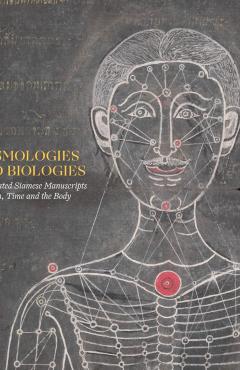
Justin McDaniel is the Edmund J. and Louise W. Kahn Endowed Professor of the Humanities at the University of Pennsylvania's Department of Religious Studies. His research focuses on Lao, Thai, Pali, and Sanskrit literature, Buddhist rituals, manuscript studies, and Southeast Asian history. He has authored multiple award-winning books and published over 100 articles and reviews. Education includes a BA from Boston College (1993), MTS from Harvard Divinity School (1998), MA and PhD in Sanskrit and Indian Studies from Harvard University (2001, 2003). His research explores intersections between Buddhism, material culture, and social history. Recent work includes studies on Siamese manuscripts and Thai Buddhist art. He has held grants from NEH, Mellon, Rockefeller, and others. Awarded teaching excellence at multiple institutions, McDaniel’s innovative courses like Existential Despair and Living Deliberately have been featured in national media. He serves as co-editor for Buddhism Compass and Journal of Lao Studies . Publications include Cosmologies and Biologies (2024), Wayward Distractions (2023), and Architects of Buddhist Leisure (2015), supported by NEH and Kyoto University. Forthcoming projects address Thai manuscripts and Buddhist biographies.
MF Norwegian School of Theology, Religion and SocietyNorway
Tatjana Schnell is a Professor of Existential Psychology at MF Norwegian School of Theology, Religion and Society, where she has worked since October 2020. She also holds a fellowship at the Humanistic University Berlin (since 2024). Her professional journey includes academic training in psychology, theology, religious studies, and philosophy across Germany, the UK, and Austria, with a doctorate from the University of Trier (Germany) and habilitation from the University of Innsbruck (Austria), where she founded the Existential Psychology Lab. Education : Psychology, Theology, Religious Studies, and Philosophy from the University of Göttingen, University of London, University of Heidelberg, and University of Cambridge Degree : Doctorate in Psychology (University of Trier, Germany) Habilitation : Psychology (University of Innsbruck, Austria) Tatjana Schnell's research focuses on existential themes including meaning in life, existential health, death attitudes, alienation, and religious/spiritual/secular worldviews. Her work bridges individual psychology with societal and environmental implications, with extensive international collaborations and publications. She has authored key works like "The Psychology of Meaning in Life" (2nd ed., 2025) and "Sinn finden" (2024). Her recent publications examine pandemic psychology, existential resources in gifted adults, workplace spirituality, and meaning-based interventions for chronic pain and cancer rehabilitation. Her research projects include "Making Sense of Volunteering," "Sinnmacher - The Meaning App," and studies on existential resources in palliative care. The Tatjana Schnell website provides further details about her work. Fellow : Humanistic University Berlin (2024) Tatjana Schnell has developed innovative tools like the Sources of Meaning Card Method (SoMeCaM) and Meaning in Work Inventory (ME-Work), with validated versions across multiple cultures. Her work emphasizes the practical application of existential psychology in mental health, organizational behavior, and ecological engagement. She founded the Existential Psychology Lab at the University of Innsbruck and continues to lead impactful research at MF Norwegian School of Theology, Religion and Society.
Zoran Josipovic is an Adjunct Assistant Professor in the Department of Psychology at New York University's College of Arts & Science. He is also the founding director of the Nonduality Institute, an independent research center exploring nondual awareness. His expertise spans consciousness studies, meditation neuroscience, and cognitive/affective neuroscience. Education: PhD in Cognitive Neuroscience (Union Institute & University), MA in Clinical Psychology (John F. Kennedy University), BA in Asian Religions (SUNY) Research focuses on nondual awareness mechanisms, meditation's effects on epilepsy, and consciousness neurobiology. He investigates how practices like Tibetan Buddhism, Zen, and Advaita Vedanta influence neural processes. His work bridges contemplative traditions with modern neuroscience through studies on self-awareness, brain networks, and minimal phenomenal experience. Recent publications explore reflexivity gradients in consciousness, implicit-explicit nondual awareness dimensions, and neural correlates of prayer in addiction recovery. His grants include funding from the Mind Science Foundation and Yoga Science for nondual awareness research. Awards: 2010 Tom Slick Award for Consciousness Research, multiple grants supporting meditation-epilepsy studies Teaches courses like 'Consciousness and the Brain' and 'Mindfulness & Transformative Technologies.' Active in professional societies including the Association for Psychological Science and Society for Neuroscience. Operates the Nonduality Institute, conducting empirical studies on nondual experience and offering online meditation education. A lifelong practitioner of nondual traditions, he integrates clinical psychology with contemplative practice instruction.
Dr. Josip Bošnjaković is an Associate Professor at both the Catholic Faculty of Theology in Đakovo (part of Josip Juraj Strossmayer University in Osijek) and the Croatian Catholic University in Zagreb. Ordained as a priest of the Đakovo-Osijek Archdiocese in 2003, he holds a doctorate in educational psychology from the Pontifical Salesian University in Rome (2012) and is a certified psychotherapist specializing in transactional analysis. He serves as the head of the Counseling Center in the Đakovo-Osijek Archdiocese and as president of the Croatian Society of Marriage and Family Counselors since 2019. His research interests bridge psychology and theology, with particular focus on empathy, compassion, trauma recovery, family dynamics, and spiritual resilience. Bošnjaković has developed an interdisciplinary approach that integrates psychological science with theological insights, particularly emphasizing how compassion functions as both a psychological mechanism and theological virtue. His work explores how spiritual resources contribute to psychological resilience, especially in crisis situations including war trauma, pandemic experiences, and family breakdown. Bošnjaković's recent publications (2024-2025) demonstrate a consistent focus on practical applications of psychological theory within pastoral contexts. His research shows how concepts from transactional analysis can enhance pastoral care, with particular attention to communication skills, conflict resolution, and emotional intelligence in religious settings. He has made significant contributions to understanding how spiritual practices support mental health and how religious communities can better address psychological needs. As an active member of professional organizations including ITAA (International Transactional Analysis Association), EATA (European Association of Transactional Analysis), and IAPR (International Association for the Psychology of Religion), Bošnjaković bridges academic research with practical counseling applications. He regularly contributes to professional development through workshops, conferences, and media appearances where he discusses psychological and spiritual aspects of contemporary challenges. His academic leadership includes directing the specialist study program in Propaedeutics of Psychotherapy and Theotherapy at the Catholic Faculty of Theology in Đakovo since 2023. Bošnjaković also serves on various academic committees including the Award Committee and Supervisory Board at his institution, and previously served on the Ethics Committee at the Croatian Catholic University (2013-2017).
Max Planck Institute for Social AnthropologyGermany
Peter Redfield serves as Professor of Anthropology at the University of Southern California's Dornsife College of Letters, Arts and Sciences, where he bridges anthropology with science and technology studies, postcolonial theory, and humanitarian practice. He previously held the presidency of the Society for Cultural Anthropology (2017-2019) and maintains active affiliations with the LOST Research Network (Law, Organization, Science and Technology), though this network is transitioning to an archive in 2024. His research critically examines transnational expertise and the ethics of humanitarian interventions in contexts of unreliable infrastructure, with current projects including "Beyond Reliable Infrastructure"—which analyzes minimalist life technologies for water, sanitation, and health—and collaborative work with Stellenbosch University on sanitation politics in South Africa. Redfield's scholarship consistently interrogates how humanitarian design navigates utopian ideals of social justice while confronting material constraints and political complexities in global health. His publication trends reveal sustained focus on medical anthropology and humanitarian ethics, particularly through case studies of epidemic response (Ebola), technological fixes (LifeStraw®), and organizational practices (Doctors Without Borders). This work demonstrates evolving attention to material politics and infrastructure, moving from colonial histories (e.g., French Guiana rocketry) toward contemporary crises in global health governance. Redfield's research is supported by institutional affiliations including the Institute for Advanced Study (Princeton, 2016-17) and collaborative partnerships across Africa. He leads interdisciplinary teams examining humanitarian innovation, with recent work emphasizing the material dimensions of aid delivery and the political economies of "dignified living" in marginalized communities.
Elena Korosteleva is a Professor of Politics and Global Sustainable Development, and Director of the Institute for Global Sustainable Development (IGSD) at the University of Warwick. She holds dual doctoral degrees from the University of Bath (2001) and Belarusian State University (1997). Her academic roles include Jean Monnet Chair of European Politics (awarded twice by the European Commission), and Visiting Professorships at Oxford Belarus Observatory, LSE IDEAS, and the College of Europe. She previously held senior positions at the University of Kent (Founder of Global Europe Centre) and Aberystwyth University (Director of Centre for European Studies). Her research focuses on resilience, governance, and EU external policies in Central Eurasia. Key projects include Horizon Europe’s SHAPEDEM-EU (2022-25), GCRF COMPASS (2017-22, shortlisted for THE Best International Collaboration), and the Belarus Oxford Observatory (2021-23). Her work bridges complex systems theory with policy analysis, emphasizing local ownership and adaptive strategies. Elena has authored over a dozen books, including *Belarus in the 21st Century: Between Dictatorship and Democracy* (2023) and *Resilient Communities of Central Eurasia* (2023). Her peer-reviewed articles address EU-Russia relations, Eastern Partnership dynamics, and post-Soviet resilience. Awards include recognition for policy impact and academic excellence from the European Commission and Times Higher Education. Her advisory roles span UK and EU institutions, including the British Academy, FCDO, and European Parliament. She advises national governments in Eurasia and collaborates with NGOs like TEPSA and SIDA. A media commentator for BBC, France24, and Sky News, she bridges academic research with public discourse on geopolitical crises and democratic challenges.
Imke Baetens is a Professor at the Vrije Universiteit Brussel (VUB), affiliated with the Faculty of Psychology and Educational Sciences and the Department of Psychology. Her research focuses on self-injurious behavior, mental health in adolescents and older adults, and resilience-building interventions. She leads multiple projects addressing mental health challenges in schools, elderly populations, and marginalized groups like transgender individuals. Key initiatives include the PRISM network for mental health innovations and the SMARTS project enhancing resilience through schools. Baetens collaborates internationally, with studies on cross-national self-injury trends and personality risk factors for self-harm in older adults. She actively engages in public discourse on mental health via media contributions and hosts academic visitors to advance collaborative research. Education: Not explicitly stated in text; inferred doctoral training via research roles. Research interests prioritize bridging clinical practice and population health, with a focus on preventive mental health strategies. Over 97 publications since 2009 reflect her expertise in psychology, gerontology, and public health. Notable datasets include longitudinal studies on self-harm risk and cross-country comparisons of mental health interventions. Media engagements highlight her role as a public mental health expert, addressing topics like pandemic impacts on youth and elderly self-harm trends. She supervises numerous academic works, though specific student names are not listed.
Keith Obadike is a Professor in the Department of Art at Cornell University's College of Architecture, Art, and Planning (AAP), where he also serves as Director of Undergraduate Studies. He is an acclaimed interdisciplinary artist and composer, known for his collaborative work with Mendi Obadike, which spans sound art, digital media, public installations, performance, and internet-based projects. His artistic and academic work critically engages with technology, race, history, and identity. Obadike earned a B.A. in Visual Art from North Carolina Central University and an M.F.A. in Sound Design from Yale University. Prior to joining Cornell, he taught at William Paterson University and held visiting positions at Princeton University, Columbia University, Northwestern University, and the Art Institute of Chicago. His research and creative practice focus on sound art, digital media, public art, performance, and collaborative practice , with strong interdisciplinary connections to Afrofuturism, data sonification, and social justice. He explores how sound and technology mediate racial identity, memory, and liberation, notably through the concept of acousmatic blackness , which he and Mendi developed to describe the racial perception of sound when its source is unseen. Obadike’s selected works include large-scale public sound installations such as Blues Speaker (for James Baldwin) , Free/Phase , Compass Song (Times Square Arts), and GuideStar (Space Needle, Seattle). His projects often use data sonification, archival research, and mythic storytelling, blending historical inquiry with futuristic vision. Notable series include the Opera-Masquerades , Americana Suites , and Numbers Station works, which transform databases of violence into sonic experiences. His honors include: Rockefeller New Media Arts Fellowship (2004) Louis Comfort Tiffany Biennial Award (2015) New York Foundation for the Arts Fellowship in Fiction New Music USA Creator Development Fund (2022) Obadike has received commissions and support from institutions such as the Vera List Center, Harlem Stage, Times Square Arts, the American Composers Orchestra, and the Cornell Mui Ho Center for Cities. He has exhibited and performed at The New Museum, The Whitney Museum of American Art, MoMA, and The Studio Museum in Harlem. His writings and publications include contributions to Studies into Darkness (2022), and artist books such as Four Electric Ghosts and Big House / Disclosure (both 2014). He has also released albums like Crosstalk (2008) and created internet artworks such as Blackness for Sale (2001) and The Interaction of Coloreds (2002), which are foundational in new media and critical race art. While specific advisees are not listed, his role as Director of Undergraduate Studies and Professor indicates active mentorship. His work is deeply collaborative, often co-created with Mendi Obadike, and supported by interdisciplinary teams and institutions.
Jacqueline Dyer serves as Associate Professor of Practice and DSW Director at Simmons University's School of Social Work, leveraging over 25 years of clinical social work experience across mental health counseling, community advocacy, and program leadership. She has held academic appointments at Gordon Conwell Theological Seminary, Eastern Nazarene College, Wheelock College, and Salem State University while maintaining a community-based private practice. Her educational credentials include: PhD in Social Work from Boston College Graduate School of Social Work MSW from Boston College Graduate School of Social Work BA from Wellesley College Dr. Dyer's research critically examines clergy compassion fatigue , historical trauma in African descent communities , and intimate partner violence within faith contexts . Her work bridges theological perspectives with clinical social work practice, emphasizing culturally responsive interventions in religious settings. She actively presents on mental health-faith intersections for both academic and community audiences. Analysis of her 2010-2020 publications reveals consistent focus on trauma-informed approaches within religious communities, with increasing attention to racial reconciliation and systemic oppression. Her scholarship demonstrates sophisticated integration of theological frameworks with evidence-based social work practice, particularly regarding domestic violence prevention in church environments. As a clinical supervisor for secular and Christian agencies, Dr. Dyer has developed specialized expertise in faith-based trauma interventions. Her community engagement includes facilitating Christian domestic violence support groups and advancing social work education through the DSW program at Simmons University.
Stuart Carroll is an Associate Professor of Elementary Education and Co-Chair of the Department of Elementary and Early Childhood Education at The College of New Jersey's School of Education. He also serves as Faculty Director of Global Graduate Programs, demonstrating his commitment to international education experiences. Dr. Carroll earned his Ph.D. in Teaching and Curriculum from Syracuse University (1999), an MEd in Teaching ESL from Trenton State College (1995), a Bed in Elementary Education from the University of Manitoba (1987), a J.D. from the University of Manitoba (1983), and a B.A. in History from the University of Manitoba (1981). Carroll's research focuses on inclusive education, particularly for students with intellectual disabilities, teacher preparation programs, global education experiences, and ESL teaching methods. His work examines how preservice teachers develop through experiences with diverse learners, especially those with disabilities, and how these experiences shape their professional identities. He has extensively studied the impact of inclusive classroom experiences on teacher development and has developed innovative approaches to teacher education that emphasize compassion and care, particularly in the post-pandemic educational landscape. His recent publications show a clear trajectory toward examining teacher preparation in challenging contexts, including the Ukrainian refugee crisis and pandemic recovery. His work consistently emphasizes the importance of inclusive practices, compassionate teaching, and global perspectives in teacher education. Dr. Carroll has received numerous honors including The College of New Jersey School of Education's Teacher of the Year (2015) and the Northeastern Association of Graduate Schools Graduate Teaching Award (2007). The College of New Jersey School of Education's Teacher of the Year (2015) Northeastern Association of Graduate Schools Graduate Teaching Award (2007) Dissertation award, Syracuse University (1999) Berj Harootunian Award for Outstanding Dissertation Proposal (1997) Carroll has coordinated the MAT Program (2002-2008) and the Global Student Teaching Program (2001-2007), demonstrating his leadership in teacher preparation. He has secured significant grant funding including a $96,000 grant from the Developmental Disabilities Council of the State of New Jersey (2008-2009) and participation in a federal TPSID grant with Bergen Community College (2018-2019). His service includes numerous committee memberships related to faculty excellence, certification, departmental awards, and curriculum development. Through his leadership of the Career and Community Studies Program and his extensive research on inclusive education, Carroll has established TCNJ as a leader in inclusive postsecondary education for students with intellectual disabilities. His work bridges theory and practice, creating meaningful opportunities for preservice teachers to learn alongside peers with disabilities.
Samantha Su-Hsien Sim is an Assistant Professor at Nova School of Business and Economics (NOVA SBE) in Portugal, where she teaches Organisational Behaviour and Human Resource-related courses. She is affiliated with the Leadership for Impact Centre at Nova SBE and the Mindfulness Initiative at Singapore Management University, and serves as a faculty adviser for the student-led Nova Mindfulness Club. Doctorate in Business, Singapore Management University Bachelor in Social Science, Singapore Management University Master in Social Science, Tilburg University Her research centers on compassion and mindfulness in the workplace, organisational justice, and cross-cultural differences. She investigates how compassion influences workplace behavior and leadership, and how mindfulness affects cooperation and negotiation outcomes. Her work bridges organizational psychology and management, with implications for employee well-being, ethical leadership, and inclusive organizational cultures. Her recent publications explore mindfulness-based training, corporate well-being programs, and algorithmic fairness in employment. The research spans topics like psychological well-being, negotiation dynamics, and public policy, showing a strong interdisciplinary focus on human-centered organizational practices. Published in top journals including Journal of Applied Psychology , Academy of Management Journal , and Organizational Behavior and Human Decision Processes She advises student research through the Nova Mindfulness Club and contributes to research grants related to leadership, mindfulness, and organizational justice. Her collaborative network includes scholars from Singapore, Europe, and North America, reflecting her cross-cultural research orientation. She is active in research centers focused on leadership impact and mindfulness, contributing to both academic and practical applications in organizational settings.
Dr. Sarah Crook is a Senior Lecturer in the Department of History at Swansea University, Faculty of Humanities and Social Sciences. She specializes in modern British history with a focus on women's history, student mental health, and the history of medicine. PhD in History from Queen Mary University of London MSt in Women's Studies from Keble College, Oxford Bachelor's degree in History from University of Sussex Her research explores histories of feminism , LGBTQ+ activism , motherhood , university communities , and mental health from postwar Britain to the 1980s. She is the director of GENCAS (Centre for Research into Gender and Culture in Society), an interdisciplinary research center. Recent publications analyze: Gendered undercover policing in the 1970s Humor as feminist resistance Neoliberalism and academic compassion Student loneliness across decades She has secured grants from Wellcome Trust , Arts and Humanities Research Council , and Medical Research Council (U-Belong project). Her teaching includes modules on Radical Histories , History of Sex and Gender , and Making History .