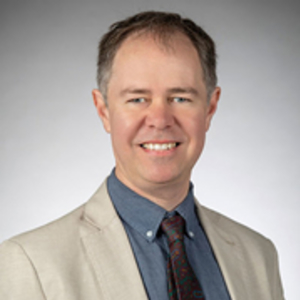
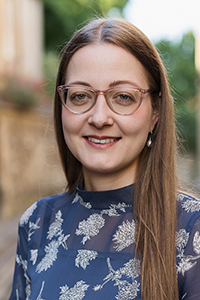
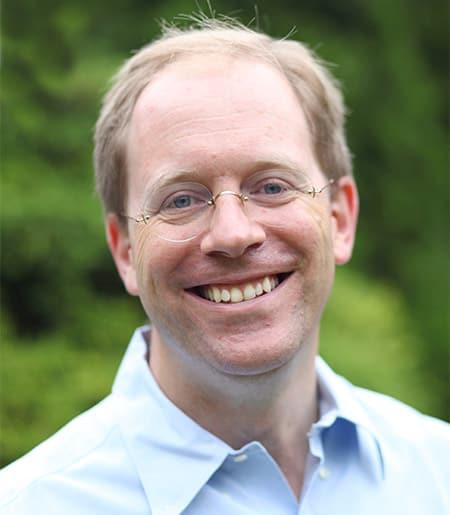
Richard Hind is a Professor in the Department of Mathematics at the University of Notre Dame, part of the College of Science. He holds a B.A. from Cambridge University (1992) and a Ph.D. from Stanford University (1997). His research focuses on differential geometry, particularly complex and symplectic geometry, with an emphasis on the interplay between Riemannian metrics and canonical geometric structures. His work explores symplectic embeddings, Lagrangian submanifolds, and geometric rigidity, utilizing pseudoholomorphic curves as a key tool. Key research areas include symplectic packing problems, Stein manifolds, and the topology of symplectic manifolds. Recent work addresses symplectic barriers, packing stability, and geometric invariants of ellipsoids. His publications span journals like Geom. Funct. Anal., Duke Math. J., and Invent. Math., often collaborating with leading researchers in the field. Teaching includes MATH 10270: Mathematics in Architecture, linking geometric principles to historic structures. Professional roles include service on editorial boards and contributions to conferences. Office: 238 Hayes-Healy Bldg, Email: rhind@nd.edu and hind.1@nd.edu.
Urs Lang is a Full Professor at the Department of Mathematics, ETH Zurich, where he has held a professorship since 2001. His academic journey began with mathematics studies at the University of Berne and the University of Freiburg i.Br., culminating in a doctoral degree focused on hyperbolic geometry and minimal surfaces. Education: University of Berne (undergraduate) University of Freiburg i.Br. (doctoral degree) Lang's research lies at the intersection of differential geometry , metric geometry , and geometric group theory . His work explores non-positive curvature spaces, geometric measure theory, and large-scale Lipschitz analysis. Recent publications examine combinatorial hyperbolicity, isoperimetric inequalities, and rank-rigidity phenomena. The publications overview reveals a consistent focus on geometric structures, including: Higher-rank hyperbolicity in singular spaces Convex geodesic bicombings Injective hulls in geometric group theory Nonlinear potential theory on hyperbolic metric spaces Lipschitz extension problems Curvature comparison theorems Lang actively contributes to academic discourse through editorial roles at journals like Geometry and Topology and Analysis and Geometry in Metric Spaces , as well as organizing major conferences including the 2025 Metric Analysis Trimester Program at Bonn's Hausdorff Institute.
Richard Bamler is an Associate Professor in the Department of Mathematics at the University of California, Berkeley . His research focuses on geometric analysis , differential geometry , and topology , particularly the application of geometric flows such as Ricci flow and Mean Curvature Flow to study metric and topological properties of manifolds. Contact : rbamler@math.berkeley.edu Role : Vice-Chair for Undergraduate Affairs His recent work includes novel results on curvature regularization via Ricci flows and singularity analysis in 4-dimensional U(2)-invariant settings. He has supervised multiple PhD students and is actively involved in teaching graduate and undergraduate courses like Riemannian Geometry and Calculus.
Aaron Smith is an Associate Professor in the Department of Mathematics and Statistics at the University of Ottawa, affiliated with the Faculty of Science. He holds a PhD from Stanford University. His research focuses on applied probability, computational statistics, Monte Carlo methods, and Markov chains, with an emphasis on advancing theoretical understanding and practical applications of these methodologies. Dr. Smith's work includes contributions to community detection algorithms, Markov chain mixing times, and synthetic health data generation. His recent publications explore topics such as nonstandard Dirichlet form representations, perturbation analysis of MCMC algorithms, and sparse Bayesian multidimensional scaling. He advises students in applied probability and has supervised postdoctoral researchers in related fields. His research interests span a wide range of topics, including stochastic processes, statistical inference, and algorithm design. He is particularly known for his analysis of convergence rates in Markov chains and the development of efficient sampling techniques for complex models. His interdisciplinary work bridges theoretical mathematics and practical computational challenges in data science and healthcare. Dr. Smith collaborates on projects involving synthetic data frameworks for privacy-preserving applications and has contributed to foundational work on mixing times and perturbation effects in stochastic systems.
Prashant Mehta is a Professor of Mechanical Science and Engineering at the University of Illinois at Urbana-Champaign , affiliated with the Coordinated Science Laboratory . His research focuses on controlled interacting particle systems and machine learning applications , particularly in human activity recognition using motion sensors. Education: Ph.D. in Mathematics, Cornell University (2004) M.S. in Electrical & Computer Engineering, University of Massachusetts Amherst (1996) B.E. in Electrical & Electronics Engineering, Birla Institute of Technology & Sciences (1993) Mehta's work has pioneered the feedback particle filter (FPF) algorithm for nonlinear estimation, applied in robotic systems and gesture recognition. His research spans control of combustion instabilities in jet engines, mean-field games , and dynamical systems in aerospace engineering. His publications emphasize nonlinear control theory and stochastic filtering , with recent trends in sensor data pattern recognition and cyber-physical systems . He has received multiple scientific awards , including the MURI award for the Cyberoctopus project and Excellence in Undergraduate Advising Awards . Scientific Honors: MURI Award (2019) for Cyberoctopus Excellence in Undergraduate Advising (2010, 2008) Outstanding Teaching Assistant Award (1994) Senior Member, IEEE Control Systems Society Member, ASME Energy Systems Subcommittee Member, SIAM Dynamical Systems Group Mehta has supervised students like Jin Kim (IEEE CDC Best Student Paper, 2019) and co-founded the startup Rithmio , acquired by Bosch Sensortec . His laboratory develops gesture-detection filters for applications in soft robotics and human-machine interfaces .
Chris De Sa is an Associate Professor in the Department of Computer Science at Cornell University, affiliated with the Cornell Machine Learning Group and leading the Relax ML Lab. His research focuses on algorithmic, software, and hardware techniques for high-performance machine learning, particularly relaxed-consistency stochastic algorithms like asynchronous and low-precision stochastic gradient descent (SGD). He earned his Ph.D. from Stanford University under advisors Kunle Olukotun and Chris Ré. His work emphasizes constructing efficient, parallel, and distributed machine learning frameworks for deep learning and data analytics. Education: Ph.D. in Computer Science, Stanford University (2017) Research Interests: Algorithmic techniques for scalable ML, quantization, distributed optimization, hyperbolic geometry in ML, and reliable measurement of ML systems. His group develops frameworks for efficient inference/training and explores the intersection of ML with domains like agriculture and plant science through courses like PLSCI 7202. Recent Highlights: DARPA YFA Grant (2024), NSF CAREER Award, Google Research Scholar Award, and multiple best paper recognitions. Key contributions include QuIP quantization methods, Coneheads attention mechanisms, and theoretical advances in decentralized training. Awards: NSF CAREER Award DARPA YFA Grant (2024) Google Research Scholar Award Mr. & Mrs. Richard F. Tucker Teaching Award Grants & Advising: Advises 8 Ph.D. students (including Ruqi Zhang, Yucheng Lu, A. Feder Cooper) and holds leadership roles in MLSys conferences. Active in grant-funded research (e.g., NSF Robust Intelligence). Labs/Teams: Leads the Relax ML Lab and participates in Cornell’s Institute for Digital Agriculture (CIDA).
Wenping Wang is a Professor in the Department of Computer Science & Engineering at Texas A&M University, part of the College of Engineering. His research focuses on computer graphics, computer vision, geometric modeling, and visualization. He holds Fellowships from ACM and IEEE, and has received notable awards including the 2021 AsiaGraphics Outstanding Technical Contributions Award and the 2017 John Gregory Memorial Award. Wang's educational background includes a Ph.D. from the University of Alberta and M.Eng. and B.Sc. degrees from Shandong University. His work spans advancements in neural implicit surfaces, 3D reconstruction, and medical imaging applications such as orthodontic treatment prediction. He has authored numerous influential papers in top-tier conferences like SIGGRAPH and journals like ACM Transactions on Graphics. His research interests emphasize bridging geometric modeling with machine learning, particularly in neural rendering, surface parameterization, and medical visualization. Recent projects include developing frameworks for automatic tooth alignment and high-fidelity 3D geometry generation. Wang's contributions have significantly impacted both theoretical foundations and practical applications in computer graphics.
Ruth Fong is a Teaching Professor at the Department of Computer Science, Princeton University , where she teaches foundational and advanced AI/ML courses (COS324, COS126) while leading the Looking Glass Lab in explainable AI research. She collaborates closely with the Visual AI Lab and Professor Olga Russakovsky . Education: PhD in Visual Geometry Group, University of Oxford (advised by Andrea Vedaldi , funded by Rhodes Trust and Open Philanthropy ) MSc in Neuroscience, University of Oxford (with Rafal Bogacz , Ben Willmore , and Nicol Harper ) AB in Computer Science, Harvard University (with David Cox and Walter Scheirer ) Research Focus: Pioneering Explainable AI and ML Fairness , with emphasis on post-hoc model understanding, interpretable-by-design architectures, and human-AI interaction frameworks. Her work spans computer vision, self-supervised learning, and neuroscience-inspired methodologies. Publication Trends: Recent papers (2023-2025) analyze interactive explanations , concept salience , and gender artifacts in vision datasets . Earlier work (2017-2020) established foundational techniques in extremal perturbations , backpropagation saliency , and neural network interpretability . Scientific Awards: Princeton Engineering Council Teaching Award (2025) Keller Center Summer Course Development Grant (2025) CHI Honorable Mention Paper Award (2023) Open Philanthropy AI Fellowship (2018) Rhodes Scholarship (2015) Advising: Directly mentored 10 Princeton undergraduates on IW/senior theses projects spanning generative AI , medical imaging fairness , and interactive visualization tools . Grants include Princeton SEAS and Open Philanthropy funding for the Looking Glass Lab. Lab & Team: Leads the Looking Glass Lab with 6 graduate/postgraduate members including Rawand Aziz , Matthew Barrett , and Ben Wachspress . Collaborates with faculty across Princeton and Oxford.
Dr. Karim El-Basyouny is a Killam Laureate Professor and City of Edmonton Urban Traffic Safety Research Chair at the University of Alberta's Faculty of Engineering, where he serves as Associate Dean (Research Infrastructure and Innovation) in the Civil and Environmental Engineering Department. A licensed Professional Engineer in Alberta, he holds advanced degrees in Transportation Engineering from the University of British Columbia and has dedicated his career to advancing road safety through data-driven management frameworks. His academic credentials include: Doctor of Philosophy, Civil Engineering, University of British Columbia, 2011 Engineering Management Sub-specialization, Civil Engineering, University of British Columbia, 2010 Master of Applied Science, Civil Engineering, University of British Columbia, 2006 Bachelor's degree (ABET Equivalent), Civil & Environmental Engineering, United Arab Emirates University, 2003 El-Basyouny's research pioneers the integration of remote sensing, machine learning, and statistical modeling to enhance transportation safety. His work develops automated tools for infrastructure digitization, collision prediction, and speed management, treating safety as a systemic product requiring management frameworks. Key contributions include LiDAR-based road feature extraction, network-level safety evaluations, and frameworks for vision-zero outcomes that address both human-driven and autonomous vehicle contexts. His recent publications demonstrate a cohesive research trajectory centered on leveraging point cloud data and computational intelligence for safety management. Over 15 major publications since 2021 focus on automated infrastructure assessment (light pole detection, clear zone mapping, vertical clearance evaluation), weather-impact modeling, and enforcement resource optimization. This body of work bridges transportation engineering with computer vision and operations research to create scalable safety solutions. His scientific contributions have been recognized with prestigious honors including: 2024 Killam Annual Professorship Award 2024 Road Safety Achievement Award from TAC 2023 Donald Stanley Award for environmental engineering 2022 Faculty of Engineering Graduate Teaching Award 2021 Daniel B. Fambro Student Paper Award As an academic leader, El-Basyouny actively mentors graduate students and secures significant research funding through his endowed chair position. He currently recruits fully-funded PhD and postdoctoral candidates specializing in remote sensing applications, machine learning, and geomatics for road digitization projects. His research group collaborates with national safety committees and municipal agencies to translate findings into policy, while he serves on editorial boards for Transportation Research Record and Analytic Methods in Accident Research. The research group operates at the intersection of transportation engineering and computational science, developing automated frameworks that merge sensor technologies with data processing tools. Current projects focus on semantic segmentation of 3D point clouds, safety implications of infrastructure digitization, and machine learning applications for road feature extraction in both urban and rural environments.
John Lott is a Professor in the Department of Mathematics at the University of California, Berkeley, specializing in Differential Geometry , Geometric Analysis , and Optimal Transport since his appointment in 2008. His research explores the interplay between Ricci curvature , metric-measure spaces , and geometric flows , with notable contributions to Ricci flow and noncommutative geometry . He has supervised multiple PhD students including Thunwa Theerakarn and Patrick Wilson , and maintains an active publication record with over 40 research papers. Selected Research Areas : Differential Geometry, Geometric Analysis, Optimal Transport, Mathematical Physics, Noncommutative Geometry Recent Publications (2020-2025) focus on Kähler manifolds , collapsing geometry , and quasilocal mass in general relativity. His work on Ricci curvature via optimal transport with Cédric Villani has become foundational in the field. Academic Affiliation : Position: Professor Institution: University of California, Berkeley Department: Mathematics
Melanie Weber is an Assistant Professor of Applied Mathematics and Computer Science at Harvard University's John A. Paulson School of Engineering and Applied Sciences (SEAS), leading the Geometric Machine Learning Group. Her research focuses on leveraging geometric structures in data for designing efficient machine learning and optimization algorithms with theoretical guarantees. She holds a PhD from Princeton University (2021) and has held fellowships at the Mathematical Institute of Oxford, Brasenose College, and the Simons Institute. Her work bridges geometry, optimization, and machine learning, with funding from NSF, Sloan Foundation, and Harvard initiatives. Education : PhD in Applied Mathematics, Princeton University (2021) BSc/MSc in Mathematics and Physics, University of Leipzig (2016) Research Interests : Dr. Weber's research integrates geometric principles into machine learning and optimization, focusing on non-Euclidean spaces, graph structures, and manifold-based methods. Key areas include optimization on Riemannian manifolds, curvature-based analysis (e.g., Ricci curvature), and developing algorithms resilient to data geometry challenges like over-smoothing in graph neural networks. Her work emphasizes theoretical foundations while addressing practical scalability in high-dimensional data. Awards & Recognition : 2024 Sloan Research Fellowship 2023 Leslie Fox Prize in Numerical Analysis 2023 NSF Grant for Geometric Optimization Grants & Funding : Supported by National Science Foundation (NSF), Alfred P. Sloan Foundation, Aramont Foundation, Harvard Dean’s Fund, and Harvard Data Science Initiative. Labs & Collaborations : Leads the Geometric Machine Learning Group at SEAS, collaborating with institutions like MIT, Max Planck Institute, and industry labs (Facebook, Google, Microsoft). Active in organizing workshops on geometric methods and curvature analysis.
Julie Bergner is a Professor in the Department of Mathematics at the University of Virginia. She is currently on sabbatical during 2024-25 as a Visiting Fellow at Clare Hall, University of Cambridge. Her research focuses on Homotopy Theory, Algebraic Topology, Algebraic K-Theory, and Category Theory, with a particular emphasis on higher category theory and homotopical algebraic structures. University of Virginia (Professor, Department of Mathematics) University of Cambridge (Visiting Fellow at Clare Hall, 2024-25) Her work spans 2-Segal objects, model categories, Waldhausen constructions, and applications to topological field theories. She has received NSF CAREER awards for her research on equivariant topological field theories and higher cluster categories. Her recent publications explore combinatorial models, enriched categories, and homotopy limits in the context of functor calculus and higher structures. Julie Bergner contributes to mathematical exposition through articles on writing papers in the mathematical sciences and homotopy theory applications. She is actively involved in the department's topology seminar and supports collaborative learning initiatives. Her research has implications in algebraic topology, category theory, and their interdisciplinary applications.
Philip J. Ethington is Professor of History, Political Science, and Spatial Sciences at the University of Southern California's Dornsife College of Letters, Arts, and Sciences. As Co-Director of the USC Center for Transformative Scholarship and Fellow of the Los Angeles Institute for the Humanities, he bridges historical scholarship with digital innovation through projects like HyperCities. Ethington's educational background includes: Ph.D. in History from Stanford University (1989) Postdoctoral Fellowship at Harvard University's Charles Warren Center (2007-2008) Getty Scholar at the Getty Research Institute (1996-1997) His research pioneers spatial theory of history through chronographs and digital cartography, examining urban evolution from Pleistocene times to present. Key interests include global metropolis studies , visual culture , and digital humanities , with focus on Los Angeles as a case study for transnational urban dynamics. Recent publications reveal consistent exploration of spatial dimensions in historical analysis, particularly through geographic institutionalism and deep historical regionalism. His work integrates cartographic innovation with theoretical frameworks to map urban change across millennia, emphasizing institutional ecology and transnational connections. Scientific recognition includes: Nomination for USC's Steven B. Sample Teaching Award (2010-2011) USC Interdisciplinary Faculty Fellowship (2004-2005) Award-winning documentary film Visual Acoustics (2009) Ethington mentors undergraduate researchers in urban history while leading major grants including MacArthur Foundation's HyperCities project ($238,000) and NEH's Digital Humanities initiative ($248,492). His funded work develops collaborative platforms for geohistorical research and digital publishing. He co-directs the USC History Lab and Center for Transformative Scholarship, fostering interdisciplinary collaboration through the Population Dynamics Lab and HyperCities consortium for participatory urban mapping.
Timothy Riley is a Professor in the Department of Mathematics at Cornell University, affiliated with the College of Arts and Sciences. His research focuses on geometric group theory, studying infinite discrete groups through geometric lenses such as Riemannian manifolds, graphs, and cell complexes. Key interests include curvature, geometric features of group presentations, and algorithmic complexity. He holds a D.Phil. from Oxford University (2002). Research spans geometric aspects of the word problem, hyperbolic groups, Dehn functions, and applications to cryptography and topology. His work integrates algebraic, topological, and computational perspectives. Notable collaborations include studies on hydra groups, Cayley graphs, and asymptotic cones. Publications emphasize geometric topology and group theory, with contributions to understanding filling invariants and geometric algorithmic properties. His office is 403 Malott Hall, and he maintains an active personal web page. No explicit awards are listed in the provided text, though he was part of news items related to teaching honors in 2024.
Anand Bhattad is an Assistant Professor in the Department of Computer Science at Johns Hopkins University, starting Fall 2025. Previously, he held positions as a Research Assistant Professor at the Toyota Technological Institute at Chicago (TTIC) and a visiting scholar at UC Berkeley. His research focuses on the intersection of computer vision, generative modeling, and physical reasoning, aiming to develop perception-driven and physics-aware visual models. His academic journey includes a PhD in Computer Science from the University of Illinois Urbana-Champaign under David Forsyth, with mentorship from Derek Hoiem, Svetlana Lazebnik, Greg Shakhnarovich, and Shenlong Wang. Prior to his PhD, he earned dual master’s degrees in Computer Science and Civil and Environmental Engineering at UIUC and a bachelor’s in Civil Engineering from NITK Surathkal, India. Research interests center on how generative models encode physical and perceptual knowledge, with key contributions in intrinsic image emergence, projective geometry limitations, and physics-aware relighting techniques. His work bridges classical computer vision concepts with modern deep learning, producing state-of-the-art methods for 3D scene synthesis and image editing. Articles span topics like 3P Vision , diffusion models, and 360° video datasets, reflecting interdisciplinary approaches in computer graphics and computational photography. Scientific awards include Outstanding Reviewer at ICCV 2023, CVPR 2022 Best Paper Finalist, and multiple conference service roles as workshop organizer and area chair. He designed the TTIC course Past Meets Present: A Tale of Two Visions , teaching connections between historical and modern computer vision research.