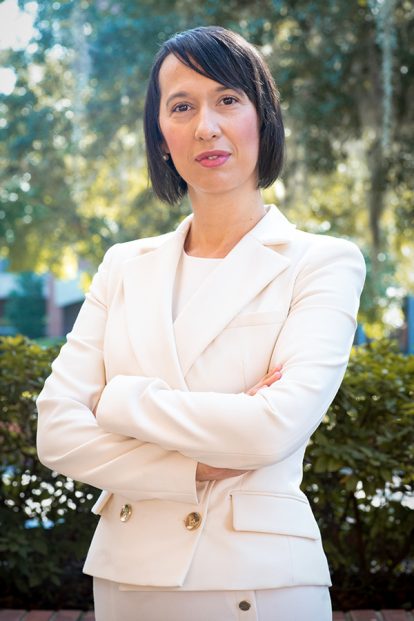
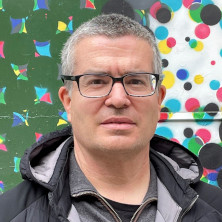
Bruno Castro da Silva is an Assistant Professor in the College of Information and Computer Sciences (CICS) at the University of Massachusetts Amherst. He holds a PhD in Computer Science from UMass Amherst (2014), and MSc and BSc degrees from the Federal University of Rio Grande do Sul (UFRGS), Brazil. Prior to UMass, he was an Associate Professor at UFRGS and a postdoctoral researcher at MIT's Aerospace Controls Laboratory. His research focuses on reinforcement learning (RL), robotics, and AI safety, aiming to develop algorithms that ensure safe and autonomous task decomposition while meeting user-specified safety criteria. Key areas include hierarchical policies, active learning, and biologically-plausible mechanisms. He has published in top venues like ICML, NeurIPS, and Science, and received awards such as the Best Paper at RLDM 2022 and Distinguished Reviewer distinctions. He teaches courses in reinforcement learning and machine learning at UMass, emphasizing accessibility and safety. His work also extends to fostering diversity in STEM education. He leads the Autonomous Learning Laboratory and collaborates with organizations like Adobe Research and the Laboratory of Computational Neuroscience in Rome.
Michael Cook is the Class of 1943 University Professor of Near Eastern Studies at Princeton University. He specializes in Islamic history, thought, and religious values, with a focus on medieval Islamic civilization and the role of religious obligations like al-amr bi’l-ma'ruf. Cook earned degrees from Cambridge and SOAS in London, later teaching at SOAS before joining Princeton in 1986. His research spans Ottoman population history, Islamic legal and ethical traditions, and comparative studies of ancient religions and modern politics. Notable works include Commanding Right and Forbidding Wrong in Islamic Thought and Ancient Religions, Modern Politics . He has supervised over 30 doctoral dissertations, covering diverse topics such as medieval Islamic law, sectarian identities, and cross-cultural historical comparisons. Cook’s teaching emphasizes Arabic textual analysis and graduate mentorship, including seminars on dissertation writing. His publications reflect a commitment to interdisciplinary approaches, bridging history, theology, and comparative politics.
Alena Ledeneva is a Professor of Politics and Society at the School of Slavonic and East European Studies (SSEES) at University College London (UCL). She holds a PhD in Social and Political Theory from Cambridge University (1996) and has been at UCL since 1999. Her research focuses on informal governance systems, corruption, and networks in post-Soviet societies, particularly in Russia and Southeast Europe. She leads major EU-funded projects like ANTICORRP.eu and MARKETS, and founded the UCL FRINGE Centre and Global Informality Project. Education: PhD in Social and Political Theory, University of Cambridge (1996) MPhil, University of Cambridge (1992) BA, Novosibirsk State University (1986) Research interests include informal institutions, blat networks, systemic corruption (sistema), and cross-cultural informality. She has authored landmark books such as How Russia Really Works and Can Russia Modernize? , and edited the Global Encyclopedia of Informality series. Her work bridges political science, sociology, and organizational behavior. Key contributions include analyzing the 'dark and bright sides' of informal networks, modeling costs of informal practices in the Western Balkans, and critiquing global corruption paradigms. She advises on anti-corruption strategies and runs interdisciplinary research hubs. Labs/Teams: FRINGE Centre for Social and Cultural Complexity Global Informality Project (in-formality.com) Her art explores sociopolitical themes, displayed at alenaledeneva.com/art .
Prof. Dr. Peter Georg Picht is a Professor of Law at the University of Zurich, leading the Chair of Economic Law, Competition Law, and Intellectual Property Law. His research focuses on the intersection of intellectual property, antitrust, and digital markets. He is affiliated with the Max Planck Institute for Innovation & Competition and actively contributes to the Center for Intellectual Property and Competition Law (CIPCO). His work addresses challenges in AI regulation, FRAND licensing, geoblocking, and competition law in the digital economy. Research Interests: AI and IP policy, FRAND licensing disputes, digital market regulation, patent arbitration, and EU competition law. Recent Activities: Supervises master's and doctoral theses, organizes seminars on AI and competition law, and participates in global conferences on digital platforms and standards. Notable publications include analyses on AI's impact on IP frameworks, sustainable pricing under competition law, and comparative assessments of FRAND injunction rules. He advises on policy development and regularly lectures on emerging legal issues in technology and innovation.
Jonathan Jackson is Professor of Research Methodology at the London School of Economics and Political Science's Department of Methodology, with affiliated positions at University of Sydney Law School and Yale Law School's Justice Collaboratory. His internationally recognized research examines procedural justice, legitimacy, and fairness in criminal justice systems through cross-cultural methodologies. His research integrates psychology and law to investigate: the causal mechanisms of procedural justice; structural racism in policing; bounded authority concepts; and adaptability of justice frameworks across diverse sociopolitical contexts. Jackson leads major projects funded by the Economic and Social Research Council and European Commission, including the design of the European Social Survey's justice module implemented in 28 countries. Recent publications demonstrate focus on digital justice transformation, crisis policing legitimacy, gender-based violence response, and racial justice impacts following George Floyd's murder. His scholarly influence extends through editorship of the British Journal of Criminology and PLOS ONE, plus visiting appointments at Oxford, Cambridge, Harvard, and NYU.
Amy Scott Metcalfe is a Professor in the Department of Educational Studies at the University of British Columbia (UBC), affiliated with the Faculty of Education. She holds dual appointments with the Institute for Gender, Race, Sexuality and Social Justice, emphasizing interdisciplinary approaches to higher education studies. Her research focuses on international comparative higher education systems, academic governance, and sociological analysis of university policies. She critiques managerialism trends and explores gender disparities in academic productivity. Metcalfe employs visual methodologies, including photo-ethnography and extended photo essays to document institutional change. Teaching responsibilities are managed through the Department of Educational Studies, with course details available via UBC’s official portal. Her scholarship spans Canadian and global contexts, addressing issues like faculty internationalization, research ethics frameworks, and the impact of pandemic disruptions on academic collaboration. Key contributions include longitudinal studies on Canadian professors’ perceptions of work-life balance, comparative analyses of gender gaps in research output across North America, and critical examinations of university-industry-government networks. She advocates for equity-centered pedagogies and anti-colonial approaches in higher education policy.
Jianping Fu is a Professor in the Department of Mechanical Engineering at the University of Michigan , with joint appointments in Biomedical Engineering and Cell and Developmental Biology. His research integrates micro/nanoengineering , mechanobiology , and stem cell biology to model human development and disease. Education: PhD (MIT, 2007), BE (University of Science and Technology of China, 2000) His research interests focus on stem cell bioengineering , developmental bioengineering , and mechanobiology , particularly in modeling early post-implantation human development, neural tube formation, and pluripotent stem cell mechanoregulation. His work combines biomimetic culture systems with microfluidic gradients to study embryogenesis and organogenesis. Recent publications highlight advances in human embryo modeling (2024 Cell, Nature, Cell Stem Cell), neural tube patterning (2024 Nature), and mechanobiology of stem cells (2024 Nature Reviews Physics). These studies emphasize computational methods , single-cell analysis , and standardization of embryo models . Scientific honors include: Friedrich Wilhelm Bessel Research Award (2022) ISSCR Merit Award (2024) Fellow, American Institute for Medical and Biological Engineering (2019) NSF CAREER Award (2012) Life Member, World Association of Chinese Biomedical Engineers (2024) Dr. Fu mentors extensively, with 20+ alumni including PhD students and postdocs now in academic and industry positions. His lab has received $3M NIH funding for immunological diagnostics and MTRAC grants for translational research. Collaborations with institutions like Cincinnati Children's Hospital and Rice University enhance his interdisciplinary approach to regenerative medicine.
Brian Magerko is Professor of Digital Media in the School of Literature, Media, and Communication at Georgia Institute of Technology , where he also serves as Director of Graduate Studies for the Digital Media program and holds an adjunct appointment in the School of Interactive Computing . He directs the Expressive Machinery Lab and has led over $20 million in federally funded research at the intersection of cognition, computation, and creativity. Education Ph.D. Computer Science and Engineering, University of Michigan (2006) M.S. Computer Science and Engineering, University of Michigan (2001) B.S. Cognitive Science (minor Computer Science & Jazz Performance), Carnegie Mellon University (1999) Research Interests Dr. Magerko’s scholarship integrates cognitive science , AI , and computational media to investigate three core themes: (1) social and creative collaboration between humans and AI; (2) design of interactive narrative, music, and arts-based computational experiences; and (3) inclusive STEAM education that leverages personal expression—most notably through the widely-adopted EarSketch platform, which engages learners in computer science via music remixing and coding. Publication Trends Recent publications (2022-2025) reveal a surge in work on generative and co-creative AI systems , AI literacy frameworks , and accessible computing education . Studies span dance improvisation agents (LuminAI), inclusive design for blind and visually-impaired learners, and large-scale evaluations of creativity and learning outcomes in EarSketch classrooms across the United States. Awards & Honors Methods Paper Recognition, ACM CSCW 2022 Best Paper Award, ACM Creativity & Cognition 2021 & 2017 Ivan Allen College Researcher of the Year 2018 NCWIT Engagement Excellence Award 2017 Multiple Best Student Paper Awards (AIED 2021, ICCCI 2021) CETL Thank-a-Teacher Award 2008 Grants & Advising Dr. Magerko has served as PI or Co-PI on numerous NSF, NEA, and private foundation grants totaling more than $20 million. His projects fund interdisciplinary teams of graduate and undergraduate students, post-docs, and external collaborators, producing open-source software, museum installations, and K-12 curricula. Labs & Teams As head of the Expressive Machinery Lab , he mentors researchers creating AI partners for dance, drawing, music, and storytelling. The lab’s artifacts have been exhibited at the Smithsonian, ArtScience Museum Singapore, MoogFest, and other international venues.
Eleni Bozia is an Associate Professor of Classics and Digital Humanities at the University of Florida. She leads the Data-Driven Humanities Research Group and serves as Associate Director of the Digital Epigraphy and Archaeology Project, focusing on 3D digitization of cultural heritage and AI integration in humanities. Her research explores linguistic/cultural diversity in Imperial Greek/Latin literature and its intersections with modern globalism. Bozia holds dual doctorates from the University of Florida (2009) in Classical Studies and Universität Leipzig (2018) in Digital Humanities. Her scholarly work bridges classical studies with digital innovation, including computational analysis of ancient texts, virtual reality for experiential learning, and collaborative global preservation initiatives. Recognized with awards from La Fondation Hardt and the American Academy in Rome, her contributions span peer-reviewed articles, edited volumes, and public engagements like TEDx talks. She actively promotes interdisciplinary collaboration through roles in the Florida Digital Humanities Consortium and the Literary Encyclopedia. Bozia’s research portfolio includes groundbreaking books on Lucian’s works, multilingual practices in antiquity, and digital epigraphy. She advocates for reimagining classical pedagogy through technology, emphasizing accessibility and relevance for younger generations. Her lab’s projects like the Digital Rosetta Stone and 3D artifact preservation redefine how ancient knowledge is studied, shared, and experienced in the digital age.
Tan Sor Hoon is Professor of Philosophy at the School of Social Sciences, Singapore Management University. Holds a PhD from University of Hawaii (2000), MA from National University of Singapore (1991), and BA from Oxford University (1988). Research bridges Eastern and Western philosophical traditions with focus on political theory and cultural hermeneutics. Specializes in Confucian philosophy, Chinese political thought, John Dewey's pragmatism, and democratization processes. Current work examines intersections of Confucian ethics with contemporary issues including gender equality, meritocracy, and democratic governance. Publications (2019-2024) demonstrate strong thematic focus on: Confucian political ethics applied to modern governance Comparative analysis of Deweyan pragmatism and Confucianism Feminist reinterpretations of classical traditions Democratization challenges in Asian contexts Teaches Analytical Skills and Critical Thinking in Real World courses, emphasizing philosophical application to contemporary social issues.
Matthew Escobar is an Associate Professor of French and Spanish at Seton Hall University, serving as Director of Prestigious Fellowships. He holds a Ph.D. in Romance Languages from Princeton University, with undergraduate degrees from Purchase College (Political Science and French) and Université Paris III (Comparative Literature). His research focuses on 20th-century narrative, cinema, and comparative literature across French, Spanish, and Latin American contexts, emphasizing themes of personal identity, trauma, and posthumanism. Escobar has lived in Paris, Madrid, Berlin, and New York, enriching his interdisciplinary perspective. Notable courses include 'Franco-American Exchanges,' 'French Diplomacy and Foreign Policy,' and 'The Eye of the Other: Body, Identity and Alterity in French Writing and Film.' His work bridges literary analysis with philosophical inquiry, particularly in exploring consciousness, temporality, and ethical alterity. He was awarded a Fulbright Senior Scholar grant in Madrid (2022) and has published widely on topics like narrative identity, trauma studies, and posthumanism. His research often intersects film and literature, examining how texts and visual media represent existential and bodily themes. Escobar actively mentors students through prestigious fellowship programs, enhancing academic and professional opportunities for undergraduates.
Cristina Cerami is a Research Director (DR2) at the French National Centre for Scientific Research (CNRS), affiliated with the SPHERE laboratory (UMR 7219) and the Center for the History of Arab and Medieval Sciences and Philosophies (CHSPAM). She holds leadership roles as Deputy Director of SPHERE, Director of CHSPAM, and head of multiple research axes including 'History of Philosophy from Antiquity to the Classical Age' and 'Metaphysics and Science'. She has been a prominent figure in the French academic research landscape since 2008. Her research interests lie at the intersection of philology and theoretical philosophy, focusing on ancient and medieval Arabic philosophies. She specializes in Aristotle, Averroes, and Greco-Arab peripateticism, with particular expertise in physics, cosmology, metaphysics, logic, and the theory of demonstration. Her methodological approach combines meticulous textual analysis with deep philosophical interpretation, emphasizing the interplay between logic, natural philosophy, and metaphysics in reconstructing Aristotelian and post-Aristotelian systems. The trends in her publications show a sustained focus on reconstructing the philosophical systems of Averroes and Avicenna through detailed commentary and comparative analysis. Her work frequently explores the transmission and interpretation of Aristotelian texts in the Arabic tradition, the epistemological foundations of demonstration, and the metaphysical implications of physical theories. She has contributed extensively to understanding the structure of Aristotelian natural philosophy and its reception across Greek, Arabic, Hebrew, and Latin traditions. Scientific Awards: Gilberto Bernardini Prize for best doctoral thesis (2006/2007) Emilio Bocca Prize for best doctoral thesis (2006/2007) Cerami has been actively involved in research leadership and academic service , coordinating international projects like PHYSIKA, serving on editorial boards of major journals including Arabic Sciences and Philosophy and Documenti e Studi sulla Tradizione Filosofica Medievale , and participating in numerous national selection committees. She has organized several international colloquia and seminars, demonstrating strong academic networking and community building. Her teaching includes lecturing at Sorbonne University and the University of Paris. She is also Deputy Secretary of SIHSPAI (International Society for the History of Arab and Islamic Sciences and Philosophy). Her work is supported by major research institutions and centers, including CNRS and international collaborations, reflecting her standing as a leading scholar in the history of Arabic and medieval philosophy.
Dr. Jose R Juan Sanchez is a full Professor at the Faculty of Law, Universitat de València, specializing in Procedural Law within the Institute of Criminology and Criminal Science (ICCP). He serves in the Administrative Department and leads the NCPJ New conflicts and judicial process research group. Doctorate in Law (1997) from Universitat de València Thesis: Autonomous Communities as Parties in Civil Proceedings Supervised by Dr. Manuel Ortells Ramos His research focuses on procedural law, judicial management, and legal reforms. He investigates tribunal jurisdiction, victim rights, and data protection in criminal proceedings. Recent work includes Photovoice analysis of pandemic healthcare systems and efficiency in Spanish criminal justice. Key article trends span judicial reforms (2015-2024), victim rights in EU legal frameworks (2020-2023), digital justice systems (2016-2017), and social justice in legal education (2022-2023). His work bridges law, criminology, and policy analysis. Current affiliations: Universitat de València, ICCP Institute Research group: NCPJ New conflicts and judicial process
Daniel Powell is a Senior Lecturer in Health Psychology and Programme Director of the MSc Health Psychology at the University of Aberdeen, School of Medicine, Medical Sciences and Nutrition. He is a core member of the Aberdeen Health Psychology Group and the interdisciplinary Centre for Labour Market Research. He holds a PhD from the University of Southampton and became a Fellow of the Higher Education Academy in 2019. His educational background includes: BSc (Hons) Psychology – University of the West of England, 2007 MSc Health Psychology – University of Southampton, 2009 PhD Psychology – University of Southampton, 2014 Daniel's research focuses on health psychology, particularly using intensive longitudinal methods such as ecological momentary assessment (EMA) to study stress, fatigue, self-regulation, and decision-making in real-world contexts. His work spans chronic illness (e.g., multiple sclerosis, diabetes), healthcare professionals (e.g., doctors, nurses), and occupational settings (e.g., fly-in fly-out workers). He leads the Stress and Health Research Theme and convenes regular workshops to support health psychology researchers. His methodological expertise includes real-time data collection, psychophysiology (e.g., heart rate variability, cortisol), and interdisciplinary collaboration with health economics, primary care, and bioengineering. His recent publications (2024–2025) reveal a strong trend in investigating decision fatigue in healthcare, stress and recovery patterns in medical professionals using biometric monitoring, and the psychosocial impact of shift and rotation work. He frequently employs EMA and systematic reviews to explore behavioral patterns in context. His work also extends to sustainable clinical research and digital health tools for pandemic response. His scientific recognition includes: Stan Maes Early Career Award, European Health Psychology Society (2019) Rosemary Anne Price Student Award, MS Society (2013) Daniel actively supervises five PhD students on topics including decision fatigue in healthcare, quality of life after limb loss, stress in medical and dental students, and low-carbon clinical trials. He teaches across postgraduate programs, coordinates the PU5053 course on Stress, Personality & Health, and co-founded an annual Summer School in Intensive Longitudinal Methods. He has no indication of part-time status and is actively engaged in research, teaching, and leadership. He is affiliated with several professional organizations, including the British Psychological Society (Chartered Psychologist), Division of Health Psychology, European Health Psychology Society, and UK Society for Behavioural Medicine. His research lab is embedded within the Aberdeen Health Psychology Group, which fosters interdisciplinary collaboration and methodological innovation in health behavior research.
Ari Jantunen is a Professor in Strategy Research at the LUT Business School, LUT University, Lappeenranta, Finland. He is affiliated with the Department of Business Studies and has been actively contributing to academic research in strategic management and organizational behavior. University: LUT University School: LUT Business School Department: Business Studies Position: Professor, Strategy Research Email: Ari.Jantunen@lut.fi He earned his D.Sc. (Econ.) from Lappeenranta University of Technology in 2005, establishing a long-standing academic career focused on strategic change and innovation. Ari Jantunen’s research centers on strategic change and renewal, organizational cognition, dynamic capabilities, dominant logic, and industry dynamics . His work explores how managerial cognition influences strategic decisions and organizational performance, particularly in industries undergoing transformation such as media, energy, and forest sectors. He also investigates sustainability strategies, the circular bioeconomy, and corporate social performance. His recent publications reflect a strong trend in using cognitive mapping, qualitative comparative analysis (fsQCA), and simulation modeling to understand strategic phenomena. Articles on dominant logic, strategic renewal, and cognitive diversity highlight his focus on the cognitive underpinnings of strategic management. Among his notable works are studies on the bioeconomy transition in the pulp and paper industry, innovation races in high-tech sectors, and the interplay between corporate social and financial performance. Jantunen has collaborated extensively with researchers such as Anni Tuppura, Satu Pätäri, Kalevi Kyläheiko, and Anssi Tarkiainen, often co-authoring studies in journals like European Management Journal , Journal of Business Research , and Futures . Ari Jantunen is actively engaged in research and supervision, though no specific students are listed in the provided sources. He does not appear to have received any explicitly mentioned scientific awards, but his consistent publication record in high-impact journals underscores his academic contributions. He has been involved in interdisciplinary research projects, particularly those examining the interface between the energy and forest sectors, the diffusion of energy services, and innovation in cleantech firms. His work often combines theoretical rigor with practical insights, contributing to both academic discourse and industry applications.