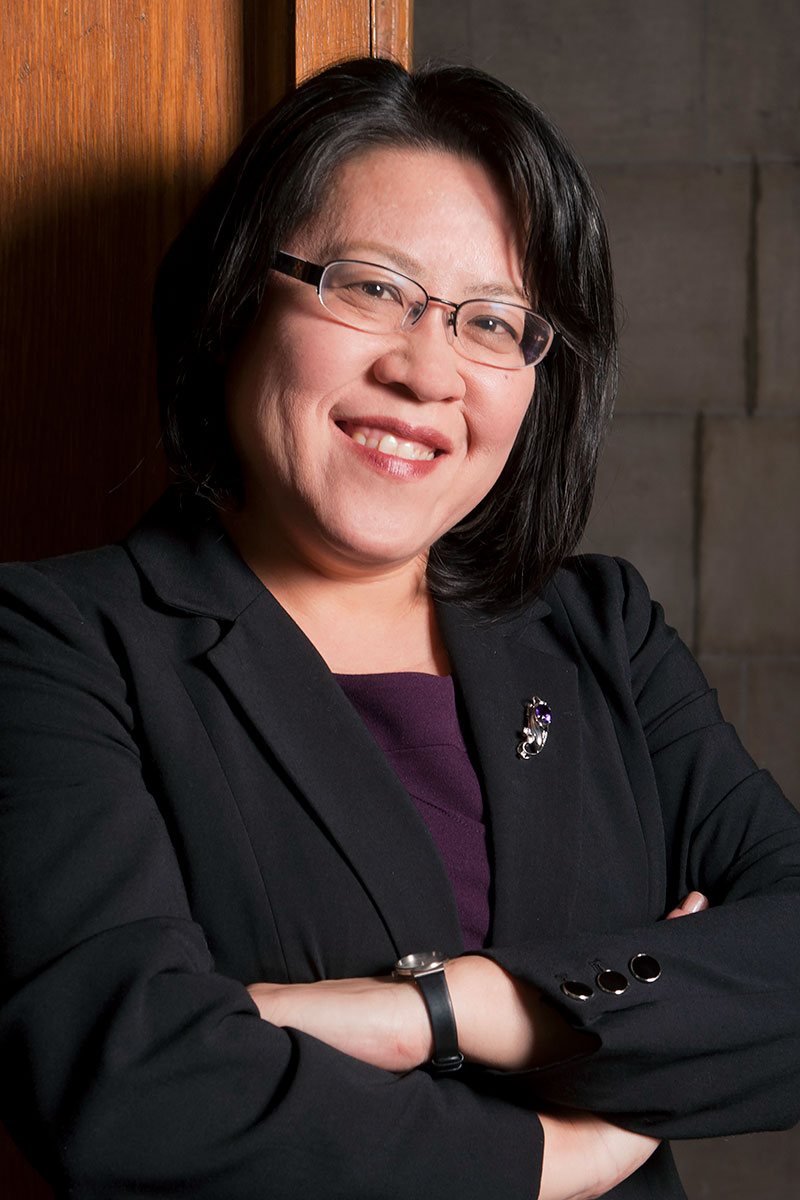
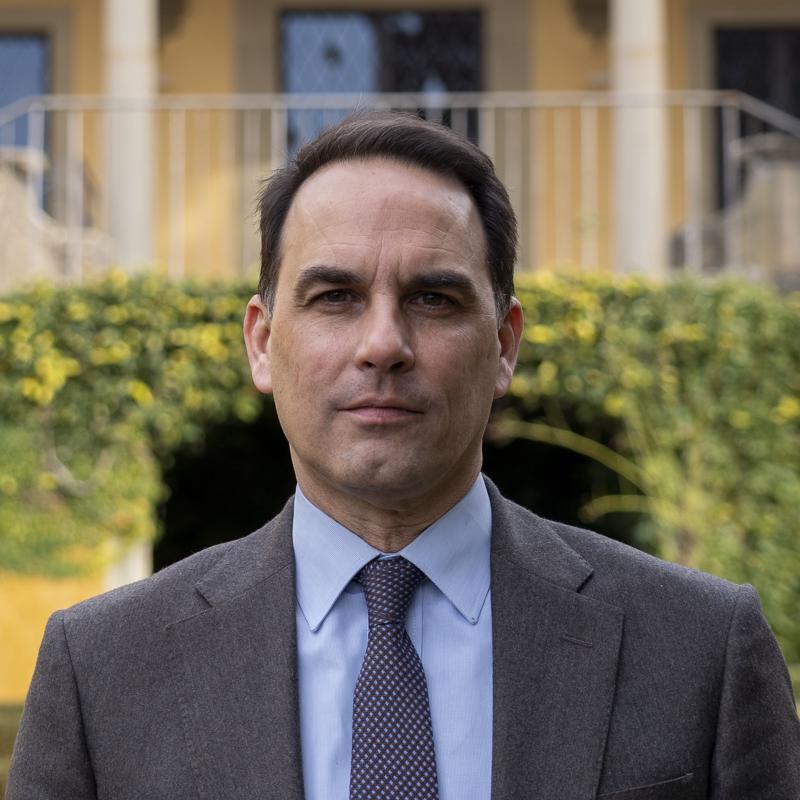
Prof. Dr. Ahmet Taşağıl is a prominent historian specializing in Turkic studies, Eurasian history, and pre-Islamic cultures. He holds the rank of Professor at Yeditepe University's Faculty of Arts and Sciences, History Department, since 2015, and previously served at Mimar Sinan Fine Arts University. His academic journey includes a PhD from Istanbul University (1989-1991) and extensive research on ancient Turkic empires like the Gokturks and Huns. Education: PhD in General Turkish History (Istanbul University), MSc in Medieval History (Istanbul University), BA in History (Istanbul University). Affiliations: Currently at Yeditepe University; previously at Mimar Sinan Fine Arts University and Kirgizistan-Türkiye Manas Üniversitesi. Research Interests : Focuses on early Turkic states (Gokturks, Huns, Uyghurs), cross-cultural relations between Turkic and Chinese empires, shamanism, and pre-Islamic Turkic societies. His work bridges archaeology, ethnohistory, and political analysis, with a particular emphasis on primary sources like Chinese records and Orkhon inscriptions. Publications : Over 50 books and articles, including seminal works like Kök Tengri’nin Çocukları , Avrasya'nın Sekiz Asrı Çengizoğulları , and İslamiyet Öncesi Türkler . His research often examines the socio-political structures of nomadic empires and their legacy in Eurasian history. Awards : Recipient of the Moğalistan Devlet Onur Madalyası, Muğla Sıtkı Koçman Tarih Ödülü, and numerous academic honors. His contributions to Turkic cultural heritage are widely recognized internationally. Grants & Projects : Led projects on Central Asian archaeology, cultural atlas of the Turkic world, and historical studies of Siberian tribes. Collaborated with institutions in Kazakhstan, Russia, and Turkey. Teaching : Offers courses on pre-Islamic Turkic history, Eurasian empires, and historical methodology in Turkish and English.
Karl Gustafsson is a Professor at Stockholm University within the Department of Economic History and International Relations. His work bridges security studies , collective memory , and digital research methods in international relations. Current Role: Professor of International Relations, Stockholm University Previous Positions: Post-Doc at Lund University, Researcher at Swedish Institute of International Affairs Visiting Appointments: University of Tokyo, Osaka University, Keio University, Academia Sinica, Nordic Institute of Asian Studies Research Focus: Karl specializes in memory politics , ontological security , and anxiety-driven international dynamics , particularly in Sino-Japanese relations and digital platforms . His studies explore how historical narratives and online memory construction influence state identity and policy. Awards & Grants: Recipient of the Wang Gungwu Prize (2014) and Stockholm University Association’s award (2011). Holds Swedish Research Council and Marianne & Marcus Wallenberg Foundation grants for projects on apologies in international politics and digital memory in East Asia . Publications: His work appears in journals such as International Studies Quarterly , European Journal of International Relations , and Memory Studies , addressing topics like narrative power in East Asia, anxiety’s role in policy change , and digital humanities applications in IR.
Prof. Dr. Eva Spies is a Professor for the Study of Religion with Focus on Africa at the University of Bayreuth within the Faculty of Humanities & Social Sciences . She holds a PhD in Cultural Anthropology from the University of Mainz and leads the Research Section Moralities in the Africa Multiple Cluster of Excellence (EXC 2052). Key Roles : Principal Investigator, Bayreuth International Graduate School of African Studies (BIGSAS) Vice Dean of Research Co-founder, German Association for the Study of Religion's Africa working group Research Interests span religious plurality, development cooperation, and transformative practices. She coined the concept of religious engineering to analyze how religious resources shape social/political worlds. Regional expertise in Niger/West Africa and Madagascar/Indian Ocean , with focus on: South-South mission Religion and pandemic response Intercultural hermeneutics Epistemological conflicts Material culture in development Projects : Africa Multiple Cluster of Excellence (2025): "Religious engineering. The making of moralities, development and religion in Niger" Humboldt Research Hub (2021): "Fighting pandemics with religion?" (with Moi University and University of Zimbabwe) Education : PhD in Cultural Anthropology, University of Mainz
Leigh Oakes is Professor of French and Linguistics in the Department of Modern Languages and Cultures within the School of Languages, Linguistics and Film at Queen Mary University of London. He has held progressive academic positions at the institution since 2000, advancing from Lecturer to his current professorship. His international academic background includes a PhD from the University of Melbourne and research at Stockholm University's Centre for Research on Bilingualism. His educational qualifications include a PhD (2001) and BA (Hons) (1996), both from the University of Melbourne. Oakes specializes in language policy and planning, with particular focus on language and national identity in France, Quebec, and Sweden. His research has expanded into linguistic justice debates in political theory, advocating for normative and interdisciplinary approaches to language policy. Oakes' publication trends reveal a consistent focus on ethical dimensions of language policy, with increasing emphasis on pluricentric justice and linguistic integration since 2016. His work bridges sociolinguistics and political philosophy, demonstrating strong interdisciplinary connections between language attitudes, national identity construction, and policy implementation across Francophone contexts. The 2018 co-authored monograph 'Normative Language Policy' represents a significant theoretical contribution to the field. 2008 Pierre Savard Prize for 'Language, Citizenship and Identity in Quebec' Leverhulme Trust Research Project Grant for 'The Ethics of Linguistic Integration' project Co-editor-in-chief of Sociolinguistica: European Journal of Sociolinguistics Co-editor of Multilingual Matters book series Member of editorial boards for Language Policy and Modern Languages Open Oakes actively supervises PhD candidates in sociolinguistic topics, with current research focusing on linguistic integration in Quebec and adaptation among mobile French speakers. His major Leverhulme-funded project 'The Ethics of Linguistic Integration' examines moral implications of language requirements for immigrants across England, Quebec, and Wales. He serves on several international academic committees including the Association internationale des études québécoises and the British Association of Canadian Studies. He leads the interdisciplinary 'Ethics of Linguistic Integration' research team, which combines expertise from applied linguistics, sociolinguistics, and political theory to investigate language integration policies. His work connects with broader university initiatives through Queen Mary's research highways in social justice and global challenges.
Lucie DE CARVALHO is a Lecturer in British Civilization at the University of Lille, Faculty of Languages, Culture and Societies, Department of English Studies. She is affiliated with ULR 4074 - Center for Studies in Civilizations, Languages and Foreign Literature. Graduated from ENS Cachan Specializes in British Civilization Based at University of Lille (BO.529) Dr. DE CARVALHO's research focuses on contemporary British politics, political discourse studies, British energy policies (particularly nuclear and renewable energy), neoliberalism, historiography of science, and climate governance. Her work demonstrates a consistent engagement with the intersection of political power, energy policy, and media representation in the British context. She has developed a particular expertise in analyzing how the UK state manages controversial technologies like nuclear power within neoliberal frameworks. Her publication record shows a consistent output spanning from 2014 to 2024, with recent work examining twenty-first century UK broadcasting ecology, teaching British history to French students, and contemporary nuclear power policies. The analysis of her articles reveals a strong thematic continuity centered on British governance, energy policy, and the complexities of neoliberal state intervention. Her research employs interdisciplinary approaches drawing from political science, media studies, and science and technology studies. Member of the SAES (Society of Anglicists in Higher Education) Member of CRECIB (Centre for Research on British Civilization) Associate member of the Research Center in British Civilization (CREC) Institute of the Anglophone World, Sorbonne Nouvelle University – Paris 3 Member of the UK Political Studies Association Member of the European Association for the Study of Science and Technology (EASST) Member of UACES Dr. DE CARVALHO has demonstrated sustained research activity across multiple domains related to British studies, with particular emphasis on energy policy and political discourse. Her work bridges academic research with pedagogical practice, as evidenced by publications on teaching British history to French undergraduate students and language learning through television series.
Lena Berggren serves as an Associate Professor in the Department of Historical, Philosophical and Religious Studies at Umeå University, Sweden, with her office located in Humanisthuset (HUM.H.125), Umeå. She holds the title of Docent and has been honored as a Distinguished university teacher for exceptional pedagogical contributions. Her academic qualifications include the Swedish Docent credential (a post-doctoral habilitation) and recognition as a Distinguished university teacher, reflecting dual expertise in research and education. Berggren's research centers on Swedish fascism, antisemitism, and ultra-nationalism during the interwar period, with specific focus on clerical fascism intersections with Lutheranism and völkisch thought. She simultaneously advances university pedagogy through investigations into scientific methodology development and assessment strategies for students, creating a unique bridge between historical scholarship and educational innovation. Analysis of her publication trajectory reveals persistent examination of extremist ideologies' historical roots and modern manifestations, culminating in her 2024 co-authored book '100 år av svensk nazism' which directly addresses contemporary far-right movements in Sweden. Her scientific recognition includes: Distinguished university teacher award Berggren secured research funding for the project 'Swedish fascism 1920-1950' (2007-2008), demonstrating sustained investigative focus. While no formal advisee list is documented, her pedagogical publications indicate active mentorship in historical methodology and academic writing development.
Laverne Jacobs, PhD, is a Full Professor at the University of Windsor's Faculty of Law where she holds the Research Chair in Disability Equality & Administrative Justice. She serves as the founder and Director of the Law, Disability & Social Change Project, a research and public policy center dedicated to fostering inclusive communities. Notably, Professor Jacobs was elected to the United Nations Committee on the Rights of Persons with Disabilities in 2022, becoming the first Canadian to serve on this UN Human Rights Treaty Body. She also serves as Co-Director of the Disability Rights Working Group at Berkeley Law's Center for Comparative Equality & Anti-Discrimination Law and previously held the position of Associate Dean (Research & Graduate Studies) for the Faculty of Law from 2018-2021. B.A. (Honours), McGill University, 1994 LL.B., McGill University, 1999 B.C.L., McGill University, 1999 Ph.D., Osgoode Hall Law School, York University, 2009 Professor Jacobs' research sits at the intersection of disability equality law and administrative law and justice, characterized by an interest in the everyday work of the administrative justice system and the lived experiences of people who use it, particularly persons with disabilities. Her work spans disability rights, administrative justice, human rights law, socio-legal theory, and empirical research methodologies. She has made significant contributions to understanding accessibility legislation, transportation inequality, post-secondary education access for students with disabilities, and the implementation of disability equality principles in administrative decision-making. Her scholarship bridges theoretical legal frameworks with practical applications, emphasizing citizen participation in policy development and the importance of inclusive design in legal systems. Analysis of Professor Jacobs' recent publications reveals a consistent focus on how administrative law can better serve persons with disabilities through inclusive design and accessible processes. Her work demonstrates growing attention to intersectional issues, particularly how women with disabilities experience administrative systems, and increasingly examines the implementation challenges of accessibility legislation across Canadian jurisdictions. She frequently employs empirical research methods to ground her legal analysis in real-world experiences of marginalized communities. Scientific Awards and Honors: Canadian Bar Association Touchstone Award (2021) Canadian Association of Law Teachers (CALT) Academic Excellence Award (2022) Hummingbird Award from the Disabled Women's Network of Canada (DaWN), 2022 Election to the United Nations Committee on the Rights of Persons with Disabilities (2022) Professor Jacobs has held significant leadership roles including service on the Board of Directors of the Income Security Advocacy Centre and the Canadian Institute for the Administration of Justice. Through her role as Director of the Law, Disability & Social Change Project, she has secured research funding to support policy-relevant scholarship on disability rights and administrative justice. Her work has influenced accessibility legislation development across Canada, particularly through her annotated version of the Accessible Canada Act. She provides expert consultation to government bodies and international organizations on disability rights implementation. The Law, Disability & Social Change Project serves as Professor Jacobs' primary research hub, bringing together interdisciplinary scholars, disability advocates, and policy makers to develop practical solutions for creating more inclusive legal and administrative systems. The project has produced numerous research reports, policy briefs, and public resources that translate academic research into actionable recommendations for improving accessibility and disability equality in Canadian society.
Maren Toft is a Professor in the Department of Sociology and Human Geography at the University of Oslo's Faculty of Social Sciences. Her academic career has progressed from Research Assistant (2013-2014) to PhD Candidate (2014-2018), Postdoctoral Fellow (2018-2022), Associate Professor (2022), and now Professor. Her research focuses on: Class theory and theory of elites Social mobility and class structuration Segregation and urban inequality Social capital and networks of power Advanced quantitative methods including social sequence analysis and correspondence analysis Toft's publication record shows a consistent focus on elite formation, wealth accumulation, and class reproduction. Her work frequently employs longitudinal approaches to examine how social origins influence life trajectories, particularly among the upper classes. She has made significant contributions to understanding how class structures persist in Scandinavian welfare states, challenging assumptions about equality in these societies. Her major scientific awards include: His Majesty the King's Gold Medal for her 2018 PhD dissertation 'Biographies of privilege' Norwegian sociological association's award for best international publication in 2020/2021 Norwegian sociological association's award for best international publication in 2017 Kunnskap Oslo's award for best Oslo-related Research in 2015 Norwegian sociological association's award for research dissemination in 2018 Toft actively supervises PhD students including Iselin Hewitt (studying urban planning and gentrification), Marte Lund Saga (examining business-politics networks), and Stian Uvaag (researching sibling similarities in mobility). She serves on the board of both the Department of Sociology and Human Geography and the Norwegian Sociological Association. She is involved in several major research projects including HISTCLASS, The Oslo Register Data Classification (ORDC), The Salmon Elite (SALELITE), and Weaving the fabric of Elite Bonds (WEB), which collectively examine various dimensions of elite formation, power structures, and social inequality in Norway and internationally.
Marisol De La Cadena is a Professor in the Department of Anthropology at the University of California, Davis, with affiliations in Science and Technology Studies (STS). Her work bridges anthropology, political theory, and environmental thought, focusing on ontological divergence and multispecies relations in Latin America, particularly in Peru and Colombia. Department: Department of Anthropology School: College of Letters and Science University: University of California, Davis Email: mdelac@ucdavis.edu Office: Young Hall 315 Her research centers on the intersection of modern politics and non-modern or ahistorical ontologies, especially through what she calls "ontological openings." Drawing from deep ethnographic engagement with Quechua-speaking interlocutors in the Andes, she explores how earth-beings, humans, and nonhumans co-constitute worlds that exceed Western categories. Her theoretical contributions challenge conventional boundaries between nature and culture, history and timelessness, and politics and cosmology. Her recent fieldwork in Colombia examines human-cow relations on cattle ranches and in veterinary schools, situating these practices within broader ecological crises and post-conflict transitions. Her publications reveal a consistent interest in how ethnographic concepts function as both empirical observations and theoretical tools. The body of her work, including key articles like "Uncommoning Nature" and "Runa: Human but not only," reflects a deep commitment to rethinking anthropological method and theory. Her research trends emphasize ontological politics, multispecies ethnography, and the decolonization of knowledge, contributing significantly to contemporary debates in STS and anthropology. Her scientific honors include: John Simon Guggenheim Memorial Foundation Fellow (2008) Lewis H. Morgan Lecture Series Invited Speaker, University of Rochester (2011) Invited Researcher, Center for Advanced Studies, Norwegian Academy of Sciences (2015) Guest Speaker, Mellon-Sawyer Seminar, University of Cape Town (2010) She has been principal investigator on several major grants, including the John E. Sawyer Mellon-Sawyer Seminar on the Comparative Study of Cultures (2012–2016), a Wenner-Gren Conference Support Grant (2009–2010), and multiple research fellowships from the Guggenheim, Wenner-Gren, and American Philosophical Societies. These grants have enabled collaborative, transdisciplinary research on cosmopolitics, indigeneity, and the anthropology of worlds. She is affiliated with research initiatives such as the Sawyer Seminar on the Comparative Study of Cultures and contributes to global academic networks in anthropology and STS. Her work fosters dialogue between indigenous thought, continental philosophy, and ethnographic practice, creating spaces for alternative modes of knowing and being.
Hiromi Tsuchiya Dollase is an Associate Professor of Chinese and Japanese at Vassar College since 2003. Her research focuses on Japanese women’s literature, girls’ magazine culture, and manga, with a particular interest in integrating popular media into language education. She teaches courses such as 'Japanese Popular Culture and Literature' and 'The Gothic and the Supernatural in Japanese Literature.' Dr. Dollase holds a PhD in comparative literature (Japanese and American) from Purdue University (2003), an MA from Illinois State University, and a BA/MA from Baika Women’s College. She authored *Age of Shojo: The Emergence, Evolution and Power of Japanese Girls’ Magazine Fiction* (2019) and has contributed to numerous edited volumes and refereed journals. Her work spans topics like child abuse depictions in manga, sex education in historical fiction, and queer reinterpretations of classic narratives. She co-edited *Women’s Voices in Manga* (2024) and *Manga!: Visual Pop-Culture in ARTS Education* (2020). Her research bridges literary analysis with cultural studies, emphasizing the intersection of gender, media, and education. Dr. Dollase has been featured in media discussions about Japanese literary icons like Nobuko Yoshiya. She actively contributes to interdisciplinary programs in Asian Studies, Media Studies, and Women’s, Feminist, and Queer Studies at Vassar.
Daniele Caramani is a Part-time Professor at the Robert Schuman Centre for Advanced Studies at the European University Institute, where he holds the Ernst B. Haas Chair in European Governance and Politics and co-directs the European Governance and Politics Programme. He also serves as a professor and Head of Department at the University of Zurich, holding the Chair of Comparative Politics. His academic journey began with BA and MA degrees from the University of Geneva, followed by a PhD from the European University Institute. Dr. Caramani's research focuses on comparative politics, European integration, and globalization, with particular emphasis on political cleavages, electoral systems, and democratization processes. His work bridges historical analysis with contemporary political challenges, examining how territorial and functional divisions shape political landscapes across different eras and regions. His approach combines theoretical innovation with empirical rigor, drawing connections between 19th century mass democratization and current debates about European integration and global governance. Caramani's publications reveal a consistent trajectory of increasingly complex analyses, moving from national political systems to European integration and then to global comparative frameworks. His work demonstrates strong methodological expertise in comparative and quantitative analysis, with a particular focus on large cross-national datasets and historical electoral results. The evolution of his research shows a clear progression from national-level analysis to transnational and global comparative frameworks. Stein Rokkan Prize for Comparative Social Science Research (for The Nationalization of Politics ) APSA Lijphart-Przeworski-Verba Dataset Award (for Constituency-Level Elections Archive) As an educator and academic leader, Caramani has supervised numerous students and edited influential textbooks in comparative politics. His leadership extends to directing major research projects, including an ERC Advanced Grant on global cleavages across world regions. At the University of Zurich, he serves as Head of Department, demonstrating administrative leadership alongside his research and teaching responsibilities. His Constituency-Level Elections Archive (CLEA) represents a significant contribution to the field, providing essential data for comparative electoral research.
Yuhua Wang serves as the Ford Foundation Professor of Modern China Studies within Harvard University's Faculty of Arts and Sciences, Department of Government. His scholarly work establishes him as a leading authority on Chinese political development, state capacity, and historical institutional analysis across imperial and contemporary contexts. His academic foundation includes: B.A. from Peking University Ph.D. from the University of Michigan Professor Wang's research program integrates comparative politics with Chinese studies through core interests in bureaucracy , institutions , judiciary and public law , political economy & development , political geography , and state-society relations . He employs a methodological triad of historical , qualitative , and quantitative approaches to analyze China's political evolution. His work uniquely bridges macro-historical patterns with contemporary governance challenges, particularly examining how historical legacies shape modern state capacity and institutional resilience in authoritarian contexts. Analysis of his publication trajectory reveals consistent focus on state development mechanisms, with increasing sophistication in comparative historical methodology. Recent work demonstrates expanded geographic scope beyond China while maintaining analytical depth in imperial political economy. His research shows growing integration of cross-national datasets with deep historical case studies, reflecting broader trends in political science toward mixed-method designs for complex institutional analysis. His distinguished recognition includes: 2023 Lubbert Best Book Award in Comparative Politics from the American Political Science Association for The Rise and Fall of Imperial China Harvard College Professor appointment (2025) Professor Wang maintains active research leadership through extensive publication in premier journals including American Political Science Review and Comparative Political Studies , with significant contributions to theoretical frameworks like State-in-Society 2.0. His work generates substantial policy-relevant insights on corruption, judicial review, and urban governance in China. As a core faculty member in Harvard's Government Department, he contributes to the university's intellectual ecosystem through cross-disciplinary collaboration and participation in research initiatives focused on Asian political development, though specific lab affiliations are not documented in available sources.
David Friedman is a Researcher affiliated with the Faculty of Classics at the University of Cambridge and serves as Director of Studies in Classics at St Edmund's College. His research focuses on Judaism in the Greco-Roman world, particularly through the lens of ancient historians like Josephus. Fields of Interest: Judaism in the Greco-Roman world, Ancient History, Josephus Studies, Roman Imperialism, Religious Studies, Historiography, Classical Literature, and Cultural Exchange. Email: daf39@cam.ac.uk His recent work includes the 2024 edited volume Looking in, looking out: Jews and non-Jews in mutual contemplation , studies on Dionysius of Halicarnassus and Augustan Rome (2020), and analyses of Josephus's accounts of Jewish origins in Egypt (2017, 2014). No scientific awards or students are mentioned in the provided texts.
Prof. Dr. Thomas Duve is a Director at the Max Planck Institute for Legal History and Legal Theory and holds the Professorship for Comparative Legal History at Goethe University Frankfurt am Main. His research focuses on global legal history, particularly the interplay between secular and religious knowledge in the Iberian empires of the early modern period, and the method of legal history and comparative law. Director, Max Planck Institute for Legal History and Legal Theory Professor of Comparative Legal History, Goethe University Frankfurt Co-editor of 'The School of Salamanca Working Paper Series' Duve’s research explores normative knowledge production, colonial law, and the glocalization of legal norms. He has led projects such as 'Glocalizing Normativities' and 'Mapping Conflicts in Iberian Worlds', emphasizing cross-cultural legal exchange and historical normativity regimes. His recent publications (2018–2025) address global legal history, transnational legal practices, and the role of canon law in colonial settings. Key themes include legal pluralism, indigenous rights, and the translation of legal norms across cultures, with methodological innovations in comparative and transnational legal studies. Duve collaborates extensively with international scholars and institutions, including the Max Planck Partner Group and the Oxford Handbook of Legal History. His work bridges European and Latin American legal traditions, offering critical insights into legal globalization and postcolonial legal analysis.
Ricardo Sabates is a Professor of Education and International Development at the University of Cambridge, affiliated with the Faculty of Education and the Research for Equitable Access and Learning (REAL) Centre . He is a Fellow at Hughes Hall and serves as Deputy Director of Research at the Faculty of Education. His career spans institutions including the University of Sussex, Institute of Education London, and Hughes Hall, Cambridge. PhD in Development (University of Wisconsin-Madison, USA) MSc in Economics (University of Wisconsin-Madison, USA) BA Honours (ITAM, Mexico) Ricardo is a development economist with expertise in educational inequalities , particularly in low-income countries. His work focuses on quantitative methods , maternal education impacts , and equity in educational access and learning . He collaborates with international agencies such as the OECD , UNICEF , UNESCO UIS , DFID , and the World Bank . His recent research trends include large-scale educational reform in Ethiopia , community-school participation in India , disability and learning outcomes , and teacher effectiveness in Africa . Projects often involve experimental/quasi-experimental designs and policy evaluation in Ethiopia, Ghana, India, Pakistan, Rwanda, and Tanzania. Ricardo also supervises postgraduate doctoral and masters students and contributes to core research training courses at Cambridge. He is actively involved in multiproject collaborations funded by the DFID-ESRC , MasterCard Foundation , and CAMFED , addressing topics like girls' secondary education , teacher effectiveness , and equity in educational interventions .