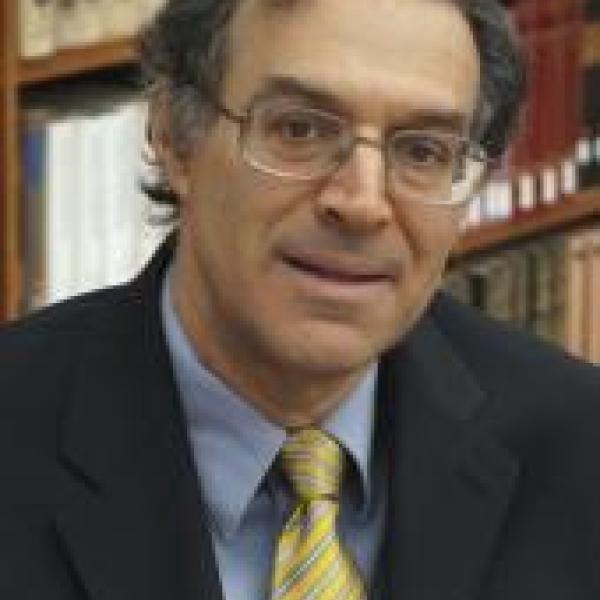
Kenneth Pomeranz is the University Professor of Modern Chinese History at the University of Chicago in the Department of East Asian Languages and Civilizations (EALC). Previously taught at the University of California, Irvine , his research spans late Imperial and twentieth-century China , comparative world history , and global economic systems . Research Focus: Reciprocal influences between state, society, and economy; origins of the world economy through mutual regional influences; comparative studies of labor, family organization, and economic history. Current Projects: A history of Chinese political economy from the seventeenth century to the present; a book titled Why Is China So Big? exploring China's political unity despite its vast size. Scientific Awards and Fellowships: John K. Fairbank Prize (twice) World History Association Book Prize (shared) Guggenheim Fellowship American Academy of Arts and Sciences Fellow Publications: Key works include The Great Divergence , The Making of a Hinterland , and The World that Trade Created . His articles address topics such as labor-intensive industrialization, global environmental history, and Qing state-building.
Monika Gabryś-Sławińska is a Professor at the Department of Polish Literary History , part of the Faculty of Languages, Literatures and Cultures at the University of Maria Curie-Skłodowska (UMCS). Her research spans 19th- and 20th-century Polish literature , focusing on Stefan Żeromski , historical journalism , text editing , voice emission , and museology . MA in Polish Philology (1998, UMCS) PhD in Literary Studies (2007, UMCS) Habilitation in Literary Studies (2016, UMCS) Her research interests include political commentary in historical press , media's role in cultural identity , and sociolinguistic trends . She has edited over 29 academic volumes and authored 5 monographs. Scientific awards: Bronze Cross of Merit KEN Medals (Bronze, Silver) 8 Rector's Awards (UMCS) Lublin Mayor's Medal (2019) She has participated in 5 research grants , organized 35 academic conferences , and contributed extensively to Annales UMCS as a scientific editor.
Roland Greene is the Mark Pigott KBE Professor and Anthony P. Meier Family Professor of the Humanities at Stanford University, holding dual appointments in the Department of English and the Department of Comparative Literature. He serves as Director of the Stanford Humanities Center and co-chair of the Renaissances and Poetics Workshop research groups. Educated at Brown University (A.B., 1979) and Princeton University (Ph.D., 1985), his academic career includes prior roles at Harvard and Oregon universities. His research focuses on Renaissance literatures of England, Latin Europe, and the transatlantic world, with expertise in poetry and poetics from the Renaissance to the present. Major works include Five Words: Critical Semantics in the Age of Shakespeare and Cervantes (2013) and editing the Princeton Encyclopedia of Poetry and Poetics (2012). Recent lectures address topics like Juan Caramuel’s Metametrica , Baroque aesthetics, and digital humanities challenges. Greene has advised over 50 Ph.D. students, many of whom hold academic positions globally. Awards include American Academy of Arts and Sciences membership and leadership roles like MLA President (2015–2016). His work engages with interdisciplinary themes such as colonial baroque, digital humanities, and global literary history.
University of Illinois Urbana-ChampaignUnited States
Asef Bayat is Professor of Sociology and the Catherine and Bruce Bastian Professor of Global and Transnational Studies at the Department of Sociology, University of Illinois, Urbana-Champaign. He has held previous academic positions at the American University in Cairo, Leiden University (where he held the Chair of Society and Culture of the Modern Middle East), and visiting appointments at UC Berkeley, Columbia University, Oxford, and Brown University. His research interests include: Political Sociology Collective Behavior and Social Movements Sociology of Religion Urban Life and Politics Islam and Modernity Contemporary Middle East Bayat's research focuses on the role of ordinary people and subaltern classes in social and political transformations, particularly in the context of the Arab Spring and Middle Eastern urban movements. His work bridges comparative and historical sociology with global and transnational perspectives, emphasizing everyday forms of resistance and the reconfiguration of political Islam. He has extensively explored the sociological dimensions of revolution, modernity, migration, and loss of home. His recent publications, including articles in International Journal of Urban and Regional Research and Journal of Democracy , reflect a sustained engagement with urban politics, revolutionary dynamics, and youth activism in the Global South. The recurring themes across his work include the agency of marginalized populations, the transformation of public space, and the evolving nature of political engagement in non-Western contexts. Bayat has received numerous honors and fellowships: Guggenheim Fellow Ford Foundation Fellow MacArthur Fellow Open Society Fellow Wissenschaftskolleg Fellow, Berlin He has been actively involved in academic leadership, having served as director of the International Institute for the Study of Islam in the Modern World (ISIM) and elected to the Board of the UN Research Institute for Social Development. He has taught key courses such as Global Social Movements, Global Religion and Politics, and Middle Eastern Societies. Though specific students are not listed, his role as a full professor and author of major works indicates extensive mentorship and academic advising. He is affiliated with multiple interdisciplinary centers, including the Center for African Studies, Center for South Asian and Middle Eastern Studies, European Union Center, and Center for Global Studies.
Jose Luis Belmonte Postigo is an active researcher and faculty member at the University of Seville, specifically in the Department of American History within the Faculty of Philosophy, Arts and Humanities. His academic career spans over a decade, with research activity documented from 2010 to the present. He earned his doctorate from the Pablo de Olavide University with a thesis on slavery in Santiago de Cuba (1780-1803), supervised by Dr. Juan Marchena Fernández. Belmonte Postigo's research focuses on the history of slavery in the Spanish Caribbean and Latin America, with particular attention to Cuba, Puerto Rico, Peru, and the broader Atlantic World. His work examines the social, economic, and cultural dimensions of slavery, including enslaved people's resistance strategies, social mobility, and the complex relationships between masters and slaves. He has conducted extensive research on how enslaved individuals navigated systems of power, sought freedom, and maintained cultural practices across the colonial period. His publications reveal a strong interest in the microhistories of enslaved individuals and communities, analyzing how they negotiated their circumstances within rigid colonial structures. Belmonte Postigo has made significant contributions to understanding the regional variations of slavery across the Spanish Empire, particularly examining how local contexts shaped slave societies in different parts of the Caribbean and Latin America. Belmonte Postigo has received recognition for his scholarly work, with a substantial following on academic platforms like Academia.edu where he has 938 followers. He collaborates with scholars across Latin America and Spain, contributing to edited volumes and participating in international research projects focused on slavery and colonial history. In addition to his research, Belmonte Postigo has demonstrated commitment to academic service through peer reviewing and contributing to scholarly journals. His expertise in colonial slavery has positioned him as a key contributor to ongoing scholarly conversations about the legacy of slavery in Latin America and the Caribbean.
London School of Economics and Political Science (LSE)United Kingdom
John T. Sidel Summary Professor John T. Sidel is the Sir Patrick Gillam Chair in International and Comparative Politics at the London School of Economics and Political Science (LSE), holding joint appointments in the Government and International Relations Departments. He is also Director of the Saw Swee Hock Southeast Asia Centre. His career spans over three decades of research on Southeast Asia, with a focus on the Philippines, Indonesia, and Vietnam. Education B.A. and M.A. in Political Science from Yale University Ph.D. in Government from Cornell University Research Interests Sidel specializes in Southeast Asian politics, including local power dynamics, comparative historical sociology, Islam in politics, reform advocacy campaigns, and infrastructure politics. Key themes include: Local Politics: Analysis of political bossism, dynasties, and subnational governance in the Philippines and beyond. Comparative History: Long-term patterns of state-building, nationalism, and colonial legacies in Southeast Asia. Islam & Politics: Study of religious violence, political mobilization, and transnational Islam in Indonesia. Reform Advocacy: Advising development initiatives like the Philippines' Coalitions for Change program. Infrastructure Politics: Urban transport reforms and their socio-political implications in Metro Manila. Key Publications Major works include Republicanism, Communism, Islam: Cosmopolitan Origins of Revolution in Southeast Asia (2021), Riots, Pogroms, Jihad (2006), and Capital, Coercion, and Crime (1999). His recent research explores transport policy reforms and the political economy of development in the Philippines. Teaching Sidel teaches courses on Southeast Asian politics, comparative historical sociology, and Islam in world politics at LSE. Notable courses include GV4D3 (Local Power in Globalization) and IR461 (Islam in International Relations). Public Engagement He advises international organizations such as The Asia Foundation and UNHCR, contributing reports on Indonesia's refugee policies and Philippine development initiatives. Active in public lectures and podcasts, he promotes Southeast Asian studies through platforms like the LSE's 'Dialogues on Southeast Asia' series.
Paul Downes is a Professor in the Department of English at the University of Toronto, with a focus on eighteenth- and nineteenth-century American literature and its intersection with political philosophy. He holds a BA from York University and a PhD from Cornell University. His research spans literature and political philosophy, Marxist theory, and environmental humanities, often analyzing canonical texts through critical theoretical frameworks. Education: BA, York University; PhD, Cornell University Fields of Interest: American Literature, Environmental Humanities, Literary and Critical Theory, Literature and Political Philosophy, Marxist Theory Downes’ research examines the relationship between literary works and political ideologies, particularly in early American literature. His recent work explores the politics and aesthetics of protection from the 18th to 21st centuries. His publications highlight themes of sovereignty, democracy, and ethical intervention in texts by authors like Herman Melville and Charles Brockden Brown. His journal articles and book chapters frequently bridge literary analysis with philosophical and political discourse. Notable trends in his publications include critical engagements with Thomas Hobbes’ theories in colonial contexts, the role of political theology in shaping early American narratives, and the interplay between democracy and terror in Gothic fiction. His work also interrogates energy ideologies in Melville’s Moby Dick and historical parallels between revolutionary texts and modern events. No scientific awards or honors were mentioned in the provided text. He has not explicitly listed any formal advisees or students in the available materials.
Professor Sujit Sivasundaram is a leading scholar in world history at the University of Cambridge, with affiliations as a Fellow of Gonville and Caius College and director of the Centre of South Asian Studies. His academic journey includes a Research Fellowship at Gonville and Caius College (2001), a Lectureship in South Asian History at the London School of Economics, and his current role as Professor of World History since 2019. Research Interests : Imperial history, history of science, environmental history, cultural history, history of race, and Indian/Pacific Ocean history with a focus on marginalized regions and material culture. Professional Leadership : President of The Pacific Circle , co-editorial roles in Cambridge Oceanic Histories and World Environmental History series, and EDI work at the Faculty of History (2024). Scientific Awards : British Academy Prize for Global Cultural Understanding (2021) Bentley Book Prize for World History (2021) Philip Leverhulme Prize for History (2012) Fellow of the British Academy (elected 2023) Publications emphasize oceanic histories, environmental fragments, and critical re-examinations of Euro-Atlantic historiography. His recent work explores materialist approaches to world history using objects like fossilized ferns and sea cucumbers to challenge universalist narratives.
Rutgers, The State University of New JerseyUnited States
Jochen Hellbeck is a Distinguished Professor of History and Vice Chair for Graduate Education in the Department of History at Rutgers University's School of Arts and Sciences, where he has been teaching since 2003. He holds a Ph.D. from Columbia University and specializes in the history of the Soviet Union, with particular focus on individual life stories and the shaping of the self in modern Europe. Professor Hellbeck's research centers on the place and self-understandings of individuals during cataclysmic 20th century events, including the Russian Revolution, Stalin's terror regime, and World War II. His work examines how narratives of redemptive violence and transformation attached themselves to individuals on the ground, revealing how authors of diaries and personal texts became co-authors of the revolutionary script. More recently, he has explored comparative and transnational aspects of how Soviet, German, and British states mobilized citizens during World War II, highlighting the centrality of the Soviet war effort to the broader history of the conflict. His acclaimed book Stalingrad: The City that Defeated the Third Reich (2015) was the first Western study to probe the meaning of the Battle of Stalingrad for Soviet soldiers and civilians. The book draws on dozens of oral histories recorded by Moscow historians during and after the battle. Hellbeck's research consistently focuses on personal narratives and eyewitness accounts to provide grounded perspectives on major historical events. Morphomata Fellowship, Cologne (2019) Guggenheim Fellowship (2017) Short list, non-fiction prize of the Moscow Book Fair (2017) Davis Center Fellowship, Princeton (2016) Damals prize for best historical monograph (2013) American Academy in Berlin Fellowship (2009) Rutgers Board of Trustees Fellowship for Scholarly Excellence (2007) Michigan Society of Fellows (1997-1999) As a member of the Rutgers graduate faculty, Professor Hellbeck works with students interested in modern Russia and the Soviet Union, and in transnational explorations of Communism, World War II, and the Cold War. He encourages prospective graduate students to contact him before application deadlines. His website, Facing Stalingrad , features portraits and voices of veterans he interviewed during his research.
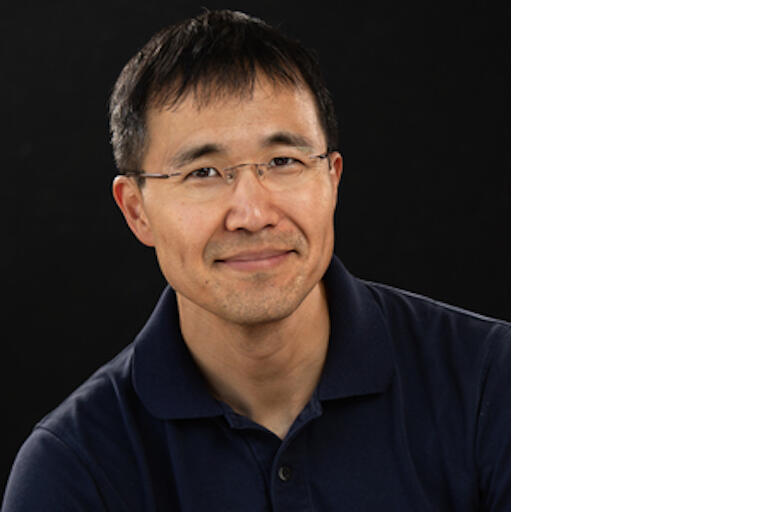
Steven Ma is a Professor at Clemson University's College of Engineering, Computing and Applied Sciences. He is affiliated with the Department of Mechanical Engineering, though the department name is not explicitly mentioned. His contact information includes an office in 222 Fluor Daniel Building, phone number (864) 656-5537, and email sma22@clemson.edu. Education : Ph.D. from State University of New York at Buffalo (1991), MS from Beijing Polytechnic University (1986), BS from Beihang University (1983). Steven Ma's research interests focus on engineering disciplines, specifically Autonomous Wheeled Vehicles, Machine Design and Manufacturing, Hydraulics and Electro-Hydraulic Control, Welding & Fatigue, and Bolted Joints Design. These areas highlight his expertise in mechanical systems and manufacturing technologies. Analysis of his publications reveals a secondary focus on historical and political topics, particularly Russia's Great War and Revolution, the Russo-Japanese War, and transnational cultural exchanges. His work explores themes like military finance, ideological propaganda, and the global impact of capitalism and revolutionary movements. As of the latest data, there are no documented scientific awards or student advisement records for Steven Ma. His affiliations and contributions to engineering research remain central to his academic profile.
Ziad Majed serves as Associate Professor and Program Coordinator for Middle East Pluralities within the Department of History and Politics, holding the Elliott E. Burdette Professorship of Middle Eastern Studies. His academic focus centers on Lebanese, Syrian, and broader Arab political affairs, with sustained engagement in civil society reform campaigns since 1994. His educational foundation includes: PhD in Political Sciences from IEP - Sciences-Po, Paris DEA in Political Sciences from IEP - Sciences-Po, Paris MA in Arabic Literature from the American University of Beirut BA in Economics from the American University of Beirut Majed's research critically examines political transitions, civil society dynamics, and democratization challenges across the Arab world. His work demonstrates deep expertise in Lebanese consociationalism, Syrian revolutionary movements, and the interplay between foreign occupation and local authoritarianism, consistently addressing themes of state failure and resistance. Analysis of his 15 most recent publications reveals a clear trajectory from Arab Spring studies toward contemporary analysis of counter-revolutionary processes, Russian and American geopolitical interventions, and the fragmentation of state authority in Syria and Lebanon. The corpus maintains rigorous focus on occupation politics, sectarian governance crises, and regional power rivalries. Professor Majed actively contributes to public discourse as Coordinator of The Arab Network for the Study of Democracy and opinion writer for Al-Quds Al-Arabi, while serving on boards of Lebanese, Syrian, and French cultural institutions and lecturing internationally at major festivals and conferences.
Vincent Brown serves as the Charles Warren Professor of American History and Professor of African and African American Studies at Harvard University, based in the Center for Government and International Studies (CGIS) South Building. His academic work centers on Atlantic history with a focus on the African diaspora and slavery in the Americas. His research expertise spans Atlantic History, African Diaspora Studies, and Slavery, with deep engagement in Digital History methodologies, Early American History, Imperial History, and Race studies. Brown examines power dynamics, resistance movements, and cultural identity formation within 17th-18th century Atlantic contexts, particularly in the Caribbean. His interdisciplinary approach integrates spatial analysis and digital tools to reinterpret historical narratives of slavery and empire. Analysis of his publications (2011-2024) reveals sustained focus on slave revolts as transnational phenomena, spatial history through digital mapping, and multimedia scholarship. His work demonstrates evolution from textual analysis in The Reaper's Garden (2008) to immersive cartographic projects like the Jamaican slave revolt mapping (2012-2016), culminating in documentary production ( Herskovits at the Heart of Blackness , 2009; The Bigger Picture , 2022). Recent outputs show increasing engagement with public history and interdisciplinary connections between political geography, racial terror, and cultural memory. The source materials do not specify details regarding student advising, grant funding, or laboratory teams.
Anindita Banerjee is an Associate Professor in the Department of Comparative Literature at Cornell University's College of Arts and Sciences, with cross-appointments in the Environment & Sustainability Program, History of Art and Visual Studies, Literatures in English, and Romance Studies. She serves as SAP Core Faculty for the South Asia Program and has been instrumental in establishing Cornell's Environmental and Sustainability Program, where she built and chaired the environmental humanities concentration for four years. Her research explores the relationship between imagining and making futures across diverse contexts, focusing on the evolving interfaces between science, technology, and culture; natural and built environments; media and information systems; and the migration of people, things, ideas, and images. Spanning Eastern Europe, Central Asia, the Indian subcontinent, and Latin and African Americas, her work examines networks of exchange, innovation, production, and consumption that emerge outside conventional coordinates of the modern world. Her scholarship has been featured in BBC Culture, Radio Free Europe, Medium, and Meduza. She has authored multiple books including the award-winning We Modern People: Science Fiction and the Making of Russian Modernity (2013), which won the Science Fiction and Technoculture Studies book prize, and is currently working on Reactionary Worldbuilding (MIT Press, 2026) and Border Environments (Cornell, 2026). Her research demonstrates consistent engagement with science fiction as a critical lens for examining global environmental, technological, and social transformations. Science Fiction and Technoculture Studies book prize Ivy+ Mellon Leadership Fellow (2024-25) Academic Venture Fund grant from Cornell Atkinson Center for Sustainability Social Sciences and Humanities Research Fellowship Banerjee serves as a faculty fellow of the Cornell Atkinson Center for Sustainability and is a participating member of cross-college programs in Biology and Society, Media Studies, and Visual Studies. She co-led a workshop series and engaged-learning course on border spaces and environmental justice supported by a grant from the Mario Einaudi Center for International Studies. As an Ivy+ Mellon Leadership Fellow, she serves as Special Assistant to the Dean of the Cornell School of Continuing Education, focusing on academic leadership and governance with an emphasis on diversity and inclusion.
Steven Lee is an Associate Professor at the University of California, Berkeley, affiliated with the Department of Slavic Languages and Literatures. He is a leading scholar in comparative ethnic studies, Soviet/post-Soviet studies, and 20th-21st century American literature, with a focus on transnational intellectual networks and revolutionary cultural movements. His work bridges Asian American, African American, and Slavic literary traditions while exploring intersections between global communism and cultural production. Lee’s research interests include the far left and far right ideologies in Northeast Asia during WWII, their influence on Asian American literature, and the role of manifestos as lived experiences. His current book project examines ideological imprints on Asian Anglophone writing. He is also affiliated with the Asian American Research Center, the Center for Korean Studies, and the Center for Race and Gender at Berkeley. His seminal work, The Ethnic Avant-Garde: Minority Cultures and World Revolution (2015), won the MLA’s Scaglione Prize, and he co-edited the award-winning Comintern Aesthetics (2020). Recent publications explore topics like Viktor Tsoi’s cultural impact, the Popular Front in Asian American writing, and transnational revolutionary manifestos. Lee’s research integrates methodologies from postcolonial theory, comparative literature, and political history. His sabbatical in AY 2024-25 focuses on finalizing his current manuscript while continuing to advise students through scheduled appointments.
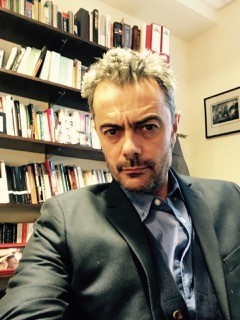
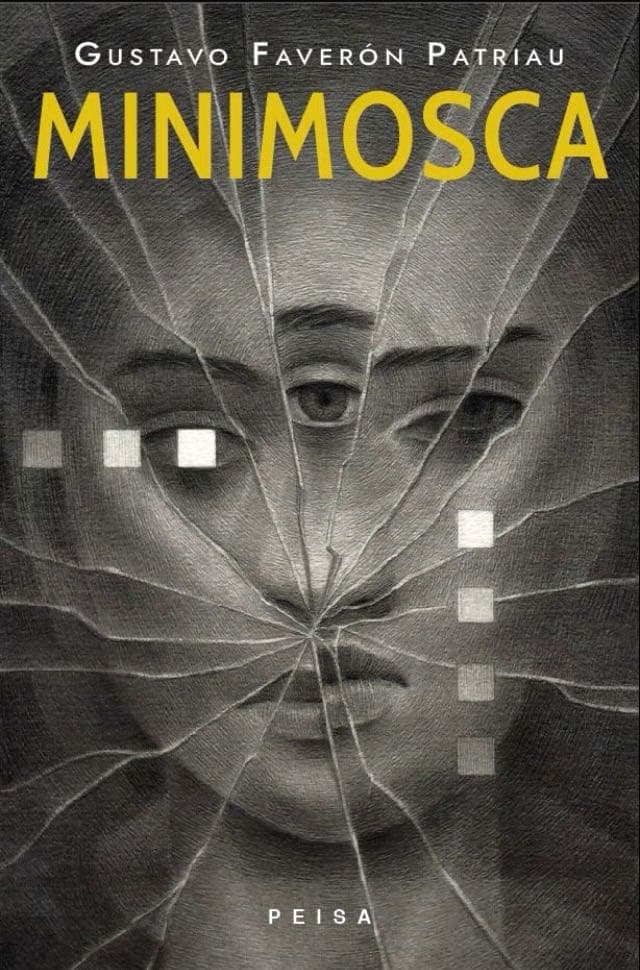
Gustavo Faverón Patriau is Professor and Chair of the Department of Romance Languages and Literatures at Bowdoin College, with affiliations in Latin American, Caribbean, and Latinx Studies and Hispanic Studies. He holds a PhD from Cornell University and has held visiting positions at Stanford University, Middlebury College, and Universidad Cayetano Heredia. His academic work centers on Latin American contemporary literature and political history, with a focus on the limits of visual and linguistic representation, the portrayal of mental illness in narrative, and the writings of Jorge Luis Borges. His research spans literary theory, cultural criticism, and journalistic inquiry, often bridging scholarly and public intellectual spheres. His recent publications reveal a consistent engagement with themes of abjection, memory, trauma, and the philosophical dimensions of narrative. He frequently analyzes canonical and marginal texts through interdisciplinary lenses, drawing on philosophy, visual culture, and historiography. His scholarship often intersects with his creative work, which includes novels and editorial projects that explore similar intellectual terrain. Among his scientific awards and recognitions are being a finalist for the III Vargas Llosa Biennial Novel Prize, receiving accolades from Letras Corsarias and Rockdelux, and being recognized by the Spanish newspaper ABC for his blog Puente Aéreo as one of the most influential in the Hispanic world. He has served on the board of Diacritics , directed literary journals such as Dissidences , La Vaca Multicolor , Somos , and Visto & Bueno , and co-edited major volumes like Bolaño salvaje and Toda la sangre . He regularly presents at international literary festivals and academic conferences, and has conducted numerous interviews and media appearances across Latin America and Europe. His creative and scholarly work has been translated into ten languages, underscoring his transnational impact. He continues to publish prolifically in both academic and literary venues, maintaining a dynamic presence in contemporary Hispanic intellectual life.