Jeffrey A. Cooper is a Professor of Law at Quinnipiac University School of Law , where he teaches courses in estate planning, wills and trusts, and taxation. He previously served as Associate Dean for Research and Faculty Development and is currently faculty adviser to the Quinnipiac Probate Law Journal . Education: AB from Harvard University, JD from Yale University, LLM from New York University Research Interests: His work focuses on tax policy , estate and gift taxation , and the intersection of federal tax law with state probate systems . He specializes in trust enforceability , uniform trust code , and historical analysis of tax legislation. Publications: Recent articles address perpetual trusts , state death tax decline , and curriculum reforms in estate planning education. His scholarship is widely published in national law journals and cited in casebooks. Scientific Awards: Academic Fellow, American College of Trust and Estate Counsel (ACTEC) Faculty Scholar, Quinnipiac University Professional Background: Before academia, Cooper practiced law for over a decade as a principal at Cummings & Lockwood, senior officer at United States Trust Company, and special counsel to Shipman & Goodwin. He also served as a senior adviser to Fiduciary Trust Company International.
Susan Fino is a Professor at the College of Liberal Arts and Sciences, Wayne State University. Her research focuses on public law, American constitutional law, administrative law, and the role of state supreme courts. She holds a B.A. from Johns Hopkins University, an M.A. and Ph.D. from Rutgers University. She has received the President's Award for Excellence in Teaching. Her courses include American Government (PS1010) and Constitutional Law (PS5110/PS5120), taught across multiple terms from 2023 to 2025. Dr. Fino's research explores judicial federalism, state constitutional frameworks, and legal interpretations of rights. Her work analyzes topics like church-state relations, taxation provisions in state constitutions, and assisted suicide debates. She has written extensively on state supreme court dynamics, including landmark cases and institutional performance metrics. Her scholarship bridges legal theory with practical governance challenges at both state and federal levels. Her publications span over three decades, addressing evolving legal landscapes such as the Rehnquist Court’s federalism approach and technological impacts on criminal sentencing. She consistently engages with issues at the intersection of law, politics, and societal values.
İBRAHİM ERDEM SEÇİLMİŞ is a Professor of Economics at Hacettepe University's Faculty of Economics and Administrative Sciences. His research focuses on experimental economics, public goods theory, behavioral economics, and tax policy with notable contributions to understanding risk perception, social discount rates, and creative industries in Mediterranean economies. He has authored/co-authored over 40 peer-reviewed publications and edited several academic volumes. Key research areas include: Experimental analysis of public goods provision Behavioral responses to environmental policies Comparative analysis of social discount rates in transition economies Evaluation of tax reforms through behavioral lenses Impact of cultural industries on regional development Notable publications include seminal works on Turkish presidential election policies (2025), risk aversion in public goods (2019), and Mediterranean creative industries (2016). His work frequently bridges theoretical economics with policy applications, particularly focusing on sustainability and social equity. He has presented at international conferences such as the Regional Studies Association European Conference (2014) and contributed to edited volumes on game theory applications and economic philosophy. Current research trends emphasize behavioral tax policy design and the socio-economic consequences of rising inequality.
Stephen Marglin is the Walter S. Barker Professor of Economics at Harvard University, Department of Economics. His research critically examines foundational assumptions of economics, particularly how economic theories marginalize community and cultural values. He explores labor-surplus economies, cost-benefit analysis, and macroeconomic adjustment processes. His work challenges mainstream economics through publications like The Dismal Science: How Thinking Like an Economist Undermines Community (2008). Marglin also advises governments and international agencies on economic policy, including recent tax reform work in Puerto Rico. His teaching integrates standard economics with critical perspectives, focusing on modernity's cultural impact and globalization. Research interests include development economics, economic theory, and the interplay between economic systems and cultural values. His articles span Keynesian theory reinterpretation, labor dynamics, and critiques of neoclassical economics. Marglin collaborates with his spouse, anthropologist Frédérique Apffel-Marglin, blending economic and cultural analyses. Personal interests include gardening, animal husbandry, and family life. He has held roles such as adviser to governments and institutions, emphasizing policy relevance. His academic contributions are translated into multiple languages, reflecting global influence.
Dr. Julian Limberg is a Senior Lecturer in Public Policy at the Department of Political Economy, King’s College London. He previously held a post-doctoral position at Ludwig Maximilian University of Munich and earned his PhD in Political and Social Sciences from the European University Institute. His research focuses on public policy and political economy, particularly inequality dynamics, tax policy, and environmental governance. Education: PhD in Political and Social Sciences (European University Institute), Post-doctoral Research (Ludwig Maximilian University). Affiliations: Public Policy and Regulation Research Group, Quantitative Political Economy Research Group, Global South Research Group. His work examines the causes and consequences of progressive taxation, climate policy effectiveness, and public perceptions of fiscal fairness. Recent studies include the impact of dedicated climate ministries on emissions reduction and the link between financial sector growth and tax policies. Limberg is also engaged in projects analyzing how technological changes influence tax preferences and the societal consequences of major tax cuts for the wealthy. Key articles highlight his contributions to understanding taxation trends, climate policy implementation, and the interplay between economic shifts and fiscal strategies. He collaborates across disciplines, bridging political science and economics to address contemporary governance challenges.
Jinyan Li serves as Professor of Tax Law at Osgoode Hall Law School, York University, where she previously held the position of Interim Dean and currently co-directs the LLM Tax program while serving as academic director of the Professional Graduate Studies Program. Her educational qualifications include: BA from UIBE (China) LLB from University of Toronto LLM from Queen's University DJur from Osgoode Hall Law School She is an active member of the Bar of Ontario. Professor Li's research spans tax law and policy with specialized expertise in international taxation frameworks, social income support systems, Chinese tax evolution, and e-commerce taxation challenges. Her scholarly work has significantly shaped legal discourse, with multiple citations by Canadian judicial authorities including the Supreme Court of Canada in landmark cases such as Deans Knight Income Corp. and Alta Energy . Her publication history demonstrates consistent focus on comparative tax systems and policy development, particularly examining Chinese tax structures and global digital economy implications. This trajectory reflects deepening engagement with international tax coordination mechanisms and equity considerations in fiscal policy. Her distinguished recognition includes: Tax Excellence Award (2021) from the Ontario Bar Association Lifetime Contribution Award (2017) from the Canadian Tax Foundation Academic Excellence Award (2007) from the Canadian Association of Law Teachers D.J. Sherbaniuk Distinguished Writing Award (1999) York University Research Leader (2017) Teaching Awards (2004, 2014) Professor Li actively supervises LLM and PhD candidates specializing in tax law and social income support policy, maintaining close mentorship with students including Lawrence, Sonia McCamus, and John D. Her externally funded research has received substantial support from governmental bodies including the Department of Finance and National Revenue, alongside international institutions such as the IMF, OECD, and Asian Development Bank where she served as consultant. She leads research initiatives through the LLM Tax program and organizes high-impact academic events, recently co-hosting the 2022 Pillar Two symposium and Women with Disabilities: Income Security and Tax Policy conference, demonstrating ongoing commitment to contemporary tax challenges and inclusive policy development.
Professor Wei Cui is a distinguished scholar at the Peter A. Allard School of Law at the University of British Columbia, where he joined the faculty in 2013. His expertise spans tax law and policy, international taxation, and Chinese legal studies, with significant contributions to understanding the intersection of tax policy, climate change, and global economic governance. Professor Cui's educational background includes a BA from Harvard College, an MA in Philosophy from Tufts University, a JD from Yale Law School, and an LLM in Taxation from New York University School of Law. He maintains strong institutional affiliations with the Centre for Asian Legal Studies, Centre for Chinese Research, and Centre for Business Law at UBC. Professor Cui's research focuses on tax law and policy with particular emphasis on international taxation, carbon pricing mechanisms, Chinese fiscal systems, and the relationship between tax policy and development. His work bridges theoretical insights with practical applications in tax administration, examining how tax systems function in different political and economic contexts. He has made significant contributions to understanding China's tax system and its implications for developing countries, as well as analyzing innovative approaches to carbon pricing and digital taxation. His recent publications demonstrate a clear trajectory toward addressing contemporary challenges in tax policy, particularly the intersection of taxation with climate change mitigation and digital economy regulation. Professor Cui's research on carbon contracts for difference, output-based pricing systems, and digital services tax reflects his engagement with pressing policy questions facing Canada and the international community. Insight Grant from the Social Sciences and Humanities Research Council of Canada Insight Grant from the Social Sciences and Humanities Research Council of Canada Professor Cui has engaged in significant scholarly supervision and research collaboration, with his work supporting numerous graduate students and research projects. His professional background includes over 10 years of tax law practice with global law firms in New York and Beijing, service as Senior Tax Counsel at the China Investment Corporation (2009-2010), and consultancy roles with China's National People's Congress, Ministry of Finance, State Administration of Taxation, and the United Nations. Professor Cui maintains active research laboratories and teams focused on comparative tax systems, with particular attention to China's fiscal development and its implications for global tax governance. His current research projects examine the evolution of international tax design as part of the post-WWII international economic order and tax/subsidy policies designed to combat climate change and support innovation.
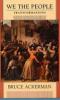
Bruce Ackerman is Sterling Professor of Law and Political Science at Yale University, holding one of the most prestigious academic positions at Yale. He has made significant contributions to constitutional law, political philosophy, and public policy over his distinguished career. His educational background includes an LL.B. from Yale (1967) and a B.A. from Harvard (1964). Ackerman has received numerous honors including the Henry Phillips Prize for lifetime achievement in Jurisprudence (2002), an Honorary Doctorate from the University of Milan (2023), and recognition as a Commander of the French Order of Merit. Ackerman's research focuses on American Constitutionalism, Comparative Constitutionalism, and Theories of Justice. His groundbreaking work includes the three-volume series We the People , which explores great turning points in American constitutional history. His scholarship has had global impact, influencing constitutional reforms in France, Brazil, Britain, and other countries. His recent work examines the constitutional challenges posed by the internet revolution and digital age. His publications reveal consistent engagement with constitutional crises across different nations and time periods, with particular attention to emergency powers, presidential authority, and democratic resilience. Ackerman's work connects historical constitutional development with contemporary challenges to democratic institutions. Commander of the French Order of Merit Henry Phillips Prize for lifetime achievement in Jurisprudence (2002) Honorary Doctorate from University of Milan (2023) Member of the American Law Institute Member of the American Academy of Arts and Sciences Named Leading Global Thinker by Foreign Policy magazine Ackerman has advised numerous governments and constitutional bodies worldwide. His work Before the Next Attack served as basis for French constitutional reform on emergency powers, while The Stakeholder Society influenced wealth distribution reforms in Brazil and Britain. He continues to actively engage with current constitutional challenges through scholarly publications, media commentary, and direct consultation with constitutional institutions globally.
Christopher R. Berry is the William J. and Alicia Townsend Friedman Professor at the Harris School of Public Policy and the College at the University of Chicago, and Director of the Mansueto Institute for Urban Innovation. He also served as the inaugural director of the Center for Municipal Finance. His research focuses on American politics, metropolitan governance, municipal finance, and intergovernmental fiscal relations. Notably, his book *Imperfect Union* won the APSA Best Book Award in Urban Politics. Key affiliations include the American Academy of Arts and Sciences. His work has been featured in major media outlets like the *New York Times* and *Last Week Tonight with John Oliver*. His research often intersects property tax fairness, urban policy, and the effects of leadership in politics and sports. His awards reflect his scholarly impact, including the APSA Urban Politics award and membership in the American Academy of Arts and Sciences. His research extends to leadership studies, as seen in collaborations analyzing coach effects in professional sports.
Ji Li is the John S. and Marilyn Long Professor of U.S.-China Business and Law at the University of California, Irvine School of Law, where he joined in July 2019. Previously, he served as a Professor of Law and Zhuang Zhou Scholar at Rutgers University with associate faculty affiliations at the Division of Global Affairs. Ph.D. in Political Science, Northwestern University J.D., Yale Law School (Olin Fellow in Law, Economics, and Public Policy) Professor Li's research focuses on Chinese law and politics, international business transactions, comparative law, contracts, and empirical legal studies. His scholarship examines how Chinese multinational companies adapt to U.S. legal systems, state-owned enterprise compliance, and the intersection of U.S.-China geopolitical rivalry with international legal norms. His recent publications (2023-2024) explore topics like foreign investment screening regulations, digital age civil rights challenges, and evolving rule of law concepts in China. These works span disciplines including international law, comparative law, corporate law, and civil rights law, with a specific emphasis on cross-jurisdictional legal adaptation, regulatory compliance, and geopolitical implications. Scientific awards include: Zhuang Zhou Scholar at Rutgers University Olin Fellow in Law, Economics, and Public Policy at Yale Law School Professor Li's ongoing research projects investigate China's engagement with international legal orders and transnational actor responses to U.S.-China tensions. He has presented at prestigious venues including the Institute for Advanced Study in Princeton, UC San Diego School of Global Policy and Strategy, and international conferences in Amsterdam and New York.
Dr David Pratt is a Fellow in History at Downing College, University of Cambridge , where he also serves as Archivist and Keeper of Art and Artefacts. His academic career focuses on early medieval political thought and court culture, particularly in Anglo-Saxon England and the Carolingian world. Academic Rank: Research Fellow Honors: FRHistS (Fellow of the Royal Historical Society) Research Interests center on the political ideology of King Alfred the Great, the origins of English coronation rituals, and broader themes of kingship, law, and social order in the later Anglo-Saxon period. His comparative approach highlights interactions between Anglo-Saxon and European medieval traditions. Recent Publications include English Coronation Ordines in the Ninth and Early Tenth Centuries (2023) and studies on Alfredian texts, taxation systems, and monastic reform. These works emphasize textual analysis, royal authority, and cross-cultural influences. Scientific Awards: FRHistS
Andrew Green serves as Professor and Metcalf Chair in Environmental Law at the University of Toronto Faculty of Law, where he teaches environmental law, climate change law, administrative law, natural resources law, judicial decision-making, and international trade. His scholarly contributions span multiple legal domains with particular emphasis on the intersection of environmental regulation and administrative governance. Green's research interests encompass Environmental Law , Administrative Law , Climate Change Policy , Judicial Decision-Making , and International Trade Law . His empirical approach to legal scholarship has produced significant insights into how judges make decisions, particularly in administrative contexts, and how trade rules interact with domestic environmental regulations. His work often bridges theoretical legal analysis with practical policy implications. His recent publications reveal a strong focus on Canadian climate policy implementation, judicial behavior in high courts, and the evolving standards of review in administrative law. The research demonstrates increasing interdisciplinary integration, incorporating machine learning approaches to analyze judicial decisions and examining the systemic challenges in environmental governance. His scholarship consistently addresses the tension between regulatory effectiveness and legal accountability. Metcalf Chair in Environmental Law Past co-President of the Society for Empirical Legal Studies Past President of the Canadian Law and Economics Association Former Associate Dean at the Faculty of Law Chair of the University of Toronto Academic Appeals Committee (2009-2018) Before joining the Faculty of Law, Green practiced environmental law in Toronto for six years, handling both litigation (including prosecutions, administrative appeals, and civil actions) and transactional work. His practical experience informs his scholarly work on regulatory design and implementation. His research has influenced policy discussions on climate change, securities regulation, and administrative law reform in Canada.
Robert Thomas is a Professor of Public Law at the University of Manchester's School of Law. He holds a LL.B. from Cardiff University (1995) and a Ph.D. from Nottingham University (1998). His research focuses on administrative law, immigration/asylum law, and administrative justice, with particular emphasis on tribunals, judicial review, and institutional design. He has advised the UK Parliament on immigration reforms and authored influential works like Administrative Justice and Asylum Appeals (2011), which won the Peter Birks Prize. His recent projects include studies on AI in governance, constitutional history, and systemic administrative justice failures. Thomas is actively involved in legal education, co-authoring Public Law (5th ed., 2024) and supervising postgraduate research in public law and immigration law. Key research contributions include empirical analyses of asylum appeals, administrative tribunals, and ombudsman practices. He has addressed challenges in public sector digitalisation, outsourcing impacts on administrative justice, and the implications of pandemic governance. Thomas advocates for administrative fairness agendas in immigration systems and contributes to legal scholarship through peer-reviewed articles and edited volumes on topics ranging from judicial review to constitutional caricature history. His awards include the 2011 Peter Birks Prize for Outstanding Legal Scholarship. Thomas engages with policy-making through expert testimony, public commentary, and collaborative research funded by the British Academy and Nuffield Foundation. His work intersects law, policy, and social justice, emphasizing the practical implications of legal frameworks on vulnerable populations.
Prof. Dr. Bernd Lucke is a full professor at the University of Hamburg , affiliated with the Faculty of Business, Economics and Social Sciences and Department of Economics . He holds the Chair for Economic Growth and Business Cycles and has been active in research, teaching, and public policy discourse. Research Interests : Macroeconomics, Monetary Policy, European Economic Policy, Business Cycles, Econometrics, Development Policy, and Public Finance. Publications : His recent work (2025–2020) focuses on synthetic control methods for EU monetary analysis, ECB policy critiques, debt sustainability, digital currency legislation, and expropriation impacts on FDI. Earlier works span econometric testing of Ricardian equivalence, productivity shocks, and growth modeling. Media Contributions : Regular political commentary in outlets like Cicero and Frankfurter Allgemeine Zeitung , often critiquing ECB decisions, EU fiscal integration, and inflation dynamics. Contact : bernd.lucke@uni-hamburg.de
Lin Chen is the Chair Professor of Finance and Stelux Endowed Professor in Finance at the University of Hong Kong (HKU), serving as Associate Dean (Research and Knowledge Exchange) in the Faculty of Business and Economics. He holds a PhD from the University of Florida and has held academic leadership roles at HKU and Chinese University of Hong Kong (CUHK). His research focuses on financial technology, banking systems, corporate finance, and economic development, with notable contributions to understanding financial resilience during crises and institutional reforms. Educations: PhD/MBA in Finance from University of Florida, B.E. in Engineering from South China University of Technology Leadership roles: Associate Dean (HKU), Board Member of HKU-Standard Chartered FinTech Academy, Currency Board Committee member Research interests span financial innovation , banking competition , corporate governance , and ESG integration . Key projects include RGC Theme-based grants on FinTech stability/inclusion and HK's financial center development. His work is published in top journals like Journal of Financial Economics and Review of Financial Studies . He has advised major institutions including Hong Kong Monetary Authority, World Bank, and China Construction Bank. Awards include the Jensen Prize (2011), Nobel nomination (2016), and honorary professorships from Edinburgh and Berkeley. Grants coordination includes HK$24.4 million FinTech project (2020-2025) and leadership roles in research centers like HKU’s Financial Innovation & Development Centre. Active in editorial roles for Management Science and policy advisory groups. Media engagements include BBC, Bloomberg, and Harvard Law School forums. Current initiatives focus on Web3.0 development in HK and financial inclusion strategies.