Prof. Stefan Müller is a Professor at the Institute for German Language and Linguistics , part of the Faculty of Languages and Literature at Humboldt University. His research focuses on syntax, formal grammar theories (especially Head-Driven Phrase Structure Grammar), and computational linguistics. He leads the CoreGram Project , developing cross-linguistic grammars using HPSG formalisms. His work includes analyses of German syntax, constituent order, anaphoric binding, and register phenomena. He is also involved in open-access publishing initiatives through Language Science Press . Contact: St.Mueller@hu-berlin.de . Education and academic background details are not explicitly stated in the provided text, but his professional trajectory indicates deep expertise in theoretical linguistics. His research spans multiple languages including German, Mandarin, and Persian, with a focus on grammar implementation and syntax-semantics interfaces. Key contributions include the Head-Driven Phrase Structure Grammar Handbook (2024), analyses of headless nominal structures in German (2022), and exploration of large language models' theoretical implications (2024). He actively engages in interdisciplinary projects bridging formal grammar and computational methods.
Bistra Andreeva is a full Professor of Phonetics and Phonology at Saarland University, Department of Language Science and Technology. She is also a principal investigator of the DFG-funded project “Judeo-Spanish in Bulgaria: a contact language between archaism and innovation” (2022-2025) and leads or co-leads several other externally funded projects on prosody, information structure, and language contact. She teaches and has taught at Saarland University, Sofia University “St. Kliment Ohridski”, and other European universities. Education & Academic Background Habilitation (kumulative Habilitationsschrift): “Contrastive Prosody: Bulgarian vs. German”, Saarland University, 2016. PhD (Dr. phil.): “Zur Phonetik und Phonologie der Intonation der Sofioter-Varietät des Bulgarischen”, Saarland University, 2007. Research Interests Andreeva’s research focuses on the phonetics and phonology of intonation and rhythm, cross-language and individual differences in the production and perception of syllabic prominence, the relation between intonation and information structure, minority languages (especially Judeo-Spanish in Bulgaria), and the interaction between information density and prosodic structure. Her methodological expertise includes experimental phonetics, corpus-based studies, and acoustic analysis. Major Projects SFB 1102 C1: “Information Density and the Predictability of Phonetic Structure” (DFG, 2014-2026) JuSpa: “Judeo-Spanish in Bulgaria: a contact language between archaism and innovation” (DFG, 2022-2025) Prosodic aspects of Bulgarian compared to other languages with lexical stress (Bulgarian National Science Fund, 2019-2024) Prosodic manifestations of focus in French and English from a Bulgarian point of view (DAAD & Sofia University, 2021-2023) Scientific Awards & Recognition While no major named prizes are listed, Andreeva’s work has been continuously supported by competitive grants from the German Research Foundation (DFG), DAAD, and Bulgarian National Science Fund. Her publications appear in top-tier journals and conference proceedings (Journal of the Acoustical Society of America, Interspeech, Speech Prosody, International Congress of Phonetic Sciences). Teaching & Supervision She offers a broad spectrum of courses including Experimental Phonetics, Prosody, Phonetics & Phonology of Slavic Languages, Introduction to Instrumental Phonetics, and seminars on language contact. She has supervised numerous BA, MA, and PhD theses and regularly teaches at the PhD School of Sofia University. Labs & Teams She is affiliated with the Phonetics Laboratory at Saarland University and collaborates closely with the Institute for Bulgarian Language (Bulgarian Academy of Sciences), working in interdisciplinary teams involving phoneticians, computational linguists, and field linguists.
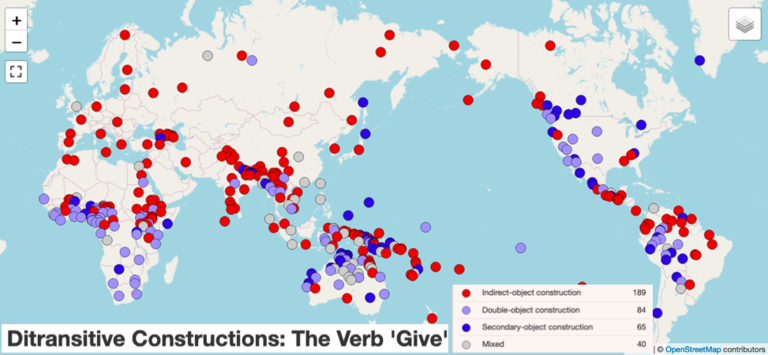
Martin Haspelmath is a Senior Research Scientist at the Department of Linguistic and Cultural Evolution at the Max Planck Institute for Evolutionary Anthropology (MPI-EVA), Leipzig, and an honorary (adjunct) professor at Leipzig University. His research focuses on comparative linguistics, language universals, and typology, particularly in syntactic and morphological systems. He co-edited the World Atlas of Language Structures (2005/2013) and co-founded Language Science Press . Education: PhD in Linguistics, Freie Universität Berlin (1990–1993) MA in Linguistics, University of Cologne and University at Buffalo (1985–1989) Undergraduate studies in Linguistics, University of Vienna (1983–1985) Research Interests: Haspelmath investigates global grammatical diversity, form-function correspondences, and universals in syntax, morphology, and lexical systems. His work emphasizes comparative concepts for cross-linguistic analysis and critiques traditional grammatical categories. Grants & Projects: ERC project leader at Leipzig University (2015–2020) Co-creator of Grambank , an open-access database of grammatical structures Leading initiatives for open-access publication and linguistic data sharing Labs/Teams: Active in the MPI's Department of Linguistic and Cultural Evolution, collaborating on projects like APICS (Atlas of Pidgin and Creole Language Structures) and ValPal (Valency Patterns Leipzig).
Marcin Wągiel is a semanticist affiliated with Masaryk University's Department of Czech Language and the Centre for Corpus and Experimental Research on Slavic Languages at the University of Wrocław. As an Alexander von Humboldt Fellow at Leibniz-Zentrum Allgemeine Sprachwissenschaft (ZAS), he researches mereotopology across linguistic domains. His work focuses on compositional semantics, quantification, and morphologically complex expressions. Research interests include: Parthood and mereotopological structures Subatomic quantification Cross-linguistic analysis of Slavic languages Semantic change and event semantics He received the E.W. Beth Dissertation Prize for his work on subatomic quantification. Current projects explore classifier constructions and additive numerals across languages.
Eliese-Sophia Lincke is a Junior Professor at the Department of History and Cultural Studies, Freie Universität Berlin, since May 2022. Her work bridges computational methods with Egyptology, focusing on digital tools for studying ancient texts. Bachelor's and Master's in Egyptology, Humboldt-Universität zu Berlin (2007) PhD in "The Conception of Spaces in Language" (TOPOI Cluster, 2012) Research interests include: Digital Humanities : Developing machine learning models for Hieroglyphic, Demotic, and Coptic text processing Linguistic Typology : Analyzing classifier systems in Ancient Egyptian and Sign Languages Spatial Linguistics : Investigating prepositions and spatial adverbs in Egyptian-Coptic Recent publications focus on Neural Lemmatization , OCR for Coptic , and Classifier Semantics , demonstrating her commitment to computational Egyptology. Scientific awards include the Humboldt-Preis 2008 for best Master's thesis and the Prize for Good Teaching 2014 . She has co-organized workshops like "Wege zum Ägyptischen" and served as Co-Editor for Lingua Aegyptia . Her teaching contributes to the Digital Studies of Ancient Texts Master's program.
Viktor Golinets is a Professor of Hebrew Linguistics at the Heidelberg University of Jewish Studies , where he has held the Chair of Hebrew Linguistics since 2018. Previously, he served as a Junior Professor at the same institution from 2012 to 2018. His academic journey includes a PhD in Ancient Near Eastern Studies from the University of Munich (2010) and a Magister degree in Semitics from Ludwig-Maximilians-Universität München (2004). Education: PhD (Altorientalistik, LMU Munich, 2010), Magister (Semitics, LMU Munich, 1997-2004) Professional Roles: Professor (Heidelberg University of Jewish Studies, since 2018), Junior Professor (Heidelberg University of Jewish Studies, 2012-2018), Scientific Assistant (University of Basel, 2007-2012) Golinets’ research focuses on the linguistic and textual history of the Hebrew Bible , ancient Bible translations , and historical grammar of Hebrew . He specializes in Masoretic studies, Semitic epigraphy, and comparative analysis of Northwest Semitic languages like Amorite, Aramaic, and Ugaritic. His work addresses textual criticism, biblical hermeneutics, and the evolution of Hebrew from Masoretic to modern usage. His publications and articles reveal a strong emphasis on Hebrew onomastics , epigraphic analysis , and the role of language in Jewish cultural identity . He has contributed to international colloquia on textual criticism and Semitic philology. Memberships: German Oriental Society, European Association of Biblical Studies, International Association for Comparative Semitics, Association of Judaists in Germany, and others Golinets serves as Deputy Rector at Heidelberg University of Jewish Studies and has collaborated on projects like the Hebrew-Greek Text-Critical Synopsis of the Book of Jeremiah and the Biblia Hebraica Transkripta. His expertise in Hebrew manuscripts and Semitic languages informs both his teaching and research.
Dr. Burkhard Maess is a Research Professor and Group Leader at the Max Planck Institute for Human Cognitive and Brain Sciences, leading the Methods and Development Group Brain Networks. His research focuses on auditory and language processing, signal analysis, and dynamic modeling of neuronal networks. He holds a Diploma in Physics (University of Leipzig, 1987) and a PhD in Physics (University of Leipzig, 1990). His career includes postdoctoral positions at the Academy of Sciences of the GDR and the Free University of Berlin before joining the MPI in 1995. Since 2000, he has led research groups on MEG/EEG signal analysis and cortical network dynamics. His work integrates advanced neuroimaging techniques like MEG and EEG to study sensory processing, neural network dynamics, and the effects of aging on auditory attention. Key contributions include developing high-resolution BEM-FMM methods for source localization and analyzing cross-frequency coupling in neuroscience data. His group also explores spinal cord electrophysiology and the neural underpinnings of perceptual decision-making. Dr. Maess’ research spans cognitive neuroscience, biomedical engineering, and computational modeling, with a focus on bridging empirical findings with theoretical frameworks in neuroscience.
Prof. Gaurav Raheja is a Professor at the Department of Architecture & Planning, IIT Roorkee, and Co-coordinator of the Design Innovation Centre. He holds joint faculty positions at the Centre for Transportation Systems and is Professor-in-charge of Inclusion and Accessibility Services. His academic journey includes a PhD (2008) and M.Arch (2002) from IIT Roorkee, and a B.Arch from PTU Jalandhar (2000). His research focuses on universal design, inclusive mobility, urban sustainability, and accessibility for marginalized groups such as persons with disabilities, children, and the elderly. He leads the Laboratory of Inclusive Design (LID) and advises India’s government on accessibility policies. Notable awards include the Mphasis Universal Design Award (2010) and DAAD Research Ambassadorship (2018–2022). He has authored over 50 publications, including books on universal design and accessibility. His recent work explores children’s independent mobility in urban areas, inclusive urban futures, and accessibility in pilgrimage towns. He collaborates with global institutions like TU Berlin and TU Dresden through DAAD-funded programs. His teaching spans courses on universal design, architectural theory, and sustainable urban planning.
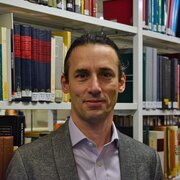
Prof. Dr. Jakob Leimgruber is Professor of English Linguistics at the University of Regensburg since 2022, where he is affiliated with the Department of English and American Studies within the Faculty of Languages, Literature, and Cultures. Previously, he served as Substitute Professor at the University of Freiburg (2020-2022) and Lecturer at the University of Basel (2018-2022). His academic journey includes a Habilitation in English Philology from the University of Freiburg (2018), a DPhil in English Language from the University of Oxford (2009), and a Licence ès lettres in English Linguistics from the University of Fribourg (2005). Leimgruber's research centers on World Englishes with particular focus on East and Southeast Asia, sociolinguistics, language planning and policy, linguistic landscapes, language contact phenomena, language variation and change, indexicality, and authenticity. His work employs empirical approaches including corpus linguistics, fieldwork, and eye-tracking methodologies to investigate multilingual contexts across Singapore, Montreal, Taiwan, and the UAE. He has made significant contributions to understanding Singapore English, linguistic landscapes in multilingual cities, and language variation in postcolonial contexts. His publication record demonstrates consistent research output across multiple high-impact journals in linguistics, with a strong focus on empirical studies of language variation in specific contexts. Recent work shows increased attention to East Asian Englishes beyond Singapore, including Taiwan, and expanding investigations into the linguistic landscapes of global cities like Dubai. His research often employs collaborative approaches with international scholars across multiple institutions. Leimgruber has been active in academic service through numerous conference presentations including invited talks at institutions worldwide, participation in research workshops, and contributions to edited volumes on World Englishes and multilingual cities. His work bridges theoretical linguistics with practical applications in language policy and education. As an academic leader, Leimgruber has directed research projects examining multilingualism in global contexts, with particular attention to the role of English in shaping linguistic landscapes and identity construction. His recent work has increasingly focused on comparative approaches across different multilingual settings, examining common patterns and context-specific variations in how English functions in diverse sociolinguistic environments.
Prof. Dr. Gisela Zifonun is a retired University Professor of German Linguistics at the University of Mannheim and former Head of the Grammar Department at the Institut für Deutsche Sprache (IDS) until July 2011. She holds a doctorate (1971) and habilitation (1994) in German Linguistics. Her career includes roles as a scientific employee at the IDS (1973–1995), Head of the Grammar Department (1986–1995), and professorships at the Free University of Berlin (1995–1998) and the University of Mannheim (1998–2011). Her research focuses on grammar theory, German syntax/semantics/morphology, language typology, and comparative linguistics. Key projects include the Grammar of German in European Comparison (GDE-N) and the EuroGr@mm initiative. She has authored/co-authored over 130 works, including monographs and edited volumes on German linguistics. Notable publications include Das Deutsche als europäische Sprache (2021) and Grammatik des Deutschen im europäischen Vergleich (2017). Her work emphasizes cross-linguistic analysis and corpus-driven research. Research interests span syntax, morphology, and typological comparisons across German, Romance, and Slavic languages. Recent contributions address gender-inclusive language reform and corpus-based studies. She has supervised numerous academic projects and serves as a key figure in German linguistic infrastructure, including IDS initiatives. No explicit awards are listed, but her extensive bibliography reflects significant scholarly impact. Professional roles include managing the IDS’s Grammar Department and coordinating international collaborations. Her work bridges theoretical linguistics with applied research, contributing to both academic discourse and language policy discussions.
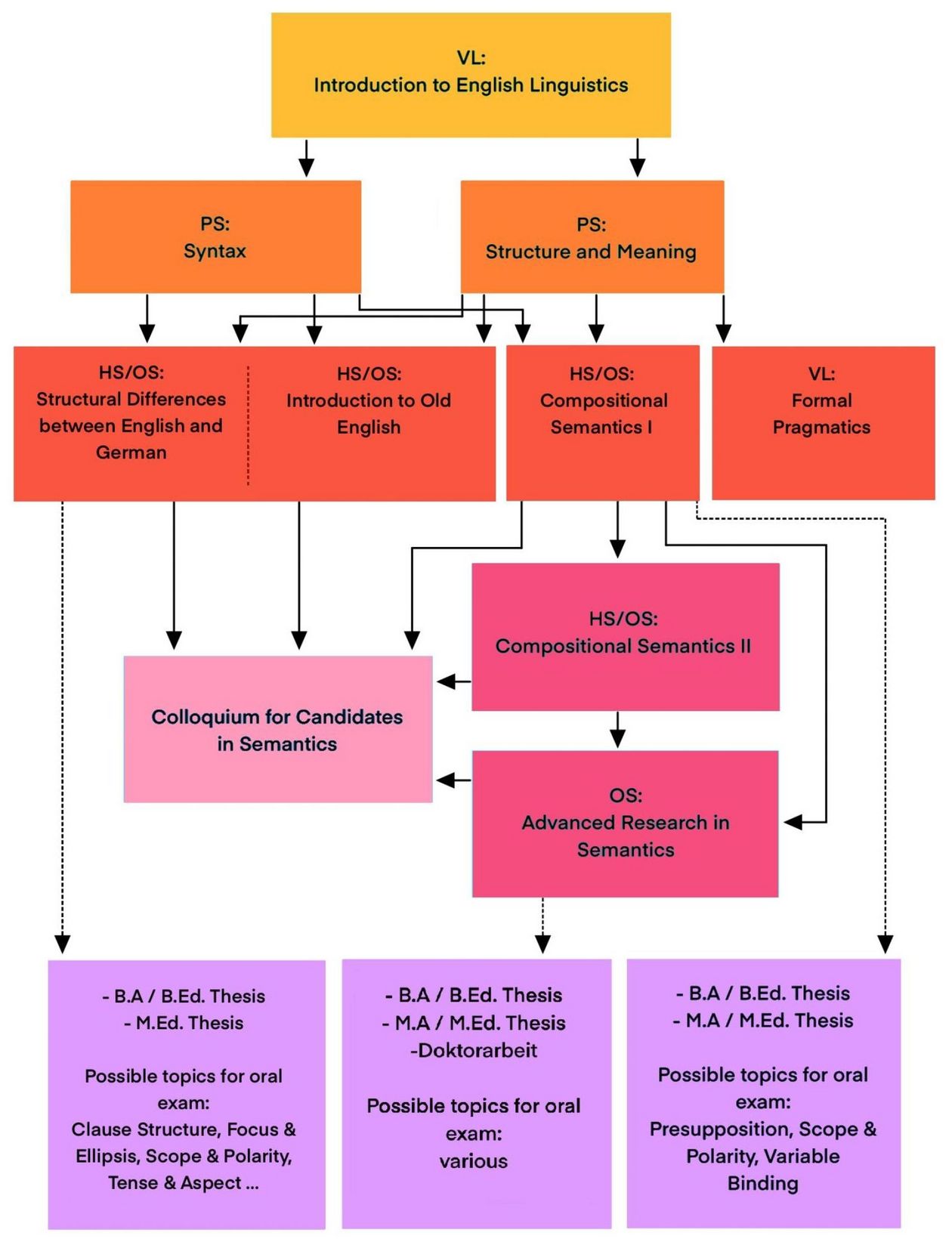
Prof. Dr. Sigrid Beck holds the Chair of Descriptive and Theoretical Linguistics at the Department of English, University of Tübingen. She is affiliated with the Faculty of Humanities and specializes in semantics, focusing on questions, focus structures, plurals, comparison constructions, and decomposition adverbs. Her research integrates crosslinguistic, diachronic, and acquisition data to inform semantic theory. Education: PhD (1996) and Habilitation (2003), University of Tübingen and Goethe University Frankfurt Key positions: Held roles at MIT, University of Massachusetts Amherst, University of Connecticut, and University of Potsdam Publications include Structure and Meaning: Contrasting English and German Grammar (2014) and foundational lecture notes on tense and modality (2011). She teaches semantics and syntax within the Department's structured program. Office hours are Tuesdays 4-5pm via secretary appointment.
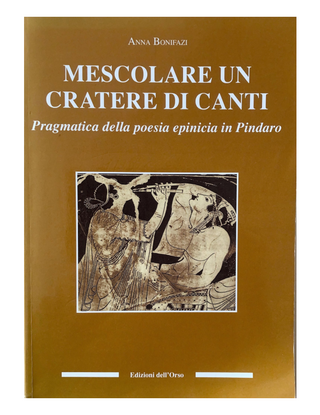
Prof. Anna Bonifazi holds a Professorship in Discourse Studies at the Department of Linguistics, University of Cologne. Her research spans Discourse Analysis, Pragmatics, Cognitive Linguistics, and Multimodal Communication with a focus on Ancient Greek Linguistics and Oral Epic traditions. She investigates phenomena like anaphoric cohesion in long texts, multimodal storytelling in film and oral traditions, and ancient Greek particles' discursive functions. Her work explores how multimodal elements (e.g., visual, musical, gestural) interact in communication, particularly analyzing films (e.g., mystery genres), ancient texts (e.g., Homeric epics), and South Slavic oral narratives. She examines cross-modal iconicity, viewpoint blending, and the cognitive underpinnings of discourse structures. Recent publications address topics like anaphoric strategies in crime stories and syntactic patterns in ancient Greek conversational frameworks. Prof. Bonifazi's research often bridges classical philology and modern cognitive theories, emphasizing embodied cognition and the interplay between language and other semiotic systems. She collaborates internationally on projects involving gesture analysis in storytelling and ancient papyrological studies. Her interdisciplinary work integrates linguistics with musicology, film studies, and cognitive science. Administratively, she oversees the Discourse Studies research group at Cologne and mentors assistants like Dr. Sandra Debreslioska and Madeleine Frings. Her lab focuses on multimodal discourse analysis using experimental and corpus-based methods.
Dr. Brigitta Mittmann is a Senior Lecturer at the Department of English and American Studies, Friedrich-Alexander University Erlangen-Nuremberg (FAU), holding the Alexander von Humboldt Professorship for Language and Cognition. Her work focuses on lexicography, phraseology, and comparative analysis of spoken English varieties.
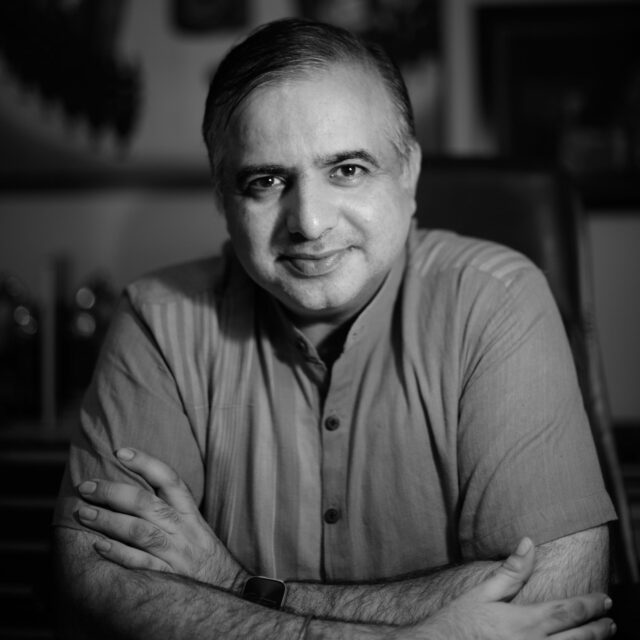
PD Dr. Lutz Rzehak is an academic staff member at the Institute for Asian and African Studies (IAAW) within the Faculty of Humanities at Humboldt University of Berlin, serving as a Teacher for special tasks specializing in Modern Iranian languages and the ethnography and cultural history of Afghanistan and Central Asia. His educational background includes: Oriental Studies/History from the State University of Leningrad (1985) Doctorate in Iranian Studies, Humboldt University of Berlin (1991) Habilitation in Central Asian Studies / Iranian Studies, Humboldt University of Berlin (2001) Dr. Rzehak's research spans Central Asian Studies , Iranian Studies , Ethnography , and Linguistics , with fieldwork focusing on Baloch, Pashtun, and Tajik communities. His work examines language evolution, social structures, and cultural practices through historical and contemporary lenses, particularly regarding Soviet influence and post-Taliban Afghanistan. Key contributions include grammatical analyses of Iranian languages and ethnographic studies of religious rituals and tribal systems. His recent publications (2016-2021) reveal consistent focus on Iranian language dynamics (especially Dari and Pashto), ethnic identity politics in Afghanistan, and cultural history of Central Asia. These works address language change mechanisms, ethnic consolidation strategies, and the interplay between tradition and modernity, often utilizing comparative linguistic and ethnographic methodologies. His scientific awards include: Heisenberg Fellow of the German Research Foundation Dr. Rzehak has held significant research positions including Research Associate in the Crossroads Asia Competence Network (2011-2016) and Heisenberg Fellow (2002-2011). While his CV does not list formal PhD advisees, his language lecturing and research supervision have mentored numerous students in Central Asian and Iranian studies through course instruction and fieldwork guidance. He has been actively involved in the Crossroads Asia Competence Network, a major interdisciplinary research initiative examining transregional connections and historical trajectories across Central, South, and West Asia.
Prof. Gerhard Jäger holds the Chair of General Linguistics at the Faculty of Humanities, University of Tübingen . He serves as a Principal Investigator (PI) in the Clusters of Excellence Human Origins and Machine Learning for Science , and leads projects like Phylomilia (funded by Volkswagen Foundation) and CrossLingference (ERC Advanced Grant). His career spans multiple institutions, including Bielefeld University (2004-2009) and Stanford University (visiting scholar, 2004). Habilitation (2002) at Humboldt University Berlin with thesis on Anaphora and Type Logical Grammar PhD (1996) at Humboldt University Berlin on Dynamic Semantics His research bridges computational linguistics , phylogenetic analysis , and game theory , focusing on Bayesian models , language evolution , and cross-linguistic typology . Recent work explores phylogenetic inference from acoustic speech data and geographic influences on language trees . Key contributions include 15+ recent publications on topics spanning phylogenetic typology , cognate detection , and Bayesian language modeling . These works employ machine learning , statistical inference , and evolutionary game theory to analyze language change , typological variation , and linguistic stability . Honors include ERC Advanced Grant , Volkswagen Foundation funding , and DFG-Humanities Centre for Advanced Studies participation. He has taught courses in Computational Historical Linguistics , Phylogenetic Methods , and Bayesian Data Analysis across institutions like Tübingen, Bielefeld, and Stanford. He actively contributes to academic communities through workshop organization (e.g., Quantitative Theoretical Linguistics , Game Theory in Pragmatics ) and serves on the faculty council at Tübingen. His team collaborates with institutions like Max Planck Institute for Evolutionary Anthropology , University of Pennsylvania , and LMU Munich .