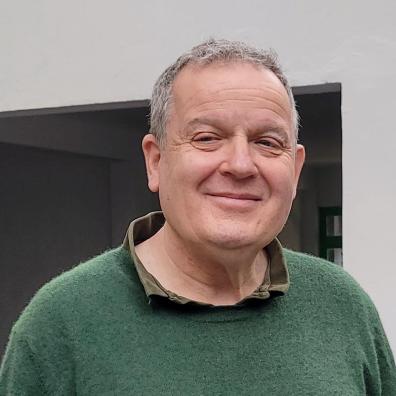
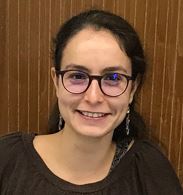
Nicolas Mathevon is a Professor at the University of Saint-Etienne, with a focus on Animal Behavior and Bioacoustics . He currently serves as Director of Studies at Ecole Pratique des Hautes Etudes and leads the ENES Team . His research explores acoustic communication across diverse species, including crocodiles, seals, penguins, and humans, with particular emphasis on vocal recognition, signal evolution, and neurobiological underpinnings. Major collaborations include Dr. T. Aubin (CNRS), Dr. I. Charrier (marine mammals), Dr. N. Grimault (crocodilian bioacoustics), and Prof. D. Reby (human communication). He also co-edits a new book, The Voices of Nature , published by Princeton University Press. His recent work spans ecoacoustic monitoring for conservation, multi-modal communication in crocodiles, and cross-species analysis of distress signals in bonobos, chimps, and humans. Neurobiological studies include brain activation patterns in response to vocalizations and sound localization mechanisms in reptiles. Scientific Awards include senior membership in the Institut universitaire de France .
Szende Thomas is a full Professor at Inalco (Institut National des Langues et Civilisations Orientales). He serves as Director of the EA 4514 Plidam research center and heads the Hungarian Studies section at Inalco. His academic work focuses on language teaching, cultural differences in dictionaries, and applied linguistics. Director, EA 4514 Plidam Research Center Head of Hungarian Studies Section, Inalco Member, UNESCO Chair "Language Policies for Multilingualism" Executive Committee Jury member, Paris University Thesis Prize Member, Inalco Scientific Council His research spans language didactics , applied linguistics , and lexicography . He has published extensively on second culture teaching, bilingual dictionary analysis, and language appropriation dynamics, with recent work on language-culture pedagogy and grammatical instruction methodologies. Key publication themes include: intercultural education , language policy in Central/Eastern Europe , bilingual dictionary design , and Hungarian language didactics . His academic contributions extend to methodological works like the Assimil Hungarian language series and specialized dictionaries.
Hugo David is a Lecturer in Philosophy and Philology (Sanskrit) at the École française d'Extrême-Orient (EFEO), based at the Pondicherry Centre. He specializes in Advaita-Vedānta, Vedic hermeneutics (Mīmāṃsā), and the history of Indian linguistic thought. PhD from EPHE (2012), supervised by Gerdi Gerschheimer Newton International Fellow at University of Cambridge Postdoctoral work at Vienna Academy of Sciences Chief Editor of the "Indologie" collection (2016–present) Director of Indology Department at French Institute of Pondicherry (2020–2022) His research focuses on ancient Indian systems analyzed through their own foundations and historical developments. Key projects include a critical edition of Bhartṛhari's Vākyapadīya auto-commentary, the Vyaktiviveka in Sanskrit poetics, and philosophical doxography in old Tamil. Since 2018, he leads a large-scale palm-leaf manuscript preservation initiative in Kerala. Scientific Awards: Newton International Fellowship
Simona ANASTASIO is an Associate Professor in the Department of Language Sciences at the University of Toulouse – Jean Jaurès, where she conducts research at the NeuroPsychoLinguistics Laboratory (LNPL, UR 4156). She is also affiliated with two CNRS research units: UMR 7023 SFL and UMR 8163 STL. Her teaching spans multiple programs, including Units and Diversities of Languages, FLE methodologies, child language development, and second language learning at both undergraduate and graduate levels. University: University of Toulouse – Jean Jaurès Department: Department of Language Sciences Research Lab: NeuroPsychoLinguistics Laboratory (LNPL, UR 4156) Additional Affiliations: UMR 7023 SFL CNRS, UMR 8163 STL CNRS Her research centers on second language acquisition, linguistic typology, and the interface between language and cognition, particularly in the expression of spatial and temporal relations. She employs qualitative and quantitative methods based on oral and written corpus analysis. Her work investigates crosslinguistic influence, inter- and intra-typological variations, and the didactic implications of acquisition research. She has led and participated in several major research projects, including WRIMOTEF, ADMIT, and CAUSEMOTYP, focusing on motion events, migrant integration, and linguistic relativism. The recent publications and conference presentations reflect a strong thematic concentration on motion event construal in L2 French and Italian, with growing attention to pedagogical applications and cognitive underpinnings. Her work frequently compares learners with different L1 backgrounds (e.g., French, English) and analyzes both oral and written productions across proficiency levels. Scientific Affiliations: Member, Second Language Acquisition Network (ReAL2) Member, Romance Linguistics Society (SLR) Member, French Association of Cognitive Linguistics (AFLICO) Member, Italian Association of Applied Linguistics (AItLA) Member, International Society for Applied Psycholinguistics (ISAPL) She actively contributes to the academic community through editorial reviews for journals such as International Review of Applied Linguistics , Discours , and Language and Cognition , and serves on scientific committees for international conferences. She has organized workshops and conferences on linguistic relativism, motion and cognition, and discourse in multilingual contexts. Her current projects involve corpus-based research with practical applications in language teaching and migrant education. Laboratories and Research Teams: NeuroPsychoLinguistics Laboratory (LNPL) UMR 7023 SFL CNRS UMR 8163 STL CNRS Participation in DOC (Didactique, Oral, Corpus) project
Sarah Bourse is a Lecturer in English Linguistics at the Center for Anglophone Studies (CAS), University of Toulouse II Jean Jaurès, where she teaches English linguistics, phonology, syntax, semantics, pragmatics, and translation. She is actively involved in research on discourse analysis, argumentation, and natural language processing. Aggregation in Linguistics (2011) Doctorate in Linguistics, University of Toulouse Jean Jaurès (2017) Qualified in academic sections 7 and 11 (2018) Her research focuses on the linguistic mechanisms of argumentation, particularly in political and crisis discourse. She investigates how language constructs meaning through connectives, metaphors, and loaded words, often combining qualitative discourse analysis with computational methods. Her work spans discourse analysis, semantics, pragmatics, corpus linguistics, and natural language processing , with recent emphasis on the metaphorical framing in public health communication during the pandemic. She explores how linguistic choices shape public perception and ideological positioning. Her publications reveal a strong trend in analyzing argumentative strategies in political discourse , especially in American politics, including the 'war on drugs' metaphor and emotional appeals in drug policy debates. She frequently collaborates with scholars such as Blandine Pennec, Patrick Saint-Dizier, and Marie Garnier, bridging linguistics with cognitive science and computational models. Her work appears in journals like Anglophonia and Lexis , and in conference proceedings related to semantic processing and argumentation. Scientific Responsibilities and Service: Elected representative of doctoral students at the Research Commission of the University of Toulouse II Jean Jaurès (2014–2016) Elected representative at the ALLPH@ Doctoral School (2012–2014) Elected representative at the CAS Laboratory (2012–2014) Member of the reading committee of the journal Anglophonia Co-organizer of multiple academic events including conferences and seminars on argumentation and crisis discourse Sarah Bourse has secured editorial and collaborative roles in significant academic projects, such as co-editing special issues and books on argumentation and enunciative duplicity. While no direct mention of grants is found, her involvement in conferences and publications suggests active research funding. She has not advised any students listed in the public record. She contributes to the academic community through organizing seminars and participating in editorial boards, demonstrating leadership in her field.
Philip Miller is a Professor of General and English Linguistics at University of Paris Cité. He specializes in syntax, semantics, and discourse pragmatics, with a focus on verbal complementation, perception verbs, VP ellipsis, pseudogapping, anaphora, and deixis. His work often compares English and French, and he has supervised several PhD students in linguistics. PhD in Linguistics, Utrecht University (1991) His research explores the interface between syntax, semantics, and pragmatics, particularly in areas like auxiliary verbs, ellipsis mechanisms, and discourse constraints. Recent publications analyze VP ellipsis, anaphora, and nominal phrase structures. Professor Miller actively supervises doctoral research in topics such as verbal complementation and discourse pragmatics. He contributes to edited volumes like Sens conventionnel et implicite and Experimental Approaches to Ellipsis .
Anne Le Draoulec is a CNRS Research Officer affiliated with the Cognition, Languages, Ergonomics (CLLE) laboratory at the University of Toulouse 2 - Jean Jaurès. Her work focuses on Semantics, Discourse Analysis, and Temporal Markers , particularly the pragmaticalization of temporal expressions and their interaction with spatial and subjective elements in French language. Current affiliation: CNRS research officer, CLLE laboratory, University of Toulouse 2 Research interests include: Evolution of temporal locutions into pragmatic markers (e.g., "à un moment donné") Semantic-pragmatic interface in French discourse Interplay between spatial and temporal expressions Complex prepositions and enunciative rupture markers Recent article trends highlight her exploration of: Pragmaticalization processes in oral/written French Temporal deixis ("dans x temps", "ici") Discourse markers like "après", "maintenant", "ensuite" Gender asymmetry in linguistic structures
Veronique Paolacci is a Senior Lecturer in Language Sciences at the University of Toulouse - Jean Jaurès, affiliated with the National Higher Institute of Teaching and Education (INSPÉ) and the CLLE-ERSS-UMR 5263 laboratory. Since 2009, she has focused on didactic approaches to learners' writing, grammar, punctuation, and teacher training. Her work spans primary and secondary education, emphasizing sentence structure and text segmentation. Doctorate in Language Sciences (2005, University of Toulouse II-Le Mirail) DEA in Language Sciences (2000) Agrégation of Modern Letters (1998) CAPES in Modern Literature (1992) Her research investigates pedagogical strategies for writing instruction, comparing French and Brazilian educational practices. Key projects include analyzing sentence segmentation in student texts, innovating punctuation teaching, and integrating multimodal tools like emoticons. She co-supervises doctoral research and manages large-scale teacher training programs. Recent publications highlight cross-cultural differences in writing proficiency and the role of institutional prescriptions in shaping grammar instruction. She actively contributes to conferences on didactic methods and educational innovation. As co-facilitator of the DILIFOR axis since 2020, she drives collaborative research in language teaching and student assessment. Her work bridges theoretical linguistics with classroom practices, particularly for primary education.
Inka Wissner is a Lecturer in the DEFLET department at the University of Franche-Comté, France, affiliated with the research pole on Didactics and Education. Her work is centered in the CLA (Centre de Langues et d'Apprentissages) and she holds a CNU section 7° affiliation. She is actively involved in research and academic service, leading pedagogical initiatives and contributing to international scholarly discourse in variational linguistics and lexicography. Her research interests are deeply interdisciplinary, focusing on variational linguistics , sociolinguistics , lexicography , and literary discourse analysis . She investigates diatopic (regional) variation in French across the Francophone world, from the Vendée in France to Quebec, the Caribbean, and the Indian and Pacific Oceans. Her work combines corpus linguistics , fieldwork methodology , and statistical analysis to study prepositional adverbials, regional vocabulary (e.g., viticulture), and the representation of regionalisms in literature. She is a key contributor to projects on the historical development of Romance languages, particularly the 'Third Way' of prepositional adverbials. The trends in her recent publications reveal a sustained and evolving focus on methodological rigor in linguistic field research, especially for understudied phenomena in Romance languages. Her work bridges historical linguistics, descriptive grammar, and sociocultural analysis, with a strong emphasis on data collection, statistical processing of small samples, and the development of standardized tools for pan-Romance studies. Her research consistently addresses the pragmatic and sociolinguistic functions of language variation. Expert reviewer for journals such as Studia linguistica romanica , Corela , and Expanding Romance Linguistics . Member and organizer of scientific committees for international colloquia on linguistic policies, linguistic innovations, and complexity in multilingual contexts. Dr. Wissner has held significant pedagogical responsibilities, serving as the Program Director for the undergraduate program since 2020 and the Pedagogical Director for the first year of the Master's program since 2019. Her research is supported by her expertise in field methodology and data analysis, contributing to major collaborative projects like 'The Second Way' and 'La Troisième Voie'. She has not received any scientific awards listed in the provided text. She is a member of the ELLIADD research team and the 'Contexte, Langages Didactiques' research pole at the University of Franche-Comté. She also collaborates internationally, notably with the University of Graz, Austria, on projects concerning prepositional adverbials in Romance languages.
Pierre-Yves Modicom is a University Professor of Germanic Linguistics at the Faculty of Languages, Jean Moulin University Lyon 3. He serves as Director of the Department of German Studies, Head of the LLCER and LEA German degrees, and Vice-President for Internationalization, Europe, and Support for Component Areas. He is also co-facilitator of the 'Description and Modeling' research axis at the Center for Linguistic Studies – Corpus, Discourse and Societies (CELESTES). Research Interests: His primary research areas include Germanic and contrastive linguistics, with a focus on syntax, semantics, pragmatics, discourse markers, modal particles, information structure, and historical development of Germanic languages. He investigates the interplay between grammatical structure and discourse function, especially in older Germanic varieties and heritage language contexts. Recent Publications: His recent scholarly output reflects a strong trend in theoretical and descriptive linguistics, particularly on adverbial categorization, subject properties in Germanic, construction grammar, and discourse particles. He frequently collaborates with scholars such as Olivier Duplâtre and Camille Noûs, and his work appears in leading linguistics series from De Gruyter, John Benjamins, and Peter Lang. Scientific Contributions: He has contributed to interdisciplinary debates, including the impact of neoliberalism on science and the epistemology of linguistic knowledge. His publications span monographs, edited volumes, peer-reviewed journal articles, and book chapters in French, English, and German. Advising and Leadership: While no specific advisees are listed, he holds significant academic leadership roles, including training management for international degrees and research coordination. He is actively involved in professional associations like the Association of Germanists in Higher Education, where he served as national treasurer from 2018 to 2021. Laboratories and Teams: He is affiliated with CELESTES (Centre d'Études Linguistiques - Corpus, Discours et Sociétés) and the Cogitamus Laboratory, contributing to research on linguistic modeling, corpus-based analysis, and cognitive approaches to language.
Christophe Pereira is a Professor of Arabic Linguistics at the National Institute of Oriental Languages and Civilizations (INALCO) in Paris, France. He specializes in Maghrebi Arabic dialects, with particular focus on Libyan and Moroccan Arabic. His academic roles include Director Adjunct of LACNAD (Languages and Cultures of North Africa and Diasporas), and responsibility for the Master's program in LLCER (Languages, Literatures, and Foreign Civilizations) with a specialization in Maghrebi Arabic. His educational background includes a Master's degree (2001) on "L'arabe de Tripoli (Libye): État des lieux et nouvelle approche," a DEA (Diplôme d'Études Approfondies) in 2002 on "La transmission de l'arabe dialectal en France," a PhD in 2008 on "Le parler arabe de Tripoli (Libye): phonologie, morphosyntaxe et catégories grammaticales," and an HDR (Habilitation à Diriger des Recherches) in 2018 on "Dialectologie, linguistique et sociolinguistique de l'arabe maghrébin: approches comparatives." Professor Pereira's research interests span multiple areas of Arabic linguistics. His primary focus is on Dialectology of Maghrebi Arabic, particularly Libyan and Moroccan varieties. He has conducted extensive fieldwork on Tripoli Arabic, documenting its phonology, morphology, and syntax. His work in Sociolinguistics examines language variation and change in North African contexts, including urbanization effects on dialects. More recently, he has made significant contributions to Gender Studies through his research on masculinity construction in Libyan Arabic. He is also deeply involved in the study of Andalusi Arabic , co-authoring multiple volumes of the Encyclopédie Linguistique d'Al-Andalus. His research often bridges traditional linguistic analysis with contemporary sociocultural contexts, particularly focusing on how language reflects and constructs social identities. His publication record demonstrates consistent output across multiple formats - monographs, edited volumes, encyclopedia entries, and journal articles. His research trajectory shows an evolution from detailed dialect description toward broader comparative and theoretical frameworks, while maintaining empirical grounding in North African Arabic varieties. Recent work increasingly engages with gender studies and sociolinguistic variation, showing interdisciplinary reach beyond traditional linguistic boundaries. Among his notable achievements are the coordination of the CorpAfroAs project, which created a corpus for Afro-Asiatic languages including detailed documentation of Tripoli Arabic, and his leadership in the Association Internationale de Dialectologie Arabe (AIDA), where he serves as Vice-President. His work has been recognized through invitations to edit special journal issues and conference proceedings. Professor Pereira has supervised numerous graduate students, directing multiple Master's theses on Maghrebi Arabic varieties across North Africa, and co-directing several PhD dissertations on topics including linguistic urbanization in Morocco, language policy in the Maghreb, and sociolinguistic aspects of the Hirak movement in Algeria. His mentorship extends to HDR (post-PhD qualification) candidates as well. His research is primarily conducted through the LACNAD research team at INALCO, where he collaborates with colleagues on projects related to North African languages and cultures. He has been instrumental in developing digital resources for Arabic dialectology, including annotated corpora that facilitate comparative research across Maghrebi varieties.
Antonov Anton is a Lecturer at the Institut national des langues et civilisations orientales , specializing in Japanese studies . His research focuses on historical linguistics , descriptive linguistics , and typology across Asia, Eurasia, and North America . His work with the CRLAO (Centre de Recherche Linguistique sur l'Asie Orientale) emphasizes cross-linguistic analysis of morphosyntactic phenomena, including direct/inverse systems , allocutivity markers , and grammaticalization processes . He has contributed to debates on the Transeurasian language hypothesis and loan verb integration in mixed languages. Antonov's teaching covers Grammar , Classical Language , Japanese Linguistics , Lexicology , and Typology at both undergraduate (L3) and graduate (M1/M2) levels. His methodological expertise spans synchronic and diachronic analysis of linguistic structures.
Elizaveta Zimont is a Lecturer in French Linguistics at the University of Reims Champagne-Ardenne, affiliated with the UFR Letters and Human Sciences. She is part of the CIRLEP research team, specializing in historical lexicography and the history of linguistic ideas. Her work focuses on diachronic and variationist studies in French, particularly examining bilingual lexicons and the evolution of linguistic pedagogy. Education: Master's degree, Lomonosov University of Moscow (2012) Master's, Katholieke Universiteit Leuven (2014) Doctorate, University of Liège (2022) Research Interests: Her primary areas include historical metalexicography, diatopic variation in French and Dutch lexicography, and the history of teaching French as a second/foreign language. She explores how early modern dictionaries documented linguistic diversity and influenced pedagogical practices. Publications: Zimont's work spans etymological studies, bilingual lexicon analysis, and historical language manuals. Her research emphasizes early modern Europe's linguistic interactions, particularly between French and Dutch, and the evolution of lexicographical methods over centuries. Labs/Teams: She contributes to the CIRLEP team, which includes 39 researchers, 7 associate members, and 35 doctoral students, focusing on interdisciplinary linguistic studies.
Professor José Vicente Lozano is a prominent scholar in Hispanic linguistics at the University of Rouen Normandy, affiliated with the ERIAC research unit. He holds a Doctorate from Complutense University of Madrid (1991) and the University of Rouen (1995), with qualifications in research direction (2002). His work focuses on diasystematics, phonology, morphosyntax, and language variation in Spanish and French. He has authored/co-authored over 50 books and 80+ peer-reviewed articles, edited major collections like 'Épilogos' and 'Nuevas Perspectivas en Lingüística Ibero-Romance'. Research interests include: diasystematic approaches to phonology, subjunctive forms, Spanish dialects (Ecuadorian, Rebollano, Palenquero), comics translation studies, and the concept of 'phonological bouncer'. He has advised doctoral students like Olfa Dali and César Ruiz Pisano. Awards include the 1993 Extraordinary Doctoral Prize from Madrid. Administratively, he served as Director of the UFR Letters and Human Sciences (2016–2020) and co-director of the Roman Studies Department. He organizes international conferences like CILIR 2015 and chairs PhD defenses. His recent work explores maledictology in dictionaries and the use of TV series in language teaching.
Agnes Korn is a linguist affiliated with the French National Center for Scientific Research (CNRS) at the Center for Research on the Iranian World (CeRMI). Her work spans historical linguistics, comparative linguistics, and typology, with a focus on Iranian languages, particularly Baluchi and Bashkardi. PhD in Comparative Linguistics (Indo-European Studies), Frankfurt am Main (2003) HDR (Habilitation) in Comparative Linguistics, Frankfurt am Main (2010) Master’s in Indo-European Studies, University of Vienna (1996) Her research explores the historical grammar of Persian, dialectological variation in Western Iran, and the documentation of minority Iranian languages. She has supervised theses through INALCO and contributed to projects on Bashkardi and Balochi dialects. Recent publications examine word order in Bashkardi (2025), grammaticalization in Iranian (2020), and isoglosses in Iranian classification (2019). She has received awards for excellence in Iranian studies and research cooperation. European Award of Iranian Studies (2007) Award for Research Cooperation and High Excellence in Science (2008) Visiting Fellow at Clare Hall and Jesus College, Cambridge (2015)