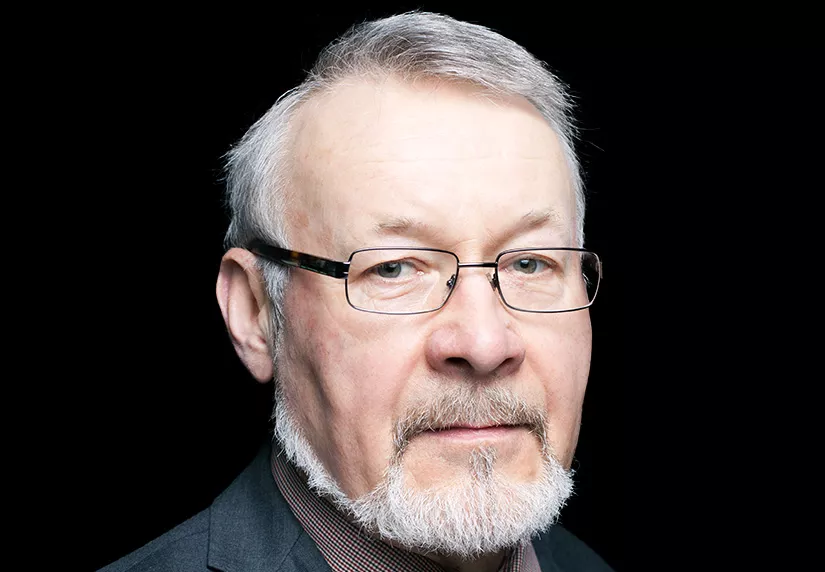
Professor Richard North (University College London, Department of English Language and Literature) is a leading expert in Anglo-Saxon and Old Norse studies. His career spans teaching and research in Old English, Middle English, and Old Icelandic literatures, with particular focus on Beowulf , medieval sensory perception , and pre-Christian Germanic religions . Affiliated with UCL since 1989, he was promoted to Reader in 1999 and Professor in 2007. Research interests include: Anglo-Saxon paganism and Christian syncretism Old Norse mythological analysis (Freyr, Loki, Baldr) Viking Age cultural exchange between England and Scandinavia Historical linguistics across Germanic languages Medieval manuscript studies His publications demonstrate interdisciplinary approaches combining literary analysis with archaeology, agronomy, and sensory studies. Recent works explore Cnut's political ideology , Old English poetic meter , and medieval animal symbolism .
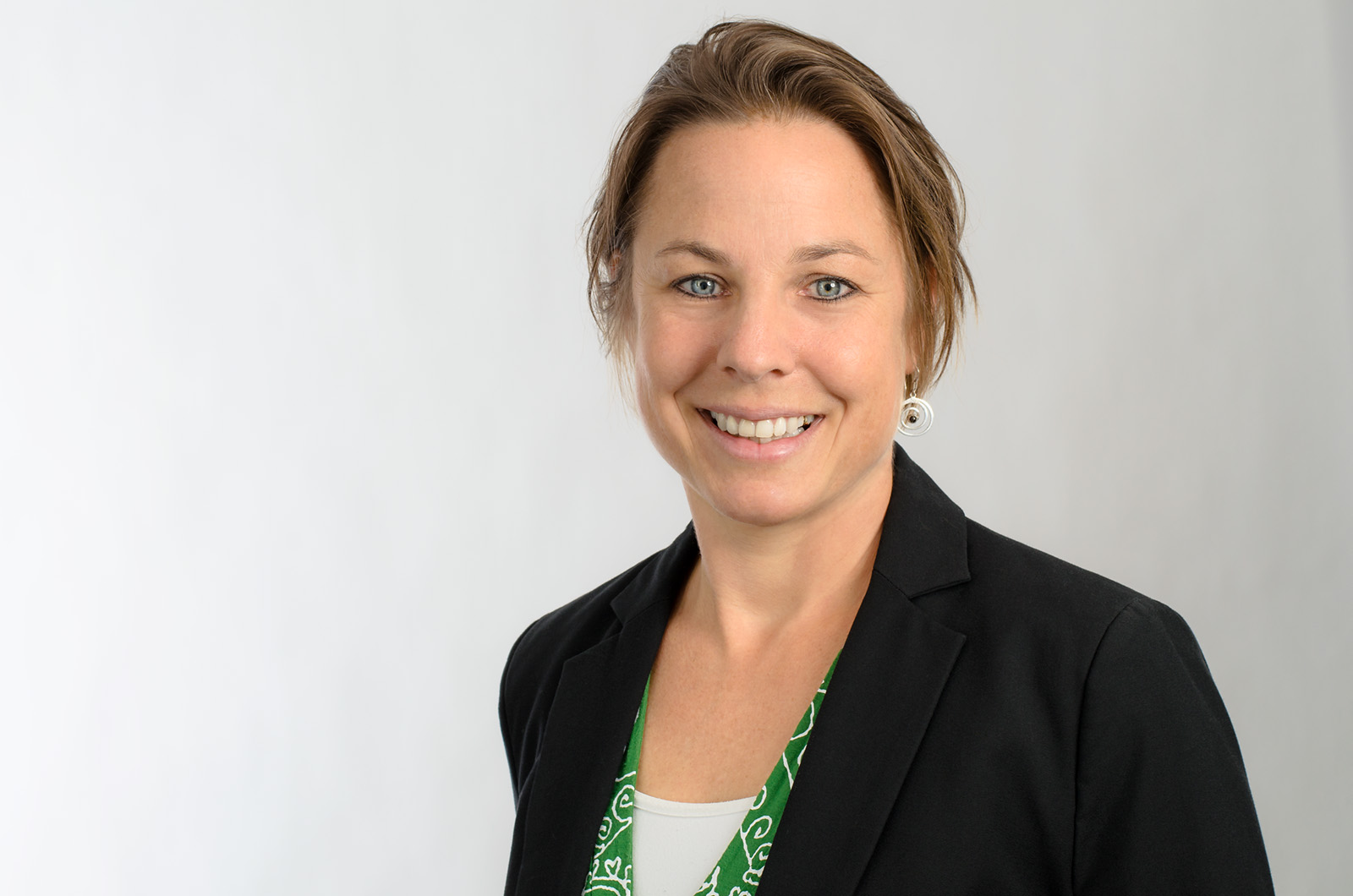
Na'ama Pat-El is a Professor in the Department of Middle Eastern Studies at the University of Texas at Austin, affiliated with the College of Liberal Arts and the Middle Eastern Languages and Cultures Graduate Studies Committee (MELC GSC). She holds a Ph.D. (2008) in Semitic Philology from Harvard University, preceded by studies at Hebrew University under Gideon Goldenberg and Harvard under John Huehnergard. Education: Ph.D., 2008, Harvard University (Semitic Philology) B.A. and M.A., Hebrew University of Jerusalem Her research focuses on Comparative Semitic Linguistics, Historical Linguistics, Syntax, and Language Contact , with a particular emphasis on syntactic change and morphological evolution. She investigates phenomena such as the development of verbal paradigms, plural morphemes, and copulae across Semitic languages, including Akkadian, Hebrew, and Aramaic. Recent publications address topics like the nondevelopment of third-person nominative pronouns in Semitic perfect/stative paradigms, the diachronic shift of East Semitic subordination markers into West Semitic indicative markers, and the reevaluation of Hebrew 'sign' terminology through epigraphic and comparative evidence. Her work also challenges assumptions about paired body part gender assignment in Semitic languages. Selected Publications (2025–2020) explore: Proto-Semitic verbal morphology Historical syntax in Akkadian and Neo-Assyrian Plural-gender mismatches in Hebrew Substrate influences in Levantine Arabic Biblical text linguistics
Prof. dr. Enoch O. Aboh is Professor of Linguistics at the University of Amsterdam , Faculty of Humanities, Department of Literature and Linguistics. His office is located at Spuistraat 134, room 647, and he can be contacted at e.o.aboh@uva.nl . Research Interests: Prof. Aboh’s work lies at the intersection of formal syntax, language contact, and learnability. He investigates creole formation , multilingual ecologies , Gbe and Kwa syntax , cartographic approaches to clause structure , and sign language morphosyntax . A recurring theme is the emergence and evolution of grammatical systems under contact, approached through both descriptive fieldwork and formal theoretical modelling. His publications reveal a methodological breadth spanning experimental studies with kindergarteners on statistical learning, computational detection of loanwords, and fine-grained syntactic analyses of serial verb constructions, predication patterns, and determiner systems. This spectrum underscores his commitment to integrating cognitive, typological, and formal perspectives on language. Awards & Recognition: While no specific prizes are listed in the current material, Prof. Aboh’s extensive editorial and collaborative work—evidenced by numerous co-edited volumes and Festschrift contributions—attests to his standing in the field. Students & Grants: Details on PhD advisees or funded projects are not provided in the source text. Labs & Teams: No dedicated laboratory or research group names are mentioned, yet his affiliation with the Amsterdam Center for Language and Communication (ACLC) can be inferred from the institutional context.
Dr. hab. Witold Maciejewski is a linguist and Scandinavianist at SWPS University in Krakow, Poland. He serves as faculty in the Interdisciplinary Faculty's Department of Humanities, where he teaches courses on Swedish language grammar and history, comparative grammar of Scandinavian languages, and contrastive grammar. Specializing in general linguistics, Scandinavian and Polish studies, and regional studies, Dr. Maciejewski focuses particularly on Polish-Swedish contrastive linguistics. His research examines linguistic differences between Polish and Scandinavian languages and cultures, including work approaches between Poland and Scandinavia, particularly regarding working hours and efficiency. He has made significant contributions to understanding cross-cultural communication patterns and linguistic structures across these language families. Dr. Maciejewski co-authored the book "Runy" (2011), has published numerous book chapters and scholarly articles, and serves as editor-in-chief of "Acta Sueco-Polonica," a journal dedicated to Polish-Scandinavian relations. His publication history shows consistent research in Scandinavian linguistics, translation studies, and Polish-Scandinavian cultural comparisons, with particular emphasis on historical documents, Bible translations, and grammatical structures. Order of the Polar Star (2011) - One of Sweden's most important decorations awarded to foreigners for outstanding contributions to Sweden and promoting its culture worldwide As a leading scholar in Scandinavian studies in Poland, Dr. Maciejewski has been instrumental in developing academic programs and research initiatives in this field. He served as head of the Department of Scandinavian Studies at SWPS University and participated in the inauguration of the Institute of Scandinavian Studies at SWPS University in Warsaw in March 2006. His work has helped establish and strengthen academic connections between Polish and Scandinavian institutions.
Assoc. Prof. Dr. Ali Şükrü Özbay currently serves as an Associate Professor at Karadeniz Technical University's Faculty of Arts, Department of English Language and Literature. He earned his PhD and MA in Applied Linguistics from Karadeniz Technical University and holds a BA in English Language and Literature from Ankara University. Education : PhD (2015) and MA (2004) from Karadeniz Technical University; BA (1996) from Ankara University Dr. Özbay's research focuses on Corpus Linguistics , Learner Corpora , Academic Writing , Translation Studies , and Language Pedagogy . His work investigates lexical bundles, support verb constructions, and pragmatic markers through computational corpus analysis. Recent publications analyze four-word recurrent expressions in educational technology contexts, collocational priming in Turkish EFL learners' mental lexicon, and semantic prosody of intensifiers in academic corpora. He supervises theses on data-driven learning applications and corpus-based teaching materials. Dr. Özbay has held managerial roles including Deputy Head of Department (2019–present) and Assistant Coordinator for Erasmus+ programs (2017–2021). He actively participates in international conferences and has published in journals like Turkish Studies , Australian Journal of Applied Linguistics , and Hacettepe Eğitim Dergisi .
Prof. Dr. Frank Kammerzell is a Professor at the Department of Archaeology and Cultural History of Northeast Africa within Humboldt University of Berlin since May 2003. His academic career includes habilitation at the University of Göttingen (1999) and extensive research collaborations with Hebrew University of Jerusalem and University of Vienna. His educational background encompasses Medieval and Modern History (major 1980), Egyptology (major), Coptic Studies, General and Indo-European Linguistics, and Assyriology. He earned his Dr. phil. from Göttingen with a dissertation on 'Studies on the Language and History of the Carians in Egypt' (1990) and completed habilitation with 'Language contact and language change in ancient Egypt' (1999). Kammerzell's research spans Egyptian phonology, morphology, syntax, lexis, language history, diachronic typology, language contact, writing systems, and Carian history in Egypt. His work integrates linguistic analysis with archaeological contexts, examining language evolution through contact and typological shifts. Notable projects include studies on Egyptian-Akkadian typological developments and classifiers in ancient Egypt. His publications since 2000 demonstrate sustained focus on Egyptian linguistic structures, writing systems, and cross-linguistic influences. Key themes include verb classifiers, glossing rules for Ancient Egyptian, and lexical semantics-pragmatics interfaces, bridging Egyptology with broader linguistic theory. Graduate Scholarship from the State of Lower Saxony (Doctoral Scholarship) 1987-1989 Kammerzell has led significant research projects funded by the DFG, Fritz Thyssen Foundation, and Volkswagen Foundation. His collaborative work with institutions in Jerusalem and Göttingen highlights international partnerships. While specific advisees aren't listed, his editorial roles suggest mentorship in academic publishing. He co-founded research groups on multilingualism and script systems, contributing to journals like Lingua Aegyptia and Ägypten und Levante , underscoring team-based archaeological-linguistic research.
Prof. Sabine Schulte im Walde is an Associate Professor at the University of Stuttgart's Institute for Natural Language Processing. She holds affiliations with the International Max Planck Research School for Intelligent Systems (IMPRS-IS), ELLIS Society, and CLARIN-D. Her research focuses on computational modeling of lexical-semantic phenomena, including compositionality of noun compounds and particle verbs, abstract/concrete semantics, and diachronic language change. She has contributed to datasets on association norms for German compounds and led projects on multimodal semantic analysis. Research Interests: Her work bridges computational linguistics and cognitive science, emphasizing data-intensive methods. Key areas include semantic classification of verbs, metaphor detection, and evaluating semantic relations using distributional models. She explores how abstractness influences plausibility judgments and investigates semantic shifts in compounds over time. Awards: Nominated for AcademiaNet by the German Research Foundation (DFG). Active in professional societies including ACL, GSCL, and DGfS. Publications span over 50 peer-reviewed articles in venues like Computational Linguistics and ACL. Labs/Teams: Leads research on computational terminology and semantic change analysis at the Stuttgart Research Focus Language and Cognition (SRF). Collaborates internationally on projects like the DURel annotation tool for diachronic semantics.
Professor Julia Schlüter is a distinguished academic in the Chair of English Linguistics within the Humanities Faculty at the University of Bamberg, Germany. She has served as Senior Lecturer at the Chair of English Linguistics and Language History under Prof. Manfred Krug since June 2008, holding the title of Professor following her habilitation in 2008. Her institutional profile demonstrates deep commitment to both research and teaching innovation, particularly through her leadership of the KorPLUS project and development of open educational resources for corpus linguistics. Her research interests span corpus linguistics for English language learners, empirical methods for studying language variation and change, and the application of corpus methods to teaching. She specializes in examining grammatical, phonological, and lexical differences between British and American English across historical periods from Middle English to present-day usage. Her work investigates phonological variation (particularly phonotactically controlled alternations), morphological change, and syntactic variation through corpus analysis, with special attention to functional grammar and grammaticalization theory. Professor Schlüter's recent publications (2022-2025) reveal a strategic evolution in her research focus, with increasing emphasis on the intersection of corpus linguistics and digital education. While maintaining her foundational work in historical English linguistics, she has developed significant expertise in applying corpus methods to language teacher education and evaluating AI writing tools. Her work demonstrates consistent methodological innovation, moving from traditional corpus analysis to blended learning approaches and digital educational resource development. Her scientific recognition includes: Winner of the 2025 Teaching Innovation Prize from the International Society for the Linguistics of English for the KorPLUS project University of Bamberg Prize for outstanding habilitation (2009) Lise Meitner Programme post-doctoral scholarship (2005-2006) Rectorate Prize from University of Paderborn for outstanding Ph.D. thesis (2005) Multiple DAAD scholarships for international study Professor Schlüter actively supervises doctoral research, currently guiding three Ph.D. candidates (Katharina Deckert, Aklima Nahar, and Nikolai Beland) while having successfully completed supervision for several others. She leads the KorPLUS project (2021-2025), funded by the Stiftung Innovation in der Hochschullehre, which develops open educational resources for corpus linguistics. Her research has been consistently supported by the German Research Foundation (DFG) and other funding bodies throughout her career. She heads the KorPLUS team (with Carina Großmann and Katharina Deckert) which develops the interactive Open Educational Resource platform for corpus linguistics. Her YouTube channel offers video tutorials on corpus basics, and she has created the Video Podcast Series "How to Update your Grammar" for English teachers. She regularly organizes in-service teacher trainings and collaborates with the Virtual Linguistics Campus at RWTH Aachen University to deliver her educational materials globally.
Edna Andrews is the Nancy & Jeffrey Marcus Distinguished Professor of Slavic and Eurasian Studies and Professor of Linguistics and Cultural Anthropology at Duke University. She serves as Director of the Program in Linguistics, Director of Undergraduate Studies in the Linguistics Program, and Director of FOCUS, Duke's signature first-year seminar program. Her interdisciplinary work bridges Slavic studies, linguistics, anthropology, and cognitive neuroscience. Dr. Andrews earned her Ph.D. from Indiana University at Bloomington in 1984 and holds an honorary doctorate from St. Petersburg State University (Russia). Her academic journey has evolved from traditional Slavic linguistics to pioneering work at the intersection of language and brain sciences, reflecting her commitment to interdisciplinary scholarship. Professor Andrews' research focuses on cognitive neuroscience and multilingualism, semiotics (particularly Peircean and Lotmanian theories), and the neural basis of language processing. Her work examines how the brain processes multiple languages, the relationship between music and language cognition, and the semiotic foundations of linguistic structures. She has pioneered longitudinal fMRI studies of second language acquisition, challenging traditional linguistic models that often overlook the multilingual reality of most humans. Her research program has produced significant insights into how multilingualism affects brain structure and function, with implications for education, cognitive aging, and language rehabilitation. Andrews' work uniquely integrates theoretical linguistics with empirical neuroscience, creating a more comprehensive understanding of human language as situated within cultural and biological contexts. University Scholar/Teacher Award (2013) Richard Lublin Teaching Award Through her leadership of the Slavic & Eurasian Language Resource Center and numerous federally-funded grants from the U.S. Department of Education, Professor Andrews has secured significant research funding to advance understanding of language acquisition and multilingualism. Her collaborative approach brings together linguists, neuroscientists, anthropologists, and educators to tackle complex questions about language and the brain. Professor Andrews leads research teams through the Duke Institute for Brain Sciences and has developed innovative programs like Duke Intense Global (DIG), which combines intensive language training with neuroscience research. Her work with the Bass Connections in Brain & Society Research Team fosters interdisciplinary collaboration among students and faculty across multiple departments.
Alessandro Del Tomba is a Tenure-Track Researcher in Linguistics and Glottology at Sapienza University of Rome, specializing in historical linguistics, Indo-European studies, and Central Asian philology. He holds a PhD in Linguistics from Sapienza and Comparative Indo-European Linguistics from Leiden University. Historical linguistics Indo-European studies Eastern Iranian philology Language contact theories His research focuses on Khotanese and Tocharian languages, with recent publications analyzing manuscript transmission, morphological variation, and phonological developments. He serves as Principal Investigator for the FIS project "Khotanese language and texts in contexts (KhoTxt): A multimodal approach to the classification and periodisation of the Khotanese language and its texts within the cultural and historical framework of medieval Central Asia". He teaches General Linguistics at undergraduate levels and Linguistics courses at the graduate level in Modern Philology. Active in international academic networks, he participates in conferences across Italy, Europe, and Asia.
Yan Cong is an Assistant Professor at Purdue University, focusing on Chinese linguistics and computational linguistics. Their work bridges natural language processing (NLP), semantics, and pragmatics, with applications in artificial intelligence (AI), language education, and healthcare. Research Focus: Developing text analysis models to quantify and improve language learning, assessing semantic/pragmatic competence in language models, and applying computational methods to speech and language fluency. Background: Former NLP researcher at the Feinstein Institutes, with a PhD in Linguistics from Michigan State University. Research Themes: Yan Cong integrates linguistic theory with AI to explore language understanding in humans and machines. Key areas include Computational modeling of semantics and pragmatics Application of NLP to second language acquisition Development of interpretable AI systems for education and healthcare Analysis of speech disturbances in clinical contexts (e.g., schizophrenia, aphasia) Awards: No specific honors mentioned in the provided text.
Haiyang Ai is an Associate Professor in the Literacy and Second Language Studies program at the University of Cincinnati's School of Education. His research applies corpus linguistics and natural language processing to investigate second language acquisition, writing complexity, and bilingual language processing. His educational background includes a Ph.D. in Applied Linguistics from The Pennsylvania State University (2015), an M.A. in Linguistics & Applied Linguistics from the University of Chinese Academy of Sciences (2006), and a B.A. in English from Shaanxi Normal University (2003). Dr. Ai's research spans corpus linguistics, natural language processing, second language acquisition, and computer-assisted language learning. He specializes in compiling and analyzing native and learner corpora to develop intelligent language learning systems and investigate lexical/syntactic complexity in L2 writing. His methodological approach integrates computational tools with theoretical linguistics to address practical language teaching challenges. His recent publications (2019-2023) demonstrate consistent focus on lexical bundles in professional communication, automating complexity measurement in Chinese, speech perception mechanisms in bilinguals, and grammatical puzzles in English learning. These works bridge corpus-based analysis with psycholinguistic experimentation across diverse subfields including morphosyntax, pragmatic competence, and cognitive processing in L2 acquisition. Dr. Ai has secured multiple University of Cincinnati grants including three CECH Faculty Development Grants ($2500 in 2017-2018 for verb-noun collocation research, $2000 in 2016-2017 for corrective feedback tools) and the NCFDD Faculty Success Program ($3250 in 2017), all supporting his development of computational language learning resources.
Szende Thomas is a full Professor at Inalco (Institut National des Langues et Civilisations Orientales). He serves as Director of the EA 4514 Plidam research center and heads the Hungarian Studies section at Inalco. His academic work focuses on language teaching, cultural differences in dictionaries, and applied linguistics. Director, EA 4514 Plidam Research Center Head of Hungarian Studies Section, Inalco Member, UNESCO Chair "Language Policies for Multilingualism" Executive Committee Jury member, Paris University Thesis Prize Member, Inalco Scientific Council His research spans language didactics , applied linguistics , and lexicography . He has published extensively on second culture teaching, bilingual dictionary analysis, and language appropriation dynamics, with recent work on language-culture pedagogy and grammatical instruction methodologies. Key publication themes include: intercultural education , language policy in Central/Eastern Europe , bilingual dictionary design , and Hungarian language didactics . His academic contributions extend to methodological works like the Assimil Hungarian language series and specialized dictionaries.
Joseph Lam is an Associate Professor in the Department of Religious Studies at the University of North Carolina at Chapel Hill. He holds a Ph.D. from the University of Chicago (2012) and specializes in ancient Near Eastern languages and literatures, particularly Hebrew Bible studies, Ugaritic texts, and Semitic linguistics. His research focuses on religious thought, metaphor theory, and ritual practices in ancient Syria-Palestine and Anatolia. Lam teaches courses on Classical Hebrew, ancient Near Eastern history, and religious metaphors, and has authored influential works like Patterns of Sin in the Hebrew Bible (2016). He has received awards including the Schwab Academic Excellence Award (2017) and Lydie T. Shufro Research Fellowship (2017). His current projects explore sacrificial traditions and their connections to sin concepts in ancient Israel. Lam also contributes to public scholarship through courses on Wondrium and academic council roles. Education: Ph.D., University of Chicago (2012); M.A. (2005), M.Div. (2003), and B.A.Sc. (1999) from other institutions. Research interests include Hebrew Bible context, ritual analysis, Semitic languages, and metaphor in religious discourse. Key publications address sin metaphors, Ugaritic literature, and linguistic studies of ancient texts. He maintains affiliations with the Society of Biblical Literature Council and has developed innovative courses on ancient Near Eastern mythologies and religious practices.
Bianca Basciano is an Associate Professor at the Department of Asian and North African Studies , Ca' Foscari University of Venice, where she has held the Director's Delegate for Research role since 2023. Her work focuses on Chinese linguistics , particularly Mandarin morphology, syntax, and second language acquisition. Research Areas: Chinese compounding, reduplication, causative constructions, resultative compounds, and language teaching methodologies. Teaching: Offers BA/MA courses in Chinese language and linguistics at Ca' Foscari University. Editorial Roles: Member of the editorial boards for Sinica Venetiana and Lingue e Linguaggio . Research Projects: Principal investigator for the PRIN 2020 project on Italian learners' acquisition of Chinese resultative verbs, with extensive corpus-based analysis. Collaborates with Giorgio Arcodia and other international scholars. Key Themes: Event structure delimitation, Vendlerian verb classes, micro-parametric syntactic variation. Publications: Over 40 works including monographs with Oxford University Press and Bologna University Press. Her methodological approach combines theoretical linguistics with corpus analysis, contributing to the understanding of Chinese as both a linguistic system and a second language acquisition challenge. She has also organized international conferences like the 31st IACL Annual Meeting.