Moshe Behar is a Senior Lecturer in Israeli Studies at the University of Manchester's Department of Arabic and Middle Eastern Studies. His research examines the Palestine/Israel conflict, Israeli society, Mizrahi Jewish communities, and the co-evolution of Jewish and Arab nationalisms. Behar employs comparative frameworks to analyze nationalist movements in the Middle East. Recent publications critically examine definitions of antisemitism and the historical construction of Arab-Jewish identities. His work engages with contemporary debates about racialization and minority rights, particularly regarding non-White Jewish communities in Israel.
Donald Bruce is a Professor in the School of Languages and Literatures at the University of Guelph’s College of Arts. His research focuses on indigenous genocide, settler colonialism, political trust, and comparative policy analysis. He holds a faculty position in a humanities-oriented department but engages deeply with interdisciplinary issues in history, law, and international relations. Key research areas include analysis of Canada’s Indian residential schools through the UN genocide framework, critiques of settler justice systems (e.g., Colten Boushie case), and transnational comparisons of truth commissions. His work intersects with environmental policy reform, labor movements, and public opinion dynamics on issues like immigration and foreign aid. Recent publications (2023-2025) emphasize colonial legacies in North America, New Zealand’s bicultural policies, and the ethical dimensions of international relations. Bruce collaborates with interdisciplinary groups such as the Grounded and Engaged Theory Lab (GET) and contributes to public lectures on reconciliation and historical accountability. No scientific awards are listed in the provided materials. His advising and grant activity remains unspecified, though his prolific publication record suggests active research engagement. He maintains a public-facing website through the College of Arts ( http://uoguelph.ca/arts ) and is affiliated with the SOLAL and THINC research initiatives.
Paul Testa is an Assistant Professor of Political Science at Brown University, specializing in applying designed-based inference to study the politics of race and criminal justice. He examines how criminal justice interactions shape political behavior and public perceptions of justice. His work appears in top journals like the American Journal of Political Science and Journal of Politics . He teaches quantitative methods at both undergraduate and graduate levels. Education: PhD in Political Science (2016, University of Illinois at Urbana-Champaign) and BA in Government and Economics (2007, Cornell University). Research focuses on racial disparities in criminal justice, public opinion formation, and the efficacy of social movement messaging. Recent projects include analyzing pandemic responses in Brazil, Mexico, and the U.S., and studying gender equity advocacy through male allyship. Awards include the Catt Prize (2015) and George T. Yu Travel Award (2016). He is a Policy Lab fellow at Brown, integrating behavioral insights into public policy, and an affiliate at the Taubman Center for American Politics. His teaching includes courses on quantitative research methods and the politics of race in criminal justice.
Eric Grube is a Visiting Assistant Professor in the Department of History at Boston College, specializing in Interwar Europe, Modern Germany, and Austria. He holds a Ph.D. from Boston College, following degrees from the University of Virginia and additional studies at institutions like the Katholische Universität Eichstätt-Ingolstadt. His research focuses on fascist movements, borderlands, nationalism, and paramilitary organizations in interwar Central Europe. Education: B.A. in History from the University of Virginia, M.A. and Ph.D. in History from Boston College. Research Interests: Grube examines transborder dynamics between Austria and Germany, particularly Austrofascist resistance to Nazism, paramilitary networks, and cultural-nationalist ideologies. His work bridges political history with cultural analysis, emphasizing the role of language, symbolism, and regional identity in shaping fascist movements. Recent articles explore topics like Nazi-Austrian borderland conflicts, post-war cultural reimaginings in occupied Axis powers, and the semantic politics of territorial nomenclature. His book manuscript, Brotherlands: Nazis versus Fascists across Austria & Germany, 1918-1955 , challenges traditional narratives of Nazi hegemony in Central Europe. Scientific Awards: Max Kade Prize (2023), Radomír Luža Prize (2023), DAAD Scholarships (2018-2019), Teaching Excellence Award (2020). Grants: Multiple fellowships from Boston College, including a Dissertation Fellowship and Summer Research Grant. Teaching: Grube instructs courses such as World War II , Europe in the World I , and Modern History I & II . His pedagogy emphasizes global historical connections and critical analysis of primary sources. Professional Engagement: He actively participates in international conferences (e.g., German Studies Association, Austrian Studies Association) and serves as a reviewer for journals like German Studies Review and Journal of Austrian Studies .
Professional Roles and Affiliations Since 2023, Gennaro Ascione serves as Senior Researcher in Sociology (SPS/07) at the Department of Human and Social Sciences, University of Naples L'Orientale. He teaches Sociology and Mediterranean Cultural and Postcolonial Studies. He is also a Research Fellow at the University of Cambridge's Center for Global Studies, Directeur d'etudes associès at the Fondation Maison des Sciences de l'Homme (Paris), and affiliated with the Istituto Italiano per gli Studi Filosofici. He has held visiting positions, including at Delhi University (2015-2017). Education PhD in History and Society of Modern and Contemporary Age (2008), Italian Institute of Human Sciences (SUM) Research periods at UC Berkeley's Department of Ethnic Studies and SUNY Binghamton's Fernand Braudel Center Research Interests Ascione's work focuses on Global Studies, capitalism, modernity, and science epistemology. He explores non-Western knowledge systems, postcolonial/decolonial theory, World-Systems Analysis, indigenous ontologies, and Eastern philosophies. His historical research includes premodern Mediterranean knowledge circulation and Giordano Bruno's thought. Publications Highlights Key works include Concept Formation in Global Studies (2024), Science and the Decolonization of Social Theory (2016), and A sud di nessun Sud (2009). He edited the first Italian anthology of decolonial thinkers ( America Latina e modernità , 2014). Awards and Recognition Recipient of the 2017 Explorative Research Award from the World International Studies Committee for post-Western international theory. Honorary fellowships include the Center for Social Theory at Warwick University and the Colonial Postcolonial Decolonial Working Group. Grants and Leadership Member of the University of Naples' Research Commission and Executive Board. Co-founder of the UN-sponsored Non-Hegemonic World-Sociology group. Active in networks like the Global Social Theory and Conceptual Analysis in Social Sciences. Labs and Collaborations Leads the Interuniversity Research Center on Transnational Technocultures (CRITT). Collaborates with global institutions on decolonial and global studies initiatives.
Andrea Muehlebach is an Associate Professor (Status-Only) at the University of Toronto's Department of Anthropology and Professor of Maritime Anthropology and Cultures of Water at the University of Bremen's Department of Anthropology and Cultural Research. Her research bridges socio-cultural anthropology, political economy, and environmental studies, with regional expertise in Italy, Germany, and France. Her scholarly work examines the intersection of welfare systems, citizenship, and neoliberalism, with recent focus on water politics and infrastructure financialization. Key research areas include: Anthropologies of welfare, state structures, and citizenship formations Neoliberal transformations and austerity politics Water resource management and remunicipalization movements Political ecology and human-environment relations Legal anthropology and rights-based struggles Her publications demonstrate strong engagement with crises of democracy, financialization of public goods, and community responses to extractive capitalism. Recent works critically analyze pandemic governance, water insurgencies, and the racialized impacts of austerity regimes across Europe. She advises multiple graduate students and maintains active collaborations with water justice movements. Her forthcoming book A Vital Politics: Water Insurgencies in Europe examines anti-privatization struggles through ethnographic research.
Prof. Dr. Ruud Koopmans is a leading scholar in sociology and migration research at Humboldt University of Berlin and Director of the Department Migration, Integration, Transnationalization at the Social Science Center Berlin (WZB). He has held visiting professorships at the University of Amsterdam and has been a board member of institutions like DeZIM and BAMF. Education: PhD in Political and Social Sciences (1992) from the University of Amsterdam, with a dissertation on Democracy from Below . His research focuses on political sociology of cosmopolitanism and communitarianism , analyzing immigration policy, ethnic inequality, religious fundamentalism, and social movements. He examines how globalization reshapes political cleavages and the role of religious texts in legitimizing violence. The 15 most recent publications span refugee policy (e.g., The Asylum Lottery ), religious fundamentalism (experimental studies across seven countries), ethnic discrimination (labor market correspondence studies), and pandemic migration dynamics (Covid-19 travel restrictions). Keywords include Migration Policy , Political Islam , and Social Cohesion . No specific scientific awards are mentioned, but his work has been funded by Horizon 2020 and the Leibniz Association . He has advised projects on religious radicalization, multiculturalism, and migrant rights. Koopmans leads teams in studies like GEMM (global migration and labor markets), Religious Fundamentalism (2015–present), and the Political Sociology of Cosmopolitanism (2011–2017), collaborating with institutions across Europe.
David Damrosch is the Ernest Bernbaum Professor of Comparative Literature and Director of the Institute for World Literature at Harvard University. His work focuses on expanding the scope of comparative literature beyond Western canons, emphasizing global literary circulation, translation studies, and cultural memory. He is renowned for his book What Is World Literature? and as general editor of The Longman Anthology of World Literature . Research Interests: Comparative Literature, World Literature, Globalization Studies, Cultural Memory, and the intersection of literary theory with transnational frameworks. Key Contributions: Advocates for inclusive global literary studies, challenging Eurocentric paradigms. Explores script systems' role in shaping world literature. Edited major anthologies reshaping world literature curricula. Publications span from ancient epics like Gilgamesh to contemporary global narratives, emphasizing interdisciplinary and historical approaches.
Vilna Bashi is the Osborn Professor of Sociology at Northwestern University, currently on leave for AY 2024-2025. Her work bridges sociological theory with visual art, focusing on international migration, race and ethnicity, and hierarchical socioeconomic structures. She holds a prominent position within the sociology discipline, contributing to debates on racialization frameworks and global inequality dynamics. Her research interests emphasize comparative historical analyses of racial formation, transnational adoption, and immigrant social networks. Recent projects include a memoir titled Schooled , exploring her educational journey, paired with a self-portrait series reflecting academic and artistic identity. Awarded the ASA's Cox-Johnson-Frazier Award (2020) for social justice scholarship and the A. Wade Smith Award (2022) for mentorship, Bashi is recognized for both intellectual contributions and pedagogical excellence. She edited a special section on Outsiders in the Academy in Sociological Forum (2019), critiquing academic exclusionary practices. Advising priorities center on fostering critical engagement with sociological methods and ethical research practices. Lab affiliations include interdisciplinary collaborations on migration studies and racial equity initiatives within the Northwestern community.
Jeffrey H. Cohen is a full Professor in the Department of Anthropology at The Ohio State University. His research focuses on migration, development, and nutrition, with a particular emphasis on indigenous communities in Mexico and transnational migration patterns. He has conducted extensive comparative studies on Mexican, Dominican, and Turkish migration, supported by grants from the National Science Foundation and National Geographic Society. Education: PhD in Anthropology from Indiana University (1994). Previous academic positions include roles at Texas A&M University and Wright State University. Research interests include transnational migration, remittances, food systems, and the impact of globalization on marginalized communities. He directs the Transnational Research Laboratory (TRL), exploring topics such as the digital divide among Bhutanese refugees during the pandemic, and the cultural dimensions of migration-related health disparities. Key projects include: "Bridging the Digital Divide" with the Bhutanese Community of Central Ohio (2020) National Science Foundation-funded studies on diet transformation in rural areas (2019) Co-editing works like Handbook of Culture and Migration (2021) and COVID-19 and Migration: Understanding the Pandemic and Human Mobility (2020) Scientific awards include the 2022 Community-Engaged Scholar Award from OSU and a Fulbright Specialist grant (2022–2025). Current graduate advisees include Nina Wilson, Chegwei Chen, and Andrew Mitchell. His lab collaborations span multiple countries, addressing issues like entomophagy in Oaxaca, refugee health interventions, and social justice initiatives.
Tace Hedrick is a Professor at the University of Florida, specializing in United States Latinx/Chicanx and Latin American Studies. Her research focuses on intellectual history, popular genre studies, and feminist critiques of Latina literature and gothic romance. She has published widely on topics such as New Age spirituality, Mestiza identity, and the intersection of race, sexuality, and religion. Recent and upcoming talks include discussions on Silvia Moreno-García’s Mexican Gothic and Gloria Anzaldúa’s psychological frameworks at conferences like Latinx Visions and the Latinx Studies Association. Her current book project explores New Age spiritual belief systems in Latin/x America, analyzing the works of Gloria Anzaldúa, Walter Mercado, and Ana Mendieta. Hedrick’s scholarship bridges literature and cultural critique, examining how Latinx/Chicanx artists re-imagine racialized and sexualized imagery. Key publications include Chica Lit: Popular Latina Fiction and Americanization in the Twenty-First Century (2015) and multiple peer-reviewed essays on gothic fiction, queer temporality, and cultural hybridity. Her work emphasizes interdisciplinary approaches to understanding Latinx identity, blending literary analysis with historical and social contexts. Awards and grants are not explicitly listed, but her extensive publication record reflects sustained academic engagement with marginalized narratives and cultural politics.
Gyanendra Pandey is an Arts & Sciences Distinguished Professor and Director of the Colonial and Postcolonial Studies Workshop at Emory University's Department of History. He holds a B.A. from the University of Delhi and a D.Phil. from the University of Oxford. Previously, he taught at Johns Hopkins University, the University of Delhi, and the Centre for Studies in Social Sciences, Kolkata. His research focuses on colonial/postcolonial studies, subaltern theory, South Asia, and African-American history. Education: B.A. (Delhi University), D.Phil. (Oxford) His key research interests include the intersection of race, caste, and nationalism in India and the U.S., unarchived histories, and democratic practices. He has authored seminal works like Construction of Communalism in Colonial North India and Remembering Partition . Current projects include a revised edition of Remembering Partition and a Hindi transcreation of Men at Home . Pandey has organized interdisciplinary workshops on marginality, subalternity, and democracy, leading to publications such as Subaltern Citizens and Their Histories (2010) and Un-archived Histories (2014). He has delivered keynote lectures at institutions like Brown University, Duke University, and the University of Hyderabad.
Walter C. Rucker is the Goodrich C. White Professor of African American Studies and History at Emory University. He holds a BA from Morehouse College, and MA/PhD from the University of California-Riverside. Previously, he served as a Professor of History at Rutgers University. His research focuses on the African Diaspora, Black Atlantic cultures, slavery, resistance, and ritual practices. Rucker has held leadership roles in ASWAD (2015–2021) and authored influential books like Gold Coast Diasporas (2015) and The River Flows On (2005). His work has been supported by the NEH, Mellon Foundation, and Layman Trust. Awards include the ASWAD Presidential Award (2017) and Ohio State’s Order of Omega (2010). Education: Ph.D., University of California-Riverside (1999); M.A. (1994), B.A. Morehouse College (1992). Rucker’s research explores the intersection of slavery, resistance, and ritual in the Black Atlantic. He analyzes how enslaved Africans used cultural practices to resist oppression and shape identity. His work bridges ethnohistory and political discourse, emphasizing the socio-political scripts of diasporic communities. Recent studies include Gabriel’s Conspiracy (2023) and Gold Coast ritual technologies (2017). Award highlights include recognition for scholarship (ASWAD, NCBS), teaching (Harold Edgerton), and mentoring (Black Graduate Caucus). His current projects address racial violence, mass incarceration, and diasporic history. Teaching spans graduate/undergraduate courses on Atlantic cultures, slavery, and diaspora studies. He actively mentors students but is not accepting new advisees. His publications include over 100 journal articles, encyclopedias, and edited volumes.
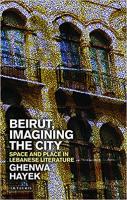
Ghenwa Hayek is an Associate Professor of Modern Arabic Literature at the University of Chicago. Her research focuses on modern Arabic literature, cultural production, space and place, and identity formation in the Arab Middle East, with particular emphasis on Lebanon. She teaches courses such as Narrating Conflict in Modern Arabic Literature , The Literary Legacies of War in Lebanon , and The City in Modern Arabic Literature . Education: PhD from Brown University (2011) Hayek's scholarship examines the intersections of literary studies, cultural studies, and critical geography. Her first book, Beirut, Imagining the City , explores how Lebanese fiction from the late 19th century to today uses metaphors of spatial dislocation to interrogate national identity. Her ongoing project investigates the affective impact of over a century of Lebanese emigration (c. 1860–present), emphasizing the racial, gender, and class dynamics of diaspora in national imaginaries. She advises students on topics spanning modern Iraqi fiction, political issues in contemporary Lebanon, comics, and Palestinian literature. Hayek also co-created the web series Gaming Islam , analyzing representations of Islam and the Middle East in video games.
Esmeralda Sánchez Salazar is a Postdoctoral Fellow in Sociology and Criminology at Pennsylvania State University, affiliated with the Population Research Institute. Her research examines how educational, familial, religious, and state institutions shape racial/ethnic stratification in higher education, science, and labor markets. Research utilizes mixed methods to analyze: 1) intersectional inequalities in immigrant outcomes, 2) racial stratification in STEM academia, and 3) higher education barriers for Latinos and English learners. Funded by NSF, Ford Foundation, and Sociology of Science and Religion initiatives, her work appears in Social Problems, Ethnic and Racial Studies, and Sociology of Religion. Current projects include religious institution impacts on Latino college enrollment and structural barriers in academic science career pathways. She employs advanced quantitative analysis and community-based participatory approaches.