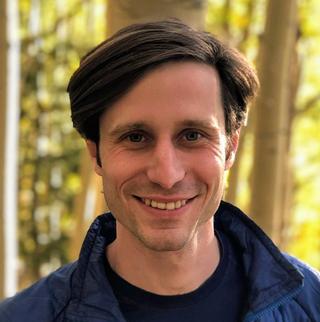
Alexander Bondarenko is a postdoctoral researcher at the Databases and Information Systems group, Friedrich-Schiller-Universität Jena, where he works on natural language understanding, argument retrieval, and causality extraction since October 2022. He completed his PhD in June 2023 with a dissertation titled Understanding Comparative Questions and Retrieving Argumentative Answers . Research Focus Primary research areas: natural language processing, question answering systems, information retrieval, argumentation modeling, and causal inference. Key projects: developing frameworks for comparative QA, stance-aware ranking, and misinformation-resistant biomedical search systems. Recent Article Trends His publications (2020–2025) emphasize: Argument retrieval systems and axiomatic re-ranking Biomedical question answering robustness Comparative question modeling across languages Causal inference in neural models Search quality impact on decision-making AI applications in medical education Teaching & Advising Supervised 8 theses including Marvin Vogel ( Axiomatic Re-ranking ) and Lukas Zeit-Altpeter ( Health QA with Trusted Sources ) Contributed to Touché shared tasks and Webis research group Contact Phone: +49 3641 9-46506 | Room 3237, Ernst-Abbe-Platz 2, 07743 Jena
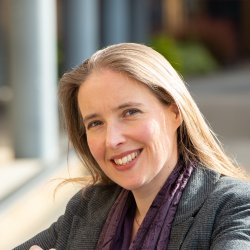
Elisa Kreiss is an Assistant Professor of Communication at UCLA and the director of the Coalas Lab, which focuses on Computation and Language for Society. Her research integrates natural language processing, psycholinguistics, and human-computer interaction to study how communicative context influences language use, with applications to image accessibility for visually impaired users. She holds a PhD in Linguistics from Stanford University, advised by Christopher Potts, and has been affiliated with Stanford’s NLP group and the Stanford Data Science Center for Open and Reproducible Science (CORES). Her education includes a PhD in Linguistics from Stanford (2017-2022) and prior academic work spanning computational linguistics and cognitive science. Her research is supported by grants from Google Research, the National Science Foundation, and Stanford’s Human-Centered AI initiative. She advocates for inclusive academic environments and has received Stanford’s Community Impact Award (2022). Key research themes include: 1) Human-centered evaluation of AI systems, 2) Accessibility of visual information for disabled users, 3) Causal modeling in NLP, and 4) Pragmatics of language generation. Her lab develops tools like CHART-6 for assessing data visualization understanding and Mosaic for simulating social AI dynamics. Her scientific awards reflect both technical excellence and societal impact, including grants focused on open science practices and recognition for fostering community engagement. She actively mentors students through the Coalas Lab and collaborates with interdisciplinary teams on projects addressing real-world communication challenges.
Hao Wang is a researcher affiliated with Zhengzhou University in the School of Electrical and Information Engineering . His work spans interdisciplinary domains, primarily focusing on Computer Science , Artificial Intelligence , and Knowledge Graphs .
Samuel V. Norman-Haignere, Ph.D. is an Assistant Professor at the University of Rochester with appointments in the Department of Biostatistics and Computational Biology, Department of Biomedical Engineering, and Department of Neuroscience within the School of Medicine and Dentistry. His research focuses on understanding the neural and computational mechanisms that underlie human hearing, particularly how the brain processes natural sounds like speech and music. Dr. Norman-Haignere received his BA in Cognitive Science from Yale University in 2010 and his Ph.D. in Neuroscience from Massachusetts Institute of Technology in 2015. His doctoral work was conducted under the advisement of Josh McDermott and Nancy Kanwisher. He then completed postdoctoral training at Massachusetts Institute of Technology (2015-2017), École Normale Supérieure (2017-2018), and Columbia University (2018-2021). Dr. Norman-Haignere's research centers on cognitive computational neuroscience, specifically investigating how the human brain perceives and understands natural sounds. His lab, the Computational Neuroscience of Audition Lab, focuses on three main areas: Neural mechanisms of hierarchical temporal integration - studying how the brain integrates information across multiple timescales from milliseconds to minutes Representation of speech and music in non-primary auditory cortex - identifying distinct neural populations that respond selectively to speech, music, and singing Testing computational models of human auditory cortex - developing models that replicate the nonlinear computations of the human auditory system Analysis of Dr. Norman-Haignere's recent publications reveals a consistent focus on auditory neuroscience and computational modeling. His work spans multiple methodologies including fMRI, intracranial recordings, and computational modeling approaches. A key theme across his recent work is temporal integration in auditory processing, with several papers examining how the brain processes information across different time scales. His research also shows strong interdisciplinary connections between neuroscience, computer science, and cognitive psychology. Dr. Norman-Haignere has received several scientific awards including: Poster Award (2019) Poster Award (2015) NSF Graduate Research Fellowship (2010-2015) Dr. Norman-Haignere actively mentors graduate students and postdoctoral scholars in his lab. Current lab members include Postdoctoral Scholar Dana Boebinger, Research Technicians Zehua Kcriss Li and Guoyang Liao, and graduate students Joseph Jaeger (Biomedical Engineering), Pavel Rjabtsenkov (Neuroscience), David Skrill (Statistics), and Xinzhu (Claire) Wang (Statistics). His lab employs a range of methodologies including functional MRI, intracranial recordings from patients, and computational modeling to investigate auditory processing. The Computational Neuroscience of Audition Lab, located at 601 Elmwood Ave, Rochester, NY 14642, maintains active collaborations with animal physiology labs to understand cross-species differences in auditory processing and address questions that cannot be answered using human neuroscience methods alone. A key focus of the lab is developing novel computational and experimental methods to fully exploit various neural recording techniques.
Georgina Tarrant is a Data Scientist at Surrey DataHub within the University of Surrey, holding strong affiliations with the School of Veterinary Medicine in the Faculty of Health and Medical Sciences, and the Centre for Vision, Speech and Signal Processing (CVSSP). Her work bridges data science methodology with veterinary medicine applications, focusing on extracting meaningful insights from complex online discourse related to animal health issues. Her educational background includes: MCLIP Chartered Member of CILIP (2013) MSc Information Science from City University (2004) BSc Biochemistry (Toxicology) from University of Surrey (2001) Georgina specializes in AI-enhanced social listening techniques, developing innovative end-to-end methodologies for social media data collection, cleaning, and analysis. Her research integrates natural language processing, sentiment classification, and Non-Negative Matrix Factorisation topic modeling to advance understanding of public sentiment around animal health issues. She has pioneered approaches to systematically analyze online discourse about companion animal diseases, pet owner behaviors, and concerns, contributing to evidence-based veterinary care. Her methodology increasingly incorporates large language models to enhance data filtering, classification, and thematic analysis. Analysis of her publication record reveals a consistent focus on applying social media listening to understand animal health from pet owner perspectives. Her research spans feline and canine diseases, medication administration challenges, chronic conditions like kidney disease, and NSAID use in pets. She has also made significant contributions to semantic data innovation, developing frameworks for creating data hubs that facilitate information sharing in animal health across multiple stakeholders. Georgina has been actively involved in several significant research projects: Utilising social media listening to understand feline and canine disease pathways from pet owners' perspectives Investigating health outcomes from human-animal interactions, including zoonotic diseases and antimicrobial resistance Developing conceptual semantic data hubs for animal health information sharing Contributing to the Data Innovation Hub for Animal Health (DIHAH) through vHive Developing health-related quality of life measures for cats and dogs Participating in the African Livestock Productivity and Health Advancement (ALPHA) Initiative Her career path shows progression from information management roles in various sectors to her current specialized position in academic research. Previous roles include Marketing Data Manager and Digital Content Assistant at the University of Surrey, Taxonomy Specialist and Product Marketer at Artesian Solutions, and various information management positions in financial services and library sectors. As a chartered information professional, she brings extensive expertise in data organization and information systems to her current research in veterinary data science.
Dr Benet Vincent is an Assistant Professor in Applied Linguistics at the School of Humanities , Coventry University. He leads undergraduate modules on English, Creative Writing, and TEFL courses, focusing on discourse analysis, computer-assisted language learning, and corpus approaches to English. Vincent also teaches on the MA English Language Teaching and Applied Linguistics course, including the dissertation module. He serves as a link tutor for partner programs in Sri Lanka, ensuring quality standards in English education. Vincent's research centers on corpus linguistics applications, particularly through projects like BAWE Quicklinks (academic writing feedback), Communicating Covid (pandemic discourse analysis), and a parallel translation study of A Clockwork Orange . He coordinates Coventry's CLaC (Corpus Linguistics at Coventry) group and acts as Guest Editor for a special issue on the Language of Covid-19 in Applied Corpus Linguistics . His publication history reveals a focus on translation studies (Nadsat in A Clockwork Orange ), corpus-based EAP instruction , and linguistic analysis of institutional communication . Vincent's collaborative work spans multilingual corpora analysis, academic phraseology, and pedagogical genre implementation. He maintains active roles in professional networks like the British Association for Applied Linguistics (BAAL) and the Corpus Linguistics Special Interest Group .
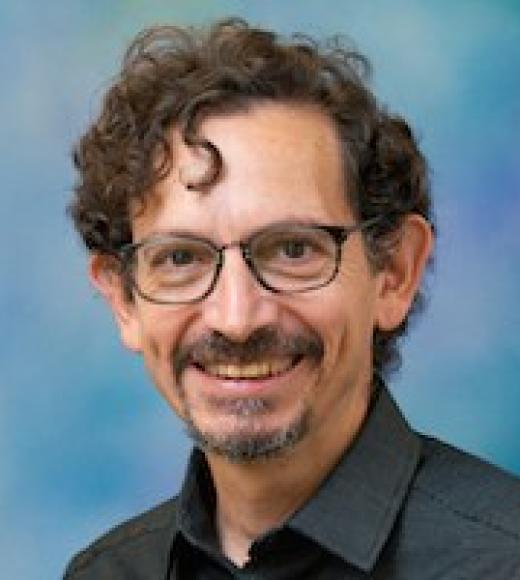
Raúl Aranovich is a Professor in the Department of Linguistics at the University of California, Davis, within the College of Letters and Science. He has been a faculty member at UC Davis since 2001 and previously held academic positions at Ohio State University and the University of Texas at San Antonio. He earned his Ph.D. in Linguistics from UC San Diego in 1996 under the supervision of Professors S.-Y. Kuroda and John Moore. His research centers on theoretical linguistics, particularly the interfaces between syntax, morphology, and semantics, with a focus on grammatical mismatches across these domains. He specializes in Romance languages—especially Spanish—and lesser-studied languages such as Fijian and Shona. His work increasingly integrates computational methods, including corpus linguistics, natural language processing, and knowledge representation via ontologies. He has also contributed to interdisciplinary research in cybersecurity communication and neural machine translation. The recent publications of Raúl Aranovich span a wide range of subfields, from historical linguistics and construction grammar to computational modeling and cross-linguistic typology. A strong trend in his work is the use of formal and empirical methods to analyze syntactic variation, auxiliary selection, impersonal constructions, and morphological complexity, often with a comparative approach across languages. His interdisciplinary collaborations, especially with computer scientists, reflect a growing interest in applying linguistic theory to real-world digital communication and security challenges. Fellow, Linguistic Society of America Raúl Aranovich has mentored numerous students and collaborators, though specific advisees are not listed in the provided text. He has secured research funding through collaborative projects, particularly in computational linguistics and cybersecurity, as evidenced by co-authored publications with researchers in computer science. His work on low-resource machine translation and semantic web applications suggests active grant-supported research. He is involved in modeling grammars using OWL ontologies and has explored language use in digital communities such as GitHub and cybersecurity forums. His research group likely includes students and postdocs working at the intersection of linguistics and computer science, particularly in NLP and knowledge representation.
Wilker Ferreira Aziz is an Assistant Professor at the Institute for Logic, Language and Computation (ILLC) within the Faculty of Science at the University of Amsterdam, where he leads the Probabilistic Language Learning group. His primary affiliation is with the Natural Language Processing & Digital Humanities research unit. His research focuses on the intersection of machine learning, natural language processing, and probabilistic modeling. Key areas of interest include language modeling, machine translation, syntactic parsing, text classification, and question answering. He develops techniques for probabilistic inference, gradient estimation, and uncertainty quantification in neural language models. Dr. Aziz's recent publications demonstrate a strong focus on uncertainty in natural language generation, with multiple papers at top-tier conferences like EACL, EMNLP, and ICLR. His work examines how language models represent uncertainty compared to humans, calibration issues when humans disagree on labels, and methods for more robust decision-making in text generation. Best Paper Award at Coling 2020 He actively supervises both PhD and MSc students, with several ongoing PhD projects focusing on uncertainty in language models and neural text generation. Dr. Aziz serves on program committees for major ML and NLP conferences including ACL, EMNLP, NeurIPS, and ICLR, and has acted as area chair for several of these venues. His research has been supported through positions at the Mercury Machine Learning Lab, a collaboration between Booking.com, TU Delft, and the University of Amsterdam.
Philipp Cimiano is a Professor at the Faculty of Engineering, Bielefeld University, and leads the Semantic Databases Group. He holds additional roles as Coordinator of the Cognitive Interaction Technology Center (CITEC) and Director of the Joint Artificial Intelligence Institute (JAII). His research focuses on the intersection of language, semantics, and knowledge representation, with applications in Explainable AI , Knowledge Graphs , and AI in Medicine . Education: University of Stuttgart, University of South Australia, Karlsruhe Institute of Technology (KIT) Key Research Areas: Knowledge Representation, Ontologies, Explainable AI, Clinical Decision Support His recent work emphasizes dialogue-based XAI , federated learning , and semantic data integration . He has secured funding from the German Research Foundation (DFG) and the European Union for projects like TRR 318 "Constructing Explainability" and Pret-a-LLOD. Scientific Awards Carl Adam Petrie Prize, KIT Faculty of Business and Economics Editorial Roles Co-editor, Journal of Applied Ontology Area Editor, Semantic Web Journal Editorial Board, Journal of Web Semantics Notable Projects TRR 318 (Subprojects B01, C05, INF) 3B: Bots Building Bridges for online deliberation LLM4KMU: Open Source LLMs for SMEs
Dr. Jana Peters is a researcher at the Department of Mathematics Education , under the Institute for Didactics of Mathematics and Physics at Leibniz University Hannover . Her work bridges Mathematics Education and Engineering Mathematics through the lens of the Anthropological Theory of Didactics (ATD) . Research Focus: Anthropological Theory of Didactics, University Didactics Mathematics, Engineering Mathematics Didactics, Teacher Training Contact: Email: peters@idmp.uni-hannover.de Phone: +49 511 762 5679 Address: Welfengarten 1, Building 1101, Room F424, 30167 Hanover, Germany Her research explores the dialectics of in and for in engineering mathematics, praxeological analyses in signal theory, and the application of QA-Maps in lesson planning. Her publications (2017–2025) highlight collaborations with Reinhard Hochmuth, Sarah Khellaf, and international teams, focusing on inquiry-based mathematics education and subject-specific learning theories . Current projects include intervention studies to sensitize teacher students to institutional obstacles in lesson planning and spidercharts as reflective tools for IBME activities . She contributes to conferences like CERME14 and INDRUM2024, addressing tertiary mathematics education transformation and theoretical approaches in didactic research.
Masahiko Abe is a Professor at the Graduate School of Humanities and Sociology, University of Tokyo. Holding a PhD, he specializes in English Literature and contributes to research in literary criticism, cultural comparisons, and language education. Degree: PhD Affiliation: University of Tokyo Specialty: Literature in English His research explores intersections between literary sensibility and bureaucratic societies, transatlantic cultural relationships, and the role of politeness in cross-cultural literature. Key themes include English poetry, knowledge representation in novels, and historical discourse models influencing English education in Japan. Grants & Research Projects: 2025-2029: Representations of 'Attention' and 'Linguistic Competence' in Post-18th-Century English Literature 2020-2024: Concept of 'Knowledge in Novels' Analysis 2018-2022: Politeness in English/Japanese Literature 2015-2020: Transatlantic Relationships in American Literature 2011-2015: English Literature Education Methods 2011-2014: Cultural Significance of 'Staring' in Western History 2007-2010: Question-Answer Discourse Models 2006-2009: Evolution of Lyricism in 20th-Century English Literature Scientific Awards: Multiple Grant-in-Aid for Scientific Research (C/B) and Young Scientists (B) awards from the Japanese government
Prof. Dr. Nicole Richter holds the Professorship for Multicultural Communication (Slavonic and English Linguistics and Language Use) at the European University Viadrina and Collegium Polonicum. She is affiliated with the Department of Language and Media Studies under the Faculty of Cultural Studies. Her research spans phonetics, prosody, multilingualism, and sociolinguistics, with a focus on Slavic languages and cross-border communication.
Andrew Redd, Ph.D., is an Assistant Professor in the Division of Epidemiology with primary affiliation in the Department of Internal Medicine and adjunct appointments in Family & Preventive Medicine and Population Health Sciences. His academic foundation includes a Ph.D. and M.S. from Texas A&M University, supplemented by internships at KBSI, Inc. and ATK Launch Systems. His research integrates biostatistics, clinical NLP, and big data analytics to address complex healthcare challenges. Key focus areas include: Statistical modeling for disease surveillance and transmission Natural language processing for EMR data extraction High-performance computing for biomedical informatics Reproducible research methodologies Redd's publications (2013-2024) demonstrate consistent focus on veterans' health, utilizing advanced statistical and NLP techniques to analyze: Healthcare disparities in military populations Clinical documentation patterns in VA systems Long-term outcomes of combat trauma Predictive modeling for service-connected disabilities He maintains active contributions to the R statistical ecosystem through development of specialized packages.
Benjamin Spector is a Research Director at the CNRS and an Associate Professor at École Normale Supérieure (ENS-PSL) , affiliated with the Institut Jean-Nicod (CNRS/ENS/EHESS). His work bridges natural language interpretation , formal logic , and experimental psychology , focusing on the interplay between compositional semantics and pragmatic reasoning . Research Interests: Syntax-semantics interface, scalar implicatures, presuppositions, plural predication, quantification, vagueness, and polarity sensitivity. Teaching: Courses on logic, semantics, and the Rational Speech Act (RSA) framework, including at ENS and ESSLLI. Collaborations: Extensive co-authorship with scholars like Paul Egré, Danny Fox, and Emmanuel Chemla, exploring topics from exhaustivity in RSA to trivalent logic for presuppositions . Labs: Associate Director of the CONCEPTS, LOGIC, REASONING research network at Institut Jean-Nicod.
Prof. Dr. Malte Zimmermann is a Full Professor of Semantics and Theory of Grammar at the Department of Linguistics, University of Potsdam. He is also a faculty and board member of the African Linguistics School (ALS), which biannually convenes in West African countries to advance formal linguistics knowledge among African scholars. His editorial roles include Associate Editor for Natural Language and Linguistic Theory and former Associate Editor for Linguistics and Philosophy . His educational background includes: Ph.D. in General Linguistics, Universiteit van Amsterdam (2002) M.A. in German Language and Linguistics/English/Anglistic/Philosophy, Universität zu Köln (1998) Abitur, Gymnasium Athenaeum, Stade/Niedersachsen (1989) Zimmermann's research centers on the interface between linguistic form and meaning, with specialization in formal semantics and grammar theory. His work spans quantification, tense, question semantics, discourse particles, and information structure, with particular emphasis on semantically under-researched West African languages (Chadic, Kwa, Grassfield Bantu). His research combines theoretical analysis with experimental methods, notably through projects like 'ExQ' examining embedded question interpretation across European and Non-European languages. He has led field research in Ghana, Cameroon, and Nigeria, challenging assumptions about language universals through empirical investigation of linguistic diversity. His publication trajectory reveals consistent focus on cross-linguistic semantic variation, particularly in focus interpretation, quantifier scope, and information structure phenomena. Recent work demonstrates growing integration of experimental methodologies with traditional formal approaches, with frequent comparisons between German, English, and diverse African languages. His investigations into serial verb constructions have been especially influential, uncovering hidden syntactic variability beneath surface similarities across languages like Akan and Igbo. As a supervisor, Zimmermann has guided numerous doctoral students to completion, with recent graduates including Giuliano Armenante (2024), Eva Shipova (2024), and Mareike Philipp (2023). His research has been supported by substantial funding including: SFB1287 Limits of Variability in Language, 'Limits of variability in interpretation' (2017-2021) SPP 1727 XPRAG.de, 'Exhaustiveness in embedded questions across languages' (2017-2020) SPP 1727 XPRAG.de, 'Exhaustivity in it-clefts' (2014-2017) DFG-Network 'Questions in Discourse' (2012-2016) SFB632 Information Structure projects (2007-2015) He leads the Potsdam semantics group (including Peter Sutton, Giuliano Armenante, Jeanne Lecavelier, Anna Struck, and Carla Bombi) which conducts fieldwork in West Africa. Currently, he co-directs the SFB-project on the 'Limits of Variability in Interpretation,' examining scope ambiguities, reconstruction, and bare NP interpretation across German, English, Akan, Igbo, and Medumba. His collaborative work with Edgar Onea (Graz) and Tatjana Scheffler exemplifies his commitment to bridging theoretical linguistics with empirical fieldwork and experimental validation.