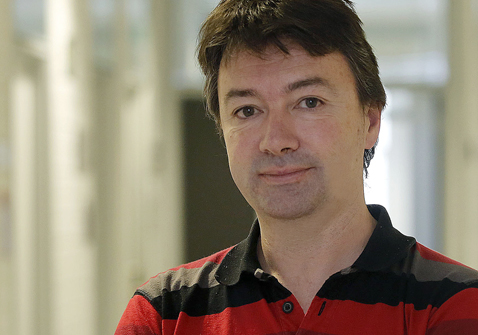
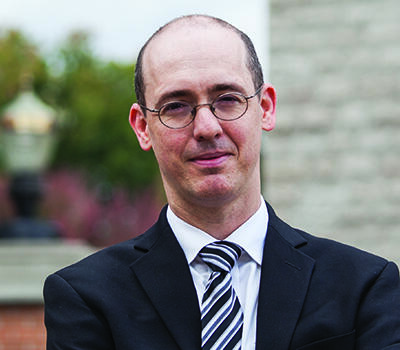
Ildikó Király is a Professor at the Institute of Psychology, Eötvös Loránd University, Budapest, currently serving as Head of the Department of Cognitive Psychology and lecturer. Her research focuses on developmental psychology, particularly social cognition, imitation behavior, and theory of mind in early childhood. Key areas: Social Cognition , Developmental Neuroscience , and Cognitive Development Recent work examines preschoolers' exploration tendencies, joint action observation effects, and linguistic group membership's role in perspective taking. She leads the Social Minds Research Group , investigating how cultural knowledge transmission shapes cognitive development. Her 2021-2025 publications reveal trends in: Imitative behavior's sensitivity to social norms and group identity Memory flexibility in adapting to changing contexts Interactions between semantic processing and mentalization in social situations Comparative studies on human and non-human primate cognition
Maria Moruz serves as a Researcher at the Department of Social Sciences and Humanities, Alexandru Ioan Cuza University of Iasi, a position she has held since February 2009. Her academic profile centers on Romanian linguistic research with strong interdisciplinary connections to biblical studies and computational methods. She earned her PhD from Alexandru Ioan Cuza University of Iasi in December 2009 with a dissertation analyzing phraseological units in parallel bilingual corpora, establishing her foundational expertise in comparative linguistics. Maria Moruz's research program integrates traditional philological scholarship with modern computational techniques . Her primary domains include Romanian linguistics , phraseology , and computational linguistics , with significant contributions to Biblical philology through critical editions of historical texts. She examines national specificity in phraseological units while developing linguistic resources for Romanian language processing , bridging historical textual analysis with contemporary NLP applications. Her publication trajectory reveals distinct thematic phases: early computational linguistics work (2004-2012) on Romanian lexical resources and question-answering systems evolved into specialized biblical philology research (2014-present) within the Monumenta linguae Dacoromanorum project. Recent publications focus on Romanian lexicography and biblical marginalia, demonstrating sustained engagement with both digital humanities methodologies and historical textual criticism. Maria Moruz has secured significant research funding as Project Director for a CNCSIS TD grant and served as a POSDRU postdoctoral researcher. Her collaborative work includes membership in the international "Widespread Idioms in Europe and Beyond" project and leadership in multiple Romanian linguistics initiatives. Project Director: CNCSIS TD grant POSDRU Postdoctoral Researcher Collaborator: "Widespread Idioms in Europe and Beyond" project Co-organizer: International Symposium "Explorations in the Romanian and European Biblical Tradition" Founding Member: Romanian Association of Biblical Philology and Hermeneutics She maintains active scholarly infrastructure through editorial work on the Monumenta linguae Dacoromanorum series and organization of specialized symposia, fostering interdisciplinary dialogue between computational linguists, philologists, and biblical scholars.
Tyson Ashley Retz is an Associate Professor of Intellectual History at the University of South-Eastern Norway (Department of Culture and Language Sciences, Faculty of Education and Humanities). He holds a PhD from the University of Melbourne and is a Fellow of the Royal Historical Society. His research focuses on the philosophy of history, historiography, and the intellectual history of political thought, particularly in 19th-century Europe. Retz has held visiting positions at the University of British Columbia (2014), Tallinn University (2018), and the University of Oslo (2021), and is currently a Senior Research Fellow at the University of Vienna (2024-25). Retz’s scholarly work critiques traditional concepts of empathy in historical understanding, advocating instead for a hermeneutical approach rooted in Collingwood’s question-answer logic. His books *Empathy and History* (2018) and *Progress and the Scale of History* (2022) explore foundational issues in historical methodology and the evolution of progress narratives. Current research examines the religious-political dynamics of Restoration France (1815–1830) and the role of historical writing in liberal thought during Catholic revival periods. His peer-reviewed articles span topics such as historical scale, the Anthropocene’s ethical challenges, and comparative progress theories. Retz actively contributes to history education through editorial roles: he edits the *Bloomsbury History: Theory and Method* digital resource, chairs the *History Education Research Journal*, and guest-edited special issues on history didactics. He has supervised at least one PhD student, Jacob Tom (2025), and frequently publishes in journals like *Journal of the Philosophy of History* and *Rethinking History*. Awards include his Royal Historical Society fellowship. Retz’s interdisciplinary work bridges historical theory, education, and political philosophy, emphasizing the societal role of historical inquiry in addressing contemporary ethical and epistemological issues.
Dr. Pouyan Nejadhashemi is an MSU Research Foundation Professor in the Departments of Plant, Soil and Microbial Sciences and Biosystems & Agricultural Engineering at Michigan State University. He serves as Director of the MSU Institute of Water Research and the Center for Intelligent Water Resources Engineering. His expertise spans ecohydrology, climate change adaptation, environmental impact assessment, and decision support systems for ecosystem sustainability. He holds a Ph.D. in Biological Resources Engineering from the University of Maryland. Dr. Nejadhashemi's research focuses on water quality modeling, non-point source pollution prevention, and integrating machine learning with hydrological systems. Key areas include irrigation optimization, PFAS contamination monitoring, and watershed management. He teaches courses on water resources systems analysis and ecohydrology. Awards: MSU Research Foundation Professor Title Grants: FAA grant for PFAS remediation, grants for developing agricultural innovations in Senegal and Bangladesh Labs/Teams: MSU Institute of Water Research, Center for Intelligent Water Resources Engineering His work bridges computational methods with environmental challenges, addressing global water security, food systems, and sustainable resource management. Recent projects include modeling water quality in the Chesapeake Bay and developing AI tools for agricultural extension platforms.
Emmanuel Morin is a Full Professor in Computer Science at the University of Nantes, France. He is affiliated with the Computer Science Department of Nantes Institute of Technology (IUT) and leads the Natural Language Processing (TALN) team at the Digital Sciences Laboratory of Nantes (LS2N UMR CNRS 6004). His research focuses on computational linguistics with particular emphasis on multilingualism and multimodality. His academic leadership includes serving as Head of the NLP team (2017-present), Co-responsible for the ATAL (Machine Learning and Natural Language Processing) option of the Computer Science Master (2017-present), and Director of the Nantes computer science training department (2014-present). He also co-edits the Traitement Automatique des Langues (TAL) journal and serves on the steering committee of ATALA since 2004. Current projects: Atlantic 2020, ALALA Project (2019-present), ANR ADDICTE (2017-present), and Atlanstic 2020 RAPACE Project (2016-present) Past projects: Labex CominLabs LIMAH (2014-2019), ANR CRISTAL (2012-2016), and European FP7-ICT TTC project (2010-2012) Professor Morin's research spans natural language processing with a focus on bilingual terminology extraction and comparable corpora analysis. His recent work (2020-2022) shows strategic expansion into medical informatics applications like FrenchMedMCQA, while maintaining his foundational work on domain adaptation of language models using graph-based networks. His publications demonstrate a consistent trajectory from early terminology extraction methods to contemporary applications in specialized language processing. He has supervised numerous PhD students, with current advisees including Kévin Espasa, Martin Laville, Merieme Bouhandi, and Antoine Caubrière. His past students have made significant contributions to the field of natural language processing, continuing his research legacy in academia and industry.
Andrew Weir is a Professor of English Language and Linguistics at the Norwegian University of Science and Technology (NTNU), Department of Language and Literature (ISL). He holds positions in the Faculty of Humanities and serves on NTNU's Language Policy Committee and the MLSPRÅK teacher training committee. His academic journey includes an MA in Linguistics from the University of Edinburgh (2008), an MA in Syntax from University College London (2009), and a PhD in Linguistics from the University of Massachusetts Amherst (2014). Before NTNU, he was a postdoctoral researcher at Ghent University's English department. Weir specializes in generative syntax and semantics, focusing on ellipsis (particularly clausal ellipsis) and interfaces between syntax, semantics, and phonology. He studies register variation in 'reduced written registers' (diaries, text messages) and dialectal features of Scottish English. As co-leader of the ForMAAL research group, he explores formal, mental, and acquisition-based approaches to language. His teaching spans theoretical linguistics courses including syntax, semantics, and linguistic theories. Weir's research emphasizes syntax-semantics interactions, dialectal syntax, and the role of prosody in ellipsis. He has supervised numerous student theses and actively participates in academic outreach, including lectures on Scots language history and generative syntax methodologies.
Javier Osorio is an Assistant Professor at the University of Arizona's School of Government and Public Policy. His research focuses on the micro-foundations and dynamics of political and criminal violence in Latin America, employing quantitative methods such as natural language processing, GIS, and big data analytics. He has received awards from the UNODC and MPSA, and his work appears in leading journals like the Journal of Peace Research . Dr. Osorio holds a Ph.D. in Political Science from the University of Notre Dame (2013) and previously taught at John Jay College of Criminal Justice. He leads the Academy for Security Analysis, funded by USAID, and collaborates with the NSF and DoD’s Minerva Initiative. His research projects include supervised event coding for conflict analysis and randomized controlled trials in Central America. His key contributions span conflict language models (e.g., ConfliBERT), criminal violence classification, and multilingual event coding frameworks. He has advised interventions in El Salvador and Nicaragua, emphasizing data-driven approaches to security challenges.
Matthias Hagen is Professor of Databases and Information Systems at Friedrich-Schiller-Universität Jena. His research focuses on information retrieval (query understanding, conversational search, comparative questions, known-item search, user simulation), natural language processing (clickbait, argumentation), and web data mining. He earned his Ph.D. from Friedrich-Schiller-Universität Jena with a thesis on algorithmic complexity, and previously led research groups at Bauhaus-Universität Weimar and Martin-Luther-Universität Halle-Wittenberg. His current work develops novel methods for retrieval-augmented generation evaluation, neural information retrieval efficiency, and user-centered search systems. Recent publications examine crowdsourcing for RAG evaluation, LLM-based relevance assessment, corpus subsampling techniques, and child-friendly web search evaluation frameworks. He contributes to open web search initiatives and develops tools like the TIREx Tracker for experimental reproducibility in IR research. Dr. Hagen serves on program committees for major conferences including SIGIR, ECIR, and ACL. His research group participates in competitive evaluations such as TREC, CLEF, and Touché. Recent projects explore axiomatic approaches to retrieval, argumentation systems, and the impact of search result quality on decision-making.
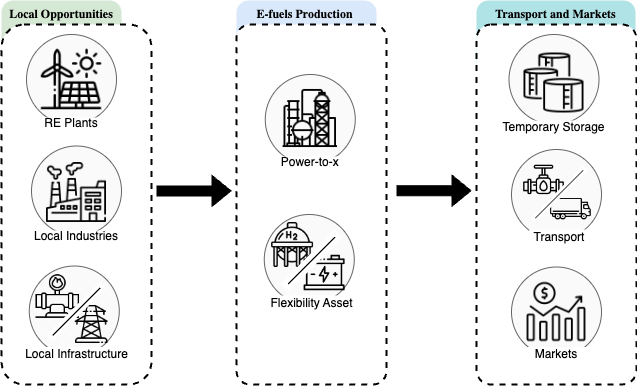
Prof. Damien Ernst is a faculty member at the Montefiore Institute, Department of Electrical Engineering and Computer Science, University of Liège (Belgium). His research focuses on energy systems, remote renewable energy hubs, reinforcement learning, and optimization algorithms. He actively contributes to decarbonization strategies for hard-to-abate sectors like shipping and aviation. Academic Rank: Professor University: University of Liège School: Montefiore Institute Department: Electrical Engineering and Computer Science Research interests include: Design and techno-economic analysis of remote renewable energy systems Reinforcement learning applications in energy and optimization Energy transition policy and sustainability modeling Machine learning techniques for energy system transparency Integration of nuclear, hydrogen, and battery technologies His recent publications demonstrate expertise in: Remote Renewable Energy Hub (RREH) design Small Modular Reactor (SMR) integration Asymmetric Actor-Critic algorithms Energy system optimization and modeling Grid stability and hosting capacity analysis Explainable AI for closed-domain question answering Prof. Ernst leads PhD projects at the intersection of Operations Research and Energy Systems, focusing on energy systems models' transparency and optimization techniques.
Eneko Agirre is a Full Professor at the Faculty of Computer Science of the University of the Basque Country UPV/EHU, where he serves as the director of the HiTZ Centre on Language Technology. He is an active member of the Ixa Research Group and has established himself as a leading figure in Natural Language Processing, particularly in multilingual and low-resource language settings. His work bridges theoretical advances with practical applications for language technology. Agirre received his PhD from the University of the Basque Country in 1999 with a thesis on conceptual relationships and ontologies, supervised by Dr. Kepa Sarasola Gabiola and Dr. Arantza Díaz de Ilarraza Sánchez. His academic journey has been marked by significant contributions to computational linguistics and language technology. His research primarily focuses on Natural Language Processing challenges, with special emphasis on Word Sense Disambiguation, cross-lingual transfer learning, dialogue systems, and Large Language Models for low-resource languages. He has pioneered work on Basque language technology and has consistently addressed the challenges of multilingual AI systems, particularly examining how language models perform across different linguistic contexts and cultural settings. Analysis of his recent publications reveals a strong trajectory toward advancing Large Language Models for low-resource languages, with particular attention to Basque. His work spans vision-language models, information extraction techniques, and rigorous evaluation methodologies for NLP systems. A recurring theme is the exploration of how language models handle low-resource languages compared to high-resource ones, with groundbreaking findings about cultural knowledge transfer between languages. Fellow of the ACL (2021), one of only 74 research leaders worldwide National Research Prize on Informatics (2021) Best resource paper award at ACL 2024 Honourable mention paper award (top 1%) at EMNLP (2020) Outstanding Paper award (top 2%) at COLING (2020) Recipient of three Google Faculty Research Awards (2017, 2018, 2019) Agirre has supervised over 25 PhD students, many of whom have received prestigious awards including the EurAI Artificial Intelligence PhD Dissertation Award. His research has been supported by numerous European projects including LIHLITH (2018-2020) on lifelong learning for dialogue systems, and he has served as principal investigator for multiple CHIST-ERA and FP7 projects. His work with Google includes collaborative projects on entity dictionaries and conversational question answering systems. As director of the HiTZ Centre on Language Technology and member of the Ixa Research Group, Agirre leads a vibrant team focused on advancing language technology for Basque and other under-resourced languages. The center has developed significant resources including Latxa, an open language model for Basque, and has established itself as a hub for multilingual NLP research. His group actively collaborates with international institutions including Stanford, NYU, and various European universities, fostering a global network for language technology research.
Stephen Ramsey, an Associate Professor at Oregon State University, holds dual appointments in the School of Electrical Engineering and Computer Science (College of Engineering) and the Department of Biomedical Sciences (Carlson College of Veterinary Medicine). With a PhD in Physics from the University of Maryland, his postdoctoral training in computational genomics at the University of Washington, and professional experience at the Institute for Systems Biology and Center for Infectious Disease Research, Ramsey bridges computational methods with biomedical applications. Education : Ph.D., Physics, University of Maryland; M.S., Physics, University of Maryland; Sc.B., Mathematical Physics, Brown University Ramsey specializes in computational systems biology , focusing on bioinformatics , biomedical knowledge graphs , and precision medicine . His research integrates machine learning , gene regulatory network modeling , and multi-omics data analysis to address challenges in rare disease diagnostics , drug monitoring , and inflammatory disease mechanisms . Current work includes AI-driven biomedical translation and electrochemical biosensor development for non-invasive diagnostics . Recent publications highlight knowledge graph applications in translational biomedicine , causal network inference in clinical-environmental data integration , and cross-species cancer transcriptomics . His team develops tools like RTX-KG2 and PloverDB to standardize biomedical data sharing and semantic reasoning . Scientific Awards : 2019 Zoetis Award (Carlson College of Veterinary Medicine) 2016 NSF CAREER Award 2016 PhRMA New Investigator Award 2010 NIH K25 Mentored Quantitative Research Award Ramsey advises in computational biology courses (CS 446/546) and contributes to biomedical AI through projects like mediKanren for rare disease diagnostics . His NSF-funded research explores gene expression noise and regulatory network dynamics , while NIH and PhRMA grants support his translational medicine initiatives. He leads the Ramsey Laboratory , which develops graph-based reasoning tools for biomedical data translation and multi-omics integration . The lab's work spans comparative oncology models, electrochemical biosensors , and knowledge graph infrastructure for clinical decision support .
Prof. Dr. Miquel Serra-Burriel is a full Professor at the University of Zurich , based in the Institute of Epidemiology, Biostatistics and Prevention (EBPI) . His work bridges population health sciences with advanced biostatistical and health-economic methods. Research Focus: Hepatology & liver-disease epidemiology, including steatotic liver disease and cirrhosis Cancer screening programmes (colorectal, lung, liver) Pharmacoepidemiology and health-technology assessment Causal machine-learning approaches to personalised treatment effects Health-economics of chronic diseases and drug pricing across the US, EU and Switzerland Across more than 50 recent publications (2022-2025) he consistently applies rigorous epidemiological designs—randomised trials, cohort studies, systematic reviews and target-trial emulations—to answer pressing clinical and public-health questions. A dominant theme is the translation of evidence into policy, exemplified by comparative analyses of regulatory timelines, reimbursement delays, drug shortages and pricing trajectories in high-income countries. Scientific Awards & Recognition: No specific awards were mentioned in the supplied text. Funding & Collaborative Networks: While explicit grant identifiers are absent, the breadth of multicentre and multinational studies (e.g., Swiss-AF, COLONPREV, LiverScreen, EASL–Lancet Liver Commission) indicates substantial competitive funding and extensive collaboration with clinical, regulatory and academic partners across Europe and North America. Laboratories & Teams: Prof. Serra-Burriel leads research activities within the EBPI, working closely with interdisciplinary teams spanning biostatistics, health economics, hepatology, cardiology and data science.
Abdurrahim BİLİK is an Assistant Professor at the Faculty of Theology, Trakya University since 2019. He holds a PhD in Islamic Law from Marmara University (2013) and has extensive academic credentials including a Master's in Islamic Law (Marmara University, 2013), a Bachelor's in Economic and Administrative Sciences (2009), and multiple degrees from Kartal Anatolian Imam Hatip High School. His research focuses on Islamic jurisprudence (Fiqh), Ottoman legal theory (Usul al-Fiqh), and the methodology of Jadal debates in classical legal texts. Education History: Bachelor's Degree in Islamic Law (Marmara University, 2013) Master's Degree in Islamic Law (Marmara University, 2013) PhD in Islamic Law (Marmara University, 2013) Associate Degree in Economic and Administrative Sciences (2009) High School: Kartal Anatolian Imam Hatip (2004) Research Interests: His work examines the interplay between legal methodology (Jadal) and textual analysis in Ottoman legal works, particularly focusing on figures like Molla Khusraw and the application of Hilaf literature. He explores how political authority shapes Islamic legal legitimacy and has contributed to foundational Islamic encyclopedias on rituals like menstruation (Nifas) and Tayammum. His recent publications analyze the structural impact of Hilaf on Hanafi jurisprudence and the evolution of Islamic legal discourse in the Balkans. Editing Contributions: He has edited volumes on 'The Balkans and İslam,' documenting the region's Islamic legal and cultural heritage. His teaching includes courses on Islamic family law, comparative law, and the history of Fiqh.
Hugh Zillmann is an Assistant Professor at Bond University’s Faculty of Law and a member of the Centre for Professional Legal Education. With over 35 years of combined legal practice and academia, he transitioned from full-time barristry to academia in 2006. He previously held part-time lecturer roles at Queensland University of Technology, Australian Catholic University, and Central Queensland University before joining Bond University in 2010. Education: Graduated from the University of Queensland in 1979. His professional legal practice spanned Australia and internationally until 2006. Research interests focus on Civil Procedure Law reform, Taxation and Revenue Law pedagogy, online learning for insolvency professionals, and Australian War Crimes Trials. He co-authored LexisNexis Questions and Answers: Civil Procedure (2020) and authored A Civil Litigation Practice Manual (2019). He was appointed to Queensland Law Society’s Commercial Litigation Specialist Accreditation Advisory Committee in 2020. Teaching expertise includes Taxation Law, Civil Procedure, Evidence Law, and Commercial Law. His legal practice specialized in Commercial Law, Estate Law, and Insolvency. He directs Bond University’s Professional Legal Training Programs since 2015.
Alexander Bondarenko is an Assistant Professor in the Department of Computer Science at Martin-Luther-Universität Halle-Wittenberg, Germany, specializing in information retrieval, argument mining, and comparative question answering. His research focuses on developing systems that can retrieve argumentative content and answer comparative questions, with particular applications in health misinformation detection and biomedical question answering. His primary research interests include Argument retrieval and mining Comparative question understanding and answering Health misinformation detection Neural ranking models Causal question answering Biomedical information retrieval His work bridges theoretical information retrieval with practical applications in domains where accurate information is critical, such as healthcare. His recent publications (2023-2025) demonstrate a clear trajectory from foundational work on comparative questions to more specialized applications in biomedical domains. The Touché evaluation lab series represents his most significant contribution to the field, providing standardized benchmarks for argument retrieval research. His 2024-2025 work shows increasing focus on large language model applications and robustness against misinformation in specialized domains. Bondarenko has received recognition through numerous publications at top-tier venues including SIGIR, WSDM, ECIR, and AAAI. While specific awards aren't documented in the provided data, his consistent publication record at major conferences indicates recognition within the information retrieval community. As a relatively early-career researcher (completing his PhD in 2023), Bondarenko has established himself as a key contributor to argument retrieval research through the Touché lab series and related publications. His work often involves interdisciplinary collaboration, particularly with researchers from biomedical informatics domains. His laboratory work centers around the development and evaluation of argument retrieval systems, with significant contributions to dataset creation (Touché series) and evaluation methodologies for argumentative content. His recent work with biomedical applications suggests expanding research into domain-specific information retrieval challenges.