Alan Cusack is an Associate Professor at the School of Law, University College Cork , and a member of the Centre for Crime, Justice and Victim Studies . He is a qualified solicitor and holds a PhD , LLM , and BCL from University College Cork, along with a Diploma in Employment Law from University College Dublin. Education PhD in Law (University College Cork, 2017) LLM in Law (University College Cork, 2011) BCL in Law (University College Cork, 2008) Diploma in Employment Law (University College Dublin, 2011) His research focuses on criminal procedure , victimology , disability studies , and criminology , particularly examining how adversarial justice systems accommodate individuals with intellectual disabilities. His work explores procedural fairness, vulnerable witness engagement, and systemic reforms in policing and judicial processes. Recent publications address disability-inclusive policing , accessible legal documentation , and community safety co-response models . He has acted as an expert advisor to government bodies and international organizations. Scientific Awards Faculty of Law PhD Scholarship, University College Cork Gold Medal for Best Letter to the Editor, Cork Online Law Review Irish Research Council Government of Ireland Scholarship PhD Research Training Scheme Scholarship, University College Cork IALT Conference 2014 PhD Scholarship Alan has led policy reform projects with An Garda Síochána and contributed to UN Sustainable Development Goals through disability-inclusive legal frameworks. He practices as a part-time solicitor and serves on editorial and advisory boards for legal journals.
Constantin Duvac is a Professor and Dean of the Faculty of Law at the Romanian-American University, specializing in penal law, European penal law, and criminology. He earned his Ph.D. from the Romanian Academy and completed postdoctoral studies in Penal Legal Sciences, International Business Law, and Administrative Sciences. As a Ph.D. supervisor at the Academy of Economic Studies, he guides research in penal law and contributes to legal scholarship through editorial leadership of the Penal Law Review and Criminal Law Review . His research explores criminal law institutions, forensic science integration in justice systems, and legislative reforms, with recent work examining AI's impact on criminal law and environmental protection in Southeast Europe. Publications demonstrate consistent focus on Romanian penal code evolution, jurisprudential analysis, and comparative legal studies. Honors include the Order of Manhood and Faith (Officer, 2006), Ioan Tanoviceanu Award (2009), and two Vintilă Dongoroz Awards (2010, 2016). He leads multiple professional associations as President of the Romanian Association of Penal Sciences and the International Penal Law Association's Romanian National Group. Prior to academia, he held directorial roles in Romania's police force, including the Criminal Investigation Directorate and Legal Directorate, bringing practical insights to his scholarly work.
Dr. Moira Dustin is an Assistant Professor in the School of Law, Politics and Sociology at the University of Sussex. She specializes in gender, sexuality, migration, and refugee protection, with a focus on feminist theory and SOGIESC-based refugee claims. Co-Investigator for ESRC-funded project 'Negotiating Queer Identities Following Forced Migration' Co-Founder of Women in Refugee Law (WiRL) network Tutor and module convenor for MA in Refugee Protection and Forced Migration Studies at University of London Former Research Fellow on ERC-funded SOGICA project (2016-2020) Her research explores asylum adjudication challenges for LGBTQ+ individuals and refugee women, with publications analyzing persecution frameworks, cultural barriers, and policy recommendations. She has contributed to influential works on SOGI asylum through co-authored books and journal articles. Key grants include: Society of Legal Scholars funding for WiRL network ESRC grant for comparative study of Iranian queer refugees Moira has previously worked at the Equality and Diversity Forum, Refugee Council, and as a freelance sub-editor for The Guardian and Independent. She holds a PhD in Gender Studies from the London School of Economics.
Martha A. Field is the Langdell Professor of Law at Harvard Law School. She holds a B.A. from Radcliffe College and a J.D. from the University of Chicago Law School, where she was valedictorian. Her career includes clerkships for Justice Abe Fortas of the U.S. Supreme Court and Judge John Minor Wisdom. Prior to Harvard, she taught at the University of Pennsylvania Law School for nine years. Her research focuses on constitutional law, civil procedure, disability rights, reproductive rights, family law, and First Amendment issues. She has engaged in international legal projects, including a five-year study of Central American judicial systems. Field’s work bridges legal theory and practice, addressing topics like surrogacy, federal jurisdiction, and disability rights. Her publications include influential books on surrogate motherhood and mental retardation rights. She has argued cases before the U.S. Supreme Court and federal appellate courts. Her teaching spans criminal law, evidence, and federal courts.
David C. King is a Senior Lecturer in Public Policy at Harvard Kennedy School (HKS), where he has taught since 1992. He specializes in U.S. congressional dynamics, election administration, and public policy implementation. His research includes studies on legislative processes, voter mobilization, and government transparency reforms. King chairs Harvard’s Bi-Partisan Program for Newly Elected Members of the U.S. Congress and teaches courses on Congress, interest groups, and state/local government management. Key professional roles include directing the 2000 Election Task Force (helping draft the Help America Vote Act) and advising Boston’s election reforms post-2006. He chairs the pro-democracy group Initiatives for China and has authored/co-authored books like The Generation of Trust and journal articles on topics such as partisan mobilization and congressional vote strategies. His research spans election systems, legislative behavior, and public trust, with a focus on applying empirical methods to political problems. Recent work includes analyses of generational political attitudes and voter outreach strategies for youth engagement. Affiliations: Ash Center for Democratic Governance, Institute of Politics, Taubman Center for State and Local Government Grants: Delta Leadership Institute (2024), Gates Family Foundation Fellowships (2022) Advisory Roles: Board Chair for Initiatives for China, Knovva Academy speaker King’s work bridges academic research and practical policy solutions, emphasizing institutional reform and democratic participation.
Dr. Edmund Horowicz is a Senior Lecturer in Law at the University of Liverpool, part of the School of Law and Social Justice within the Faculty of Humanities and Social Sciences. He combines academic expertise with clinical ethics practice, co-chairing Alder Hey Children's Hospital Clinical Ethics Service. His research focuses on legal and ethical challenges in healthcare for gender diverse/intersex children and adolescents, children's rights in medical decision-making, and best interests standards in pediatric care. Education: LL.B (Hons) from Liverpool John Moores University, LL.M (Distinction) in Healthcare Law and Ethics from the University of Manchester, and a Ph.D on 'Sex, Gender and Medicine: Comparative Ethical and Legal Complexities for Children and Adolescents with Atypical Identities'. Teaching includes modules on Medical Law, Ethics in Healthcare Decision-Making, and Children's Rights. He leads the Academic Advisor system in the Law School and supervises postgraduate research. Professional roles include Chair of the Central University Research Ethics Committee and collaboration with the European Children's Rights Unit and Health Law and Regulation Unit. Research outputs span legal analysis of gender care policies, participatory studies on children's healthcare experiences, and ethics guidance development. Current projects include a book on best interests in pediatric medical interventions and standards for rights-based clinical procedures involving minors.
Duco Bannink is an Associate Professor at the Department of Political Science and Public Administration, Vrije Universiteit Amsterdam. He holds dual appointments in the New Public Governance (NPG) research group and the Faculty of Social Sciences and Humanities. His work focuses on collaborative governance, sustainable development goals, and administrative challenges in healthcare and social policy. Bannink actively engages with public-sector organizations through ancillary roles including advisor to PvdA Wiardi Beckman Stichting (since 2015), member of Fietsersbond Amersfoort (2019–present), and board member of the Wetenschappelijke Raad Enschede (2021–present). Education: Not explicitly stated in text, inferred to hold PhD based on academic role. Research interests center on late modernity governance challenges, co-production dynamics, and institutional complexity in public service delivery. His recent work analyzes power asymmetries in healthcare decision-making and explores how wicked problems shape collaborative governance frameworks. He contributes to UN Sustainable Development Goals through studies on inclusive service provision and administrative efficiency. Key projects include the Talma Zorgprogramma (2023–2027) examining care sector integration and the Effectenonderzoek Open Hiring initiative (2019–2020) analyzing recruitment practices. Supervised 5 PhD theses focusing on public governance topics. Labs/Teams: Active in the New Public Governance research group, collaborating with institutions like the Vereniging voor Bestuurskunde (since 2021).
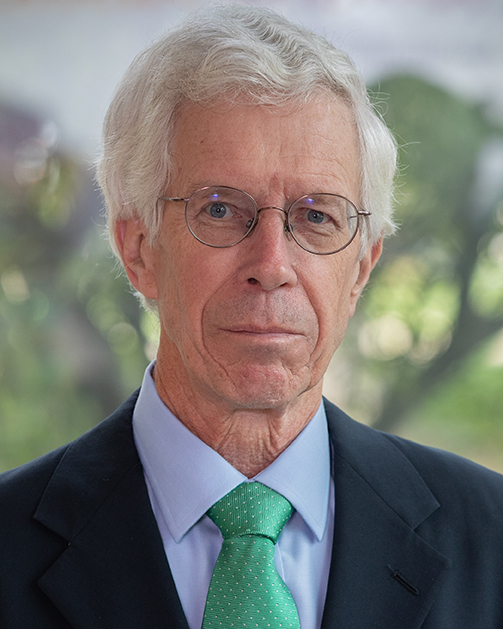
Panagiotis Takis Tridimas is a Professor and Chair of European Law at King's College London. He holds a Ph.D. and LL.M. from Girton College, University of Cambridge, and an LL.B. from the University of Athens. His expertise focuses on EU constitutional law, judicial protection mechanisms, and financial regulation. He has advised institutions during the Eurozone crisis and served as a senior legal advisor to the EU, chairing the committee drafting accession treaties for Central and Eastern European states in 2003. He co-edits the Yearbook of European Law and is a practicing barrister in England/Wales and advocate in Greece's Bar of Athens. Education: Ph.D., LL.M. (Girton College, Cambridge) LL.B. (University of Athens) His research explores EU legal frameworks, including treaty interpretation, judicial review, and financial crisis management. He frequently engages with European and U.S. media, emphasizing the practical implications of EU law. His publications analyze topics like ESMA regulatory oversight, post-Kadi sanctions jurisprudence, and the philosophical underpinnings of EU law. Tridimas has advised governments and corporations on EU law challenges and contributed to treaty negotiations. His work bridges academic rigor with real-world policy impact, particularly in crisis-driven legal reforms.
Stephen Calkins is a Professor of Law at Wayne State University Law School, specializing in Antitrust, Consumer Law, and Torts. He holds a J.D. from Harvard Law School and a B.A. from Yale University. His career includes serving as General Counsel of the FTC, a member of Ireland’s Competition Authority, and director roles in regulatory bodies. Calkins has authored influential books such as Antitrust Law: Policy and Practice and contributes to professional organizations like the American Law Institute. His research focuses on antitrust policy, merger regulation, and international competition law. Education: J.D., Harvard Law School B.A., Yale University Research Interests: Calkins’ work emphasizes antitrust enforcement, consumer protection, and regulatory frameworks. He critiques and shapes policies through academic writing and public speaking, addressing both domestic and global legal challenges. His recent scholarship explores merger litigation strategies, FTC authority, and international cooperation in competition law. Awards: He has received the Alfred E. Kahn Award, FTC’s Distinguished Service Award, and teaching accolades. His contributions to legal scholarship and policy have been recognized nationally and internationally. Professional Activities: Calkins serves on advisory boards for the American Antitrust Institute and the Loyola Consumer Law Review. He has held leadership roles in academic and regulatory committees, including chairing the AALS Antitrust Committee and serving on Wayne State’s Academic Senate. His expertise spans academia, government, and international regulatory practice. Labs/Teams: Engaged with interdisciplinary initiatives, including co-editing publications like the ABA Antitrust Section’s Consumer Protection Law Developments . His work integrates legal theory with practical regulatory challenges.
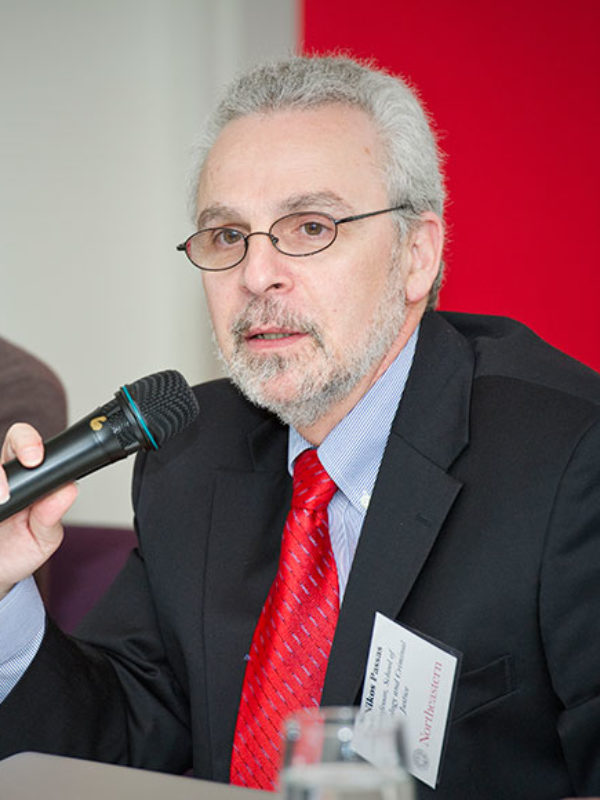
Nikos Passas is a Professor of Criminology and Criminal Justice at Northeastern University's College of Social Sciences and Humanities, where he serves as Co-Director of the Institute for Security and Public Policy. He holds multiple international appointments including Co-Chair of the Steering Committee for the University of Geneva Anti-Corruption Academy (GENACA), Distinguished Visiting Professor at Beijing Normal University, Distinguished Lecturer in Financial Integrity at Case Western Reserve Law School, and Chair of the Academic Council of the Anti-Corruption Academy in India. His work bridges academic research and practical policy implementation across global institutions. His educational background includes a PhD in Sociology of Deviance from the University of Edinburgh (1988), an LLB from the University of Athens, and a DEA from the University of Paris II. These foundations support his interdisciplinary approach to complex crime issues. Passas specializes in corruption, illicit financial flows, terrorism financing, white-collar crime, and transnational organized crime. His research examines institutional corruption mechanisms, anti-corruption academic frameworks, trade-facilitated crime, and the intersection of debt crises with corruption—particularly in Greece. Current projects include NSF-funded research on Financial Network Disruptions in Illicit and Counterfeit Medicines Trade (FIND-M), analysis of serious crimes during the COVID-19 pandemic, and criminological theory development. His work consistently addresses the practical implementation challenges of global crime control frameworks. Analysis of his 230+ publications across 15 languages reveals an evolving focus from foundational criminological theory and organized crime structures toward contemporary financial crime systems and regulatory challenges. Early works established frameworks for understanding transnational crime economics, while recent scholarship targets terrorist financing mechanisms, identity-related cybercrime, and the operational realities of anti-corruption implementation. His publications consistently emphasize practical policy applications and cross-institutional coordination requirements. Dr. Jean Mayer Global Citizenship Award (2017) from Tufts University’s Institute on Global Leadership INSPIRE Fellow at Tufts University Institute of Global Leadership Passas has secured significant research funding including the NSF FIND-M planning grant and has consulted for major international bodies including UNODC (designing the UNCAC legal library and review mechanism software), OECD, IMF, World Bank, OSCE, European Union, and Financial Crimes Enforcement Network (FinCEN). He regularly provides expert testimony in legal proceedings and develops specialized training for law enforcement, intelligence agencies, and financial institutions worldwide. His advisory roles span the Centre for Crime Justice and Policing at the University of Birmingham, Global Risk Profile in Geneva, and Compliance and Capacity Skills International in New York. He leads Northeastern's Institute for Security and Public Policy while directing international initiatives including the University of Geneva Anti-Corruption Academy and India's Anti-Corruption Academy. His work with UNODC established critical infrastructure for global anti-corruption monitoring, and he currently chairs academic councils that coordinate anti-corruption research across multiple continents. These roles position him at the nexus of academic research, policy development, and operational crime prevention strategies.
Winnie Ma is Assistant Professor in Bond University's Faculty of Law, specializing in international dispute resolution. With expertise spanning arbitration legislation, private international law, and mediation frameworks, she contributed to drafting Taiwan's arbitration rules and the UN Convention on International Settlement Agreements. As ICC Institute Council Member, she influences global arbitration standards. Research concentrations: Reconciling jurisdictional approaches in arbitration agreements Comparative analysis of international dispute systems Legal harmonization across Asian and Western frameworks Publications address contemporary challenges in arbitral procedure, including admisibility standards and judicial interpretation of arbitration clauses. Recent work examines Taiwan's evolving role in international dispute resolution frameworks.
Tyler Cawthray is Assistant Professor of Criminology and Criminal Justice at Bond University, specializing in police legitimacy and reform in post-conflict settings. His research examines procedural justice, spatial dimensions of policing, and gender differences in police integrity across Pacific Island nations. Current collaborations with QUT, Ghent University, and Leiden University investigate technology's impact on police legitimacy. He teaches undergraduate and postgraduate criminology courses, with PhD supervision capacity in policing, ethics, and rule-of-law reform. Prior roles include lecturing at Western Sydney University and research positions at Griffith University focusing on international police codes of conduct.
Deserai Crow serves as Associate Professor and Associate Program Director for the PhD in Public Affairs at the University of Colorado Denver's School of Public Affairs. Her research focuses on narrative dynamics in policy processes, particularly during crises like wildfires, floods, and the COVID-19 pandemic. Crow's work centers on the Narrative Policy Framework, examining how stories shape policy learning, conflict resolution, and governance during disasters. She investigates environmental rulemaking, stakeholder engagement in crisis recovery, and the intersection of political communication with public health responses. Her research bridges political science, environmental policy, and disaster management through empirical analyses of real-world events including Colorado's extreme floods and pandemic responses. Recent publications reveal consistent thematic trends: narrative power in policy conflicts, visual communication strategies for vaccine uptake, and cross-state comparative analyses of crisis governance. Her scholarship spans political science, public administration, and health policy, with methodological emphasis on narrative analysis, stakeholder engagement, and policy process theory. Key contributions include demonstrating how disaster narratives influence regulatory outcomes and identifying mechanisms for collaborative governance amid belief divergence.
Dr. Lydia Miljan is Professor and Head of the Department of Political Science at the University of Windsor. Office: Chrysler Hall North 1147. Research expertise spans electoral systems, media-politics relations, public policy analysis, and municipal governance. Publications frequently examine Canadian electoral reform, media coverage of politics, and democratic theory. Recent work analyzes referendum design, proportional representation impacts, and federal appointment patterns. Articles demonstrate consistent focus on democratic processes, media-policy interactions, and institutional design, with strong emphasis on Canadian provincial and federal politics. Research methodology blends policy analysis with comparative case studies.
Radosveta Vassileva is a Visiting Research Fellow at Middlesex University's Law School within the Faculty of Business and Law . She holds a PhD in Law from University College London (UCL), a Master’s in Global Business Law from Sorbonne University, and a Master’s in Economic Law from Sciences Po Paris, alongside a Bachelor’s in International Relations from Tufts University. Research Focus: Her work centers on comparative private/public law, EU law, international arbitration, legal history, and rule-of-law challenges in post-communist states. Key areas include Bulgarian legal reforms, EU legal frameworks, and institutional accountability mechanisms. Publications: Her 2022 monograph Bulgarian Private Law at Crossroads (Intersentia) analyzes legal traditions and modern challenges. Recent articles address topics like transparency in investment arbitration, environmental legal reforms under the European Green Deal, and Bulgaria’s constitutional crises. She frequently contributes to media platforms like Verfassungsblog and EUobserver . Key Themes: Her scholarship critiques EU conditionality mechanisms, explores post-communist legal systems, and examines political capture in Eastern Europe. She emphasizes interdisciplinary approaches linking legal history, comparative methodology, and institutional critique. No student supervision or grants are explicitly mentioned in the provided texts.