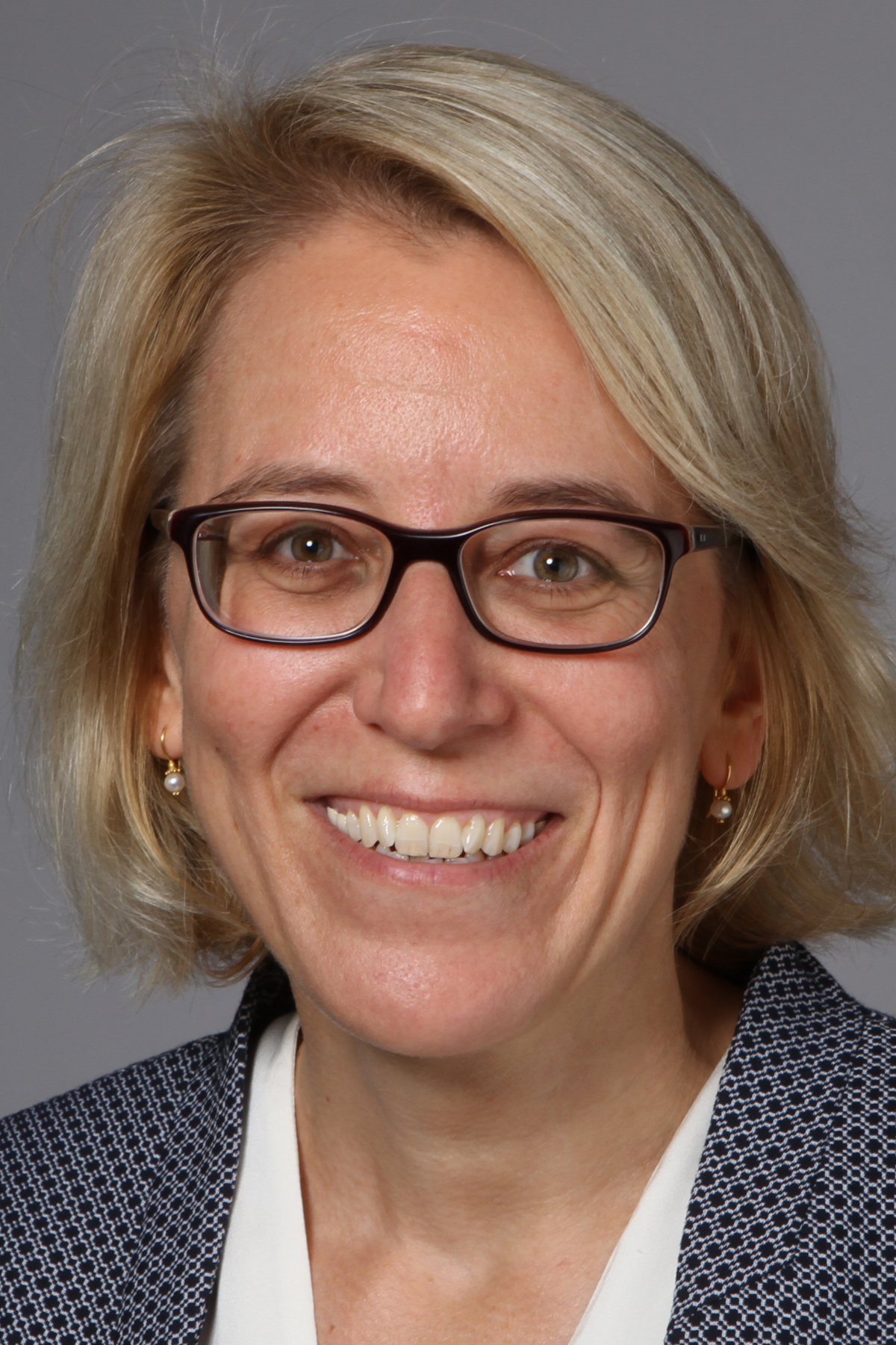
Rebekka von Mallinckrodt is a Professor at the Department of Early Modern History , Universität Bremen . She specializes in Early Modern European History , focusing on slavery , colonial entanglements , sports and bodily practices , and gender dynamics . Her work bridges transnational history and legal studies , examining how European societies navigated freedom and subjugation between 1650–1850. Education : PhD in History (Augsburg, 2003); Staatsexamen (Bonn, 1998); studies in Bonn, Tübingen, Rome, and Bremen. Her research synthesizes slavery studies , cultural transfer , and bodily techniques , with a particular emphasis on German regions within global contexts . She leads the VolkswagenStiftung Opus Magnum project (2023–2024) and previously directed the ERC Consolidator Grant on German slavery . Articles highlight racial dynamics , legal paradoxes , and popular sports in Germany and France . Scientific Awards include NASSH Finalist , Feodor-Lynen Stipendium , and ProFiL Mentoring . She has served on juries for DFG , VolkswagenStiftung , and ERC , and is an Ordentliches Mitglied of the Akademie der Wissenschaften Hamburg (2022–). As an advisor, she has mentored over 15 PhD and Master’s candidates , including Sarah Lentz (awarded Best Dissertation, Bremen, 2020) and Jasper Hagedorn (received multiple prizes, 2023). She directed the Institute for Historical Sciences (2017–2023) and co-founded the DFG Network on Bodily Techniques (2009–2012). Her public engagement includes exhibitions, media interviews (e.g., NDR , SPIEGEL ), and contributions to encyclopedias like Encyclopedia of Early Modern History .
Elizabeth Lemmon is a Research Fellow within the Health Economics Group of the Edinburgh Clinical Trials Unit at the Usher Institute, University of Edinburgh. Her work focuses on applying econometric methods to healthcare and social care data, particularly in the context of aging populations and long-term care provision. PhD in Economics, University of Stirling (2019) MSc in Economics, University of Edinburgh (2014) BA Hons in Economics, University of Stirling (2013) Her research spans applied econometric analysis of survey and administrative data, economic aspects of aging, unpaid care dynamics, long-term care provision, health and care resource utilization at end-of-life, and policy implications derived from data-driven insights. A key component of her work involves leveraging Scottish and English national health data repositories to evaluate cancer care costs, screening efficiency, and treatment outcomes. Recent publications highlight her expertise in analyzing colorectal cancer economics, end-of-life hospital cost trajectories, and long-term care vulnerabilities during pandemics. She has contributed to the development of the national CORECT-R data repository and has explored international comparisons of care home mortality during the COVID-19 crisis. Elizabeth is actively engaged in public and patient involvement initiatives, ensuring her research informs both policy and clinical practice through the integration of administrative datasets.
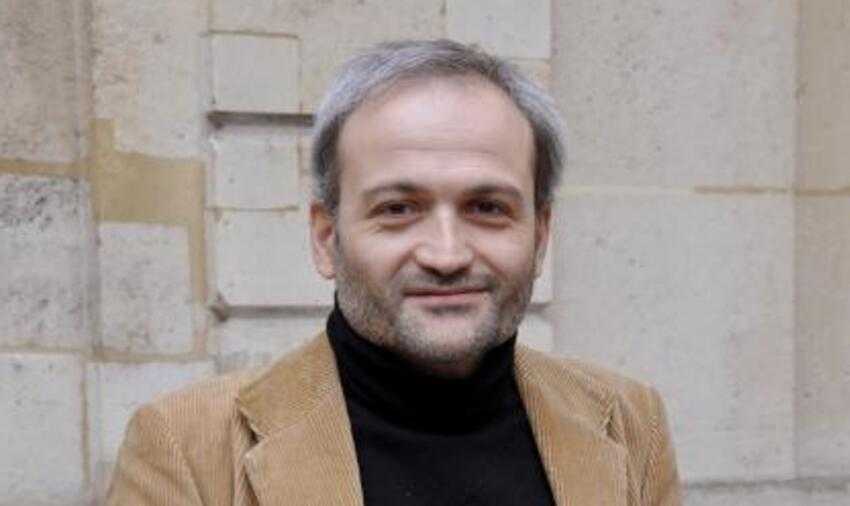
Philippe Coulangeon is a CNRS Research Professor with HDR at the Centre for Research on Social Inequalities (CRIS) at Sciences Po. His research is situated at the intersection of cultural sociology and the sociology of social inequalities, focusing on cultural practices, tastes, and social stratification. His research interests include: Cultural Sociology and Inequalities Cultural Capital and Omnivorousness Social Stratification and Class Arts and Cultural Education Ecological Conversion and Lifestyles Quantitative Methods in Social Sciences His publications reveal a strong thematic continuity in understanding how culture functions as a marker of social distinction and inequality in France. Recent works increasingly integrate environmental concerns, showing evolving trends toward sustainable lifestyles and their social dimensions. His methodological focus on quantitative and geometric data analysis underpins a rigorous empirical approach to cultural sociology. Scientific awards and honors: No specific awards mentioned in the text. He has supervised PhD students, including Abel Aussant, and teaches graduate courses on the sociology of inequalities and quantitative methods. He has been involved in major funded projects, notably an ANR project on the social forces of ecological conversion. His editorial roles include membership on the editorial board of the journal Sociologie . He is affiliated with CRIS and collaborates with researchers across France on issues of inequality, particularly during the pandemic. His recent policy briefs highlight the impact of lockdowns on social life and inequality.
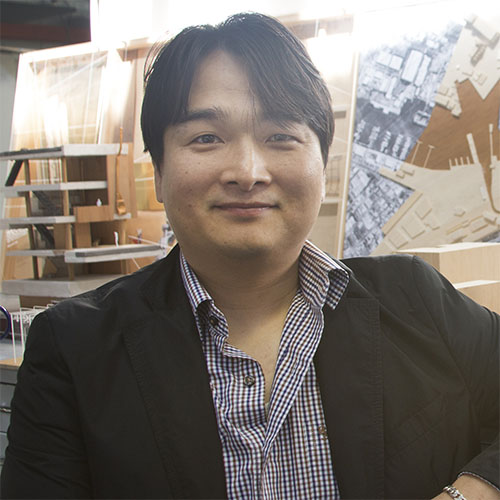
JuHyun Lee is an Associate Professor of Architecture and Computational Design in the School of Built Environment at the Faculty of Arts, Design and Architecture (ADA), University of New South Wales (UNSW) Sydney, where they also hold the prestigious title of Scientia Academic. With a professional background in architecture and construction (1998-2002), they have held academic positions across Australia including a five-year post-doctoral fellowship at the University of Newcastle (2012-2017) and a senior research fellowship at the University of South Australia (2018), following earlier research and teaching roles in South Korea (2003-2011). Lee specializes in architectural design computing, design cognition, and urban complexity, integrating computational methods, cognitive science, and architectural theory to advance architectural intelligence and human-centered design. Their research spans architectural visualization, analysis and design methods, algorithm/protocol design, and data visualization with computational approaches. They have established a strong research program examining the intersection of language, culture, and design cognition, particularly focusing on cross-cultural design communication between Australia and Korea. Lee's recent publications demonstrate a clear trajectory toward increasingly sophisticated integration of computational methods with architectural design theory, particularly in the areas of shape grammar, space syntax, and machine learning applications. Their work shows consistent focus on practical applications of computational design methods to real-world architectural problems, with growing emphasis on cross-cultural collaboration and intelligent design systems. The research portfolio reveals a deepening engagement with AI and machine learning techniques applied to architectural design assessment and generation. Scientia Academic at UNSW Sydney Associate Fellow of the Higher Education Academy (AFHEA, 2020) As an educator, Lee develops cutting-edge courses in computational design and Building Information Modeling (BIM), integrating experiential learning and industry engagement. They have secured over $11 million in research funding, including multiple ARC Discovery Projects and an Australia-Korea Foundation grant. Lee co-directs the Advanced Architectural Analytics Laboratory (A 3 LAB), leading interdisciplinary research on design automation, spatial analysis, and machine learning applications in architecture, while also leading cross-cultural initiatives like the Australia-Korea Architects' Network (AKAN). Lee supervises multiple HDR students working on culturally sustainable urban design, socio-spatial patterns in public housing, and computational layout generation. Their research has significant implications for improving design communication across cultural boundaries and developing more coherent, clear, and accessible built environments through computational design approaches.
William Sulis is an Associate Clinical Professor in the Department of Psychiatry and an Associate Member of the Department of Psychology at McMaster University, where he also directs the Collective Intelligence Lab (CILab). With a unique interdisciplinary background spanning mathematics, physics, and psychiatry, Dr. Sulis bridges the gap between theoretical science and clinical practice. His educational journey is exceptionally diverse: B.Sc. (Hon) in Mathematics with minor in Theoretical Physics, Carleton University (1976) M.D., University of Western Ontario (1980) M.A. in Mathematics, University of Western Ontario (1984) Ph.D. in Mathematics, University of Western Ontario (1989) FRCPC in Psychiatry (1984) Ph.D. in Theoretical Physics, University of Waterloo (2014) CRCPC in Geriatric Psychiatry (2015) Dr. Sulis's research explores the intersection of complex systems theory with psychological and psychiatric phenomena. His work on Collective Intelligence investigates how group dynamics emerge from individual interactions, while his research on Temperament and Psychobiology examines the continuum between normal personality variations and mental illness. He has made significant contributions to understanding Synchronization in Complex Systems and developed the concept of Transient Induced Global Response Synchronization (TIGoRS) , which has implications for neural coding and information processing. His theoretical work extends to Quantum Foundations and Process Algebra Theory , where he proposes novel approaches to quantum mechanics. Analysis of his recent publications reveals a consistent thread connecting complex systems theory with psychological and psychiatric applications. His work increasingly focuses on bridging the gap between temperament theory and clinical psychiatry, using mathematical and computational approaches to understand mental illness. Simultaneously, he continues to develop theoretical frameworks in quantum physics through process algebra models, demonstrating remarkable interdisciplinary range. Dr. Sulis has received several prestigious awards including The Governor General's Medal for having the highest overall grade point average in his graduating class, the Henry Marshall Tory Scholarship, and multiple Harry Stevenson Southam Scholarships. Throughout his career, Dr. Sulis has mentored numerous students across disciplines, supervising research projects spanning collective intelligence, semantic space modeling, network dynamics, and temperament studies. His Collective Intelligence Lab has served as a hub for interdisciplinary research connecting computer science, psychology, and psychiatry. Dr. Sulis has also been actively involved in professional organizations, serving as President of The Society for Chaos Theory in Psychology and the Life Sciences (1996-1998) and holding editorial positions for several journals including "Dynamical Psychology" and "Nonlinear Dynamics in Psychology and the Life Sciences." As Director of the Collective Intelligence Lab at McMaster University, Dr. Sulis fosters research exploring how complex adaptive systems can model cognitive and social phenomena. The lab serves as an intellectual nexus where mathematics, computer science, psychology, and psychiatry converge to address fundamental questions about intelligence, both individual and collective.
Maksymilian Del Mar is Professor of Legal Theory and Legal Humanities in the Department of Law at Queen Mary University of London's School of Law. He has held this position since joining Queen Mary in 2011, contributing significantly to legal scholarship and education. His academic journey spans multiple disciplines and institutions, reflecting his interdisciplinary approach to legal studies. Professor Del Mar received his BA Hons/LLB Hons in philosophy, literature, and law from the University of Queensland, Australia (1999-2004), with an Honours dissertation in philosophy and literature on Italo Calvino. He then completed a Doctorate in Philosophy (PhD) at the University of Edinburgh (2006-2009), followed by a Doctorate in the Social Sciences (DSS) at the University of Lausanne (2009-2012). Prior to academia, he qualified as a lawyer in Brisbane, Australia, and worked as a Judge's Associate in the Supreme Court of Queensland. Professor Del Mar's research interests span the intersection of legal theory and legal humanities. His work explores the relations between legal theory and legal history, the history and historiography of politics and philosophy, and the theory and history of imagination, emotion, and related language arts. He has a particular focus on Scottish philosophers and jurists from the 18th to 20th centuries, including David Hume, Adam Smith, and Neil MacCormick. His current research projects examine the relations between character sketching and legal reasoning, and the imagination in eighteenth century Scotland. His scholarship reflects a commitment to building bridges across disciplines and articulating the essential role of arts and humanities in legal pedagogy and scholarship. His recent publications demonstrate a consistent focus on cognitive legal humanities, imagination in law, and the historical dimensions of legal reasoning. There is a clear trend toward interdisciplinary approaches that integrate insights from literature, rhetoric, cognitive science, and history into legal analysis. His work increasingly explores the embodied and affective dimensions of legal reasoning, moving beyond purely textual analysis to consider kinesic intelligence, emotional dimensions, and the materiality of legal practice. Professor Del Mar has received recognition for his work, including the IVR's Commendation for Excellence for 'Artefacts of Legal Inquiry'. Professor Del Mar actively supervises doctoral students working in legal theory and legal humanities, with a focus on the theory and history of common law reasoning, relations between law and cultural theory and history, the history and historiography of legal philosophy, law in a global context, and Scottish jurisprudence. His current and recent students include Isa Bellati, Luiza Tavares da Motta, Gabrielle Schwarzmann, and Adela Halo. His editorial work demonstrates significant scholarly activity, including editing the Law in Context series at Cambridge University Press, the Cambridge Elements in Legal Humanities, and the Encounters with Books from Other Disciplines series for the International Journal of Law in Context. He serves on the Editorial Board of Law & Literature. Professor Del Mar convenes the interdisciplinary research network on 'Imagination' at the Institute for the Humanities and Social Sciences at Queen Mary University of London. He previously founded and convened the Cotterrell Lectures in Sociological Jurisprudence (2015-2025) and the Centre for Law and Society in a Global Context (2013-18). He is also Co-Convenor of the Research Seminar series of the Queen Mary Centre for Eighteenth Century Studies and a Member of the Advisory Committee of the Centre for the History of Political Thought at Queen Mary.
Lawrence David is a part-time Professor at the University of Ottawa's Faculty of Law , specializing in Constitutional Law , Administrative Law , and Criminal Law . He is a proudly bilingual public law scholar and lawyer with extensive federal experience in institutions like the Privy Council Office , Department of Justice Canada , and the Supreme Court of Canada , where he clerked for Justice Rosalie Abella (2015-2016). As founder and president of the Public Interest Litigation Institute , he advocates for the rule of law and public interest in high-profile appeals. LL.M , Harvard Law School (2018) B.C.L./LL.B , McGill University Faculty of Law (2014) BA , Concordia University (2010) His research focuses on stare decisis , judicial independence , and the rule of law , with a particular interest in bilingualism, religious institutionalism, and the intersection of governance and constitutional theory. His publications analyze the evolution of the Supreme Court of Canada's jurisprudence and the role of judges in modern society. His 2024 article on translating pre-1970 Supreme Court decisions highlights his commitment to judicial transparency , while his 2020 monograph on Stare Decisis, the Charter, and the Rule of Law has been cited in landmark rulings. He has also contributed to comparative constitutional law through the Max Planck Encyclopedia and explored the public role of judges in his 2017 I-CONnect article. As legal counsel, he has appeared before the Supreme Court of Canada , Quebec Court of Appeal , and Federal Court of Appeal . He is a member of the Law Society of Ontario and a champion of open-access education, providing free course materials to students.
Poonam Puri is a Professor and York Research Chair in Corporate Governance, Investor Protection & Financial Markets at Osgoode Hall Law School, York University. She holds an LLB from Toronto and an LLM from Harvard. Co-Founder and Director of the Osgoode Investor Protection Clinic Founder and Director of the Business Law LLM at Osgoode Professional Development Chair of York University’s Senate Her research focuses on corporate governance, investor protection, securities regulation, and the legal implications of digital currencies. She has supervised PhD and LLM students in areas like corporate accountability, ESG, and cryptocurrency regulation. Article Trends : Recent works emphasize digital currencies, corporate sustainability, enforcement mechanisms, and governance reforms, reflecting her interdisciplinary approach to law and finance. Scientific Awards : Royal Society of Canada’s Yvan Allaire Medal (2021) Law Society Medal (2021) Walter Mundell Medal for Legal Writing (2020) Top 25 Most Influential Lawyers (2015, 2017) Canada’s 100 Most Powerful Women (2011) Grants : Over $5 million in research funding, including five SSHRC grants and $775,000 from York and University of Toronto for digital currency research. Labs & Teams : Directs the Osgoode Investor Protection Clinic and has served on numerous public and private sector boards, including Canada Infrastructure Bank and Holland Bloorview Kids Rehabilitation Hospital.
Robert Mayer is a Faculty Associate at the Faculty of Asian and Middle Eastern Studies, University of Oxford, and a Fellow at the Oxford Centre for Buddhist Studies. Affiliated with Wolfson College, he specializes in Tibetan Buddhist studies with a focus on early Nyingma tantric traditions and scriptural revelation practices. His research centers on rNying ma tantric traditions , gTer ma (treasure) literature , the rNying ma'i rgyud 'bum (NGB) , Dunhuang tantric manuscripts , Tibetan ritual systems , and phur pa (kīla) traditions across both Buddhist and Bon contexts. Mayer examines textual transmission mechanisms, ritual innovation, and the historical formation of Tibetan Buddhism from the 10th-12th centuries, with particular attention to how revelation practices challenge conventional notions of authorship and originality. Analysis of his recent publications reveals a consistent trajectory exploring treasure literature's relationship to Indian Buddhist antecedents, comparative studies of Bon and Buddhist tantric systems, and critical editions of foundational texts like the Ancient Tantra Collection. His work demonstrates increasing interdisciplinary engagement with cultural history, myth-making processes, and the sociology of religious knowledge production in Tibetan contexts. Mayer directs the Treasure Seminar Series and has secured major funding from the AHRC, John Fell Fund, and DFG for projects including authorship studies in Tibetan scriptural revelations, comparative analyses of Bon/Buddhist phur pa traditions, and restoration of ancient tantric manuscripts. He teaches courses on Early Tantric Traditions in Tibet and Early Bon Tantric Literature, while maintaining the research blog kīli kīlaya documenting discoveries in Tibetan Buddhist studies.
Lieselotte Ahnert serves as a Visiting Professor for Developmental Psychology at the Free University of Berlin's Department of Education and Psychology, specifically within the Department of Developmental Science and Applied Developmental Psychology. Her academic journey began at Humboldt University in East Berlin, where she studied psychology during a period of significant political change in the GDR. After completing her doctorate in 1982, she held various research positions including director of the Interdisciplinary Center for Applied Socialization Research (IZAS e.V.) from 1991-1996 and a visiting scientist position at the National Institutes of Health in Washington from 1996-1999. Prior to her current position at FU Berlin (since 2019), she was a Professor of Developmental Psychology at the University of Vienna from 2008-2019. Professor Ahnert's research focuses on early childhood development, attachment theory, and the specific contributions of fathers to child development. Her work examines how children develop within various caregiving contexts, including the transition from home to childcare settings, the effects of socioeconomic disadvantage on attachment security, and the unique role fathers play in children's language development and emotional regulation. She has conducted extensive research on stress responses in infants during childcare transitions and how care providers influence these responses. Her interdisciplinary approach draws from behavioral biology, genetics, neuroscience, pediatrics, and education to understand the complex interplay between genetic and environmental influences in early development. Ahnert's publication record demonstrates significant contributions to understanding father-child relationships, with recent work exploring how fathers' attachment security and education contribute to early child language skills beyond mothers' influence. Her research has also examined the 'terrible twos' phase, investigating how children cope with frustration and tantrums and how parents support them through these developmental challenges. She has published extensively in high-impact journals including Child Development, Developmental Psychobiology, and Attachment and Human Development. Professor Ahnert has received recognition for her expertise, including being commissioned to provide expertise for the Federal Chancellery of Austria in 2021. Her work has practical applications in early childhood education and intervention programs, particularly in understanding how public childcare can compensate for developmental risks in socioeconomically disadvantaged children. In addition to her research, Ahnert has made significant contributions to academic training and supervision. Her book publications, including 'It's the fathers who matter' (2023) and 'How much mother does a child need?' (2020), bridge the gap between academic research and public understanding of child development. Her work continues to influence both academic discourse and practical approaches to early childhood care and education.
Professor Martin Heimgartner is an Adjunct Professor of Church History at the Martin Luther University Halle-Wittenberg's Faculty of Theology, where he has served as a private lecturer since 2007 and as adjunct professor since 2014. He also works as a research associate at the Theological Seminary of the University of Zurich since 2009. His academic career spans multiple institutions including the Universities of Zurich and Basel where he completed his doctoral and habilitation work. Heimgartner's research focuses on Syriac Christianity, particularly the works of the East Syrian Patriarch Timotheus I (780-823), Christian-Muslim relations in early Islam, philosophy and theology of Syrian Christians, John Chrysostom, Greek and Syrian florilegia literature, and 2nd century Christian apologists. His scholarly work demonstrates deep engagement with primary sources through critical editions and translations of Syriac texts. His publication record shows consistent scholarly output with emphasis on Timotheus I's writings, with multiple monographs published through prestigious series like Corpus Scriptorum Christianorum Orientalium (CSCO). His work bridges historical theology, textual criticism, and interreligious studies, particularly examining early Christian-Muslim dialogue. The articles reveal a progression from textual editions toward more thematic studies on theological concepts like Trinitarian doctrine in interreligious contexts. His scholarly contributions include numerous encyclopedia entries in major reference works such as Religion in Geschichte und Gegenwart (RGG) and Der Neue Pauly, covering figures from early Christianity. He has also collaborated on editorial projects including a volume on Apollinarius. Notably, Heimgartner maintains a dual scholarly identity, combining theological research with musicology. His musicological editions, particularly for Cecilia Bartoli's Malibran project, demonstrate expertise in historical musical works from the 19th century, showing his interdisciplinary approach to historical scholarship across different cultural domains.
Julian Millie is a Professor in Indonesian Studies at Monash University, Faculty of Arts, where he coordinates and teaches in the Indonesian Studies program. His academic work bridges anthropology, religious studies, and Southeast Asian studies, with a focus on the social and political dimensions of Islamic practice in Indonesia. His research centers on embodied Islamic routines, including preaching, ritual, and commemoration of regional Islamic figures. He has led major ARC-funded projects such as Preaching Islam: politics, performers and publics and Glocalisation and sub-national Islams , and currently leads the international project Islamic Bureaucracies and Pious Publics in Turkey and Indonesia . Anthropology of Indonesia Islamic Culture and Society Ritual and Religion Public Islam and Preaching Social Change in Muslim Societies Political Anthropology His recent publications (2023–2024) reveal a continued focus on Islamic consumerism, reformist critiques of consumption, ritual embodiment, and the politics of Islamic education. These works span journals like Asian Studies Review and edited volumes on preaching and Malay-Indonesian Islamic studies, showing strong interdisciplinary reach into sociology, cultural studies, and education policy. Julian Millie has contributed to scholarly discourse through editorial roles, including guest editorships for Asian Studies Review (2023) and International Journal of Cultural Studies (2013). His media engagements highlight his commitment to public anthropology, commenting on the state of Indonesian studies in Australia and Islamic education policy. He is actively involved in research grants, including current funding from 2020 to 2025, and has collaborated with scholars across Australia, Indonesia, and Turkey. While no formal advisees are listed, his leadership in research projects suggests mentorship and team coordination. He is a central figure in the study of contemporary Indonesian Islam, contributing to both academic and public understanding.
Prof. Dr. med. Franz Lennard Ricklefs is a Senior Physician and Head of the Working Group at the Department of Neurosurgery, University of Hamburg Faculty of Medicine. He is a Medical Specialist in Neurosurgery with cross-disciplinary expertise in neuro-oncology, molecular pathology, and extracellular vesicle research. Affiliations: University Medical Center Hamburg-Eppendorf (UKE), European Liquid Biopsy Society (ELBS), International Consortium on Meningiomas (ICOM) Research Interests: His work focuses on neurosurgical oncology, particularly glioblastoma and meningioma pathobiology. He investigates DNA methylation patterns, extracellular vesicle biomarkers, and liquid biopsy implementation in clinical neuro-oncology. Additional interests include surgical outcomes for epilepsy and aneurysm management. Article Trends: Over the last decade, Dr. Ricklefs has published extensively on: Extracellular vesicle applications as liquid biopsy markers DNA methylation subclasses for glioblastoma and meningioma Multicenter surgical outcome benchmarking Immune evasion mechanisms in neuro-oncology Technological innovations in neurosurgical visualization Molecular characterization of rare CNS tumors Professional Contributions: He co-authored the MISEV2023 guidelines for extracellular vesicle studies and participates in international consensus reviews for meningioma classification. His collaborations span institutions across Europe and North America.
Ana Paulina Lee is an Assistant Professor of Writing and Digital Humanities in the Comparative Literature, English, and Creative Writing Department at the American University of Paris. She joined AUP in 2025 after teaching Latin American literature and culture at Columbia University for eight years and serving as a Mellon Postdoctoral Fellow at Tulane University. Her interdisciplinary scholarship bridges literature, history, law, and urban studies with particular focus on marginalized narratives in the Americas. Ph.D. from University of Southern California M.A. from New York University B.A. from Binghamton University Professor Lee's research examines how stories—archival, fictional, oral—shape legal imagination, social life, and urban experience in the Americas. She specializes in the intersections of magic, law, and literature in Latin America, with particular focus on Asian and African diasporas in Brazil. Her work traces how narrative functions as both historical record and catalyst for social transformation, exploring themes of slavery, emancipation, colonial legacies, and urban memory. She approaches these topics through interdisciplinary lenses combining literary analysis with histories of labor, migration, and performance. Lee's recent publications reveal a consistent focus on marginalized narratives and their impact on social structures. Her scholarship connects legal history with cultural production, showing how magical thinking and narrative practices shape urban spaces and social relations. Works like 'Urban Sorcery, Segregation, and Spectacle in Twentieth-Century Rio de Janeiro' and 'Black Magic City' demonstrate her innovative approach to understanding the relationship between occult logics and legal frameworks in Brazilian contexts. Her research on diasporic communities, particularly Chinese and Japanese experiences in Latin America, contributes significantly to transnational and comparative race studies. David B. Larson Fellowship in Health and Spirituality, Kluge Center, United States Library of Congress (2025-2026) National Endowment for the Humanities Fellowship (2025) Social Sciences Research Council, Inaugural Recipient of Interdisciplinary Projects in the Social Sciences (2020-2023) Institute for Ideas and Imagination Fellowship, Columbia University in Paris, France (2021-2022) Provost's Tsunoda Senior Fellowship, Visiting Scholar, Waseda University, Tokyo, Japan (2019) Heyman Center Fellow, The Heyman Center for the Humanities, Columbia University (2017-2018) Fulbright, Lisbon, Portugal (2013-2014) Professor Lee's scholarly activities have been generously supported by major research grants from the National Endowment for the Humanities, the Social Sciences Research Council, and the Library of Congress. Her work demonstrates a commitment to interdisciplinary approaches that bridge humanities and social sciences, particularly through projects examining intersections of race, migration, and cultural production in the Americas. Her publication 'Socially Engaged Oral History Pedagogy Amid the COVID-19 Pandemic' indicates a strong commitment to innovative teaching methods and community-based research. While specific details about current advisees aren't provided, her research program suggests engagement with graduate students interested in diaspora studies, urban history, and literary-cultural analysis. Though not explicitly mentioned in the available information, Professor Lee's research on urban spaces, magic, and law in Brazil likely involves collaborative work with scholars across disciplines. Her participation in centers like the Institute for Ideas and Imagination at Columbia University suggests engagement with interdisciplinary research communities focused on global cultural production and social transformation. Her work contributes to ongoing conversations about how narrative practices shape legal frameworks and social structures in the Americas, particularly regarding racial formation and diasporic experiences.
Jenny Kehl is a Visiting Associate Professor in the Department of Political Science at McMaster University's Faculty of Social Sciences. Her academic work focuses on the intersection of political science, international relations, and environmental policy, with particular emphasis on resource politics and governance. Dr. Kehl's research interests span several critical areas of contemporary political science: International water security and transboundary water management Political economy of natural resources, particularly oil and water Human rights and environmental justice in the context of climate change Foreign investment and development strategies in emerging economies Theoretical frameworks addressing the resource curse phenomenon Her scholarly work demonstrates a clear trajectory examining how states and international actors manage critical resources, particularly in contexts of conflict and cooperation. Recent publications show an increasing focus on water security issues, environmental justice, and the intersection of climate change with social practice. Her research bridges theoretical political science with practical policy implications, particularly in the areas of resource governance and international cooperation. Dr. Kehl has received recognition for her work, with publications referenced in Wikipedia pages and picked up by news outlets. Her research has been shared among academic communities, with readers on platforms like Mendeley. Her teaching and scholarly activities include contributions to political science education, as evidenced by publications on teaching and learning in political science. She has been involved in initiatives for preparing future faculty, demonstrating commitment to academic development beyond her research interests.