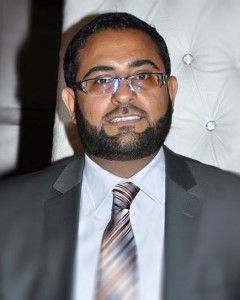
Dr. Hüseyin YUSUF is a Lecturer in the Department of Translation and Interpreting (Arabic) at 29 Mayis University. He holds a PhD in Arabic Language from Al-Azhar University (2013), following a Master's (2010) and Bachelor's (2005) from the same institution. His academic career includes roles as assistant professor (2014), researcher/supervisor for the Doha Historical Dictionary (2017), and supervisor of Arabic preparatory students in Jordan (2019). Education: B.A. in Arabic Language, Al-Azhar University (2005) M.A. in Arabic Language (2010) Ph.D. in Arabic Language (2013) His research focuses on Arabic grammar, historical lexicography, Quranic exegesis, and comparative analysis of classical texts. He has published extensively on topics including Prophetic Sunnah's linguistic influence, morphological irregularities in poetry, and grammatical mediation theories. His work with the Doha Historical Dictionary highlights his expertise in lexical evolution and historical semantics. Scientific awards and grants are not explicitly mentioned in available records. His publications demonstrate a strong emphasis on analyzing classical Arabic grammar through Quranic recitation variations, poetic structures, and historical dictionaries, with particular attention to particles like 'illa' (except) and syntactic mediation between opposites.
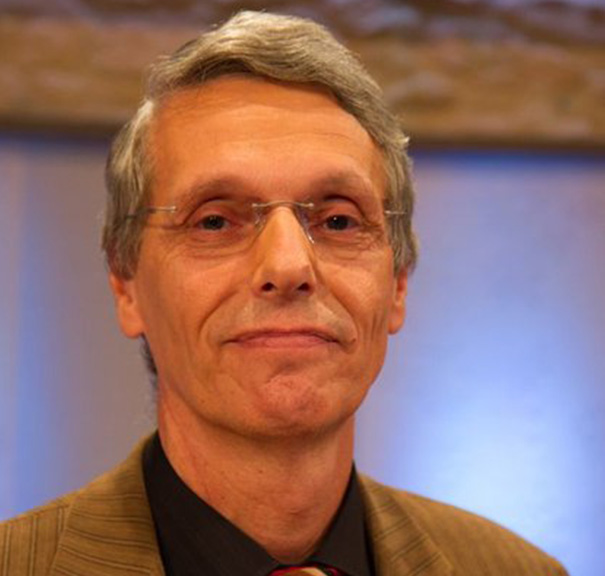
Prof. Bernhard Oestreich is a Professor of New Testament at Friedensau Theological College since 1978. His career spans over four decades, focusing on Biblical Exegesis, Homiletics, and Performance Criticism. He earned his Ph.D. from Andrews University in 1997 and has held pastoral roles in Leipzig and Güstrow (1971–1977). Education: High School Diploma (1967), Theology Diploma (Friedensau, 1971), M.Div. Equivalency (Andrews, 1980), Ph.D. (Andrews, 1997) His research explores Pauline epistles , apocalyptic symbolism , and ritual theology , with a focus on performance criticism and intercultural interpretations. Articles like Investigations into the Sound’s Message of Philippians (2018) and Metaphors and Similes for Yahweh in Hosea (1998) reflect his interdisciplinary approach blending literary analysis, theology, and ritual studies. His publications examine ecclesiological dynamics , moral tensions in early Christian communities, and liturgical practices , including translations of his work into Croatian, Czech, and French. He has contributed to Adventist ecumenical theology through works on baptism, footwashing, and the doctrine of the Trinity.
A. Sean Pue is an Associate Professor at Michigan State University's College of Arts & Letters, affiliated with the Hindi and South Asian Languages and Culture department and Global Studies in Arts and Humanities program. His research bridges South Asian literary history, particularly modernism, and digital humanities methodologies. Education: Ph.D., Middle East and Asian Languages and Cultures and Comparative Literature and Society, Columbia University Pue specializes in leveraging digital technologies to interpret literary and cultural phenomena, with a focus on South Asian modernist literature. His 2020 publication on computer analytics in poetic culture exemplifies his interdisciplinary approach combining data science with humanities research. As a core faculty member of Global Studies in Arts and Humanities, he has been recognized in university news for his 2023 promotion to Associate Professor. This advancement underscores his contributions to academic research and teaching within the College of Arts & Letters.
Dr. Stefan Knödler serves as Akademischer Rat at the University of Tübingen 's Department of Neuere deutsche Literaturwissenschaft . His habilitation (2022) focuses on Neuere deutsche Literaturwissenschaft and Allgemeine und vergleichende Literaturwissenschaft . Education : PhD in Stuttgart (2009), Germanistik/Anglistik studies (1998-2004), bookseller training (1996-1998) Research spans Romanticism , Württemberg literary history , book trade studies , 1800-1848 German literature , and German-French literary relations . He co-edited key texts including August Wilhelm Schlegel's lectures and Schubart's Geislinger Schuldiktate. Recent publications analyze Schubart's journalism, Schlegel's theatrical theory, and Württemberg's Romantic landscapes. His 2017 Ludwig-Uhland-Förderpreis recognizes outstanding academic work. 2023-2025 Courses : Rilke's Malte, Tübingen student poetry, Thomas Mann's Zauberberg, and Romantic fragment seminars Current Projects : Schlegel's lectures, Hermann Kurz edition, Shakespeare translation analysis Conferences : Organized sessions in Dresden, Reutlingen, Stuttgart, and Ulm on Romanticism, literary spaces, and 19th-century media
Burghard Baltrusch is a Professor of Galician and Latin Philology at the University of Vigo's Faculty of Philology and Translation in Galicia, Spain. Since 2015, he has directed the International José Saramago Chair at the University of Vigo, an institution funded internationally by the Instituto Camões and the Universidade Lusófona de Humanidades e Tecnologias. He coordinates the BiFeGa research group in Cultural Studies, Translation and Interpretation, recognized as a GRC group by the Xunta de Galicia since 2019, and collaborates with the Institute of Comparative Literature Margarida Losa at the University of Porto. Baltrusch obtained his doctorate (doctor philosophiae) from the University of Bonn in 1996 after studying at the Universities of Bonn and Cologne (Germany), Nova de Lisboa (Portugal), and Complutense (Spain). His academic journey has been dedicated to Lusophone literatures, particularly focusing on the intersection of literary studies, cultural analysis, and political discourse within Portuguese-speaking contexts. His primary research interests center on contemporary poetry and its relationship to political discourse, with special attention to the works of Fernando Pessoa and José Saramago. Baltrusch has pioneered studies examining how poetic expression functions in public spaces, the hermeneutics of translation, and the political dimensions of literary works. His scholarship demonstrates a consistent engagement with how literature interacts with social movements, critiques of neoliberal capitalism, and questions of identity and resistance. The researcher has particularly focused on Galician and Portuguese literary traditions while maintaining a comparative perspective that spans Iberian and Lusophone contexts. Analysis of Baltrusch's recent publications reveals a sustained exploration of the intersection between poetic expression and political discourse, particularly in contemporary Iberian and Lusophone contexts. His work consistently examines how poetry engages with social conflicts, political movements, and cultural resistance. A significant portion of his recent scholarship focuses on José Saramago's legacy, Adília Lopes' feminist poetry, and the visual-literary dialogue between writer José Saramago and artist Graça Morais. His research demonstrates increasing attention to intermedial approaches, examining how poetry interacts with visual arts, performance, and digital media in contemporary cultural production. Burghard Baltrusch has directed the International José Saramago Chair since 2015 and established the JANGADA network in 2019, which connects nine José Saramago chairs worldwide along with five additional chairs and four research centers. He has served as principal investigator for two significant research projects on "Contemporary Poetry and Politics" funded by the Spanish Ministry of Science and Innovation. His academic leadership extends to coordinating the BiFeGa research group and formerly serving as coordinator of the Interuniversity Doctoral Program in Literary Studies. Through these roles, he has mentored numerous graduate students and fostered international academic collaborations across Iberian and Lusophone institutions. As director of the International José Saramago Chair and coordinator of the BiFeGa research group, Baltrusch leads initiatives that bridge academic research with public engagement. His work with the JANGADA network has created a global platform for Saramago studies, while his research group focuses on interdisciplinary approaches to literary studies, translation, and cultural analysis. The researcher has organized numerous conferences, exhibitions, and collaborative projects that bring academic scholarship into dialogue with contemporary cultural and political issues, particularly through events examining the 50th anniversary of Portugal's Carnation Revolution and exhibitions exploring the relationship between Saramago's literary work and Graça Morais' visual art.
Sonia Gentili is a Full Professor at Sapienza University of Rome, where she teaches in the Department of Modern Literature and Culture within the Faculty of Humanities. She has held this position since her national qualification as Professor Ordinario (Full Professor) in 2017, following her appointment as Associate Professor in 2015. Her academic career at Sapienza began in 2007 when she joined as a researcher. Professor Gentili's research focuses on Italian literature with special emphasis on Medieval literature, Dante studies, Petrarch studies, and the reception of classical and biblical sources in Italian literary tradition. Her work explores the intersections between philosophy, particularly Aristotelian thought, and literary production from the Middle Ages through contemporary literature. She has published extensively on Dante's Convivio, the relationship between poetry and philosophy, and the reception of classical texts in Italian literary tradition. Her scholarly work reveals a consistent interest in how philosophical concepts shape literary expression, particularly examining the transmission of Aristotelian ethics through vernacular literature. Her publications demonstrate expertise in both medieval textual analysis and modern literary criticism, with notable contributions to understanding Dante's intellectual context and the legacy of classical thought in Italian literature. Professor Gentili has received significant recognition for her work, including: The 2016 Viareggio Prize for her poetry collection 'Viaggio mentre morivo' The 2009 Literature Prize from the Accademia dei Lincei 'Angiolo Silvio Novaro,' presented by the President of the Italian Republic She serves in important scholarly capacities, including as a member of the Scientific Council of the Società Dantesca Italiana since 2015 and as co-director of the journal 'Studi Danteschi.' Her research activities include directing multiple funded projects, most notably 'Una biblioteca nella Firenze di Dante: i manoscritti di Santa Croce,' examining Dante's intellectual context through the manuscripts of Santa Croce. Professor Gentili is actively engaged in the international academic community, regularly presenting at conferences across Europe and collaborating with institutions including Notre Dame University and the École Française de Rome. Her current research projects include 'Institutional censorship in Italy (1946-1989),' 'The history and manuscripts of Santa Croce: a library in Dante's Florence,' and 'The idea of poetry in the Italian Middle Ages.'
Paola Ferretti serves as Associate Professor in the Department of European, American and Intercultural Studies at Sapienza University of Rome, where she teaches Russian literature courses for the Master's program in Linguistic, Literary and Translation Sciences. Her institutional role includes conducting advanced and in-depth courses on Russian literary traditions, with scheduled classes for 2024-2025 academic year held in Room C of the Vetrerie campus. Her research centers on Russian literature spanning the late eighteenth to twentieth centuries, with specialized focus on Silver Age poetry, travel narratives, and gender dynamics within literary production. Key thematic concentrations include the works of Boris Pasternak, Marina Tsvetaeva, and Velimir Khlebnikov, examining mythological frameworks, poetic translation methodologies, and cultural identity formation. Her scholarship consistently bridges historical context with contemporary critical theory, particularly through gender studies lenses applied to canonical Russian texts. Analysis of her 15 most recent publications (2023-2025) reveals dominant engagement with modernist Russian poetry , authorial biographies , and translation theory , frequently published in specialized journals including ALIAS SUNDAY and SLAVIA. Recurring sub-themes include mythopoetic reconstruction in Tsvetaeva's work, Pasternak's metaphysical explorations, and Khlebnikov's linguistic innovations within the Futurist movement. Student advising occurs through structured reception hours on Thursdays (3:00-5:00 PM by email appointment) at the Marco Polo campus Studio 206, supporting graduate research in Russian literary studies within Sapienza's Linguistic, Literary and Translation Sciences program.
Luigi Marinelli is Full Professor at the Department of European, American and Intercultural Studies of Sapienza University of Rome, specializing in Polish Language and Literature. He teaches courses like Polish Literature III and Polish Language I , with lectures held in the Marco Polo Building (3rd floor, Lab 4 & 5). PhD in Slavic Studies (Sapienza, 1991) MA in Polish Language and Literature (Florence, 1983) His research spans Polish literary history from the Middle Ages to contemporary, with emphasis on intercultural dynamics, translation studies, and gender/minority discourses. Recent publications focus on Czeslaw Milosz's Dantism, the Esau Complex in European literatures, and Polish avant-garde movements. Scientific Awards include the Alexander von Humboldt Fellowship and the Italian Ambassador's Cultural Medal. He co-organized the 2022 international conference on minor/major cultural hierarchies. Articles reveal interdisciplinary engagement: 12 out of 15 focus on Polish-Italian intertextuality, Renaissance comparative studies, and postmodern translation theories. Subfields include cybernetic art, interwar intellectual networks, and ethical dimensions of canonical texts.
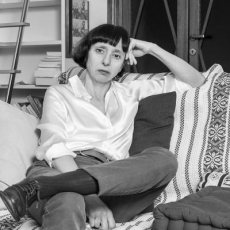
Arianna Punzi is a Full Professor at the Department of European, American and Intercultural Studies (Sapienza University of Rome), specializing in medieval Romance philology and literature. Focus on Arthurian cycles (Lancelot-Graal, Guiron le Courtois) Expertise in Dante's Inferno and classical myth reception Conducts textual criticism and intercultural narrative analysis Recent publications explore emotional themes in medieval texts, manuscript traditions, and cross-cultural adaptations. She leads research projects on Ernesto Monaci's archive digitization and teaches courses in Modern Philology. Her work engages with the ERC SH5_2/SH5_3 projects, emphasizing textual history and digital humanities approaches.
Haun Saussy is University Professor in the Department of East Asian Languages and Civilizations and the Committee on Social Thought at the University of Chicago. He holds a PhD from Yale University (1990) and has maintained strong ties with French scholars through collaborations with institutions like the Collège de France and CNRS. Currently serving as adjunct director of the Chicago-CNRS International Research Laboratory 'HumanitiesPlus,' he also fosters academic partnerships with the University of Global Health Equity in Rwanda. PhD from Yale University (1990) Specializes in Chinese literary studies and comparative literature Active in international academic collaborations His research explores: Translation studies and linguistic theory Cultural memory in global contexts Comparative methodologies in humanities Historical intersections of Chinese and Western thought Postcolonial and transnational literary frameworks Digital humanities applications Recent publications analyze: Structuralist approaches to language Ethics of cultural comparison Literary reception across language barriers Material history of literary forms Contemporary Chinese literary historiography Global implications for humanities research
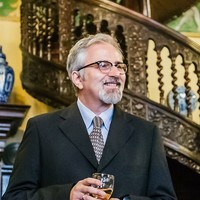
Theodore J. Cachey, Jr. is the Inaugural Pizzo Family Chair in Dante Studies and Ravarino Family Director of Italian and Dante Studies at the University of Notre Dame, where he is a faculty member in the Department of Romance Languages and Literatures within the College of Arts and Letters. He specializes in Italian Medieval and Renaissance literature, with particular expertise in Dante, Boccaccio, and Petrarch, as well as the history of the Italian language and the literature and history of travel. Dr. Cachey earned his Ph.D. from the University of California, Los Angeles and his B.A. from Northwestern University. His scholarly contributions include numerous books and articles that have significantly advanced the understanding of Italian literary traditions and Dante studies specifically. His research interests encompass a wide range of topics within Italian literature, including: Dante Studies and the Divine Comedy Petrarchan literature and its reception Boccaccio studies History of the Italian language Travel literature and its evolution Literature and cartography Medieval and Renaissance geographical imagination Dr. Cachey's scholarly output demonstrates consistent engagement with Dante studies across multiple decades, with recent publications focusing on Dante's reception in America, the cosmological dimensions of the Divine Comedy, and detailed analyses of specific cantos in the Purgatorio. His work often bridges literary analysis with historical and geographical contexts, particularly examining how spatial understanding influenced literary production in the medieval and Renaissance periods. Among his notable scholarly achievements: Founder and co-editor of the William and Katherine Devers Series in Dante Studies Direttore/editor in chief of Le Tre Corone. Rivista internazionale di studi su Dante, Petrarca, Boccaccio Author of influential works such as "Dante's 'Other Works.' Assessments and Interpretations" (2022) Contributor to major publications including "The Oxford Handbook of Dante" (2021) Dr. Cachey actively contributes to the academic community through his editorial work, participation in scholarly forums, and ongoing research that continues to shape contemporary understanding of Italian literary traditions. His office is located in 314 Decio Faculty Hall at the University of Notre Dame.
Prof. Dr. Christoph Bultmann serves as Professor of Biblical Studies (Evangelical Theology) at the University of Erfurt , where he has held this position since 2001. His academic journey includes roles as a Temporary Lecturer at King's College London (2000–2001), Visiting Fellow at Fitzwilliam College, Cambridge (1999–2000), and Acting Chair at the University of Giessen (1998–1999). He received his doctorate (1990) and habilitation (1997) at the University of Göttingen. Research Focus: Biblical hermeneutics, Enlightenment theology, interfaith dialogue, historical-critical method, and re-examination of Reformation-era texts. Key Publications: Contributions to debates on Luther's Jewish reception, Herder's biblical interpretation, and Gülen movement analysis. His recent articles explore Genesis 22 interpretations , Quranic exegesis , and Herder's 'natural religion' concept. Bultmann has received prestigious awards including the Feodor Lynen Fellowship (1999–2000) and German Research Foundation Scholarships (1991–1992, 1994). He actively engages in academic editing and public theological discourse , particularly regarding Turkey's political-religious dynamics.
Phillip John Usher, Associate Professor of French at New York University, specializes in Renaissance Studies, classical reception, and interdisciplinary explorations of geography, ecology, and visual culture. His research interrogates the complex relationships between literary epics and artistic production during the French Renaissance. Current project: The Humanist Anthropocene Key methodologies: Literary criticism, art history, spatial theory Professor Usher's monograph Epic Arts in the French Renaissance examines visual-literary dissonance in Renaissance epic production, analyzing works by Ronsard, Dolet, and d'Aubigné. His Errance et Cohérence explores Renaissance spatial concepts through transnational literature, while his annotated translation of Ronsard's Franciade revitalized this foundational text for English audiences. Research interests include: Renaissance epic literature and its artistic connections Classical mythological reception in early modern Europe Geographic and ecological thought in 16th-century France Visual studies and architectural representations in literature Recent publications investigate: Crete's symbolic role in Ronsard's Franciade (2017) Prophetic architecture in d'Aubigné's Parisian works (2009) Virgil's influence on 1530s Limoges enamels (2012)
Adriana X. Jacobs is an Associate Professor and Cowley Lecturer in Modern Hebrew Literature at the University of Oxford, affiliated with the Oxford Centre for Hebrew and Jewish Studies. She is currently on leave during the 2024-25 and 2025-26 academic years. Her research and teaching focus on Modern Hebrew and Israeli literature, contemporary poetry, translation theory, comparative poetics, and transnationalism. Her scholarly work emphasizes the intersections of translation history, multilingualism, and cultural exchange in Hebrew literature. She is particularly known for her book Strange Cocktail: Translation and the Making of Modern Hebrew Poetry (University of Michigan Press, 2018), which explores translation's role in shaping Hebrew modernism. Jacobs' publications span comparative literary studies, digital humanities, and Jewish/World literature. She has received recognition for her contributions to translation, including the 2022 Harold Morton Landon Translation Award for her translation of Vaan Nguyen’s The Truffle Eye . Her current projects examine contemporary poetry of crisis and the multilingual frameworks of Hebrew literary production. 2019 Jordan Schnitzer Book Award Finalist 2022 Harold Morton Landon Translation Award At Oxford, Jacobs co-convenes the MSt in Comparative Literature and Critical Translation and participates in the Oxford Comparative Criticism and Translation research program. Her work bridges academic scholarship and poetic practice, with a focus on innovative translation approaches and the global circulation of Hebrew literature.
Dr. Chinmay Dharurkar is an Assistant Professor in the Department of Humanities and Social Sciences at the Indian Institute of Technology Kanpur. He holds a Ph.D. from IIT Bombay (2018) and specializes in Sanskrit Grammar, Comparative Linguistic theory, and Philosophy of Linguistics. His academic journey includes positions at United International College, Zhuhai (2021-2022) and Central University of Kerala (2013-2020). Education: Ph.D., Indian Institute of Technology (IIT) Bombay, 2018 Dr. Dharurkar's research spans multiple dimensions of linguistic studies with a particular focus on Indian languages. His work bridges classical Indian linguistic traditions with contemporary theoretical frameworks, examining how ancient linguistic thought informs modern linguistic theory. He has made significant contributions to understanding metrical structures in Sanskrit epics, code-mixing phenomena in Indian languages, and the philosophical underpinnings of linguistic analysis. His research demonstrates deep engagement with both traditional Indian linguistic scholarship and modern linguistic frameworks. His publications reveal a consistent focus on the intersection of classical Indian linguistic traditions with contemporary linguistic theory. Dr. Dharurkar has explored metrical structures in Sanskrit epics, code-mixing of English in Indian languages, Nyaya morpho-syntactic analysis, and linguistic studies of quantifiers. His work demonstrates a unique ability to connect traditional Indian linguistic scholarship with modern linguistic frameworks, making him a significant contributor to the field of Indian linguistics. Scientific Awards: UGC-NET JRF in Linguistics (2010) IIT Bombay's Excellence in Thesis Work for PhD thesis (2018) Prof. Yashwant Sumant Memorial Young Research Inspiration Award (2020) Dr. Dharurkar has been actively involved in academic mentorship and research guidance. His professional experience includes teaching and research positions at multiple institutions, contributing to the development of linguistics education in India. He has successfully navigated both traditional academic settings and international collaborations, including a position at United International College in China (though physical relocation was prevented by the pandemic). His academic work represents a valuable bridge between classical Indian linguistic traditions and contemporary linguistic theory, contributing significantly to the understanding of language structure, history, and philosophy in the Indian context.