Pierre Longuenesse is a Lecturer in Performing Arts at Paris III Sorbonne Nouvelle University, affiliated with the Texts and Cultures Research Center (EA4028). His work bridges theatre studies, music, and interdisciplinary performance practices. Université d’Artois: Teaching (Licence/Master) and HDR accreditation (2017) Université Paris III: Accreditation to Supervise Research (2017) Research Themes focus on: W.B. Yeats’s theatrical innovations (speech-voice-image dynamics) Mutations of 20th-century European drama Theatre-music-dance interrelationships Transdisciplinary stage practices Medieval revival in modern theatre Recent Publications explore musical dramaturgy, spectral voices, and text-stage transformations. He co-edits the "Corps et voix" series at Artois Presses Université. Academic Service includes: Directing over 20 Master’s theses since 2010 Editorial roles in conference proceedings Peer-review expertise for journals Theatrical Practice : Artistic director of Compagnie du Samovar and Festival des Arts du Pont d’Oye , with stagings in France, Belgium, and India. His creative adaptations span Diderot, Yeats, and Villon.
José Rui Teixeira is an Assistant Professor and active researcher at the Research Centre for Theology and Religious Studies (CITER), affiliated with the University of Porto. His academic work bridges literature and religious studies, with a strong focus on Portuguese literary figures such as Fernando Pessoa and Guilherme de Faria. His research interests include the hermeneutics of religious texts, the dialogue between literature and theology, and the expression of transcendence in poetry. He explores themes like mysticism, religious identity, deity, and cultural ecology, particularly in the context of Portuguese intellectual history. The recent articles reflect a consistent engagement with literary-theological intersections, especially in 20th-century Portuguese poetry. His publications analyze transcendence, spiritual longing, and the structural dynamics of religious expression in literary form. The works demonstrate a deep engagement with both philosophical theology and poetic form. Religious Studies Literature and Theology Portuguese Literature Hermeneutics Spirituality in Poetry Public Theology He has contributed to editorial work for journals such as Teoliterária and Ephata , and participates in significant research projects like COLIVING2020 and 'Hermeneutics of Religion and the Literary Space'. There is no mention of scientific awards or grants in the provided text. He advises no listed students and is not indicated as part of any formal lab or research team beyond his project collaborations. His most recent research output was published in 2024, confirming his ongoing academic activity.
Francesco G. Loriggio is a Professor in the College of the Humanities and the Institute for Comparative Studies in Literature, Art and Culture at Carleton University, Faculty of Arts and Social Sciences. He holds a B.A. from the University of British Columbia and an M.A. and Ph.D. from the University of California, Los Angeles. Research Interests: His work spans literary theory, modern Italian literature, Italian diaspora cultures (particularly Italian Canadian and Italian American), Renaissance poetics, and the intersections of literature with globalization, memory, and modernity. He explores how literature engages with cultural identity, displacement, and interdisciplinary thought. Publications and Research Trends: His recent publications focus on Mediterranean modernity, Italian-Canadian writers like Pier Giorgio Di Cicco and Mary Melfi, comparative literary theory, and the cultural dimensions of migration. His scholarship combines close textual analysis with broad cultural and historical inquiry, often bridging European and North American literary traditions. Scientific Awards: None listed in the provided text. Advising and Grants: While no specific students or grants are mentioned, his editorial work and leadership roles—such as past president of the Canadian Society for Italian Studies and director of RUSELC—demonstrate significant scholarly engagement and mentorship in the field of Italian and comparative studies. Labs and Research Groups: He was the last director of the Research Unit on Southern European Literature and Culture (RUSELC), and is affiliated with the Institute for Comparative Studies in Literature, Art and Culture, contributing to interdisciplinary research on literature and cultural dynamics.
Dr. Esther Corral Díaz is a Professor at the University of Santiago de Compostela, affiliated with the Department of Galician Philology within the Faculty of Philology. Her research focuses on medieval literature, particularly Galician-Portuguese lyric poetry, women’s roles in medieval texts, troubadour studies, and cultural history. She earned her doctorate in 1993 with a thesis on women’s denominations in Galician-Portuguese lyric poetry, supervised by Dr. Mercedes Brea López. Her work explores themes like feminine representation in medieval cantigas, the influence of royal patronage (e.g., Leonor Plantagenet and Berenguela de Barcelona), and the interplay between pilgrimage narratives and gender. She has published extensively on topics such as satire, elegy, and medieval women’s voices, contributing to edited volumes like Cantares de amigos and co-authoring foundational texts like Guía para o estudo da prosa galega medieval . Her research also involves critical editions of medieval texts and analyses of manuscript traditions. Collaborations include studies with scholars like Pilar Lorenzo Gradín and involvement in projects funded by institutions like the Spanish Ministry of Science and the Xunta de Galicia.
Professor Stéphanie Panichelli-Batalla is a leading academic at the University of Warwick, where she serves as Head of the School for Cross-Faculty Studies, Academic Director for Global Sustainable Development and Liberal Arts, and Academic Director for Sustainability. She is based in the Global Sustainable Development department within the School for Cross-Faculty Studies and is a HEA Principal Fellow, reflecting her excellence in higher education pedagogy. Her research is centered on Caribbean Studies, particularly Cuba, with interdisciplinary approaches drawing from Cultural Studies, Sociology, and Oral History. Her work critically examines Cuban internationalist healthcare professionals, medical diplomacy, and the socio-political dimensions of Cuba’s global health initiatives. She has made significant contributions to the understanding of oral histories in politically sensitive contexts and the role of humor in narratives of displacement and resilience. The recent publications reflect a strong focus on medical diplomacy, sustainable development, and oral history, with a thematic emphasis on Cuba, South-South cooperation, and global health. Her work spans historical, literary, and development studies perspectives, often integrating personal narratives with broader socio-political analysis. She frequently collaborates with scholars across disciplines and institutions, contributing to journals in history, sustainability, and cultural studies. Scientific Awards and Recognition: British Council Researcher Links grant Higher Education Academy Principal Fellow (Advance HE) Professor Panichelli-Batalla is actively involved in mentoring and supervision, particularly in postgraduate research related to Latin American human rights, Cuban culture, oral history, and Education for Sustainable Development. She co-directs the Oral History Network and the ESD Network at Warwick, playing a pivotal role in advancing institutional strategies on sustainability and interdisciplinary research. Her leadership has been instrumental in expanding undergraduate and postgraduate programs and establishing new academic divisions such as Design Studies. She previously held academic positions at Aston University, Wingate University, and Princeton University, bringing extensive international experience to her current role. Her work continues to shape both academic discourse and institutional policy on global sustainable development and interdisciplinary education.
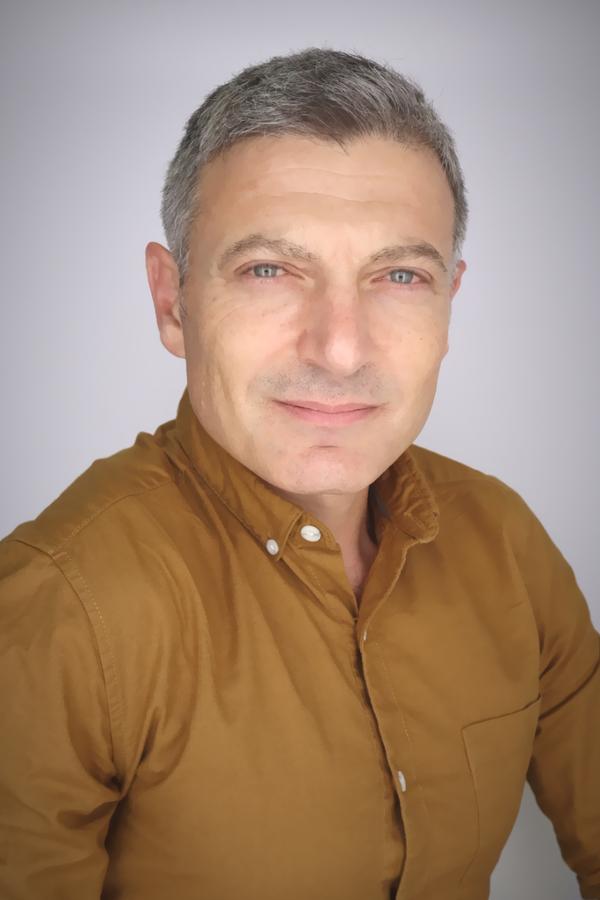
Arie M. Dubnov is an Associate Professor of History and International Affairs at The George Washington University in Washington, DC, where he also serves as the Max Ticktin Chair of Israel Studies and Director of the M.A. Middle East Studies program. Trained in Israel and the U.S., he specializes in twentieth-century Jewish and Israeli history with emphasis on political thought, nationalism studies, decolonization, and partition politics. His academic work bridges Jewish history with broader global historical developments. Dubnov earned his PhD from the Hebrew University of Jerusalem in 2010 and has since established himself as a leading scholar in modern Jewish intellectual history. His research interests span British intellectual history, modern British history, Jewish studies, and Middle Eastern history, with particular focus on the intersections between Zionist history and the British Empire. His recent scholarship demonstrates consistent engagement with themes of partition, nationalism, and Jewish political thought. The 2023-2025 publications reveal a sophisticated approach to understanding Israel's place in global history, examining everything from British visions for the Hebrew University to right-wing Zionist radicalism, and from Israel's absence at the Bandung Conference to comparative refugee studies. His work often employs conceptual history methodology to trace the evolution of key political terms and ideas across national boundaries. G.L. Mosse Fellowship at the University of Wisconsin-Madison Dorset Fellowship at the Oxford Centre for Hebrew and Jewish Studies Visiting Fellowship from the Parkes Institute at the University of Southampton Fellowship at the Wissenschaftskolleg in Berlin Senior Research Fellowship from Leibniz Institut für Europäische Geschichte Dubnov has made significant contributions to scholarly discourse through both his monographs and edited collections. His leadership as Director of the M.A. Middle East Studies program demonstrates his commitment to mentoring the next generation of scholars and fostering interdisciplinary approaches to Middle Eastern studies. His work on commemoration culture in Israel, particularly his conceptual framework of necrography, necrogeography, necropoesis, and necrochronology, has provided innovative tools for understanding Israeli memory practices.
Prof. Dr. Moritz Baßler is a Professor of Modern German Literature at the University of Münster. He holds a PhD from the University of Tübingen (1993) and has held academic positions including Redaktor of the Reallexikons der deutschen Literaturwissenschaft , Assistent at the University of Rostock, and Professor of Literature at the International University Bremen. He has been a Fellow at the IFK Wien (2001) and ZfL Berlin (2007). His research focuses on Classical Modern Literature, Literary Theory, and Contemporary Literature, with notable contributions exploring expressionism, realism, and cultural poetics. Education: Studies in Germanistics and Philosophy at Kiel, Tübingen, and Berkeley Doctoral thesis supervised by Gotthart Wunberg Research Projects: Current FRIAS project: Verfahrensgeschichte der deutschen Prosaliteratur 1850-1950 , analyzing narrative techniques across literary epochs His work bridges literary analysis with cultural studies, examining topics like pop music, online role-playing games, and the intersection of realism and metaphorical structures in prose. He has authored influential texts on New Historicism and cultural poetics, emphasizing interdisciplinary methodologies. His FRIAS fellowship (2009–2010) supported advanced research on German prose literature's procedural history, addressing shifts between realist and textural narrative methods across the 19th and 20th centuries.
Raysa Amador is a Professor in the Department of Languages, Literatures, and Cultures at Adelphi University’s College of Arts and Sciences. She has served as Chair of the department (2006–2021) and Director of the Latin American Studies Program since 1990. Her academic leadership extends to numerous university committees and advisory roles, including the DACA, International & Immigration Task Force and the International Studies Committee. Ph.D., New York University (1978) M.A., New York University (1973) B.A., Cum Laude, Phi Beta Kappa, New York University (1972) Certificate, Data Processing Programmer, New York University (1979) Her research centers on Hispanic literature, Latina writers and artists, second language acquisition, and the intersection of law and literature in colonial chronicles. She explores themes of identity, gender, transculturation, and narrative power, particularly in the works of Frida Kahlo, Cristina Garcia, Julia Alvarez, and other Latina figures. Her pedagogical focus includes intermediate Spanish curriculum development and cultural literacy. The recent scholarly output reflects a strong trend in feminist and transnational studies, analyzing the female body, self-representation, and cultural identity across literature and visual art. Her work bridges interdisciplinary fields such as law, rhetoric, anthropology, and history, particularly in her studies of the Chronicles of the Indies and colonial legitimacy. Adelphi Presidential Award for Diversity and Inclusion (2020) Distinguished Faculty Excellence Award (2005) Septima Clark Distinguished Faculty Award (1999) President’s Faculty Development Award (multiple) Certificate of Award for Advancing Women's History (1999, 2000) Selected speaker, New York Council for the Humanities (multiple years) Amador has advised numerous undergraduate and graduate students in research and theses, particularly in Hispanic literature, identity, and social justice. She has secured multiple grants, including from the U.S. Department of Education and the New York Council for the Humanities, supporting seminars, speaker programs, and cultural festivals. Her leadership in organizing the Spanish Film Series with Pragda highlights her commitment to public humanities and cultural engagement. She has been instrumental in developing academic programs such as the Latin American Studies Concentration and has served on key search and governance committees. Her long-standing advisory role with Latino Students United (formerly La Unión Latina) underscores her dedication to student support and diversity initiatives.
Julian Weiss is a Professor of Medieval and Early Modern Spanish at King’s College London. After earning his DPhil at Oxford in 1984, he held academic positions at the Universities of Liverpool, Virginia, and Oregon (where he served as Head of Romance Languages) before joining King’s in 2001. He is an affiliated member of the Programme in Comparative Literature and co-leads the Travelling Concepts strand of the Language Acts and Worldmaking project. Research Interests: Medieval and Early Modern Iberian Literatures Manuscript Studies and Early Printed Book History Interfaith Relations and Historical Legacy in Iberia Gender Theories and Literary Form Cultural Production in Medieval Spain Transhistorical Literary Evolution Key Projects: Current monograph on Flavius Josephus’s early modern Hispanic reception , analyzing Jewish-Christian identity negotiations across Europe and the Americas (1492–17th century) The French Connection : Epic rivalries between Spain and France in reshaping Iberian historiography Conference papers on Romantic visions of Al-Andalus (Chateaubriand, Irving) and Sephardic balladry Publications & Impact: Co-edited Al Andalus in Motion: Travelling Concepts and Cross-Cultural Contexts (2021), addressing the modern reconfiguration of medieval Iberia as a global metaphor Locating the Middle Ages: Spaces and Places of Medieval Culture (2012), an interdisciplinary exploration of medieval spatial identity 1990 monograph The 'Mester de Clerecía': Intellectuals and Ideologies in Thirteenth-Century Castile , redefining clerical narrative’s role in societal change Teaching: Developed modules like Writing Women in Premodern Spain , Muslim Spain: A European Fantasy , and Language Acts and Worldmaking in Medieval and Early Modern Spain Co-created Global Iberias , a first-year core module exploring the Spanish and Portuguese-speaking worlds
Dr. Joel M. Dodson is Associate Professor of English at Southern Connecticut State University in the College of Arts and Sciences. He serves as the English Department Graduate Coordinator and oversees the Renaissance Studies Minor. He teaches courses in early modern British literature, classical drama, critical theory, and first-year writing, and is also active in the Honors College. B.A. in English and Philosophy, Wheaton College (2001) Ph.D. in English Renaissance Literature, University of Notre Dame (2011) Professor Dodson's research centers on early modern British literature, with a focus on the intersections of religion, politics, and aesthetics. His work explores Tudor poetics, the literature of poverty, confessional identity, and the role of keyword studies in pedagogy. He investigates how literary form engages with religious conflict and political ideology in Renaissance England, particularly in the works of Sidney, Spenser, Donne, and Marlowe. His recent publications and conference presentations reveal a strong thematic focus on the relationship between material conditions (such as poverty) and aesthetic expression, the role of confession in shaping literary identity, and the enduring influence of classical and religious thought on early modern poetics. His scholarship appears in presses like Manchester University Press and Northwestern University Press, as well as journals including The Spenser Review and The Catholic Historical Review. Professor Dodson is actively involved in the academic community, regularly presenting at major conferences such as the Renaissance Society of America, Sixteenth Century Studies Conference, and the Marlowe Society of America. He advises graduate students and contributes to the development of the English graduate program. He is currently working on a book project titled "The Poverty of Aesthetics in Early Modern England," which examines the representation of poverty in Renaissance literature from Bocaccio to Marlowe. He also maintains a professional website at www.jmdodson.com.
Prof. Dr. Salahaddin Bekki is a Turkish folklorist and academic at Kırşehir Ahi Evran University's Faculty of Arts and Sciences, Department of Turkish Language and Literature. He completed his PhD at Atatürk University (2001) after MA (Yüzüncü Yıl University, 1994) and BA (Yüzüncü Yıl University, 1991) degrees. His career spans 24 years at Ahi Evran University, promoted to Professor in 2017. Born: June 13, 1967, Sivas Academic Ranks: Professor (2017), Associate Professor (2011), Assistant Professor (2002-2011) Leadership: Department Head (2017-), Editorial Board Member (multiple journals) Research Areas: Turkish folklore (domestic and international), Alevi-Bektashi studies, and Turkic epic traditions. Specializes in oral literature, folk healing practices, and cultural continuity. Recent Publications: 15 most recent works explore: Âşık Veysel's cultural impact Epic transformation in digital era Comparative Dede Korkut studies Macaronic Turkic poetry Alevi ritual symbolism Awards: Recipient of 4 consecutive Social Sciences Incentive Awards (2022-2024) from Ahi Evran University, TÜBİTAK Scientific Publication Awards (2008, 2011, 2012), and Hoca Ahmet Yesevi Success Award (2016). Academic Leadership: Supervised 14 MA and 13 PhD theses, served on 8 university administrative boards, and contributed to 4 major research projects including the Turk Masal Külliyatı and Neşet Ertaş Bibliography projects.
Assoc. Prof. Dr. Fatih Koyuncu is a Turkish academic specializing in Classical Turkish Literature and Ottoman Poetry. Affiliated with Kırşehir Ahi Evran Üniversitesi (Faculty of Arts and Sciences, Department of Turkish Language and Literature) since 2021, he previously served at Celâl Bayar University (2011-2017) and Kırşehir Ahi Evran Üniversitesi (2017-2021). His research focuses on Ottoman manuscripts, Sufi literature, and ethical texts. PhD in Turkish Language and Literature (2012-2016), Celâl Bayar Üniversitesi Master's in Turkish Language and Literature (2009-2012), Cumhuriyet Üniversitesi Bachelor's in Turkish Language and Literature (2005-2009), Cumhuriyet Üniversitesi His research areas include Classical Turkish Literature, Ottoman Poetry, Manuscript Analysis, Sufi Ethics, and Historical Textual Criticism. He has supervised 9 Master's theses and co-authored 3 international publications, contributing to fields like Religious Poetry, Pilgrimage Literature, and Political Texts. Scientific Collaboration includes partnerships with Adem Ceyhan (2017-2023), Ahmet Doğan (2023-2024), and Kenan Erdoğan (2014). His work has been cited 104 times, with an h-index of 6, reflecting significant impact in Ottoman and Sufi Literary Studies.
Prof. Dr. Ahmet ARI is a full-time Professor at the Department of Turkish Language and Literature, Faculty of Arts and Sciences, Kırşehir Ahi Evran University (since 2021). Previously, he served at Süleyman Demirel University (2005-2021) as an Associate Professor and Lecturer. Education: Doctorate in Old Turkish Literature (Selçuk University, 1995), Master’s in Old Turkish Literature (Gazi University, 1987), BA in Turkish Language and Literature (Selçuk University, 1984). Research Areas: Specializes in Ottoman literature, Classical Turkish poetry, Sufi traditions (especially Mevlevi Order), cultural heritage, and literary criticism. His work explores intersections of economic history, religious themes, and poetic symbolism. Recent Publications: 2024 book Hayretî Divanı'nda Sevgili analyzing poetic motifs, 2023 article on economic themes in poetry, and 2021 monograph Türklerin Medeniyet Yolculuğu tracing cultural identity. Scientific Awards: SDÜ Bilim, Teknoloji ve Sanat Ödülü (Social Sciences, 2003). Advising: Supervised Seda Duranoğlu (2023), Fazilet Çöplüoğlu (2006), and Melek Kahraman Dikmen (2004) on topics ranging from systematic classification of poetic manuscripts to Sufi themes in Ottoman literature.
Elisa Modolo is an Instructional Associate Professor of Italian in the Department of Modern Languages at the University of Mississippi , where she also directs the Basic Italian Language Program and the Italian Program. She holds a Ph.D. in Italian Studies from the University of Pennsylvania (2015) and has previously served as an Adjunct in Italian Studies at both the University of Pennsylvania and Temple University. Research Interests include Renaissance and Baroque Italian culture, translation theory, Venetian literature and language, comparative literature, cinema studies, and women and gender studies. Her work explores intersections between text and image in Ovidian rewritings, feminist critiques of convent culture, and intercultural dimensions of Italian language pedagogy. Publications and Grants demonstrate her expertise in Venetian literary traditions, multilingual poetry, and interdisciplinary analysis. She has received fellowships such as the Salvatori Graduate Research Grant and School of Arts and Sciences Dissertation Completion Fellowship . Her scientific awards also include the Apple Award for Outstanding Teaching . Teaching focuses on Italian language instruction (from elementary to advanced levels) and cultural studies, integrating pop culture artifacts to enhance cross-cultural understanding. Her academic work bridges historical Italian debates (e.g., language standardization, gender roles) with contemporary issues.
Ivan Miroshnikov is a Researcher at the Department of Humanities and Social Sciences (HSV) at Mid Sweden University, specializing in Coptic studies and early Christian literature. Based in Östersund, his work focuses on Coptic manuscripts, biblical apocrypha, and textual criticism, with a particular emphasis on Late Antique Egypt and Sahidic/Fayyumic dialects. Current affiliation: Mid Sweden University Academic rank: Researcher Research areas: Coptic manuscripts, New Testament studies, apocryphal texts His research spans textual analysis of Coptic biblical texts (e.g., First Corinthians witnesses), documentary papyri (financial records), and liturgical works (hymns to Michael). He contributes to critical editions of apocryphal acts and parabiblical texts, while exploring connections between Enochic traditions and apocalyptic literature. Recent publications examine the Martyrdom of George reception, acrostic hymn fragments, and comparative studies of Coptic dialects. He serves as editor for volumes in the Parabiblica series and contributes to catalogs of Coptic manuscripts in European collections. Key trends in his articles include: Codicological analysis of Coptic biblical manuscripts Interdisciplinary approaches to apocryphal texts Textual criticism of Sahidic and Fayyumic versions Study of economic records in Coptic papyri Presentation of Coptica fennica manuscripts Reception history of martyrdom narratives Ivan Miroshnikov's work bridges papyrology, theology, and manuscript studies. He collaborates internationally, contributing editions of early Coptic texts and comparative analyses of religious traditions in Late Antiquity.