Mimi Yiengpruksawan is a Professor of History of Art at Yale University, affiliated with the Department of East Asian Languages and Literatures, the Council on East Asian Studies, the Council on Southeast Asian Studies, and the Program in Medieval Studies. She holds a Ph.D. from UCLA (1988) and joined Yale in 1990, achieving tenure in 1998. Her research focuses on Buddhist art in nonmodern Japan and Eurasian cultural exchanges, emphasizing cross-regional and interdisciplinary approaches to study contact-driven cultural formation. Her academic work includes two major manuscripts: Michinaga’s Peacocks: A Heian World in Transition (examining exogenous influences on Kyoto’s art) and Kyoto in the Twilight of the Dharma (focusing on eschatological patronage). She also explores early modern Japanese global interactions, analyzing visual production during the 'Nanban' period. Recent research bridges environmental history with art, linking the 1006 supernova and Buddhist prophecies to artistic developments. Key publications include analyses of Buddhist iconography, transnational art networks, and transcultural architecture. She is a leading figure in rethinking Heian Japan’s cultural interconnectedness, challenging isolationist narratives through material evidence and primary sources.
Piotr Winkielman is a Professor of Psychology at the University of California, San Diego (since 2007), with affiliations at Warwick Business School (UK) and the Warsaw School of Social Sciences and Humanities (Poland). His research focuses on the interplay of emotion, cognition, embodiment, and consciousness in social cognition, employing methods from social/cognitive psychology and neuroscience. Key interests include unconscious emotion processing, facial mimicry, decision-making under emotional influence, and the neural basis of social perception. Education: PhD in Social Psychology (1997), University of Michigan MSc in Psychology (1991), University of Bielefeld, Germany BSc in Psychology (1988), University of Warsaw, Poland Research Interests: Winkielman explores how fleeting affective reactions influence behavior without conscious awareness, studying facial feedback mechanisms, emotional contagion, and the role of physiological signals in decision-making. His work bridges theories like Affect-As-Information and Facial Feedback, while challenging assumptions about the necessity of conscious processes in emotion. Grants & Funding: Supported by NSF Grant BCS-0350687 for studies on unconscious emotion and physiological feedback. Collaborations include projects on mimicry, stress effects, and cross-modal perception. Labs & Teams: Leads research at UCSD on embodied cognition and social neuroscience, with studies involving EEG, EMG, and behavioral experiments. International collaborations span UK, Poland, and Germany.
Holger Straßheim is Professor of Political Sociology at Bielefeld University, affiliated with the Faculty of Sociology, Department 4 – Politics and Society. He also holds leadership roles as co-director of the Institute for Interdisciplinary Studies of Science (ISOS) and the Institute for World Society Studies, and is an elected member of the university’s Senate. He coordinates the MA program in Political Communication and serves on multiple examination and ethics committees. University: Bielefeld University School: Faculty of Sociology Department: Department 4 – Politics and Society Research Institutes: ISOS, Institute for World Society Studies Administrative Roles: Program Coordinator MA Political Communication, Member of BA/MA Examination Boards, Habilitation Committee His research centers on the interplay between science and politics, particularly the role of expertise and evidence in public policy. Key areas include behavioral public policy, climate and consumer policy, Arctic geopolitics, and the temporal dimensions of governance. He investigates how knowledge is produced, legitimized, and used in policy-making across transnational contexts. The most recent publications reflect a strong focus on evidence cultures, ethical expertise in crises, and the global spread of behavioral governance. These works analyze how expert advice functions under uncertainty, the paradoxes of evidence-based policy, and the institutionalization of ethical guidance during emergencies like the COVID-19 pandemic. The research often employs comparative and interdisciplinary methods, engaging with science and technology studies, political sociology, and policy analysis. Best Dissertation Award, University of Tübingen (2011) Visiting Fellow, Harvard Kennedy School (2014) Visiting Research Fellow, Collège d’études mondiales, Paris (2018) Visiting Research Fellow, University of Bologna (2022) Straßheim has supervised and advised in various research projects and PhD initiatives, particularly through his leadership in DFG and ESRC-funded programs. He has secured significant third-party funding, including projects on Arctic knowledge co-production and ethics in crisis governance. He is actively involved in academic service, reviewing for major journals and research councils, and shaping policy discourse through editorial roles in Critical Policy Studies and the Advances in Critical Policy Analysis book series. He leads the Straßheim Research Group, fostering interdisciplinary collaboration on science-policy interfaces. He is a key figure in research networks such as the Science and Democracy Network (Harvard) and the International Arctic Science Committee. His work bridges academic inquiry with real-world policy challenges, emphasizing democratic accountability, epistemic pluralism, and the ethical dimensions of expertise.
Dr. Rishita Nandagiri is a feminist researcher and academic currently serving as a Lecturer (Assistant Professor) in the Department of Global Health & Social Medicine at King's College London. She previously held research and teaching positions at the London School of Economics (LSE), including an ESRC Postdoctoral Fellowship and an LSE Fellow in Health and International Development. Her work is deeply rooted in reproductive justice, gender, and global health, with a focus on the Global South. PhD in Social Policy, London School of Economics (2019) ESRC Postdoctoral Fellow, LSE Department of Methodology (2020-2021) LSE Fellow in Health and International Development (2019-2020) Research Assistant, LSE Department of Media and Communications (2018-2019) Dr. Nandagiri’s research centers on reproductive (in)justices, interrogating how power and politics shape abortion access, self-managed abortion, care trajectories, and reproductive governance. Her work is interdisciplinary, drawing on feminist theory, qualitative and participatory methods, policy analysis, and co-production with communities and organizations. She has extended her research to examine the impact of the COVID-19 pandemic on abortion and the role of lay health providers in care delivery. Her methodological interests include multi-method designs that integrate interviews, archival research, and community engagement. The 15 most recent articles reflect a strong trajectory in reproductive justice, with increasing engagement with feminist economics, carceral systems, and global policy. Themes include structural violence, legal pluralism, care ethics, and transnational advocacy. Her publications span high-impact journals in public health, social policy, gender studies, and media, indicating a broad interdisciplinary reach. Scientific awards and recognitions include: ESRC Postdoctoral Fellowship (2020-2021) LSE Class Teacher Award (2020) LSE Research Investment and Infrastructure Funds (2020) Best PhD Poster Prize, British Society for Population Studies (2018) LSE PhD Studentship (2015-2019) Dr. Nandagiri has advised on and contributed to numerous research grants, particularly those related to reproductive health, digital privacy, and pandemic response. She has collaborated with major institutions such as UNFPA, the Women’s Global Network for Reproductive Rights, and FRIDA. She co-founded the Abortion Book Club and serves on editorial and advisory boards, including BMJ Sexual & Reproductive Health and the International Union for the Scientific Study of Population’s Abortion Research panel. She also co-convenes the Development Studies Association’s Women and Development Study Group, demonstrating strong leadership in academic and advocacy networks. She is actively involved in public engagement, contributing to LSE blogs, media outlets like Women's Health Magazine UK, and platforms such as the Oxford Human Rights Hub and Harvard’s Bill of Health. Her lab and team affiliations are not explicitly named, but her collaborative projects suggest strong ties to interdisciplinary research groups focused on global health, reproductive justice, and digital rights.
Sijia Yao is an Assistant Professor of Chinese Language and Culture at Soka University of America. She holds a Ph.D. in Comparative Literature from Purdue University. Her research focuses on comparative and Sinophone literature/media studies, love/affect studies, critical theory, and post-socialism. Yao teaches courses such as CHI 401 (Cultural History of China) and Learning Cluster 200 (Sinophone Cinema). Her scholarship includes the book *Cosmopolitan Love: Utopian Vision in D.H. Lawrence and Eileen Chang* (2023) and peer-reviewed articles analyzing Chinese literature, film, and cultural phenomena. Yao has received grants for Chinese language education research and teaching excellence awards at the University of Nebraska-Lincoln. She has reviewed works in Sinophone studies, including Lily Wong’s *Transpacific Attachments*.
Ryan Preston-Roedder serves as a Professor of Philosophy at Occidental College, appointed in 2017. His academic credentials include a B.A. from Rice University and a Ph.D. from New York University (2007). His campus office is located in Swan Hall #204, and he was on academic leave during Fall 2024 semester. Education: B.A., Rice University Ph.D., New York University (2007) His research program centers on moral and political philosophy, moral psychology, and philosophy of religion, with significant contributions to Africana philosophy and philosophy-literature intersections. Current investigations explore meaning in life, the problem of the absurd, religious outlooks, and love's moral-political dimensions, reflecting a sustained engagement with existential and ethical questions at the individual and societal levels. Analysis of his 2013-2023 publications reveals a cohesive trajectory examining faith (both religious and civic), emotional responses to existential conditions, and utopian political thought. His work consistently bridges analytic philosophy with continental concerns, particularly in addressing how humans navigate meaning, trust, and vulnerability in complex social landscapes. Scientific Awards: 2014 APA Article Prize Honorable Mention No available information exists regarding graduate student advising, research grant funding, or sponsored projects. Similarly, there are no disclosed details about laboratory facilities, research teams, or collaborative institutional partnerships.
Prof. Dr. Anette Eva Fasang is a Full Professor of Microsociology at Humboldt University of Berlin, where she also serves as Director of the Department of Social Sciences and Academic Director of the Berlin Graduate School of Social Sciences (BGSS). She leads major research initiatives on life course stratification, social demography, and inequality, and has held leadership roles at the WZB Berlin Social Science Center. Her work bridges sociology, demography, and quantitative methodology, with a strong focus on comparative welfare state analysis. Ph.D. in Sociology, Jacobs University Bremen (2005–2009) B.A. and M.A. in Sociology, Ludwig-Maximilians-University Munich (1999–2004) Her research centers on life course dynamics, particularly how family formation, employment, and welfare regimes interact to shape social inequality across the lifespan. She employs advanced quantitative methods, especially sequence analysis, to study intergenerational transmission, gender disparities, and the long-term consequences of early-life trajectories. Her work spans comparative European and U.S. contexts and increasingly includes global perspectives, such as in Egypt and Senegal. The recent publications reflect a consistent focus on life course trajectories, social stratification, and methodological innovation. Key themes include the intersection of work and family, wealth and earnings accumulation, gender and racial inequality, and the impact of structural factors like welfare regimes and labor markets. Methodologically, her work advances sequence analysis and decomposition techniques for longitudinal data. Scientific Awards: Elected Fellow of the European Academy of Sociology (2024) Rosabeth Moss Kanter Award for Excellence in Work-Family Research (2023) Honorary Doctorate from the University of Turku (2022) Rosabeth Moss Kanter Award (2018) Prof. Fasang has supervised numerous doctoral students, many of whom have won top dissertation prizes. She leads significant research grants from the German Research Foundation (DFG), including the Cluster of Excellence SCRIPTS and the DYNAMICS research training group. Her advisory roles include the German Family Demographic Panel (FReDA) and scientific boards in Germany and Finland. She is actively involved in research teams and collaborative projects, such as the KOMPAKK study on household risks during the pandemic and the EQUALLIVES project on young adult life courses. Her work is deeply embedded in interdisciplinary networks across Europe and North America.
Richard Eberhardt serves as Program Manager for the MIT Game Lab and instructor for MIT Game Lab classes at the Massachusetts Institute of Technology, where he aligns research projects with staff, equipment, and funding while mentoring student game development initiatives. His operational leadership supports the lab's mission to advance game literacy through interdisciplinary collaboration. His academic credentials include: Bachelor of Arts from the College of William & Mary Serious Games MA Certificate from Michigan State University Professional certifications: Certified Scrum Master PMI Agile Certified Practitioner Eberhardt's research investigates historical representation in games, analyzing how mechanics model historical systems and which narratives are amplified or marginalized in gaming communities. His scholarship spans serious games for mental health awareness, educational applications of VR/AR technologies, and inclusive game jam methodologies, consistently addressing public literacies through civic systems and emotional intelligence frameworks. Analysis of his 2013-2023 publications reveals sustained focus on game-based educational tools across STEM and humanities domains. His work pioneers VR simulations for photonics education, examines historical accuracy in commercial games, and develops inclusive frameworks for collaborative design events. This output demonstrates strategic integration of game mechanics with learning objectives while addressing representation gaps in historical gaming. Notable recognition includes an award for elude , the depression awareness game developed in 2010 for patients' support networks. As a mentor, Eberhardt directs student projects like elude and hosts game jams fostering community collaboration. His Agile-certified project management approach facilitates resource allocation across educational initiatives, though specific grant details remain undisclosed in available materials. The MIT Game Lab operates as his primary research ecosystem, connecting students, faculty, and community partners to explore games' transformative potential in education and social contexts through its Civic Systems, Media & Emotional Intelligence pillar.
Dan Edelstein is the William H. Bonsall Professor of French at Stanford University, with courtesy appointments in History and Political Science. He serves as Faculty Director of Stanford Introductory Studies and as a University Fellow in Undergraduate Education. Department of French and Italian Stanford Introductory Studies Humanities + Design Research Lab Center for Spatial and Textual Analysis (CESTA) His research spans eighteenth-century French literature, political thought, and digital humanities, focusing on natural rights, revolutions, and Enlightenment ideologies. He has led groundbreaking projects like Mapping the Republic of Letters and Writing Rights , leveraging tools like Palladio and Data Pen for network analysis. Scientific awards include the 2009 Oscar Kenshur Book Prize, the Walter J. Gores Award (2006), and the Dean's Distinguished Teaching Award (2011). He has directed the Stanford Summer Humanities Institute and co-directs the Humanities Core program.
Pierre Legrand is a Visiting Professor of Law at the Pritzker School of Law, Northwestern University . He also teaches at the Université Panthéon-Sorbonne and has held visiting professorships at institutions including the University of Uppsala, Georgetown University Law Center, and National University of Singapore. His work spans comparative law scholarship, legal theory, and cross-cultural jurisprudence. His educational background includes advanced degrees from prestigious institutions: PhD in Law, Université Panthéon-Sorbonne PhD in Law, Lancaster University MLitt in Comparative Legal Reasoning, University of Oxford (Rhodes Scholar) DEA in Law, Université Panthéon-Sorbonne LLB and BCL, McGill University Legrand's research critically examines the theoretical foundations of comparative law, focusing on concepts like cultural incommensurability, legal translatability, and the philosophical challenges of cross-jurisdictional analysis. His scholarship draws on postmodern philosophy, including Derrida and Heidegger, to challenge conventional legal methodologies. Scientific awards and honors include: Rhodes Scholarship 2017 Special Issue of the American Journal of Comparative Law dedicated to his critical scholarship
Sara Green is an Associate Professor at the Department of Science Education, University of Copenhagen, specializing in the Section for History and Philosophy of Science . Her work bridges philosophy, biology, and biomedical ethics, focusing on the epistemic and social implications of datafication in healthcare and the ethical challenges of precision medicine and consumer health technologies. Green holds a PhD in Science Studies from Aarhus University and was a postdoctoral fellow at the University of Pittsburgh’s Center for Philosophy of Science. She leads the PROMISE and COPE projects and contributes to EU-funded initiatives like DataSpace , TRANSCEND , and REDESIGN . Research Themes: Philosophy of precision medicine and data-driven healthcare Ethics of patient-derived organoids and organ-on-chip technologies Epistemic standards in consumer medicine Interdisciplinary integration in systems biology Article Trends: Recent publications explore organoid ethics , datafication in medicine , and philosophical frameworks for emerging health technologies . Key sub-fields include biobanking, cross-border data governance, and temporal dimensions of personalized medicine. Scientific Recognition: DFF Research Project 1 (2020) Semper Ardens Accellerate Grant (2023) Silver Medal, Royal Danish Society of Science and Letters (2024) Werner Callebaut Prize (2015) EU SwafS-Horizon stipend (2020) Teaching & Supervision: She teaches philosophy of science to students in biology, chemistry, and sports science, supervising projects on philosophy of biology and medicine and co-supervising science communication research. Collaborative Networks: Green collaborates across Denmark, the EU, and the U.S., particularly on cross-border health data infrastructure and reduction of animal models through organoid technologies.
Katherine Swancutt is Reader in Social Anthropology at King's College London, where she serves as Director of the Religious and Ethnic Diversity in China and Asia Research Unit (REDCARU) and Project Lead for the ERC Synergy Grant 'Cosmological Visionaries: Shamans, Scientists, and Climate Change at the Ethnic Borderlands of China and Russia' (2020-2026). She has conducted anthropological fieldwork for over two decades across Asia, focusing on Southwest China (among the Nuosu), Mongolia, Inner Mongolia, and Buryat regions of Russia. Her research centers on the anthropology of religion, with particular emphasis on shamanism, animism, dreams, and the relationship between cosmology and the environment. Her fieldwork explores how religious innovations are used to manage conflict and shape everyday life among diverse ethnic communities. She has established herself as a leading scholar in indigenous knowledge systems and their relevance to contemporary environmental challenges. Dr. Swancutt's extensive publication record reveals consistent thematic focus on ritual practices, divination systems, and cosmological frameworks, particularly among the Nuosu people of Southwest China. Her recent work examines how spiritual practices intersect with environmental change, social renewal, and cultural memory, bridging anthropology, religious studies, and environmental humanities to create innovative frameworks for understanding indigenous cosmologies in the context of climate change. ERC Synergy Grant 'Cosmological Visionaries' (£6m project connecting shamans, scientists, and rural communities) Author of four major publications including 'Fortune and the Cursed' (2012) and 'Crafting Chinese Memories' (2021) Founder of REDCARU, now an international network with branches in Chinese universities Recipient of significant research funding including ERC Synergy Grant As an educator, Dr. Swancutt teaches anthropology of religion at all levels and supervises PhD students focusing on long-term ethnographic fieldwork among ethnic minorities in China, Mongolia, or Russia. She actively engages with public audiences through exhibitions like 'Vital Signs: Another World is Possible' at the Science Gallery London, which showcases indigenous visions of climate change.
Francisco Javier Murillo Torrecilla is a Professor of Research Methods and Evaluation in Education at the Autonomous University of Madrid (UAM). He serves as Director of multiple educational journals ( REICE , Revista Iberoamericana de Evaluación Educativa , Revista Internacional de Educación para la Justicia Social ) and leads research groups like 'Educational Change for Social Justice' (GICE) and the Ibero-American Research Network on School Change and Effectiveness (RINACE). His work focuses on Education for Social Justice , School Segregation , and Educational Leadership . He holds degrees in Mathematics and Education Sciences, and a PhD in Education Sciences from Universidad Complutense de Madrid. With 5 research sexenios and over 200 publications, his citations exceed 25,000 (h-index: 84) in Google Scholar. He has led 25 competitive research projects, including the 'Network of Excellence' RILME (EDU2017-90606-REDT). Coordinated UNESCO's Latin American Laboratory for Educational Quality Evaluation (LLECE) Former Director of Spain's Centre for Educational Research and Documentation (CIDE) Director of UAM's UNESCO Chair in Education for Social Justice and Institute DEMOSPAZ His research projects on social justice in education include five consecutive Spanish State Program grants (2010-2021) and books like La investigación sobre eficacia escolar (2005). He has consulted for UNESCO, OECD, and governments in Latin America.
Dr. Bill Davies is a historian specializing in the European Union's constitutional and legal system at American University , where he teaches courses such as JLC-110 Western Legal Traditions and JLC-411 Great Trials in Legal History . His expertise spans Constitutional Law, European Union Law, and Legal History, with a focus on the historical development of European legal frameworks.
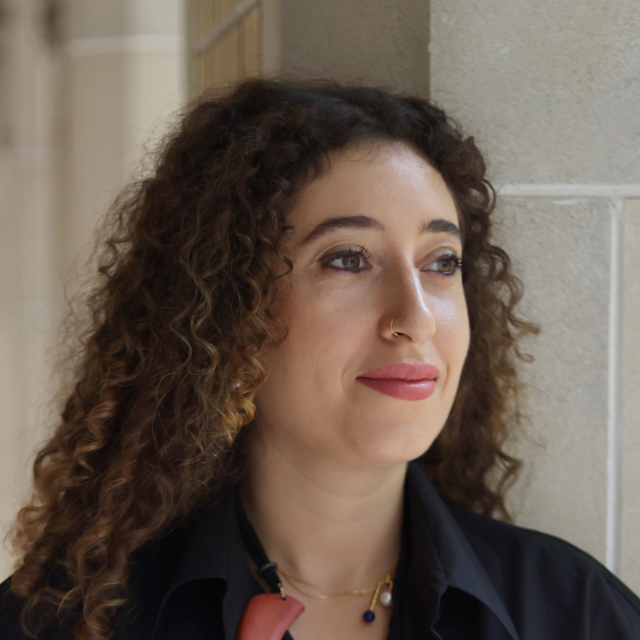
Lana Salman is an Assistant Professor in the Department of Political Science at the University of Toronto . A scholar of international development and urban politics, her research focuses on everyday statecraft, social reproduction, and urbanism in the Middle East and North Africa. PhD, University of California, Berkeley (City and Regional Planning, Global Metropolitan Studies) MUPP, American University of Beirut Her research explores how urban populations negotiate citizenship and state formation through: Land access and infrastructure development Microfinance institution operations Post-revolutionary governance practices Transdisciplinary north-south comparative analysis Current projects include: Tunisia State-Making: Ethnographic study of urban poor communities' role in statecraft Brussels-Beirut Comparison: Analysis of social workers' roles in refugee resettlement and urban displacement